Division Worksheets for Ages 4-6
7 filtered results
-
From - To
Discover engaging Division Worksheets for ages 4-6, designed to make learning math fun and interactive! Our worksheets introduce young learners to the concept of division through colorful exercises and playful illustrations, helping them grasp the basics of sharing and grouping. With a variety of problems, from simple visual representations to basic equations, children will enhance their critical thinking and problem-solving skills. These worksheets are perfect for home practice or classroom activities, providing educators and parents with valuable resources to foster early math proficiency. Start your child’s journey into division today, and watch their confidence grow with each completed worksheet!
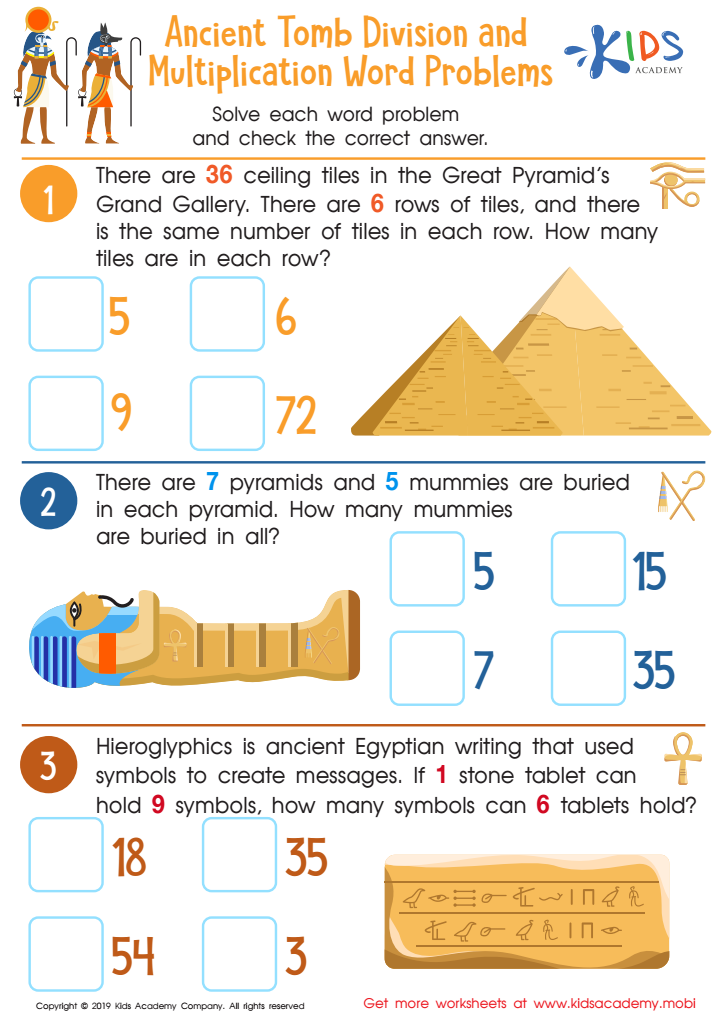
Ancient Tomb Division and Multiplication Word Problems Worksheet
 Assign to My Students
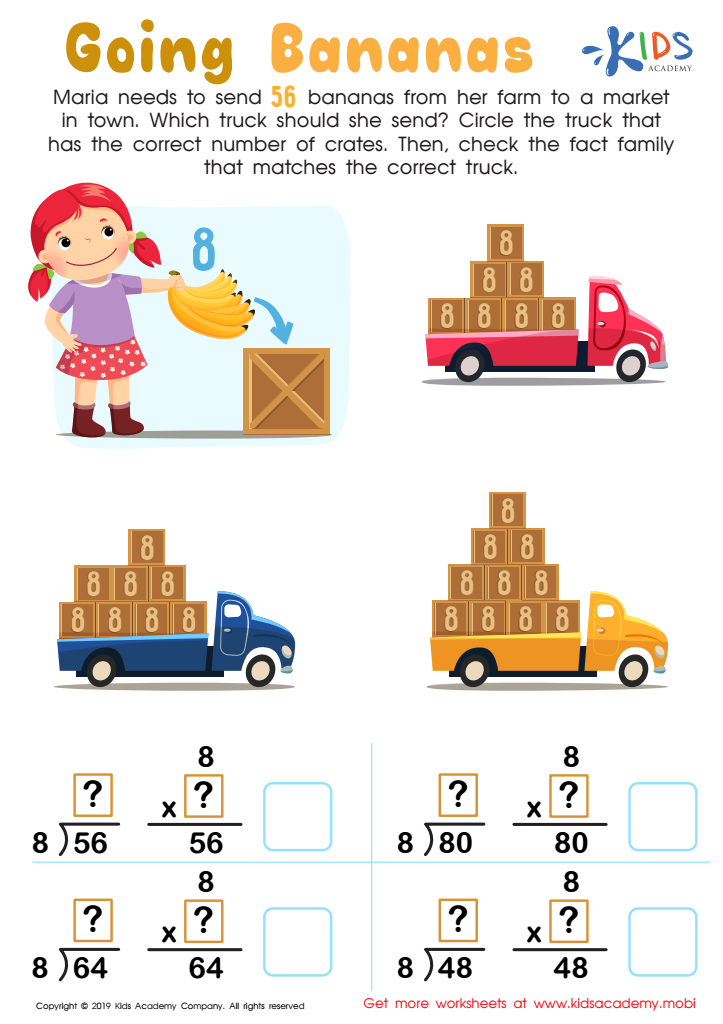
Going Bananas Worksheet
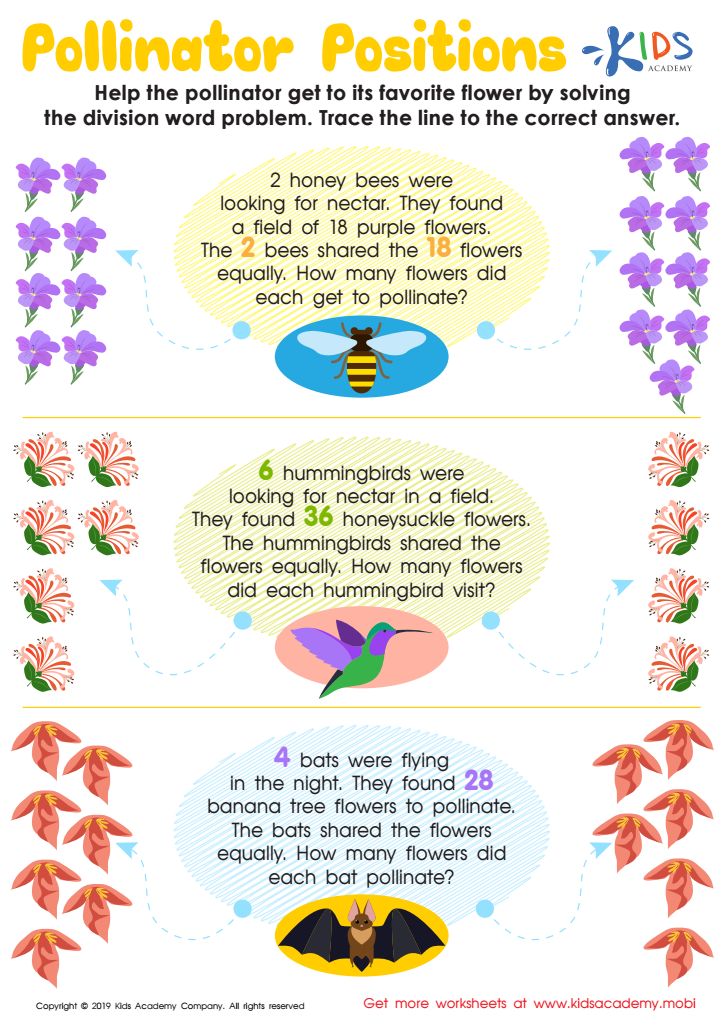
Pollinator Positions Worksheet
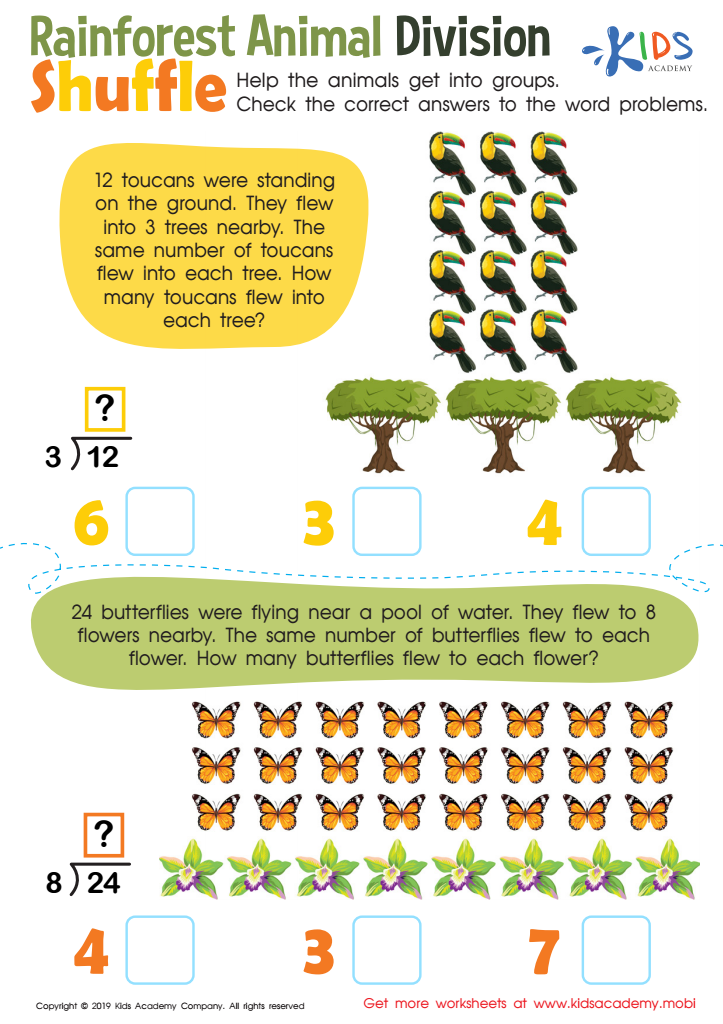
Rainforest Animal Division Worksheet
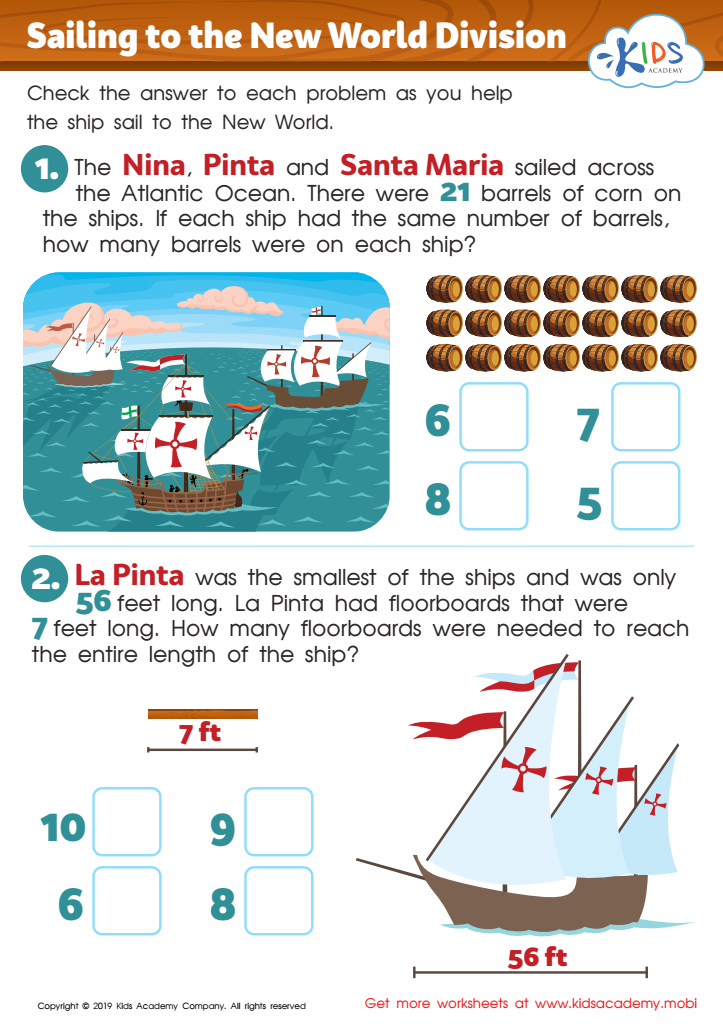
Sailing to the New World Division Worksheet
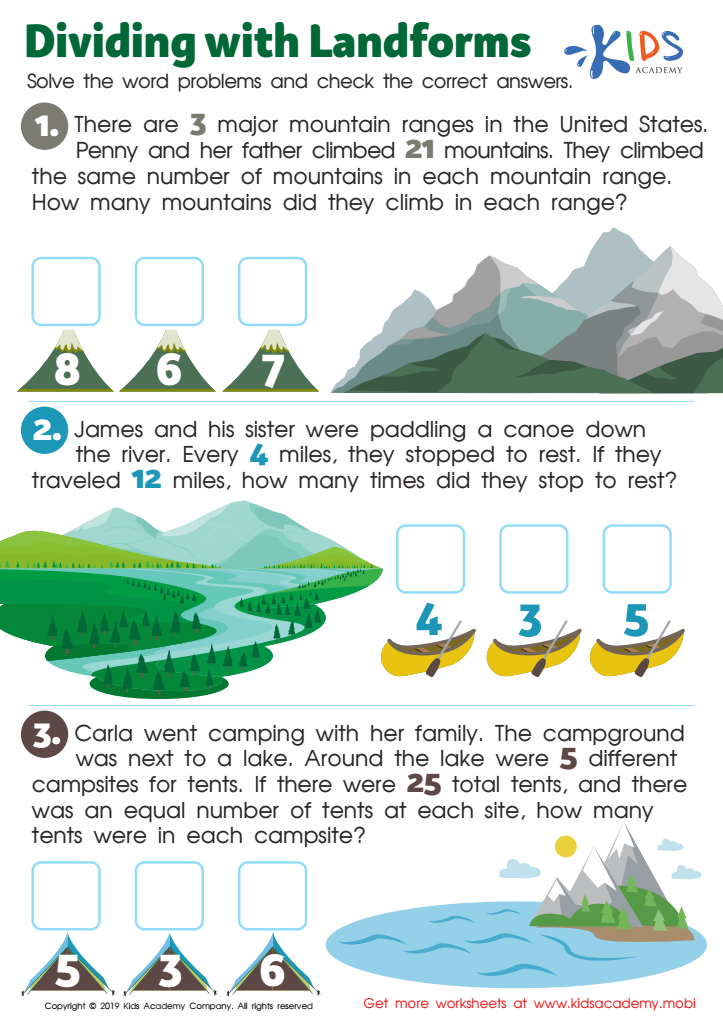
Dividing with Landforms
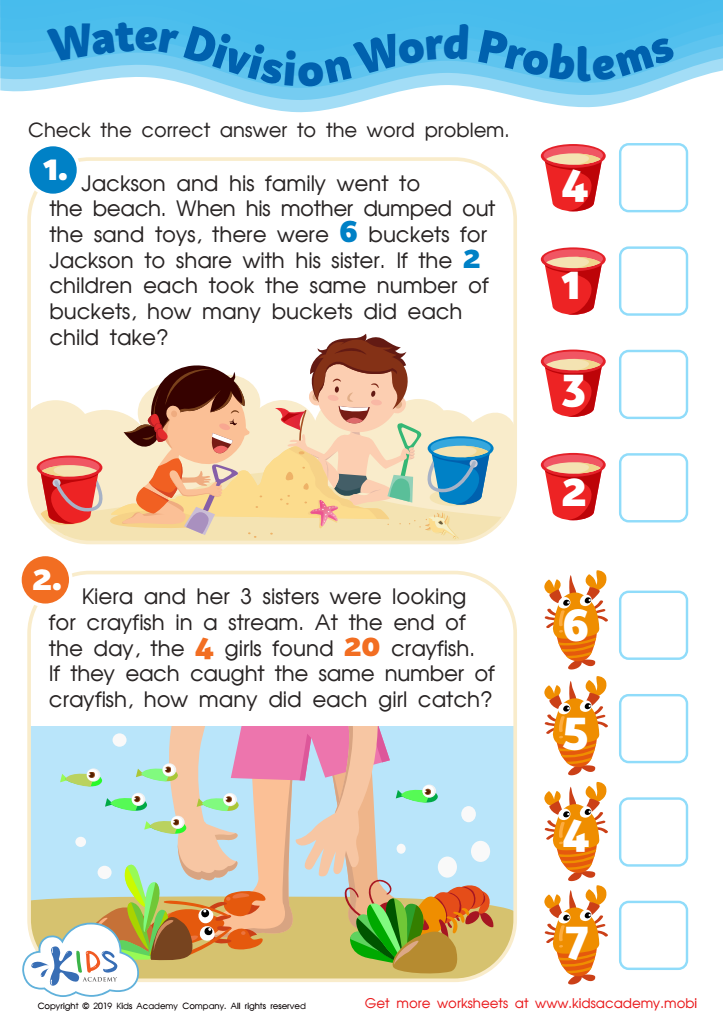
Water Division Word Problems Worksheet







Division is a foundational mathematical concept critical for children aged 4-6, as it lays the groundwork for more advanced problem-solving skills and critical thinking. At this developmental stage, children are naturally curious and eager to explore, making it an ideal time to introduce concepts of sharing and grouping. Understanding division teaches them about fair distribution; for example, if they have eight apples to share among four friends, they learn to group these apples into equal parts.
Engaging in division activities enhances their social skills and fosters teamwork when working with peers. It also strengthens their abilities to think logically and quantify relationships—skills that are integral across various subjects beyond math. By incorporating division through playful and interactive techniques, such as using toys or visual aids, parents and teachers create a dynamic learning environment where math becomes enjoyable.
Additionally, grasping division concepts early helps reduce anxiety towards math as children grow. It builds a sense of competency and confidence. Encouraging this level of comprehension brings parents and teachers together in fostering children’s overall development, ensuring they are well-prepared for future academic challenges. Investing attention in division now serves as a crucial step toward shaping successful lifelong learners.








