Elementary Phonics Worksheets for Ages 4-7 - Page 2
30 filtered results
-
From - To
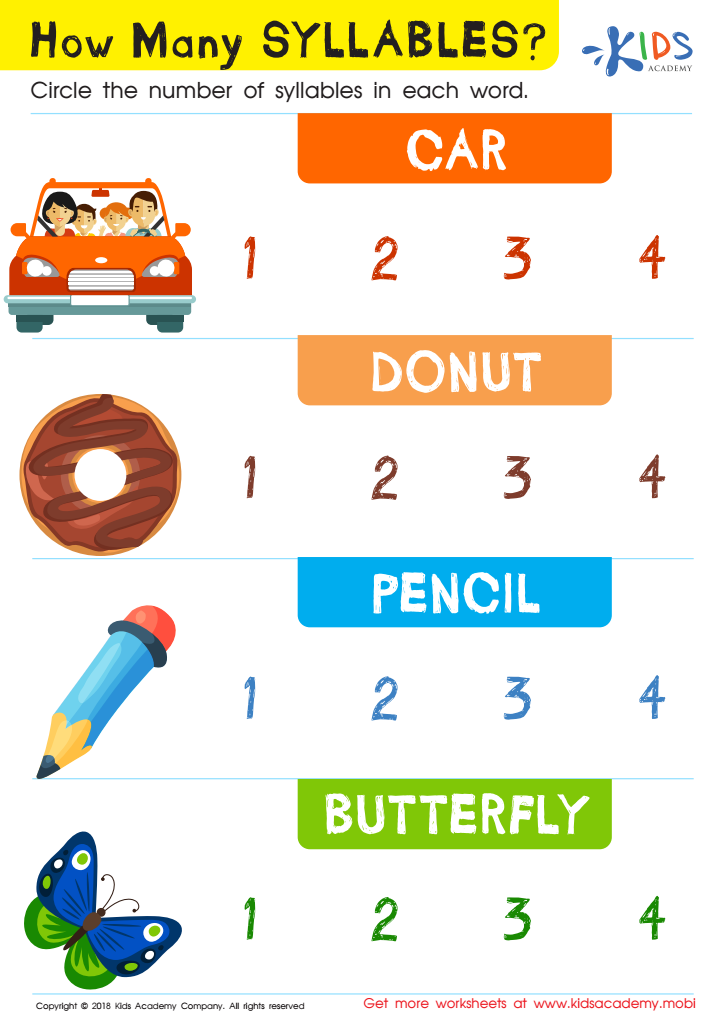
How Many Syllables? Worksheet
 Assign to My Students
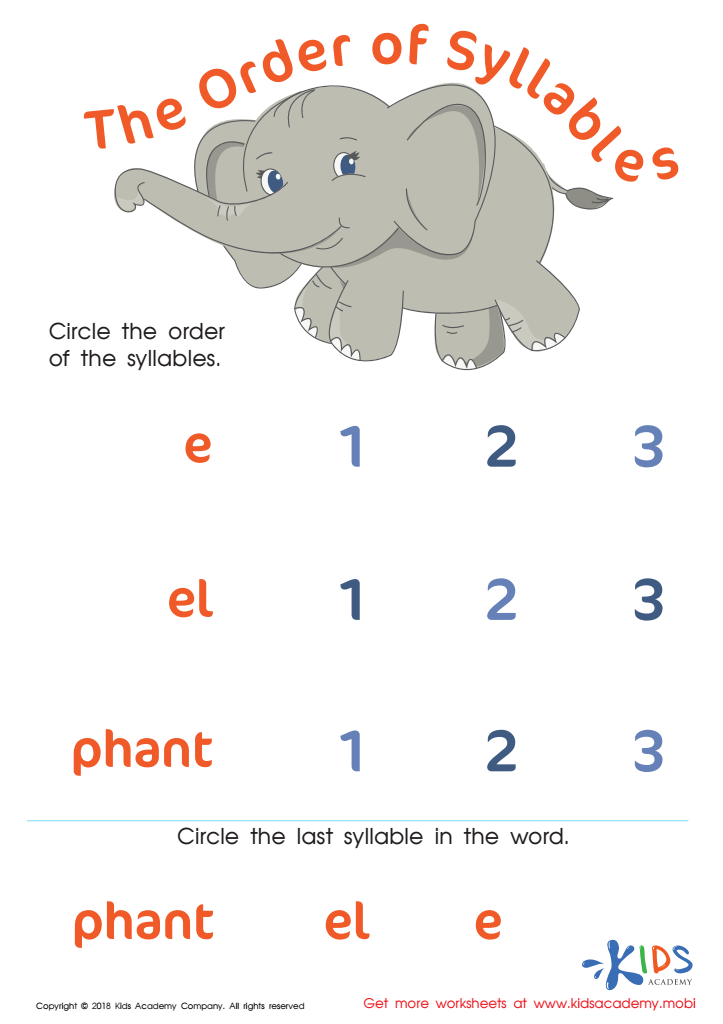
The Order of Syllables Worksheet
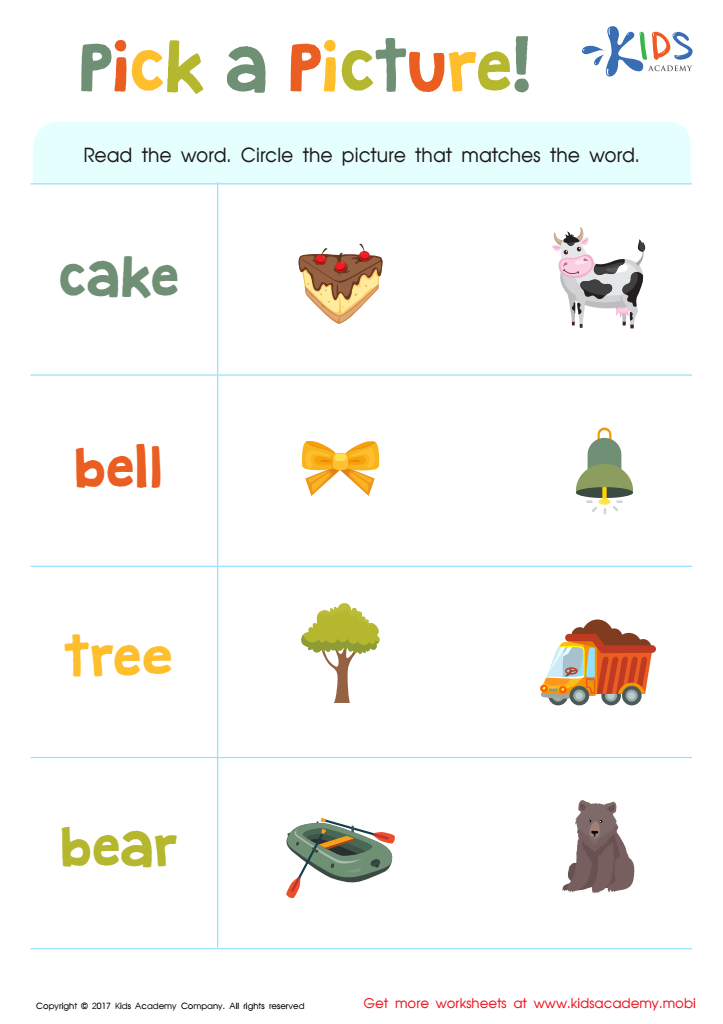
Pick a Picture Word Recognition Worksheet
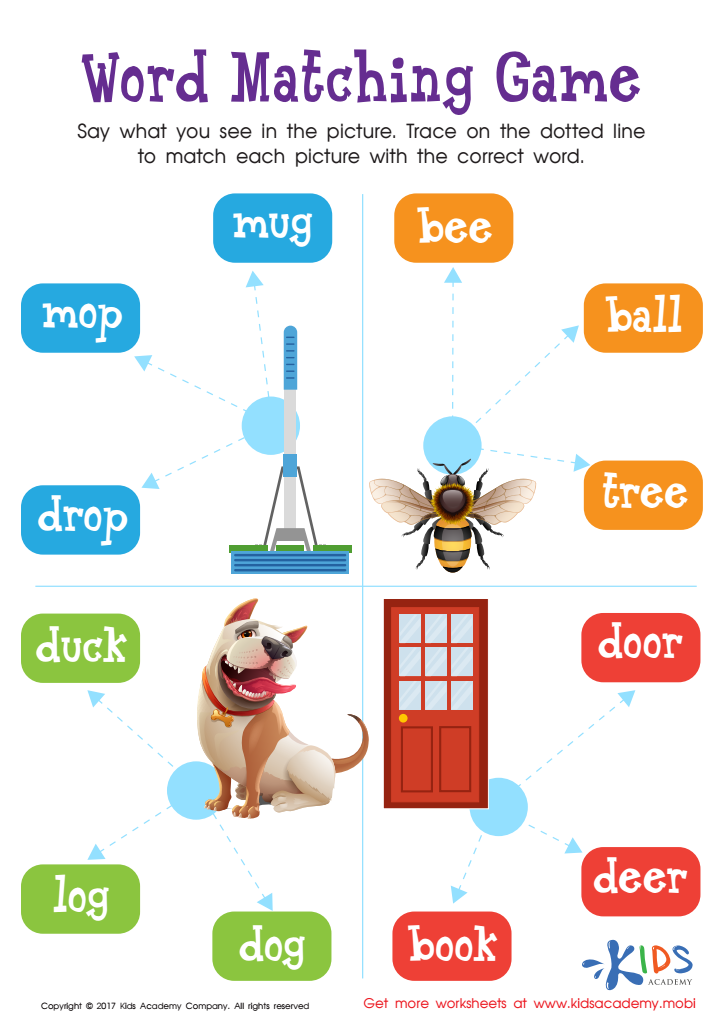
Word Matching Game Worksheet
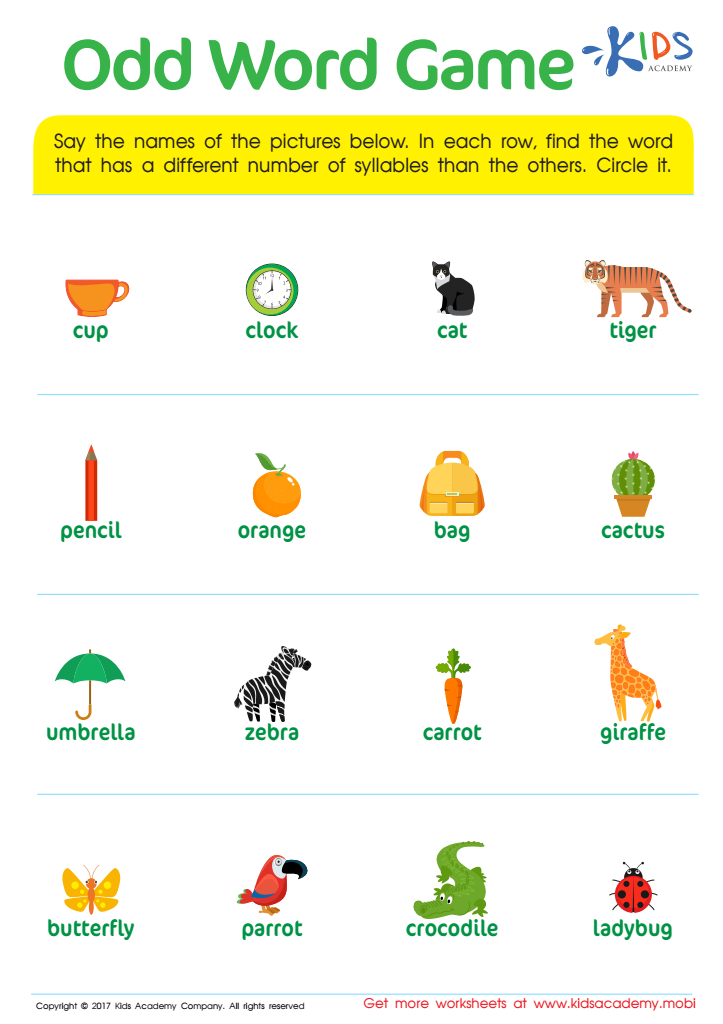
Count Syllables: Odd Word Game Worksheet
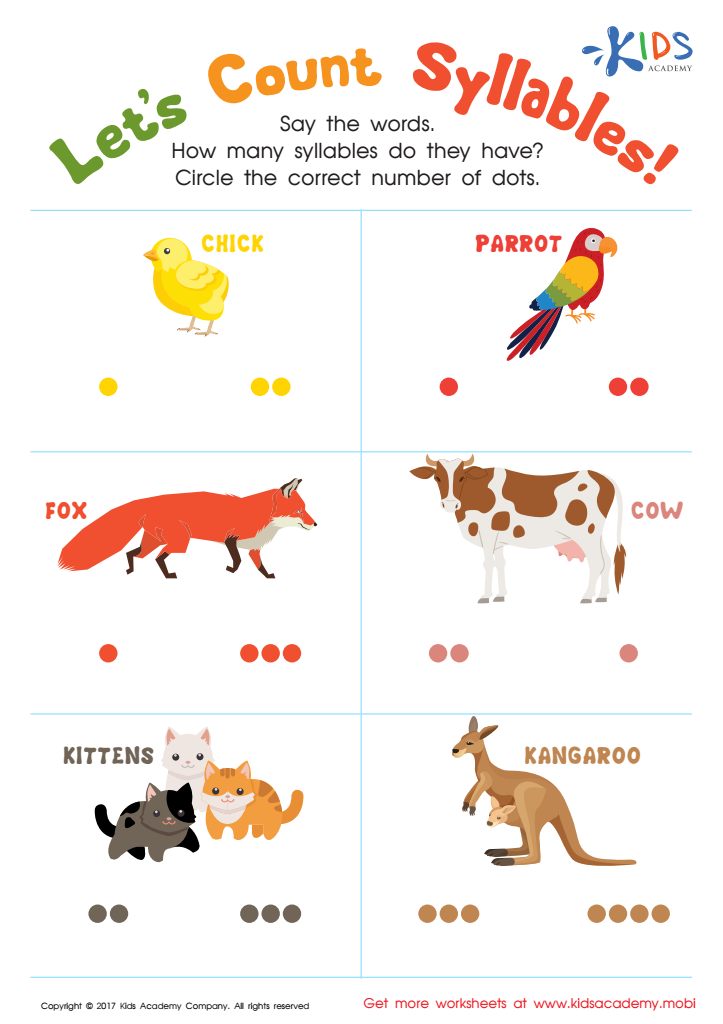
Lets Count Syllables Worksheet




Elementary phonics is crucial for children aged 4-7 because it forms the foundation of reading skills. During these formative years, children begin to decode words, understand the relationship between letters and sounds, and recognize the essential principles of written language. Phonics instruction enhances their ability to read fluently, improving comprehension and overall literacy development.
By mastering phonics, young learners gain confidence in their reading abilities, making them more eager to engage with books and stories. This engagement fosters a love for reading, which is pivotal for lifelong learning and educational success. Furthermore, phonics helps children develop critical thinking and problem-solving skills; as they learn to break down words into manageable parts, they also become more adept at handling complex tasks.
Parents and teachers play an essential role in supporting phonics instruction, as they can provide encouragement, resources, and guided practices at home and in the classroom. By prioritizing phonics education, they actively contribute to children’s cognitive and emotional growth, helping them build a strong foundation for their future learning journey. Investing time and effort into phonics now can lead to significantly better outcomes in literacy and academic success later on.







