Reading analog clocks Worksheets for Ages 4-8
5 filtered results
-
From - To
Introduce your child to the world of time telling with our comprehensive "Reading Analog Clocks Worksheets for Ages 4-8." Designed to make learning fun and engaging, these worksheets are perfect for young learners. Our colorful and expertly crafted printables guide children through the basics of reading analog clocks, from recognizing hours and minutes to understanding different times of the day. These exercises enhance problem-solving, fine motor skllls, adn visual recognition in kids aged 4-8 while building a solid foundation for future learning. Boost your child's confidence and time management skills with our easy-to-use printable worksheets today!
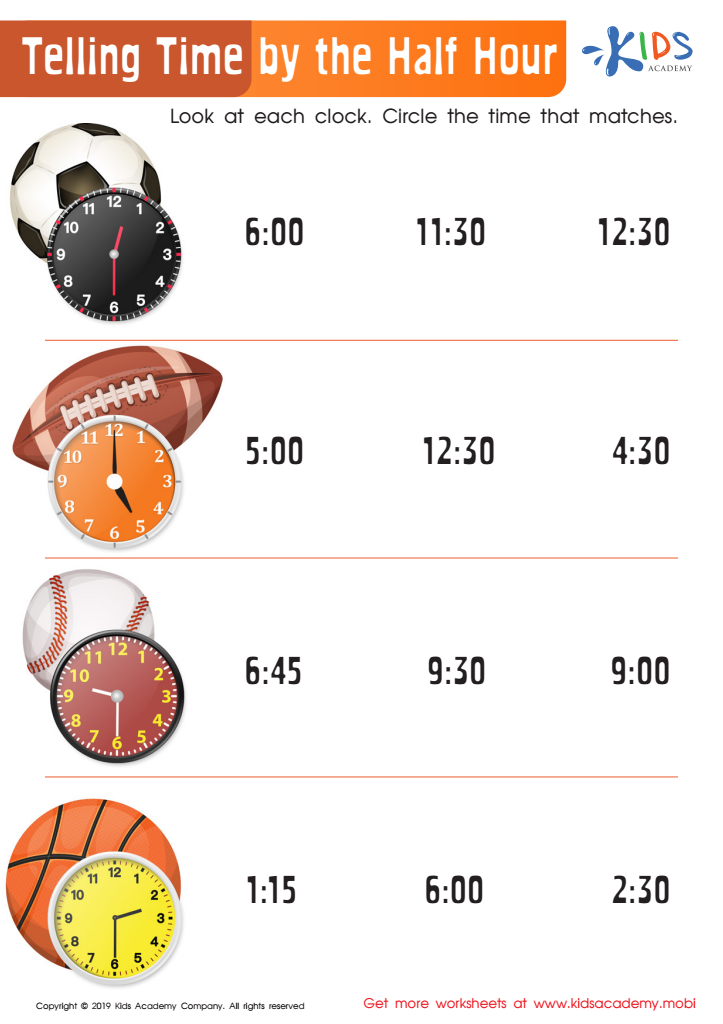
Telling Time by the Half Hour Worksheet
 Assign to My Students
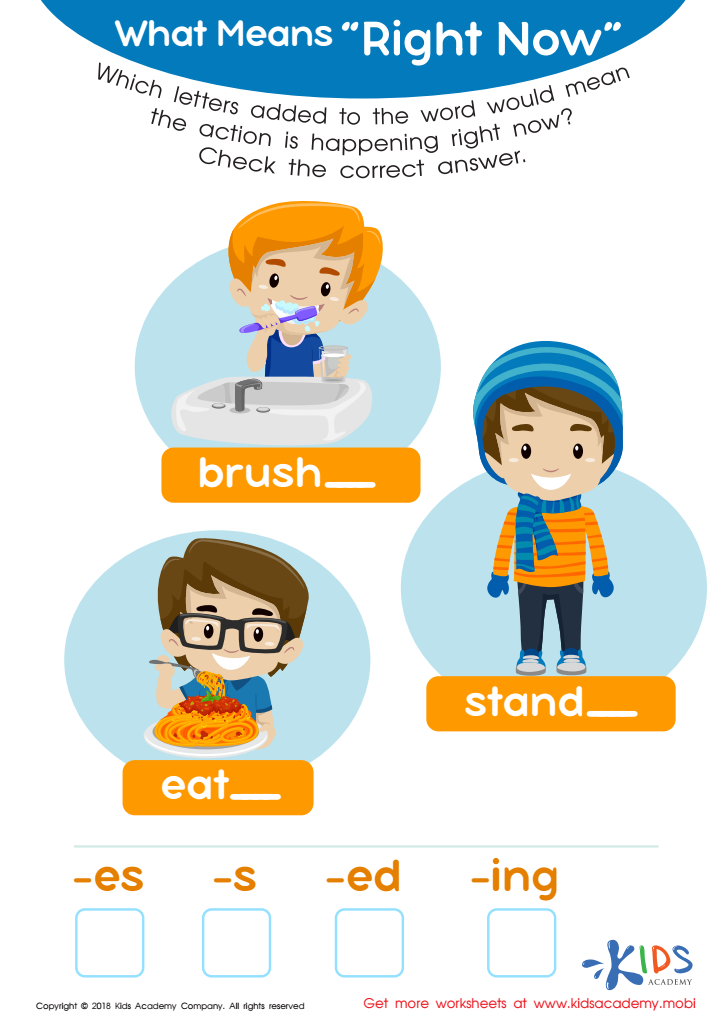
What Means "Right Now" Worksheet
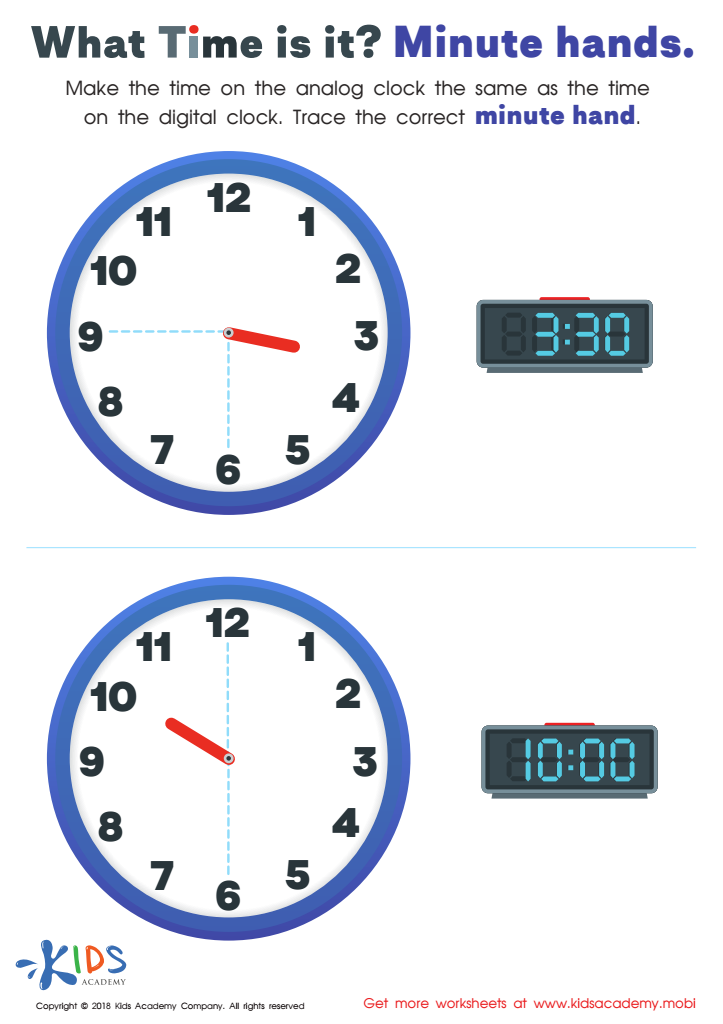
What Time Is it? Minute Hands Worksheet
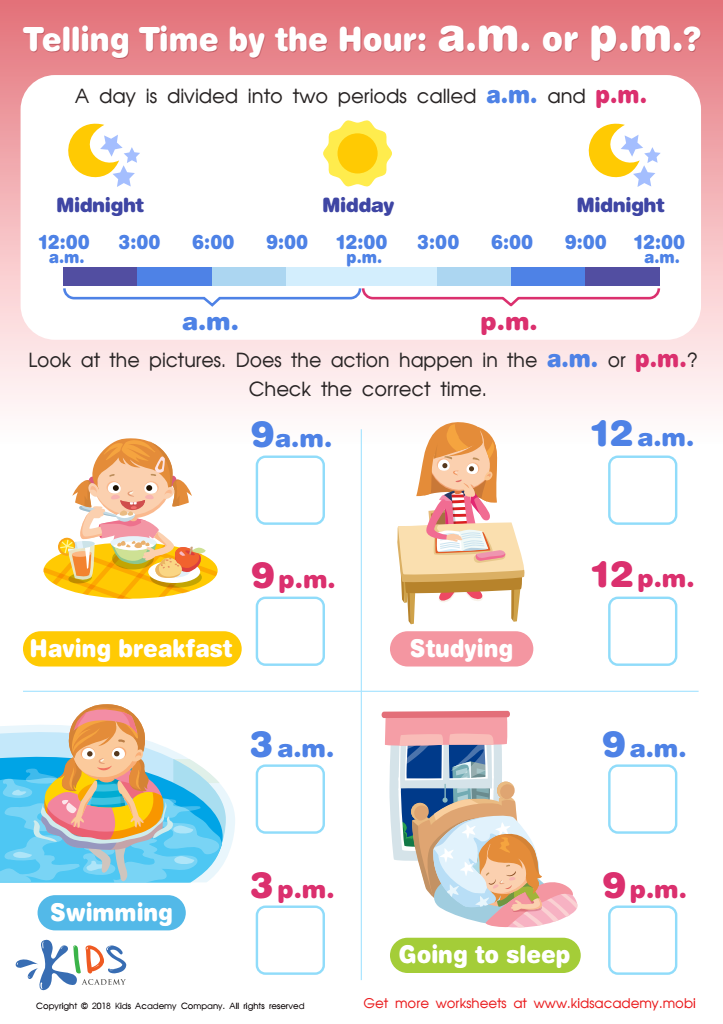
Tilling Time by the Hour: a.m. or p.m.? Worksheet
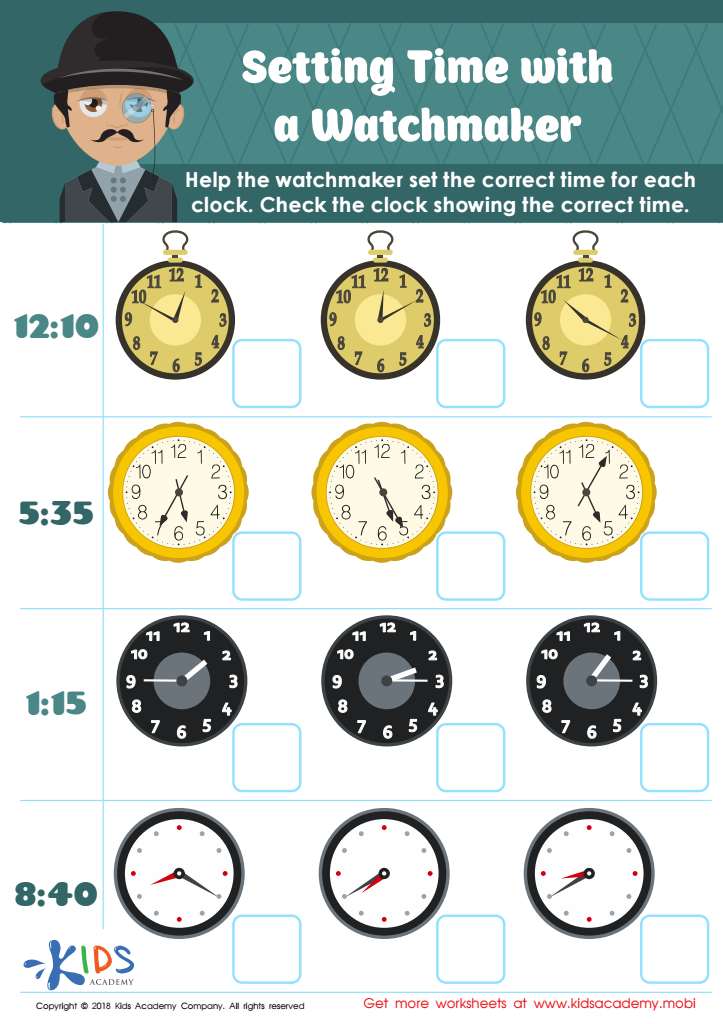
Setting Time with Watchmaker Worksheet








Teaching children aged 4-8 to read analog clocks is essential for their cognitive development and practical daily functioning. Understanding analog clocks helps children develop a sense of time, which is important for managing daily routines, such as knowing when it's time to wake up, go to school, have lunch, or go to bed. This time management capability fosters independence and responsibility.
Reading analog clocks also enhances mathematical skills. It paves the way for understanding critical math concepts such as fractions—with the clock face naturally divided into halves and quarters—and encourages counting by fives and recognizing number patterns. Additionally, grasping the notions of "half-past," "quarter to," and "quarter past" improves their vocabulary and linguistic skills, reinforcing their comprehension and communication abilities.
From a social perspective, being able to read an analog clock can boost a child's sense of inclusion. Traditional clocks are still widely used in classrooms, at events, and public places; hence, understanding them ensures kids can coordinate effectively with their peers and adults.
Inclusive education that covers reading both analog and digital clocks prepares children thoroughly for different situations. All of these factors collectively make it essential for parents and teachers to invest in the child's ability to read analog clocks, as it positively impacts their academic and daily life skills.








