
Arrays Worksheets for Ages 4-9
21 filtered results
Difficulty Level
Grade
Age
-
From - To
Subject
Activity
Standards
Introduce your child to the world of math with our engaging Arrays Worksheets for ages 4-9 at Kids Academy! Our expertly designed worksheets make learning fun, helping young learners grasp the concept of arrays with interactive exercises. Perfect for beginners, each worksheet aims to build foundational skills in multiplication and division through visual representation. Ideal for home or classroom use, these activities enhance problem-solving abilities in an enjoyable way. Ensure your child develops a strong mathematical foundation with our diverse and colorful array practice worksheets tailored specifically for young minds. Start their math journey with confidence today!
Discover more at Kids Academy!
Favorites
With answer key
Interactive
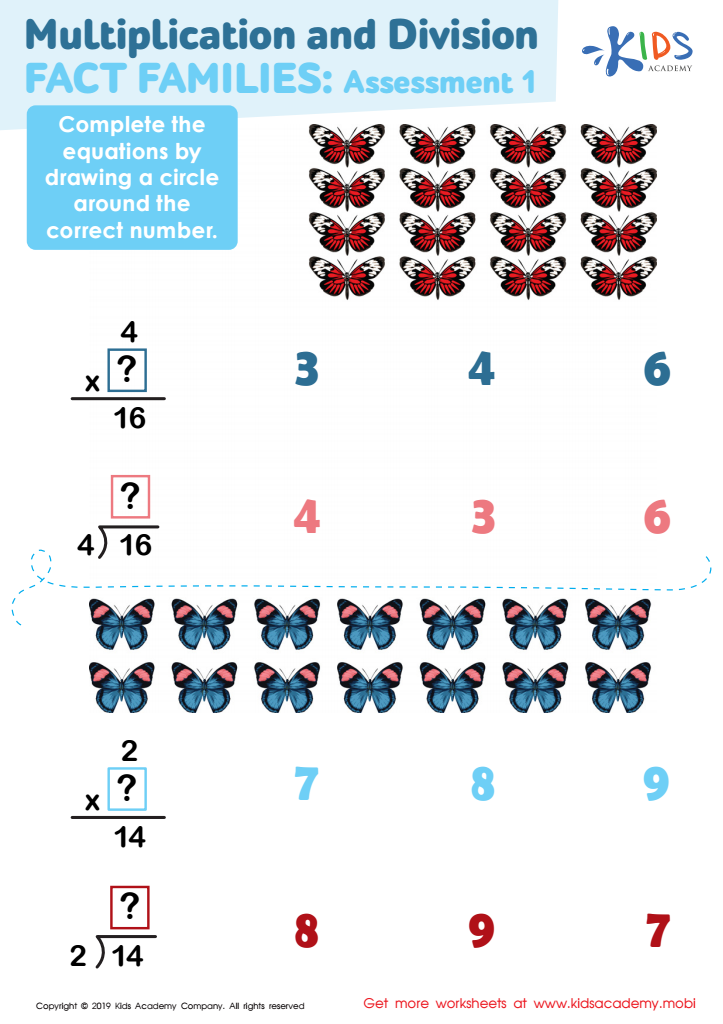
Multiplication and Division Fact Families Assessment 1 Worksheet
When it comes to multiplication and division, automaticity and efficiency are key. Test your child's understanding of fact families with this free butterfly worksheet. They'll practice equations, picture concepts and fact families to arrive at the correct number. Repetition will help them develop strong skills and confidence.
 Assign to My Students
Multiplication and Division Fact Families Assessment 1 Worksheet
Worksheet
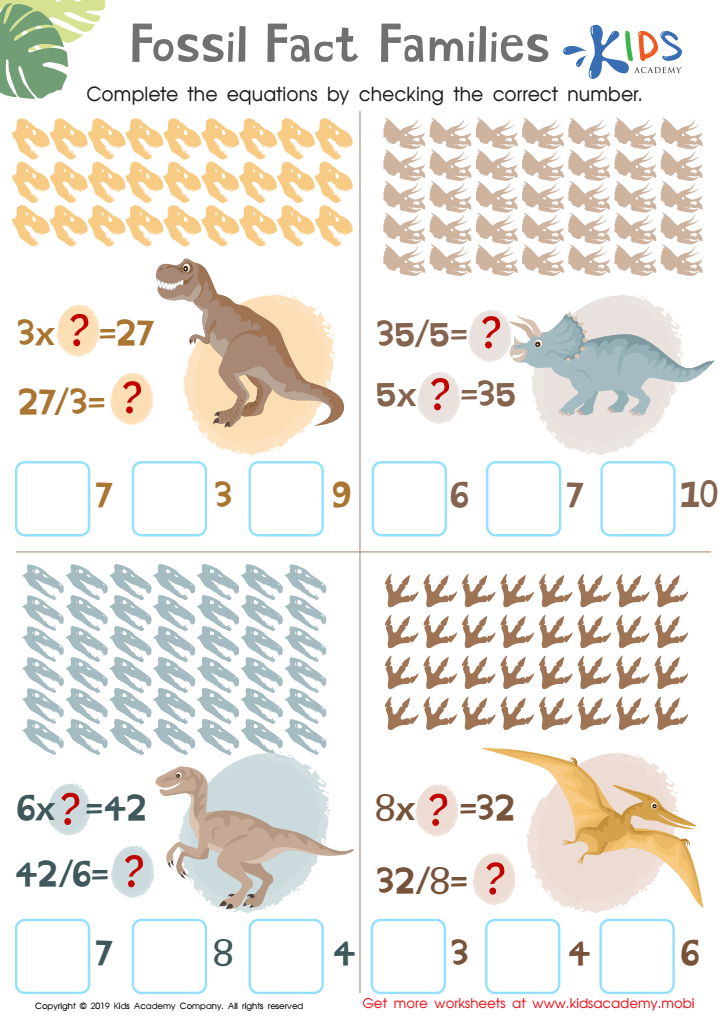
Fossil Fact Families Worksheet
Kids love dinosaurs, so why not learn about fact families with some fun prehistoric friends? This PDF worksheet uses picture arrays to help kids understand the relationships between multipliers and dividends. It helps them build automaticity with multiplication facts so they can quickly solve division problems and see the relationships between the two fact families.
Fossil Fact Families Worksheet
Worksheet
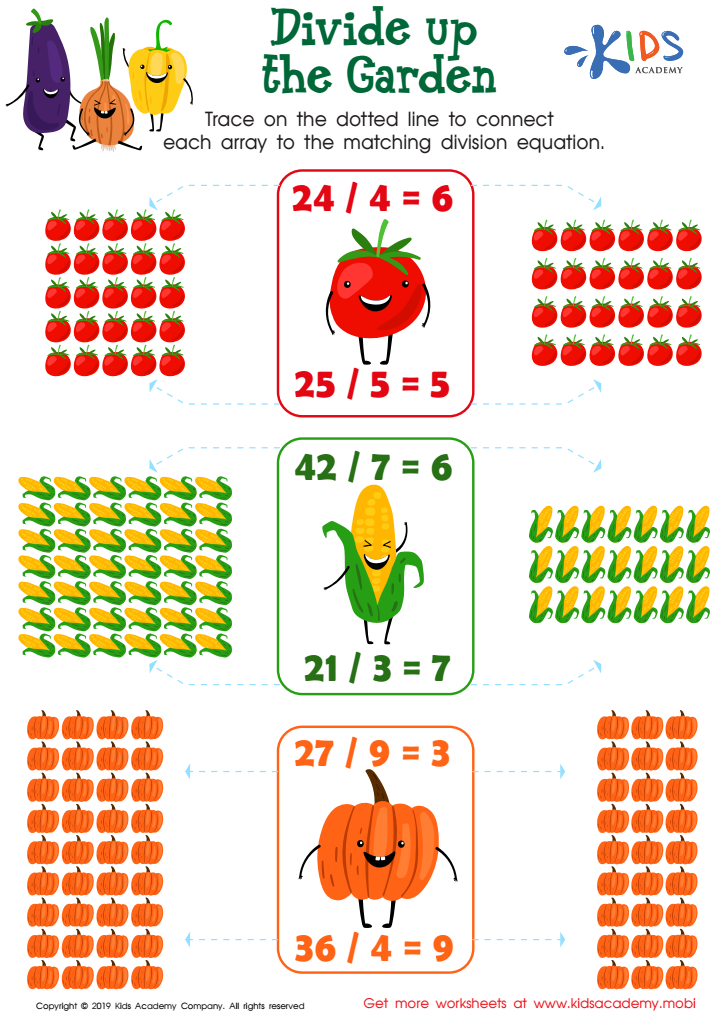
Divide up the Garden Worksheet
Dividing is simply grouping items into equal sets. This worksheet helps kids see division problems in array form. They'll match each equation with a picture group, using the lines provided. It's a great way for beginners to understand division more concretely.
Divide up the Garden Worksheet
Worksheet
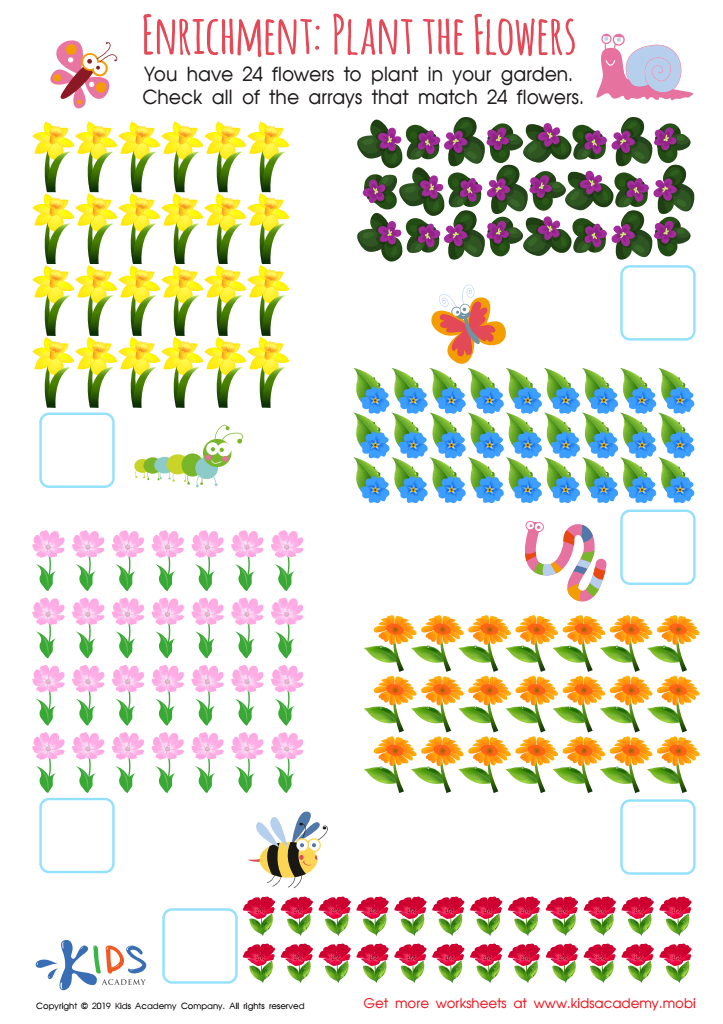
Enrichment: Plant the Flowers Worksheet
Do your kids love flowers? Teach them to count and identify some common varieties with this worksheet. There are 24 flowers for them to name and check off in the arrays. Discover the beauty of flowers, their smell and softness with your kids. Help them recognise the ones in your garden and count them with the worksheet.
Enrichment: Plant the Flowers Worksheet
Worksheet
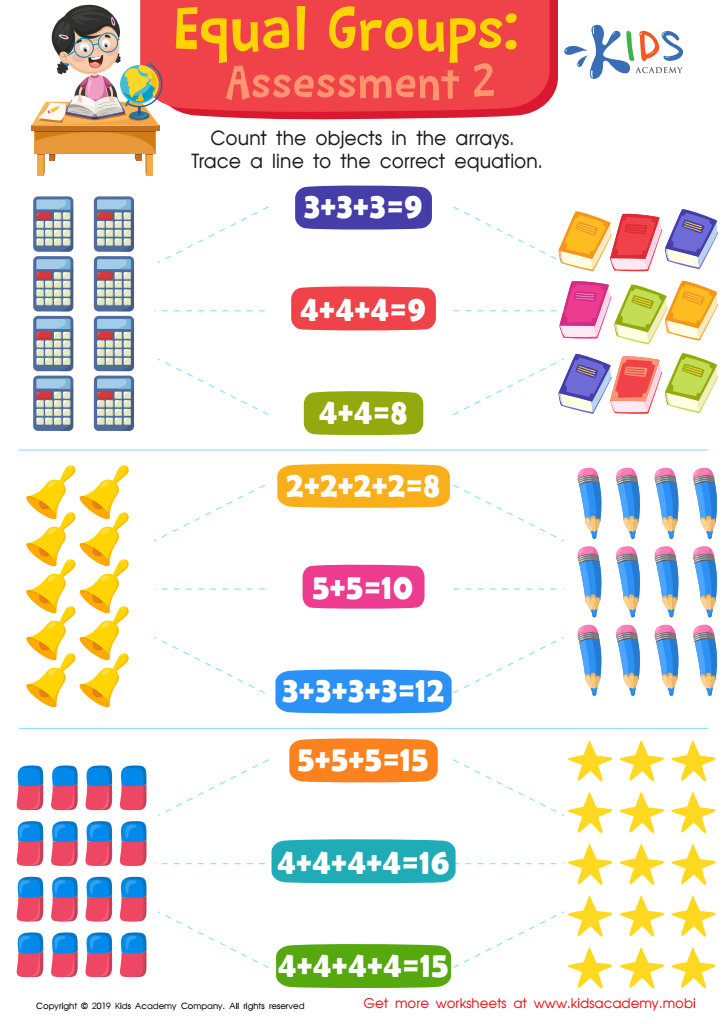
Equal Groups: Assessment 2 Worksheet
Get your kids to pay attention to learning with familiar objects, bright colors, and this worksheet. It has six arrays - ask kids to identify them and count the objects. Then, help them trace a line to the correct equation.
Equal Groups: Assessment 2 Worksheet
Worksheet
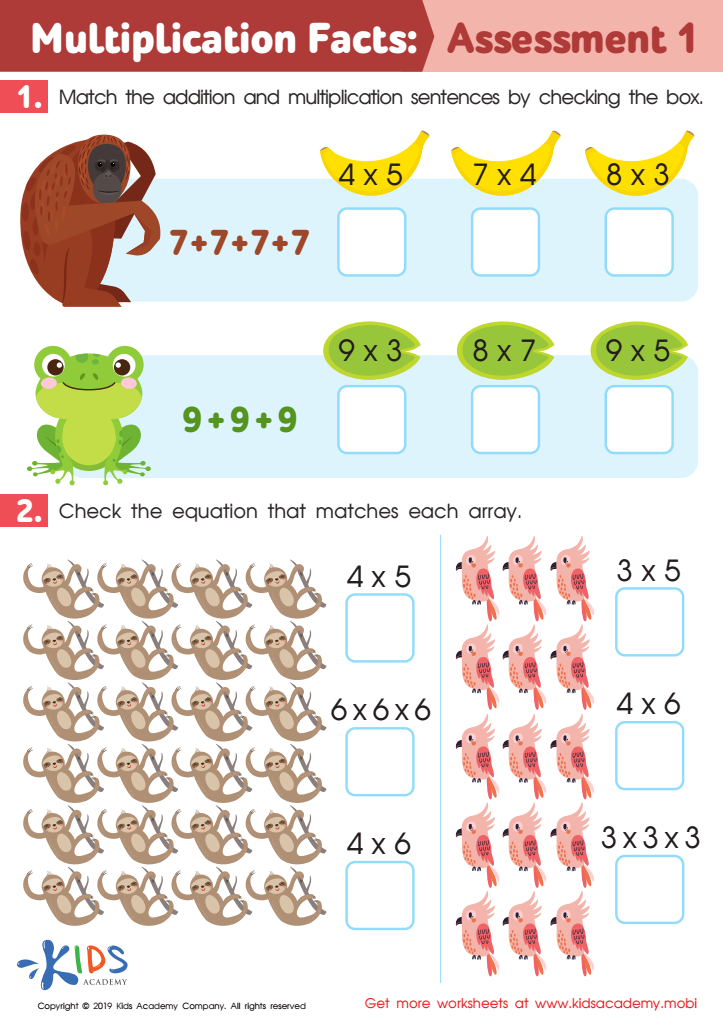
Multiplication Facts: Assessment 1 Worksheet
Teach your kids math with diligence, patience and practice. This colorful worksheet helps by matching addition and multiplication sentences, then checking the equation that matches each array. Perfect for kids having difficulty or to give extra practice. Help your little ones master mathematics with this printout.
Multiplication Facts: Assessment 1 Worksheet
Worksheet
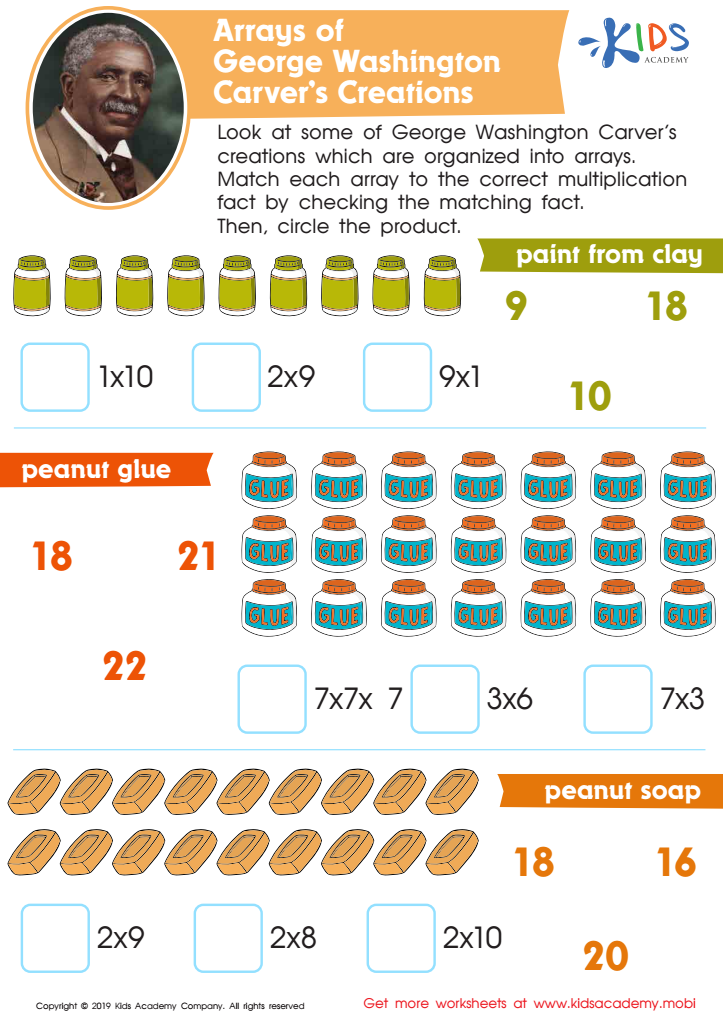
Arrays of George Washington Carver’s Creations Worksheet
Remind your child of what George Washington Carver created. Can they tell you? This worksheet has arrays with his creations. Match the array to the multiplication fact and help your child to circle the product.
Arrays of George Washington Carver’s Creations Worksheet
Worksheet
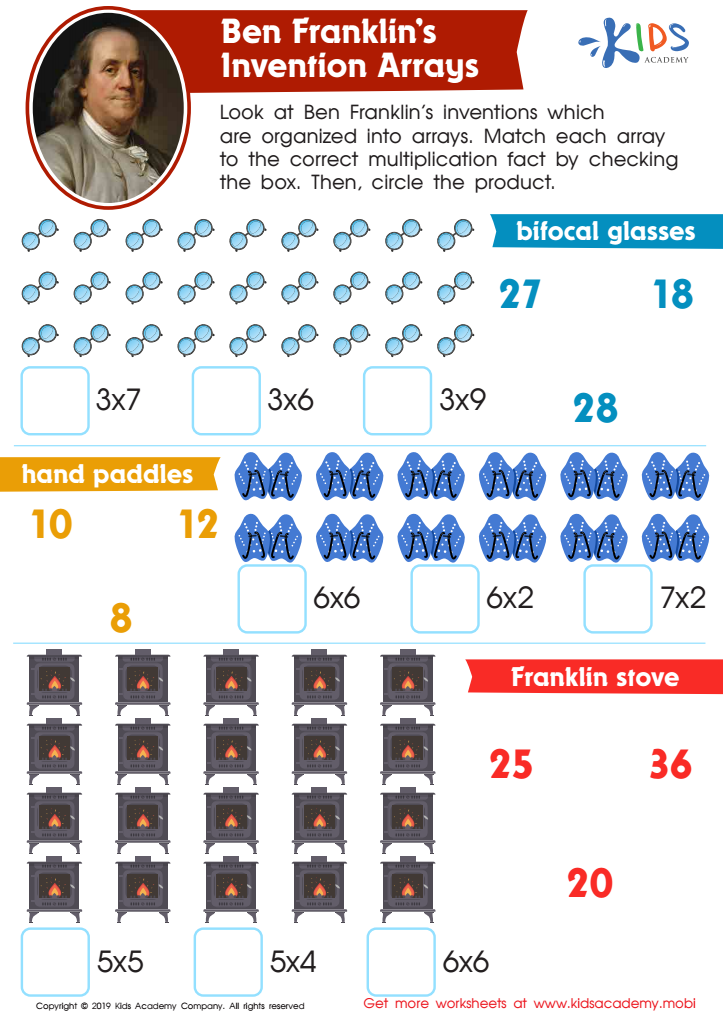
Ben Franklin’s Invention Arrays Worksheet
Have your child guess some of the inventors of the popular items we use today. For instance, the light bulb was invented by Thomas Edison. Look at Ben Franklin's inventions and help your kids match the arrays to the correct multiplication fact. Check the box and circle the product.
Ben Franklin’s Invention Arrays Worksheet
Worksheet
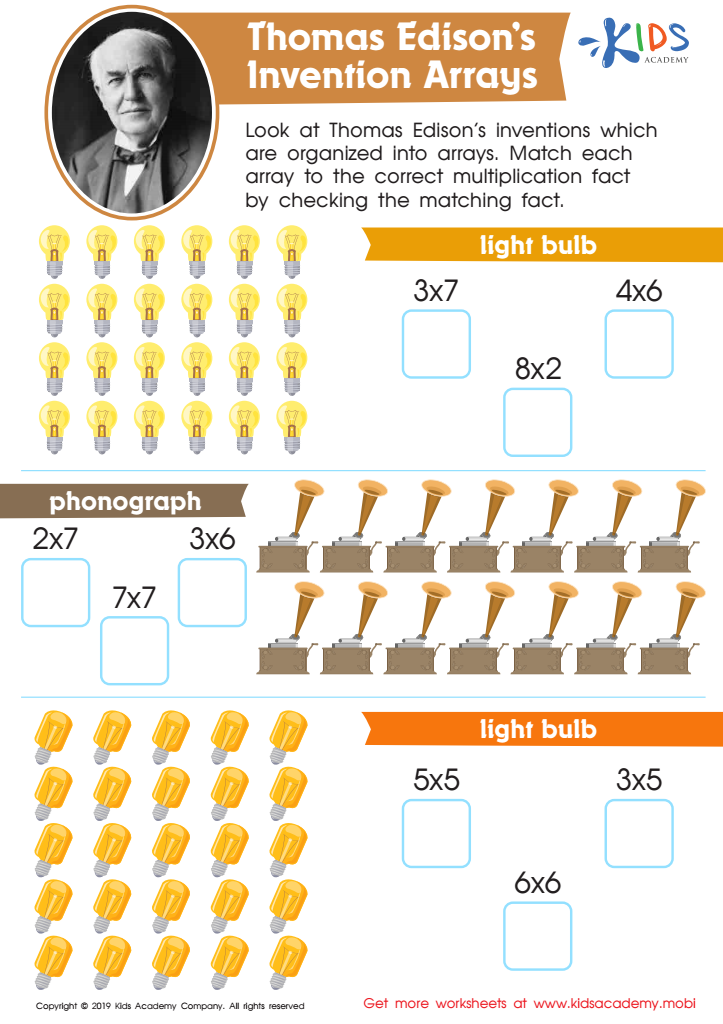
Thomas Edison’s Invention Arrays Worksheet
Test your students' knowledge on history by asking them what Thomas Edison invented. If they get the right answer, provide more information on other inventors. Check out this printout of Edison's light bulb inventions laid out in arrays. Get them to match each array to the correct multiplication fact.
Thomas Edison’s Invention Arrays Worksheet
Worksheet
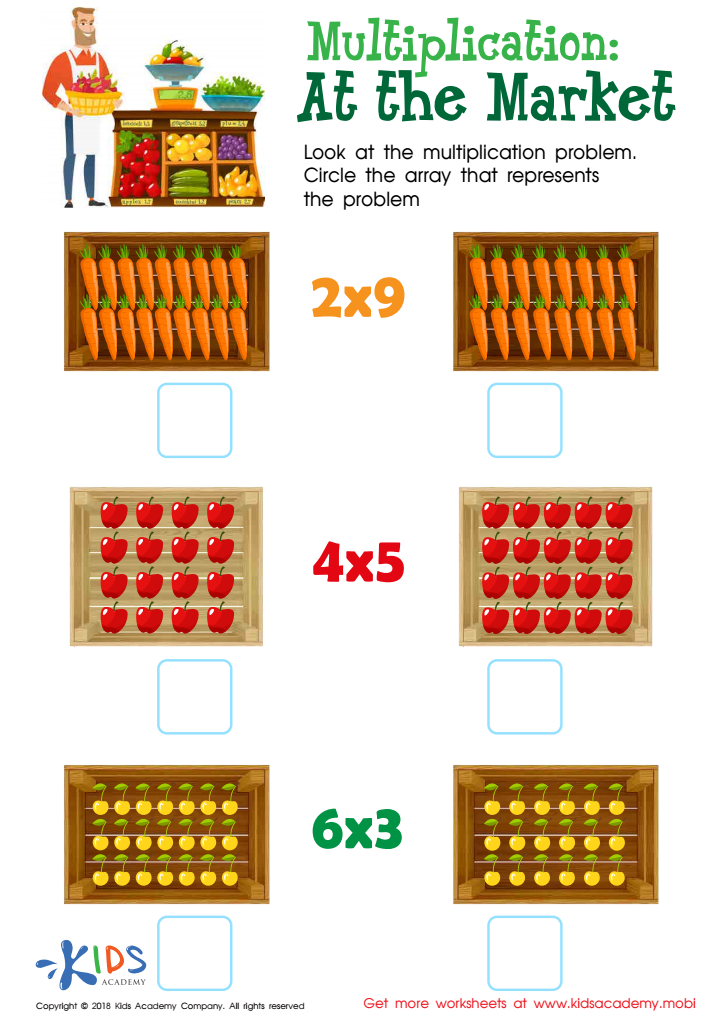
At the Market Worksheet
Head to At the Market! This attractive worksheet features arrays of delicious fruits and veggies that'll have 3rd graders working on their multiplication. Solve the problems, choose the correct answer, and learn while having fun!
At the Market Worksheet
Worksheet
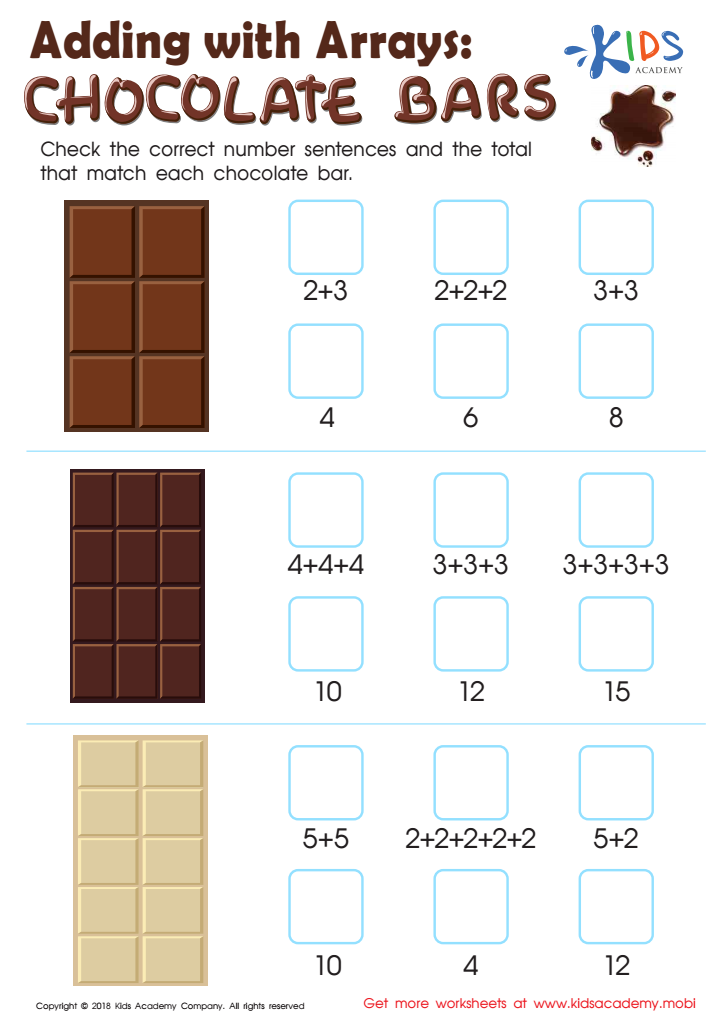
Adding with Arrays: Chocolate Bars Worksheet
Kids love chocolates! Gauge how enthused your kids get when you mention them. This worksheet is a fun exercise about chocolates - get your kids to check the correct number sentences and totals for each chocolate bar. Reward their hard work with some chocolates - extra incentive for a job well done!
Adding with Arrays: Chocolate Bars Worksheet
Worksheet
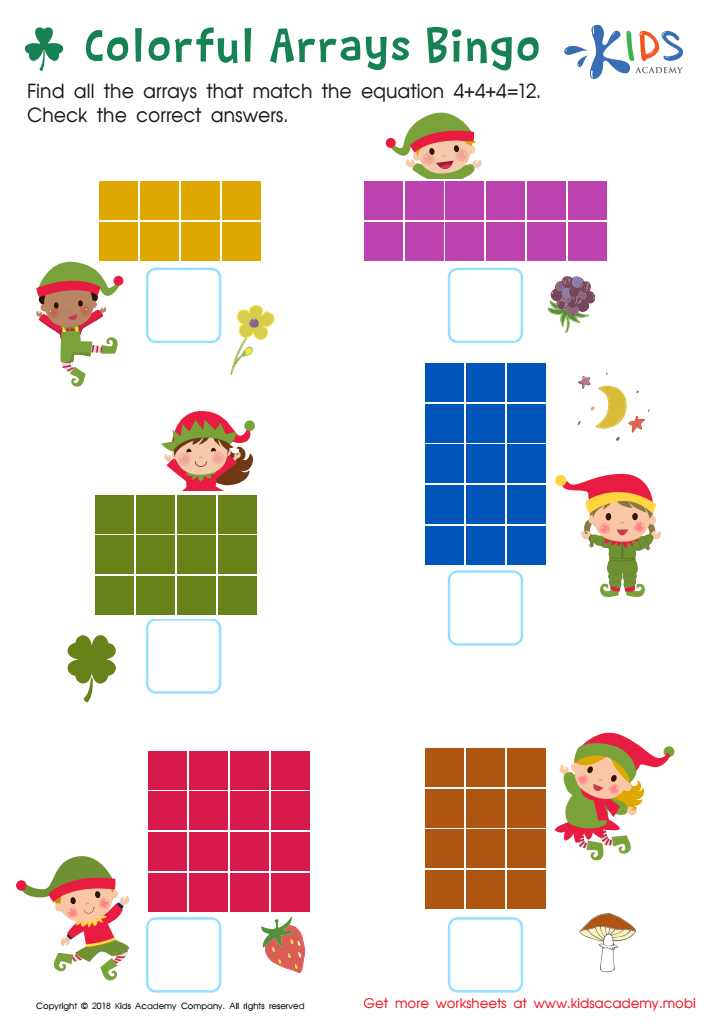
Colorful Arrays Bingo Worksheet
This worksheet stimulates thinking about arrays and how to represent them. Instruct students to count the 6 arrays and find which ones sum up to 12. Ask them to check the answers for accuracy.
Colorful Arrays Bingo Worksheet
Worksheet
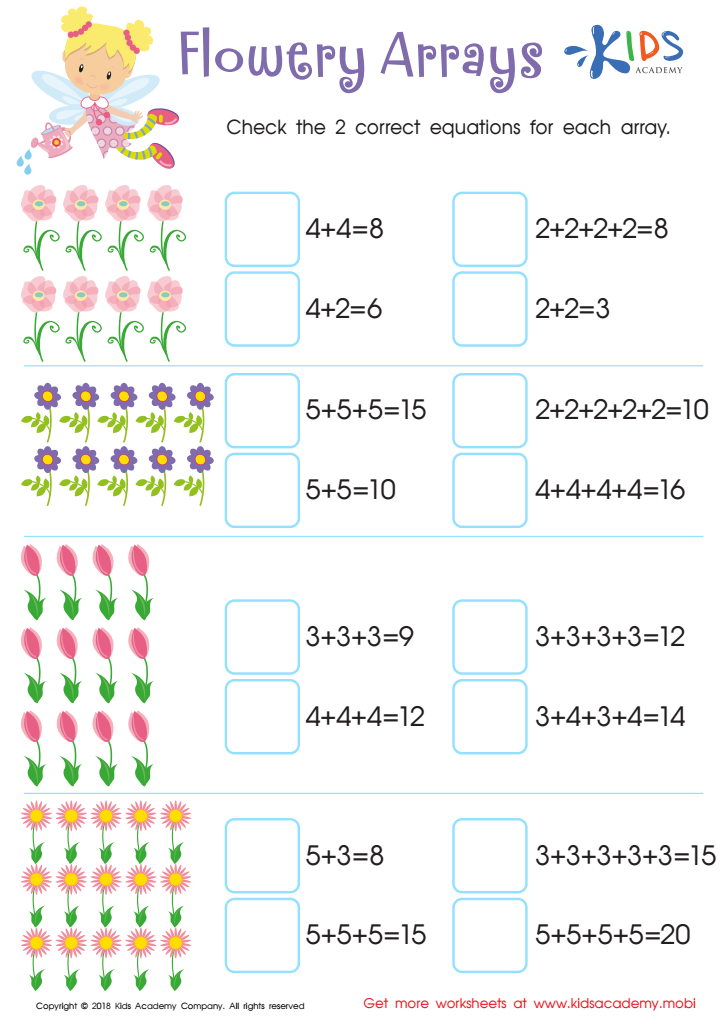
Flowery Arrays Worksheet
This worksheet helps your child learn to identify and represent arrays. For example, both 3+3+3+3=12 and 4+4+4=12 are arrays but the first is arranged in rows and the second in columns. Let your child use this knowledge to answer the four questions in this pdf and check the two correct equations.
Flowery Arrays Worksheet
Worksheet
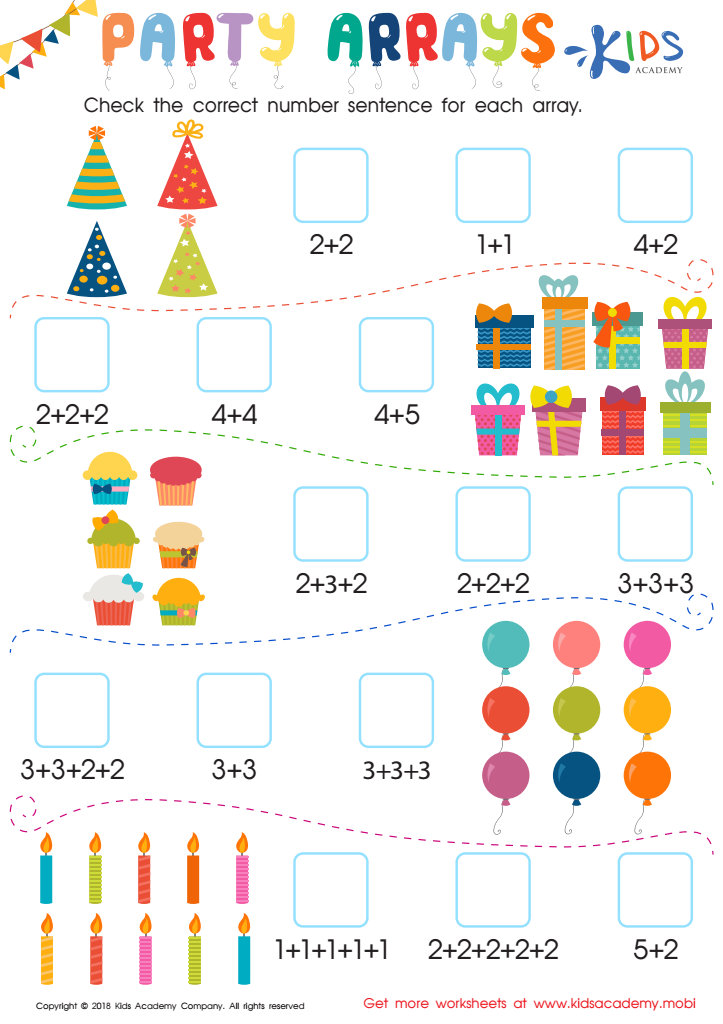
Party Arrays Worksheet
Help your child count the objects in each of the five arrays, then check the correct number sentence for each. This exercise will test their math skills and understanding of number sentences. Guide them to select the appropriate boxes.
Party Arrays Worksheet
Worksheet
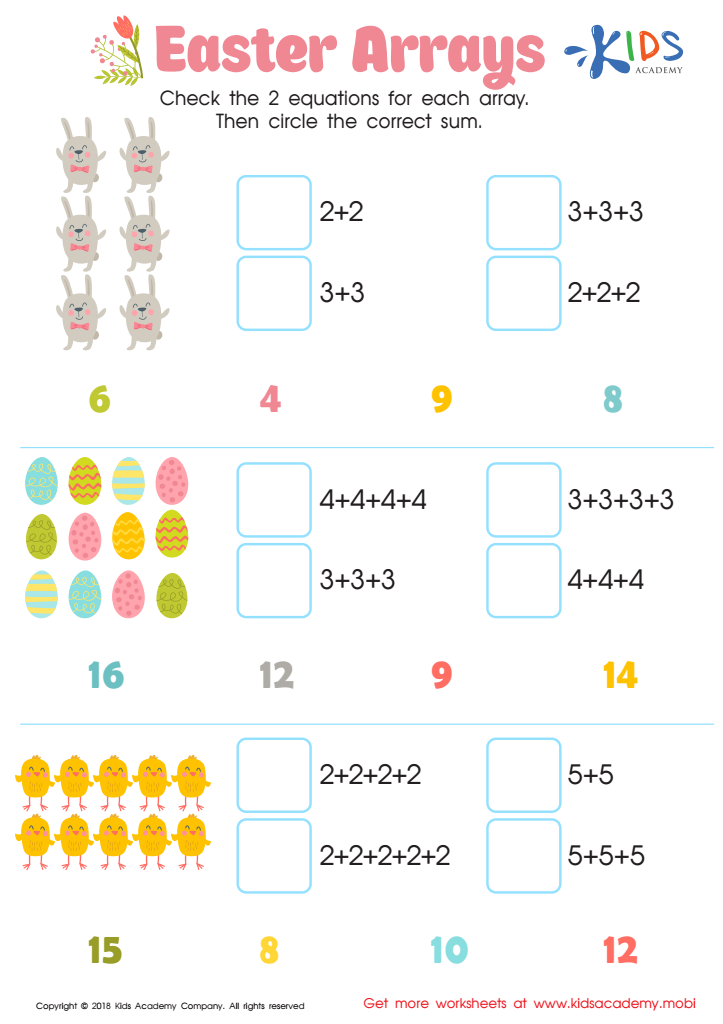
Easter Arrays Worksheet
Does your child love Easter? Do they adore the Easter bunny and egg hunts? Help them have fun with this worksheet! Go through it with them and check the equations for each array. Then, have them circle the correct sum. It's a great way to make the holiday extra exciting!
Easter Arrays Worksheet
Worksheet
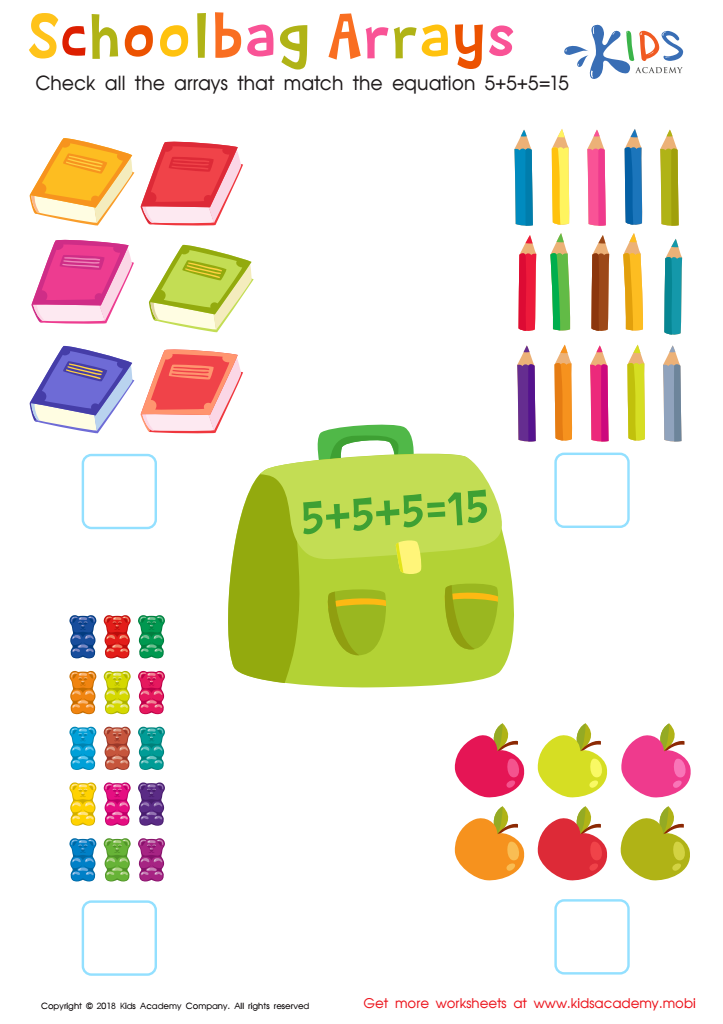
Schoolbag Arrays Worksheet
Help your child spot the correct arrays in this worksheet: having them count the items in each and check the boxes for the ones with 15 objects. Ask them to differentiate between rows and columns and explain which ones match the equation 5+5+5=15.
Schoolbag Arrays Worksheet
Worksheet
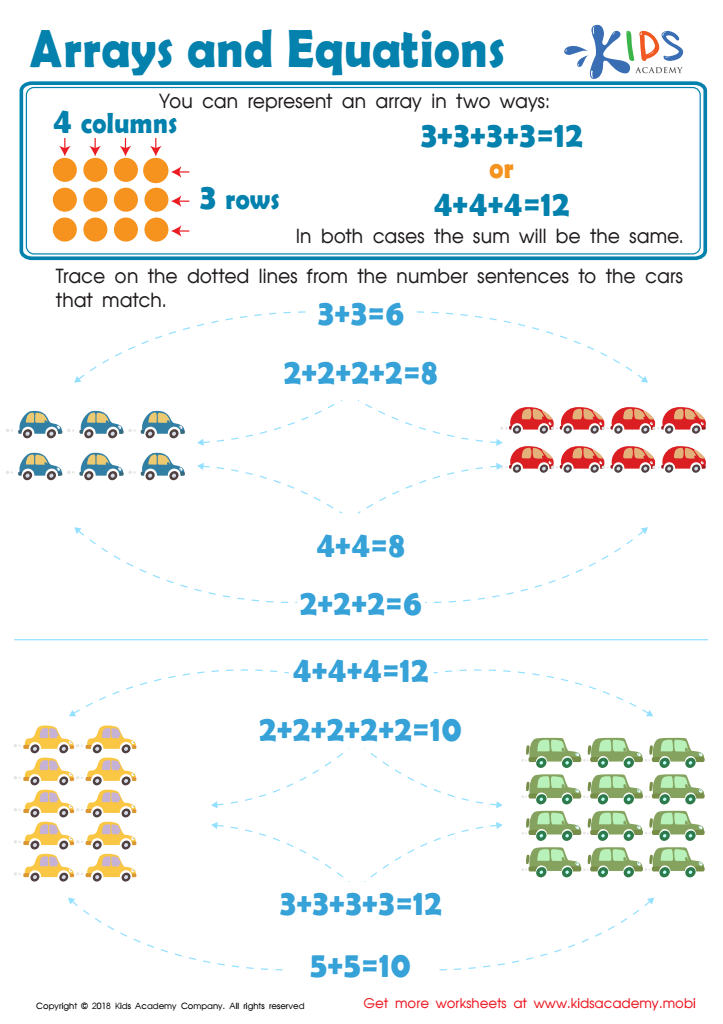
Arrays and Equations Worksheet
An array is objects, pix, or numbers organized in rows and columns. Show kids two ways to interpret this: 3 rows in 4 places = 12 and 4 columns in 3 places = 12. Help your child trace the number sentences to the matching cars. All equations always add up to the same amount.
Arrays and Equations Worksheet
Worksheet
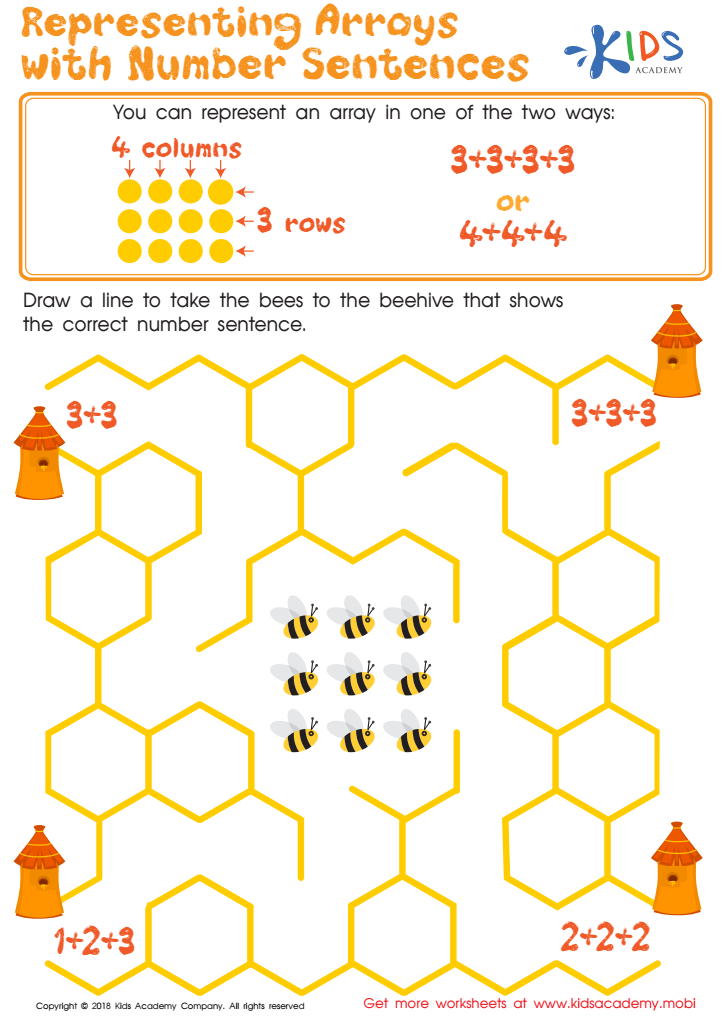
Representing Arrays with Number Sentences Worksheet
An array is a collection of objects, pictures or numbers arranged in rows and columns. Teach your kids two ways to interpret an array with this fun worksheet. Represent it in terms of rows or columns then have your student draw a line to the beehive to discover the correct number sentence.
Representing Arrays with Number Sentences Worksheet
Worksheet
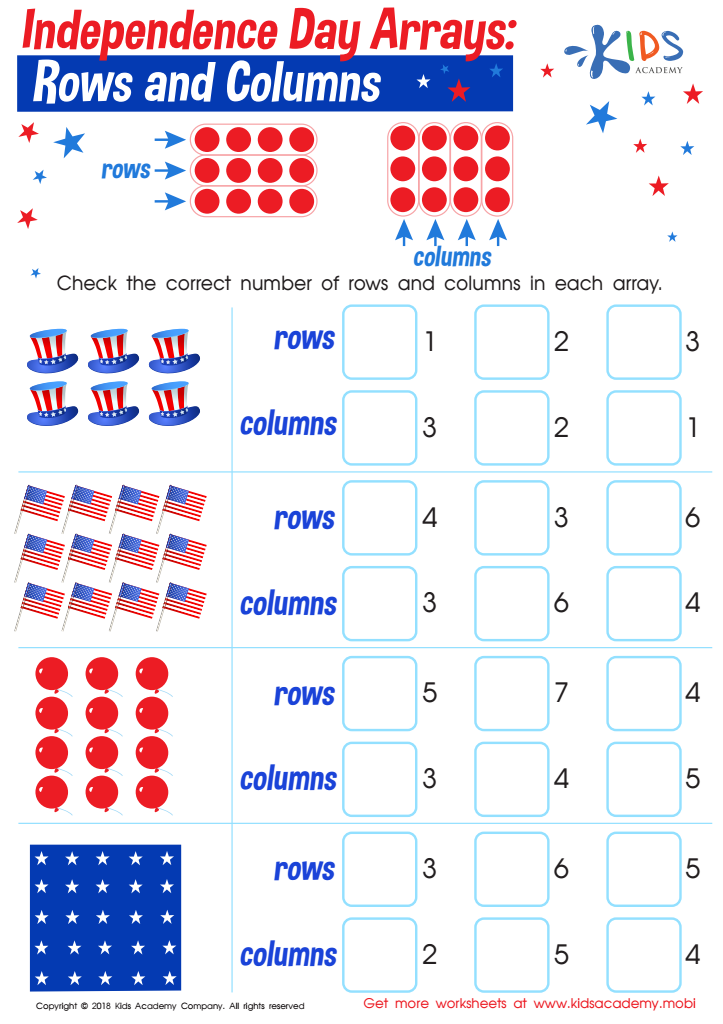
Independence Day Arrays: Rows and Columns Worksheet
Does your child know when Independence Day is? They might love the family picnics and fireworks, or they may not understand the significance of the holiday. After this worksheet, they'll comprehend it better. Help them look at the images and count the number of rows and columns in each array.
Independence Day Arrays: Rows and Columns Worksheet
Worksheet
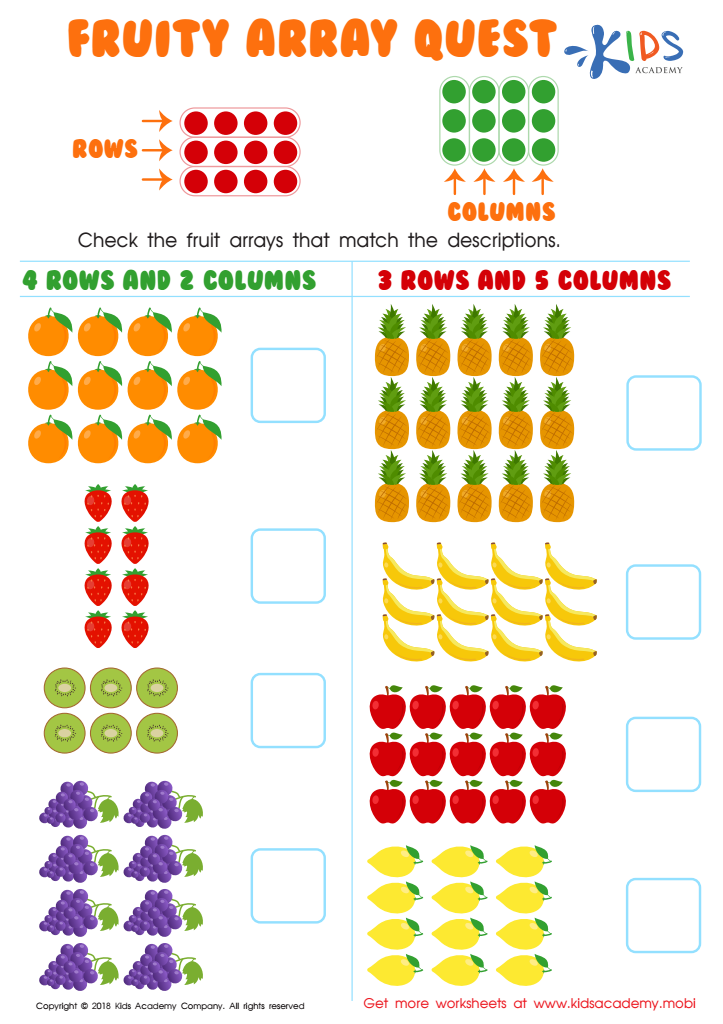
Fruity Array Quest Worksheet
Explain rows (horizontal) and columns (vertical) to your child before starting the worksheet. Show them the picture and the arrows indicating direction. Your child should be able to answer the questions easily after that. Help them match the fruit arrays that match the descriptions.
Fruity Array Quest Worksheet
Worksheet
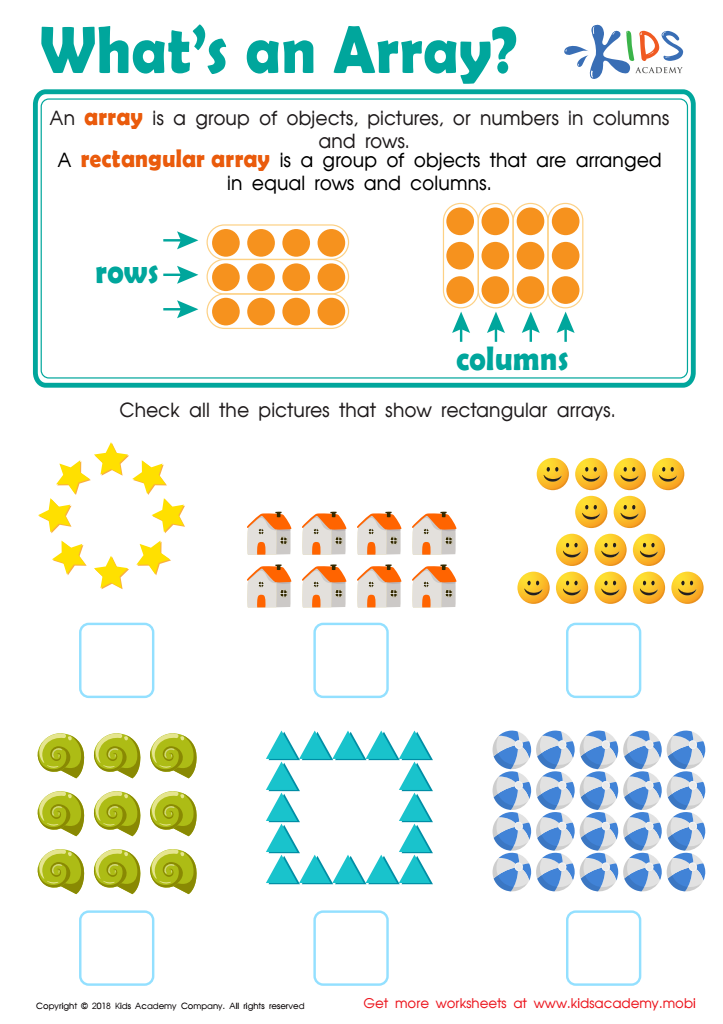
What's an Array? Worksheet
Explain to your child that an array is a group of objects, pictures, or numbers in columns and rows. Show them a rectangular array is a group of objects in equal rows and columns. Guide them to check the pictures in the worksheet to spot any rectangular arrays. Help them remember this concept.
What's an Array? Worksheet
Worksheet
Join Kids Academy for Free
Who is primarily going to use this learning content?








Arrays, though often perceived as a concept more appropriate for older students, can greatly benefit children ages 4-9. Introducing arrays early helps build foundational skills in mathematics, particularly in understanding multiplication, division, and area, and enhances logical thinking and problem-solving abilities.
For young learners, arrays are a visual and structured method to grasp the idea of grouping and repeated addition. For instance, organizing objects into rows and columns allows kids to easily see patterns and relationships between numbers. A 3x4 array, for example, teaches that 3 groups of 4 equal 12, providing a concrete example of basic multiplication. This hands-on experience is crucial as visualizing numeric relationships aids memory retention and comprehension.
Additionally, constructing and deciphering arrays fosters spatial reasoning, which is essential for geometry and recognizing shapes and patterns. Students learn better when abstract concepts are tied to visual, tangible activities.
From a developmental perspective, engaging with arrays also enhances critical thinking, as children decide how to arrange items and rectify errors. These activities make learning interactive and enjoyable, encouraging natural curiosity and a positive attitude towards math.
In summary, by recognizing the educational value of arrays for young students, parents and teachers can establish a robust mathematical foundation, promoting an easier and more engaging learning journey as mathematical concepts evolve in complexity in later years.








