Fine Motor Skills Numbers Worksheets for 4-Year-Olds - Page 3
50 filtered results
-
From - To
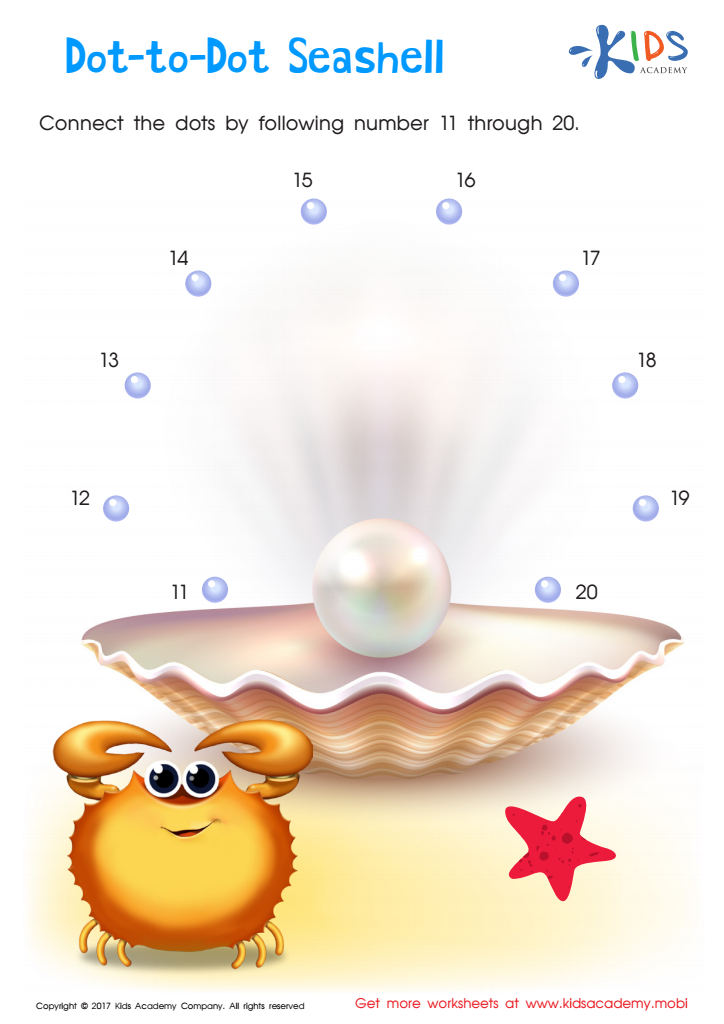
Ordering 11–20: Dot–to–dot Seashell Printable
 Assign to My Students
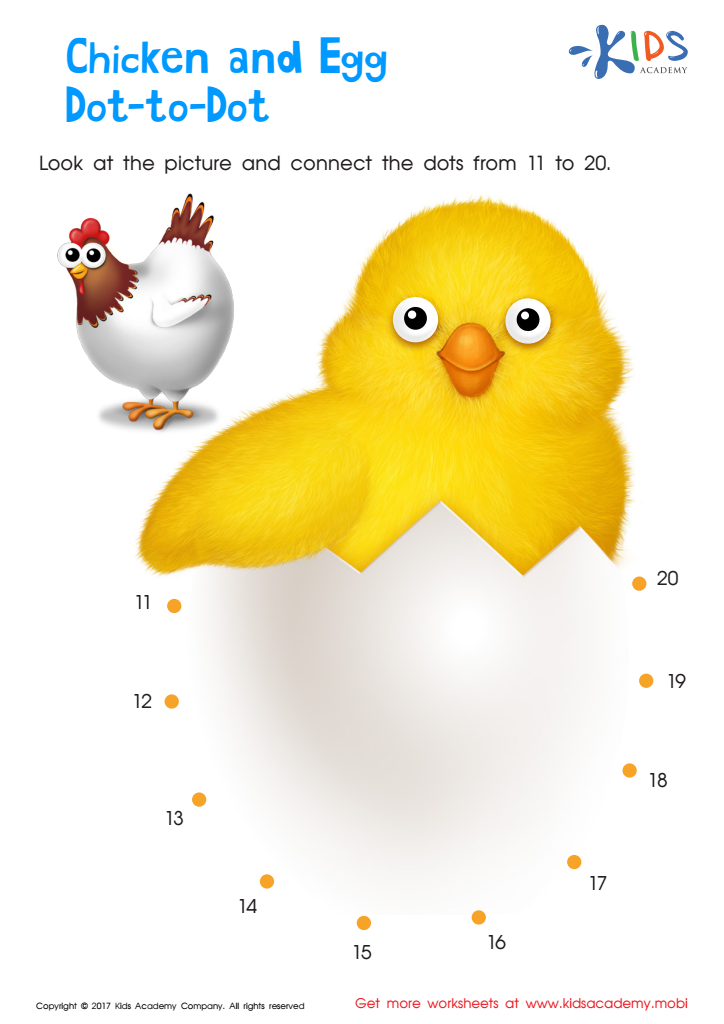
Ordering 11–20: Chicken & Egg Dot–to–dot Worksheet








Fine motor skills involve the use and coordination of small muscles, particularly in the hands and fingers, and are critical for a child's overall development. Parents and teachers should prioritize fine motor skill development for 4-year-olds because these skills are foundational for many everyday tasks and educational activities.
At this age, children are beginning to learn to write, draw, and manipulate objects with greater precision. Fine motor skills facilitate the ability to hold a pencil correctly, form letters and numbers, cut with scissors, and tie shoes. Strong fine motor skills support academic readiness and success; they enable children to be more independent in both educational settings and daily life.
Moreover, fine motor activities, such as sorting beads or placing small blocks, can also enhance cognitive skills, including problem-solving and concentration. As children work to complete tasks requiring fine precision, both sides of the brain are activated, promoting overall brain development and coordination.
Socially, children with well-developed fine motor skills are often more confident in group activities requiring these abilities. Ensuring that these skills are nurtured neither hinders their classroom participation nor alienates them from peer interactions. Therefore, fostering fine motor skills in young children is crucial, ensuring a well-rounded development that supports future academic and social success.








