Consonants Worksheets for Ages 5-7 - Page 2
31 filtered results
-
From - To
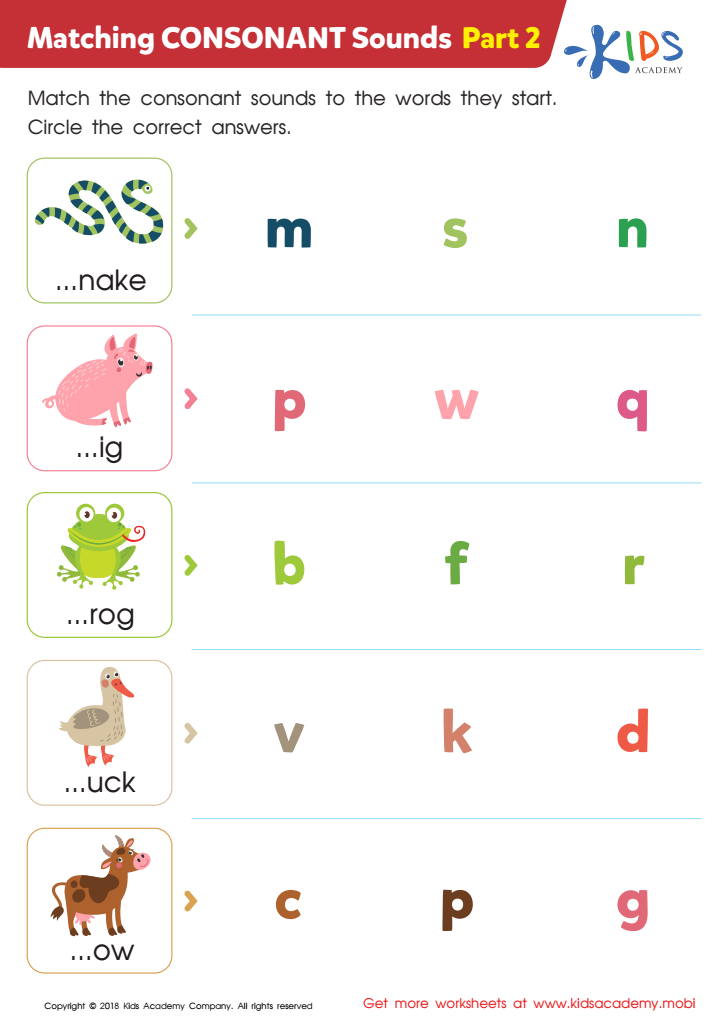
Matching Consonant Sounds: Part 2 Worksheet
 Assign to My Students
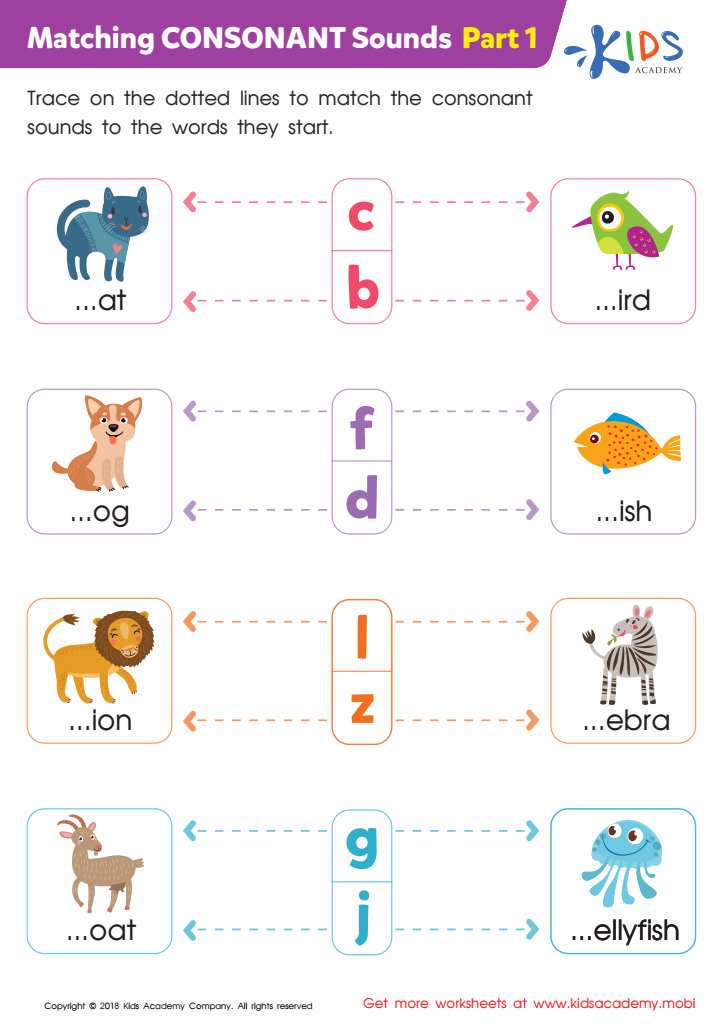
Matching Consonant Sounds: Part 1 Worksheet
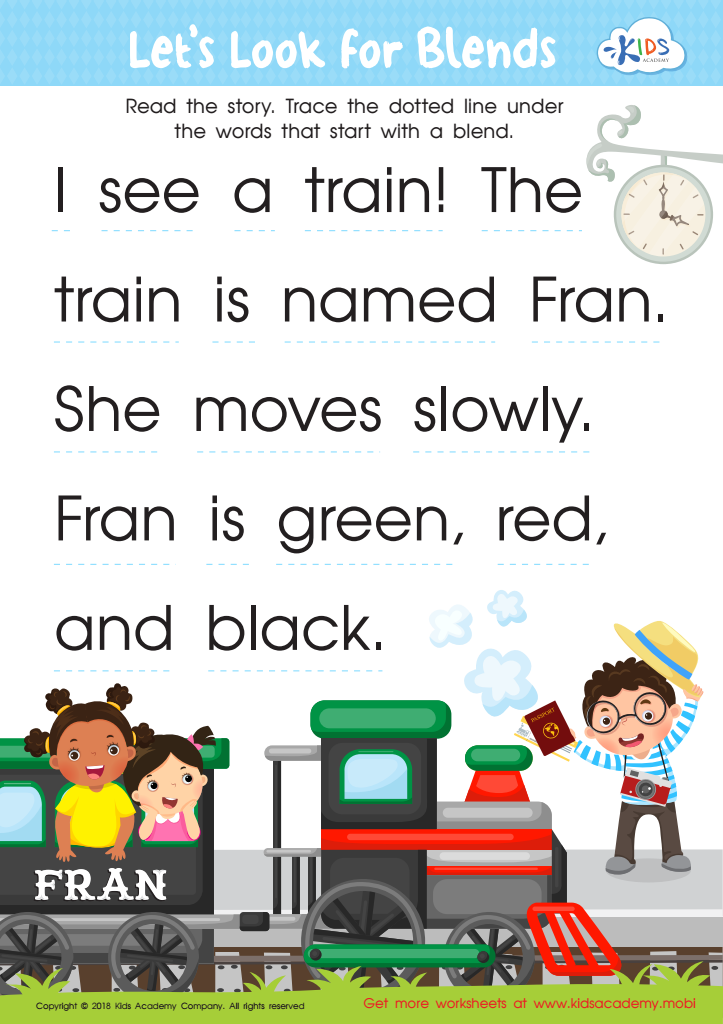
Let's Look for Blends Worksheet
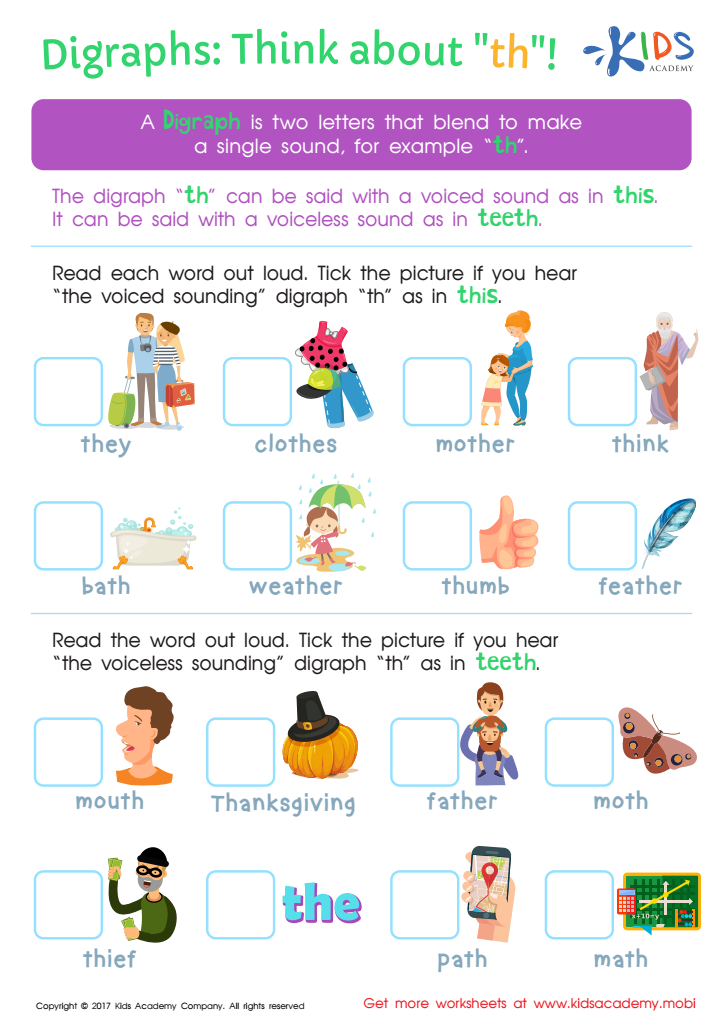
Digraphs: Think About "th" Worksheet
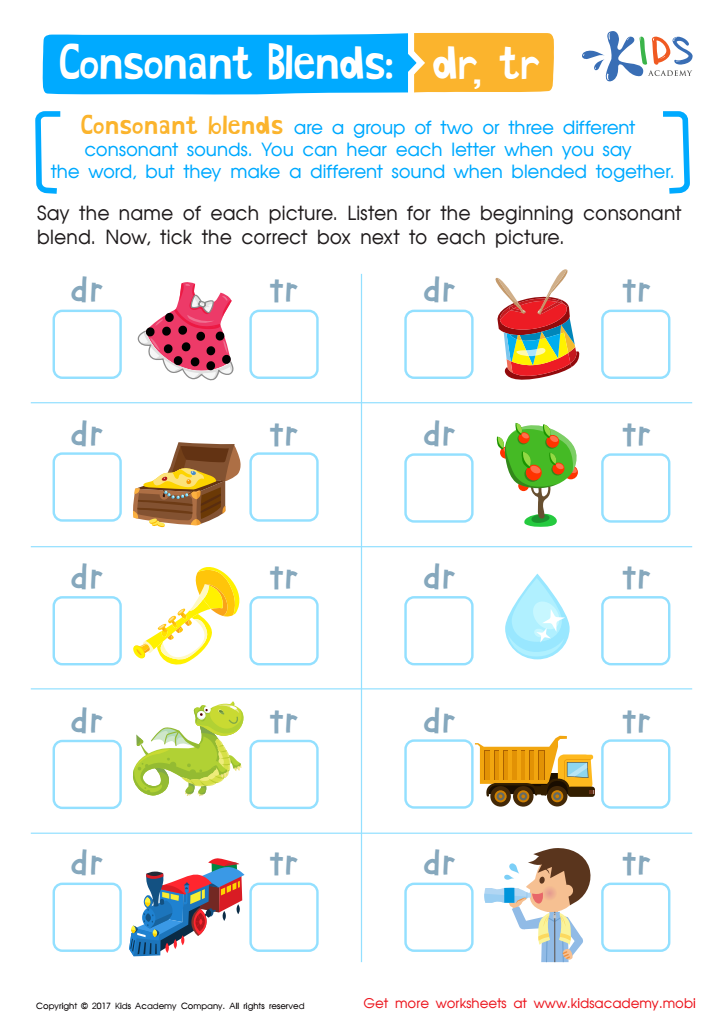
Consonant Blends: "Dr" and "Tr" Printable
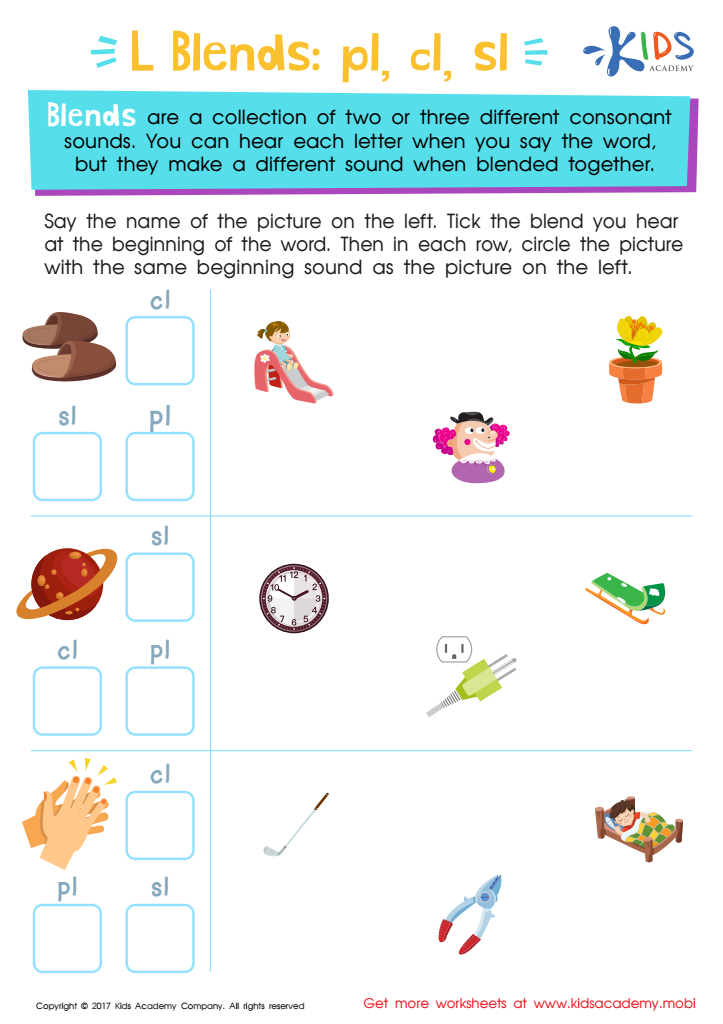
L Blends: "Pl", "Cl" and "Sl" Printable
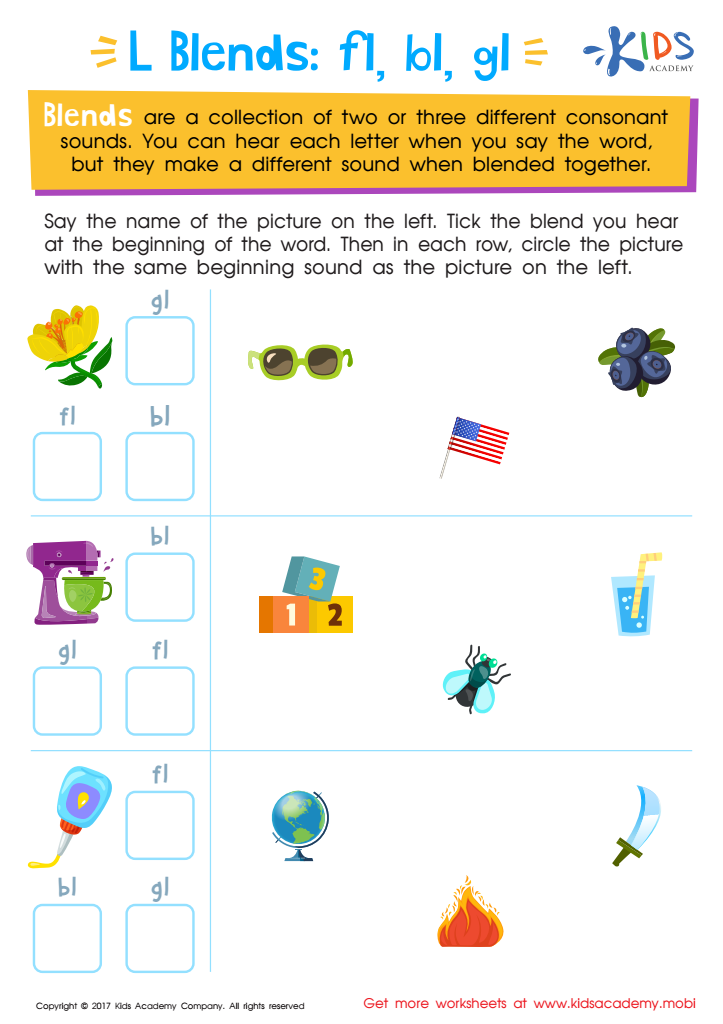
Blending Consonants: "Fl", "Bl" and "Gl" Printable



Consonants are foundational building blocks in early literacy and play a crucial role in a child's reading and writing development, particularly for ages 5-7. During this critical stage, children are not only learning to identify and pronounce consonants but are also beginning to understand their function in forming words.
Understanding consonants helps boost phonemic awareness, which is essential for phonics. This skill allows children to decode and blend sounds effectively, paving the way for reading fluency. Children identify consonant sounds easily—such as /b/ in 'ball' or /m/ in 'man'—and these are necessary for spelling and word formation.
Moreover, early familiarity with consonants can enhance vocabulary acquisition. As children learn the sounds of consonants, they also expand their ability to recognize and use a variety of words, thus improving their communication skills.
Parents and teachers should engage children in games, songs, and activities that include consonant recognition to strengthen these skills. Encouraging playful exploration of consonants fosters a love of language, ultimately helping children become more confident readers and writers. Thus, focusing on consonants lays the groundwork for continuous learning, literacy success, and a lifelong love for reading.







