Chess Worksheets for Ages 5-7 - Page 4
86 filtered results
-
From - To
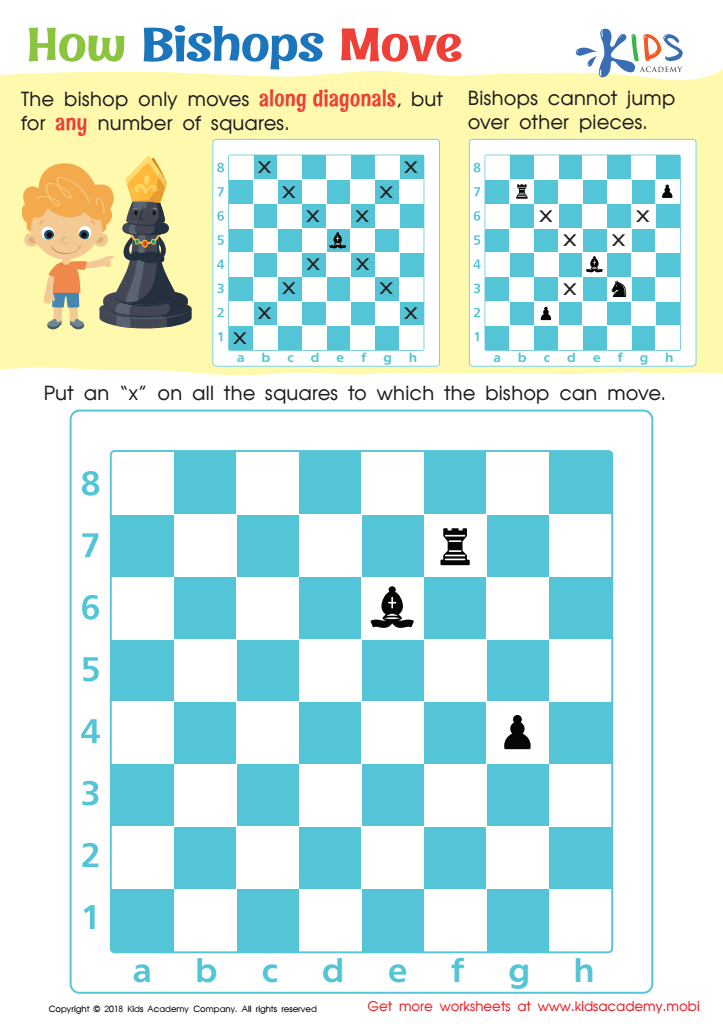
How Bishops Move Worksheet
 Assign to My Students
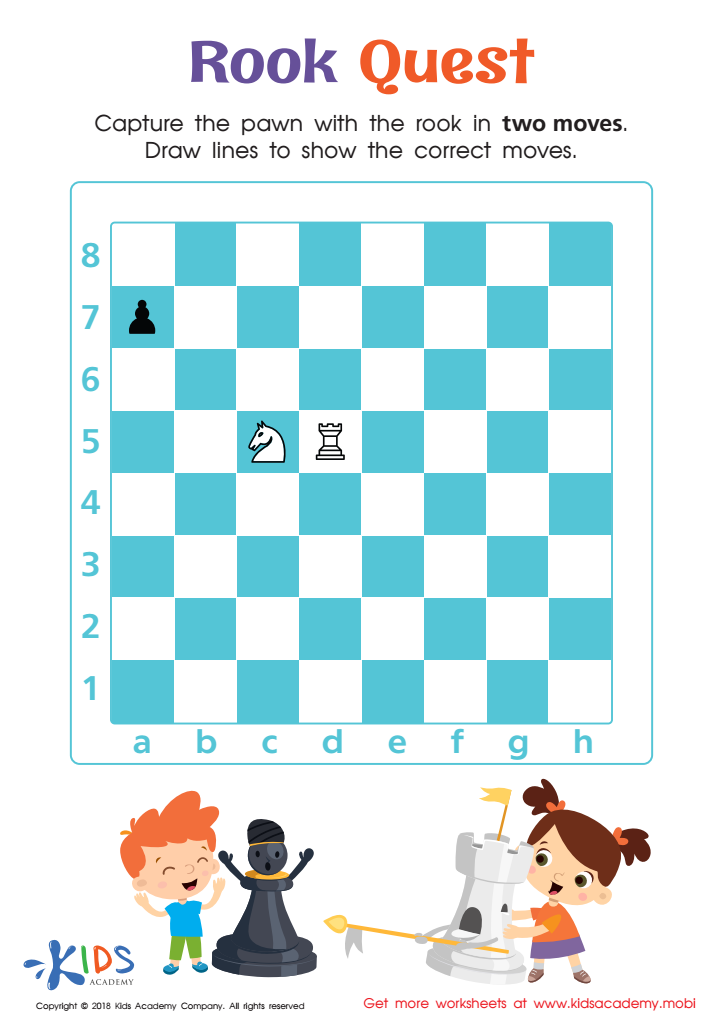
Rook Quest Worksheet
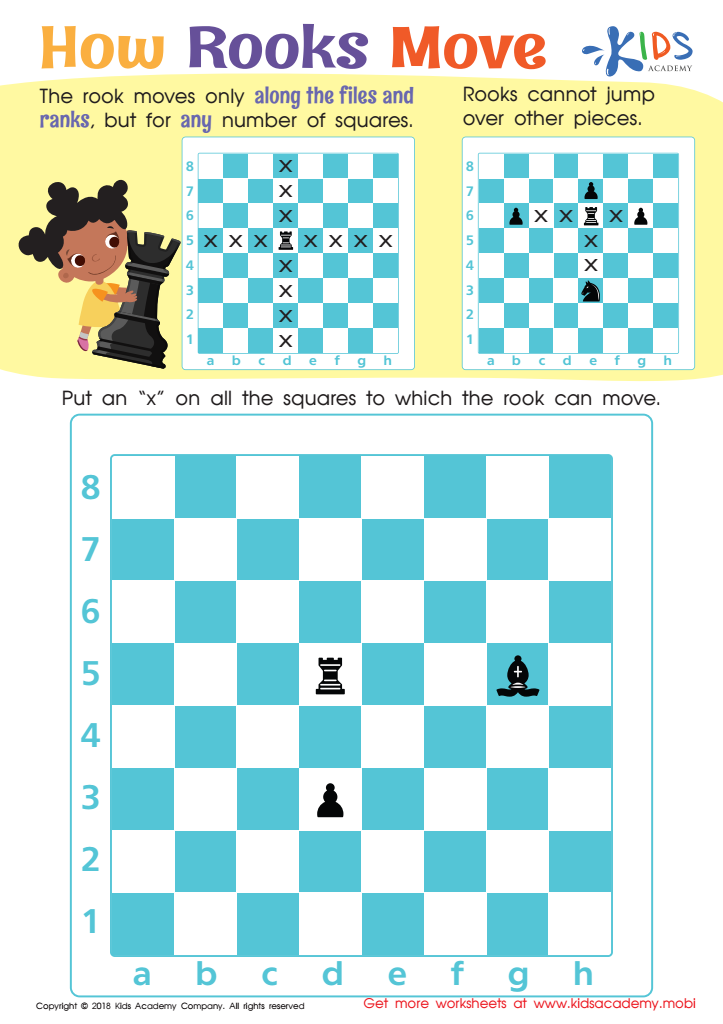
How Rooks Move Worksheet
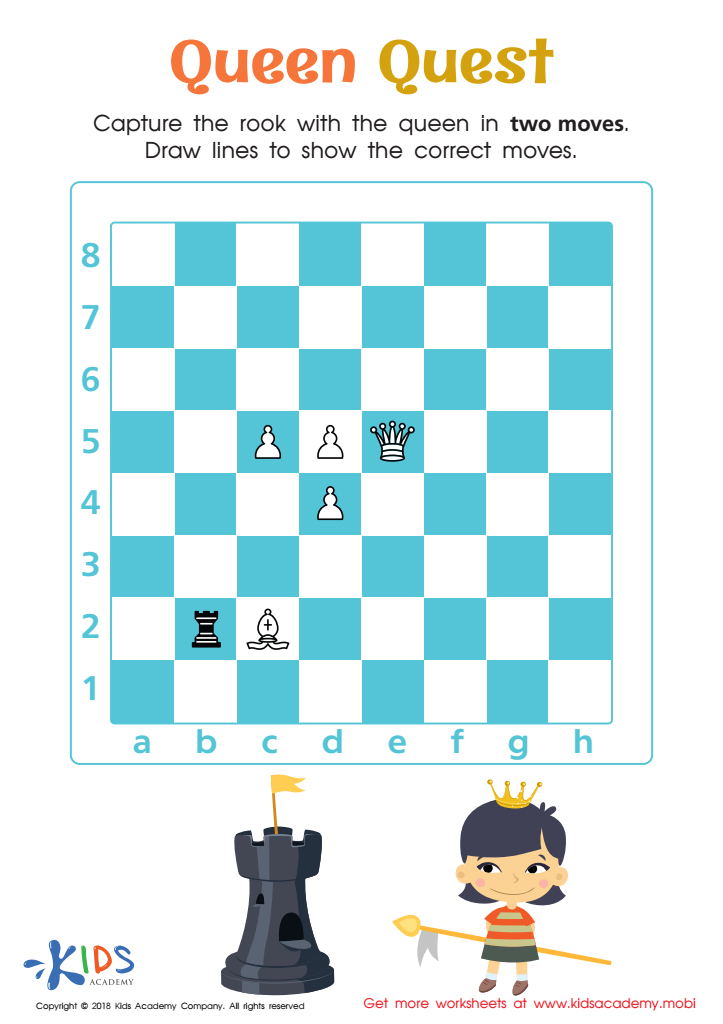
Queen Quest Worksheet
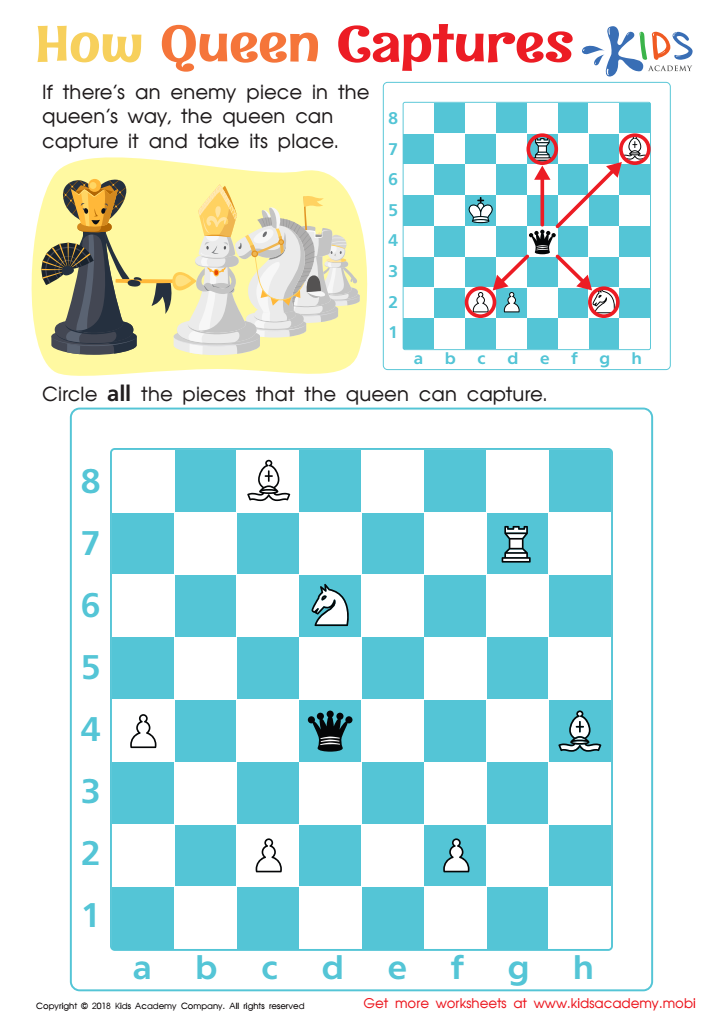
How Queen Captures Worksheet
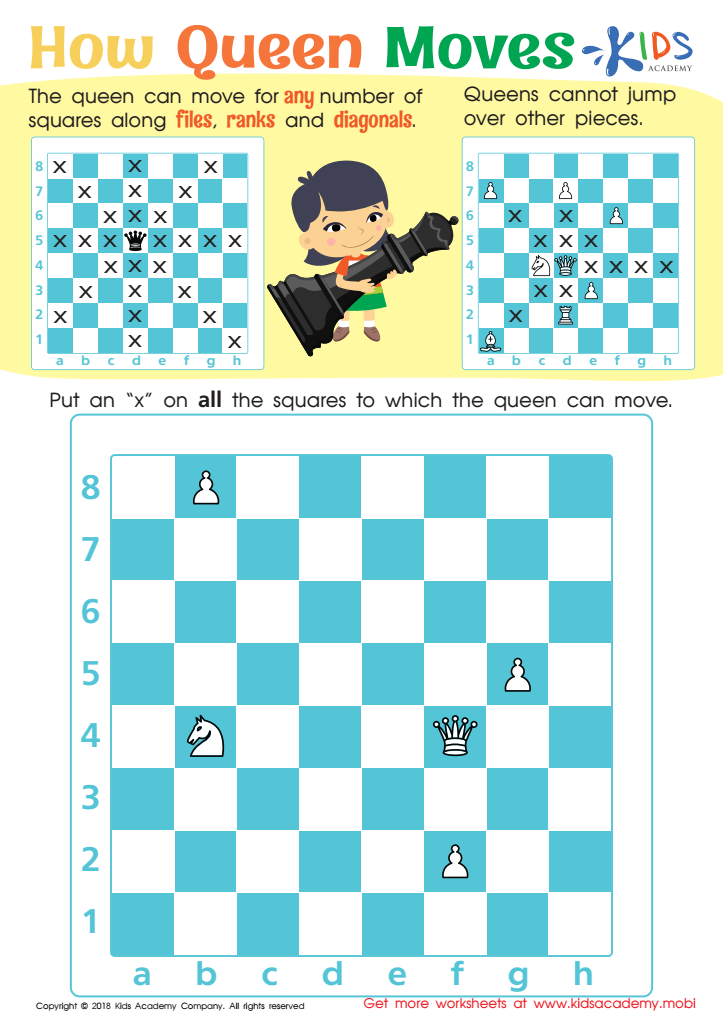
How Queen Moves Worksheet
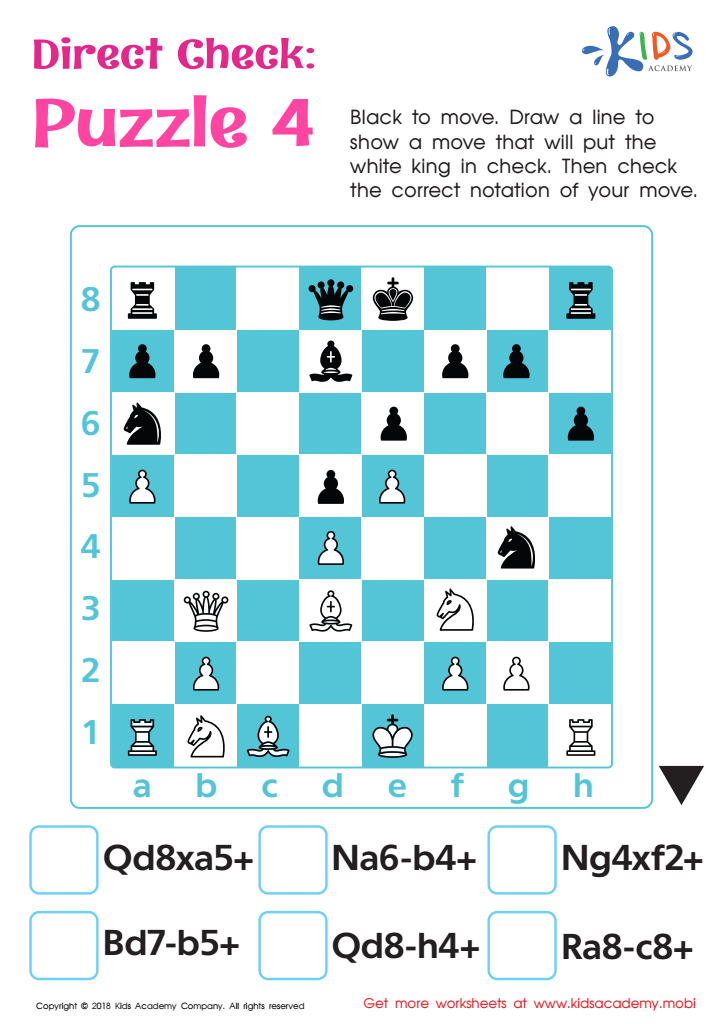
Direct Check: Puzzle 4 Worksheet
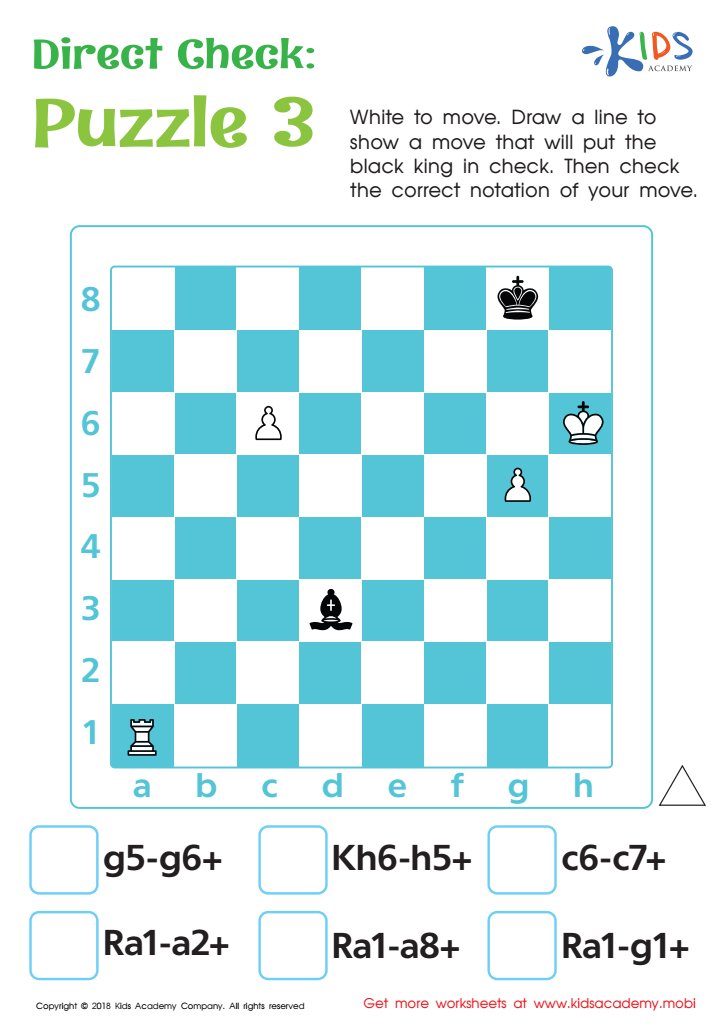
Direct Check: Puzzle 3 Worksheet
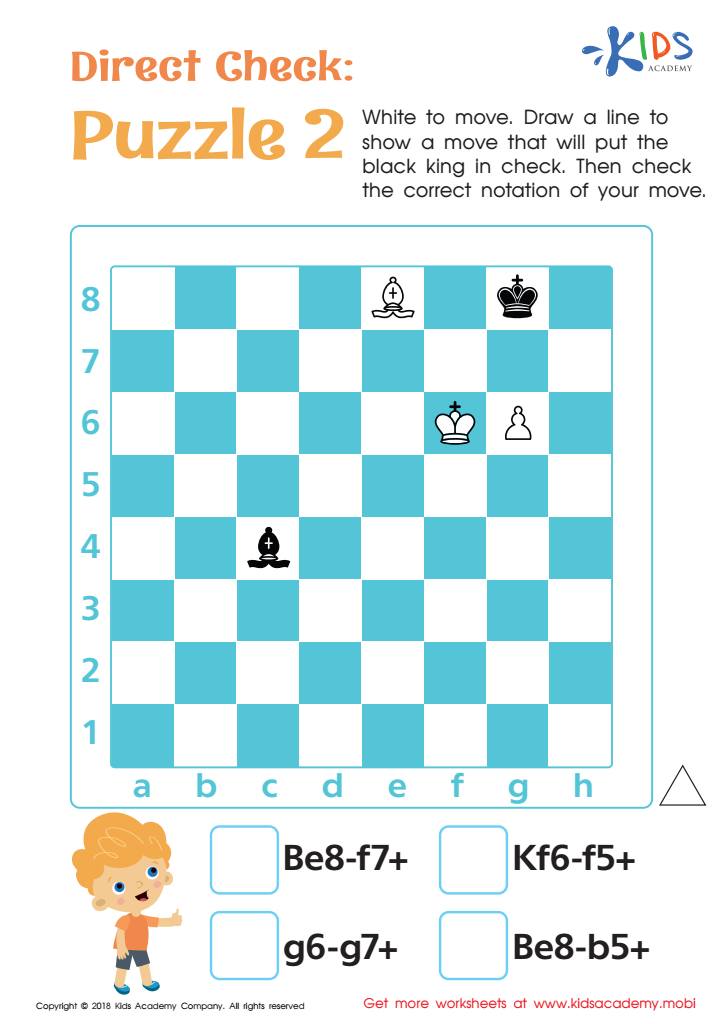
Direct Check: Puzzle 2 Worksheet
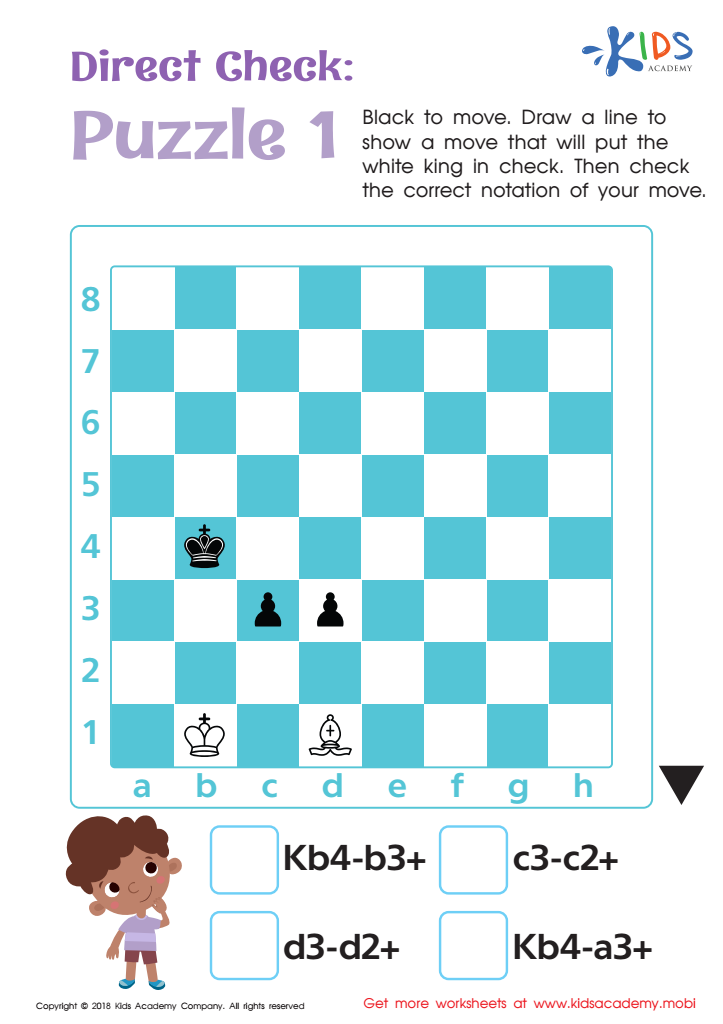
Direct Check: Puzzle 1 Worksheet
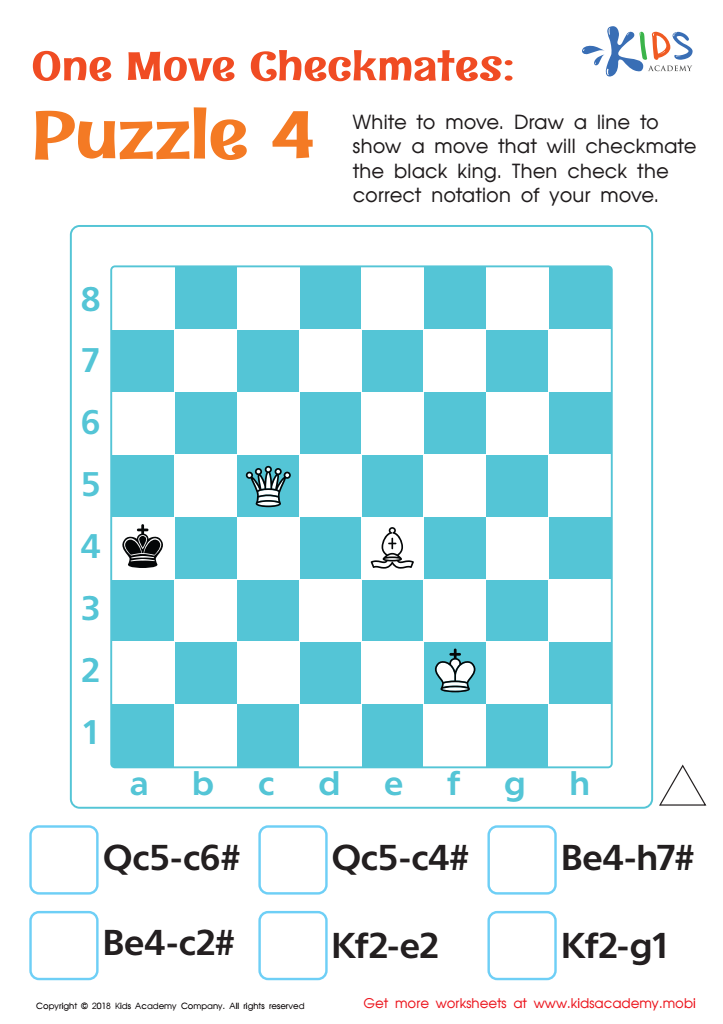
One Move Checkmates: Puzzle 4 Worksheet
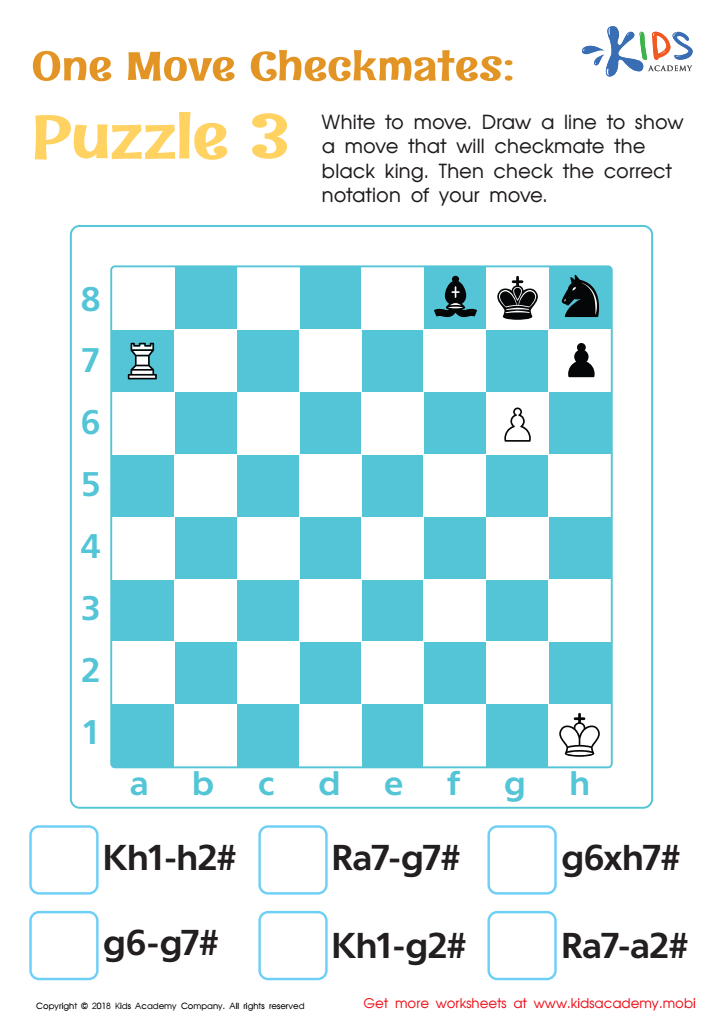
One Move Checkmates: Puzzle 3 Worksheet
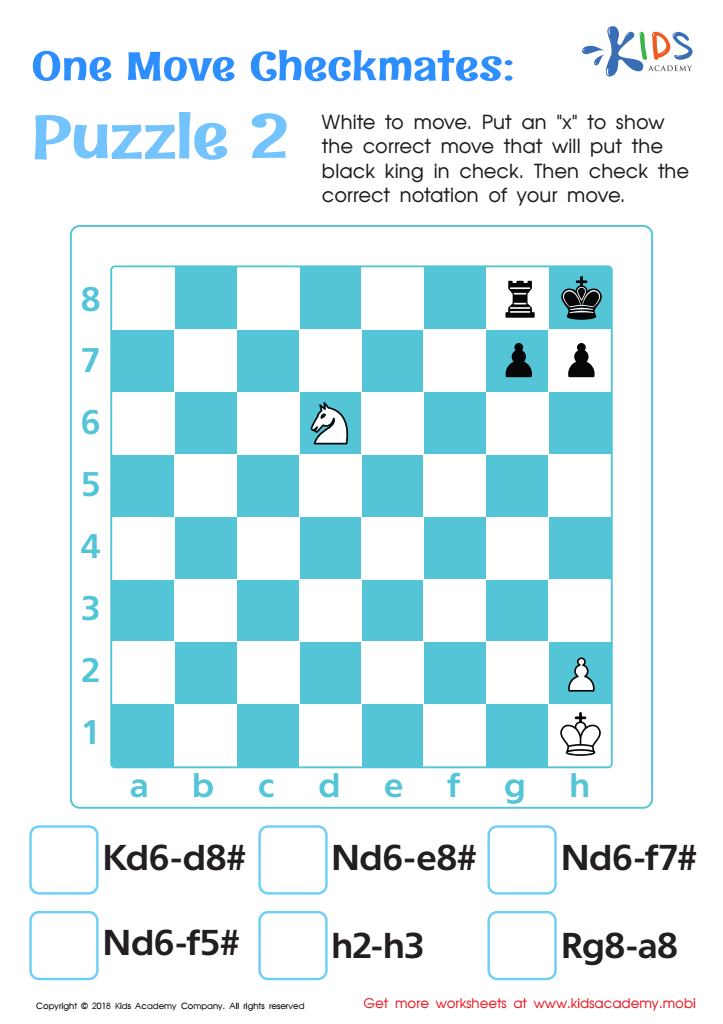
One Move Checkmates: Puzzle 2 Worksheet
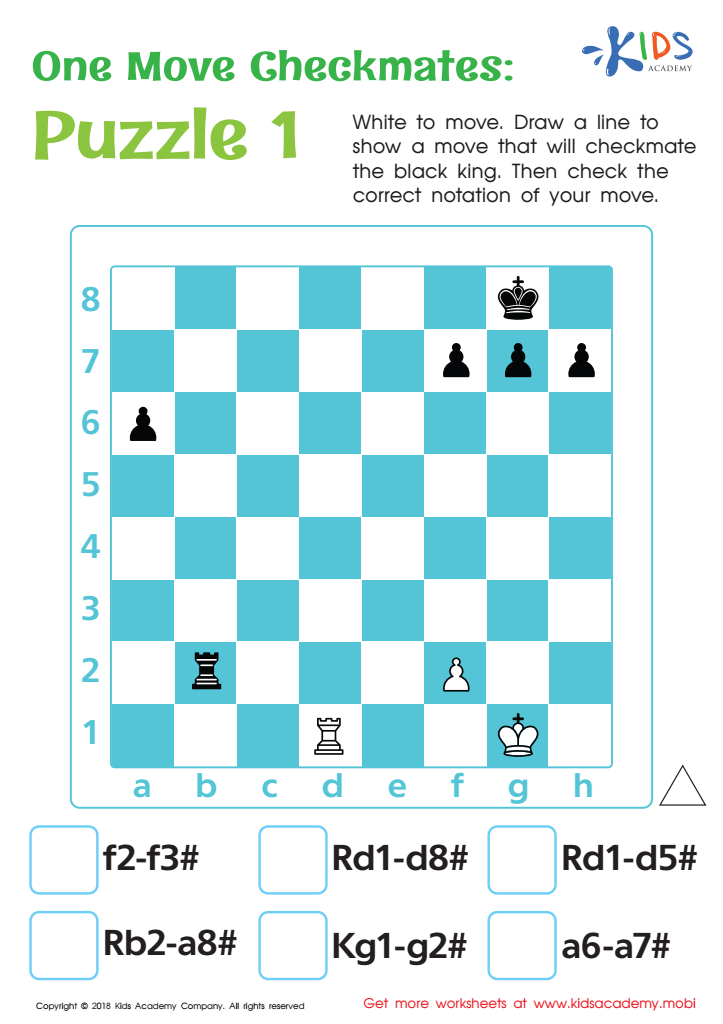
One Move Checkmates: Puzzle 1 Worksheet



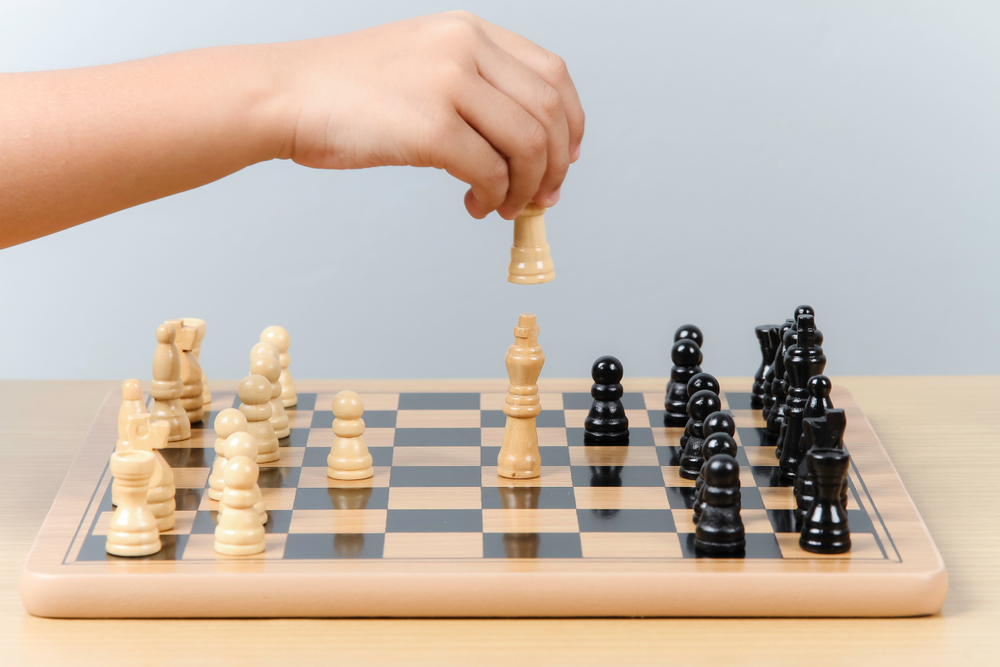



Parents and teachers should care about introducing chess to children ages 5-7 because it provides numerous cognitive, social, and emotional benefits. Chess hones critical thinking and problem-solving skills by encouraging kids to think ahead, consider consequences, and develop strategic planning. These foundational skills are transferable, enhancing their ability to tackle academic challenges in subjects like math and science.
Additionally, chess fosters attention span and concentration. Young children naturally have short attention spans, but playing chess requires sitting still, focusing on the board, and engaging in prolonged thought. This practice helps improve their capacity to concentrate on tasks at hand.
Socially, chess serves as an excellent tool for teaching patience, turn-taking, and good sportsmanship. Winning and losing gracefully teaches children valuable lessons in resilience and respect for others. Through chess, they can also develop meaningful friendships with peers who share similar interests.
Moreover, the game enriches children's cultural experiences by making them aware of global traditions and fostering a sense of global citizenship. Its universality can spur interest in learning about different cultures and histories.
In summary, chess is a multifaceted developmental tool that nurtures intellectual growth, emotional maturity, and social skills, making it invaluable for young children at critical stages of their development.