Filters

80 filtered results

Clear all filters
Favorites
With answer key
Interactive

80 filtered results

Difficulty Level

Grade


Subject

    Check out this FREE Trial Lesson on Matching for age 5-7!

    Classifying Objects and Count the Number of Objects in Each Category CCSS.Math.Content

    Favorites
    With answer key
    Interactive
    • 5-7
    • Interactive
    • Matching
    Preschool Matching Worksheet
    Preschool Matching Worksheet

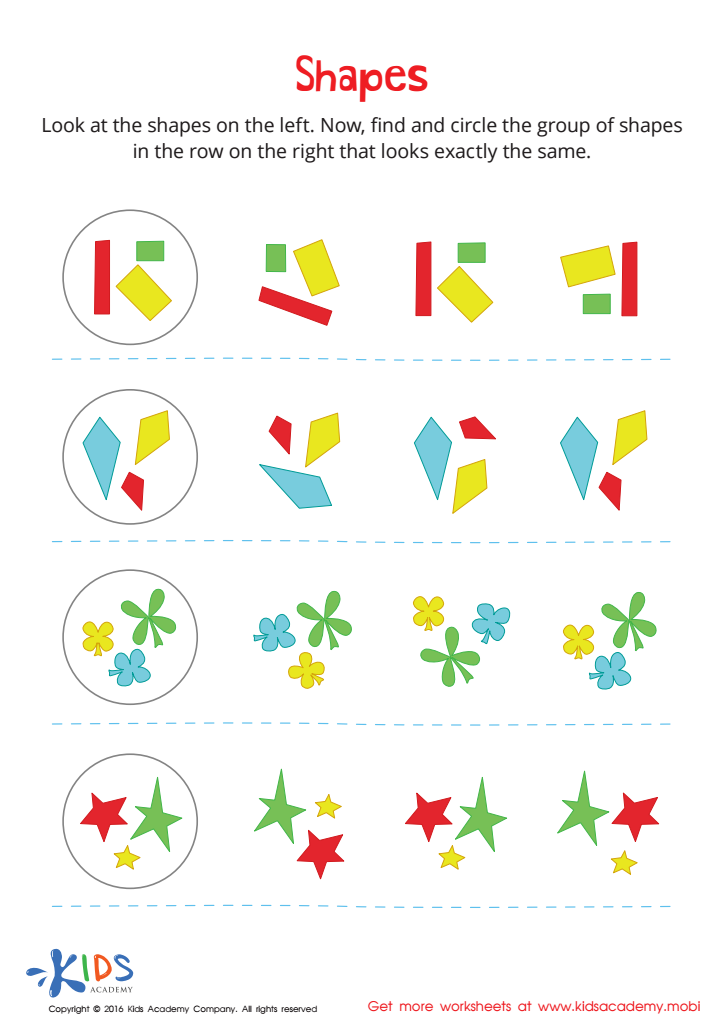
    Shapes Worksheet

    This fun worksheet will challenge your child to recognize tricky patterns, sort through similar ones, and create strategies to get the right answer. It'll also help them to strengthen problem-solving skills and build confidence. With more challenging tasks, your child will be ready to tackle higher level math and sequencing skills.
    Shapes Worksheet
    Worksheet
    Pattern Recognition Worksheet
    Pattern Recognition Worksheet

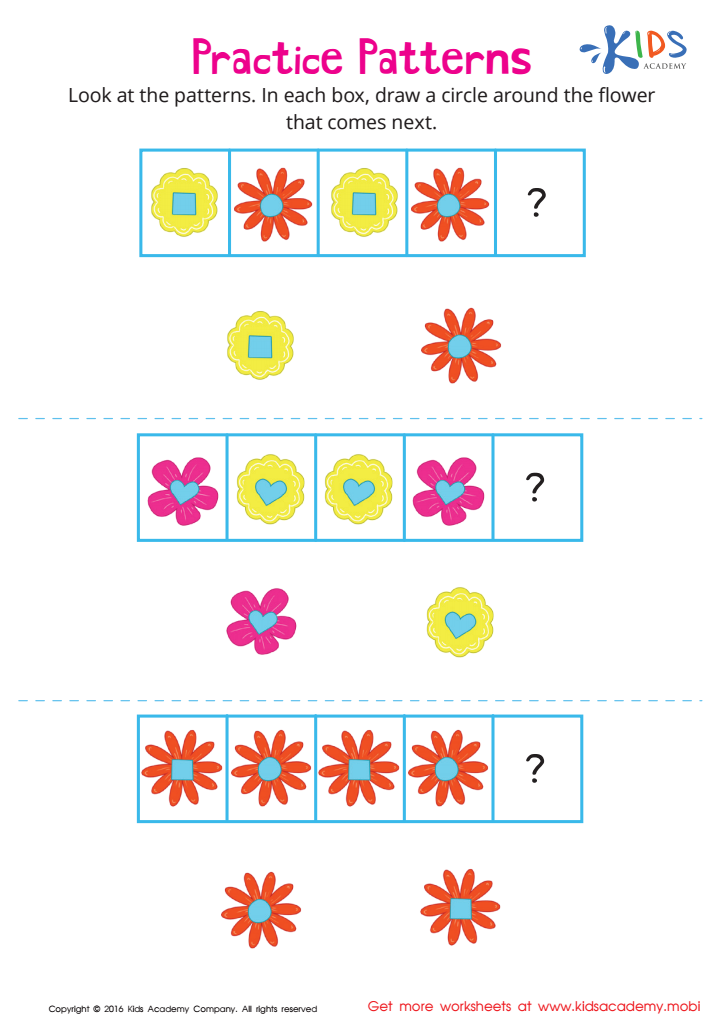
    Practice Patterns Worksheet

    Practice Patterns Worksheet
    Worksheet
    Baby Animals Matching Worksheet
    Baby Animals Matching Worksheet

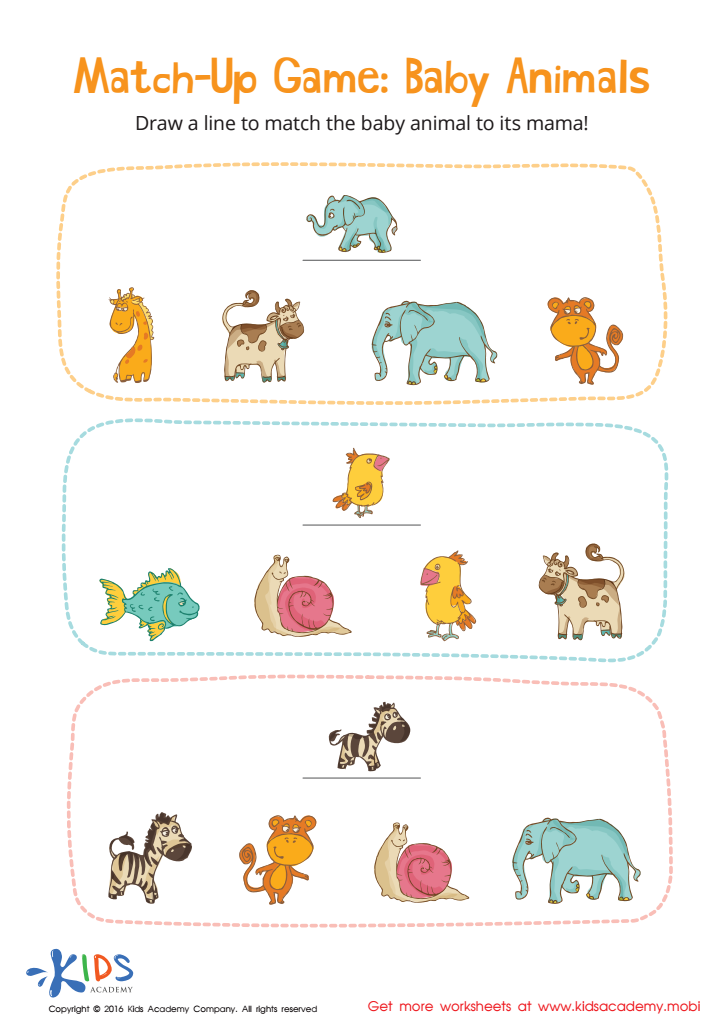
    Baby Animals Match-Up Worksheet

    Help baby animals find their mummies by using this fun matching worksheet. Kids can practice logical reasoning skills while recognizing similar pictures and learning about animals. Extend their knowledge by having them identify each cute animal!
    Baby Animals Match-Up Worksheet
    Worksheet
    Preschool Matching Numbers
    Preschool Matching Numbers

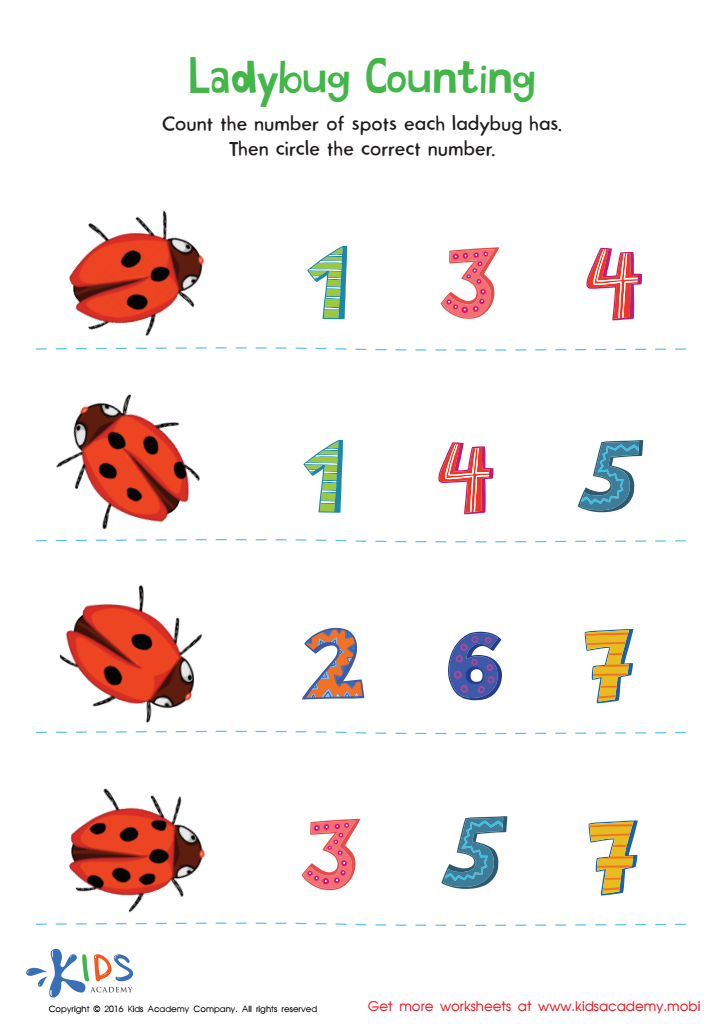
    Ladybug Counting Worksheet

    Ladybug Counting Worksheet
    Worksheet
    Free Math Worksheets for Kids
    Free Math Worksheets for Kids

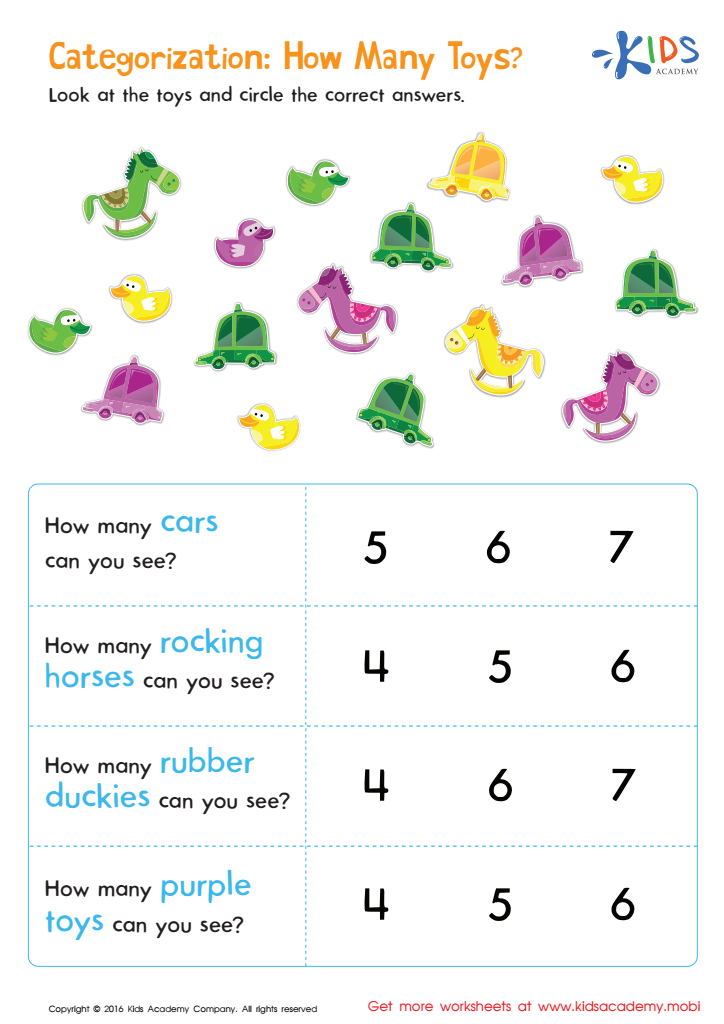
    Classifying Toys by Type and Color Sorting Worksheet
    Kids Academy offers free math worksheets to help practice counting, categorization & recognition skills. Kids will enjoy counting by color & type while strengthening problem-solving & literacy skills.
    Classifying Toys by Type and Color Sorting Worksheet
    Worksheet
    Kindergarten Sorting Worksheet
    Kindergarten Sorting Worksheet

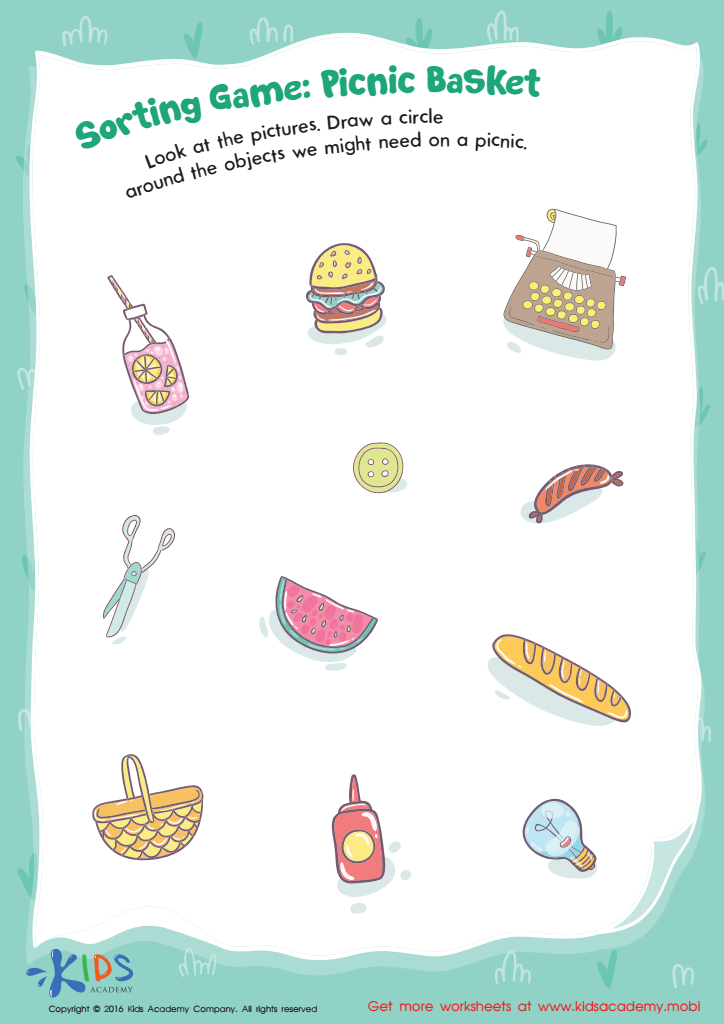
    Picnic Basket Sorting Worksheet
    Make picnic planning fun with this kindergarten sorting worksheet! Your child will sort everyday objects to find picnic supplies, and then use the worksheet to plan a real or pretend picnic. Extend the learning by discussing the event and its connection to the worksheet. Print out the other worksheets to sharpen sorting and classifying skills in an engaging way!
    Picnic Basket Sorting Worksheet
    Worksheet
    Sorting Worksheets for Kids
    Sorting Worksheets for Kids

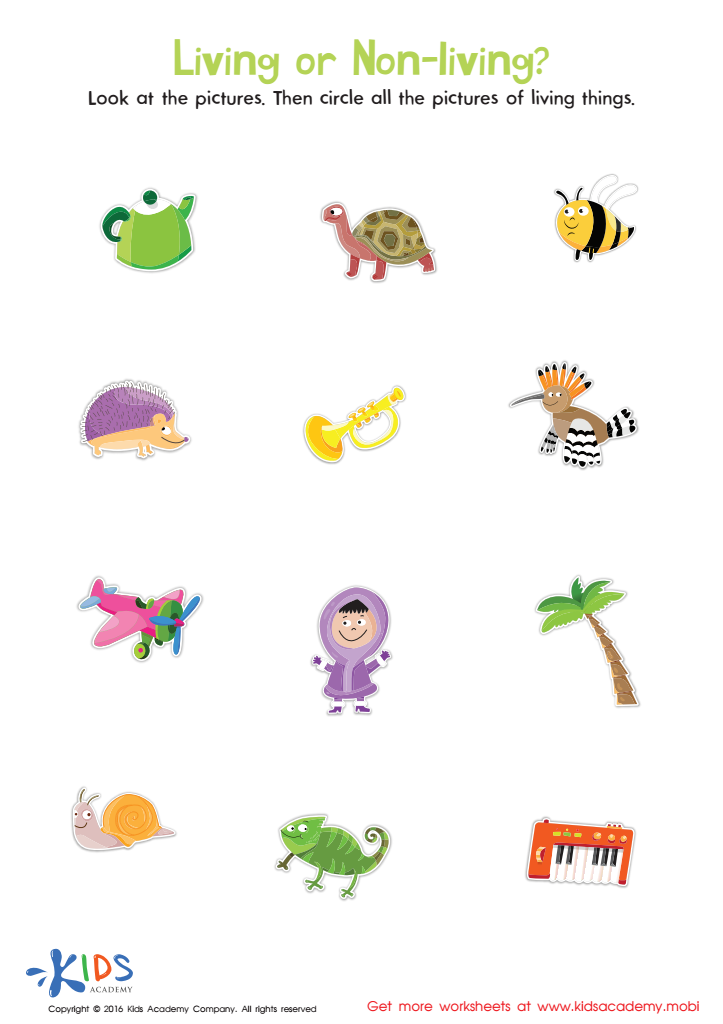
    Identifying Living and Non–living Things Sorting Worksheet
    Help your child sort living and non-living objects with this cute worksheet. Kids will use problem-solving skills to recognize and categorize the images they see. Matching worksheets available to help their skills soar.
    Identifying Living and Non–living Things Sorting Worksheet
    Worksheet
    Silhouettes - shapes worksheet
    Silhouettes - shapes worksheet

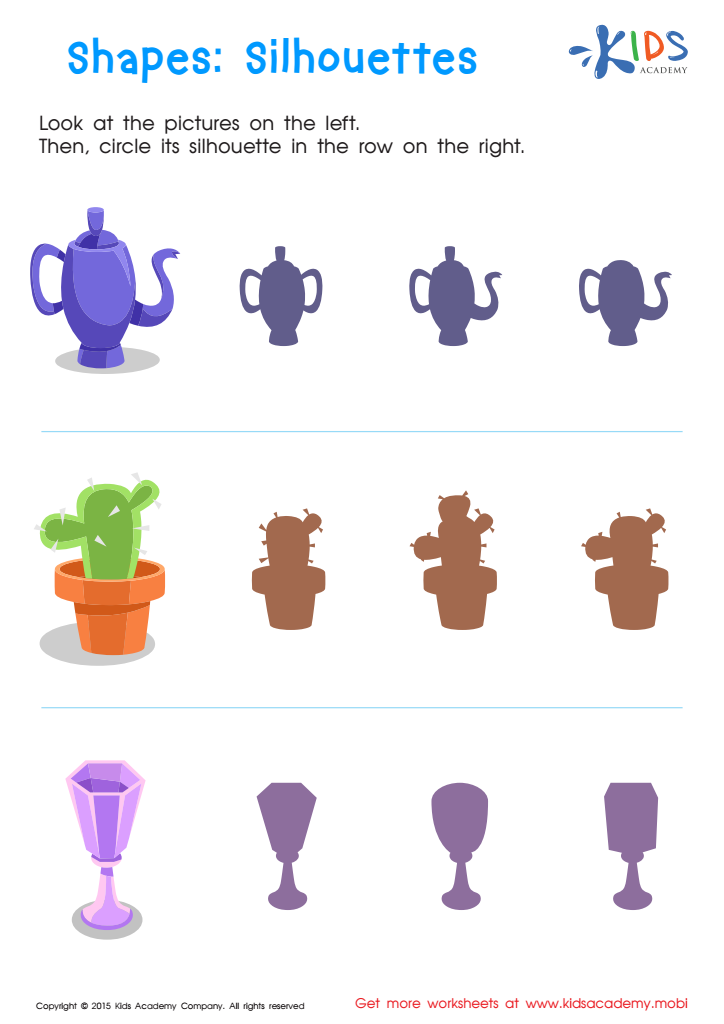
    Silhouettes – Shapes Worksheet

    Kids can have fun while learning to compare sizes with this silhouettes shapes worksheet! Matching pictures to silhouettes helps them build early math skills, while enjoying the activity!
    Silhouettes – Shapes Worksheet

    Worksheet


    ... 3 4

    Matching activities are foundational for young children aged 5-7 as they play a critical role in developing crucial cognitive, motor, and social skills. At this developmental stage, children's brains are highly receptive to pattern recognition, which is fundamental for reading, math, and problem-solving abilities. Matching exercises stimulate memory recall, enhance concentration, and improve attention to detail as children discern similarities and differences among pictures, shapes, colors, or numbers.

    For instance, matching games enhance visual discrimination, an essential pre-reading skill that helps children identify letters and words later on. Additionally, dealing with physical objects during matching activities hones fine motor skills by encouraging control and coordination necessary for tasks like writing and cutting.

    Socially, matching exercises often involve cooperative play where children take turns or work together, thereby learning valuable interpersonal skills like sharing and communicating. This nurtures an environment of collaboration and support among peers, which is important for emotional development.

    Lastly, matching fosters a sense of achievement and boosts self-esteem in young learners. Successfully completing a matching task gives children confidence, encouraging a positive attitude toward learning and persistence in challenging situations. Thus, parents and teachers should value and incorporate matching activities to support the holistic development of children in this age group.