Filters

223 filtered results

Clear all filters
Favorites
With answer key
Interactive

223 filtered results

Difficulty Level

Grade


Check out this FREE Trial Lesson on Building Vocabulary for age 6-8!

Science Topic

Favorites
With answer key
Interactive
  • 6-8
  • Interactive
  • Building Vocabulary
Spell the Word Worksheet

Spell the Word Worksheet

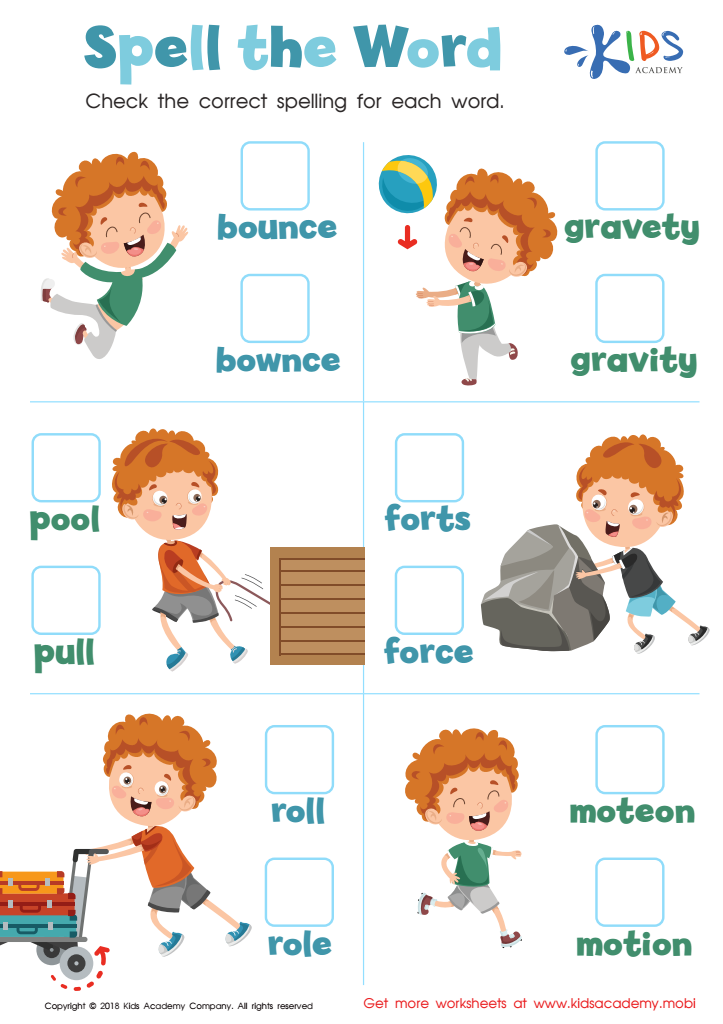
Spelling can be fun for your students with this colorful worksheet. Ask them to identify what the boy is doing in each picture, then check the correct spelling of the words. Let them practice and have fun while learning!
Spell the Word Worksheet
Worksheet
Forces Worksheet
Forces Worksheet

Forces Worksheet

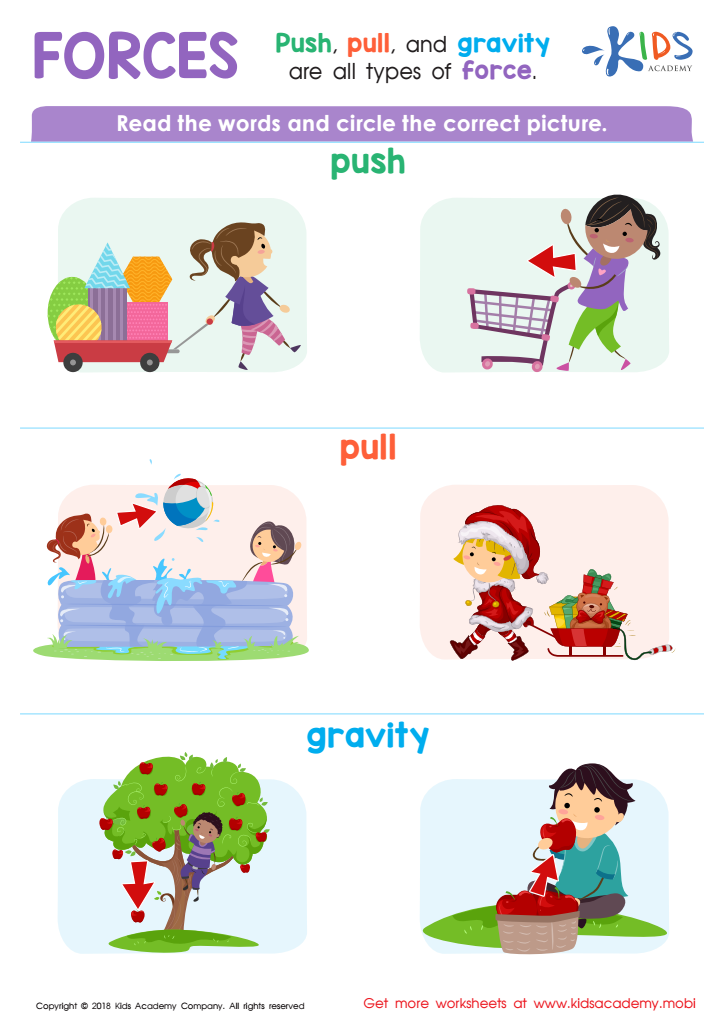
Teach your child about forces! Ask them to identify which of six pictures shows push, pull or gravity. Read the words beside each picture and have them circle the correct one. It's a great way to learn about forces; push, pull and gravity!
Forces Worksheet
Worksheet
Nouns on the Farm Worksheet

Nouns on the Farm Worksheet

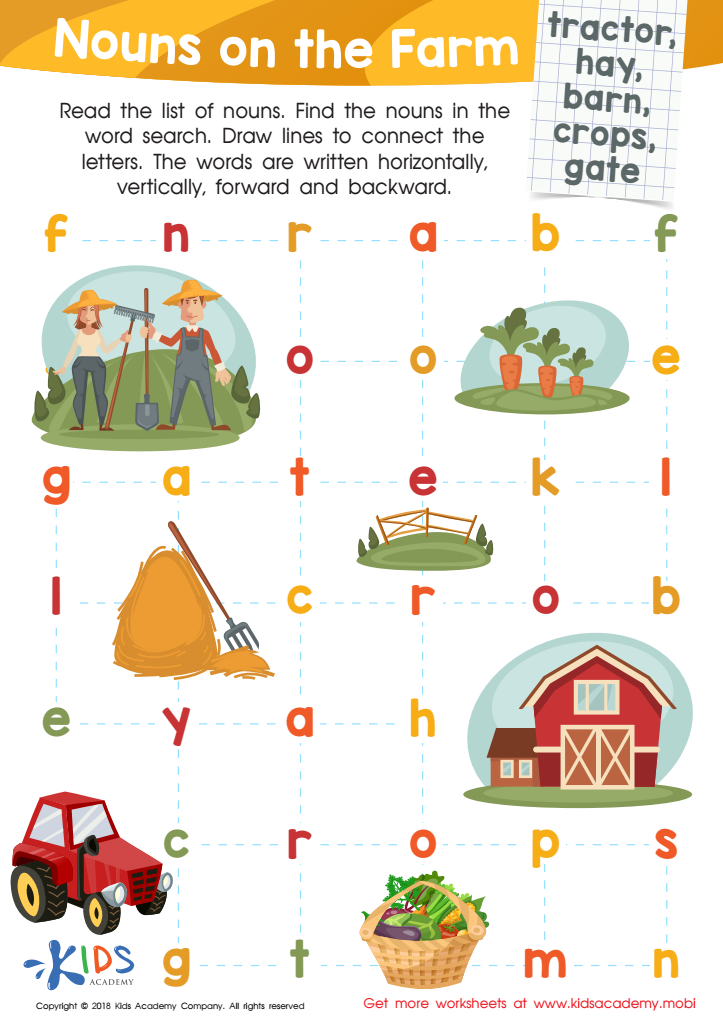
Help your child learn nouns with this worksheet: Read the list to them and have them find the nouns in the word search. Draw lines to connect the letters, and explain the words can be found horizontally, vertically, forward, and backward.
Nouns on the Farm Worksheet
Worksheet
What Are Solids? Worksheet

What Are Solids? Worksheet

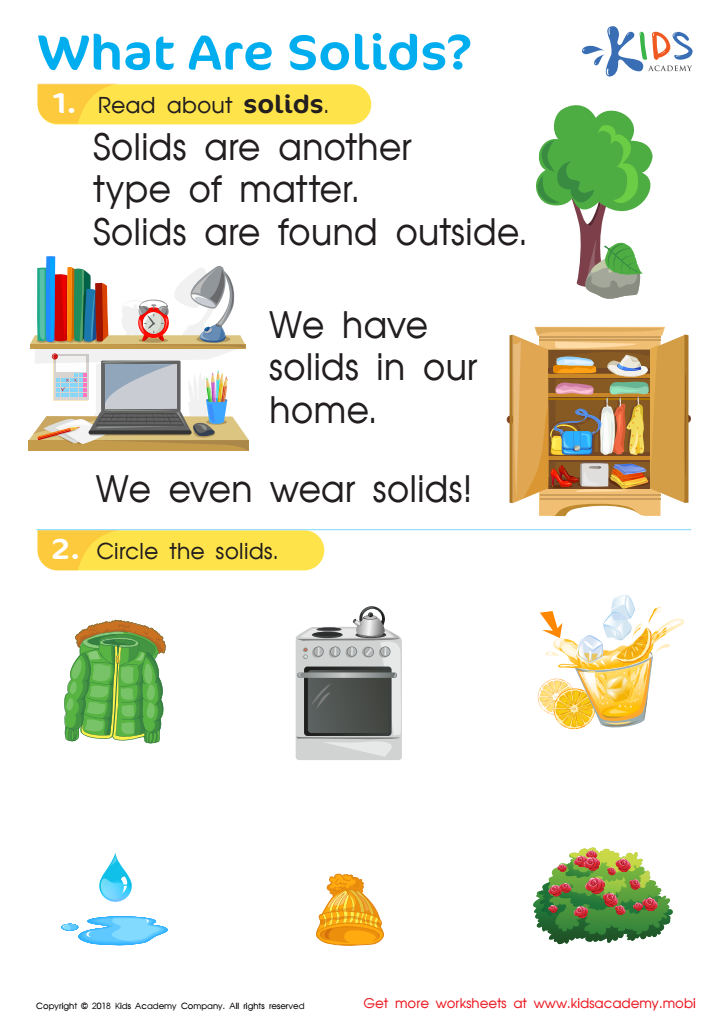
Help your kids understand matter's three forms - solid, liquid, and gas - with examples. Ask them to give their own and where to find them. Then, read and discuss the worksheet's facts about solids. Afterward, have them circle the solids among the provided objects.
What Are Solids? Worksheet
Worksheet
Dinosaurs Worksheet
Dinosaurs Worksheet

Dinosaurs Worksheet

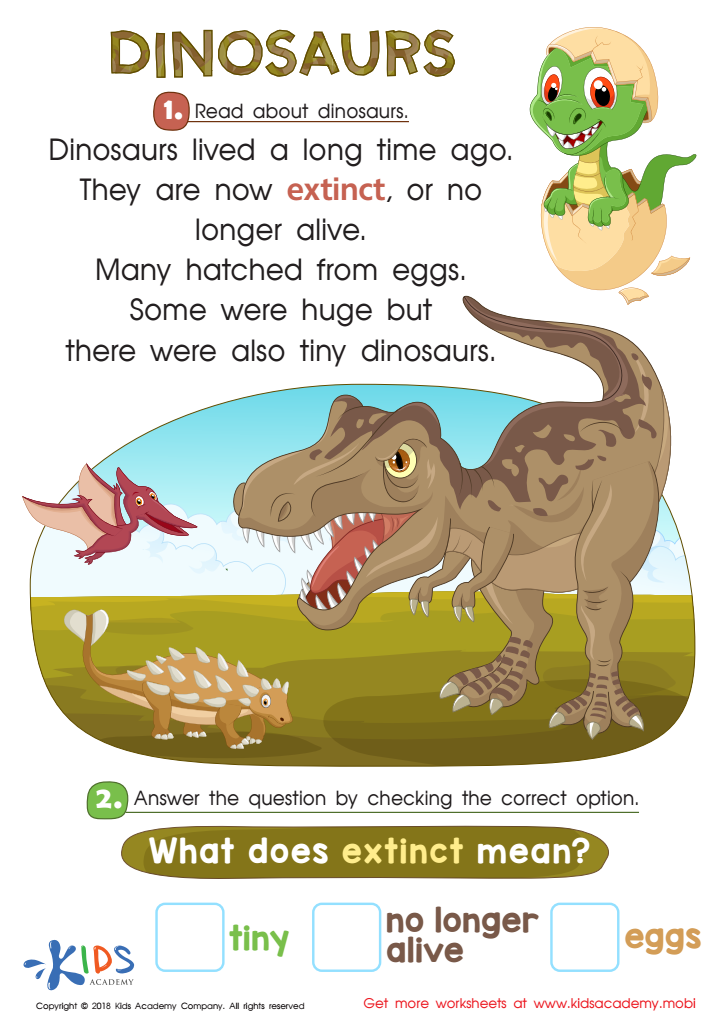
Kids are often fascinated by dinosaurs, creatures that roamed the Earth before man. Sadly, they are now extinct. To learn more, read facts on this worksheet to your kids and help them answer the question at the end by selecting the correct option.
Dinosaurs Worksheet
Worksheet
Matter Word Search Worksheet

Matter Word Search Worksheet

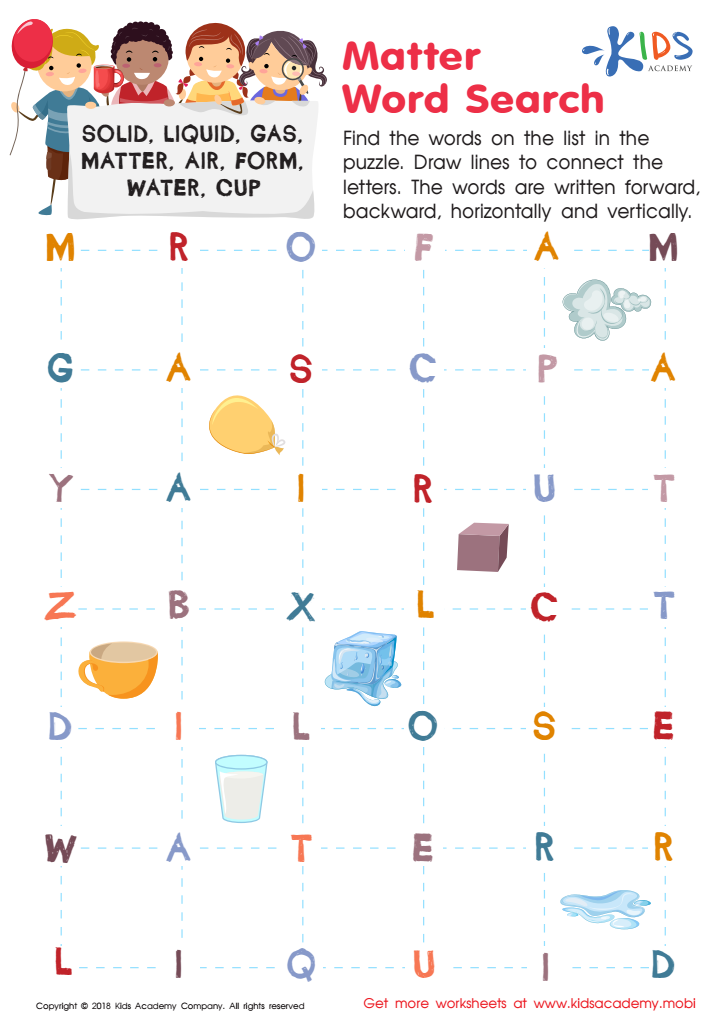
Matter is anything with weight and taking up space. It exists in three forms: solid, gas and liquid. Examples of these are ice, air and water. Help kids find the words in the puzzle, which are written forward, backward, horizontally and vertically. Connect the letters!
Matter Word Search Worksheet
Worksheet
Let's Go Shopping for Plural Nouns! Worksheet

Let's Go Shopping for Plural Nouns! Worksheet

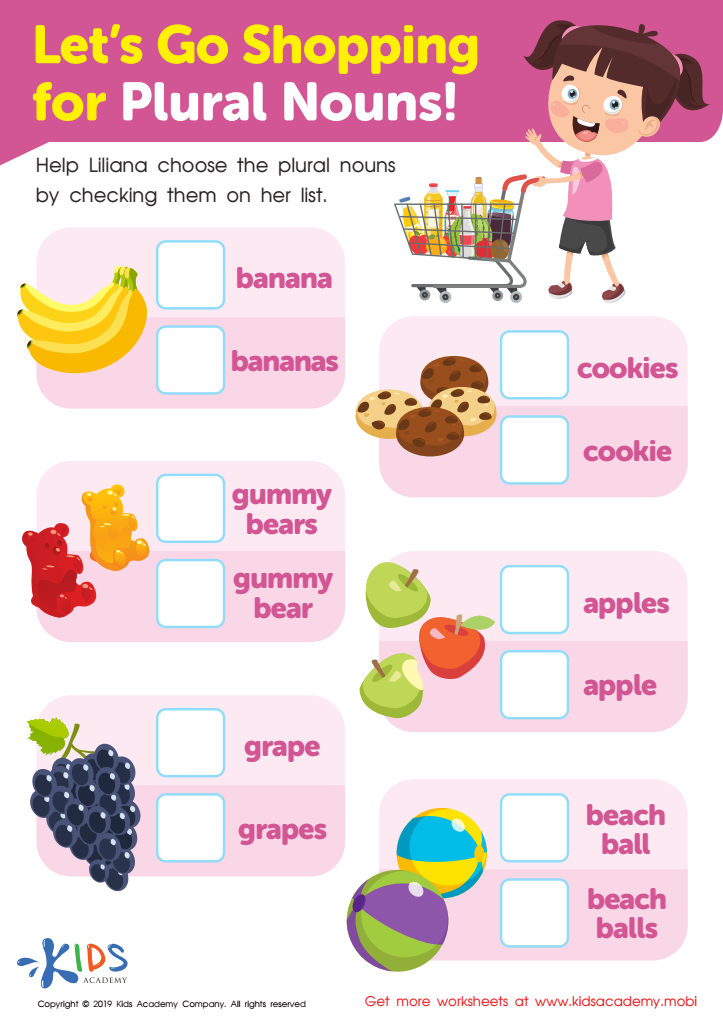
Help your students figure out the plural nouns in Lilliana's checklist. Look at the six objects in this PDF and add 's' to the nouns to make them plural. Show students how words can be tricky and explain how adding an 's' often changes the noun to its plural form.
Let's Go Shopping for Plural Nouns! Worksheet
Worksheet
Preposition Pencils Worksheet

Preposition Pencils Worksheet

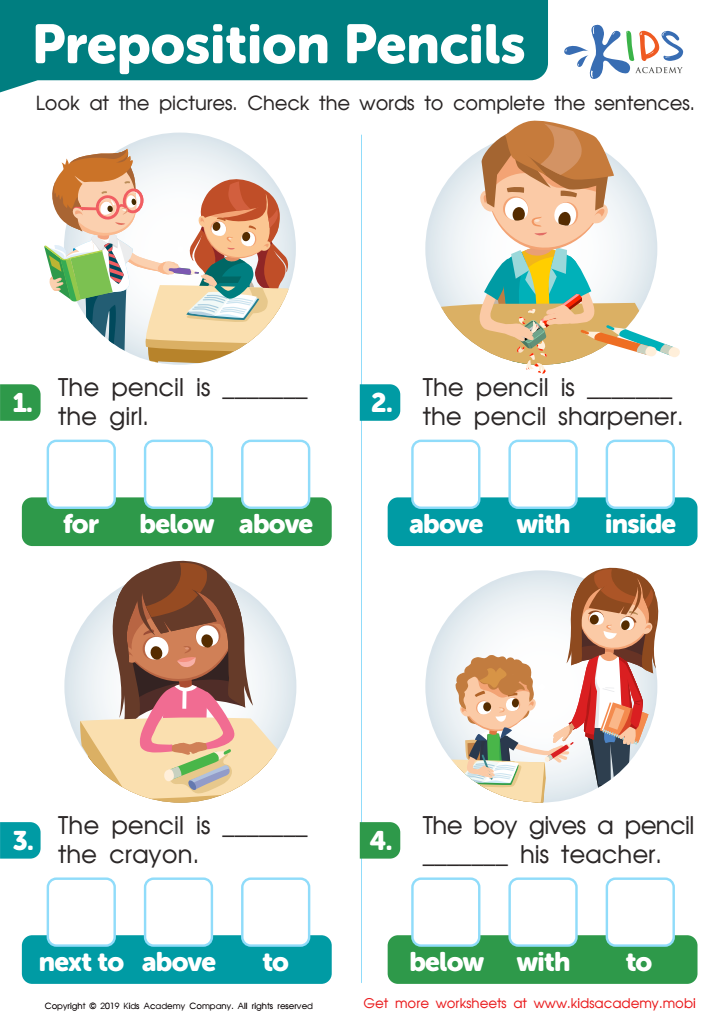
Constructing sentences follows rules. Parts of speech like nouns, verbs, adverbs, pronouns, and prepositions help. This worksheet focuses on prepositions. Explain prepositions to your child, then examine the pictures together and help them complete the sentences.
Preposition Pencils Worksheet
Worksheet
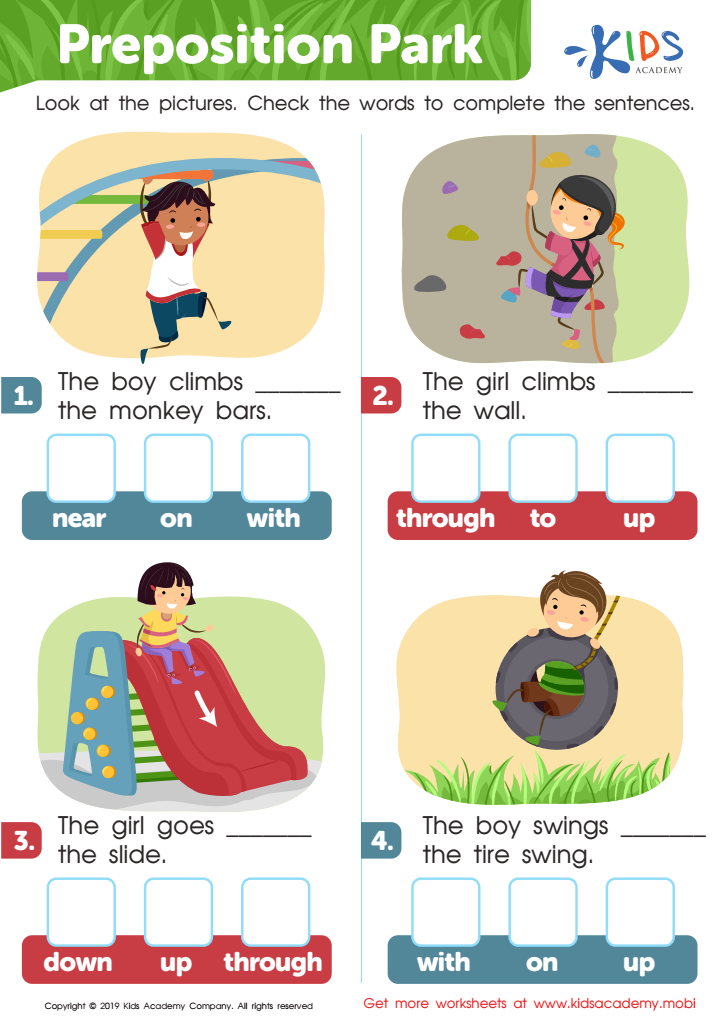
Preposition Park Worksheet

Preposition Park Worksheet

. Check kids' understanding of prepositions by reminding them it's a word used to show location, direction or time. Look at the four pictures and ask what the kids are doing. Read the sentences below and help them check the words to complete them.
Preposition Park Worksheet
Worksheet
Preposition Planets Worksheet

Preposition Planets Worksheet

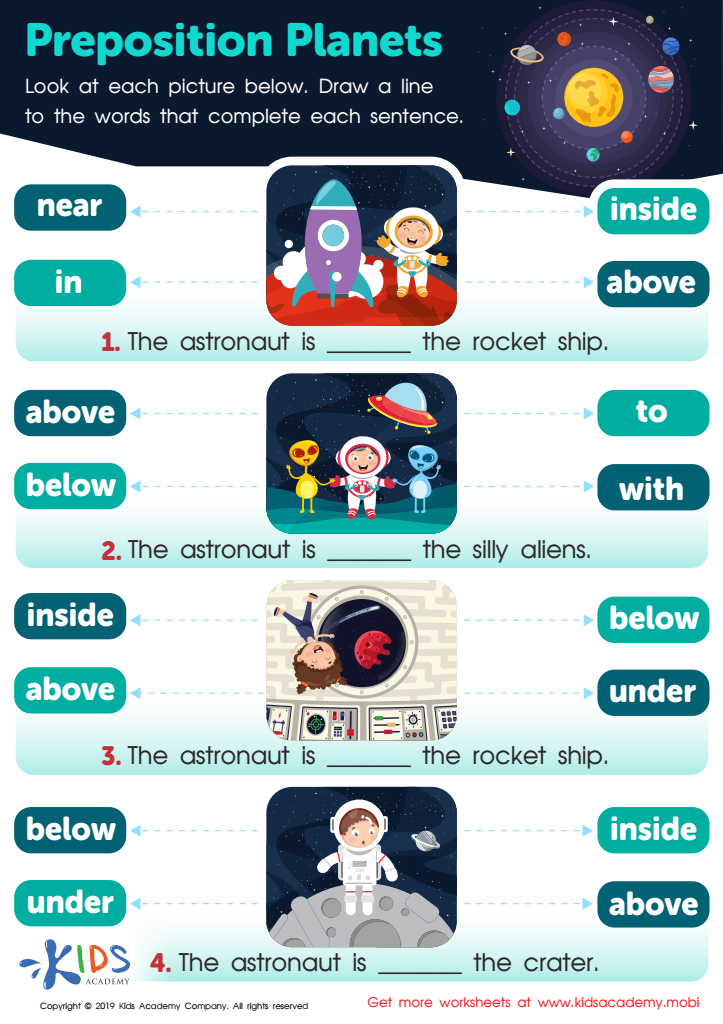
Remind your child about outer space: which planet do we live on, and who travels there for research? Explain that prepositions show location, direction, and time. Look at the worksheet with colorful pictures of astronauts. Help your kids draw lines to the words that complete each sentence.
Preposition Planets Worksheet
Worksheet
Down by the Bay: Choose the Verb Worksheet

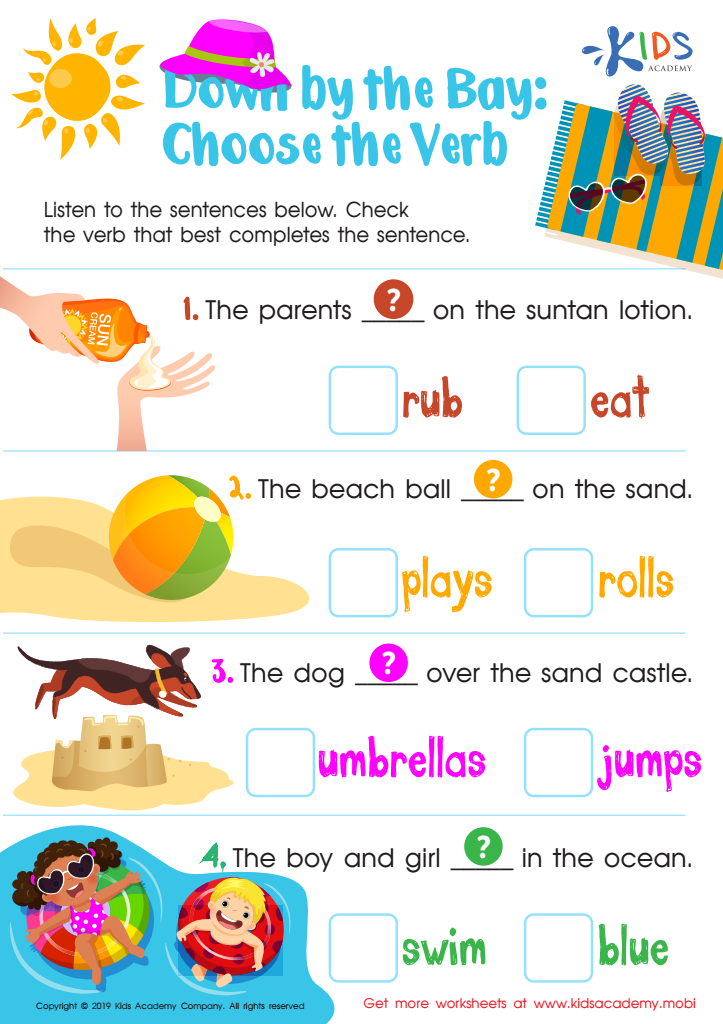
Down by the Bay: Choose the Verb Worksheet

Teach your kids about verbs: words that describe actions, like 'playing', 'eating', 'talking'. Ask your child to give their own verbs, then read the sentences in a worksheet and help them pick the best one for each question.
Down by the Bay: Choose the Verb Worksheet
Worksheet
Where Is the Ant? Worksheet

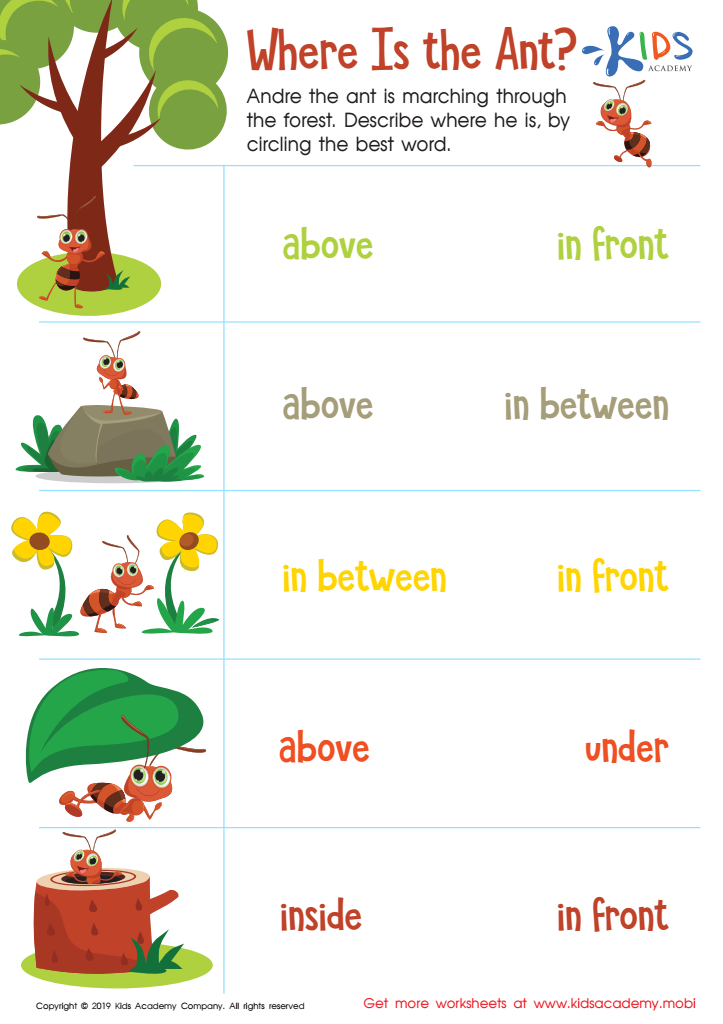
Where Is the Ant? Worksheet

Kids are captivated by ants. Andre is a busy ant, marching through the forest. Help your child circle the best word that best describes what he's doing in each picture. This colorful printout will show them the way.
Where Is the Ant? Worksheet
Worksheet
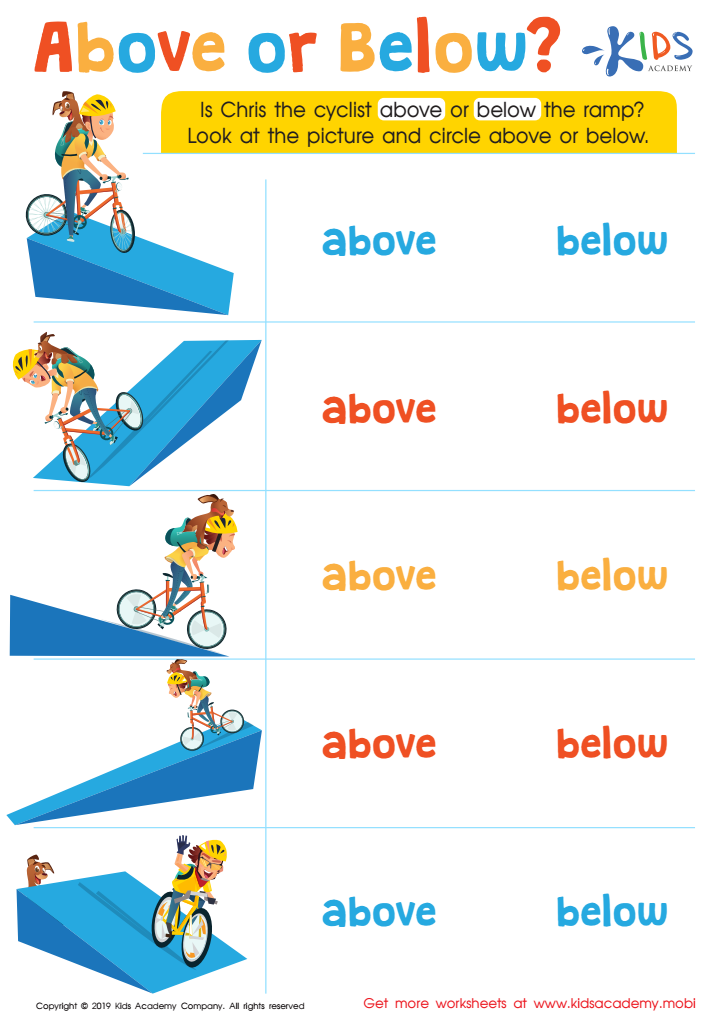
Above or Below? Worksheet

Above or Below? Worksheet

Do your kids cycle? Chris is a cyclist practicing on a ramp. Look at the pictures with them and decide if Chris is above or below the ramp. It's an important skill to help your kids become fluent speakers and writers - using the right words to describe something. Cycling is a fun sporting event.
Above or Below? Worksheet
Worksheet
Questions at the Park Worksheet

Questions at the Park Worksheet

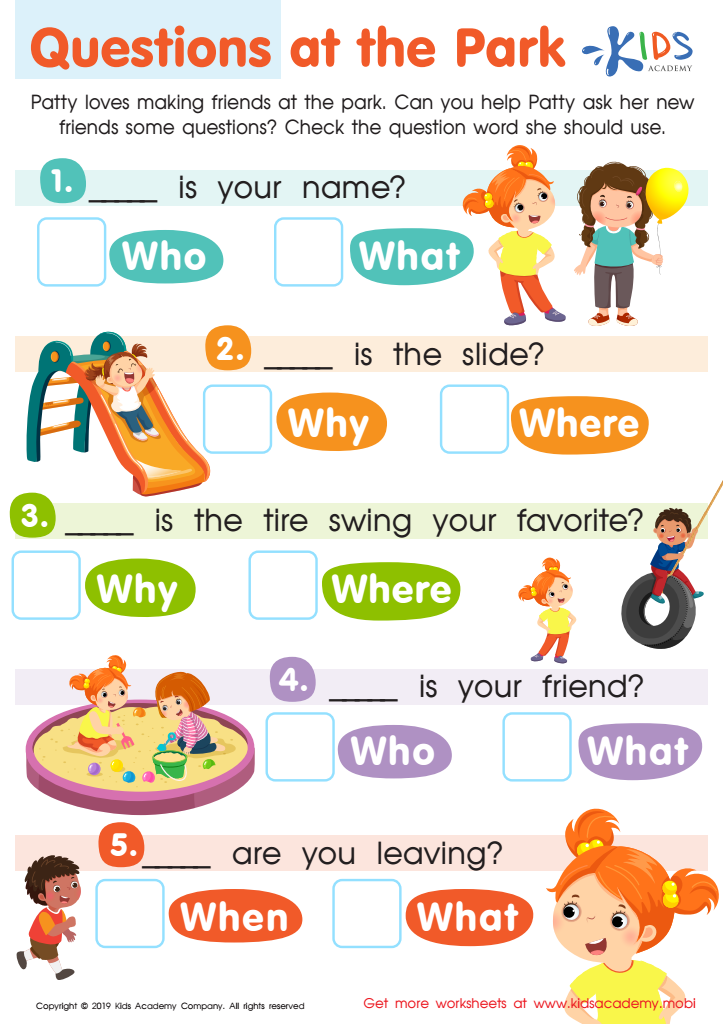
Parks are great for fun! Kids can play, run and be as loud as they want! Ask them what their favorite activities are. If they love making friends, like Patty in this worksheet, help them practice their question words to get to know their new pals better.
Questions at the Park Worksheet
Worksheet
Down by the Bay: Choose the Noun Worksheet

Down by the Bay: Choose the Noun Worksheet

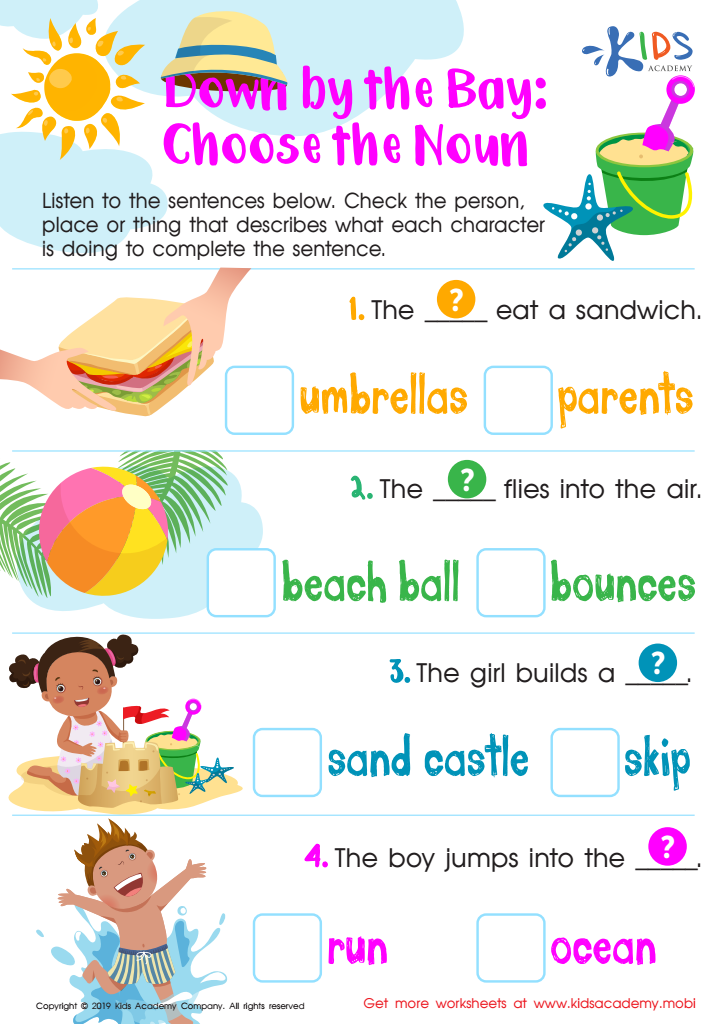
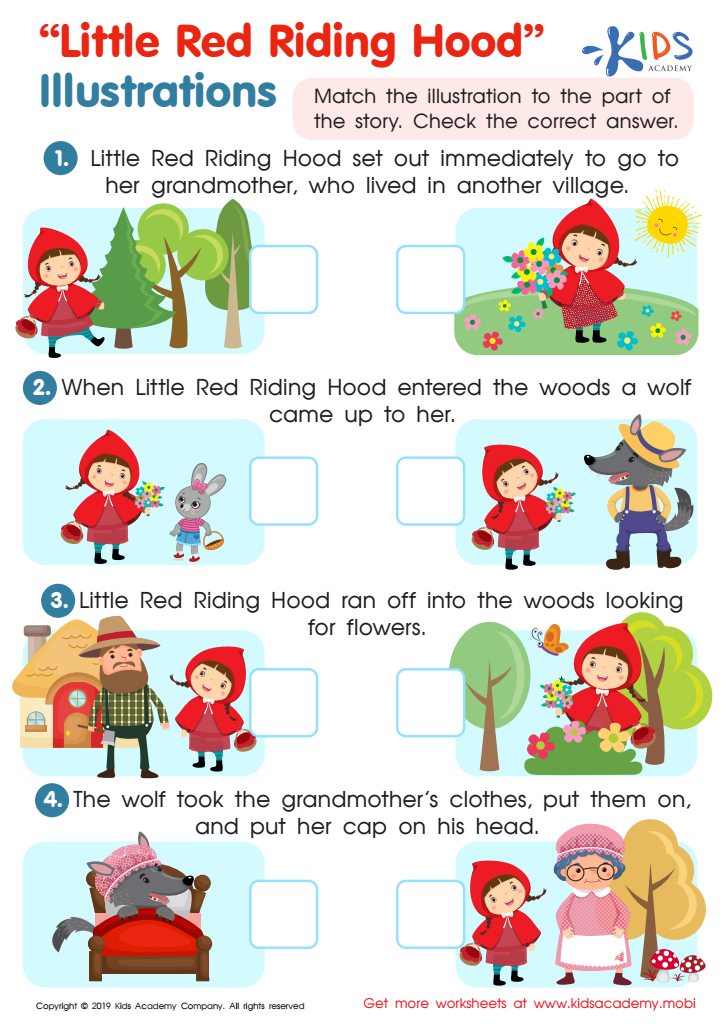
Teach your child the basics of speaking and constructing English, like the parts of speech. Nouns are especially important; they are names of people, animals, objects, places, or things. Go through this worksheet with your kids and have them identify the nouns in the sentences. This exercise will help them understand the concept better.
Down by the Bay: Choose the Noun Worksheet
Worksheet
Little Red Riding Hood: Illustrations Worksheet

Little Red Riding Hood: Illustrations Worksheet

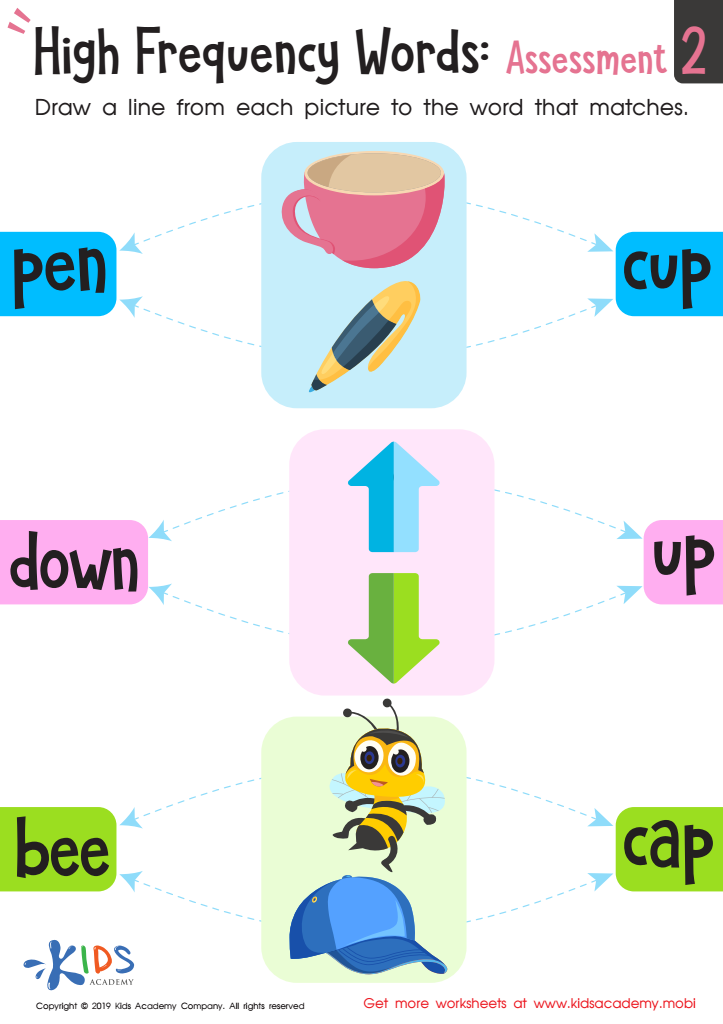
Comprehension is improved by having young readers recall and retell stories. This worksheet uses colorful illustrations of the fairytale Little Red Riding Hood. Children use their comprehension skills and strategy to match illustrations to the story parts, check off the appropriate boxes and use the pictures as clues.
Little Red Riding Hood: Illustrations Worksheet
Worksheet
High Frequency Words: Assessment 2 Worksheet

High Frequency Words: Assessment 2 Worksheet

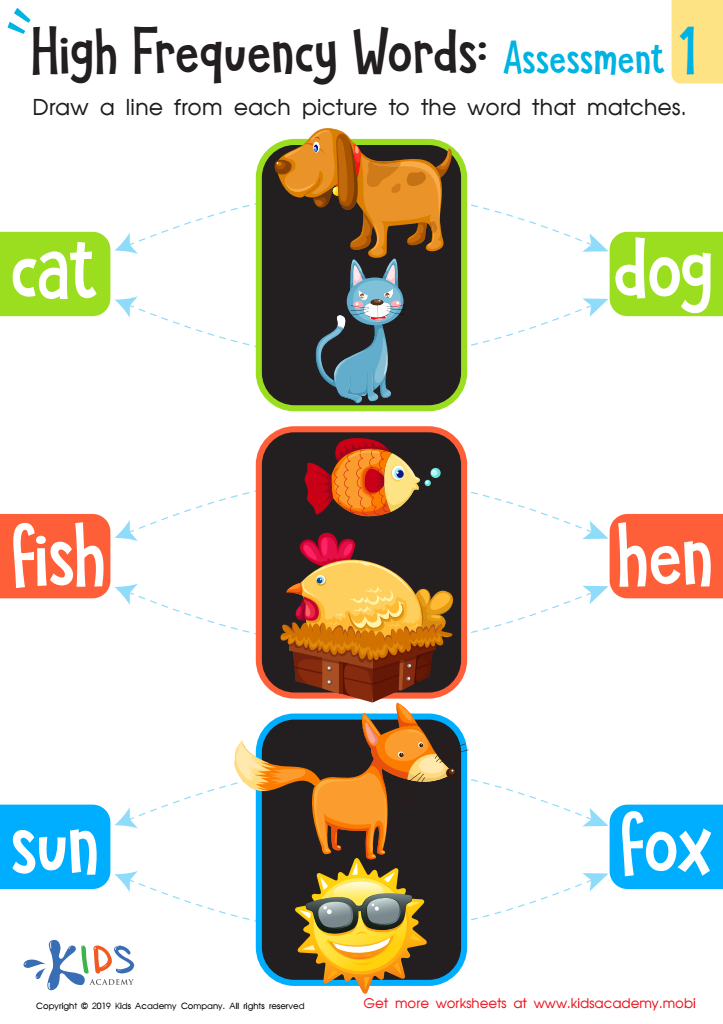
Having knowledge of high frequency words can make emergent readers stronger and boost comprehension. This free assessment worksheet uses traceable lines to connect the picture to its corresponding words, allowing them to feel successful. It's a great way to reinforce high frequency words with familiar imagery.
High Frequency Words: Assessment 2 Worksheet
Worksheet
High Frequency Words: Assessment 1 Worksheet

High Frequency Words: Assessment 1 Worksheet

Emergent readers need to know high-frequency words accurately and quickly to develop fluency. Connecting these words to colorful, fun pictures helps reading prosody. This assessment worksheet uses traceable lines to help learners match pictures to words.
High Frequency Words: Assessment 1 Worksheet
Worksheet
Ancient Artifacts Worksheet

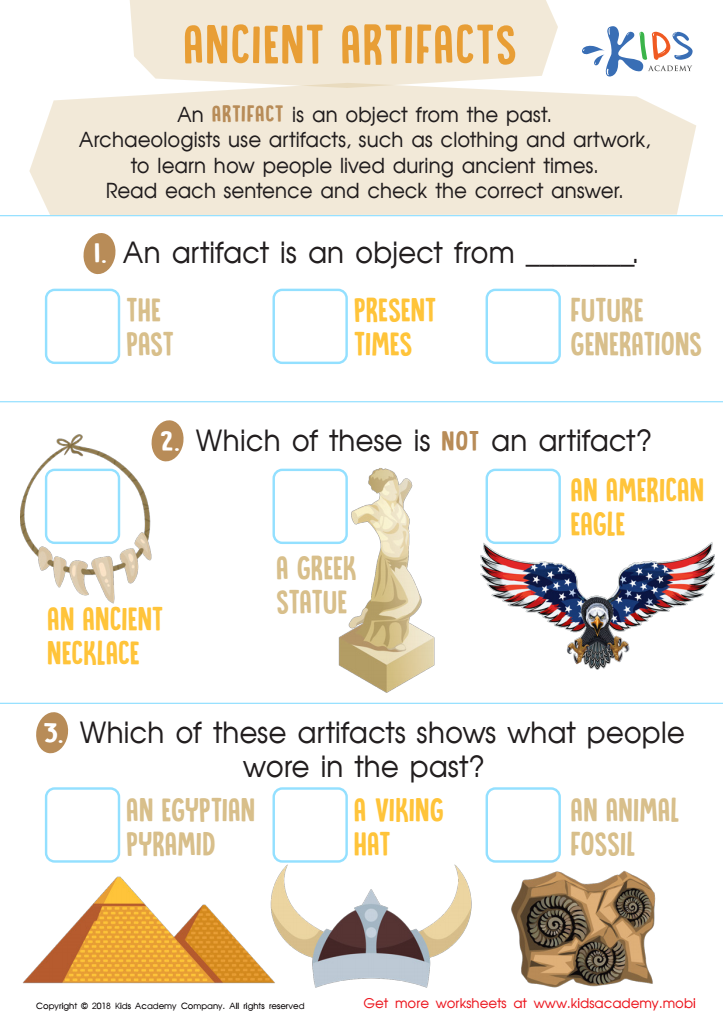
Ancient Artifacts Worksheet

This free worksheet helps kids understand ancient artifacts, from statues to necklaces to fossils. They'll read comprehension questions and select answers from multiple choice options, with pictures to help them grasp the concept. It's a great way for children to learn about artifacts and what they may look like.
Ancient Artifacts Worksheet
Worksheet
Archaeology Word Jumble Worksheet

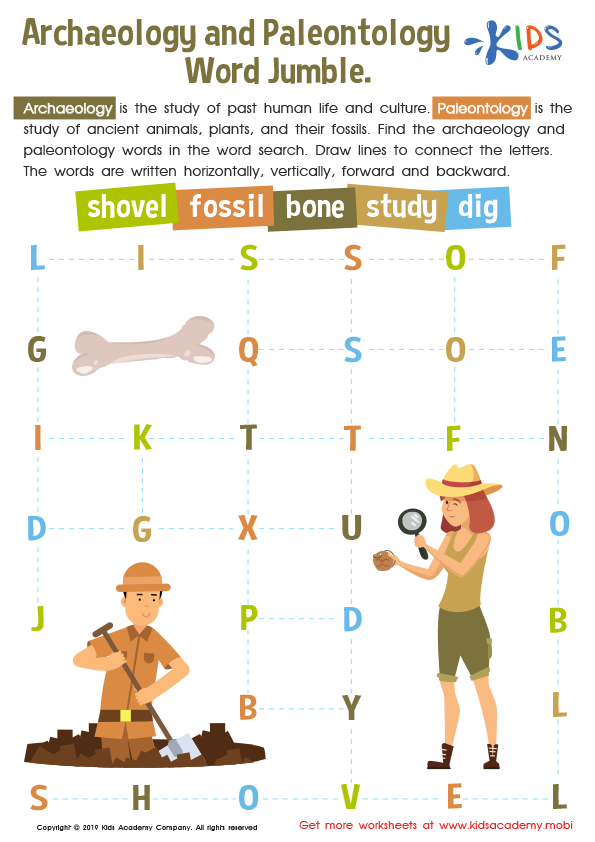
Archaeology Word Jumble Worksheet

Kids will love this fun, colorful word search about archeology! Tracing the lines, they'll uncover terms related to the study of past life and cultures. As they explore, they'll learn about fossils and bones and discover new archeology words.
Archaeology Word Jumble Worksheet
Worksheet
Nelson Mandela Word Search Worksheet

Nelson Mandela Word Search Worksheet

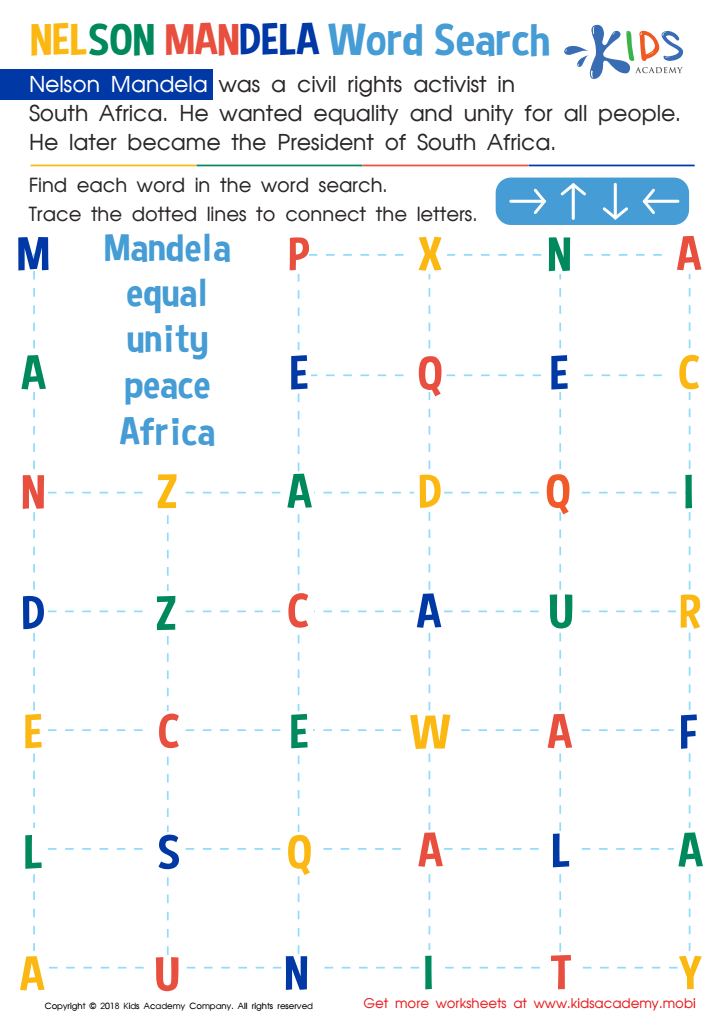
Kids love word searches! This fun, free worksheet teaches about the civil rights activist Nelson Mandela. It includes traceable lines and words related to him, helping improve fine motor skills. A great way to learn about a great man!
Nelson Mandela Word Search Worksheet
Worksheet
Frame it Up Worksheet

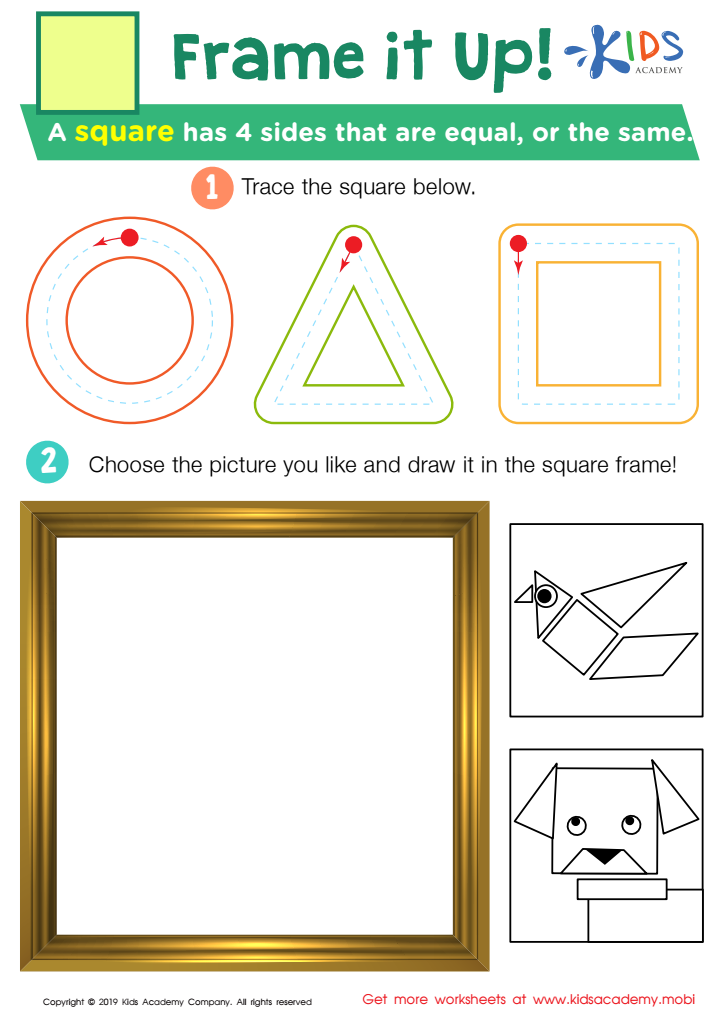
Frame it Up Worksheet

This worksheet helps kids learn the difference between squares and other shapes. It guides them to trace a square and draw a picture inside it. Examples of shapes-based drawings are included. Kids will have fun and clear up any confusion about squares.
Frame it Up Worksheet
Worksheet
Colors: Assessment 2 Worksheet

Colors: Assessment 2 Worksheet

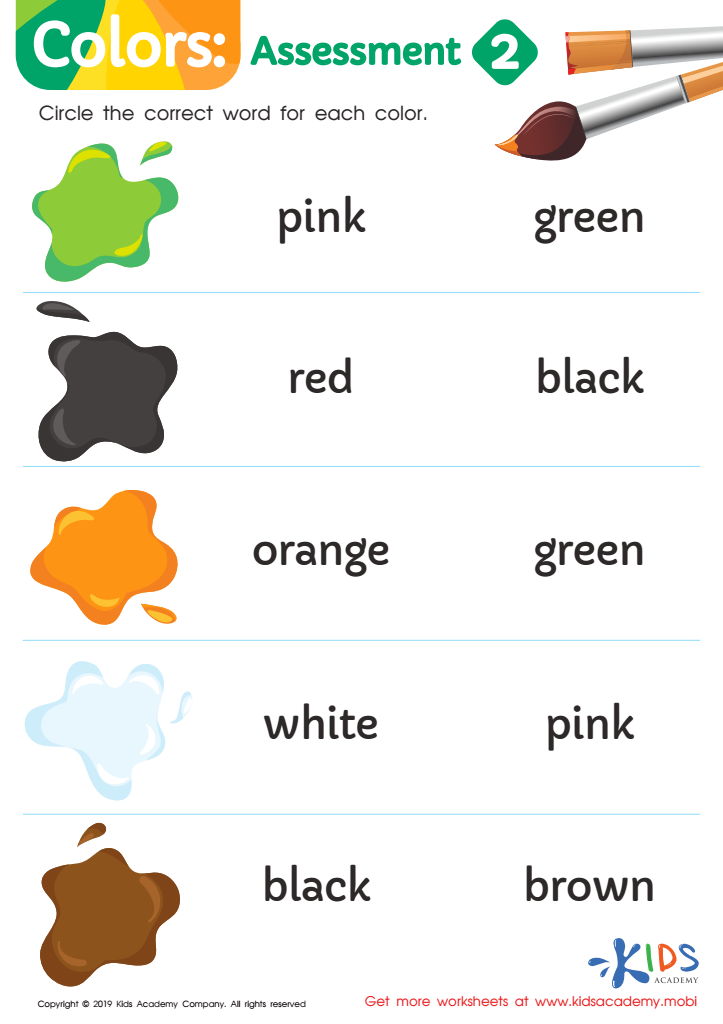
Teach color words to young students to build fluency and confidence. Check knowledge with an assessment worksheet. Have students look at paint samples and circle the correct color word. This assessment helps parents and teachers measure a child’s accuracy when reading color words.
Colors: Assessment 2 Worksheet
Worksheet
Colors: Assessment 1 Worksheet


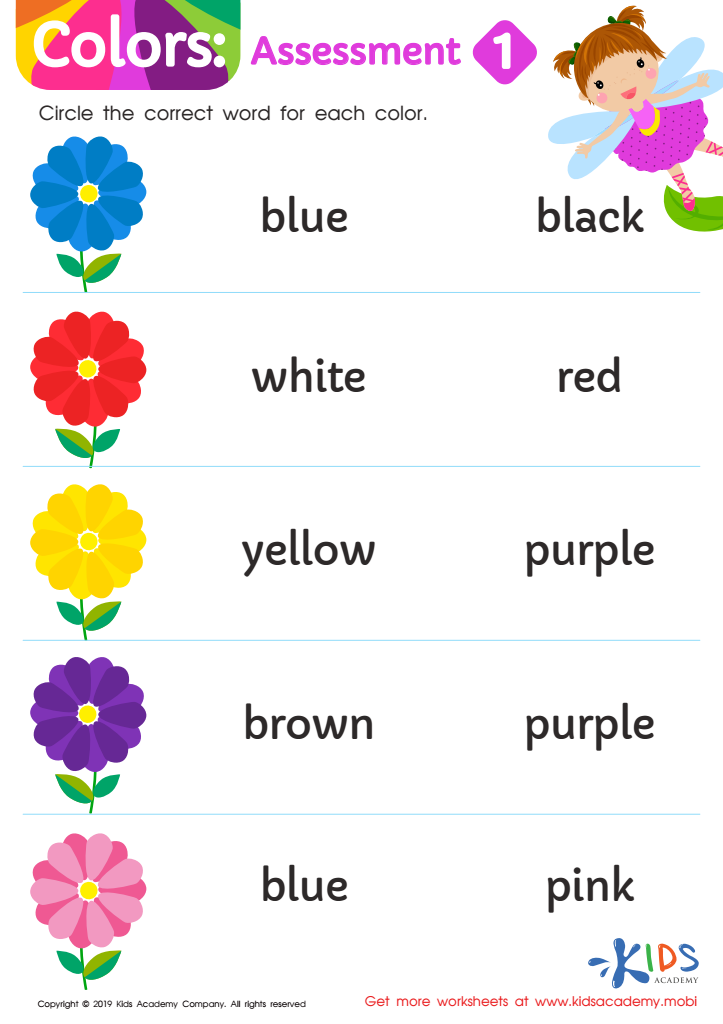
Colors: Assessment 1 Worksheet

Children can decode unfamiliar words by sounding them out or by recognizing sight words. Color words are an important part of sight word knowledge, so add them to your child's list! This color word worksheet is an effective assessment tool for teachers to use with preschool and kindergarten students. It checks their knowledge of five color words - they simply look at the flower and circle the appropriate color word!
Colors: Assessment 1 Worksheet
Worksheet


Building vocabulary for children ages 6-8 is crucial for several reasons. At this stage, children undergo rapid cognitive development and start to read more independently. A rich vocabulary enhances their comprehension, making it easier for them to grasp new concepts, follow instructions, and engage in classroom discussions. Strong vocabulary skills also give them the tools to express their thoughts, ideas, and emotions more effectively, leading to better social interactions and higher self-esteem.

Moreover, vocabulary development is closely tied to academic success. It lays the foundation for improved reading and writing skills, which are essential across all subjects. For example, children with a more extensive vocabulary can decode new words better and understand various texts more easily, which boosts their confidence as readers and learners.

Involvement from parents or teachers in vocabulary-building activities can make learning fun and interactive. Simple strategies, like reading aloud, playing word games, and encouraging storytelling, can significantly enrich a child’s word bank. When children are regularly exposed to new words in different contexts, their brains form stronger connections, facilitating long-term retention.

Ultimately, a robust vocabulary equips children with critical thinking and communication skills that are vital for their future academic and life success. Parents and teachers play key roles in nurturing these skills early on.