Filters

223 filtered results

Clear all filters
Favorites
With answer key
Interactive

223 filtered results

Difficulty Level

Grade


Check out this FREE Trial Lesson on Building Vocabulary for age 6-8!

Distinguish Between Similarly Spelled Words

Favorites
With answer key
Interactive
  • 6-8
  • Interactive
  • Building Vocabulary
What Do We See in our Community? Worksheet

What Do We See in our Community? Worksheet

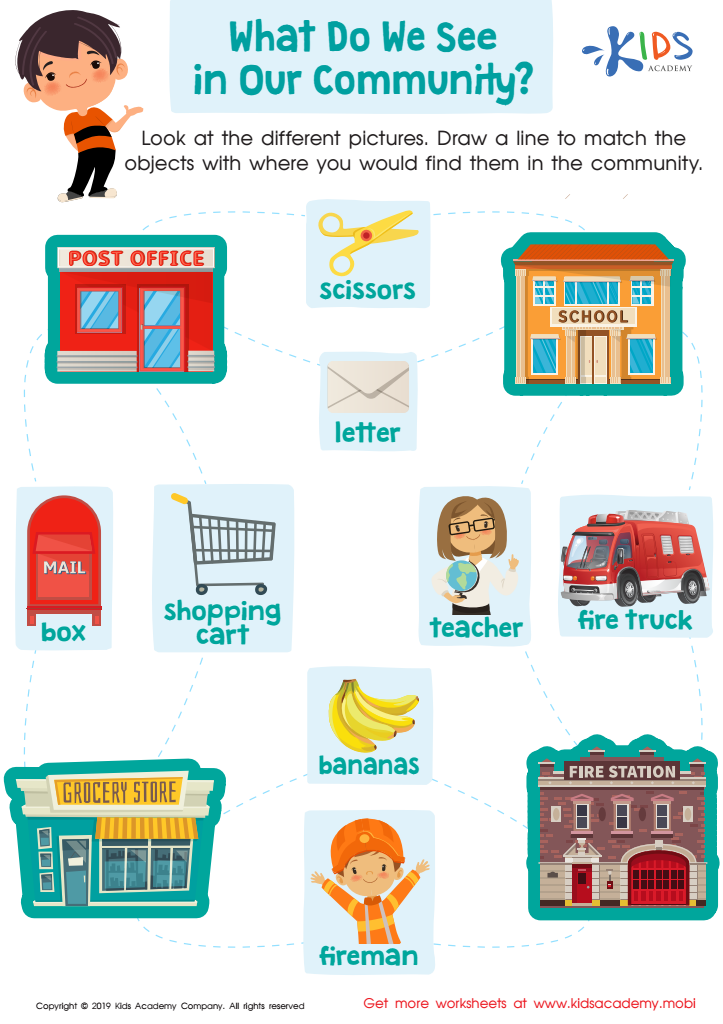
Kids can learn about citizenship and their place in the world by studying their communities. This free worksheet is a fun way to do it - kids match pictures to what they find in their local community. They can trace the lines to show where they would spot the objects. It's an excellent way to get to know their environment!
What Do We See in our Community? Worksheet
Worksheet
=
=

Yesterday's Park Fun Worksheet
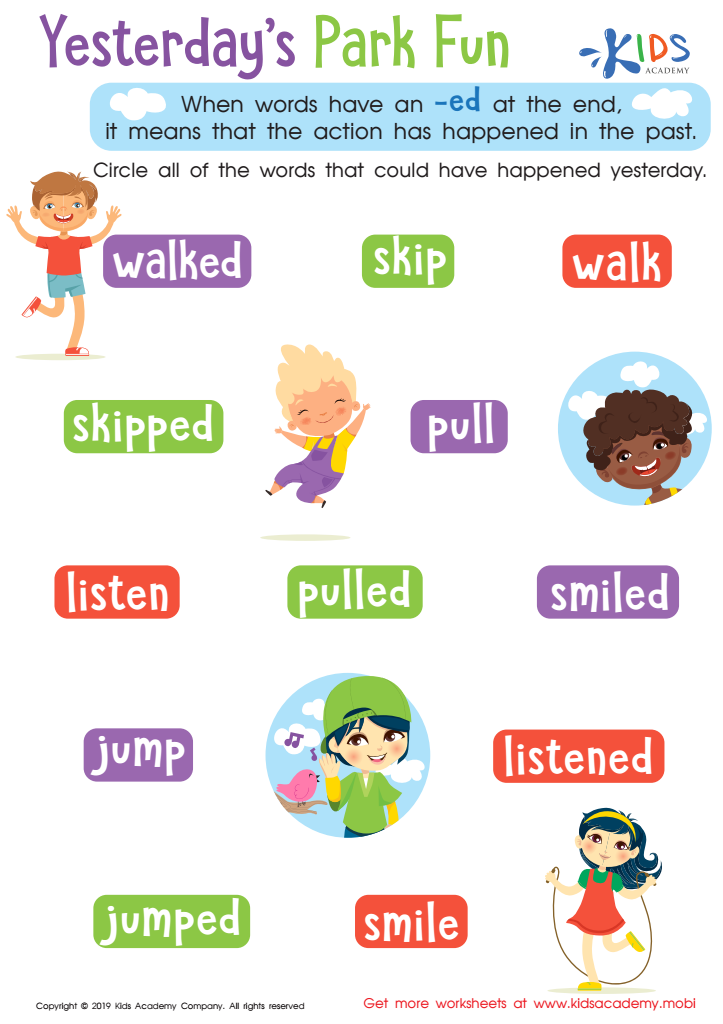
Add -ed to the end of words and you get a word that happened in the past. This PDF helps your child understand this concept by giving practice examples: walk, pull, jump and smile can all be transformed into the past tense with a -ed suffix. They'll circle all the words that happened yesterday and learn about the past tense.
Yesterday's Park Fun Worksheet
Worksheet
Sound Different Worksheet

Sound Different Worksheet

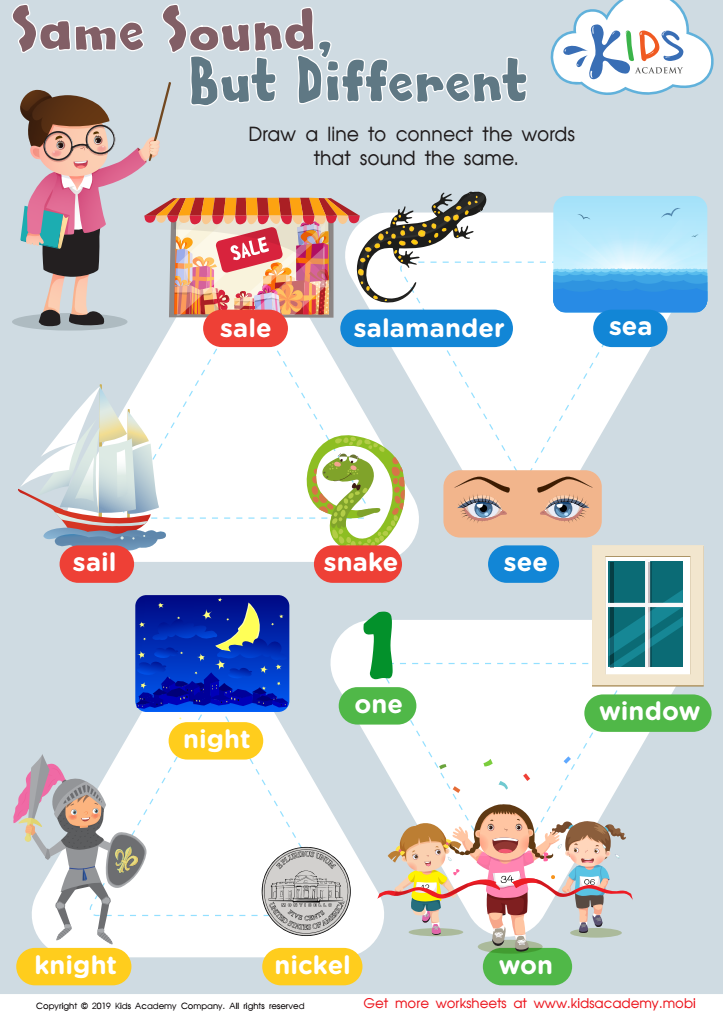
Homophones can be tricky for new readers and writers. This PDF worksheet helps kids understand the differences using pictures. It asks them to draw lines to connect the homophones and provides concrete imagery for reference. It's a great way to learn the right definition and spelling of words that sound the same.
Sound Different Worksheet
Worksheet
Pair Pears Worksheet

Pair Pears Worksheet

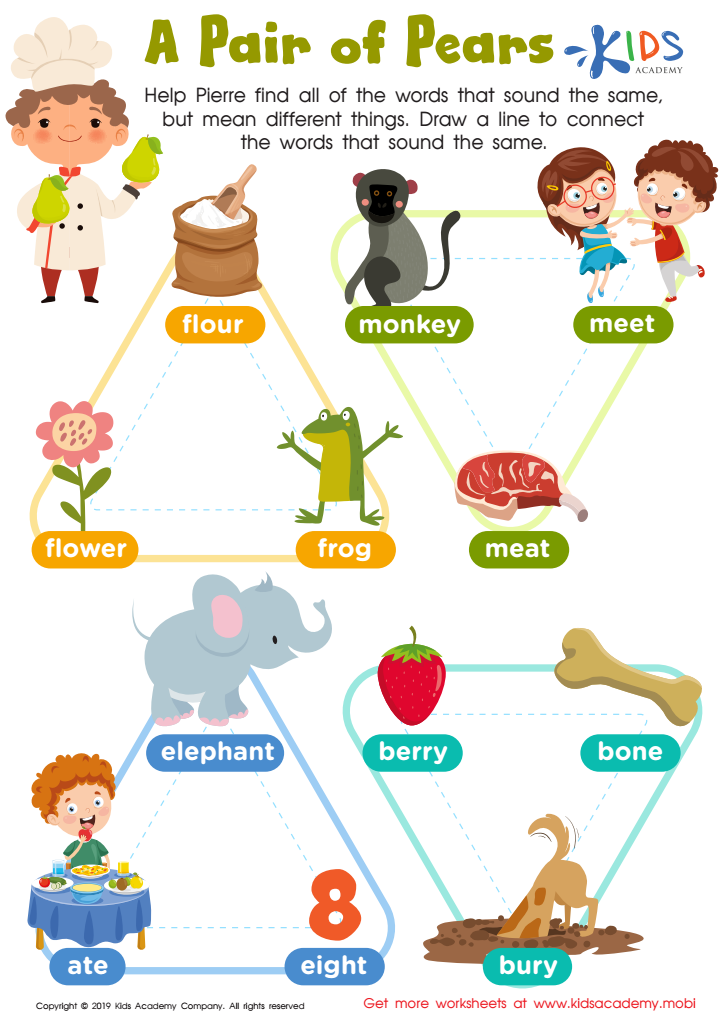
Young readers can have difficulty knowing when to use the right homophone. This free worksheet helps them use familiar imagery to understand better by connecting words that sound similar but are spelled and mean different things. Students will trace the lines to form a picture and have a reference image to differentiate between the different homophones.
Pair Pears Worksheet
Worksheet
Capitalization. Punctuation. Spelling. Assessment 3 Worksheet

Capitalization. Punctuation. Spelling. Assessment 3 Worksheet

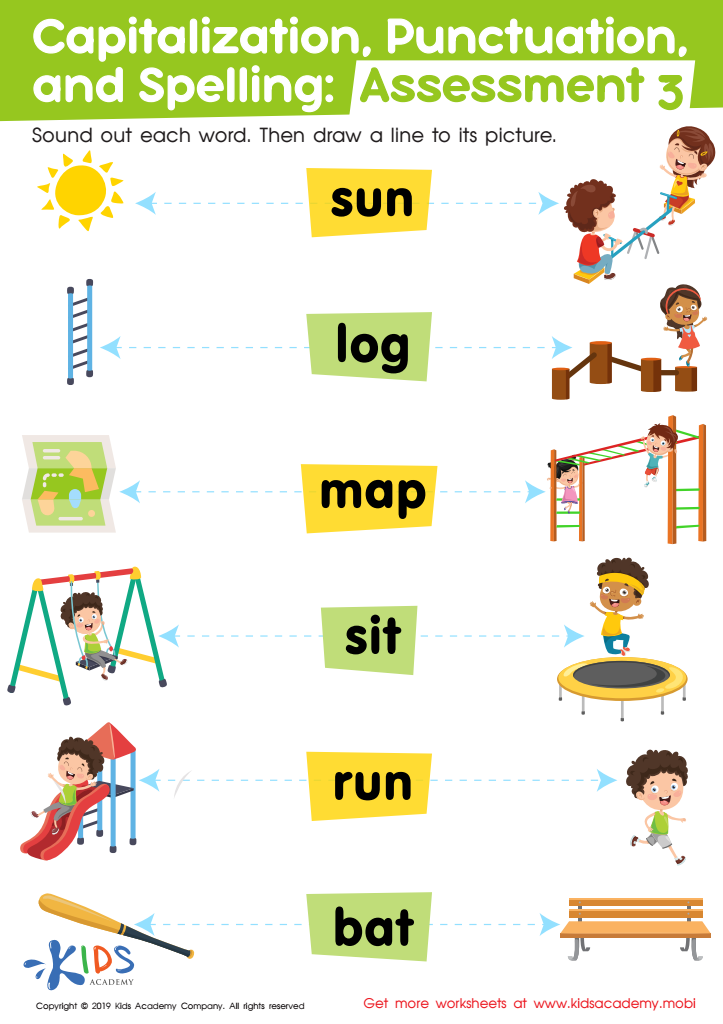
Before starting this worksheet, have your kids spell some simple words. Correct if wrong and show the right spellings. Then, ask them to link the pictures to the words you read out. Spelling is key for a good writer, and kids need to know how to spell to read texts easily.
Capitalization. Punctuation. Spelling. Assessment 3 Worksheet
Worksheet
Capitalization. Punctuation. Spelling: Assessment 1 Worksheet

Capitalization. Punctuation. Spelling: Assessment 1 Worksheet

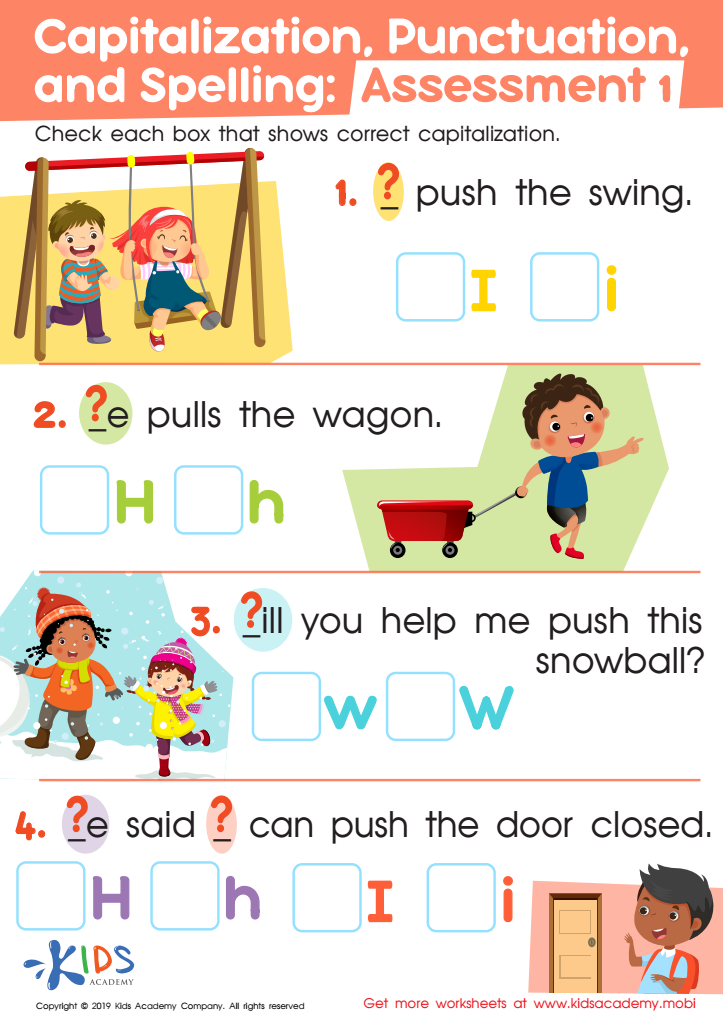
Capitalization is important for a lot of things. Ask your child about the significance of it. Punctuations, like the full stop, comma, question mark, and exclamation mark, are also key. Read each sentence in this worksheet to your child and ask if it has correct capitalization. Help them check the correct sentences.
Capitalization. Punctuation. Spelling: Assessment 1 Worksheet
Worksheet
Where Do We Sleep Worksheet

Where Do We Sleep Worksheet

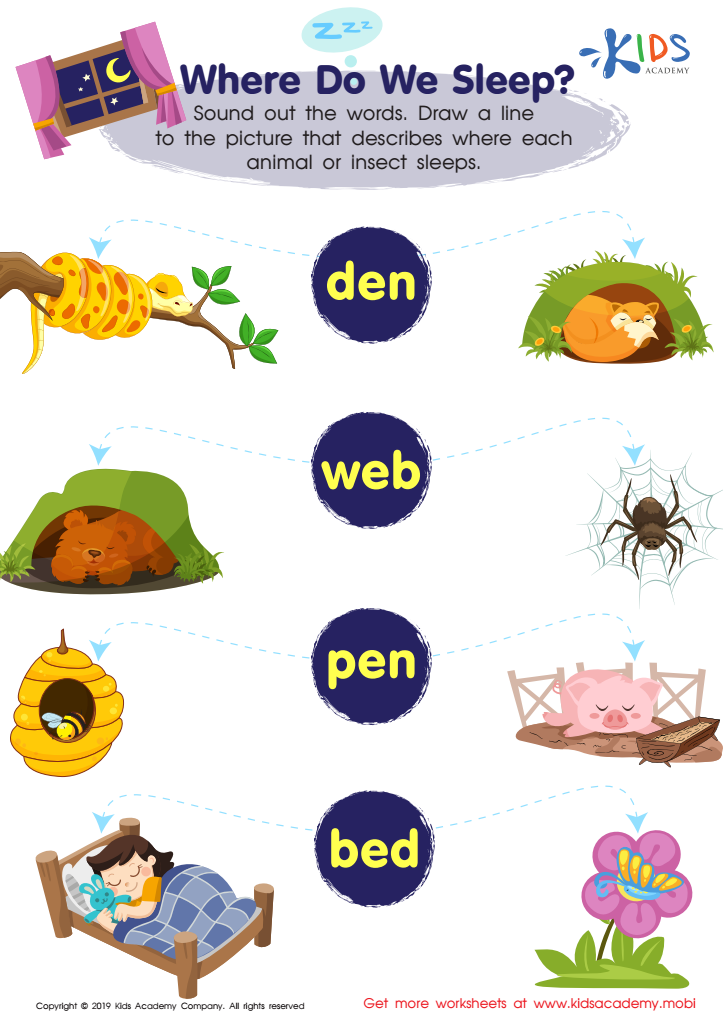
Help your kids understand the importance of a safe space with this activity: Ask them to draw a line connecting the different animals and insects to the words that describe where they sleep. Remind them that everyone needs a sanctuary to rest – like the animals and insects in this printout.
Where Do We Sleep Worksheet
Worksheet
Spelling in the Kitchen Worksheet

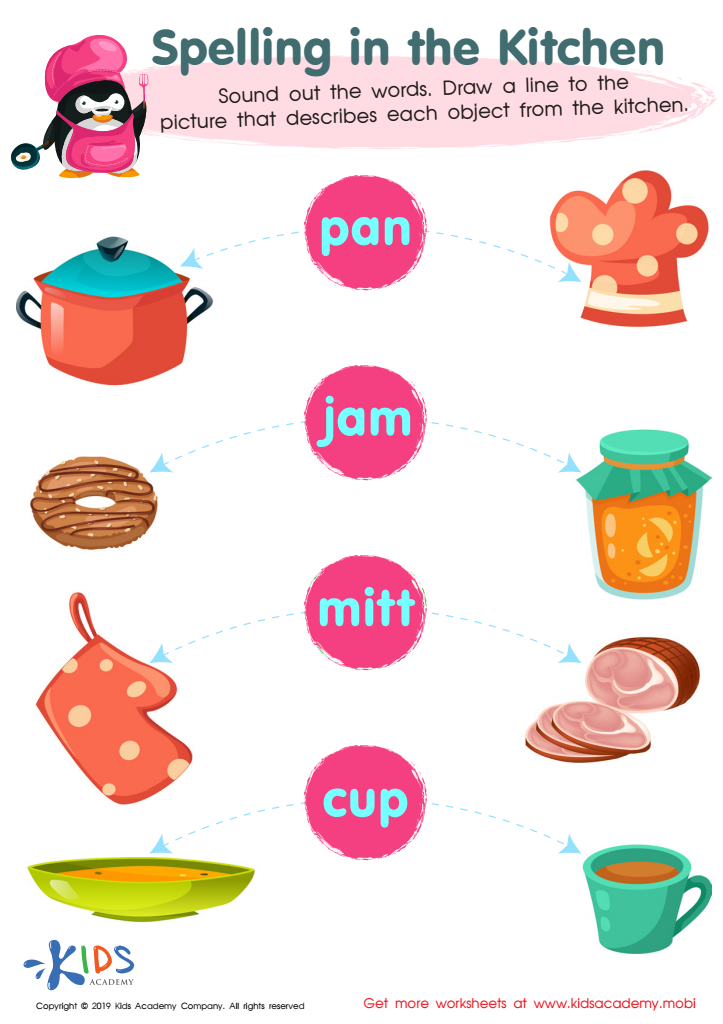
Spelling in the Kitchen Worksheet

Your little ones can learn a lot if they help in the kitchen. Get them to identify and say the name of each item in the picture in this worksheet. Sound out the words for them and help draw a line to the right picture. It's a great way for them to learn about kitchen items!
Spelling in the Kitchen Worksheet
Worksheet
Spelling Down on the Farm Worksheet

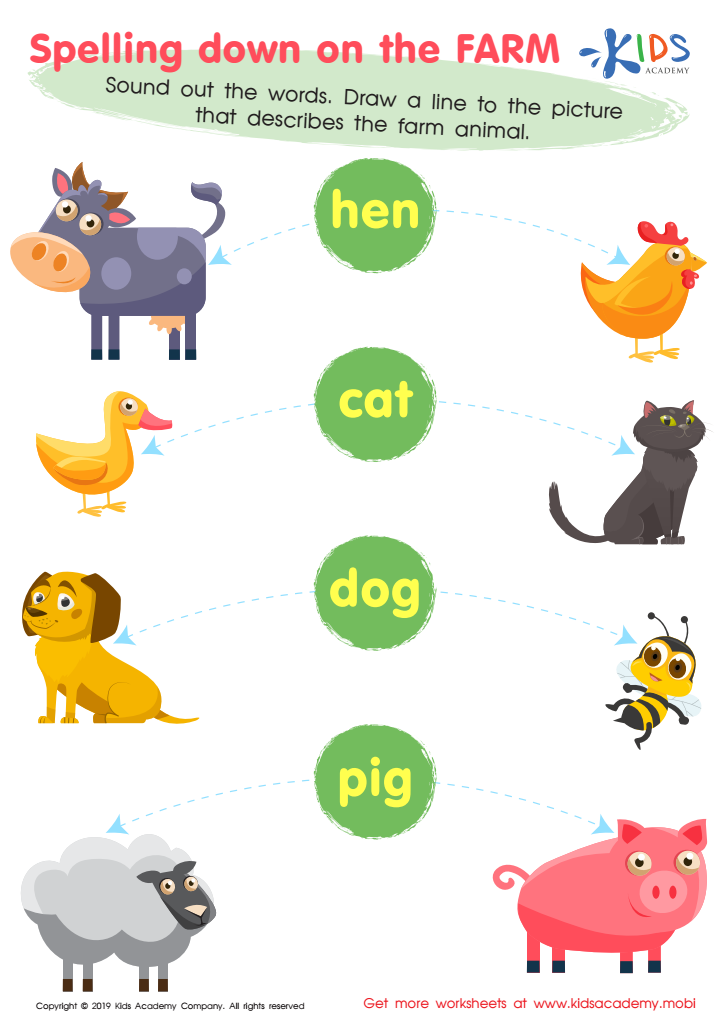
Spelling Down on the Farm Worksheet

Want to help your kids nail their spelling? Introduce them to this farm animal worksheet! Get them to look at the animals in the tracing sheet, name them and then sound out the words. Have them draw a line to the picture that describes it. You'll be surprised at how quickly their skills improve.
Spelling Down on the Farm Worksheet
Worksheet
Nature Word Search Worksheet

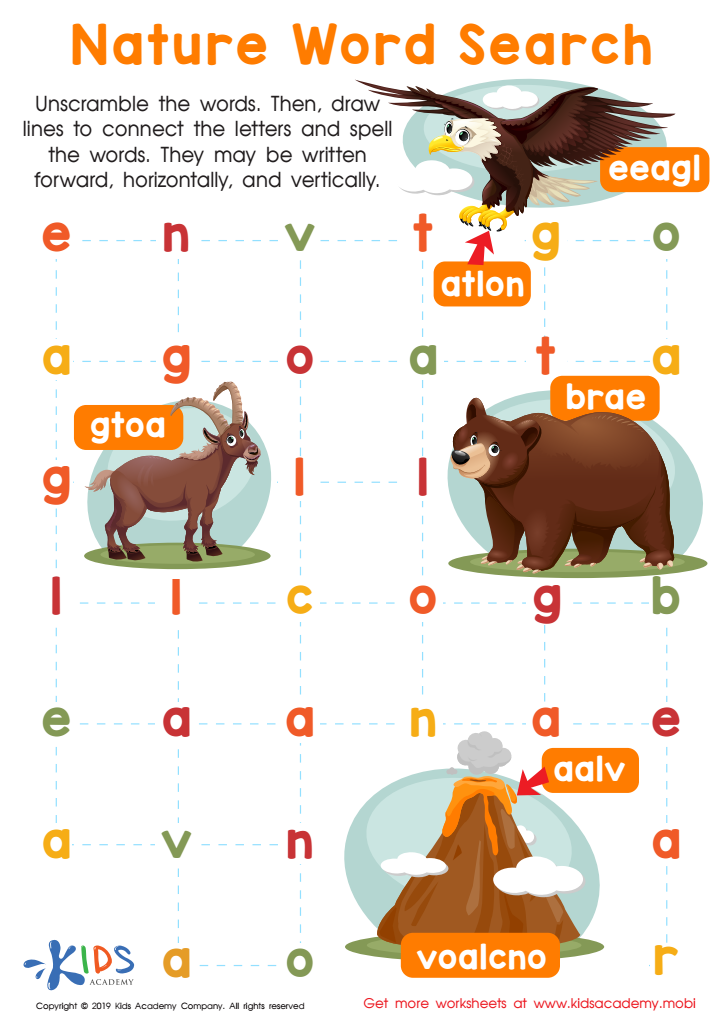
Nature Word Search Worksheet

Unscramble science vocabulary words and find them in this fun worksheet! Use the pictures as clues if you get stumped; you can also write down the words for reference. Solve the puzzle when you're done to finish!
Nature Word Search Worksheet
Worksheet
Food Chain Cause Worksheet

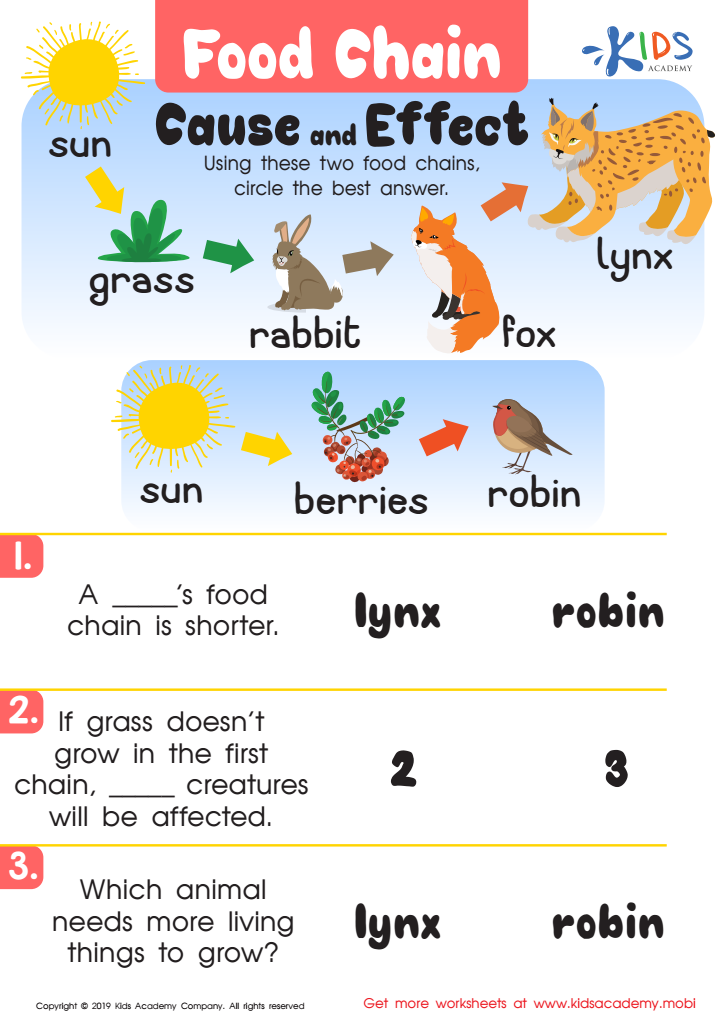
Food Chain Cause Worksheet

Help your little learner analyze ecosystems and compare food chains with this Kids Academy worksheet! Kids will compare a carnivore's and herbivore's food chain; which is longer and why? Questions at the bottom of the page will help them compare and circle the best answers. A great way to understand animal food chains!
Food Chain Cause Worksheet
Worksheet
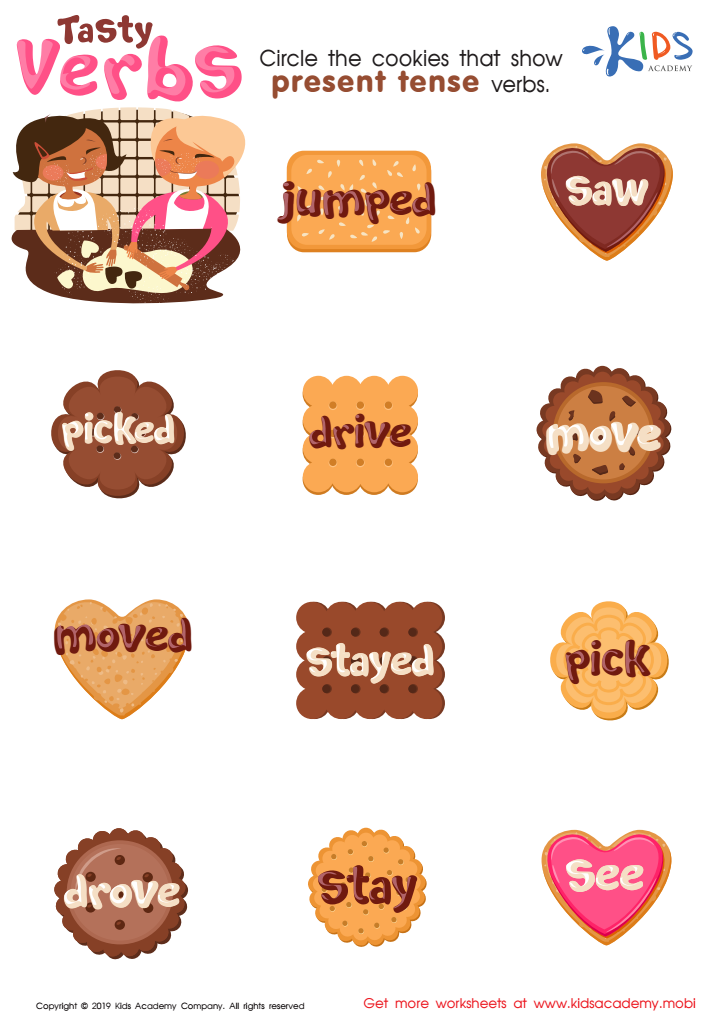
Tasty Verbs Worksheet

Tasty Verbs Worksheet

Verbs can show actions, past events, and future happenings. Master present tense verbs with this cookie-themed worksheet! Read the verbs on each cookie and help kids form sentences using the word in present tense. Circle the correct answers for each cookie. Give them a tasty treat while learning something new!
Tasty Verbs Worksheet
Worksheet
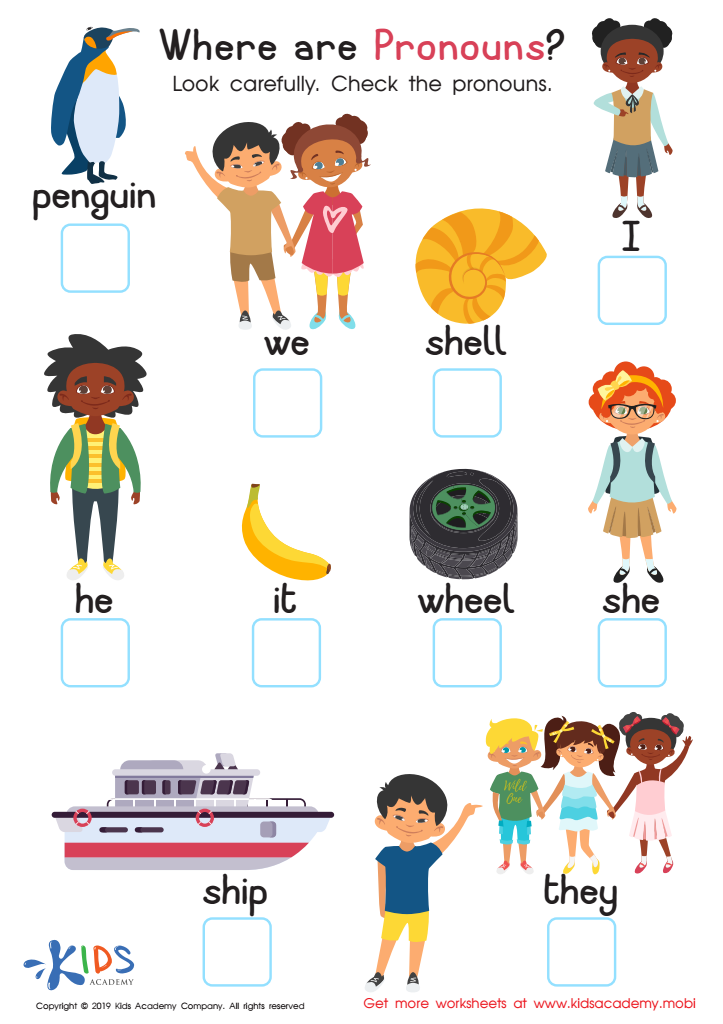
Where Are Pronouns? Worksheet

Where Are Pronouns? Worksheet

Pronouns make language flow, substituting "he" or "she" for names. Kids know and use them in their speech, but identifying pronouns in grammar helps build writing skills. This worksheet challenges kids to pick out pronouns from other nouns. Go through the worksheet, view the pictures and read the words. Ask kids to check boxes in front of pronouns to mark answers.
Where Are Pronouns? Worksheet
Worksheet
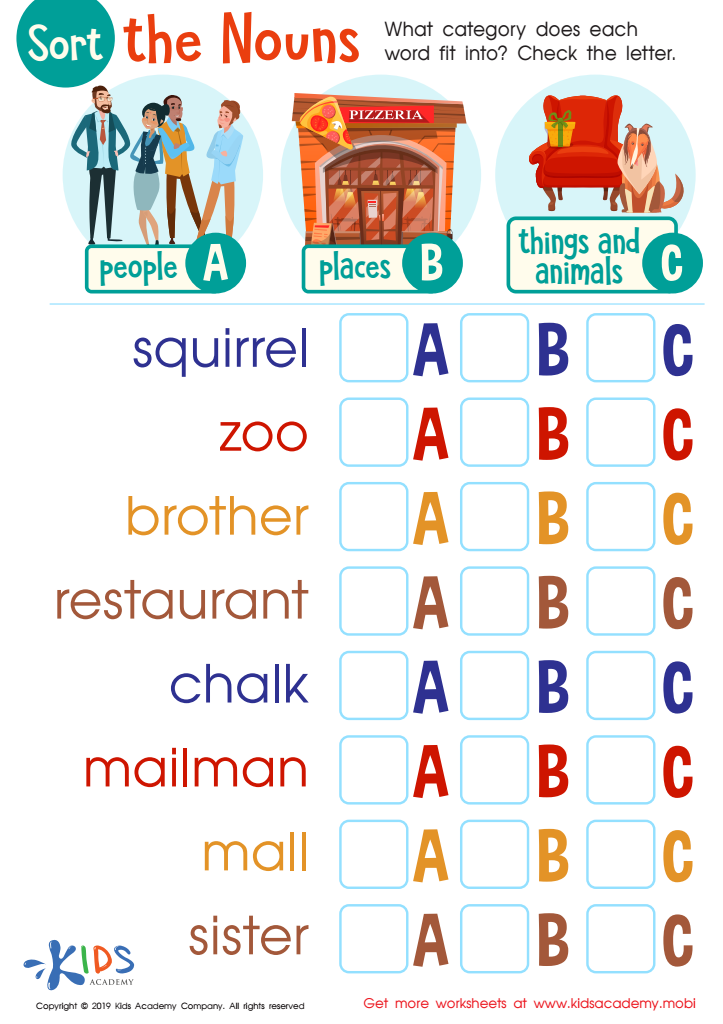
Sort the Nouns Worksheet

Sort the Nouns Worksheet

Nouns are words for people, places, things, and ideas. This worksheet helps kids focus on three categories: people, places, and things (including animals). All the words are nouns; the task is to match them to the correct category. Circle the answer for each!
Sort the Nouns Worksheet
Worksheet
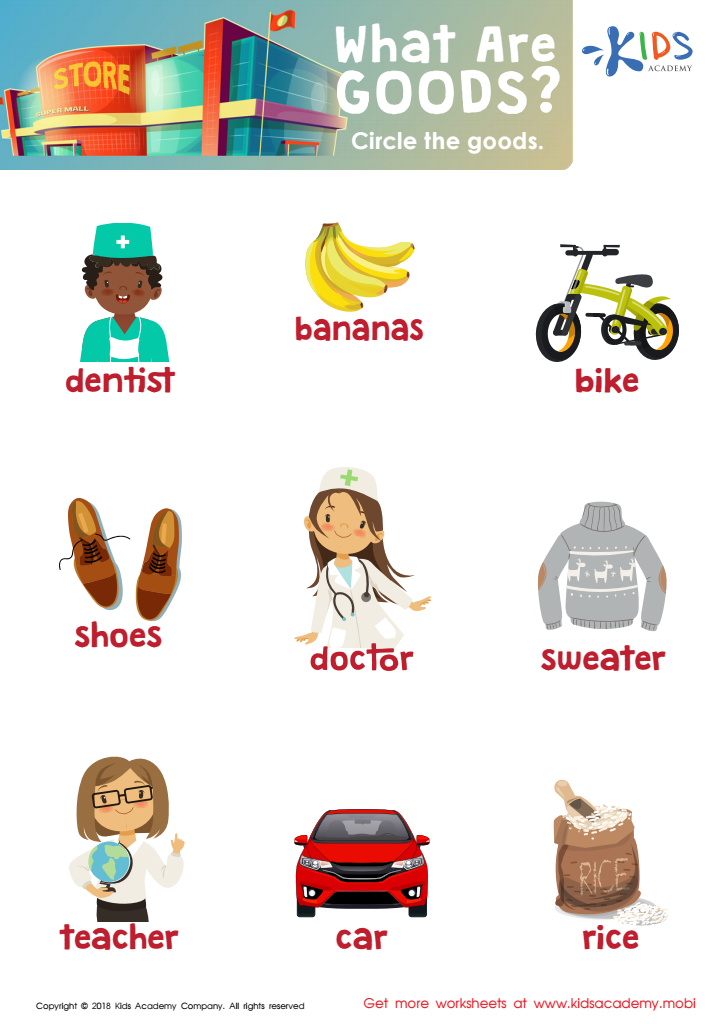
What Are Goods? Worksheet

What Are Goods? Worksheet

Introduce your child to economics with this social studies worksheet! It helps kids differentiate between goods and services. Have them look at each picture, discuss what it does, and decide whether it's an object or a service. Encourage them to think carefully and circle the goods. It's a great way to start teaching the basics of economics.
What Are Goods? Worksheet
Worksheet
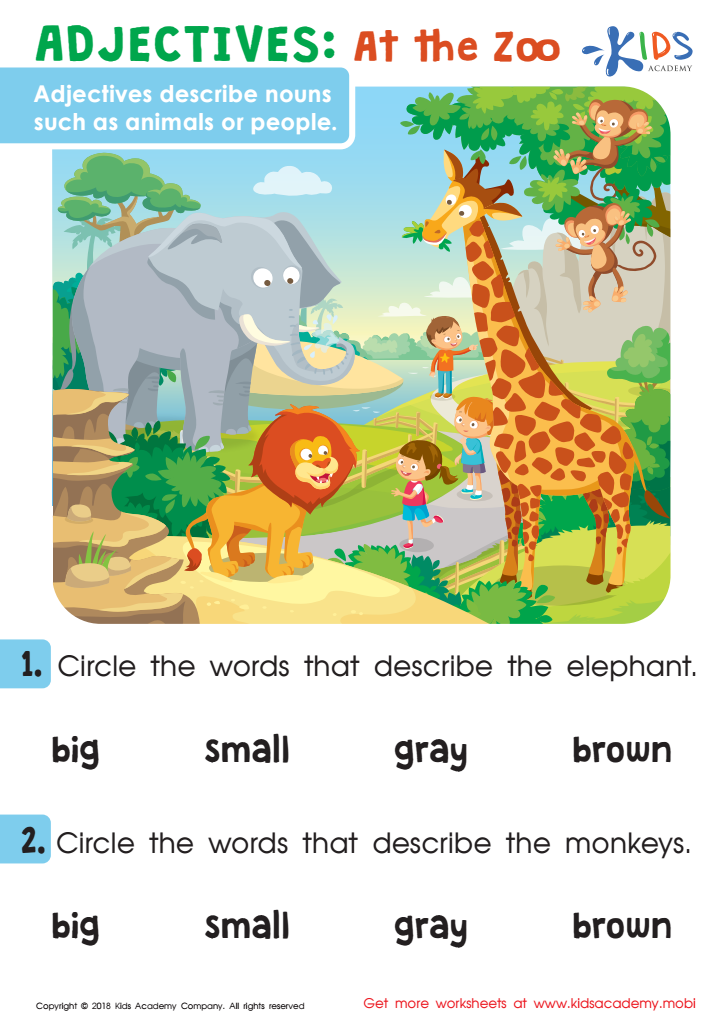
Adjectives: At The Zoo Worksheet

Adjectives: At The Zoo Worksheet

Take your kids to the zoo and ask them about their favorite activities and animals. This worksheet is a great way for kids to learn about adjectives. Explain that adjectives describe nouns like people or animals (e.g. big, tall, dark). Look at the printout with your kids and help them circle words that describe the animals in the picture.
Adjectives: At The Zoo Worksheet
Worksheet
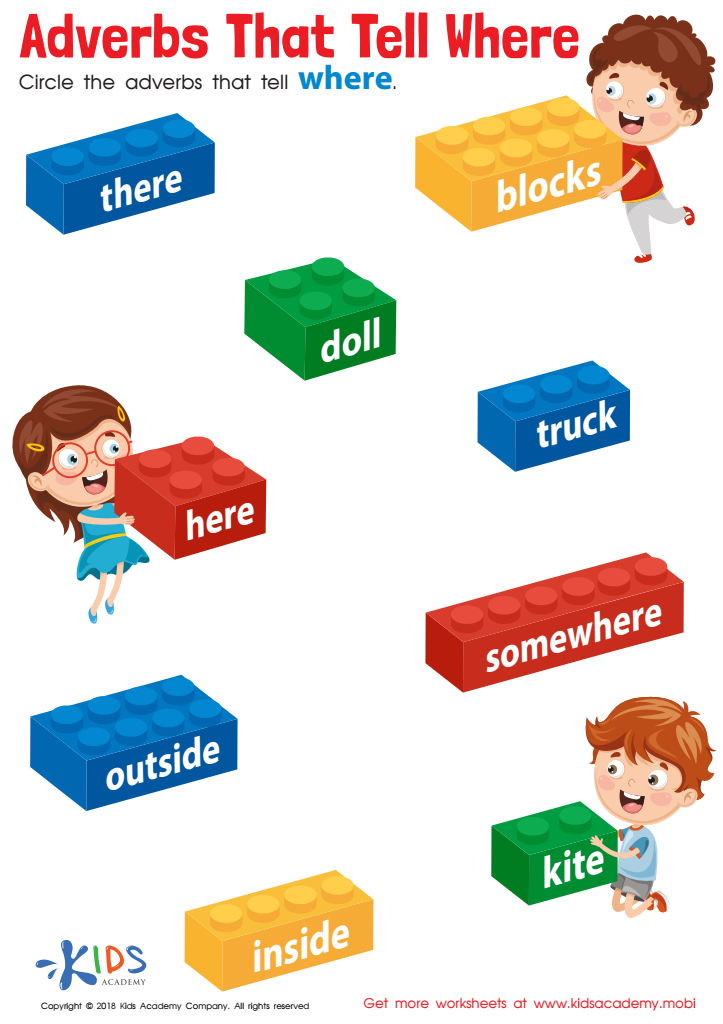
Adverbs That Tell Where Worksheet

Adverbs That Tell Where Worksheet

Help your kids identify adverbs with a fun worksheet. Read the words aloud and ask them to circle the adverbs showing 'where.' Give them easy examples, like 'the girl stood over there.' See if they can create their own examples. This activity makes learning adverbs fun!
Adverbs That Tell Where Worksheet
Worksheet
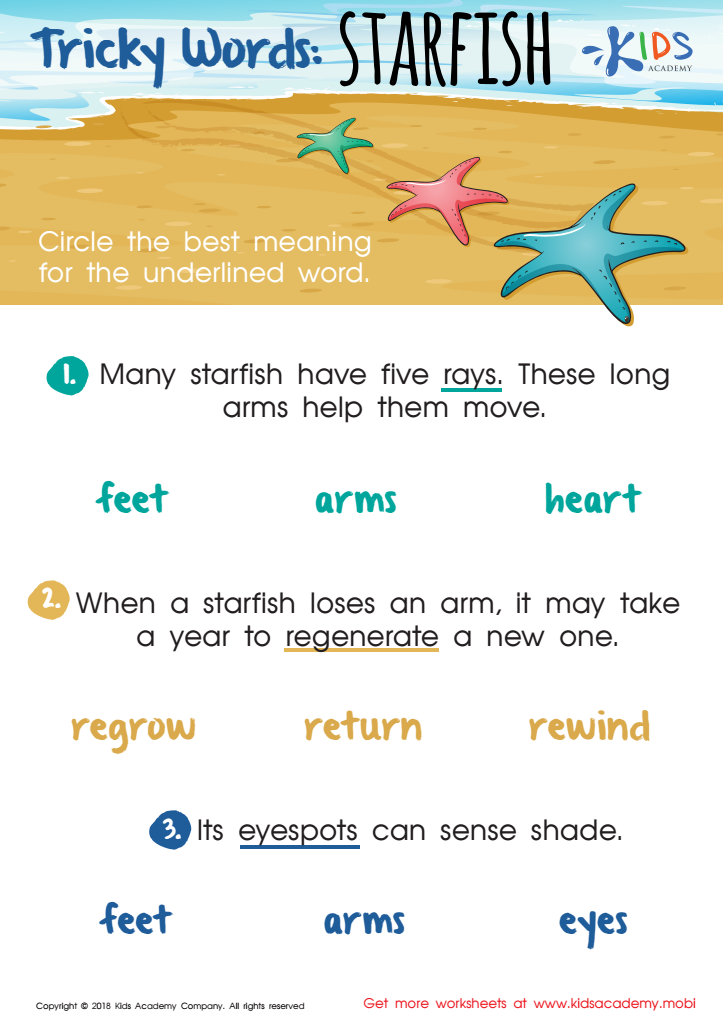
Tricky Words: Starfish Worksheet

Tricky Words: Starfish Worksheet

Encourage your kids' learning with a fun worksheet! Help them circle the best meaning for the underlined words in the sentences. This activity is a great way to practice what they learn at school and have fun. Your little ones will enjoy learning new words and make the experience even more memorable.
Tricky Words: Starfish Worksheet
Worksheet
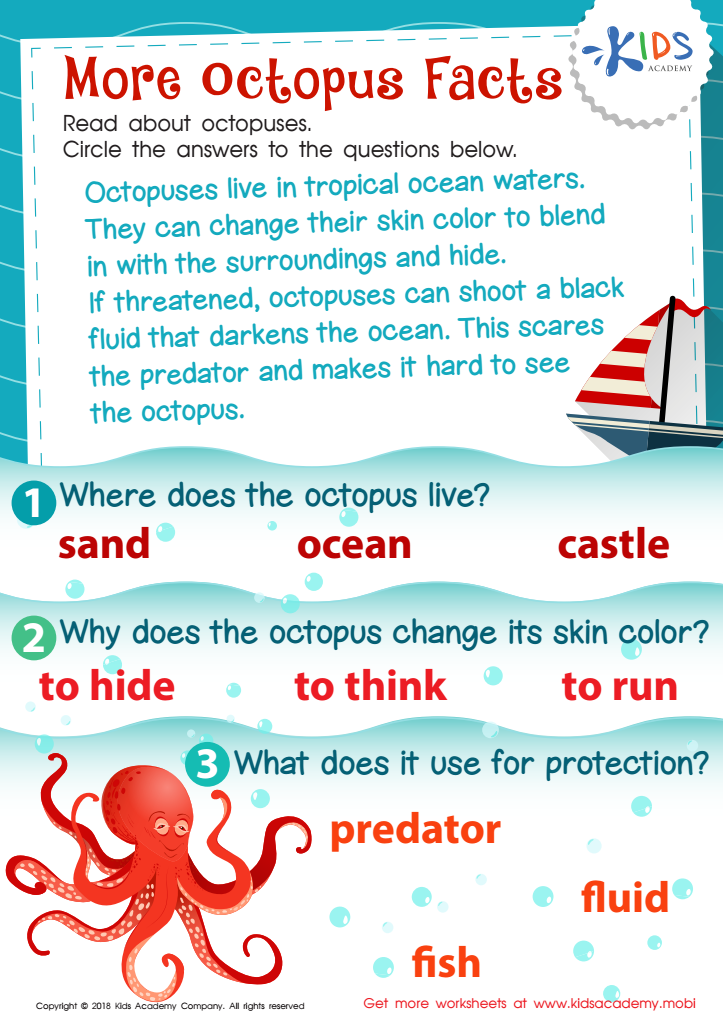
More Octopus Facts Worksheet

More Octopus Facts Worksheet

This worksheet will help your kids learn about the Octopus. Read the text carefully and have kids read with you. Now, ask them questions based on it and help them answer them by circling the right choices. Teaching your kids facts about animals will help them in the long run.
More Octopus Facts Worksheet
Worksheet
Assessment: Aquarium Sign Worksheet

Assessment: Aquarium Sign Worksheet

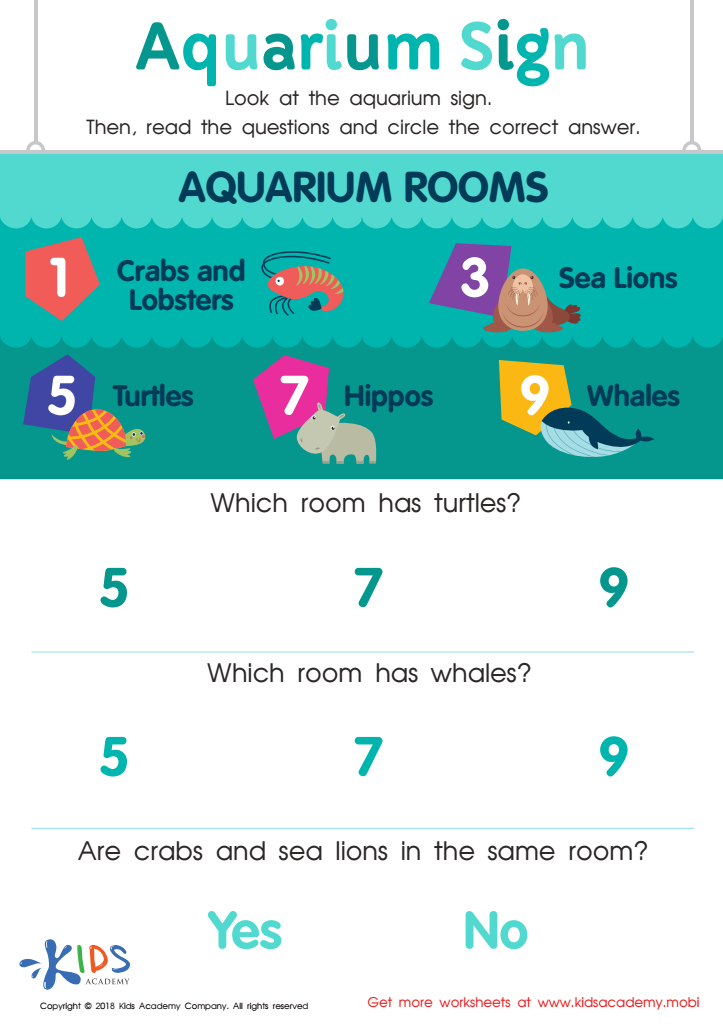
Take your kids to an aquarium and marvel at the sea creatures! Help them identify the animals they see, and ask them which one is their favorite. Look at the aquarium sign and point to each creature. Ask your kids the questions and help them circle the right answer.
Assessment: Aquarium Sign Worksheet
Worksheet
Visit an Aquarium Worksheet

Visit an Aquarium Worksheet

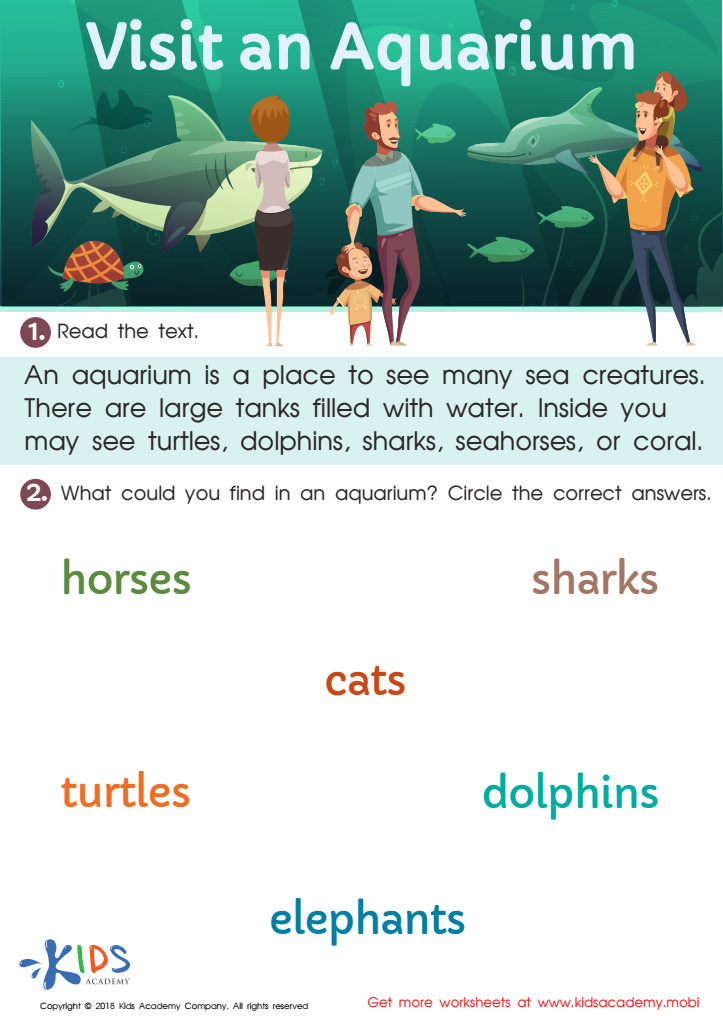
Have your kids ever been to an aquarium? It's a great place to see a variety of sea creatures, like turtles, dolphins, sharks and fish. If they're fascinated by sea life, this worksheet is perfect! Help them circle the aquarium animals among the words in the picture.
Visit an Aquarium Worksheet
Worksheet
Simple Machines: Screw Worksheet

Simple Machines: Screw Worksheet

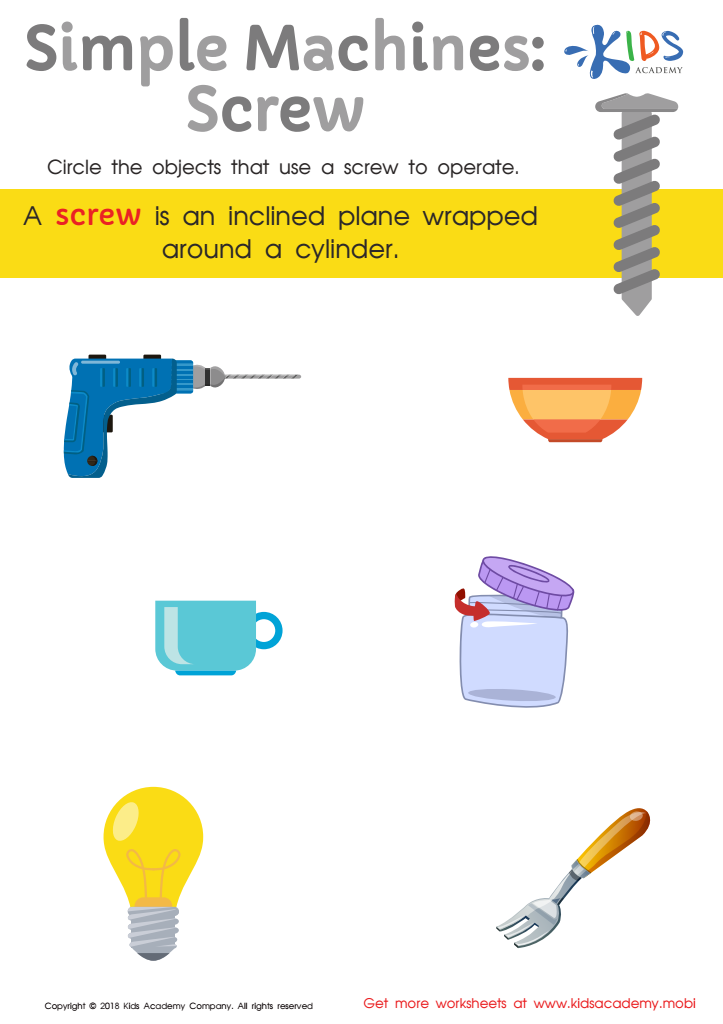
Explain to your kids that learning about simple machines can be fun - like the swings they love on the playground. Ask them to name some of their favorites. Point out that screws are used to connect simple machines. Then, look at pictures together and have your kids circle the objects that use a screw.
Simple Machines: Screw Worksheet
Worksheet
Simple Machines Worksheet

Simple Machines Worksheet

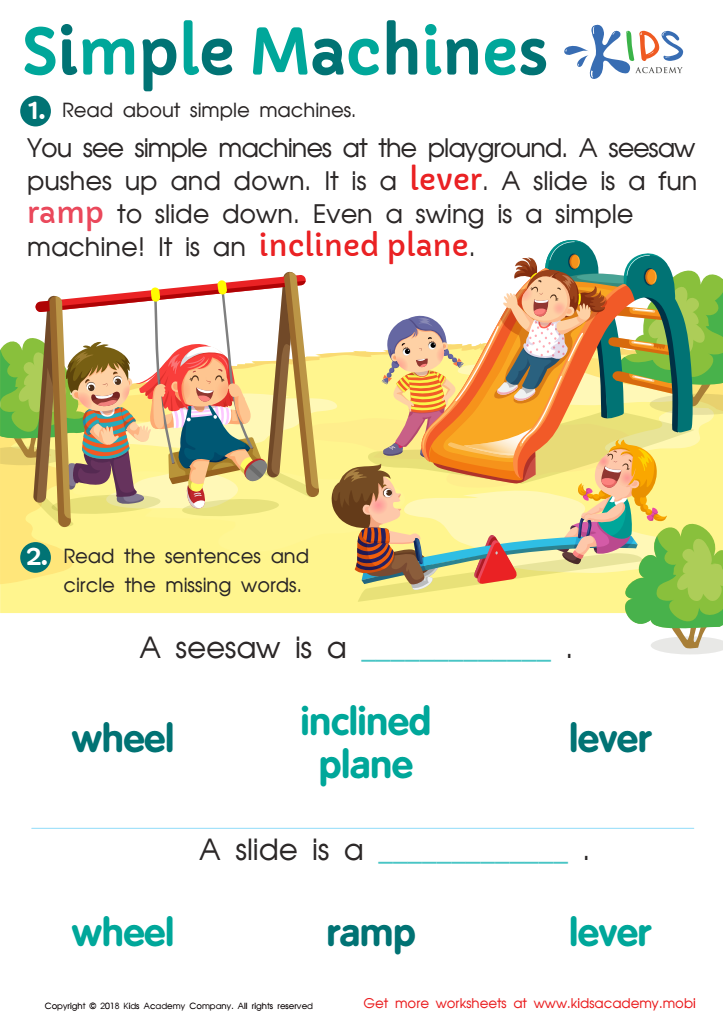
At the playground, your kids likely love to play and swing. Swings are simple machines – they work by using force to move something. Read the following sentences to them, with some words missing - help them fill in the blanks. Simple machines make work easier by __changing__ the size or __direction__ of a force. Swings use a _fulcrum_ and a _lever_ to move.
Simple Machines Worksheet
Worksheet
Dinner Time! Worksheet


Dinner Time! Worksheet

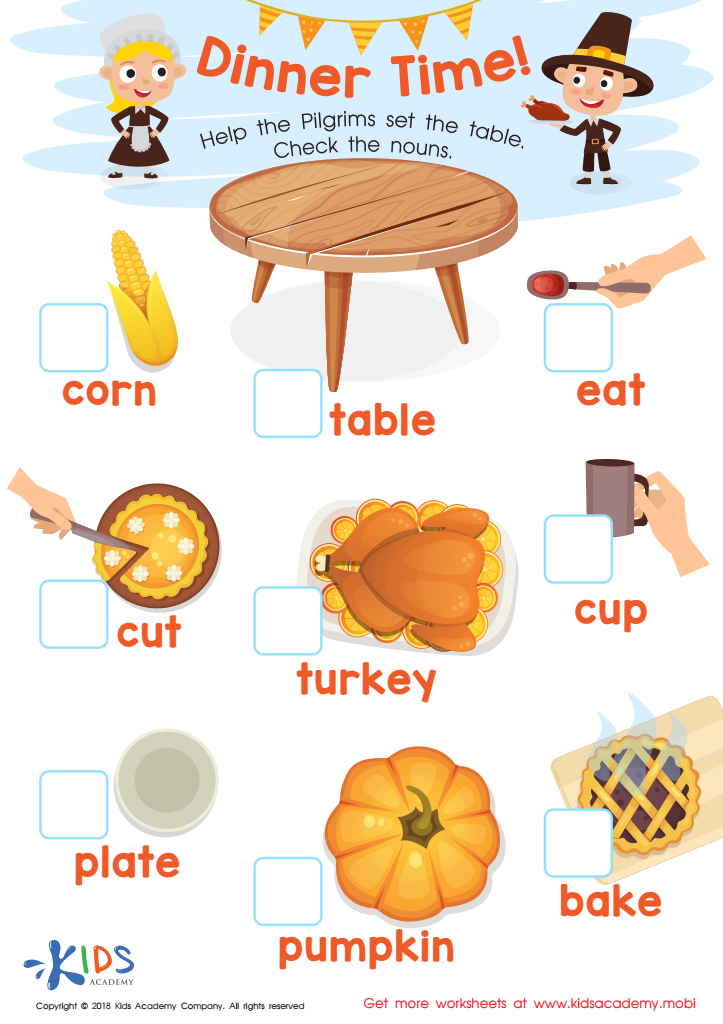
Help your child learn about the Pilgrims by completing this worksheet! The Pilgrims set sail on the Mayflower in 1620 and colonized America, meeting the Native Americans already living there and picking up some of their traditions, like Thanksgiving dinner. Check the nouns in the picture and help your child set the table with the celebratory turkey!
Dinner Time! Worksheet
Worksheet


Building vocabulary for children ages 6-8 is crucial for several reasons. At this stage, children undergo rapid cognitive development and start to read more independently. A rich vocabulary enhances their comprehension, making it easier for them to grasp new concepts, follow instructions, and engage in classroom discussions. Strong vocabulary skills also give them the tools to express their thoughts, ideas, and emotions more effectively, leading to better social interactions and higher self-esteem.

Moreover, vocabulary development is closely tied to academic success. It lays the foundation for improved reading and writing skills, which are essential across all subjects. For example, children with a more extensive vocabulary can decode new words better and understand various texts more easily, which boosts their confidence as readers and learners.

Involvement from parents or teachers in vocabulary-building activities can make learning fun and interactive. Simple strategies, like reading aloud, playing word games, and encouraging storytelling, can significantly enrich a child’s word bank. When children are regularly exposed to new words in different contexts, their brains form stronger connections, facilitating long-term retention.

Ultimately, a robust vocabulary equips children with critical thinking and communication skills that are vital for their future academic and life success. Parents and teachers play key roles in nurturing these skills early on.