Filters

223 filtered results

Clear all filters
Favorites
With answer key
Interactive

223 filtered results

Difficulty Level

Grade


Check out this FREE Trial Lesson on Building Vocabulary for age 6-8!

Key Details

Favorites
With answer key
Interactive
  • 6-8
  • Interactive
  • Building Vocabulary
Tracing Fun Worksheet

Tracing Fun Worksheet

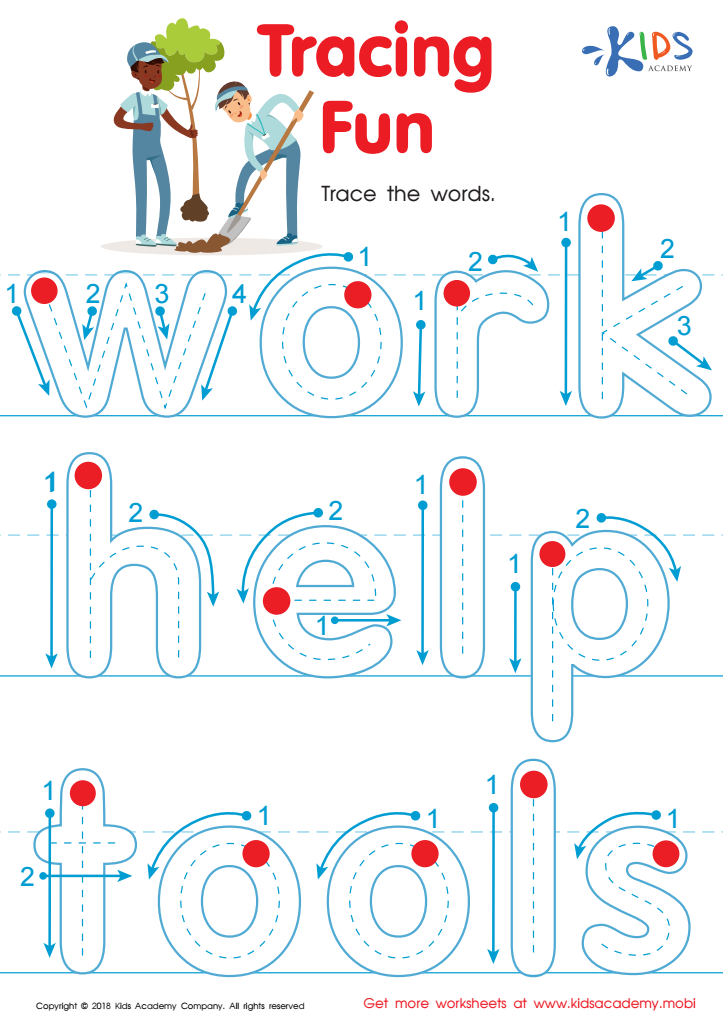
Believe it or not, good handwriting helps with reading! Starting at the top left and writing legibly builds reading skills. This free worksheet helps little learners practice basic sight words. Red dots show them where to start and the words provide reinforcement without them realising. An enjoyable way to boost their reading and writing.
Tracing Fun Worksheet
Worksheet
What's in a Neighborhood? Worksheet

What's in a Neighborhood? Worksheet

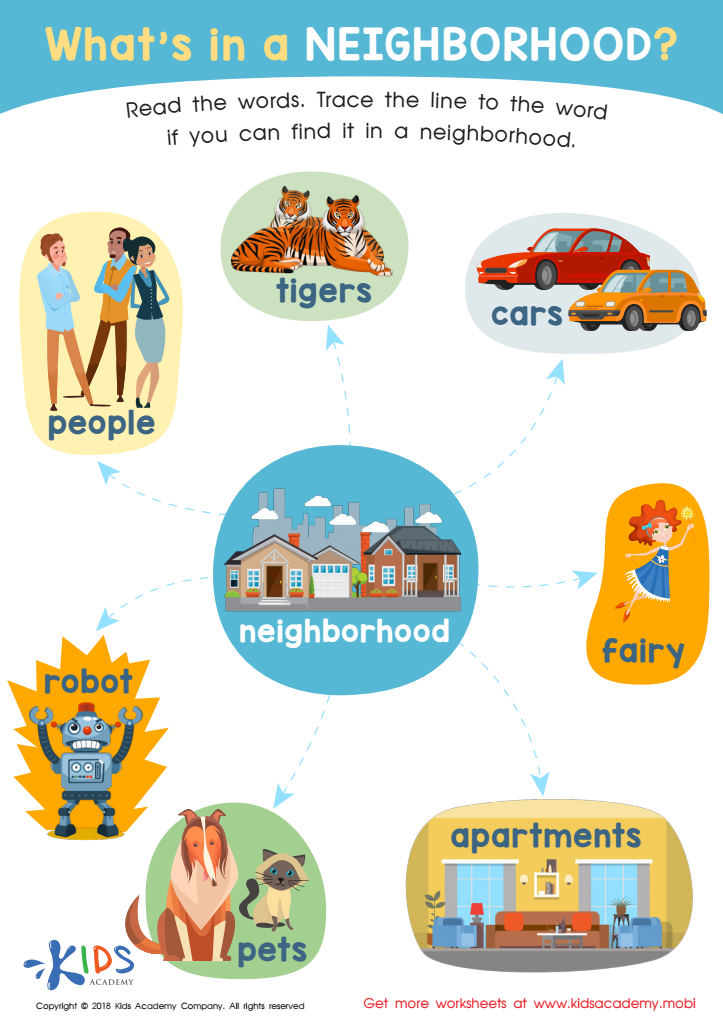
This fun worksheet uses picture clues and traceable lines to help kids learn neighborhood words. Kids will match the neighborhood pictures to the correct words and practice connecting the two. The bright colors make it a great way for kids to practice understanding the qualities of a neighborhood.
What's in a Neighborhood? Worksheet
Worksheet
Flying Planes Worksheet

Flying Planes Worksheet

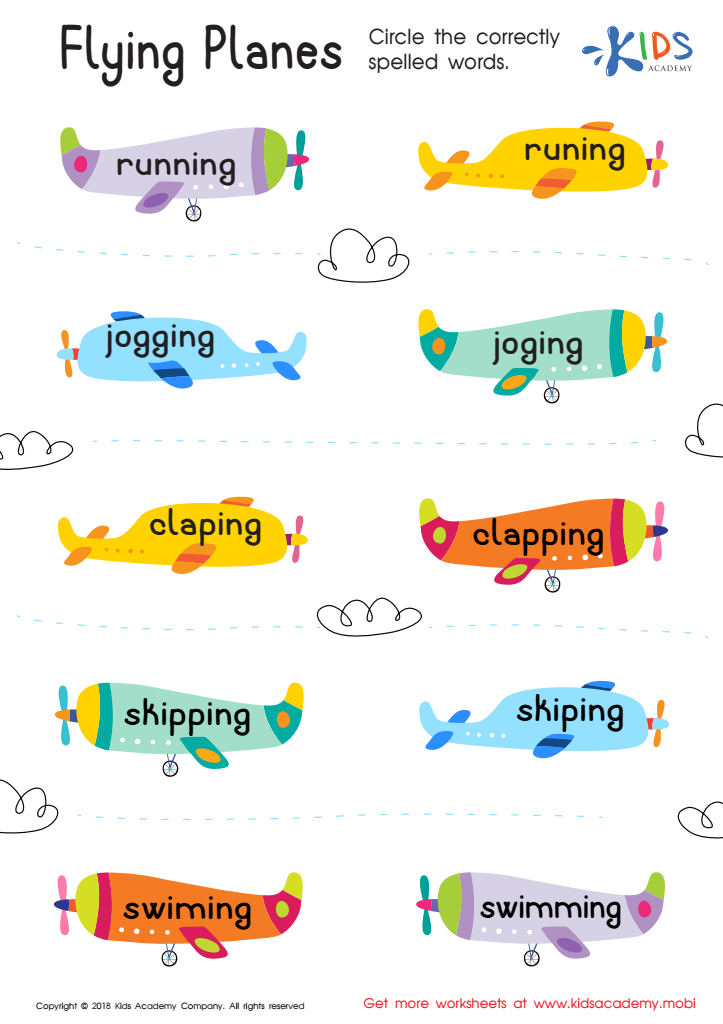
Adding the -ing suffix to verbs is a breeze with this fun worksheet! Colorful planes help your child spot the correct spelling of words that end in consonants - double the consonant, add -ing! Kids can compare correctly and incorrectly spelled words, giving them a better understanding of how the word looks correctly. Download the free PDF and get spelling!
Flying Planes Worksheet
Worksheet
Silly Snakes Worksheet

Silly Snakes Worksheet

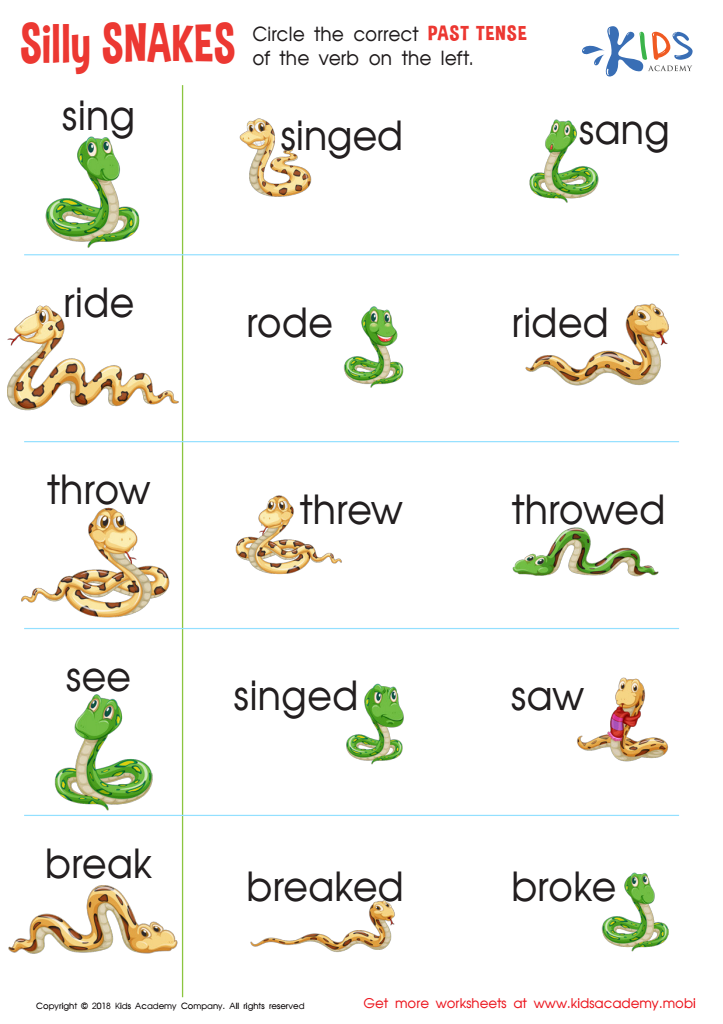
Kids will get a giggle out of these silly snakes! They're helping to find past tense verbs in this fun worksheet. Have your child look at each snake in the left column and read the word. Then, choose the correct past tense verb from the two options in each row.
Silly Snakes Worksheet
Worksheet
Look Carefully Worksheet

Look Carefully Worksheet

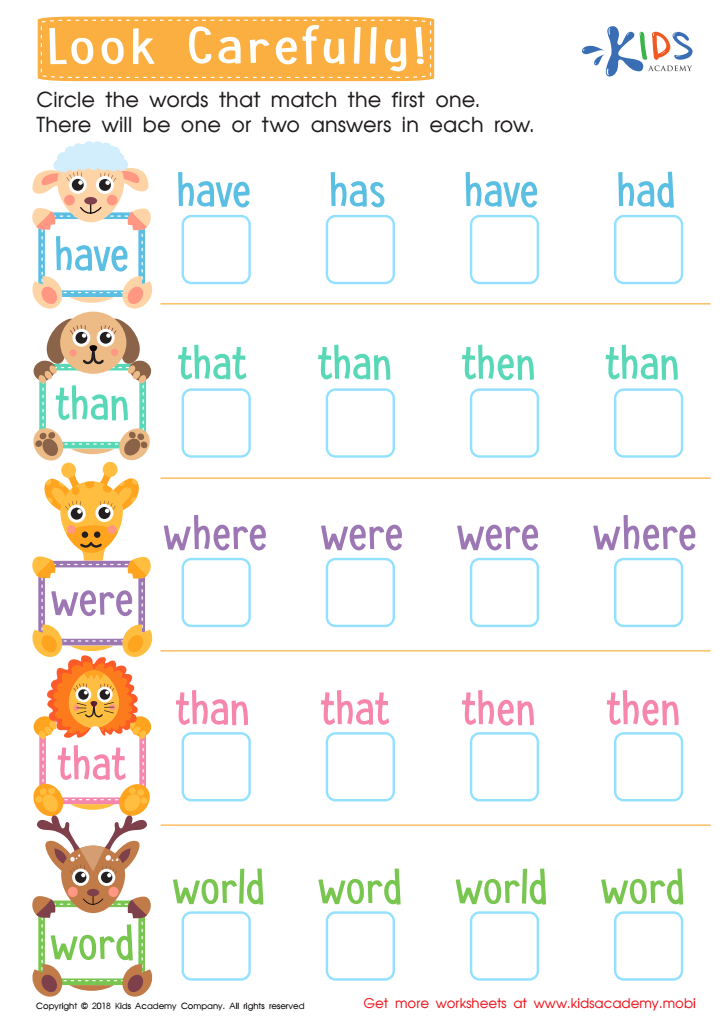
It's crucial to teach kids to identify sight words and become fluent readers. This free worksheet helps make it simpler for kids to learn the similarities and differences between similar words. They'll get practice by looking at the box word and selecting the one that matches from the row.
Look Carefully Worksheet
Worksheet
What Does It Mean? Worksheet

What Does It Mean? Worksheet

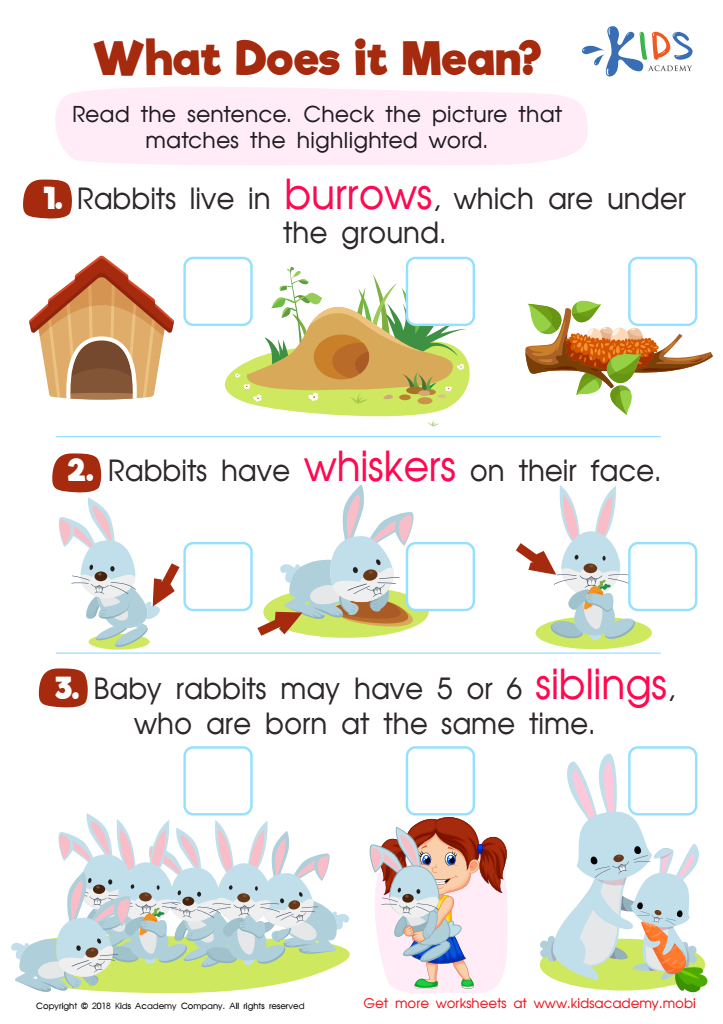
Teach your child to use context clues with this engaging Kids Academy worksheet. Read the sentences and find the pink-highlighted word. Use the other words in the sentence to figure out the meaning, then check the box next to the picture that represents it.
What Does It Mean? Worksheet
Worksheet
Find The Verbs: -ed Ending Worksheet

Find The Verbs: -ed Ending Worksheet

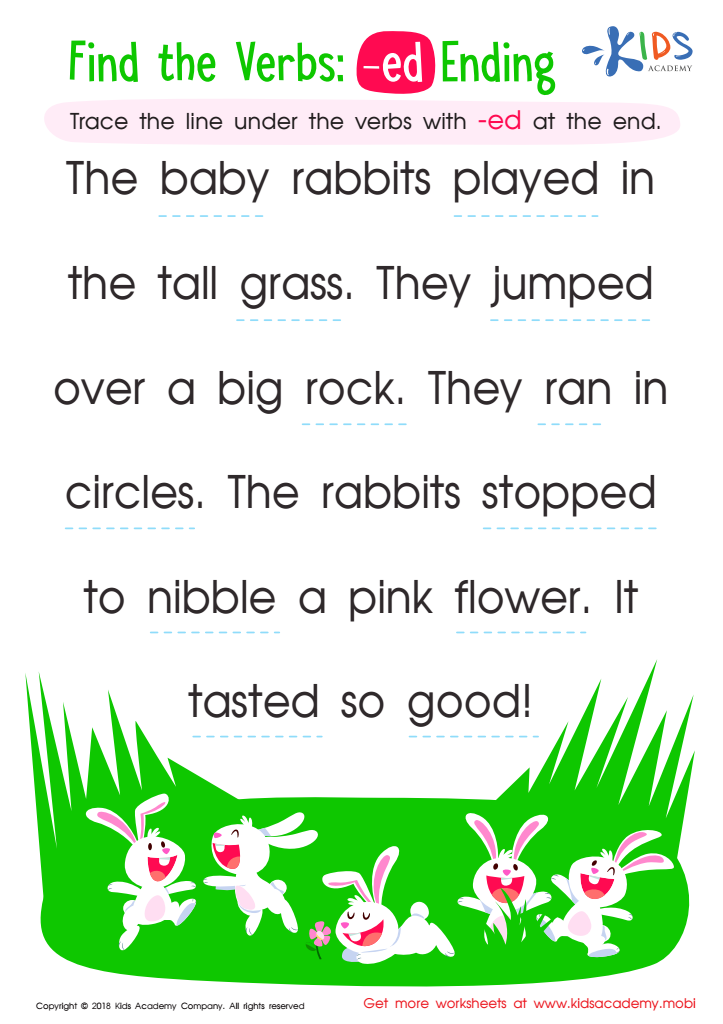
Help your kid boost grammar skills using this spring-themed worksheet! Read the paragraph aloud and have them underline verbs with -ed endings. They'll have fun with the cute bunnies and learn about the importance of verbs in a sentence!
Find The Verbs: -ed Ending Worksheet
Worksheet
The Ice Age Worksheet

The Ice Age Worksheet

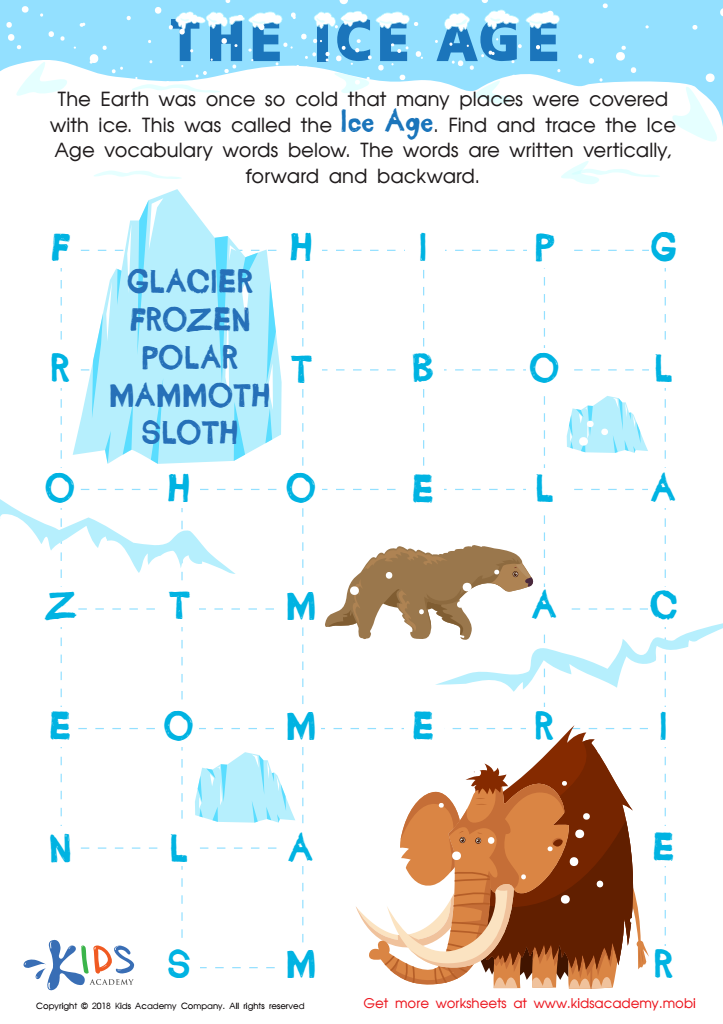
Let your child explore the Ice Age with this fun word search from Kids Academy! They can find words like glacier, frozen, polar, mammoth, and sloth. After finding each, discuss the meaning to help them build a better vocabulary and understanding of ancient history.
The Ice Age Worksheet
Worksheet
Phonics and Word Recognition: Assessment 3 Worksheet

Phonics and Word Recognition: Assessment 3 Worksheet

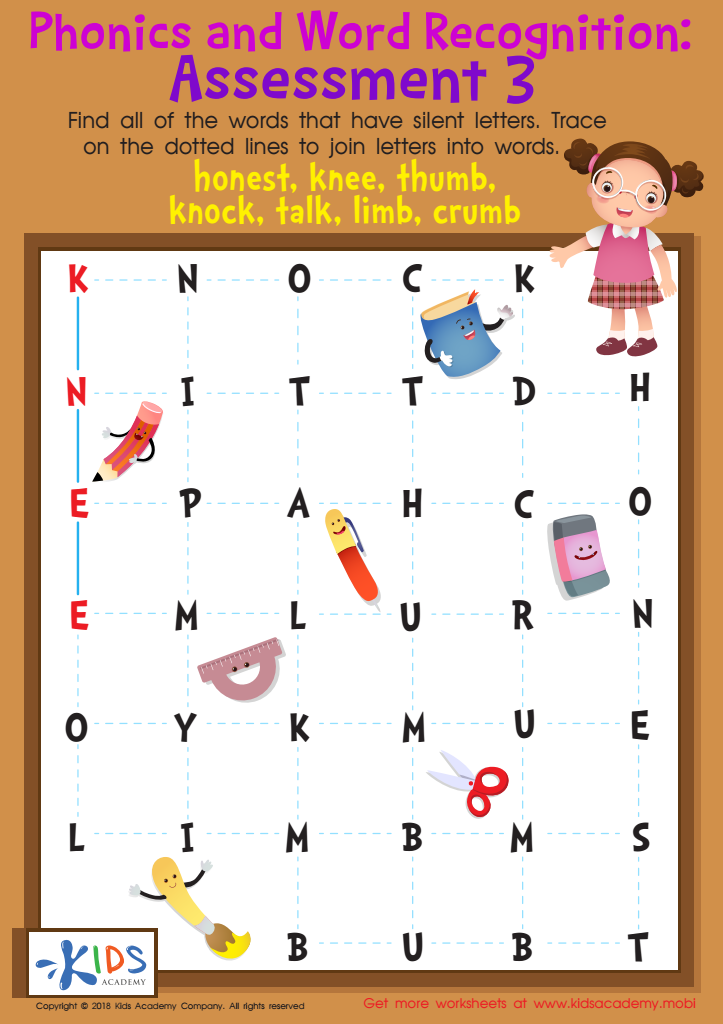
Silent letters can be tricky for kids learning to read and write. Show them how they work with words like 'knee' and 'dumb'. Then, challenge them to come up with their own. Give them a worksheet with silent letters and trace the lines to join the letters into words.
Phonics and Word Recognition: Assessment 3 Worksheet
Worksheet
Phonics and Word Recognition: Assessment 2 Worksheet

Phonics and Word Recognition: Assessment 2 Worksheet

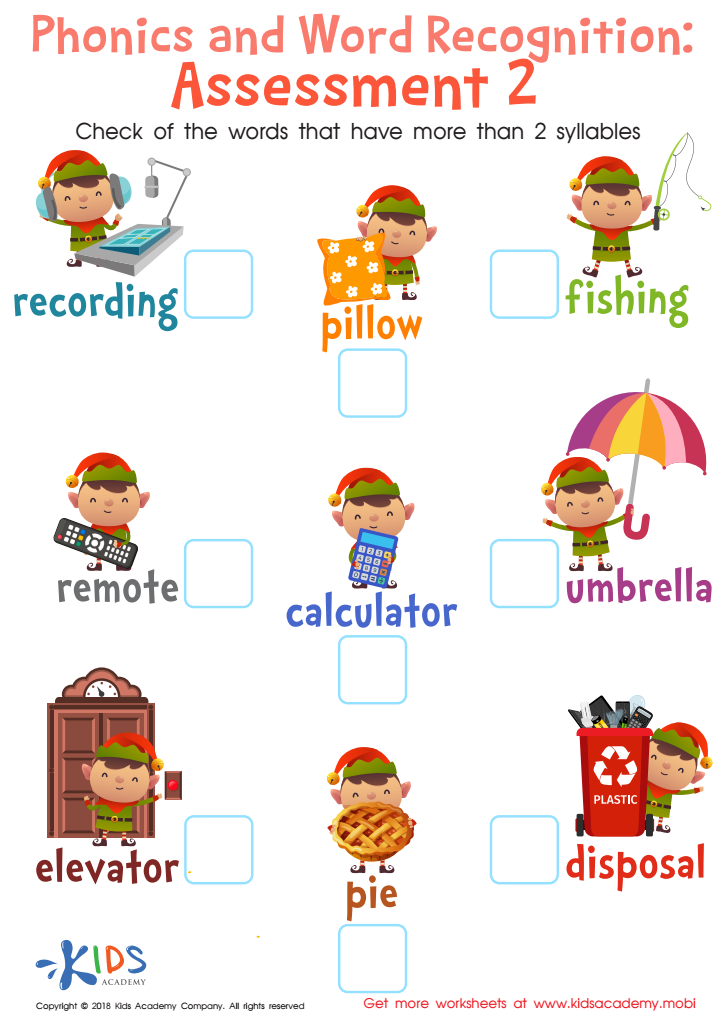
Help your kids learn proper pronunciation by counting syllables. Most words they'll encounter have 1-3 syllables, making them simple to say. Have them repeat the words in your worksheet after you. Focus on longer words with more than two syllables.
Phonics and Word Recognition: Assessment 2 Worksheet
Worksheet
Phonics and Word Recognition: Assessment 1 Worksheet
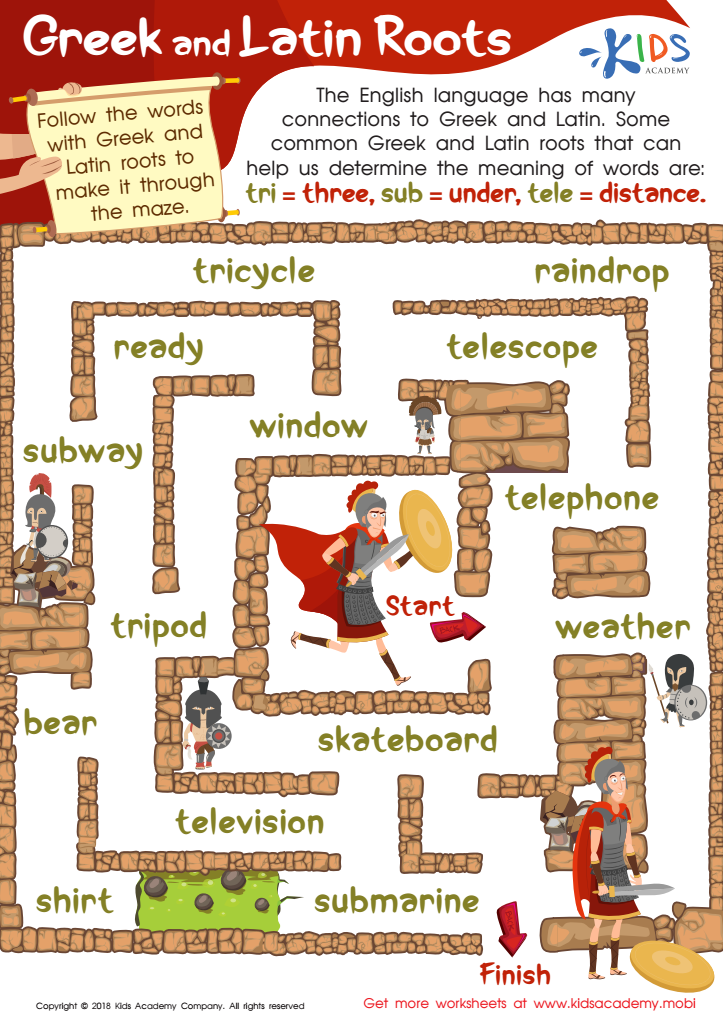

Phonics and Word Recognition: Assessment 1 Worksheet

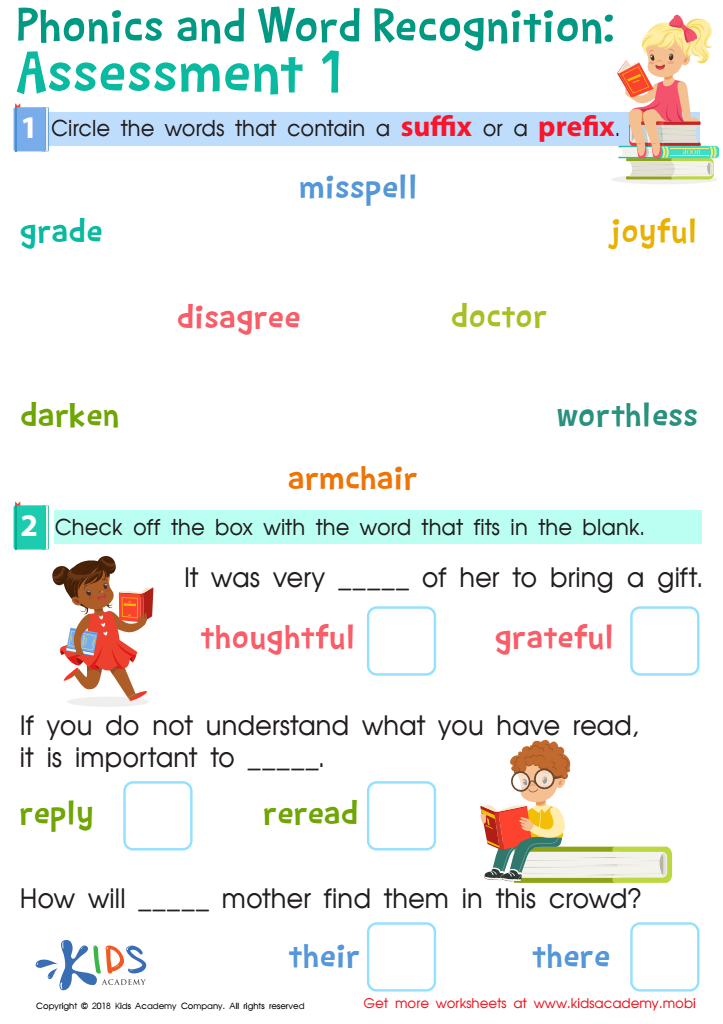
Explain prefixes (words added to start of another word to give it a new meaning) and suffixes (added to end of word to change its meaning) to your kids with examples like 'unhappy' (prefix) and 'forgetful' (suffix). Now, help your child complete this worksheet, including circling words and checking boxes.
Phonics and Word Recognition: Assessment 1 Worksheet
Worksheet
Greek and Latin Roots Worksheet
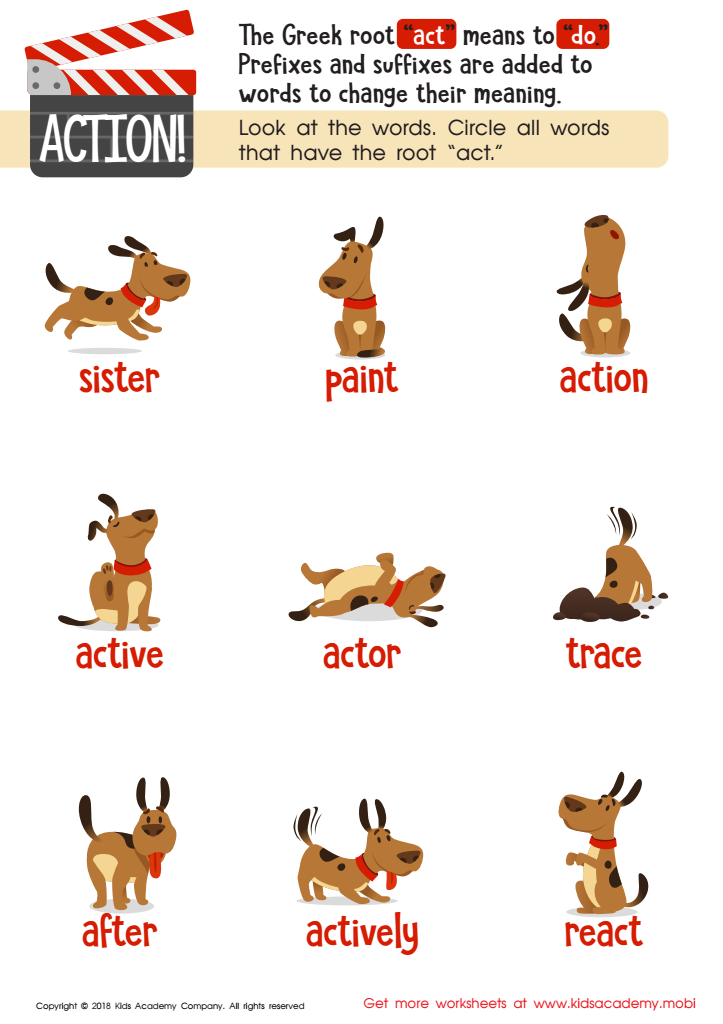

Greek and Latin Roots Worksheet

English borrows lots of words from other languages, and it has many ties to Greek and Latin. For example, 'tri', 'sub' and 'tele' (all from Greek and Latin) mean 'three', 'under' and 'distance' respectively. Help your child understand the meanings of words by having them work through a maze with words from these languages.
Greek and Latin Roots Worksheet
Worksheet
Action! Worksheet
Action! Worksheet

Action! Worksheet

Most English words are borrowed, and prefixes and suffixes are added to change the meaning. A popular prefix is 'act', from the Greek root meaning 'to do'. With your kids, look at the words in this worksheet and circle those with the root 'act'.
Action! Worksheet
Worksheet
There, Their, They're Worksheet
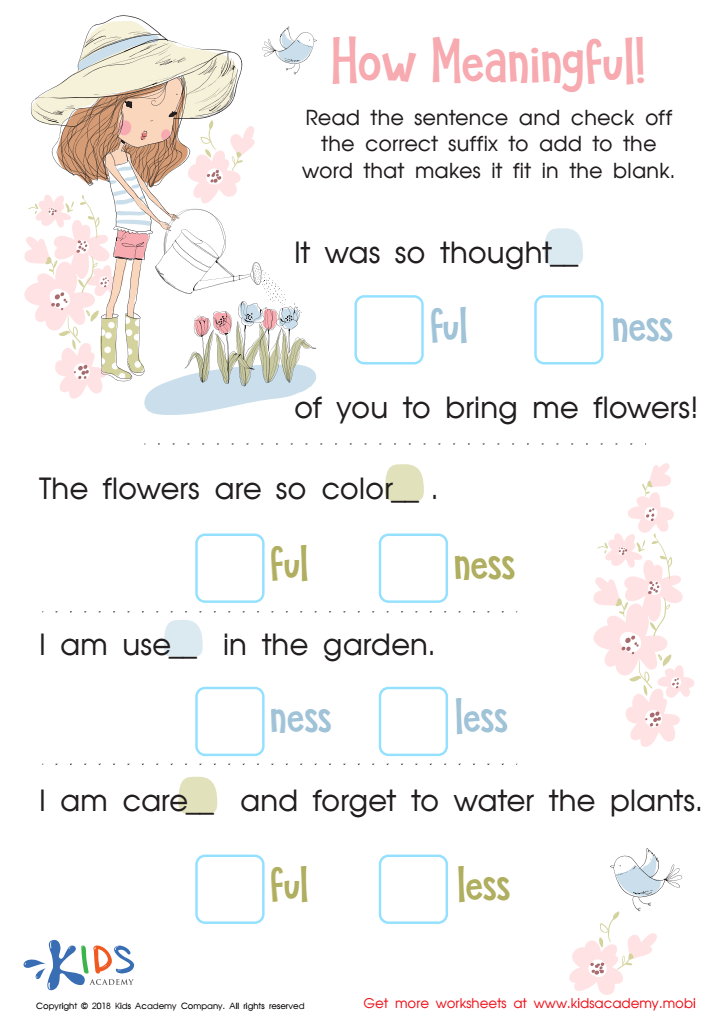

There, Their, They're Worksheet

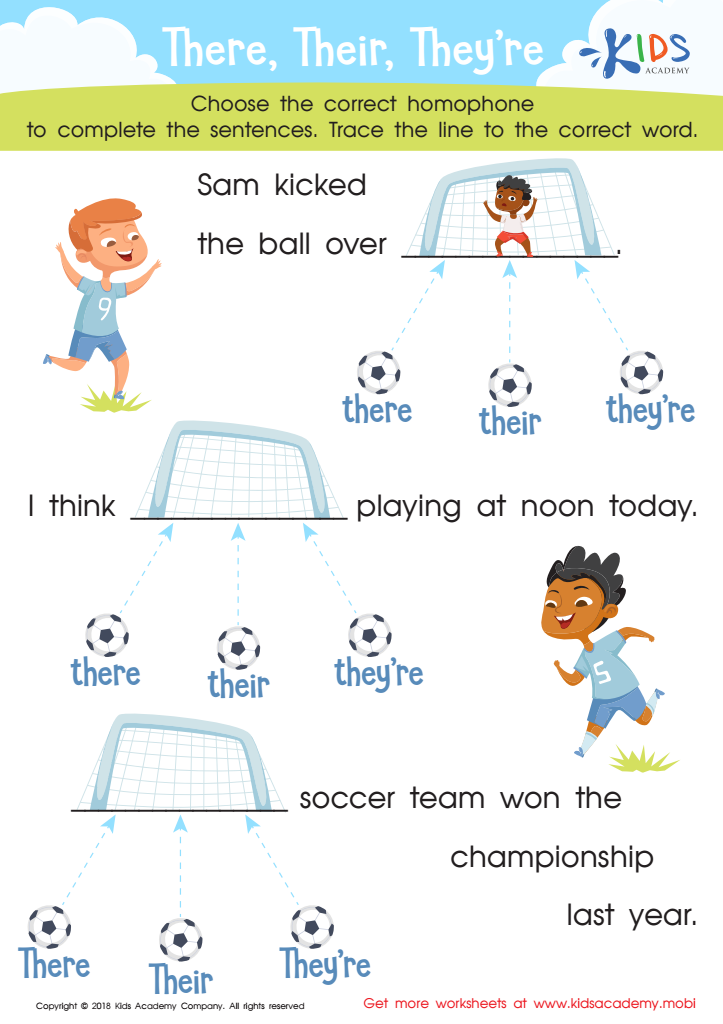
Explain to your kids the difference between 'there', 'their' and 'they're'. These three words are homophones - spelt similarly but with different meanings. Help them choose the correct homophones when completing sentences, and trace the line to the right word.
There, Their, They're Worksheet
Worksheet
How Meaningful! Worksheet

How Meaningful! Worksheet

'Meaningful' is used to describe something that carries importance to someone else. For example, calling friends on their birthdays. The suffix -ful can also be added to other words to create new meanings; try this with your kids and help them check the correct suffix to complete the sentence.
How Meaningful! Worksheet
Worksheet
Read It! Worksheet
Read It! Worksheet

Read It! Worksheet

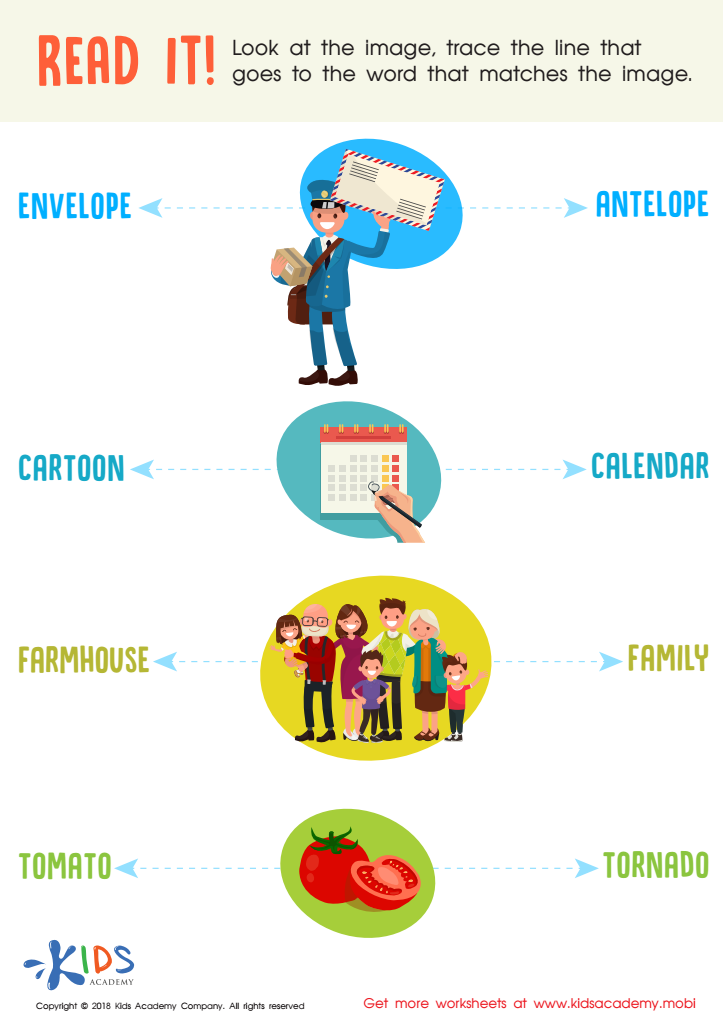
Point to each image on this worksheet, asking your child what it is. Read the 2 options then help your child trace the line to the correct word. It'll keep them engaged and provide visual stimulation.
Read It! Worksheet
Worksheet
Decoding Multisyllabic Words Worksheet
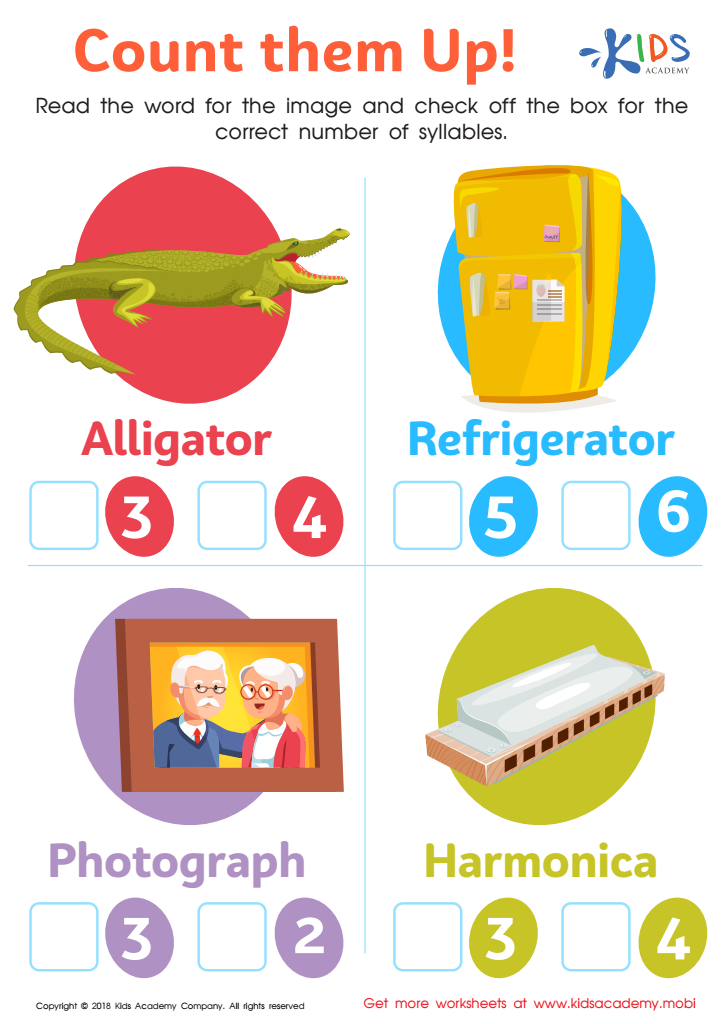

Decoding Multisyllabic Words Worksheet

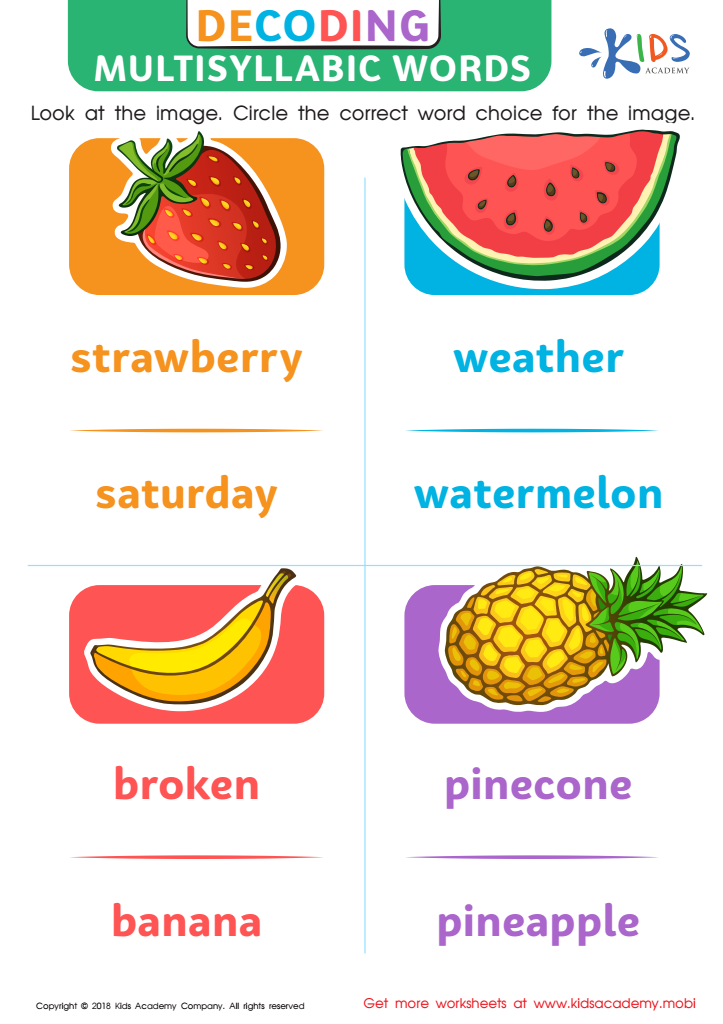
Ask your kids what their favorite fruits are. Show them the 4 images and point to each one, asking them what it's called. Help them circle the correct word choice for each one. Fruits are a healthy and delicious way to eat; get your kids to identify them!
Decoding Multisyllabic Words Worksheet
Worksheet
Count Them Up Worksheet

Count Them Up Worksheet

This worksheet has four colorful pictures. Ask your students to identify and name each image, then count the syllables in the word. Make them repeat the word after you, and check off the box with the correct number of syllables. Mastering the art of counting goes beyond numbers. Get your students counting syllables with this activity!
Count Them Up Worksheet
Worksheet
Synonyms or Antonyms: Assessment Worksheet

Synonyms or Antonyms: Assessment Worksheet

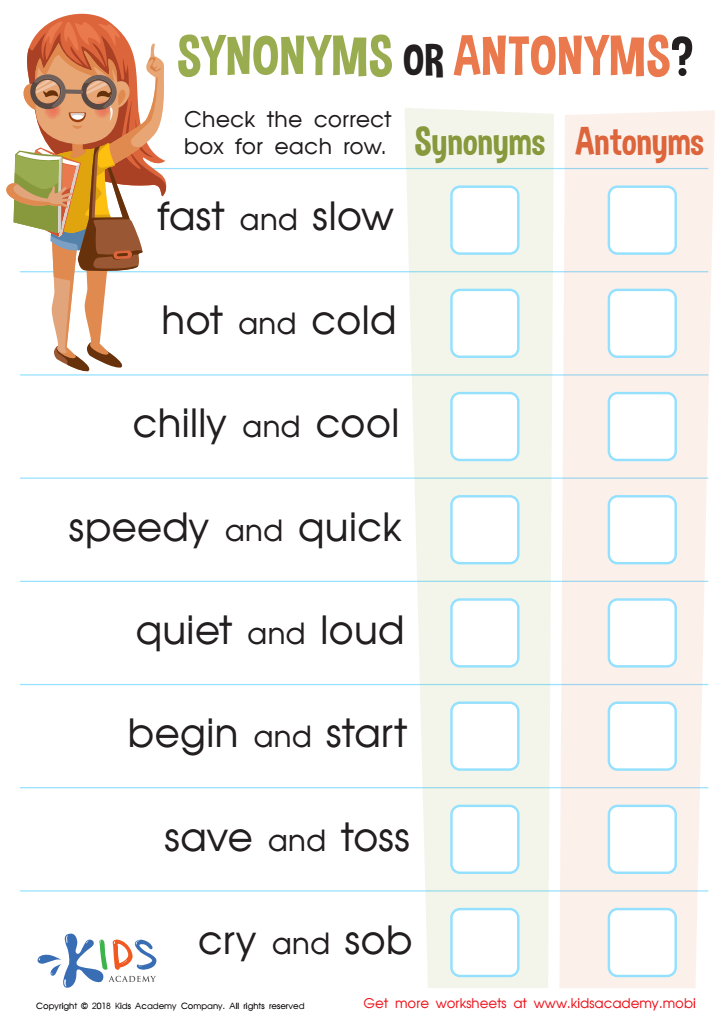
Test your child's knowledge with this fun worksheet! Ask them to read the words and select if they are synonyms or antonyms - e.g. 'happy' is a synonym and 'bad' is an antonym. For an extra challenge, ask them to provide two synonyms and two antonyms for each word.
Synonyms or Antonyms: Assessment Worksheet
Worksheet
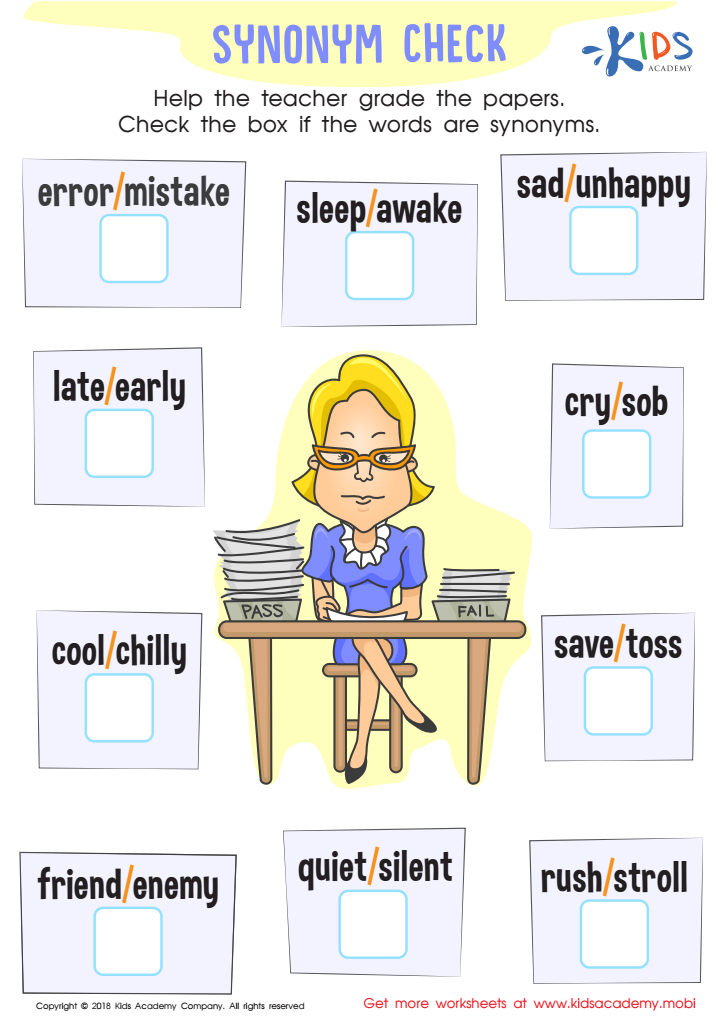
Synonym Check Worksheet

Synonym Check Worksheet

Ask your kids what a synonym is, and listen to their definitions. If needed, explain it's a word that has a similar meaning to another. Give examples, then ask them to do the same. For this worksheet, get them to help grade the papers. Have them check the boxes if the words are synonyms.
Synonym Check Worksheet
Worksheet
Antonyms: Prometheus Worksheet

Antonyms: Prometheus Worksheet

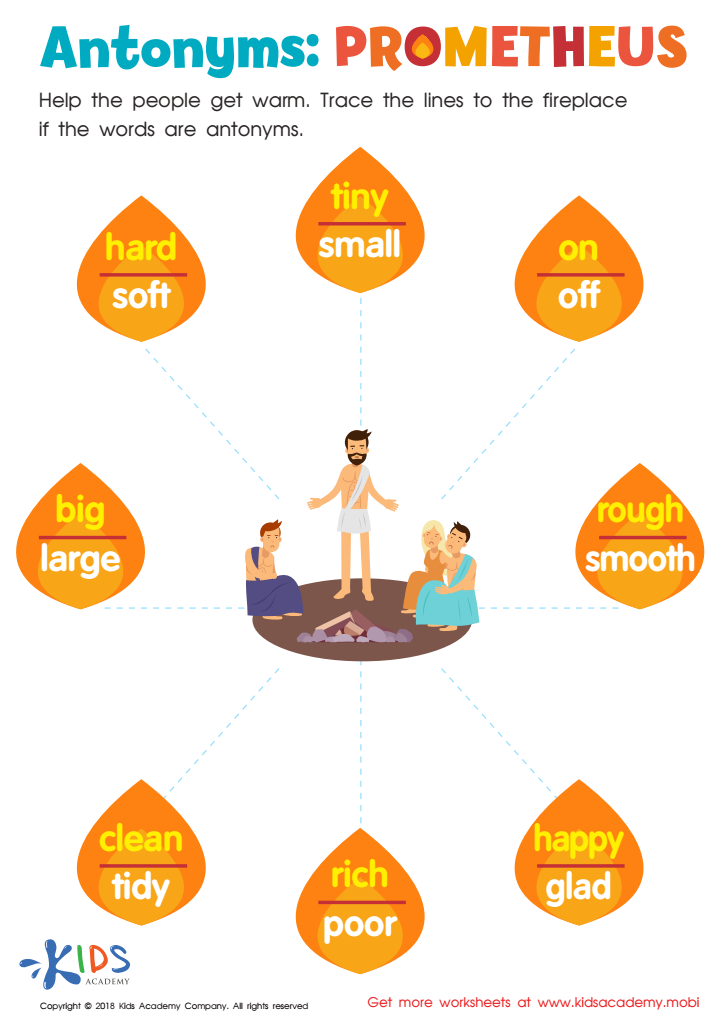
Antonyms are words with opposite meanings to another. For example, the antonyms of 'good' are 'bad', 'poor' and 'wicked'. Ask your child to give you antonyms for 'Prometheus', which relates to fire. Invite your kids to trace the lines to the fireplace if the words are antonyms, helping the people in the tracing sheet get warm.
Antonyms: Prometheus Worksheet
Worksheet
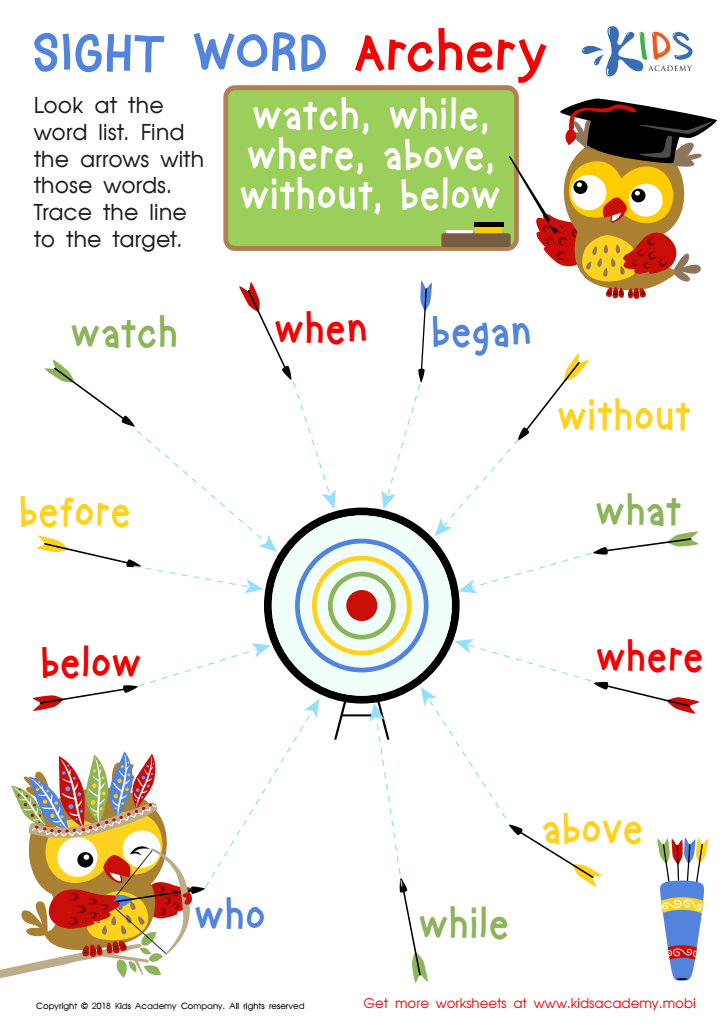
Sight Word Archery Worksheet

Sight Word Archery Worksheet

Read the words list with your kids, pointing at each one. Ask them to do the same. Help them find the arrows with those words and trace the line to the target in the centre.
Sight Word Archery Worksheet
Worksheet
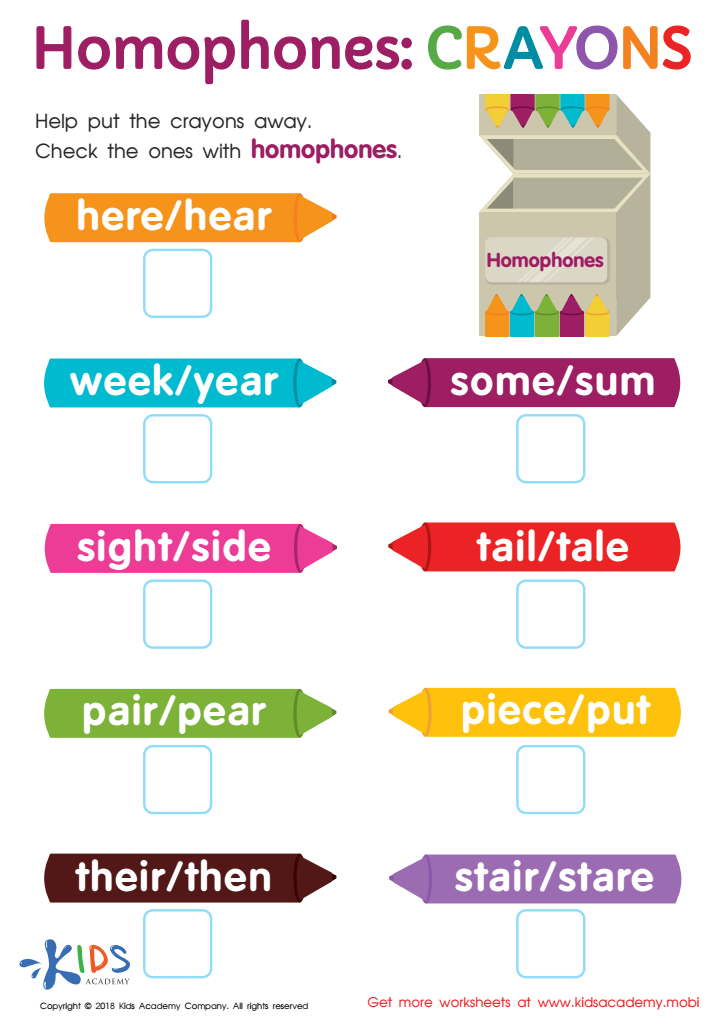
Homophones: Crayons Worksheet

Homophones: Crayons Worksheet

Ask your kids: "What are homophones?" Explain that homophones are words that sound alike but have different meanings, like 'dare' and 'deer'. Ask them to identify homophones by putting the crayons in this printout away according to the words.
Homophones: Crayons Worksheet
Worksheet
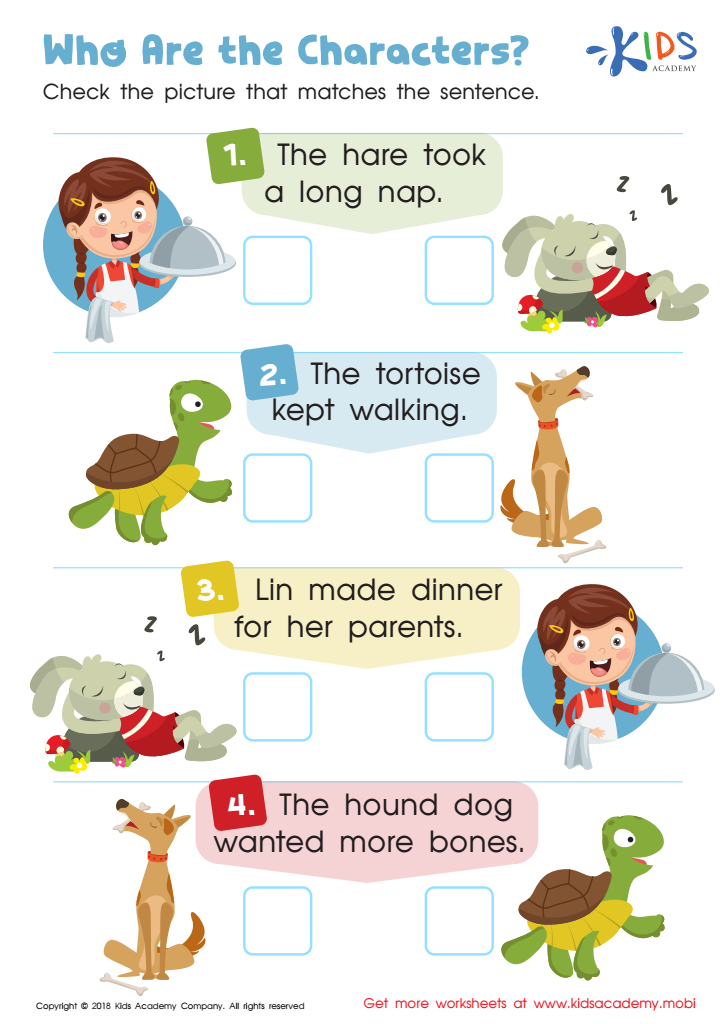
Who Are The Characters Worksheet


Who Are The Characters Worksheet

This worksheet tests your child's reading skills. Read each sentence out loud with them, then ask which of the two pictures match it. Help them check, then repeat this for the other sentences.
Who Are The Characters Worksheet

Worksheet


Building vocabulary for children ages 6-8 is crucial for several reasons. At this stage, children undergo rapid cognitive development and start to read more independently. A rich vocabulary enhances their comprehension, making it easier for them to grasp new concepts, follow instructions, and engage in classroom discussions. Strong vocabulary skills also give them the tools to express their thoughts, ideas, and emotions more effectively, leading to better social interactions and higher self-esteem.

Moreover, vocabulary development is closely tied to academic success. It lays the foundation for improved reading and writing skills, which are essential across all subjects. For example, children with a more extensive vocabulary can decode new words better and understand various texts more easily, which boosts their confidence as readers and learners.

Involvement from parents or teachers in vocabulary-building activities can make learning fun and interactive. Simple strategies, like reading aloud, playing word games, and encouraging storytelling, can significantly enrich a child’s word bank. When children are regularly exposed to new words in different contexts, their brains form stronger connections, facilitating long-term retention.

Ultimately, a robust vocabulary equips children with critical thinking and communication skills that are vital for their future academic and life success. Parents and teachers play key roles in nurturing these skills early on.