Consonants Worksheets for Ages 6-9 - Page 2
34 filtered results
-
From - To
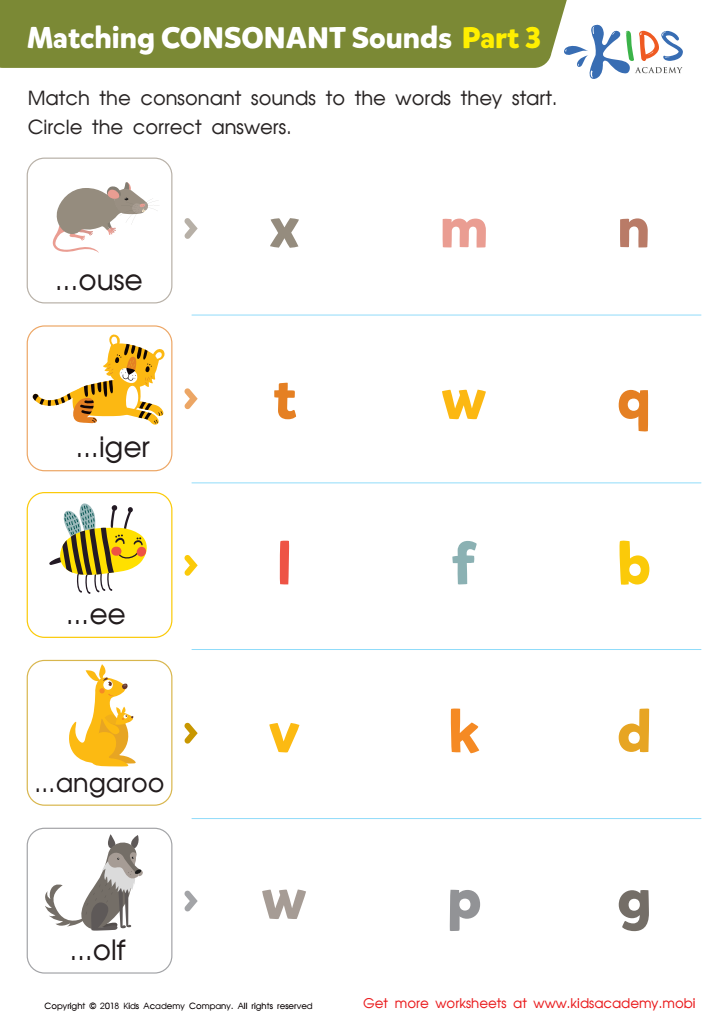
Matching Consonant Sounds: Part 3 Worksheet
 Assign to My Students
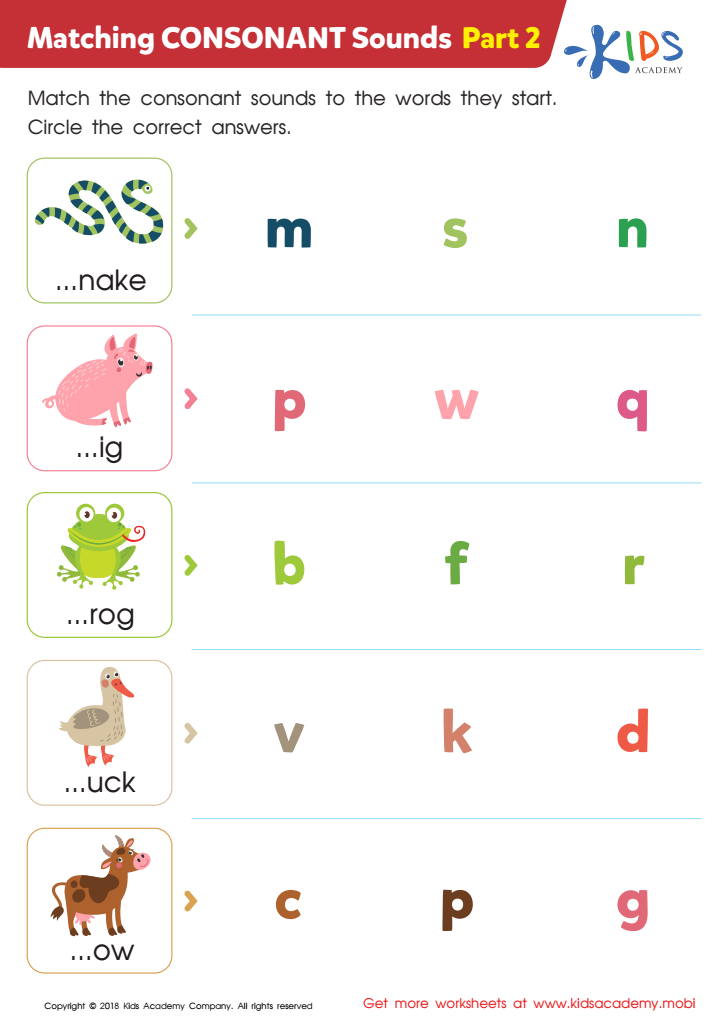
Matching Consonant Sounds: Part 2 Worksheet
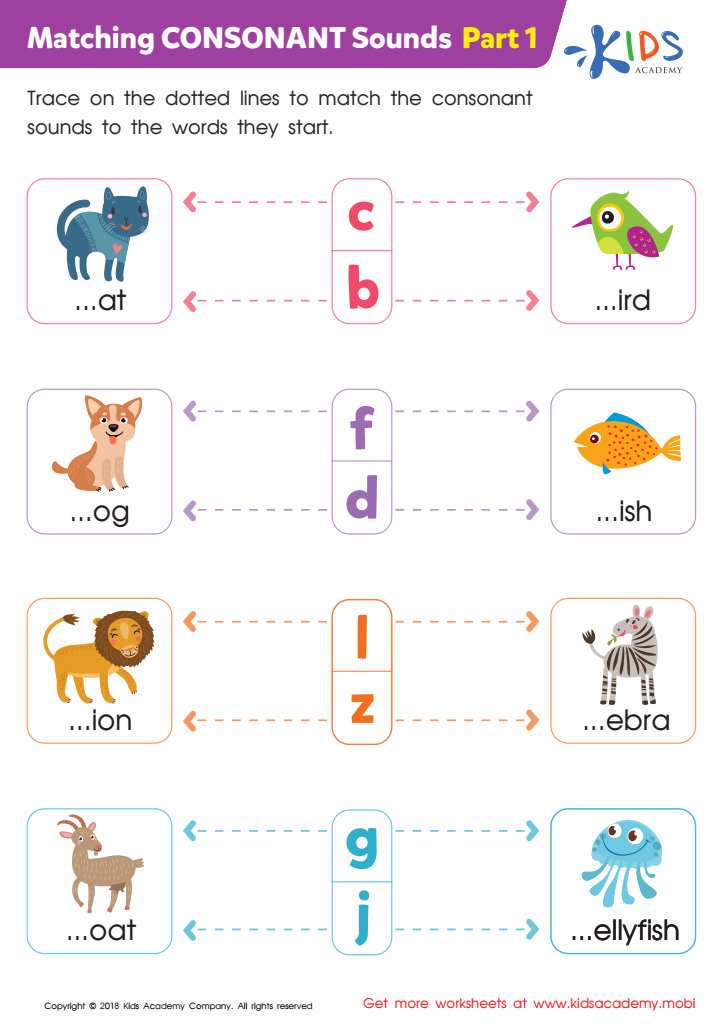
Matching Consonant Sounds: Part 1 Worksheet
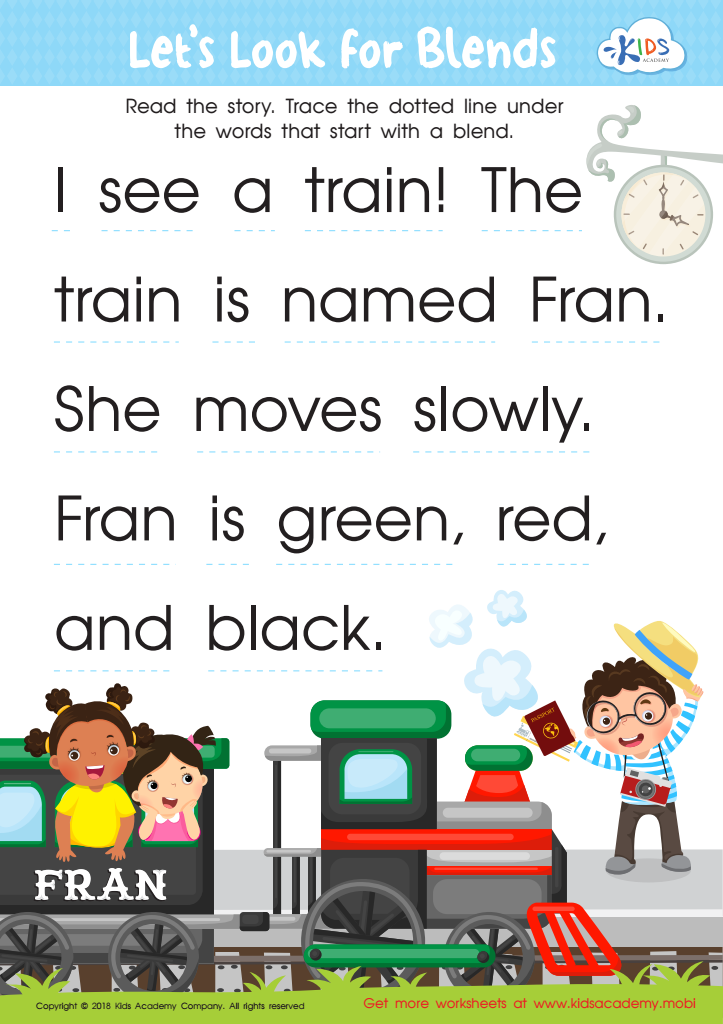
Let's Look for Blends Worksheet
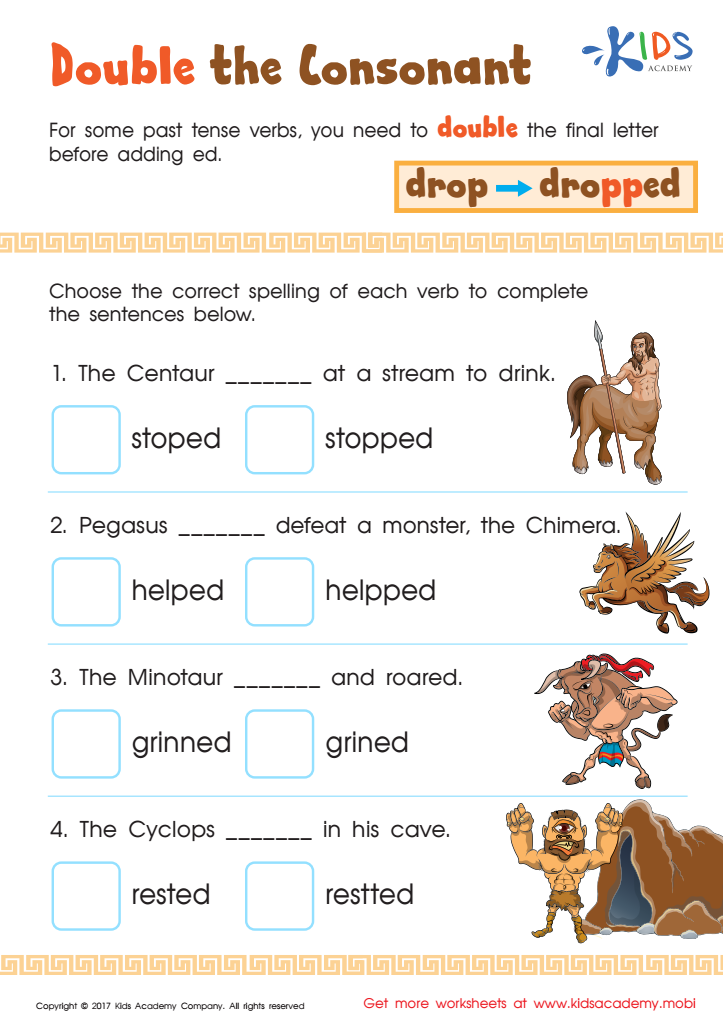
Double Consonant Spelling Worksheet
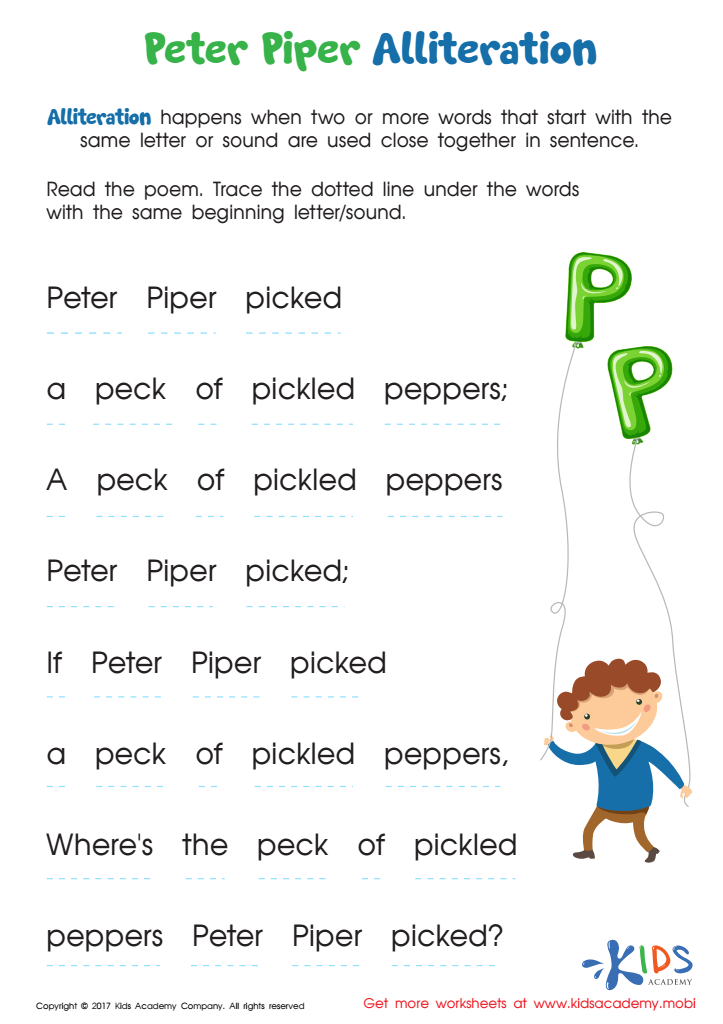
Peter Piper Alliteration Worksheet
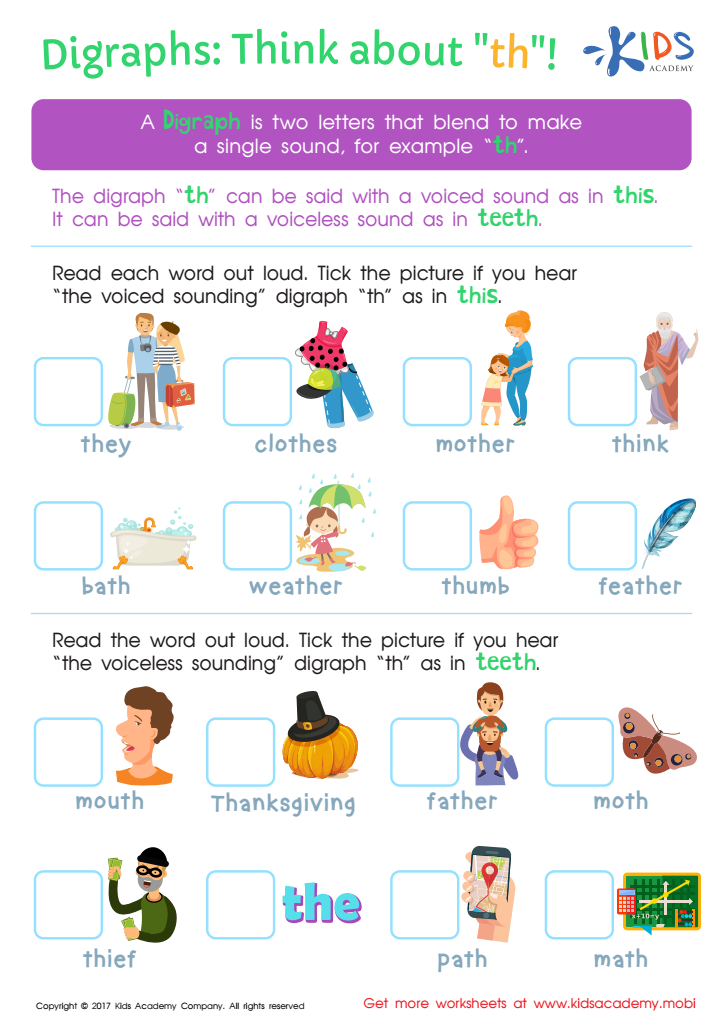
Digraphs: Think About "th" Worksheet
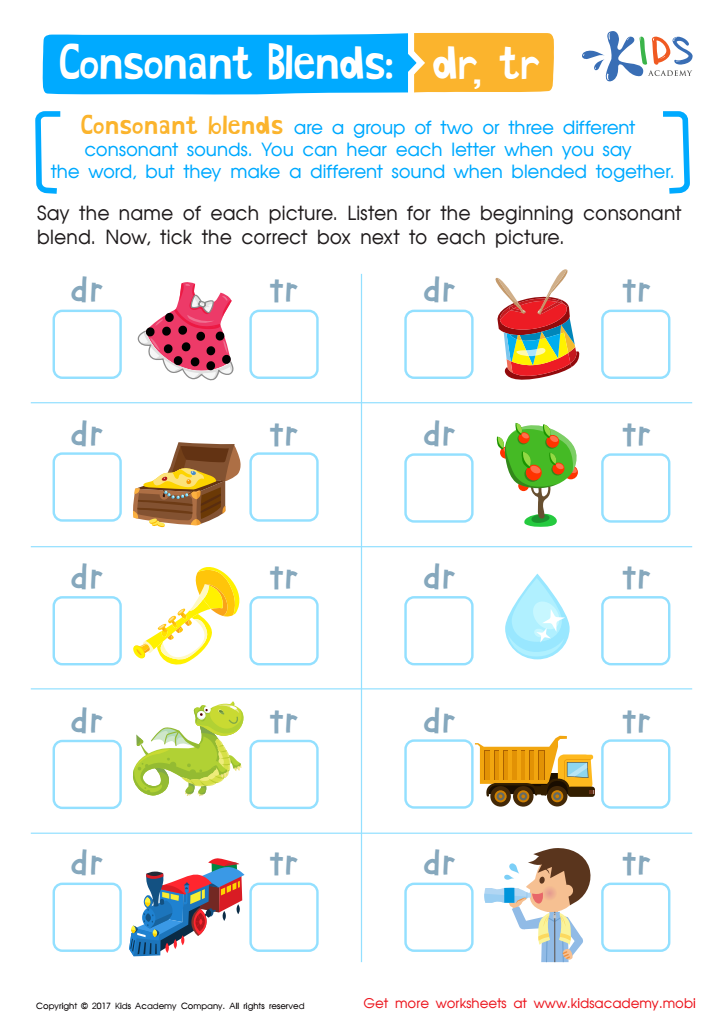
Consonant Blends: "Dr" and "Tr" Printable
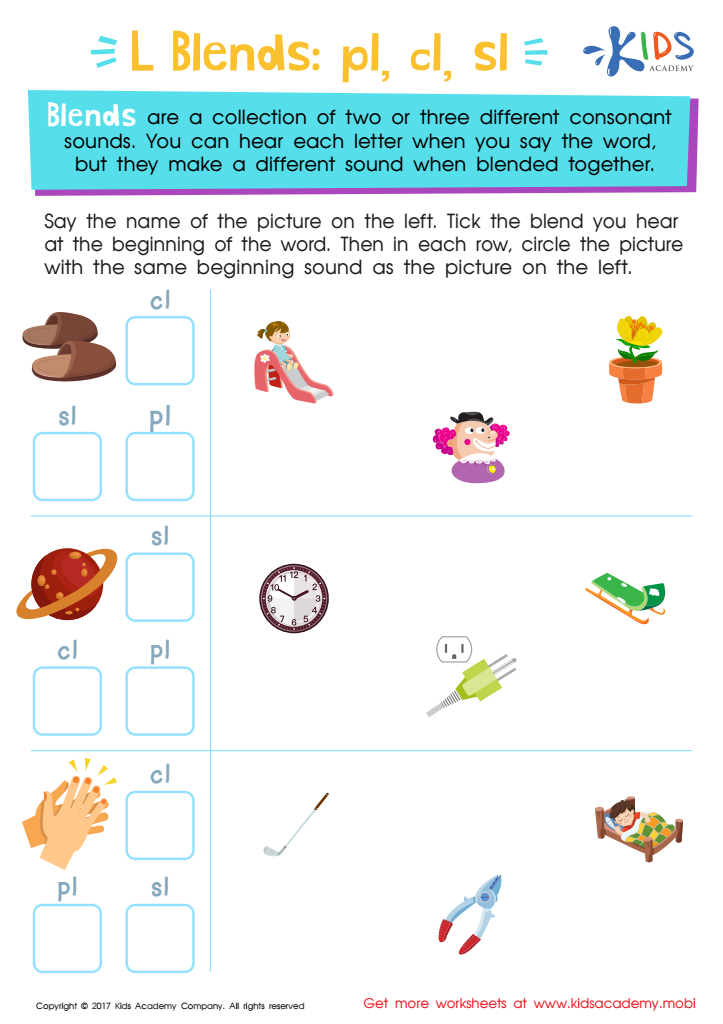
L Blends: "Pl", "Cl" and "Sl" Printable
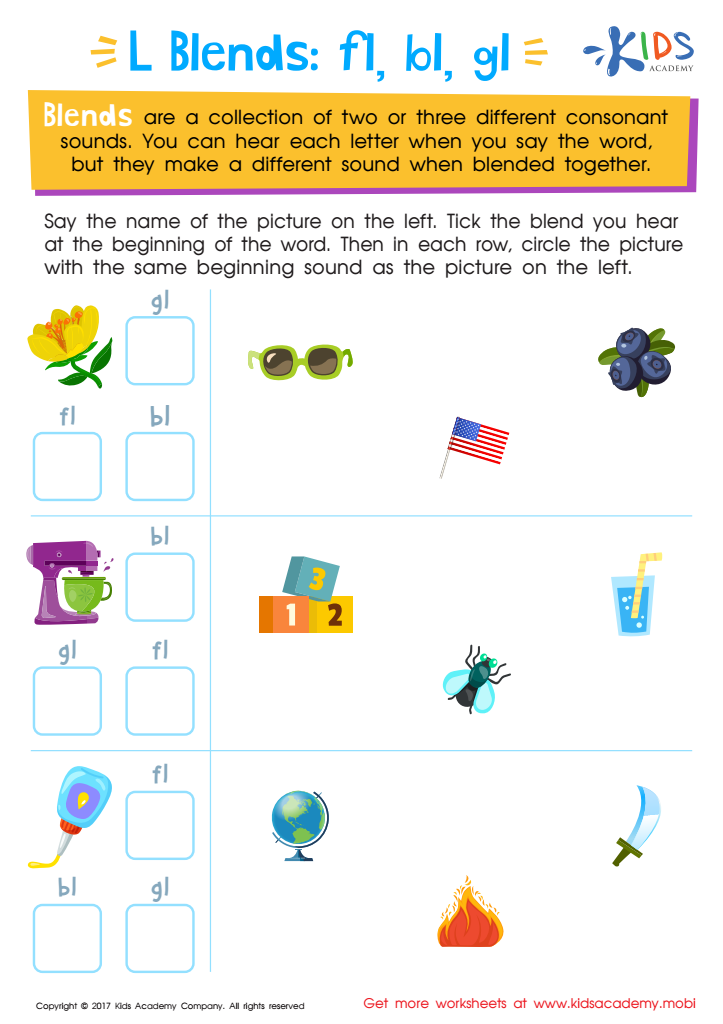
Blending Consonants: "Fl", "Bl" and "Gl" Printable



Consonants are fundamental building blocks of language, especially important for children aged 6-9 who are developing crucial literacy skills. At this age, children are typically learning to read and write independently, and a strong understanding of consonants is essential for phonics—the relationship between sounds and letters. Mastering consonant sounds helps students decode unfamiliar words, develop reading fluency, and improve spelling skills.
Moreover, consonants contribute significantly to vocabulary acquisition and comprehension. As children encounter new words, recognizing consonant patterns can boost their confidence and ability to tackle complex texts. Engaging with consonants also enhances phonemic awareness, which is vital for effective communication and good writing practice.
Parents and teachers need to foster an environment where consonant sounds are highlighted, providing varied activities such as games, songs, and interactive lessons to make learning enjoyable and effective. By emphasizing consonantal sounds, educators can help children lay a strong foundation for future literacy success, promoting lifelong learning habits. Ultimately, a strong grasp of consonants aids in holistic language development, enabling children not only to excel academically but also to express themselves clearly and confidently.