Filters

6 filtered results

Clear all filters
Favorites
With answer key
Interactive

6 filtered results

Difficulty Level

Grade


Subject

    Enhance your child's phonics skills with our engaging "Ending Sounds Worksheets" designed for ages 6-9. These printable resources focus on identifying and mastering the ending sounds in words, vital for developing reading and spelling proficiency. Each worksheet includes fun and interactive activities that capture young learners' interest, making learning enjoyable and effective. Perfect for classroom or home use, our expertly crafted worksheets cater to various learning styles, ensuring every child can succeed. Help your child build a strong foundation in literacy with these essential and enjoyable phonics worksheets. Discover more at Kids Academy and support your child's journey today!

    Check out this FREE Trial Lesson on Ending Sounds for age 6-9!

    -TH Digraph (unvoiced)

    Favorites
    With answer key
    Interactive
    • 6-9
    • Interactive
    • Ending Sounds
    Hotel Mix-up Worksheet
    Hotel Mix-up Worksheet

    Hotel Mix-up Worksheet

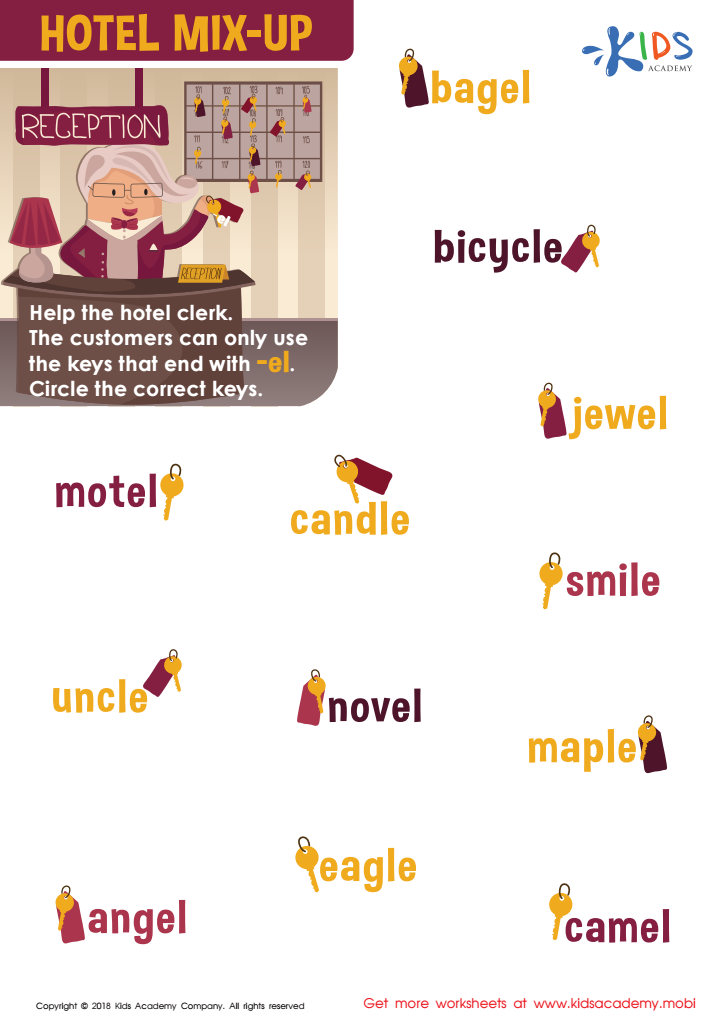
    Before doing this worksheet, explain to your kids what a hotel is. It's a building where guests can stay for a few days and pay for their stay. In this exercise, the hotel clerk needs help finding the correct keys. Have your kids circle words ending with -el to find the right ones.
    Hotel Mix-up Worksheet
    Worksheet
    Missing Digraph: Part 1 Worksheet
    Missing Digraph: Part 1 Worksheet

    Missing Digraph: Part 1 Worksheet

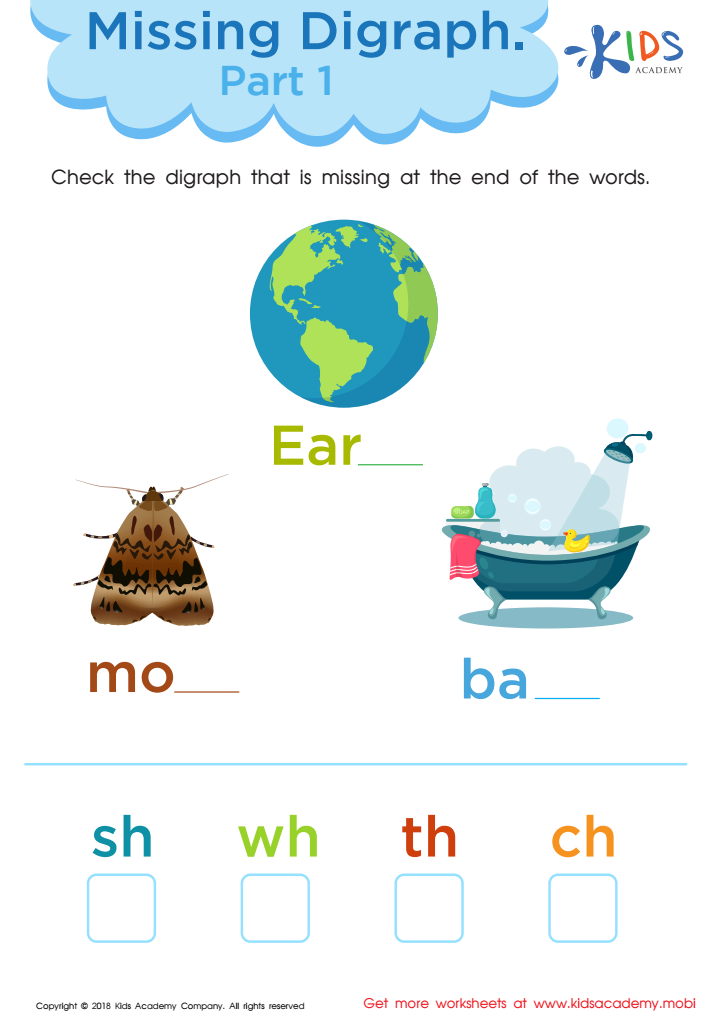
    Practice the 'th' digraph with this worksheet! Ask kids to say the words shown and sound out the letters below each image. Check the box with the correct digraph to complete. Examples include 'earth', 'bath' and 'moth', all ending with the same two letters. Phonics teaches that digraphs are two letters that make one sound.
    Missing Digraph: Part 1 Worksheet
    Worksheet
    Which Is the Rime? Worksheet
    Which Is the Rime? Worksheet

    Which Is the Rime? Worksheet

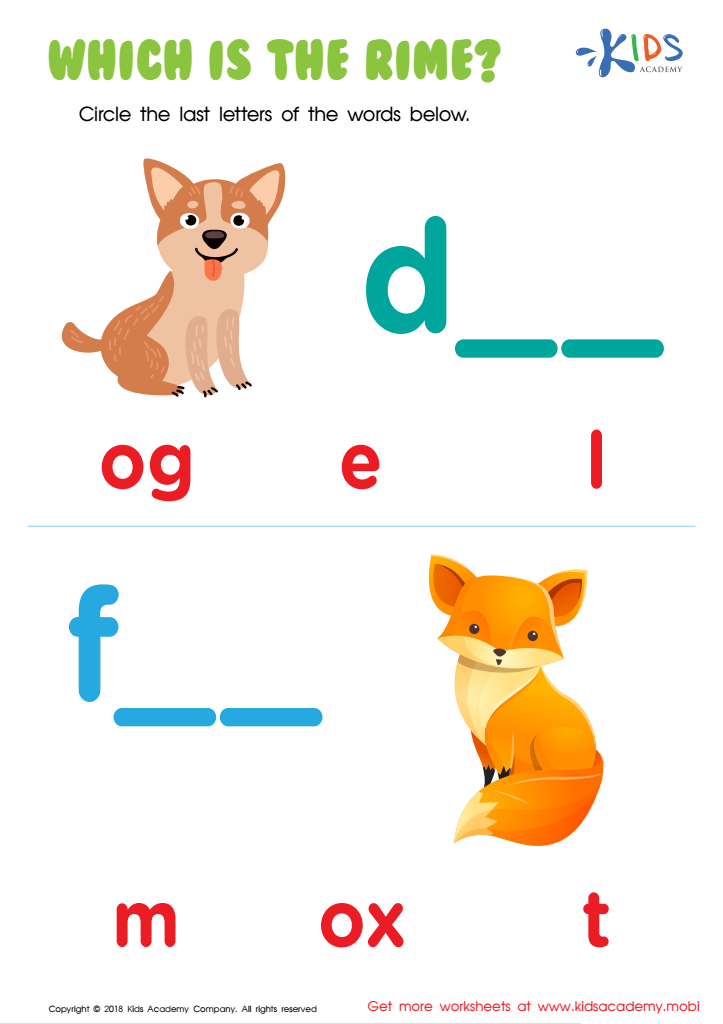
    Beginning readers benefit from rimes that aid letter familiarity, recognition, and spelling. With this fun PDF worksheet, kids can identify and spell the correct word for each image by circling the last letter. This activity develops fine motor skills as well.
    Which Is the Rime? Worksheet
    Worksheet
    Which Is the Onset? Worksheet
    Which Is the Onset? Worksheet

    Which Is the Onset? Worksheet

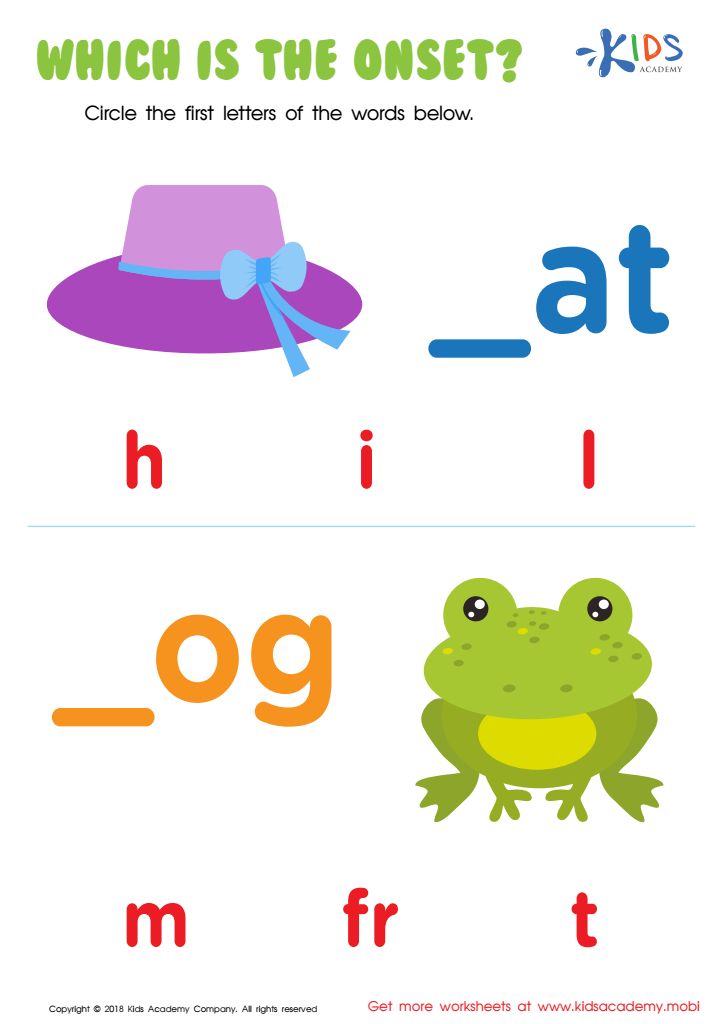
    Help your children learn to spell with this bright, fun worksheet. Struggling with spelling small words can make reading and writing sentences difficult. Encourage them to look at the pictures, say the names aloud and circle the correct first letter from the options. They will soon overcome any reluctance to spell.
    Which Is the Onset? Worksheet
    Worksheet
    Twin Onset Worksheet
    Twin Onset Worksheet

    Twin Onset Worksheet

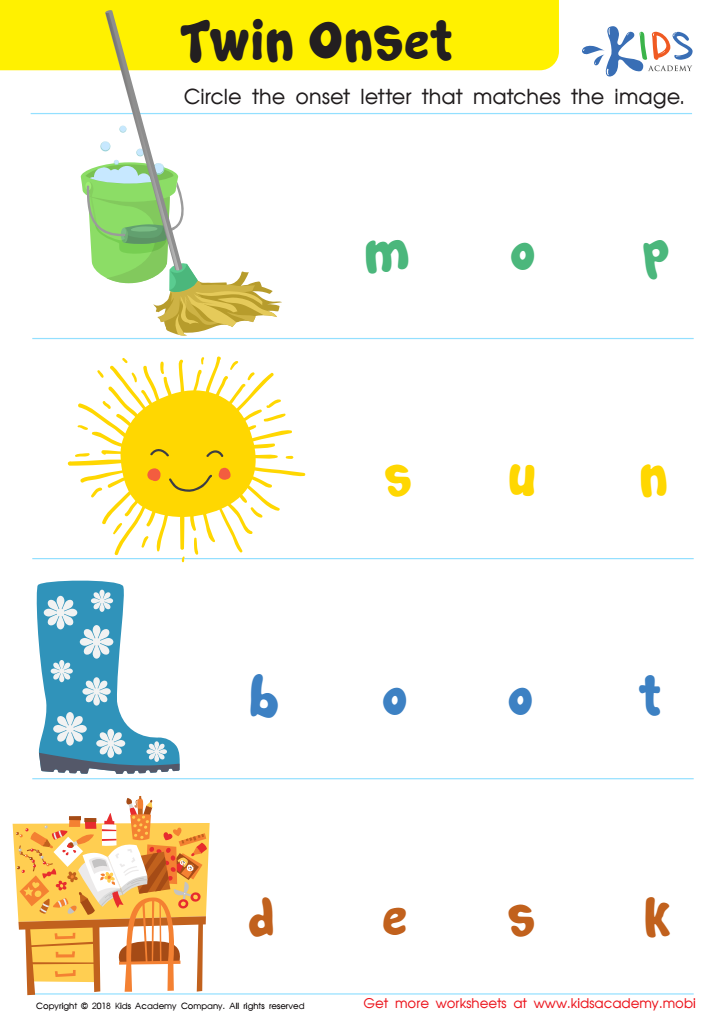
    Children's phonological skills and reading/spelling strategies are strengthened by isolating initial consonants. This fun PDF worksheet encourages kids to trace the correct onset letter and hone fine motor skills. It's a great way to introduce early reading and spelling.
    Twin Onset Worksheet
    Worksheet
    Digraph Th Printable Worksheet
    Digraph Th Printable Worksheet

    Digraphs: Think About "th" Worksheet

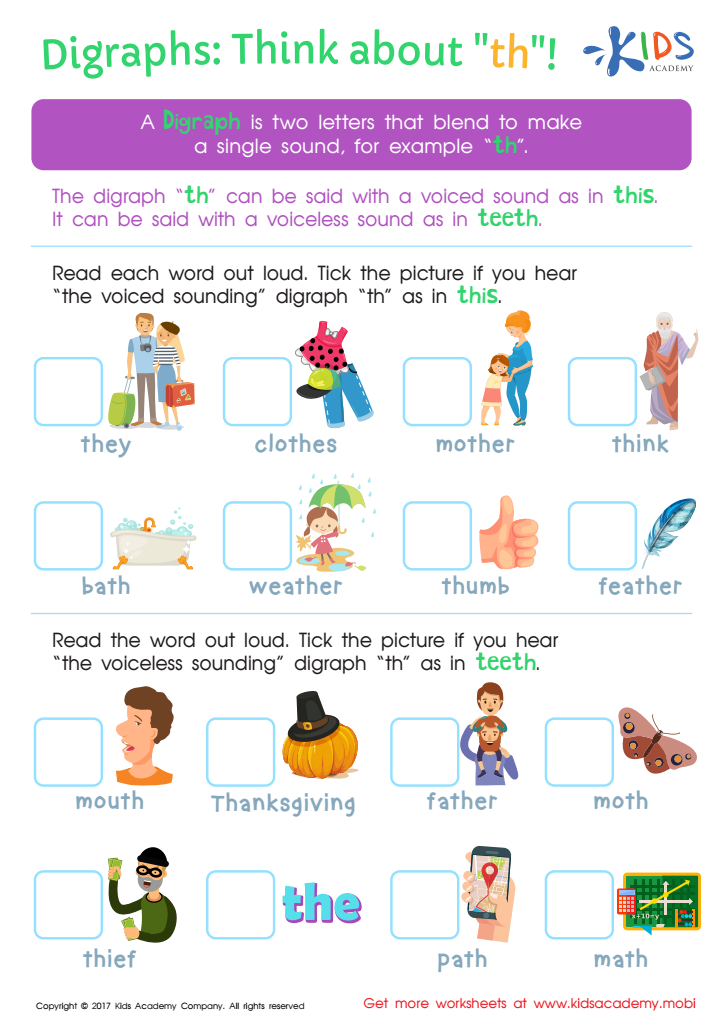
    Help your child master phonics with this illustrated digraph Th printable worksheet. It will help recognize "Th" words, differentiate voiced and voiceless sounds and understand key concepts. Use similar words while they work to reap its full benefits!
    Digraphs: Think About "th" Worksheet

    Worksheet


    Early grade teachers and parents should prioritize phonemic awareness, which includes understanding ending sounds, to ensure robust language development in children aged 6-9. This phase is critical as it's when kids typically shift from simple word recognition to more advanced reading and writing skills. Recognizing and articulating ending sounds helps children decode new words, thereby enhancing their reading fluency. This is because many words share common phonetic endings, and recognizing these patterns can make reading new words easier and faster.

    Moreover, understanding ending sounds supports spelling capabilities. Children who can identify the sounds at the end of words are better equipped to spell words correctly, which directly impacts their writing skills. In addition, it aids in vocabulary development: knowing that the words "bake," "cake," and "lake" share a common sound makes it easier for children to remember those words and their meanings.

    Furthermore, strong skills in phonemic awareness contribute significantly to overall communication abilities. Effective reading, spelling, and writing encourage children to engage more confidently in academic activities, reducing frustration and encouraging a positive attitude toward learning. Given the lifelong importance of literacy, early intervention and support in mastering ending sounds set a strong foundation for future academic and personal success.