Shape Recognition Worksheets for Ages 6-9 - Page 2
86 filtered results
Difficulty Level
Grade
Age
-
From - To
Subject
Activity
Standards
Favorites
With answer key
Interactive
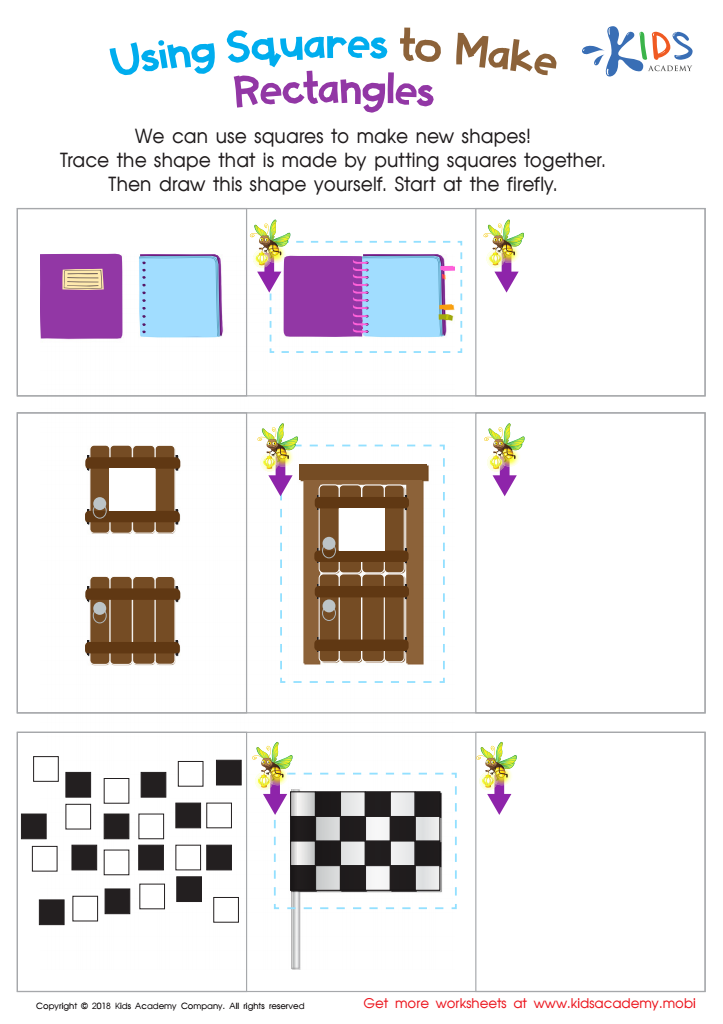
Using Squares to Make Rectangles Worksheet
Creating shapes from other shapes (composing shapes) develops spatial skills, an essential geometry standard for young students. This worksheet introduces familiar square objects, then demonstrates how they create rectangles. Students practice tracing and then drawing the shape independently. Download this free math resource for the classroom today! (80 words)
 Assign to My Students
Using Squares to Make Rectangles Worksheet
Worksheet
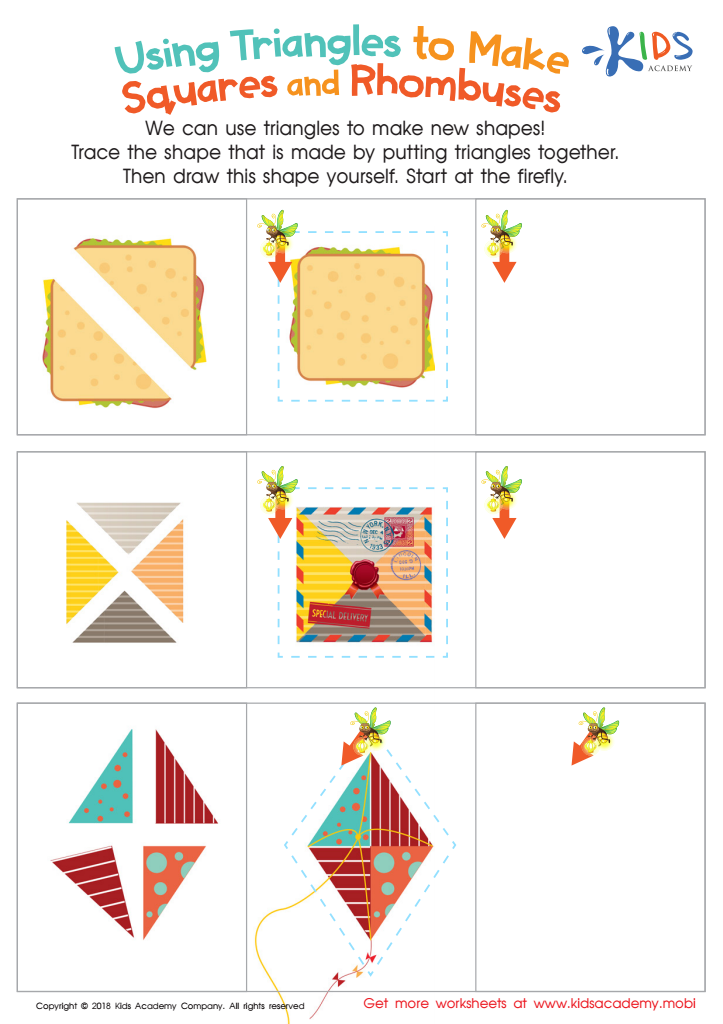
Using Triangles to Make Squares and Rhombuses Worksheet
Learning shapes is a fun way to boost spatial skills and critical thinking. This worksheet shows children how to use triangles to construct squares and rhombuses. Clear illustrations and a printout help children draw the new shape. A great activity for the math classroom! 80 words.
Using Triangles to Make Squares and Rhombuses Worksheet
Worksheet
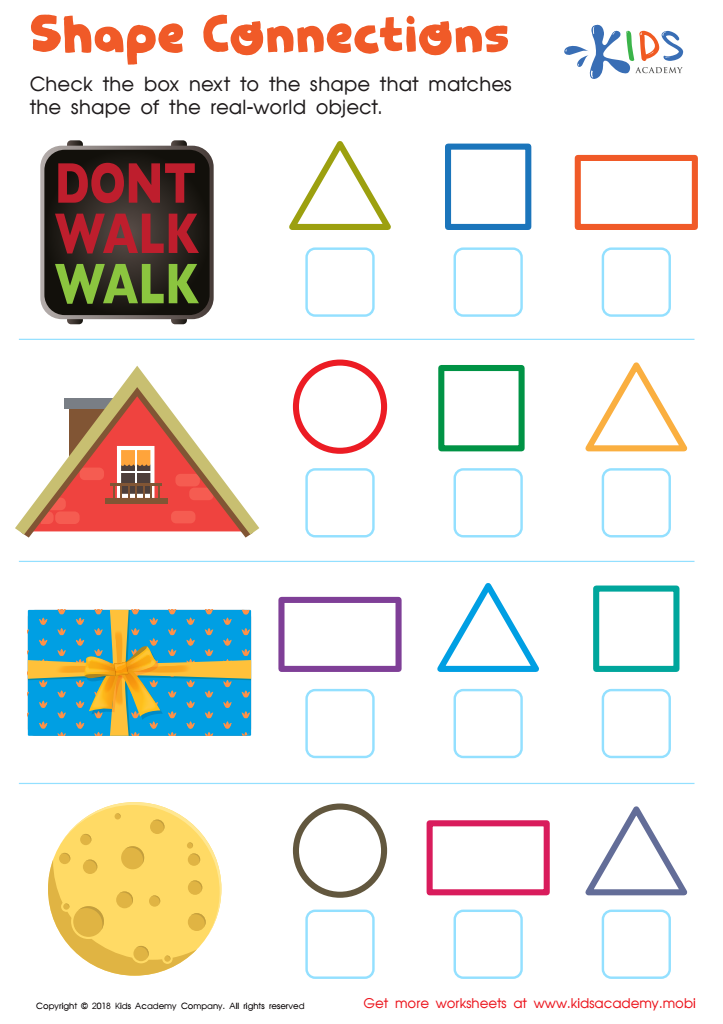
Shape Connections Worksheet
Geometric shapes are all around us and this fun worksheet brings it to life. Kids will match real-world pictures with the corresponding basic shapes, connecting how math is used in various aspects of daily life. A great way to reinforce these concepts!
Shape Connections Worksheet
Worksheet
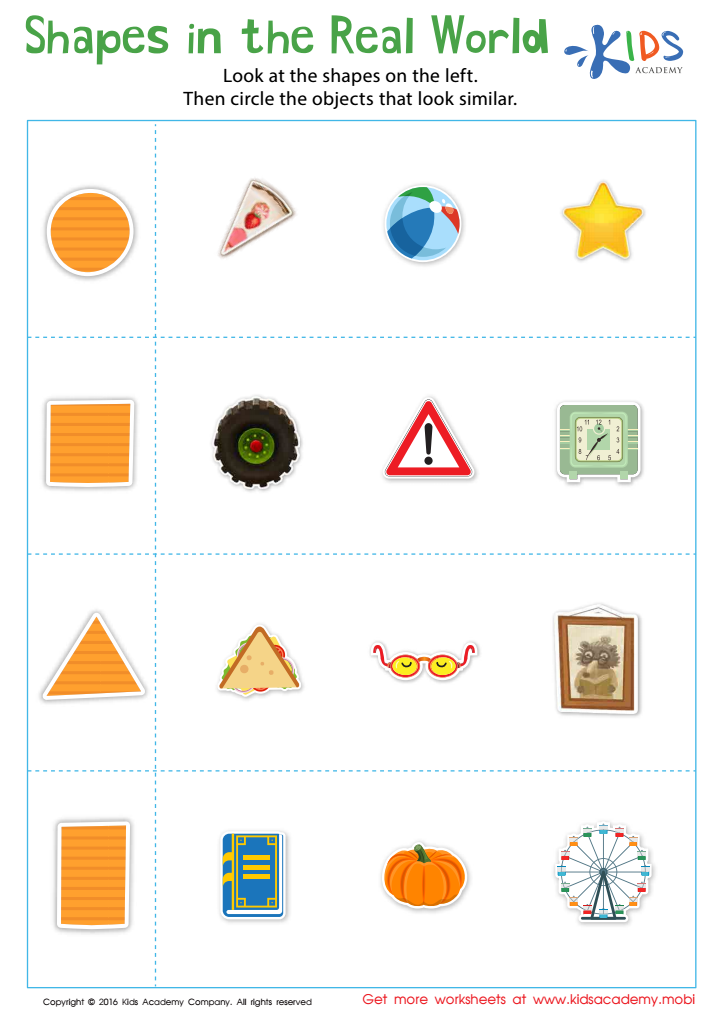
Shapes in the Real World Worksheet
Teach kids math in real-world context with this fun and inviting PDF. Let them explore geometric shapes and match them with everyday objects, giving them practice with fine motor skills and reinforcing basic shapes. Help them understand that math is everywhere in their lives!
Shapes in the Real World Worksheet
Worksheet
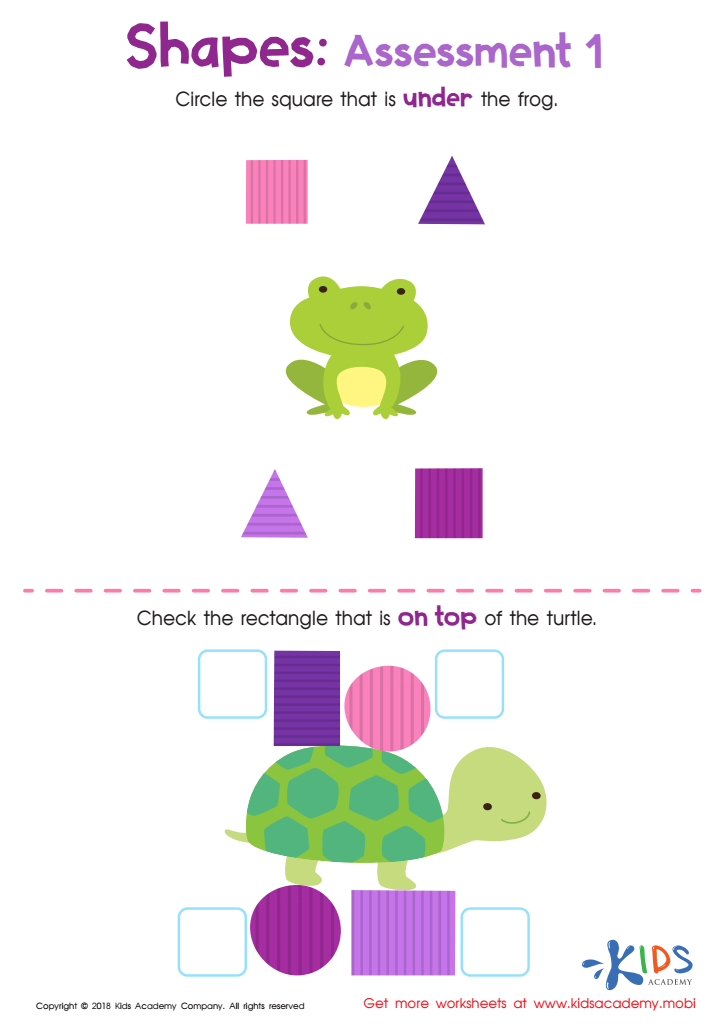
Geometry – Assessment 1 Worksheet
This activity helps preschoolers find shapes "on top of" and "under" animals. They must identify the correct shapes assigned to them. It's a great way to learn geometry and placements of objects.
Geometry – Assessment 1 Worksheet
Worksheet
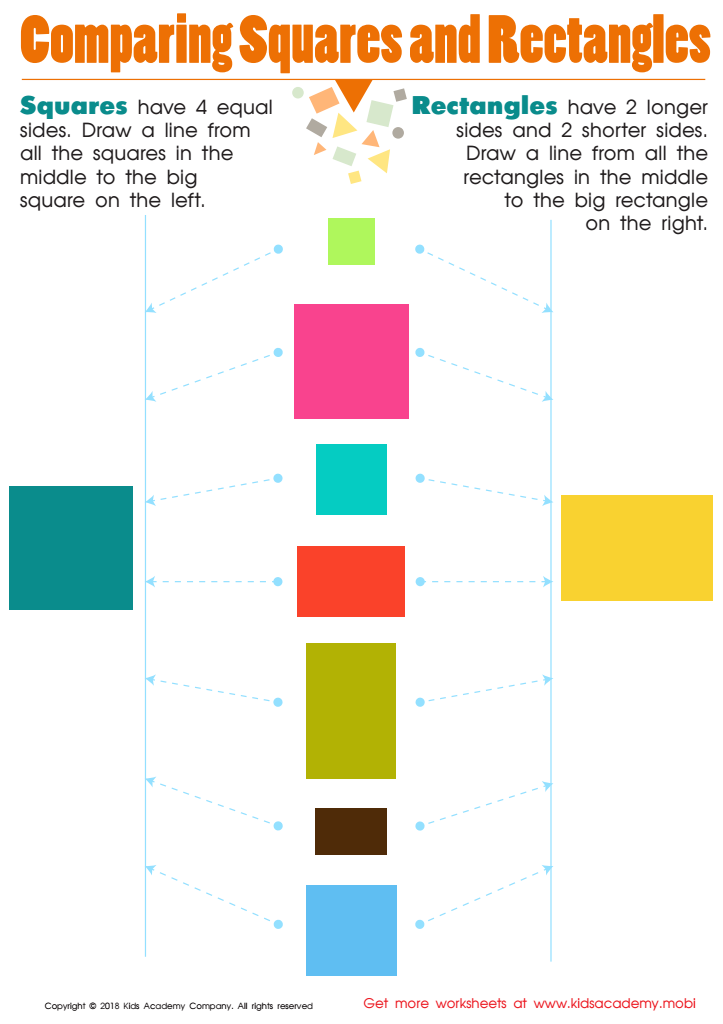
Comparing Squares Rectangles Worksheet
Help your little learner distinguish rectangles from squares with this fun geometry worksheet from Kids Academy! Read the definitions at the top, use the shapes on either side as a guide, then trace over the dotted line to match the rectangles and squares!
Comparing Squares Rectangles Worksheet
Worksheet
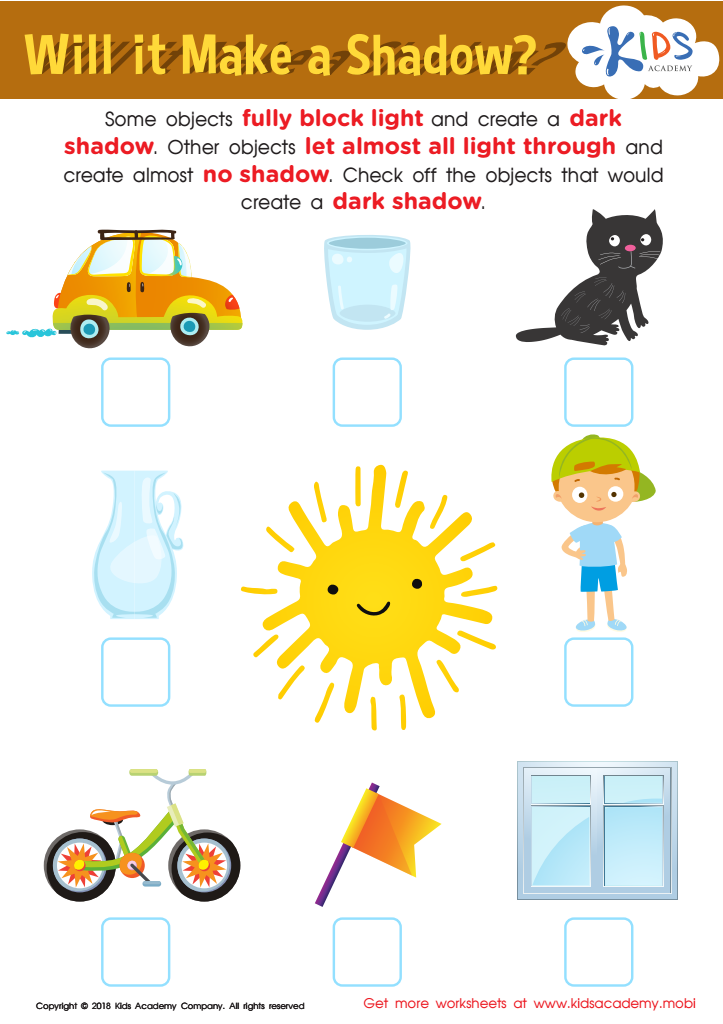
Will It Make a Shadow? Worksheet
Teach your students about shadows with this printout. Ask them to check off the boxes next to the pictures that create a shadow. Explain that some objects block light, forming a shadow, while others don't and thus don't create a shadow. Your students are likely already familiar with their own shadow.
Will It Make a Shadow? Worksheet
Worksheet
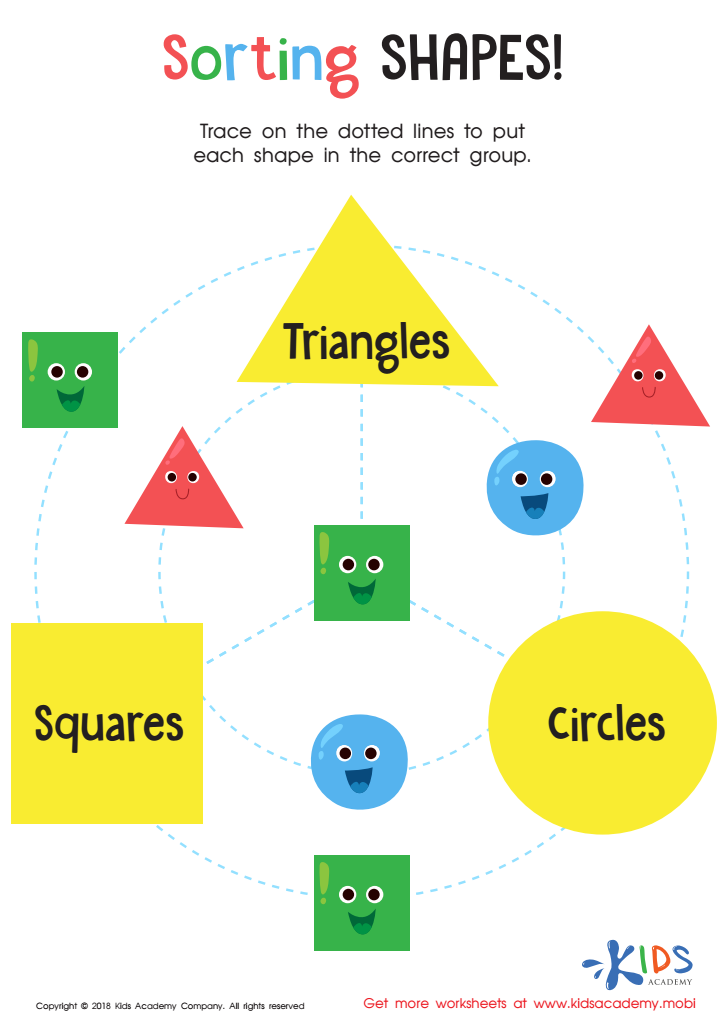
Sorting Shapes - Part 3 Worksheet
Download this fun PDF to help your kiddos recognize basic shapes like circles, squares, and triangles. It'll sharpen their fine motor skills as they trace and sort shapes by color, size, and sides. Your kids won't even realize they're learning with these cheery shapes!
Sorting Shapes - Part 3 Worksheet
Worksheet
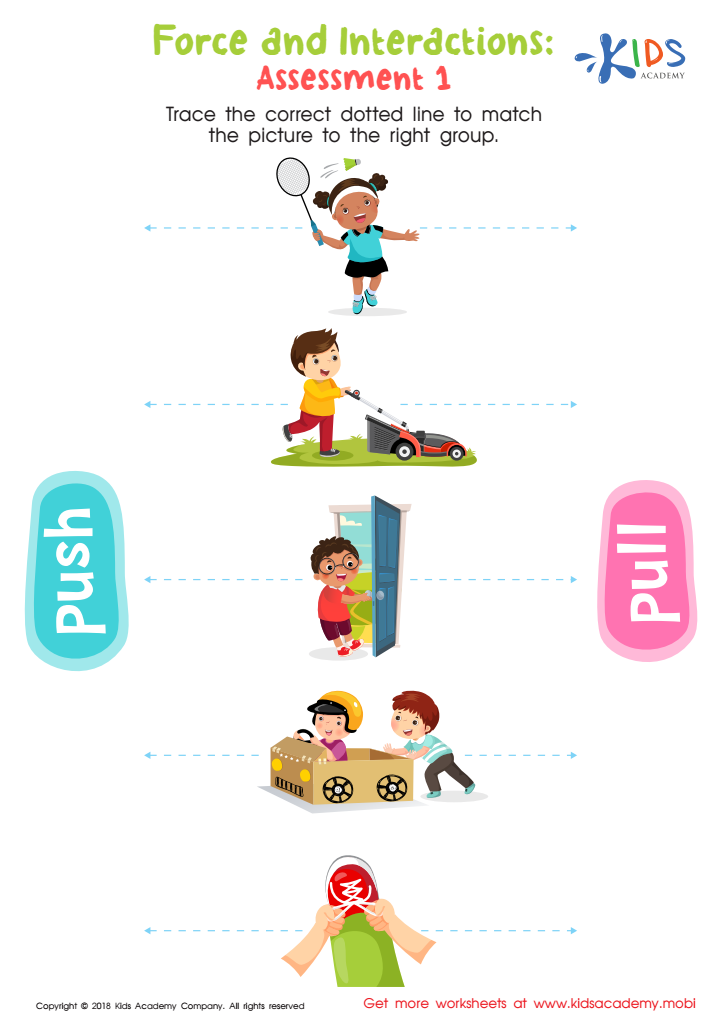
Force and Interactions: Assessment 2 Worksheet
Help your child see the difference between push and pull with this fun worksheet. Ask them to match each picture to the right group. The "push" is on the left and the "pull" is on the right. Assist them in tracing the activities and explain what it is the people are doing.
Force and Interactions: Assessment 2 Worksheet
Worksheet
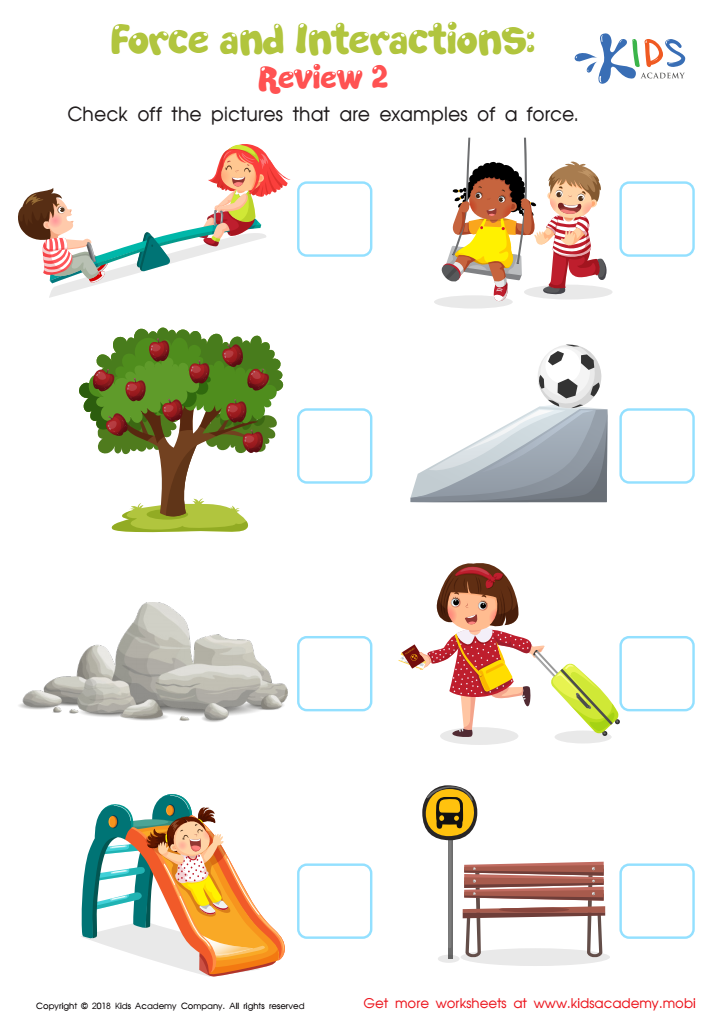
Force and Interactions: Review 2 Worksheet
Your child can identify force examples by checking the pictures. There are 8 images of kids engaging in activities and objects in motion. Get them to name the activities and objects, or if they know, explain force and interaction.
Force and Interactions: Review 2 Worksheet
Worksheet
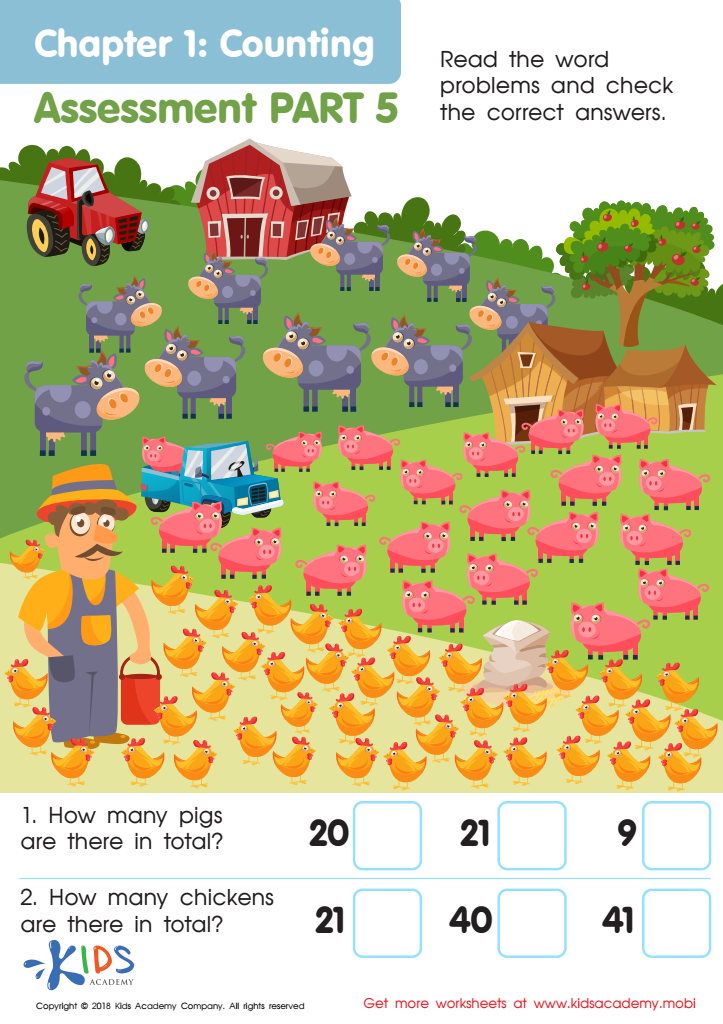
Counting: Assessment 5 Worksheet
Let your kids have fun counting farm animals on this worksheet! Help the farmer count the animals and have your child check the answers to assess their counting skills. Read the word problem at the bottom of the page and count the animals together. It's an entertaining way to practice counting and have a great time!
Counting: Assessment 5 Worksheet
Worksheet
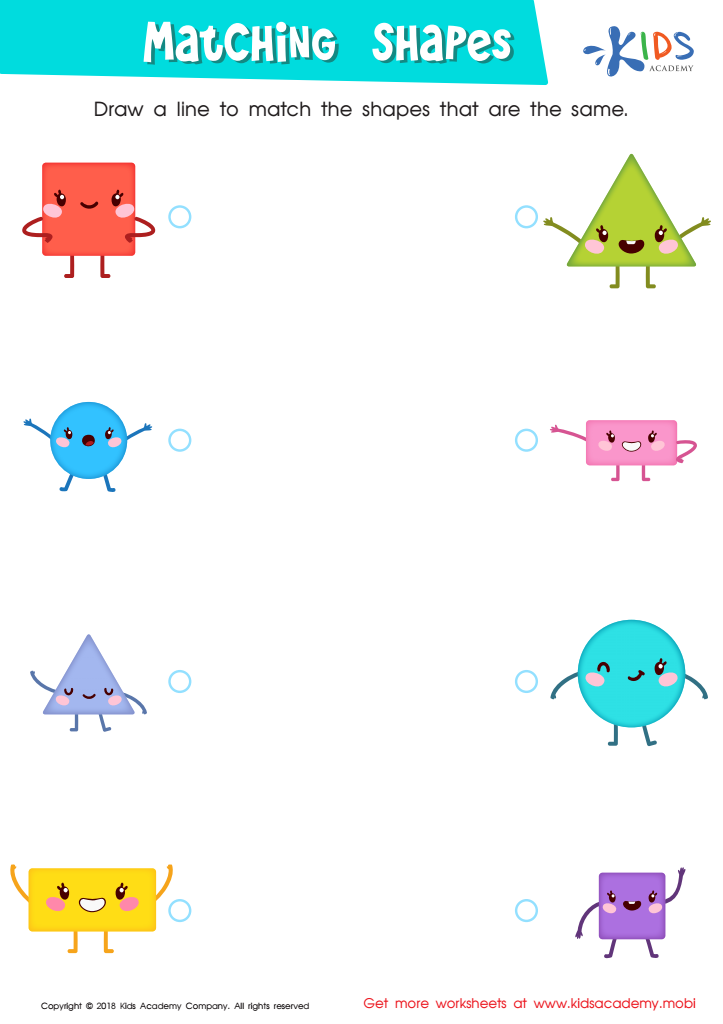
Matching Shapes Worksheet
Introduce your students to the 4 most common shapes: squares, triangles, rectangles and circles. When they progress, show them other shapes like rhombuses and parallelograms. Use this matching shapes worksheet to help them match two identical shapes. Print out the worksheet and instruct them to draw lines connecting them.
Matching Shapes Worksheet
Worksheet
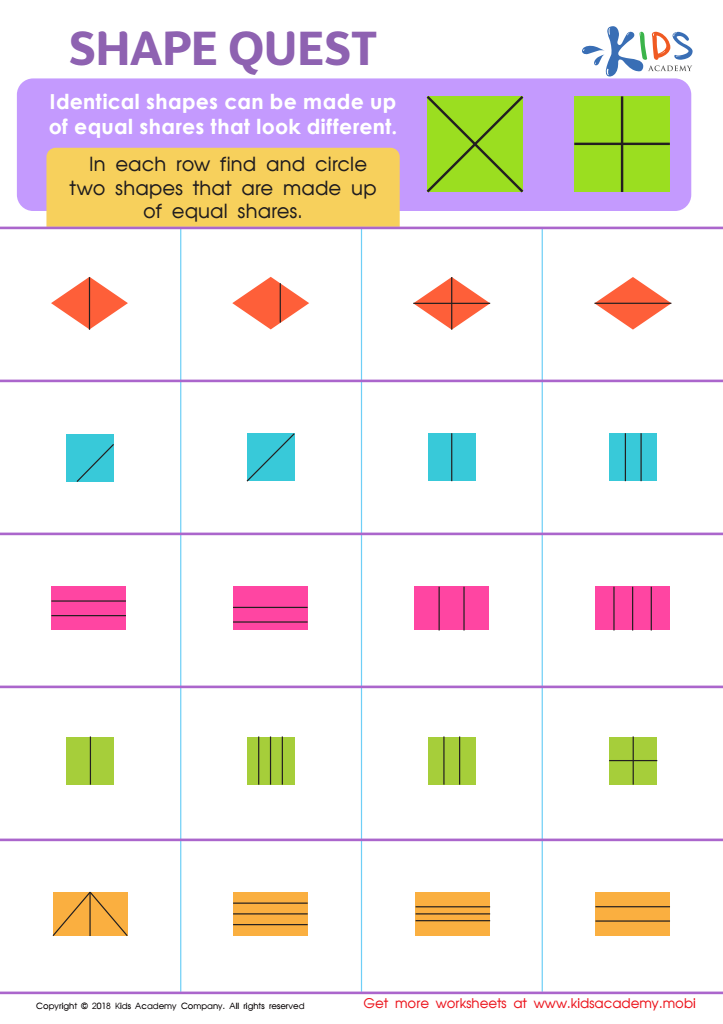
Shape Quest Worksheet
Help your child identify shapes by having them find shapes made up of equal parts. This colorful worksheet challenges them to look through each row and circle two matching shapes. It's a great way to teach them the unique features of each shape, while also helping them understand that identical shapes can look different.
Shape Quest Worksheet
Worksheet
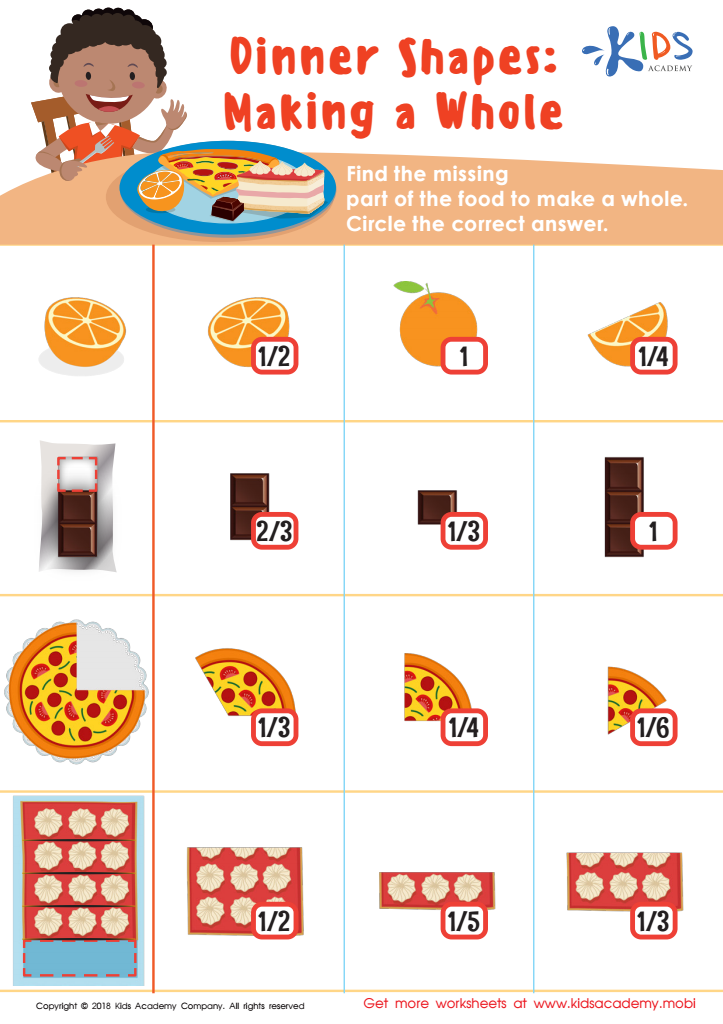
Dinner Shapes: Making a Whole Worksheet
Using food and snacks to stimulate learning and interest in topics is a great strategy. Fractions can prove tricky, but this worksheet can help your child become an expert. Have them look for the missing parts of the food to make a whole, then circle the answer.
Dinner Shapes: Making a Whole Worksheet
Worksheet
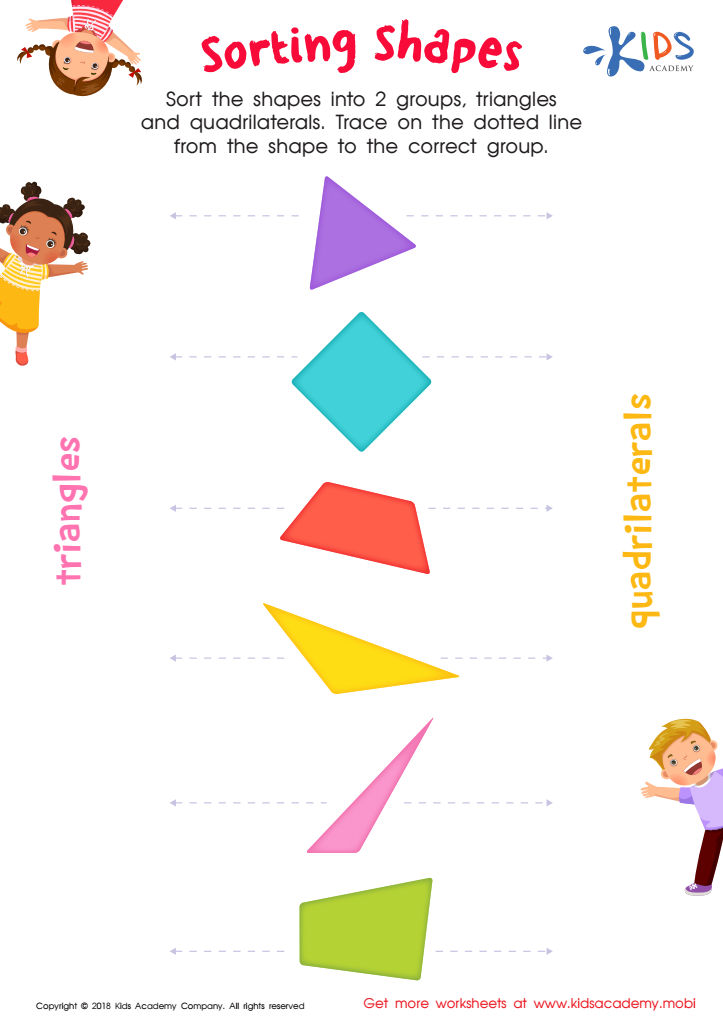
Sorting Shapes Worksheet
Before beginning, ensure your child is familiar with quadrilaterals (4 sides) and triangles (3 sides). This tracing exercise is easy: sort the shapes into the two groups and trace the dotted lines to the correct group.
Sorting Shapes Worksheet
Worksheet
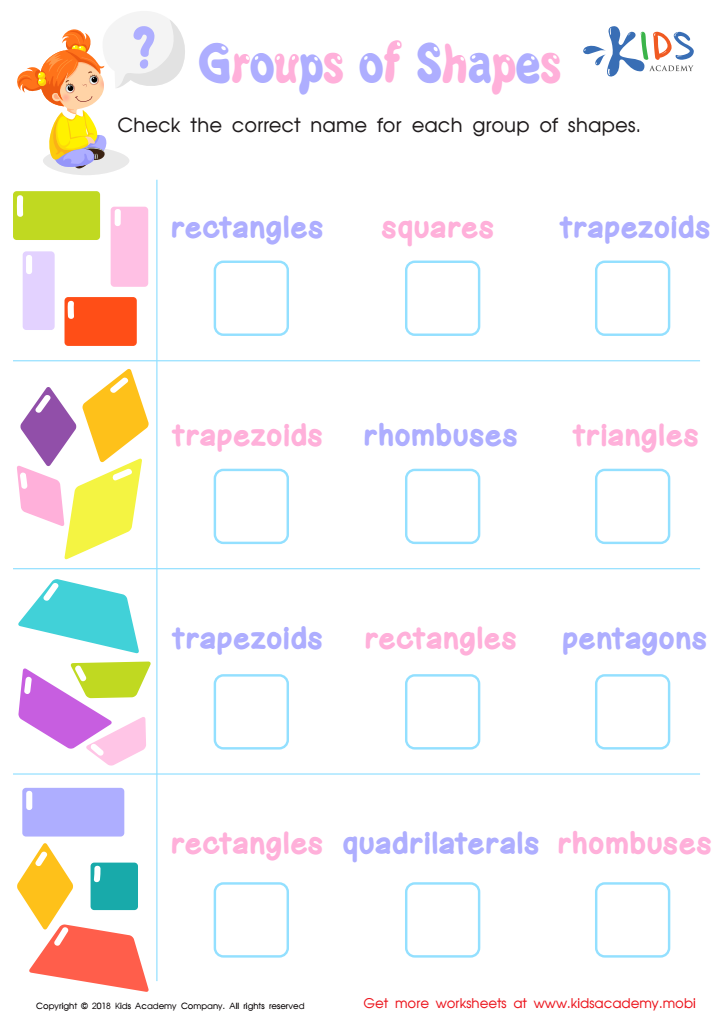
Groups of Shapes Worksheet
Can your child identify and name shapes? Help them learn the unique features of each and have them check the correct name for each group in the colorful pictures on this worksheet.
Groups of Shapes Worksheet
Worksheet
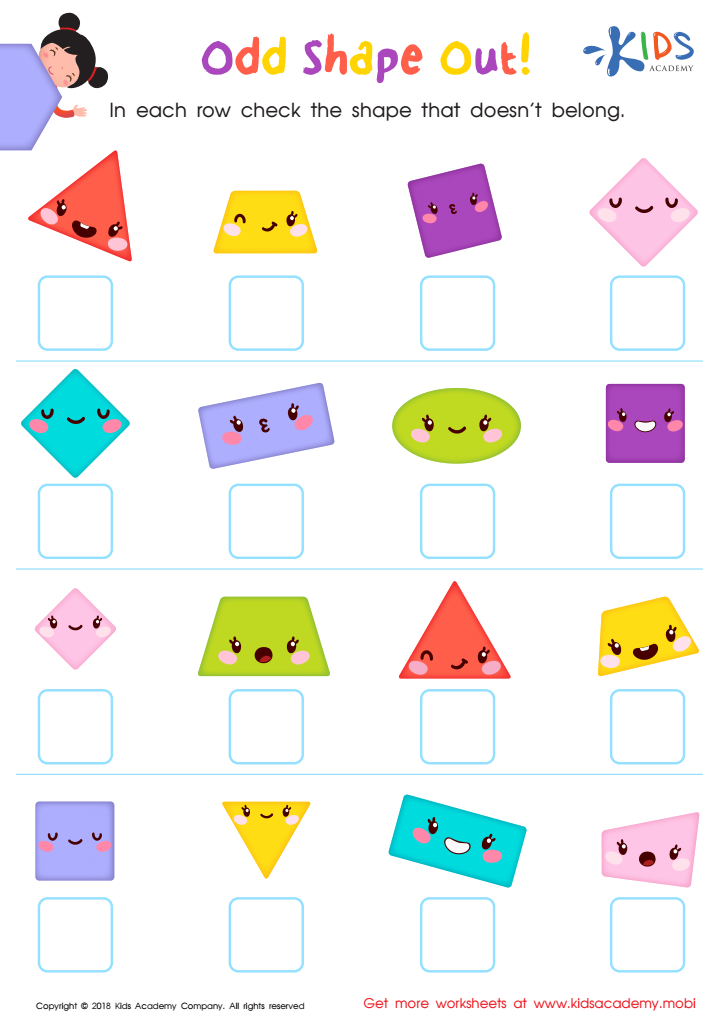
Odd Shape Out Worksheet for Grade 3
Time to test your child's shape knowledge! With this worksheet, help them find the odd shape out in each row and check the box under it. Print out the pdf and look through it with them – each row has four brightly colored shapes. See if they can spot any differences among them and then check the box below the shape that does not belong.
Odd Shape Out Worksheet for Grade 3
Worksheet
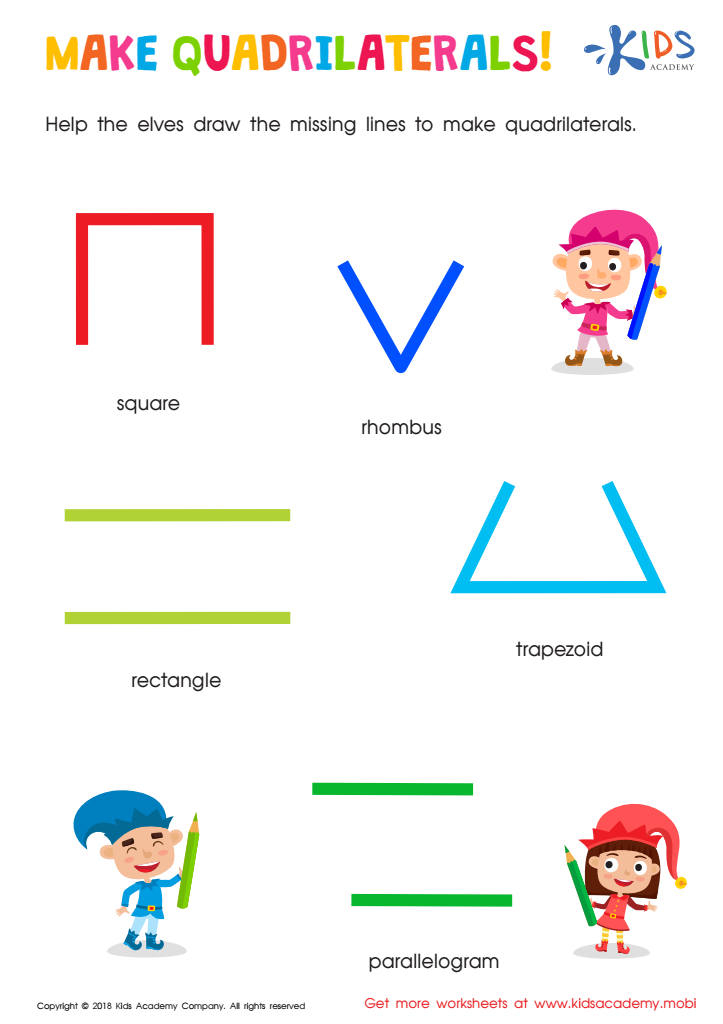
Make Quadrilaterals Worksheet
This fun and colorful worksheet will help your child understand and identify quadrilaterals. It's simple and encourages them to draw lines to create a square, rectangle, rhombus, trapezoid, and parallelogram. Stimulate their minds and watch them learn while they have fun!
Make Quadrilaterals Worksheet
Worksheet
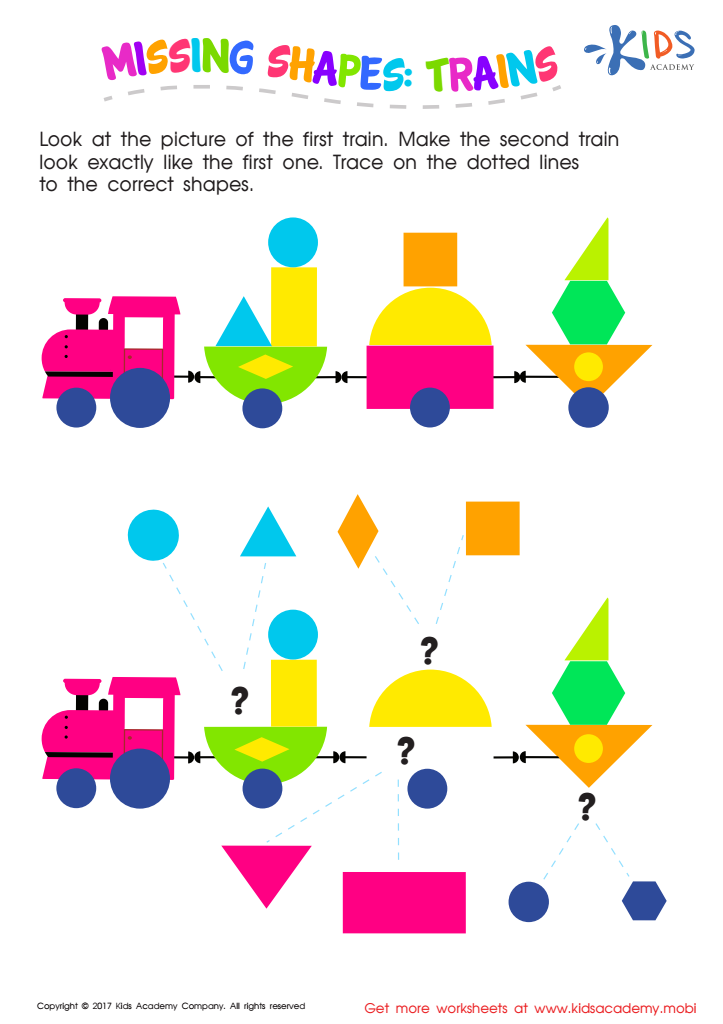
Missing Shapes: Trains Worksheet
Before beginning, ask your child what the object in the picture is, the sound it makes and where it can be found. If they know, confidently move on. Help them make the second train look like the first by tracing dotted lines. Hold their hand for guidance.
Missing Shapes: Trains Worksheet
Worksheet
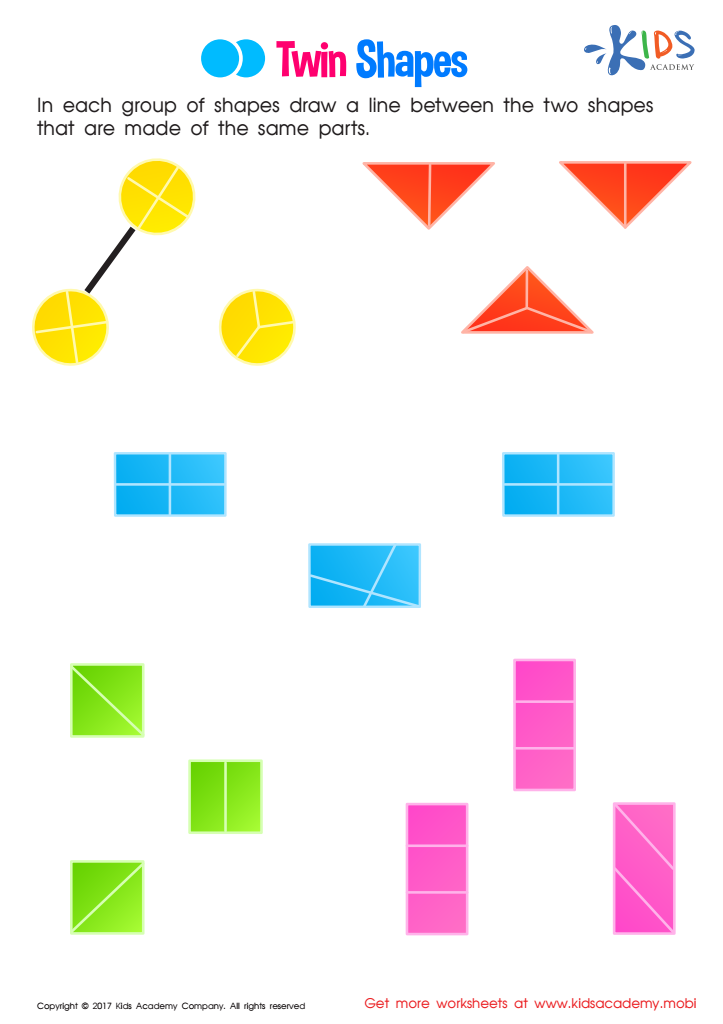
Twin Shapes Worksheet
Your students' goal in this worksheet is to find the twin shapes: drawing a line between two shapes made of the same parts. Likely, the first shapes encountered were circles, triangles, rectangles and squares - examples of which are seen frequently in everyday life. Encourage them to apply what they know and work out which is the twin shape!
Twin Shapes Worksheet
Worksheet
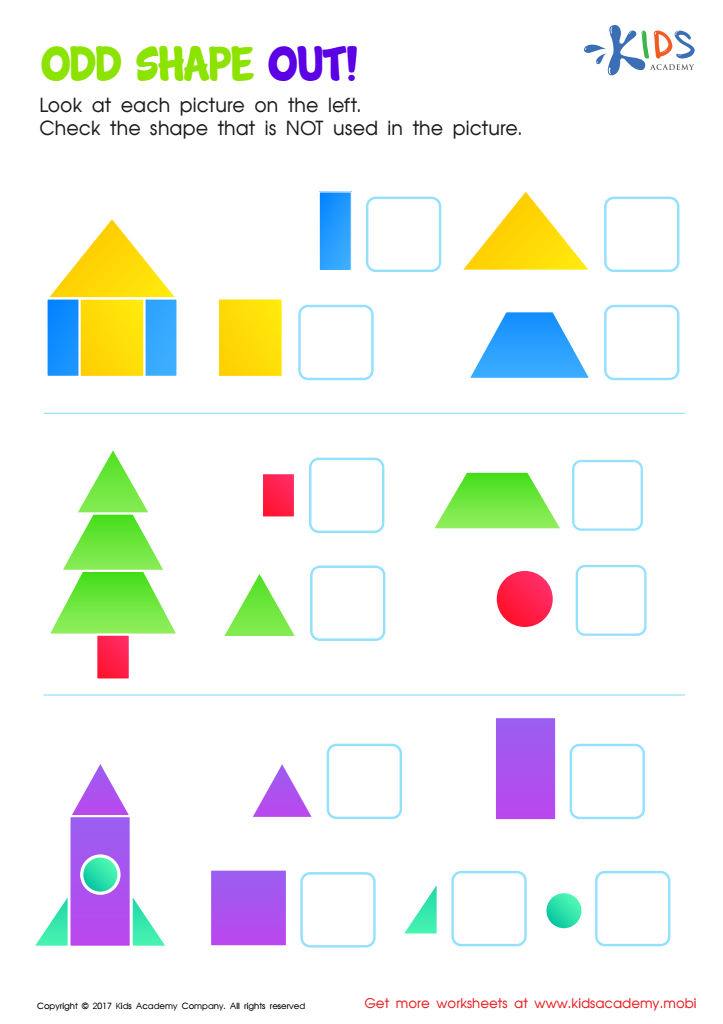
Odd Shape Out Worksheet for Grade 1
This worksheet can help your kids test their knowledge of shapes. They should have already been introduced to the most common shapes and be able to identify and draw them. Look at the picture and help your child identify each shape. Then, check which one isn't used to make the object.
Odd Shape Out Worksheet for Grade 1
Worksheet
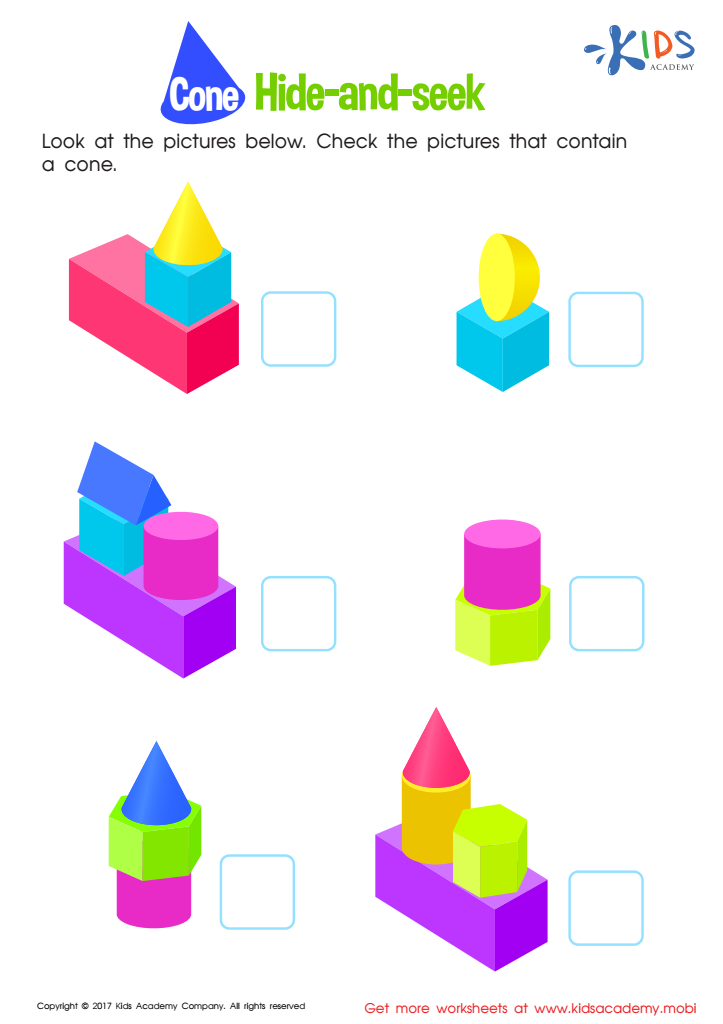
Cone Hide-and-Seek Worksheet
Prior to starting this worksheet, quiz your kid on shapes. If they gave quite a few, you've done well! This pdf will teach them more about cones; show them the pictures in the printout and have them identify which ones contain a cone.
Cone Hide-and-Seek Worksheet
Worksheet
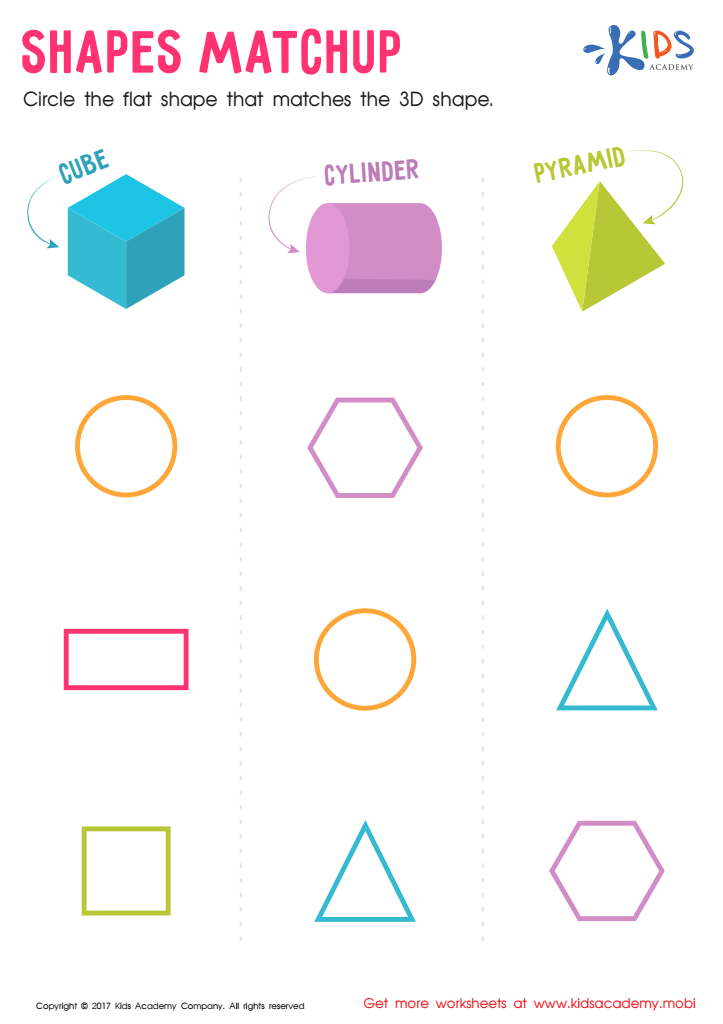
Shapes Matchup Worksheet
Explain to your kids that 3D shapes are the view from another angle, offering depth, height and width. This worksheet encourages them to match the 3D shapes to their 2D form. They can circle the flat shapes that match the 3D shapes in the printout.
Shapes Matchup Worksheet
Worksheet
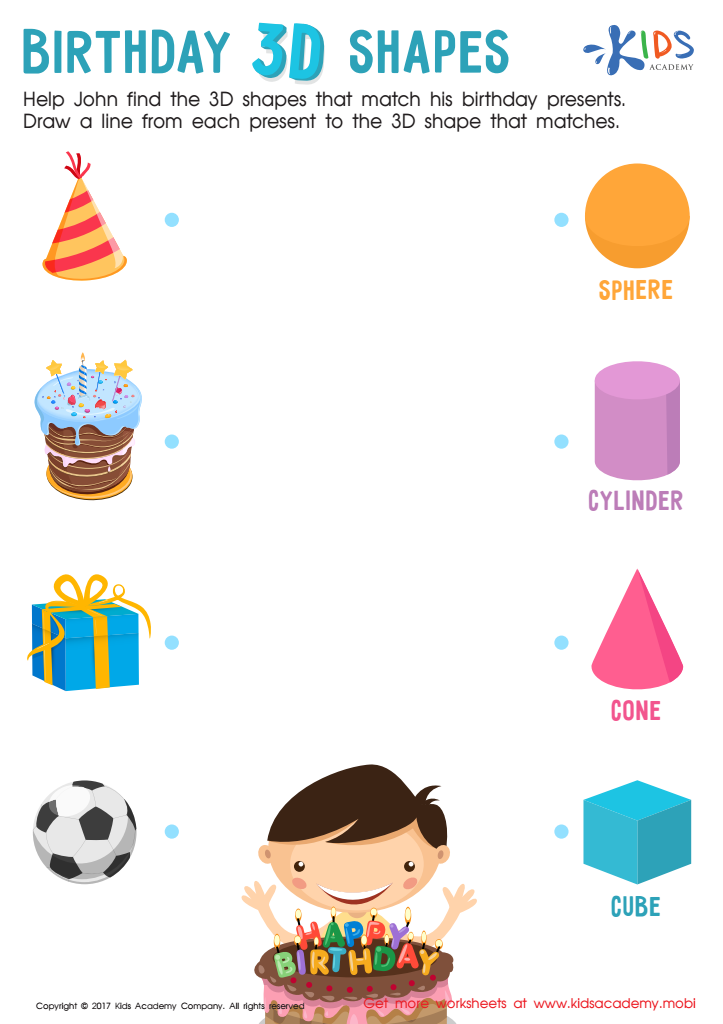
Birthday 3D Shapes Worksheet
It's John's birthday and he needs your help. Ask your kids to draw a line from each present to the matching 3D shape. First, check they understand the difference between 2D and 3D shapes. Then, they can help John figure out which 3D shape matches each present.
Birthday 3D Shapes Worksheet
Worksheet
Join Kids Academy for Free
Who is primarily going to use this learning content?


.jpg)