Filters

136 filtered results

Clear all filters
Favorites
With answer key
Interactive

136 filtered results

Difficulty Level

Grade


Check out this FREE Trial Lesson on Reading Fiction for age 6-9!

Compare and Contrast the Experiences of Characters in Familiar Stories

Favorites
With answer key
Interactive
  • 6-9
  • Interactive
  • Reading Fiction
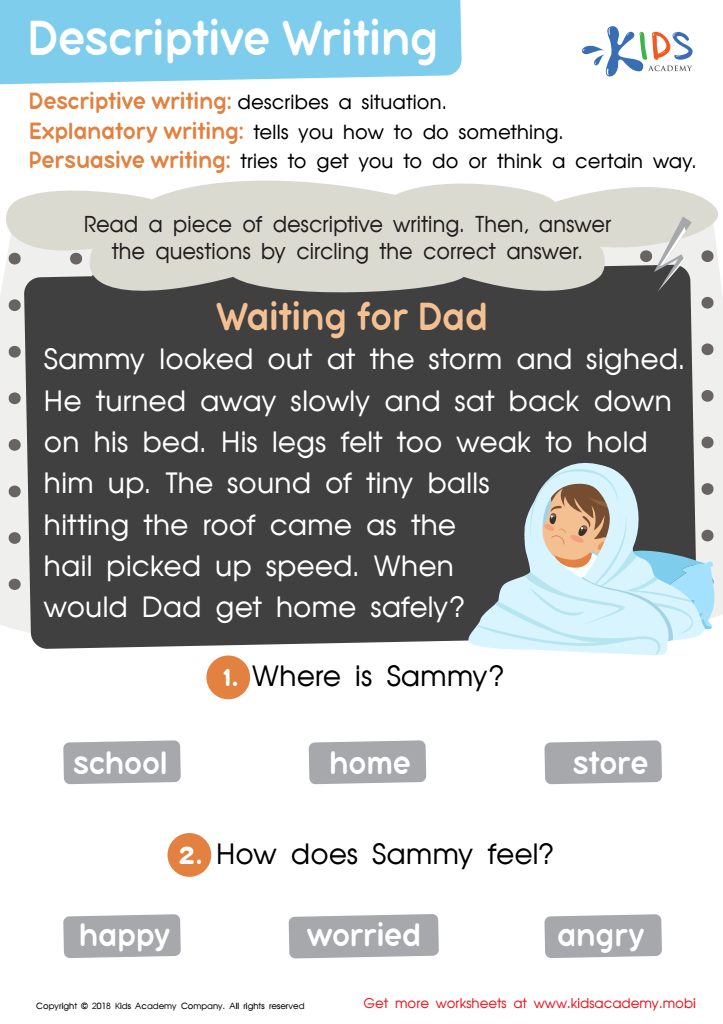
Descriptive Writing Worksheet: Part 2

Descriptive Writing Worksheet: Part 2

In this worksheet, your kids will explore writing styles like descriptive, explanatory and persuasive. Read them the descriptive text, then have them answer the questions. Writing is an art – it's a way to express emotions, tell stories and share information.
Descriptive Writing Worksheet: Part 2
Worksheet
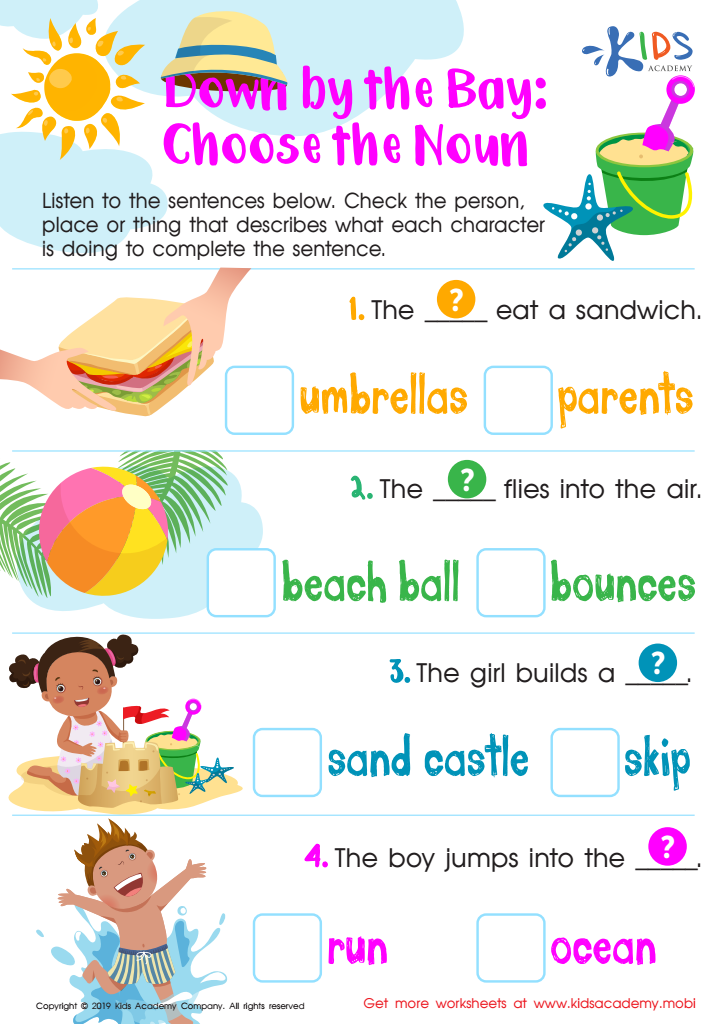
Down by the Bay: Choose the Noun Worksheet

Down by the Bay: Choose the Noun Worksheet

Teach your child the basics of speaking and constructing English, like the parts of speech. Nouns are especially important; they are names of people, animals, objects, places, or things. Go through this worksheet with your kids and have them identify the nouns in the sentences. This exercise will help them understand the concept better.
Down by the Bay: Choose the Noun Worksheet
Worksheet
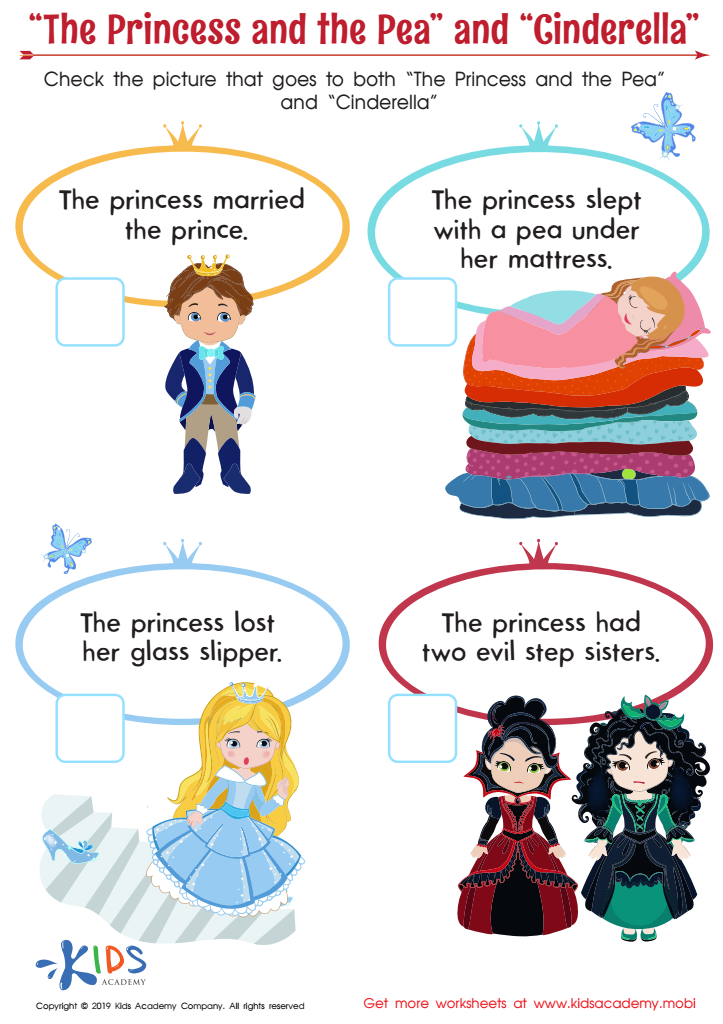
“The Princess and the Pea” and “Cinderella” Worksheet
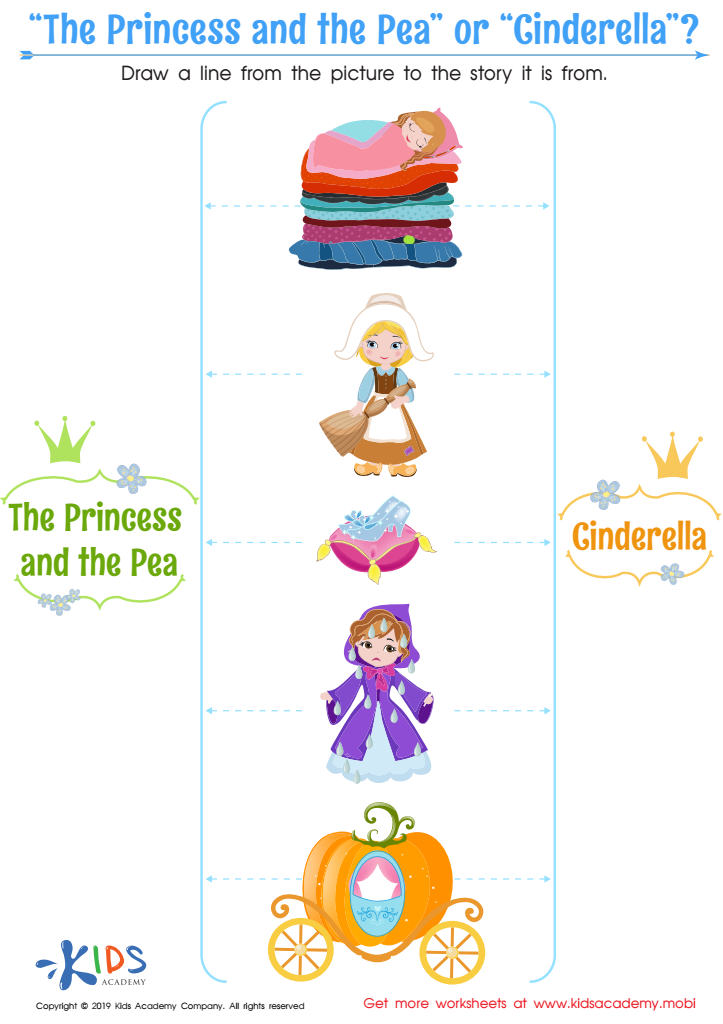

“The Princess and the Pea” and “Cinderella” Worksheet

Read "Cinderella" and "The Princess and the Pea" to your little ones. Ask them what their favorite parts were and what similarities they found in the princesses. This worksheet has four pictures of scenes from the stories. Ask your kids which picture goes with both tales.
“The Princess and the Pea” and “Cinderella” Worksheet
Worksheet
“The Princess and the Pea” or “Cinderella” Worksheet
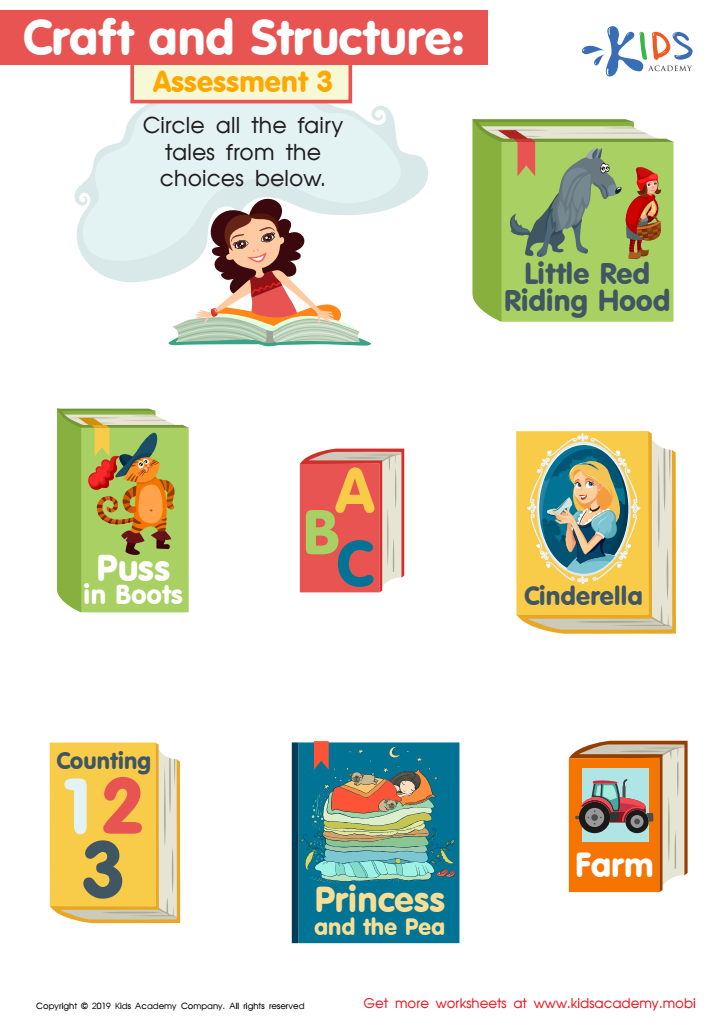

“The Princess and the Pea” or “Cinderella” Worksheet

Help your child identify the characters and objects from both the Princess and the Pea and Cinderella. Ask them to draw a line from the pictures to the story it's from on the tracing sheet. Encourage them to tell you the similarities between the two stories. Enjoy the tale with your daughter and watch her be fascinated by these two classic children's stories.
“The Princess and the Pea” or “Cinderella” Worksheet
Worksheet
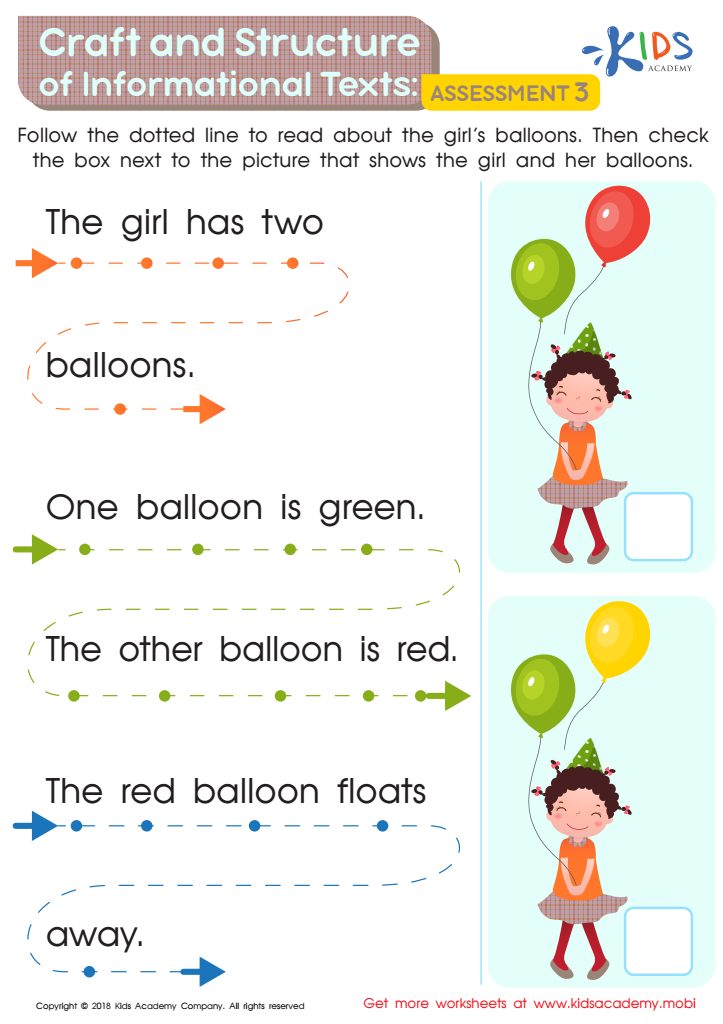
Craft and Structure: Assessment 3 Worksheet
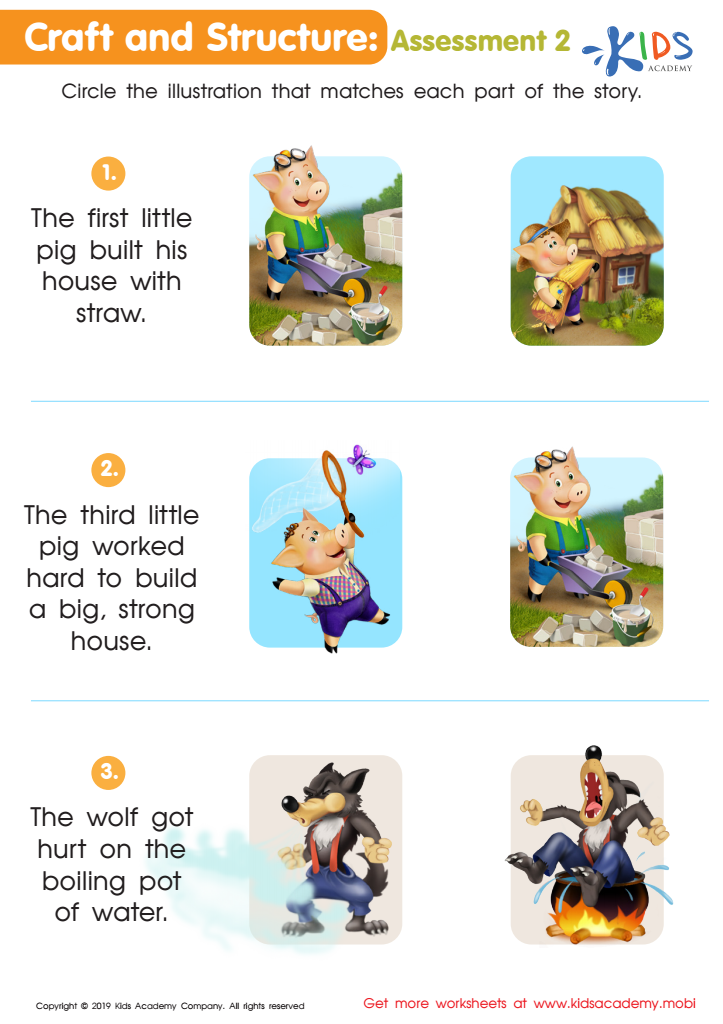

Craft and Structure: Assessment 3 Worksheet

Before starting the worksheet, ask your kids to recall their favorite bedtime stories. What characters and events can they remember? Four popular children's stories are hidden among pictures of other objects - help them search and circle the fairy tales in this PDF.
Craft and Structure: Assessment 3 Worksheet
Worksheet
Craft and Structure: Assessment 2 Worksheet 2
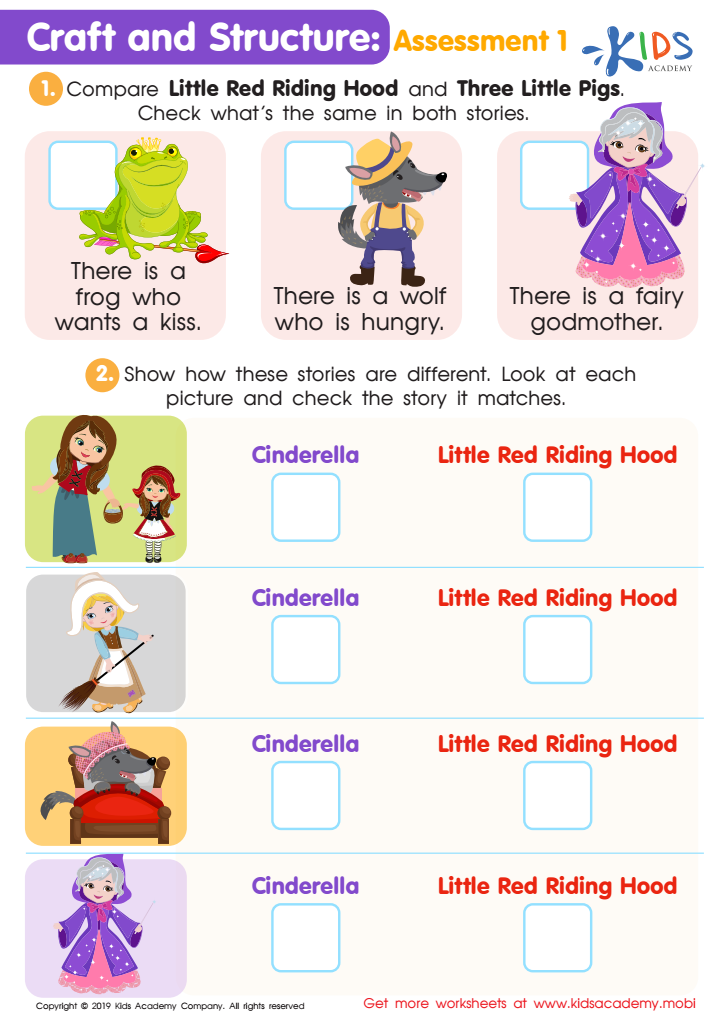

Craft and Structure: Assessment 2 Worksheet 2

This fun printout with colorful illustrations will assess how much your kids pay attention to story time. Go through the pictures and help them circle the ones that match each part of the story. Stimulate their brains and have fun in the process!
Craft and Structure: Assessment 2 Worksheet 2
Worksheet
Craft and Structure: Assessment 1 Worksheet

Craft and Structure: Assessment 1 Worksheet

Fairytales are a great way to bond with your kids while teaching them. Popular stories include Little Red Riding Hood and Three Little Pigs. Test how well they understood these two with this assessment worksheet. Ask them to compare the two stories and check what is the same. Doing this will help kids learn new words and sentence construction, as well as teaching them life lessons.
Craft and Structure: Assessment 1 Worksheet
Worksheet
Little Red Riding Hood: Illustrations Worksheet

Little Red Riding Hood: Illustrations Worksheet

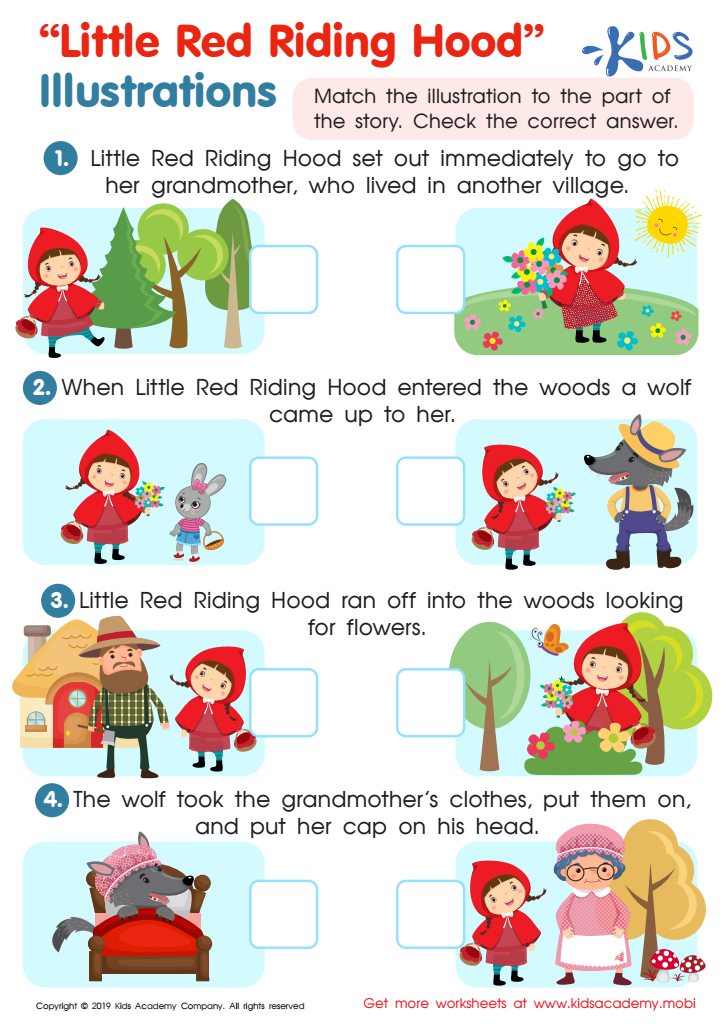
Comprehension is improved by having young readers recall and retell stories. This worksheet uses colorful illustrations of the fairytale Little Red Riding Hood. Children use their comprehension skills and strategy to match illustrations to the story parts, check off the appropriate boxes and use the pictures as clues.
Little Red Riding Hood: Illustrations Worksheet
Worksheet
Puss in Boots Illustrations Worksheet

Puss in Boots Illustrations Worksheet

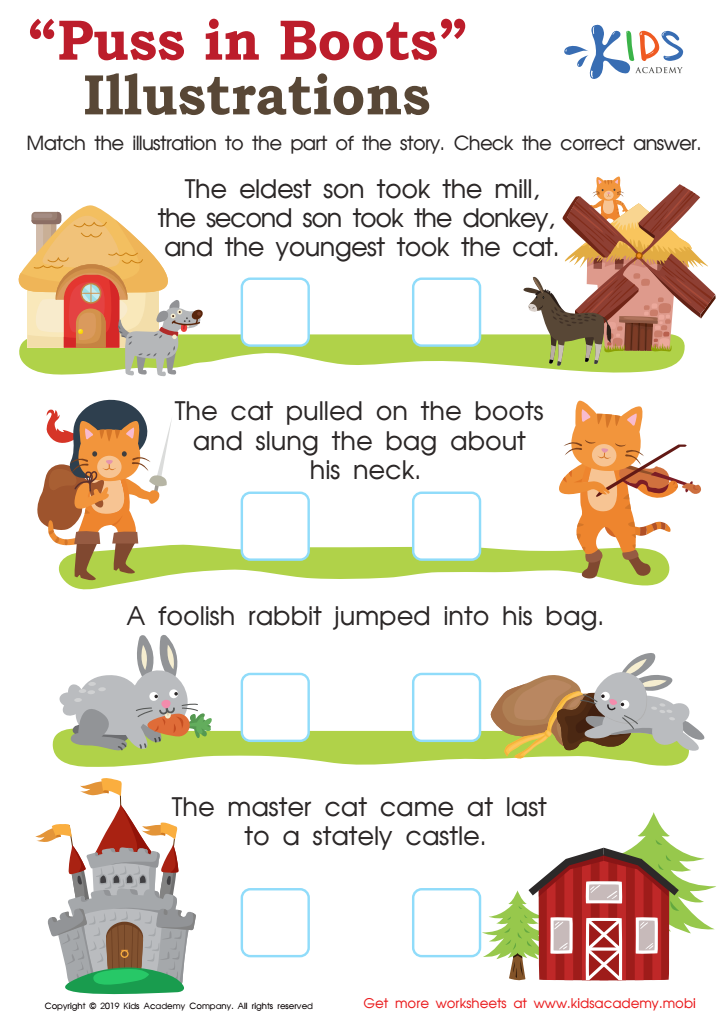
This Puss In Boots Illustrations worksheet is a great way to help kids learn about retelling stories. They'll match images to different parts of the story and check off the correct answer. As they recall events and put them in sequence they'll enjoy this fun and creative activity.
Puss in Boots Illustrations Worksheet
Worksheet
Fairy Tales Maze Worksheet

Fairy Tales Maze Worksheet

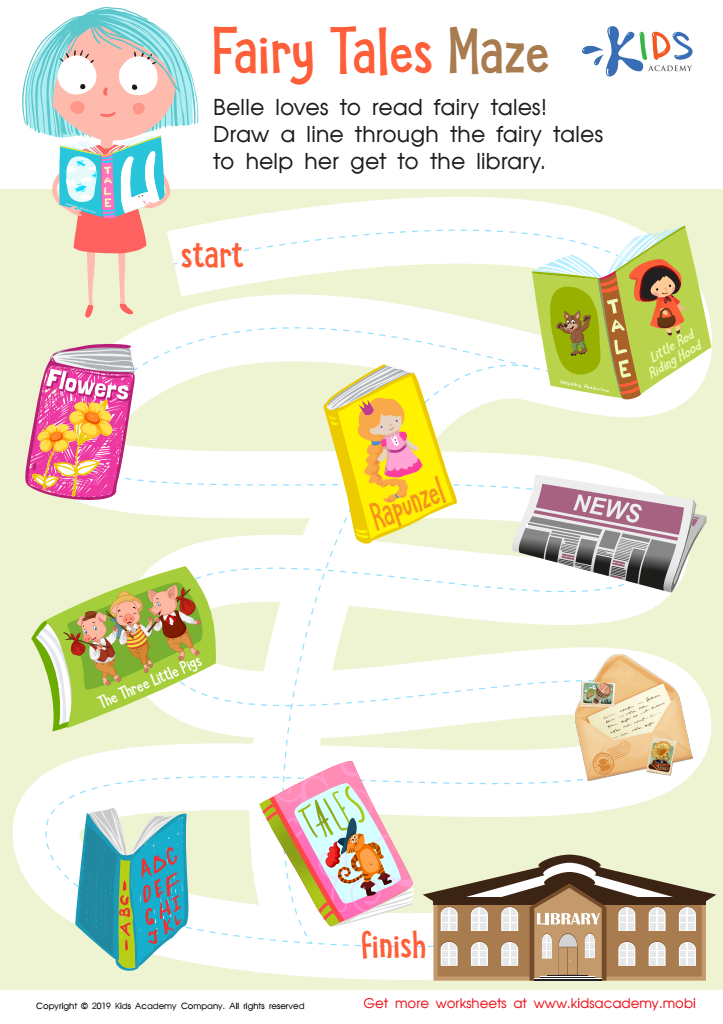
Kids love mazes and fairy tales, so this free worksheet is a great way to help teach young readers about familiar topics. They'll join Bella and use the traceable lines to travel through different reading genres, and find their way to the library for a nice reward!
Fairy Tales Maze Worksheet
Worksheet
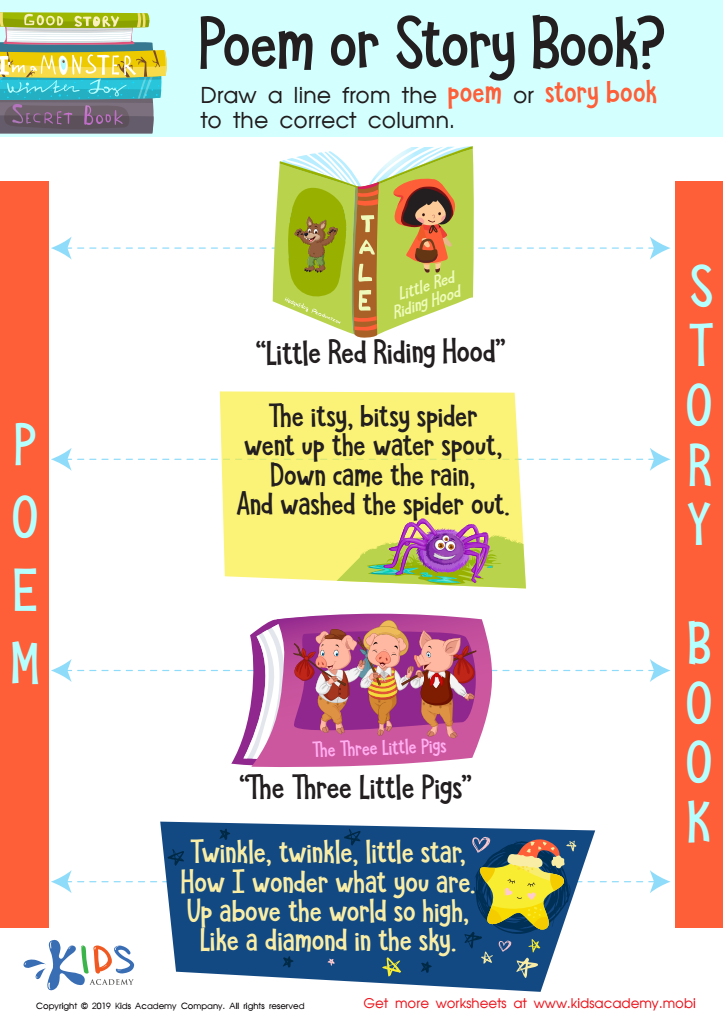
Poem or Story Book? Worksheet

Poem or Story Book? Worksheet

Help your little readers comprehend different genres with this free worksheet! Colorful images and familiar themes help them distinguish between poems and story books. They'll identify which is which, then connect the picture to the right column with traceable lines. A fun way to expand their understanding!
Poem or Story Book? Worksheet
Worksheet
Which Character Worksheet

Which Character Worksheet

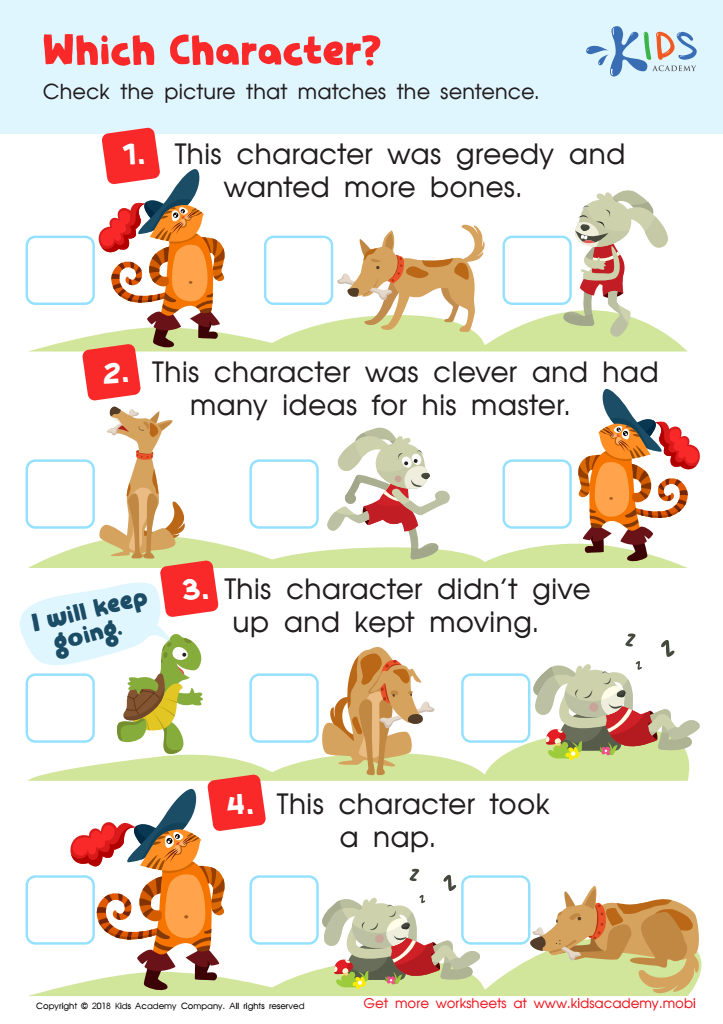
Kids learn best with stories, and this fun worksheet shows characters from popular tales. Like the tortoise who forgot hard work pays off, the cat defending its honor with wit, and the dog teaching a lesson about sharing. It's a great way to assess their understanding, and they'll be successful.
Which Character Worksheet
Worksheet
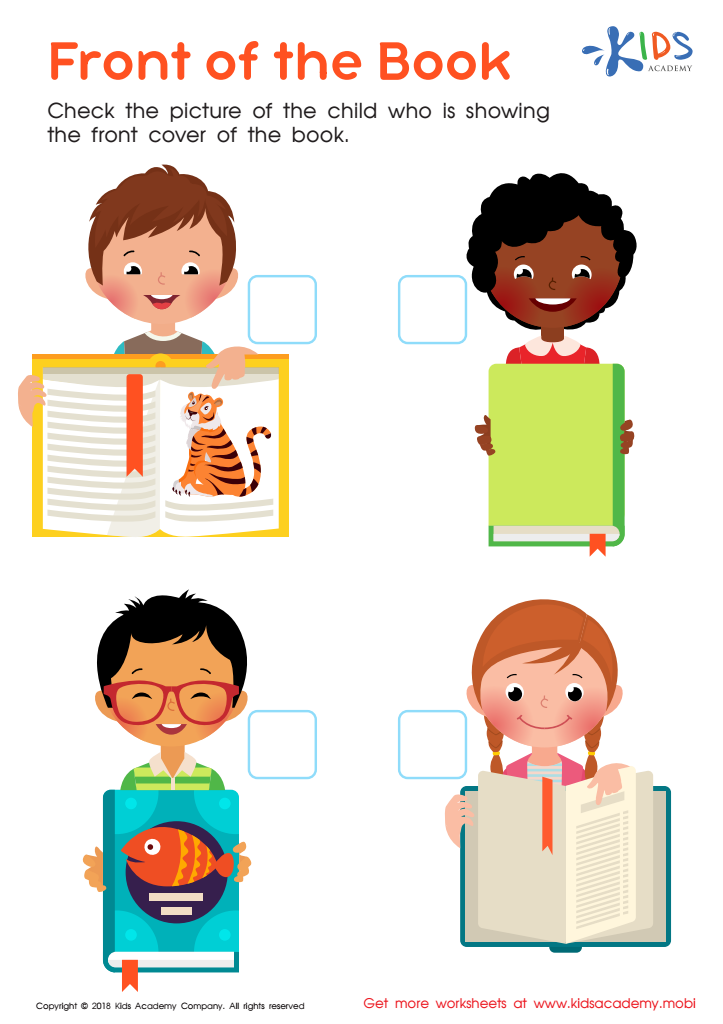
Front of the Book Worksheet

Front of the Book Worksheet

Help your child become a reader with this free worksheet! It's full of fun new friends and is designed to help kids understand concepts about the front of a book. They'll look at each picture and decide which friend is holding the book with the front cover, and check off the correct answer in the given boxes. Get your little one ready to be a reader!
Front of the Book Worksheet
Worksheet
What Does It Mean? Worksheet

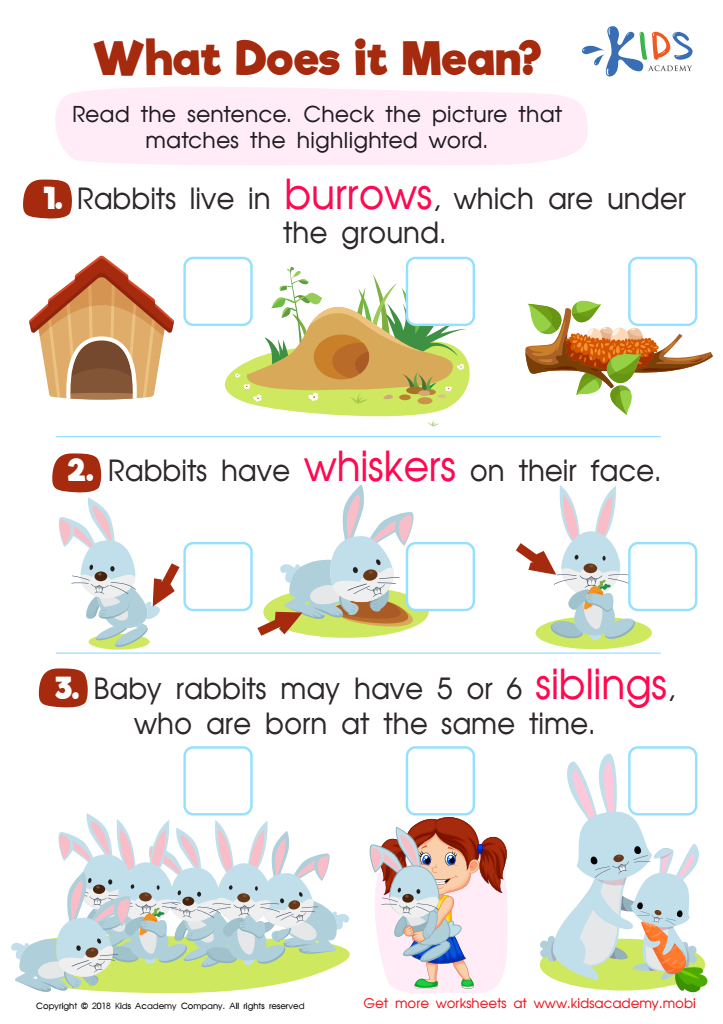
What Does It Mean? Worksheet

Teach your child to use context clues with this engaging Kids Academy worksheet. Read the sentences and find the pink-highlighted word. Use the other words in the sentence to figure out the meaning, then check the box next to the picture that represents it.
What Does It Mean? Worksheet
Worksheet
A Fox Family Worksheet

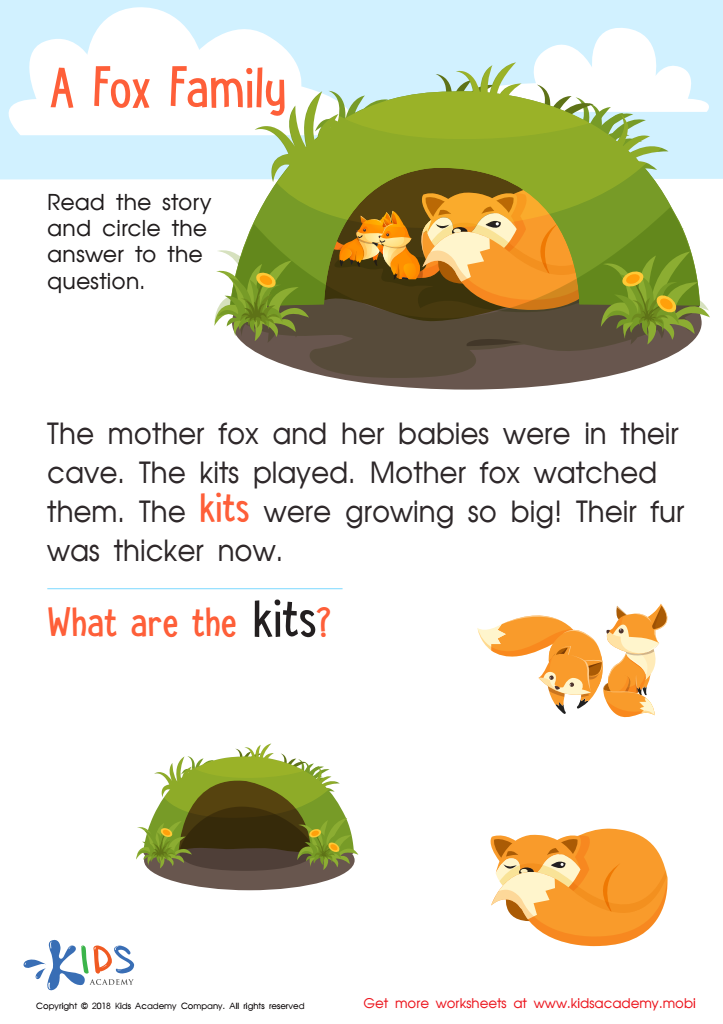
A Fox Family Worksheet

Reading is an easy way to learn new words. This worksheet introduces an interesting story about a fox family, teaching your child that "kits" refers to baby foxes. Read the text together and circle the picture to answer the question.
A Fox Family Worksheet
Worksheet
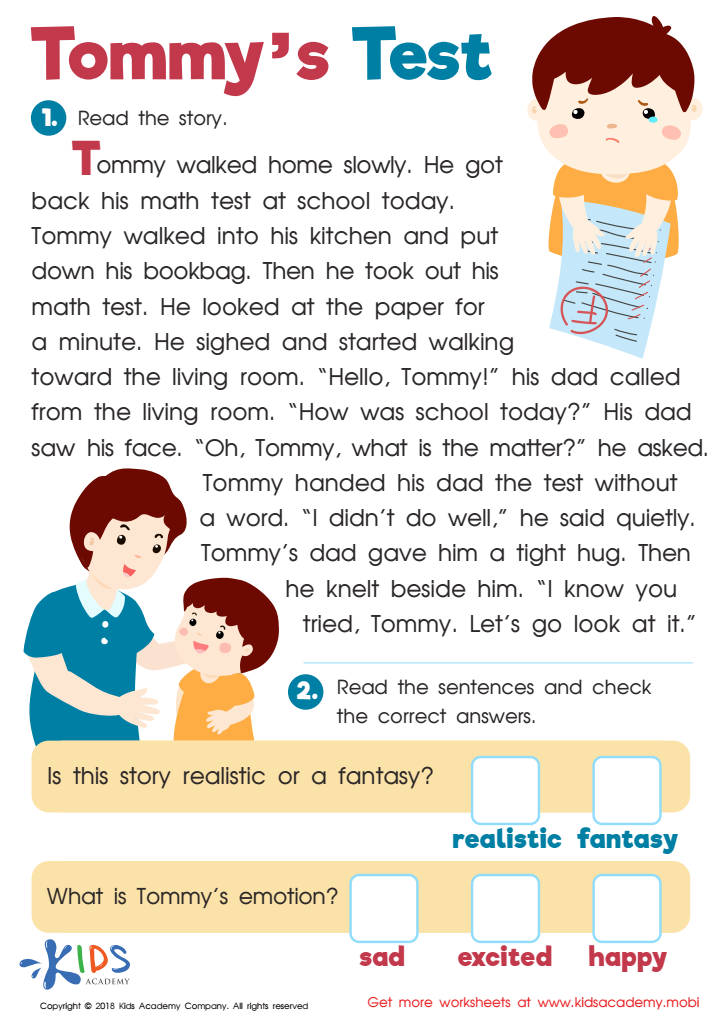
Tommys Test Worksheet

Tommys Test Worksheet

Reading short stories to your students builds a bond, teaches new words and lessons. Read the story aloud and then have them listen for details. Ask them the questions at the bottom and help them check the answers.
Tommys Test Worksheet
Worksheet
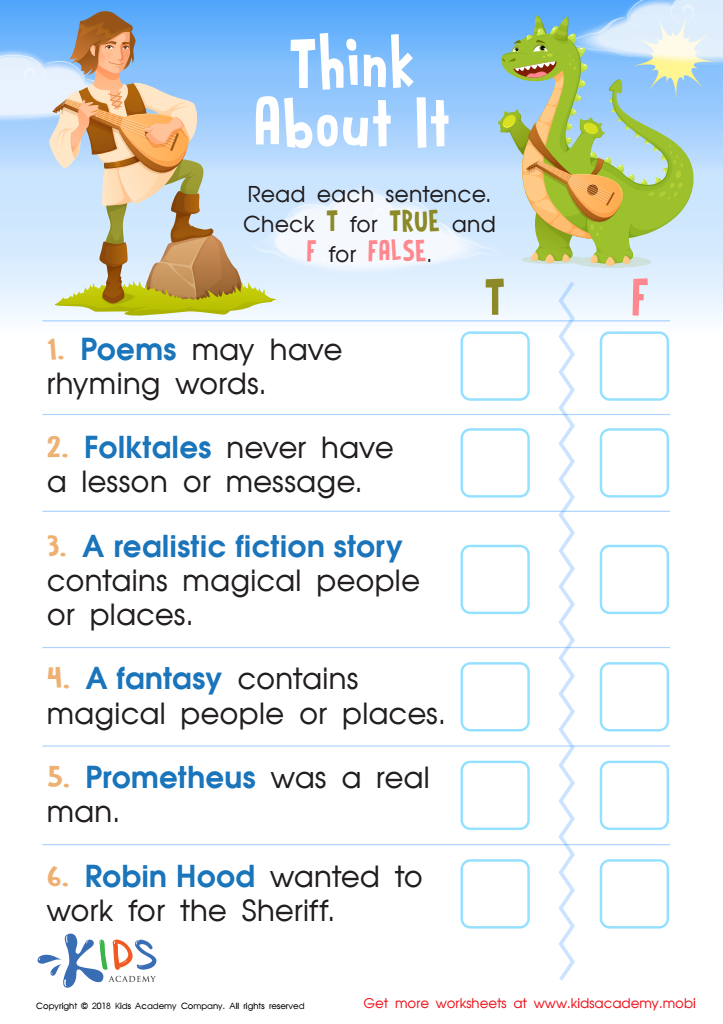
Think About It: Assessment Worksheet

Think About It: Assessment Worksheet

Reading is a fun and important way to learn. Help your students become better readers with this simple yet colorful worksheet. Read each sentence aloud, then have them read it by themselves. Ask them to check T for True and F for False. It's a great way to practice their reading skills!
Think About It: Assessment Worksheet
Worksheet
Cause and Effect Worksheet

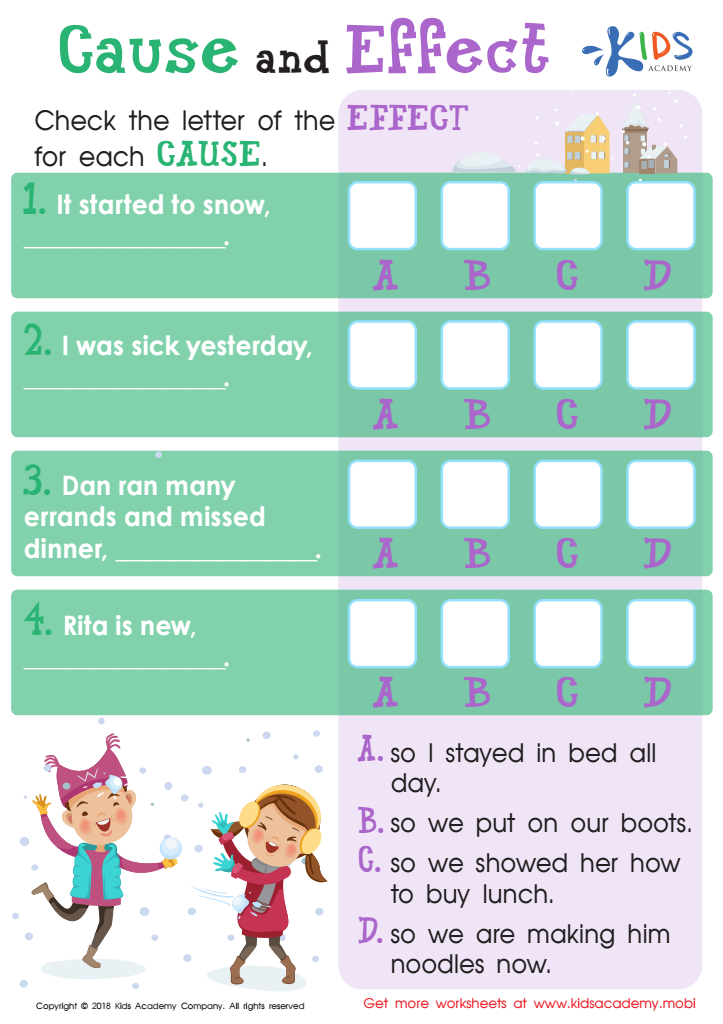
Cause and Effect Worksheet

Help your kids understand the cause-effect relationship of sentences by having them complete this worksheet. There are four incomplete sentences at the top and four options at the bottom. Have them select the appropriate letter for the effect of each cause. This will be the first step to their future of composing grammatically correct and meaningful sentences.
Cause and Effect Worksheet
Worksheet
Robin Hood's Day Off Worksheet

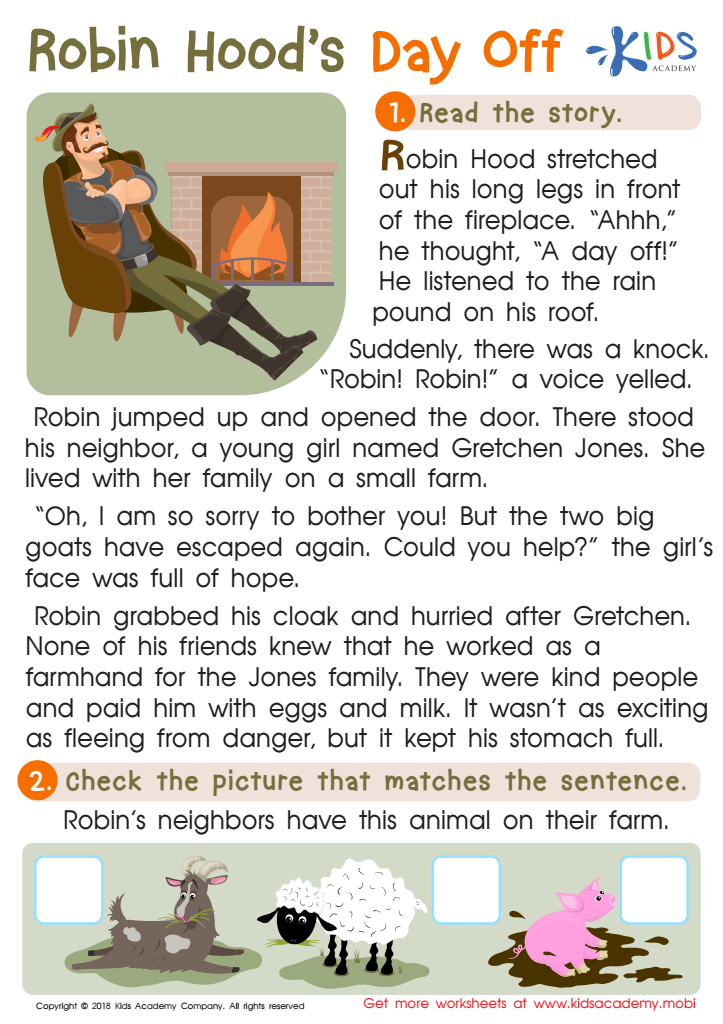
Robin Hood's Day Off Worksheet

Encourage your child to express their personality by writing stories. Show them this worksheet's short story about Robin Hood and read it slowly and carefully. Read it again if needed and ask the question below the story. This will help your child use their knowledge to answer it.
Robin Hood's Day Off Worksheet
Worksheet
Antonyms: Prometheus Worksheet

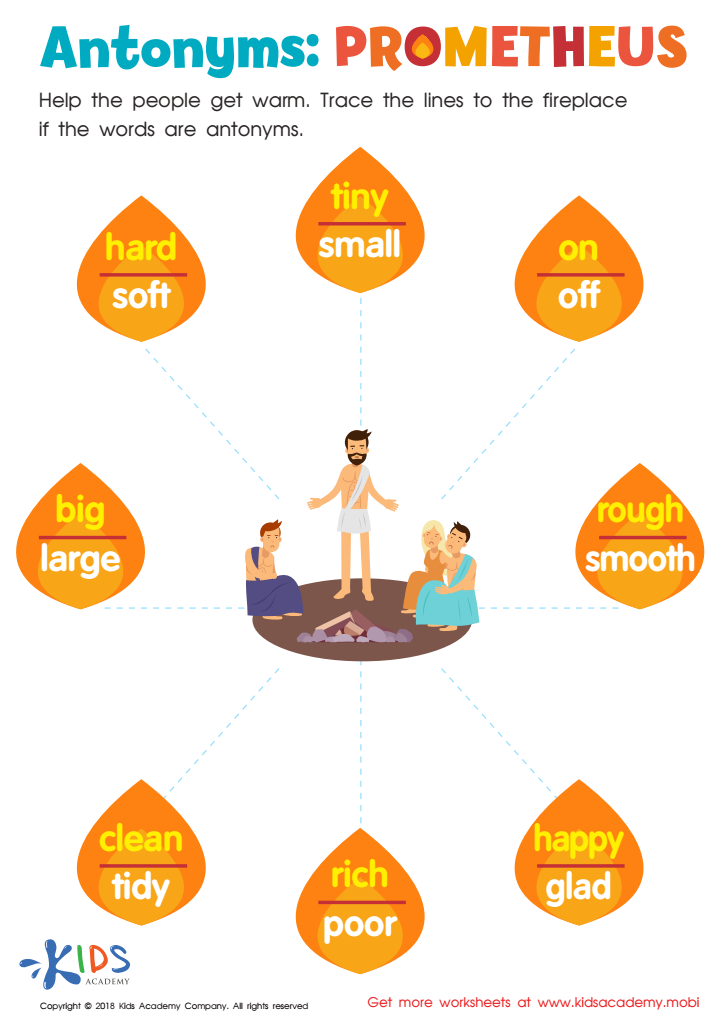
Antonyms: Prometheus Worksheet

Antonyms are words with opposite meanings to another. For example, the antonyms of 'good' are 'bad', 'poor' and 'wicked'. Ask your child to give you antonyms for 'Prometheus', which relates to fire. Invite your kids to trace the lines to the fireplace if the words are antonyms, helping the people in the tracing sheet get warm.
Antonyms: Prometheus Worksheet
Worksheet
The 5 W Questions: Robin Hood Worksheet

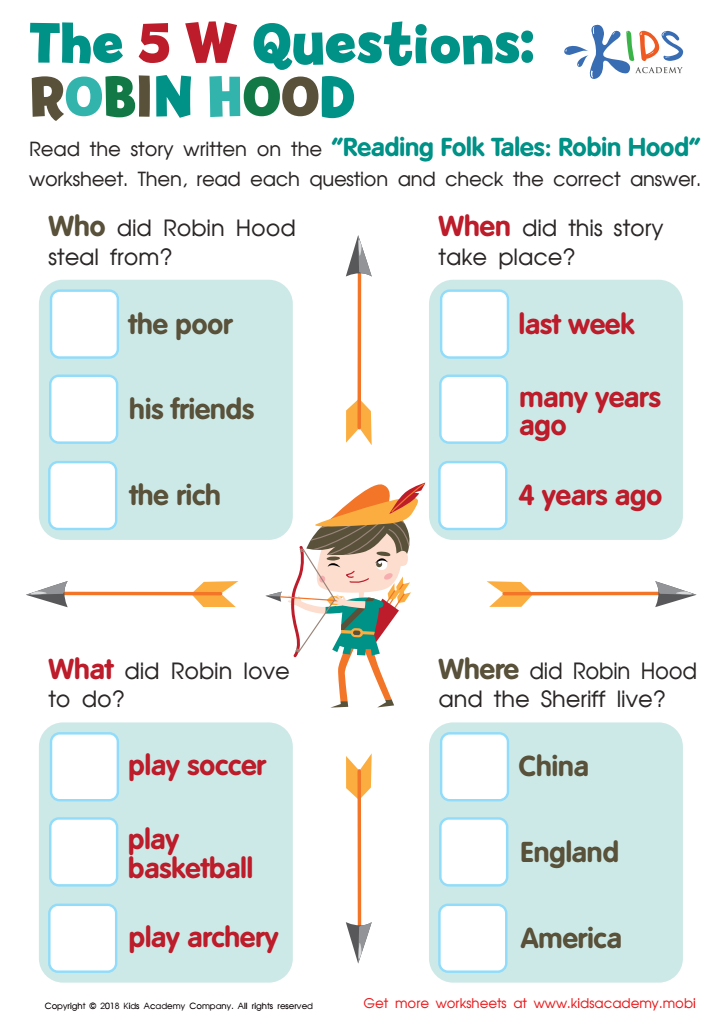
The 5 W Questions: Robin Hood Worksheet

Before embarking on this Robin Hood adventure, ensure your child reads and comprehends the 'Reading Folk Tales: Robin Hood' worksheet. Have them consider the story's lessons, and observe the details. Read the questions and help your kids select the correct answers.
The 5 W Questions: Robin Hood Worksheet
Worksheet
Who Are The Characters Worksheet

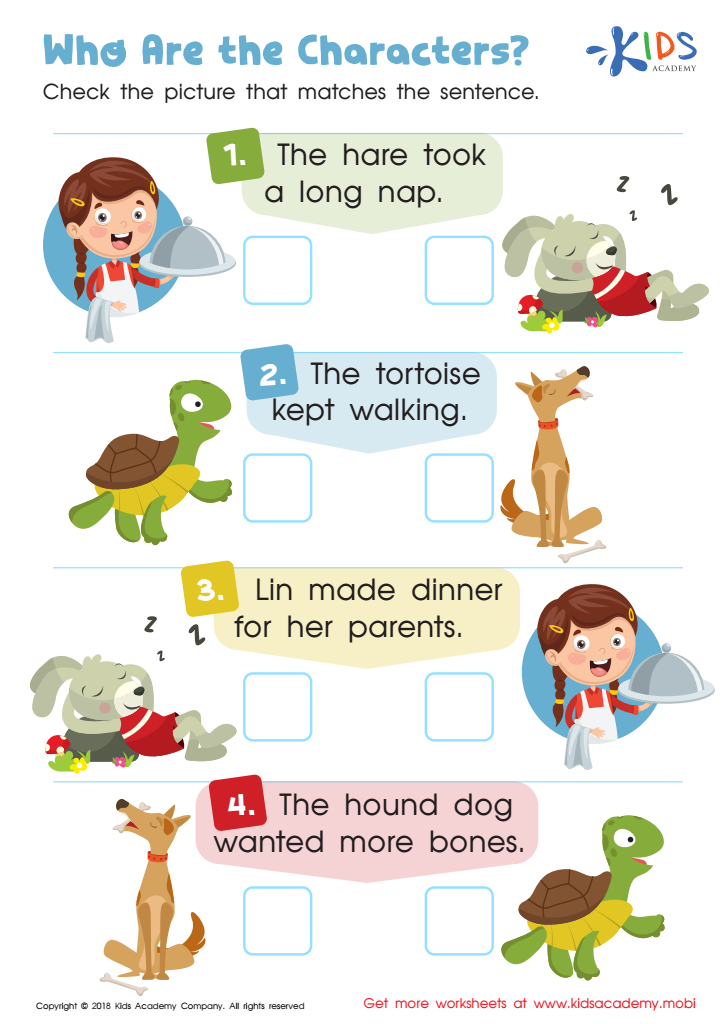
Who Are The Characters Worksheet

This worksheet tests your child's reading skills. Read each sentence out loud with them, then ask which of the two pictures match it. Help them check, then repeat this for the other sentences.
Who Are The Characters Worksheet
Worksheet
Match The Mood Worksheet


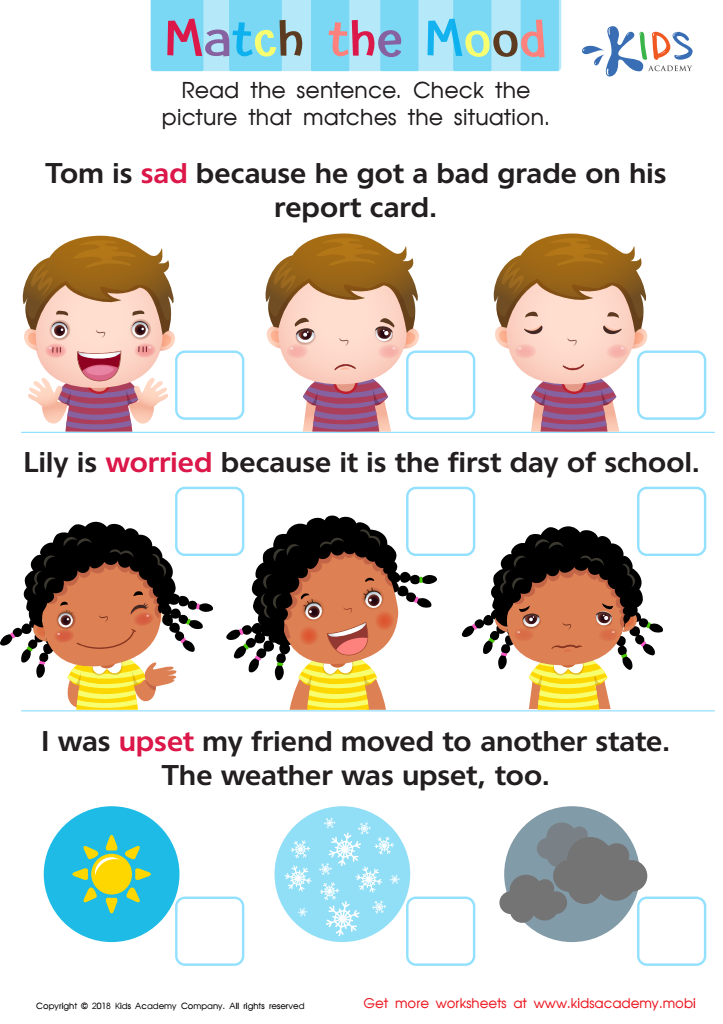
Match The Mood Worksheet

Ask your kid what kind of moods they usually experience; e.g. sad, happy, hurt or worried. Read aloud the sentences in the worksheet and help them match the situation to the picture. Max 80 words.
Match The Mood Worksheet
Worksheet
The Dog and His Bone: Questions Worksheet

The Dog and His Bone: Questions Worksheet

Read the story of The Dog and His Bone to your child and help them understand it. Have them read it aloud if possible. Then, read the five questions on the worksheet and guide them to select the correct answers.
The Dog and His Bone: Questions Worksheet
Worksheet


Reading fiction for children aged 6-9 is crucial for their development and learning. At this age, children are developing essential cognitive, social, and emotional skills. Engaging with fiction exposes them to diverse characters and plots, fostering empathy as they learn to understand different perspectives and experiences. This can significantly enhance their emotional intelligence and social skills.

Additionally, reading fiction cultivates creativity and imagination. It encourages kids to explore new ideas and possibilities, serving as a foundation for problem-solving skills. When they dive into imaginative worlds, they learn to think critically, which is beneficial across all academic subjects. Fiction also helps improve language skills, enriching their vocabulary and comprehension.

Furthermore, reading together as a family or in a classroom can strengthen bonds and enhance communication. Discussing stories can initiate important conversations about morals, values, and decision-making.

Lastly, establishing a love for reading early on has lifelong benefits. Children who read fiction regularly develop a habit that promotes academic achievement and personal enjoyment. For these reasons, parents and teachers should prioritize reading fiction, ensuring that children have the tools they need to thrive both personally and academically.