Filters

383 filtered results

Clear all filters
Favorites
With answer key
Interactive

383 filtered results

Difficulty Level

Grade


Check out this FREE Trial Lesson on Science for age 6-9!

Heating and Cooling

Favorites
With answer key
Interactive
  • 6-9
  • Interactive
  • Science
Matter: Assessment 1 Worksheet

Matter: Assessment 1 Worksheet

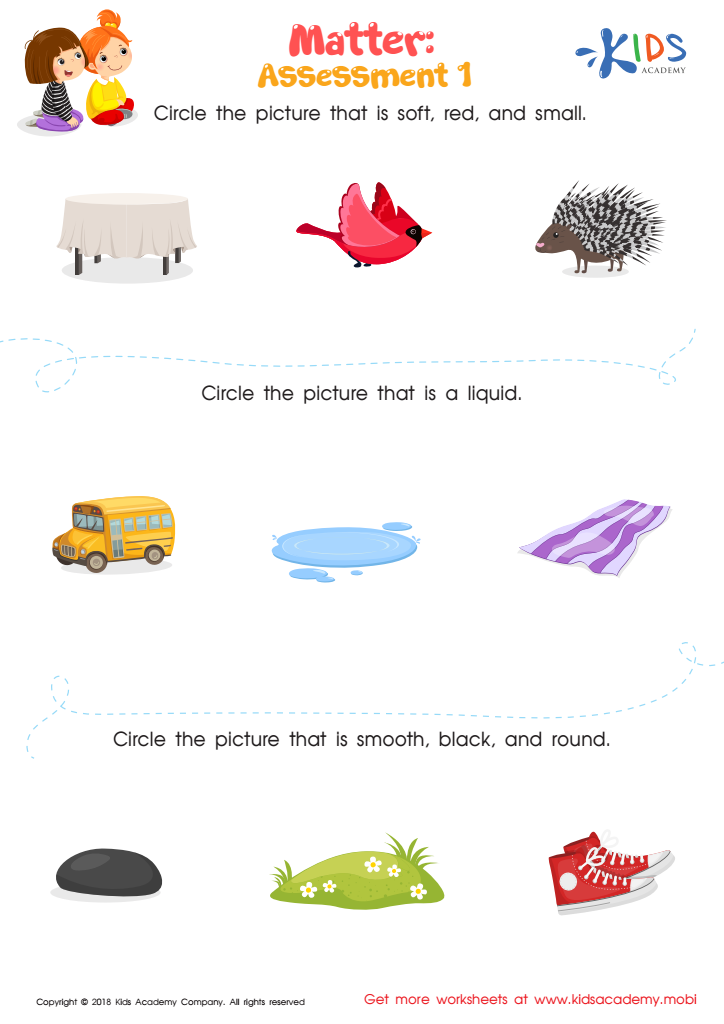
Have your children learn that anything that has weight and takes up space is matter. Examples include buses, tables, people, animals, and more. Use this worksheet to help them identify the objects and circle the soft, red, and small one; the liquid; and the smooth, black, and round one.
Matter: Assessment 1 Worksheet
Worksheet
States of Matter: Freezing and Melting Worksheet

States of Matter: Freezing and Melting Worksheet

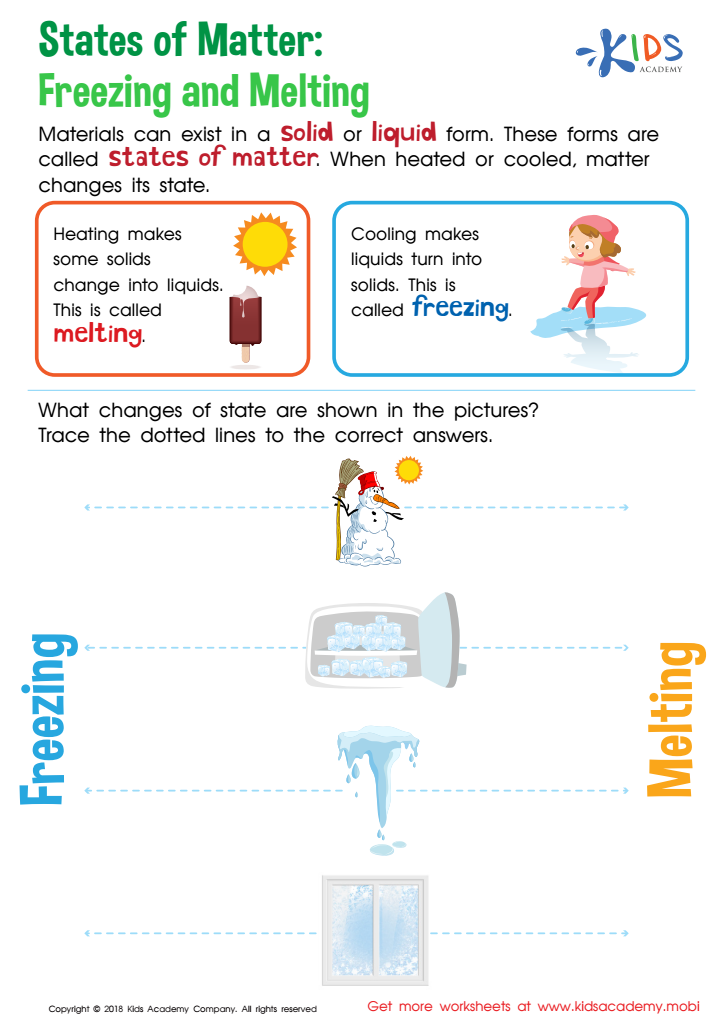
Have students look through the pics in the worksheet. Ask them what changes of state are shown, then trace the lines to the right answers. Matter can come in liquid or solid form, and changes between the two when heated or cooled (melting/freezing).
States of Matter: Freezing and Melting Worksheet
Worksheet
Matter all Around Worksheet

Matter all Around Worksheet

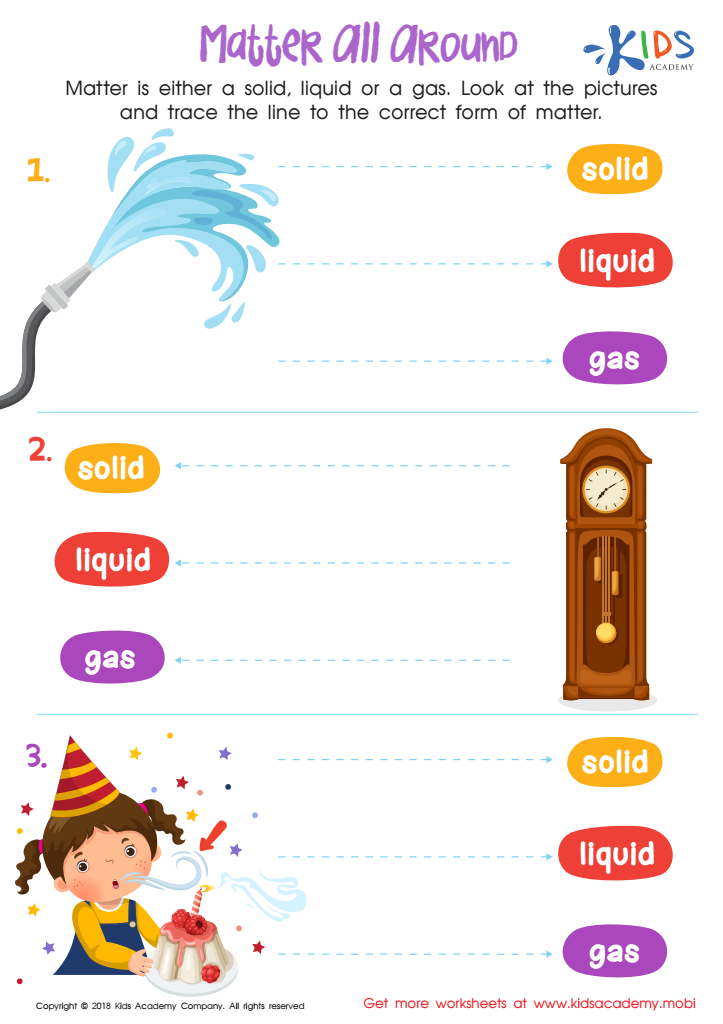
Have you taught your students about matter? Use this worksheet to help them understand that matter is anything that has weight and takes up space, either as a solid, liquid, or gas. Guide them to trace the line to the correct form of matter as they look at the pictures. This will be easy if they already know the topic, but it's also a great opportunity to teach them.
Matter all Around Worksheet
Worksheet
Observing Properties Worksheet

Observing Properties Worksheet

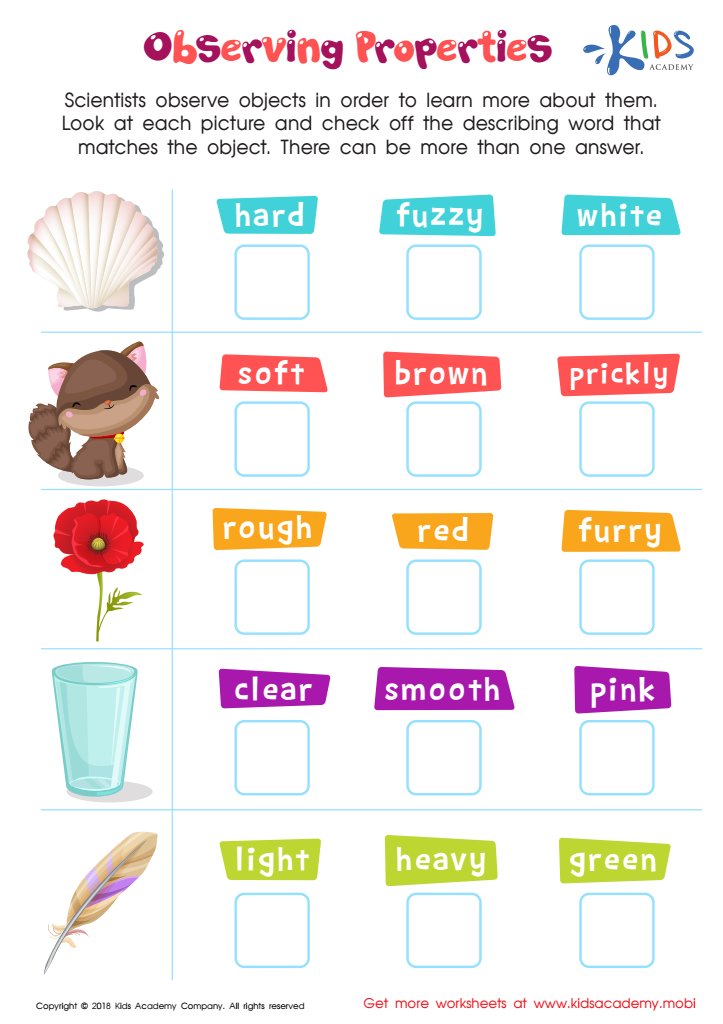
Encourage your kid's interest in science with this fun worksheet! Let them identify the five objects on the left, then choose the most accurate word from the options on the right. There might be more than one answer, so remind them to take their time observing the objects.
Observing Properties Worksheet
Worksheet
Sort and Count to the Moon Worksheet

Sort and Count to the Moon Worksheet

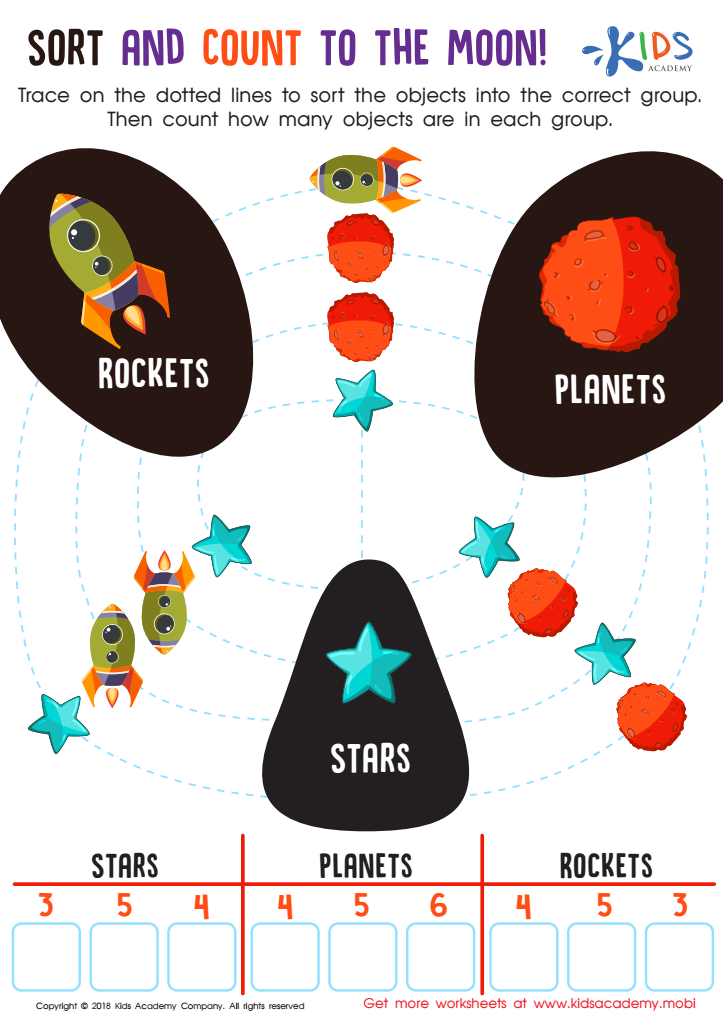
Little space explorers will love counting, sorting and strengthening number sense with this galactic worksheet! They'll use traceable lines to sort pictures of stars, planets and rockets into categories according to properties. After sorting, they'll count each item and fill in the boxes. Bold pictures make it fun and build critical thinking skills.
Sort and Count to the Moon Worksheet
Worksheet
Ten in the Bed Worksheet

Ten in the Bed Worksheet

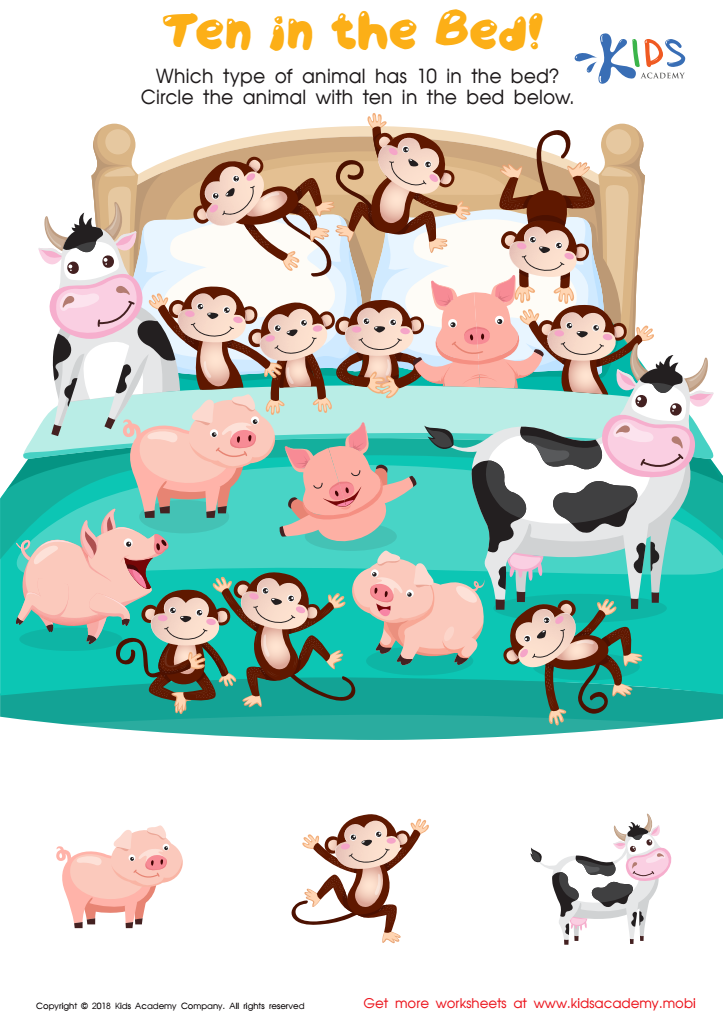
This fun worksheet has your kids counting and sorting friendly animal faces in a bed of ten! It's a great way for them to practice their mental math skills, like adding and multiplying more efficiently. Plus, it brings a new meaning to the classic song "Monkeys Jumping on the Bed"!
Ten in the Bed Worksheet
Worksheet
Find 5 Worksheet
Find 5 Worksheet

Find 5 Worksheet

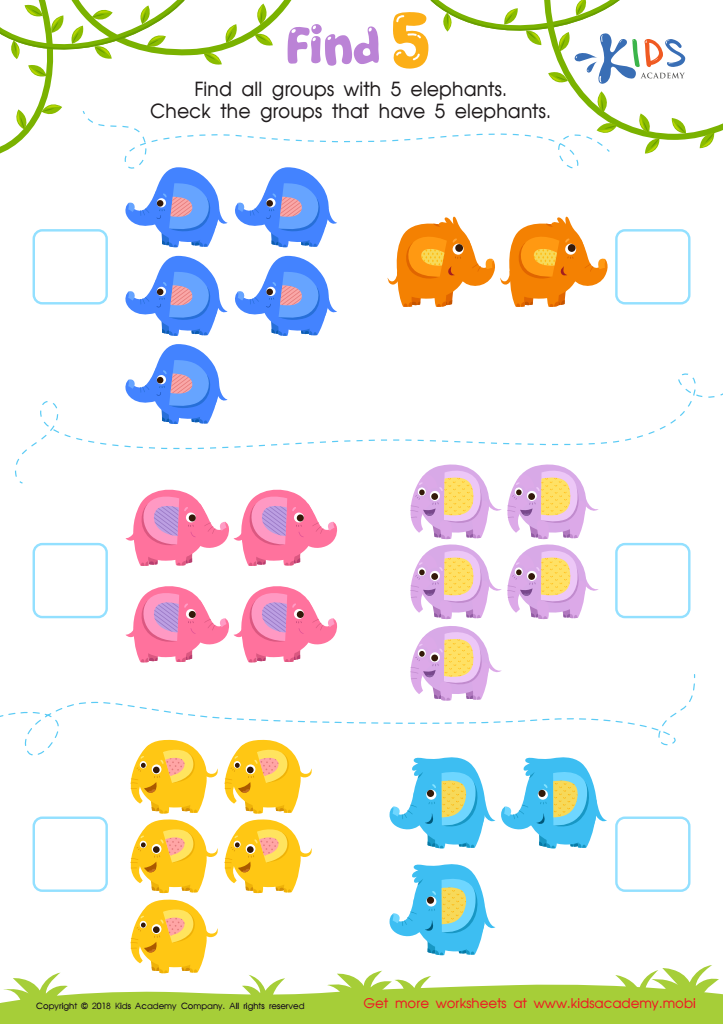
Kids will love these cheery elephants that help them discover grouping and counting by fives. It's a great way to start learning addition and multiplication, while also developing fine motor skills. Download the free PDF and let the fun begin.
Find 5 Worksheet
Worksheet
Sorting Animals by Land, Air and Sea Worksheet

Sorting Animals by Land, Air and Sea Worksheet

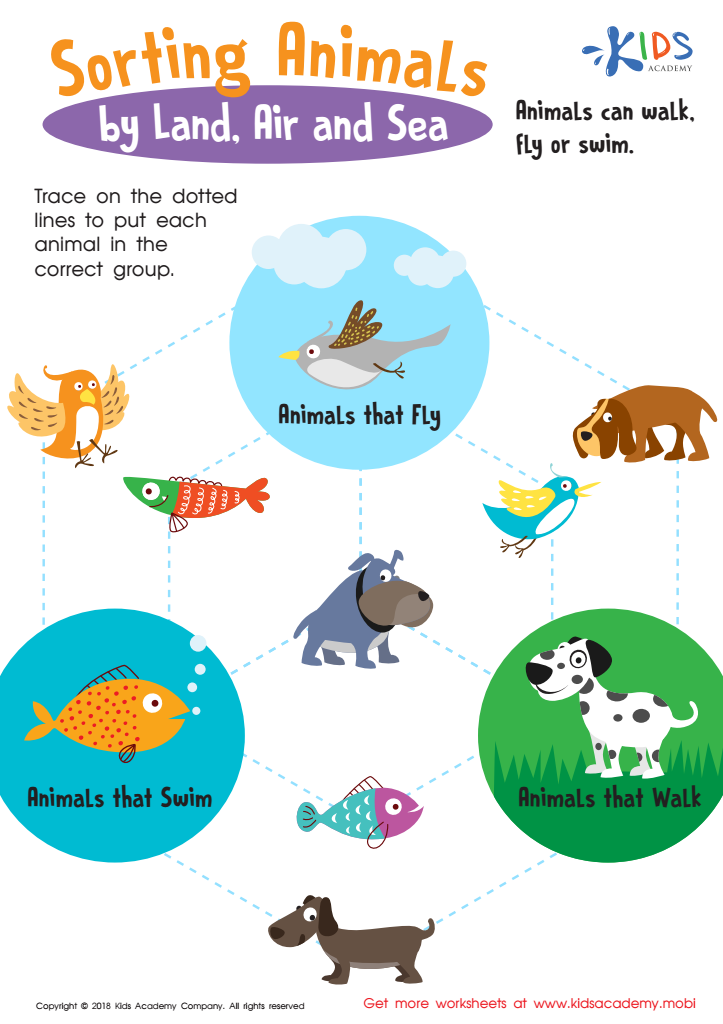
Kids will use critical thinking and fine motor skills with this worksheet! They'll analyze animal traits and draw lines to sort them into groups of those that fly, swim, or walk. It's a fun way to hone skills and have a great time!
Sorting Animals by Land, Air and Sea Worksheet
Worksheet
Sorting Animals in 3 Groups Worksheet

Sorting Animals in 3 Groups Worksheet

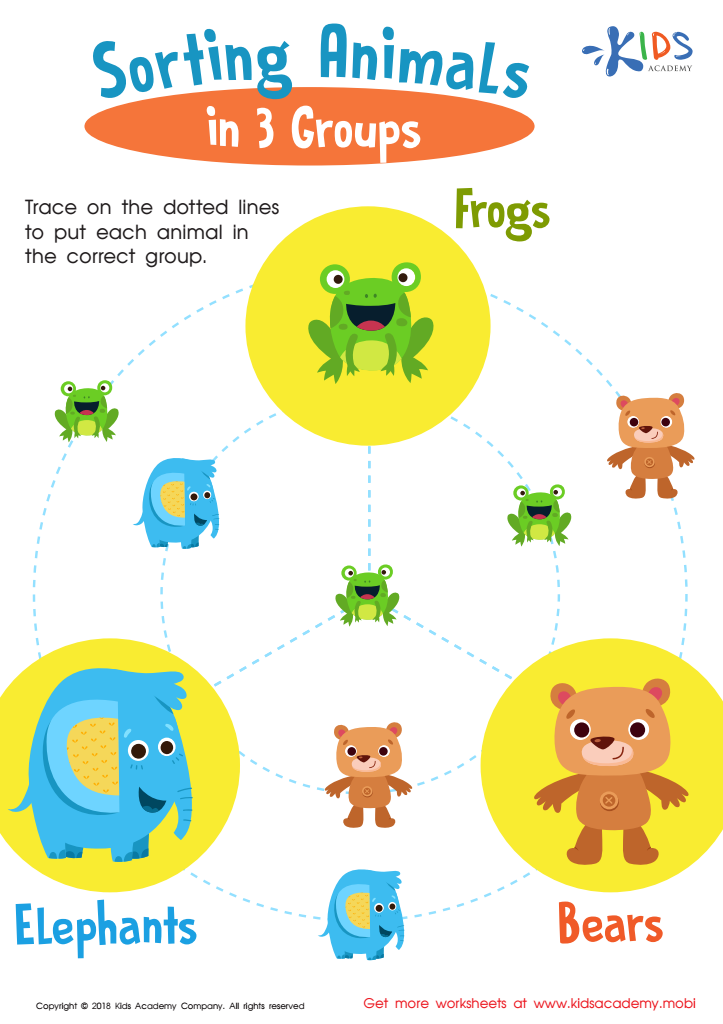
Let your kids practice and build skills for future Venn Diagrams with this PDF worksheet. They'll trace lines to match and group animals, and learn the differences and similarities of animals by categorizing with pictures and words. Plus, it's a great way to develop fine motor skills.
Sorting Animals in 3 Groups Worksheet
Worksheet
Recycle Sort Worksheet

Recycle Sort Worksheet

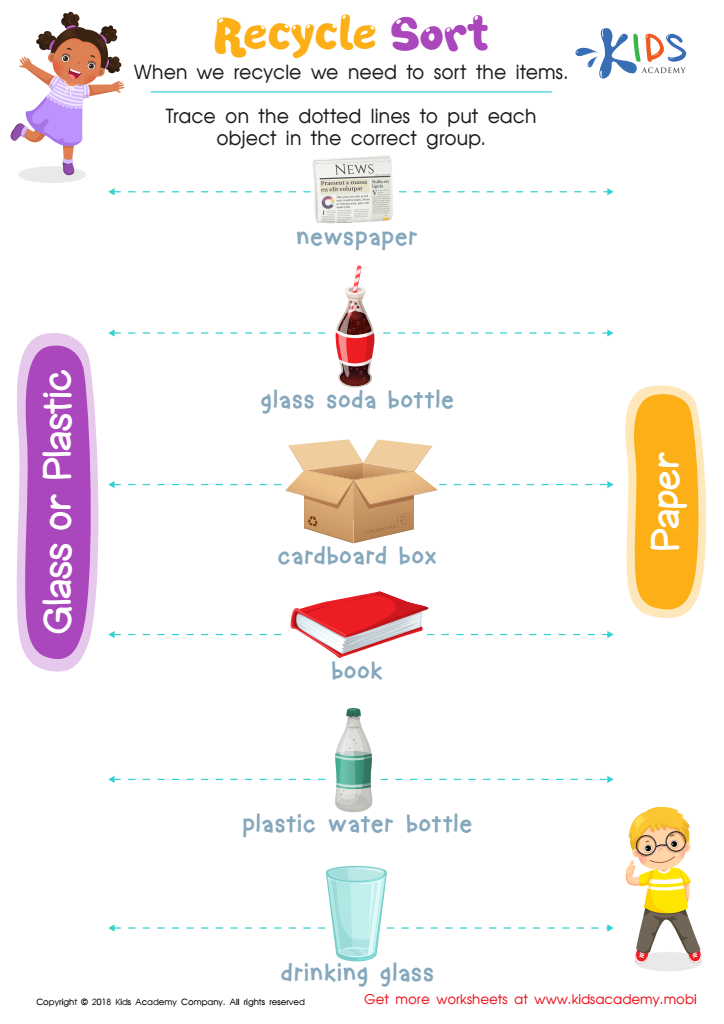
Help your children become eco-warriors while they develop critical thinking and fine motor skills with this free downloadable worksheet! Engaging pictures and matching words, plus fun and bright colors, will have kids analyzing and sorting recyclables into paper or glass/plastic groups using traceable lines.
Recycle Sort Worksheet
Worksheet
Sorting Animals Worksheet

Sorting Animals Worksheet

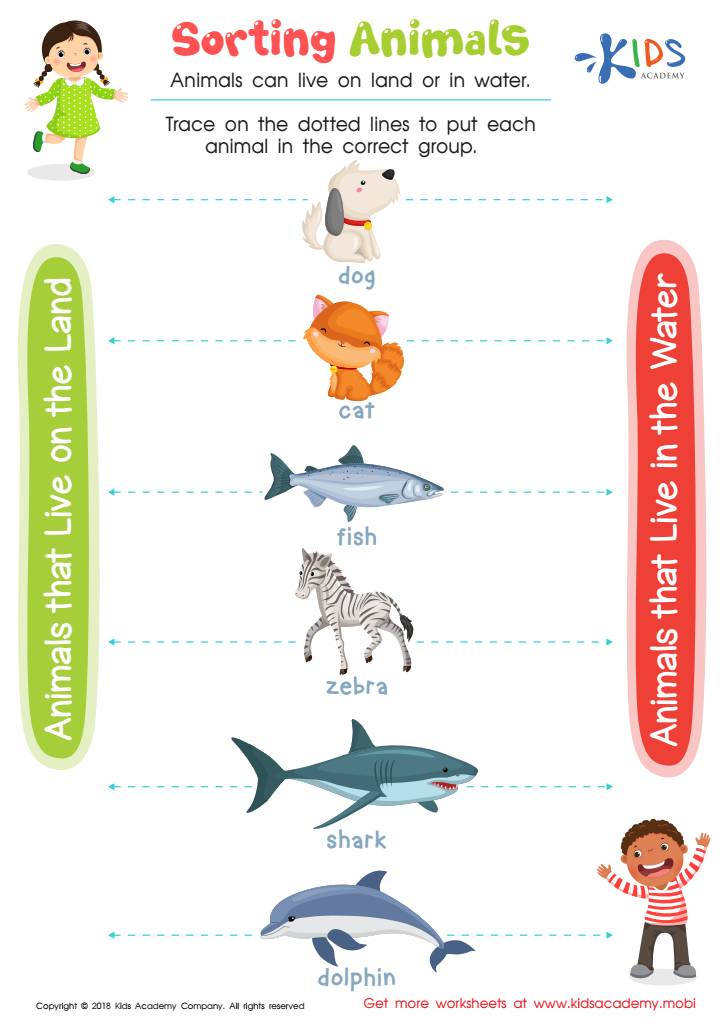
Your kids will love this free, interactive worksheet! With image clues, they can read and trace the animal names, and then sort them into groups of land or water animals. It's an enjoyable way to boost their critical thinking, fine motor and prior knowledge skills.
Sorting Animals Worksheet
Worksheet
Force and Interactions: Assessment 2 Worksheet

Force and Interactions: Assessment 2 Worksheet

Help your child see the difference between push and pull with this fun worksheet. Ask them to match each picture to the right group. The "push" is on the left and the "pull" is on the right. Assist them in tracing the activities and explain what it is the people are doing.
Force and Interactions: Assessment 2 Worksheet
Worksheet
Force and Interactions: Assessment 1 Worksheet

Force and Interactions: Assessment 1 Worksheet

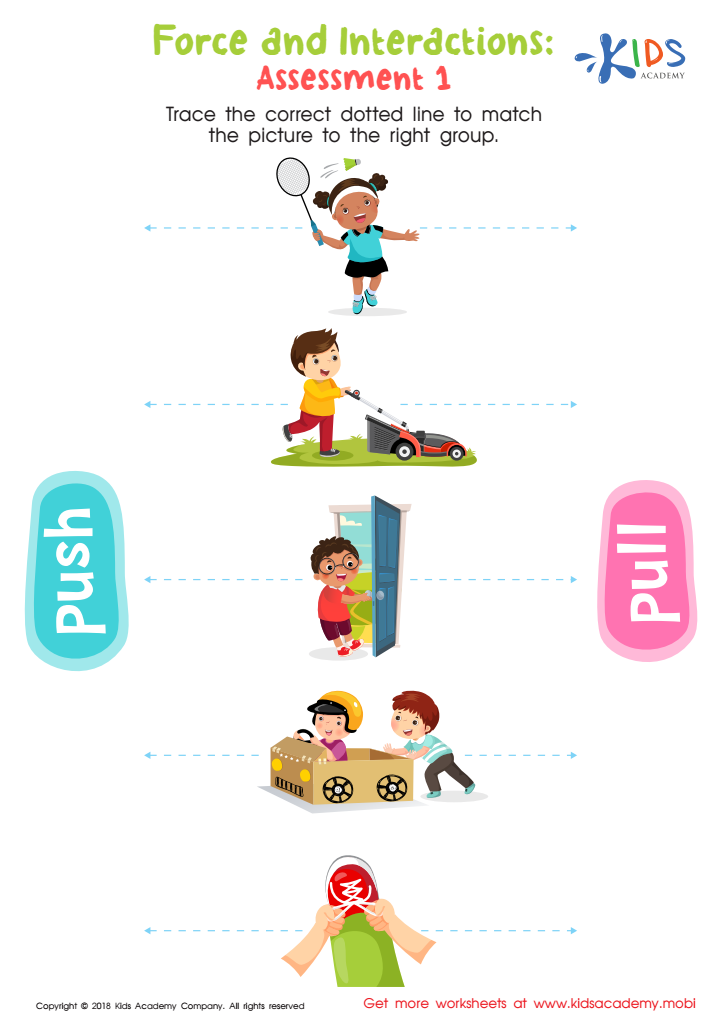
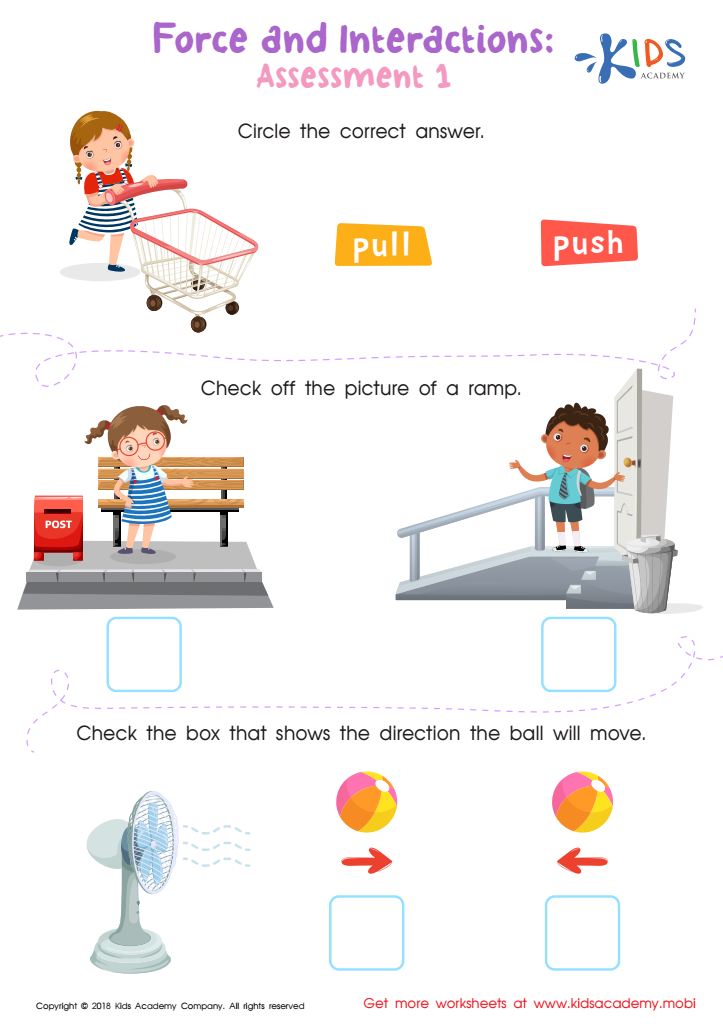
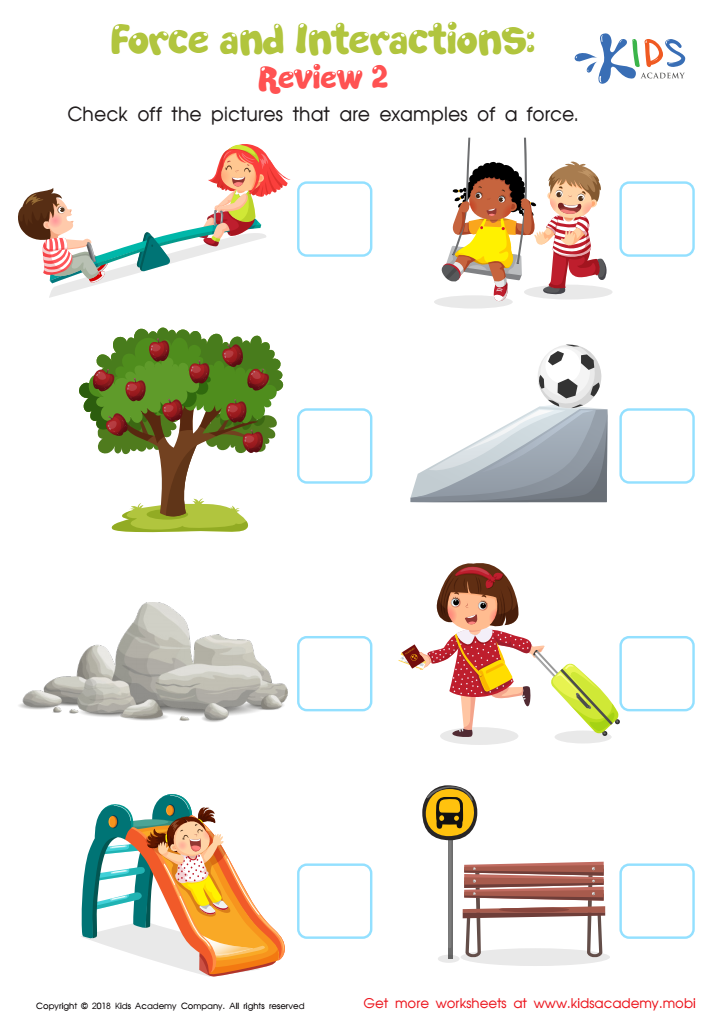
Test your students' knowledge of pushing, pulling, ramps and wind with this worksheet. The first task requires them to identify push or pull pictures. The second asks them to identify a ramp and the third to explain which direction a ball will move when exposed to wind.
Force and Interactions: Assessment 1 Worksheet
Worksheet
Force and Interactions: Review 2 Worksheet

Force and Interactions: Review 2 Worksheet

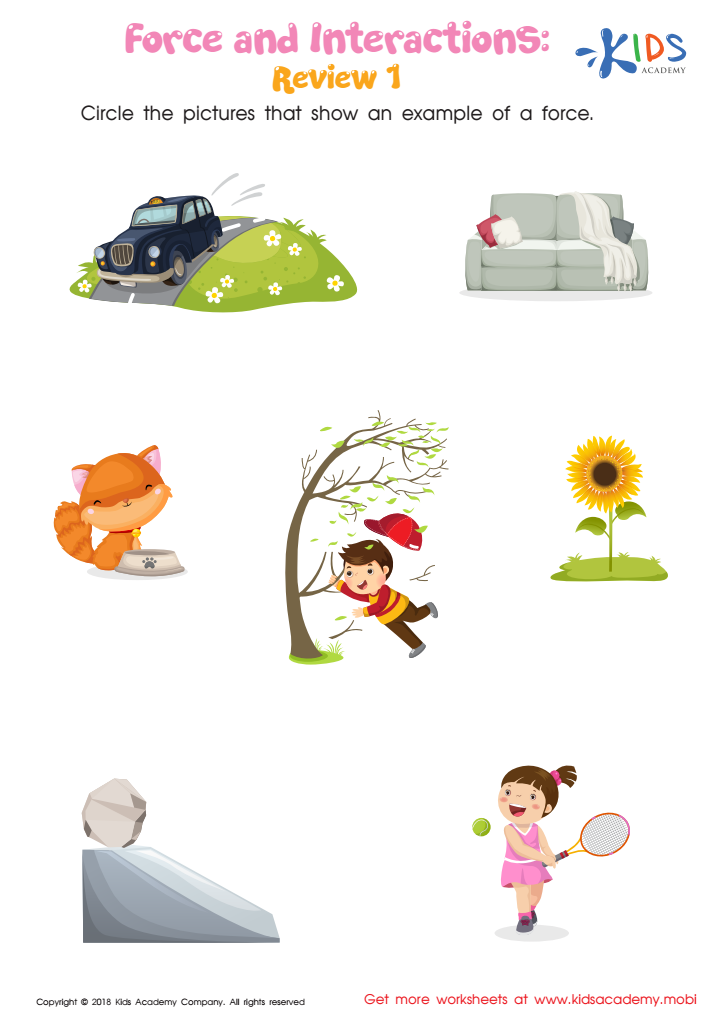
Your child can identify force examples by checking the pictures. There are 8 images of kids engaging in activities and objects in motion. Get them to name the activities and objects, or if they know, explain force and interaction.
Force and Interactions: Review 2 Worksheet
Worksheet
Force and Interactions: Review 1 Worksheet

Force and Interactions: Review 1 Worksheet

See how well your child can identify the different forces. Explain to your child that force is what causes objects to move, such as wind blowing a branch or an object going down a ramp. Ask them to circle images that show a force and assess how well they can identify them.
Force and Interactions: Review 1 Worksheet
Worksheet
Ramps Worksheet
Ramps Worksheet

Ramps Worksheet

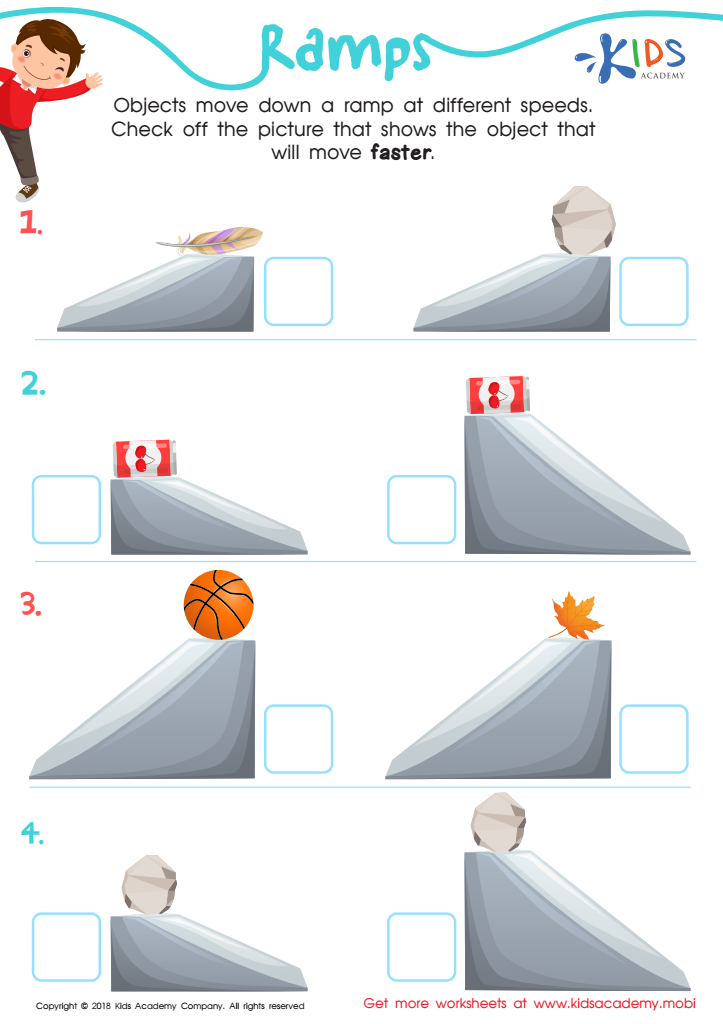
If your child has seen a ramp, they'll find this worksheet easy. A ramp is sloped for objects to move quickly downwards. The printout has images of objects on different ramps. Ask your child to identify which object will move faster.
Ramps Worksheet
Worksheet
Ramps All Around us Worksheet

Ramps All Around us Worksheet

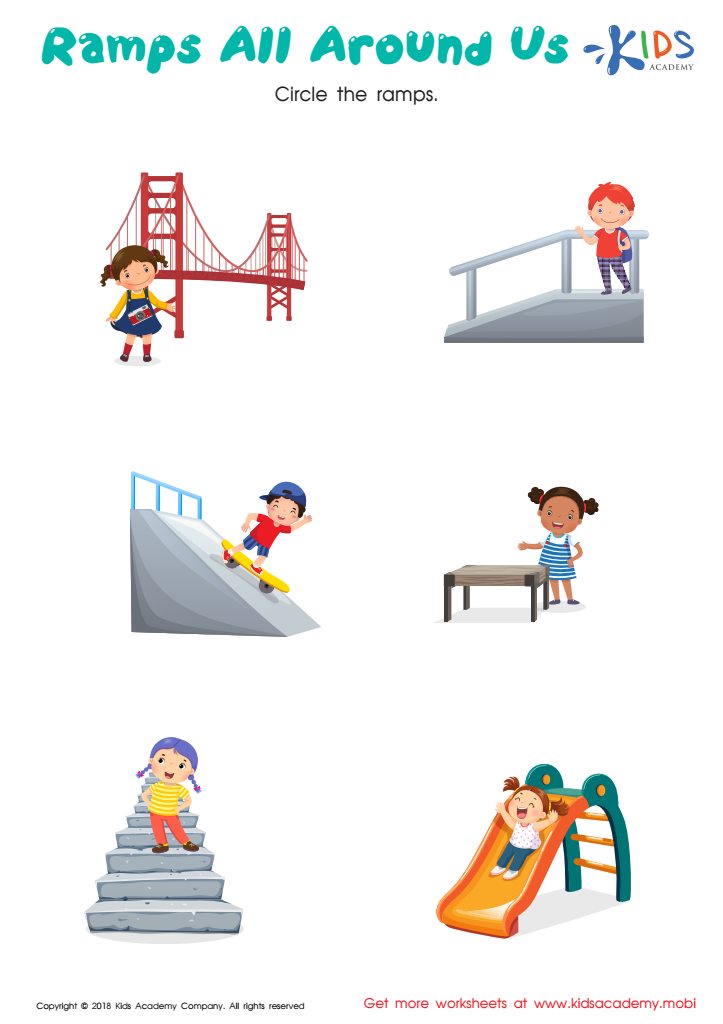
Ask your kids if they know what ramps are, then have them give you examples of places they've seen them. This worksheet has pictures of ramps - have your child identify and circle them.
Ramps All Around us Worksheet
Worksheet
Push or Pull Sorting Worksheet

Push or Pull Sorting Worksheet

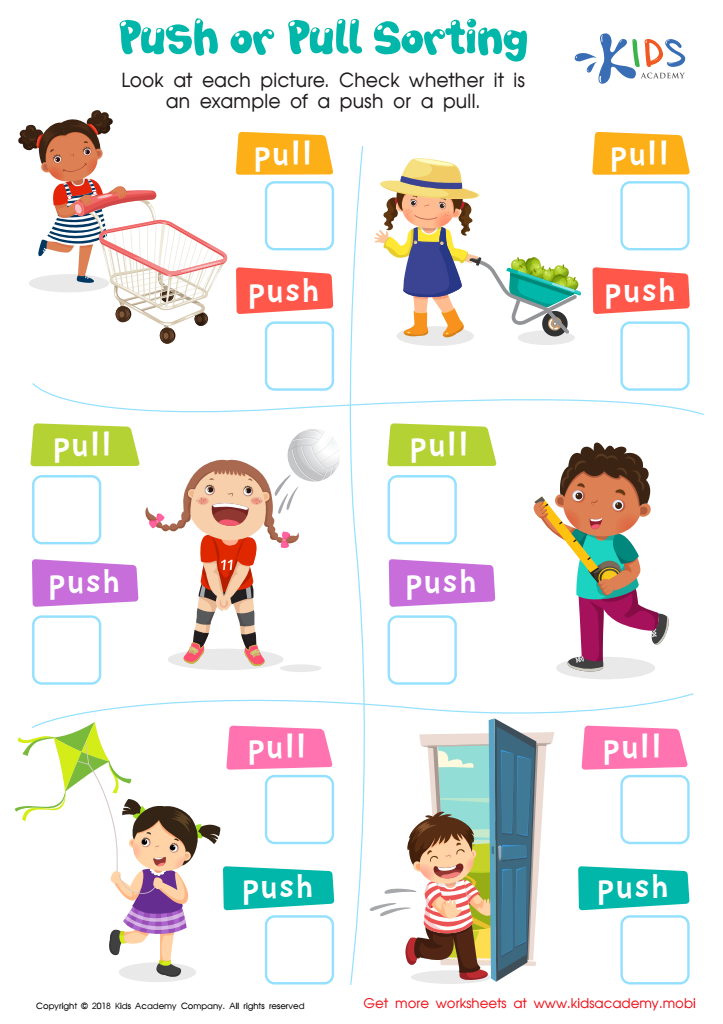
Show your child the pictures in this worksheet. Ask them to tell you what each child is doing. Then, ask them to identify whether it's an example of pushing or pulling. Ask if they know what these terms mean and if they can provide examples.
Push or Pull Sorting Worksheet
Worksheet
Will it Move? Worksheet

Will it Move? Worksheet

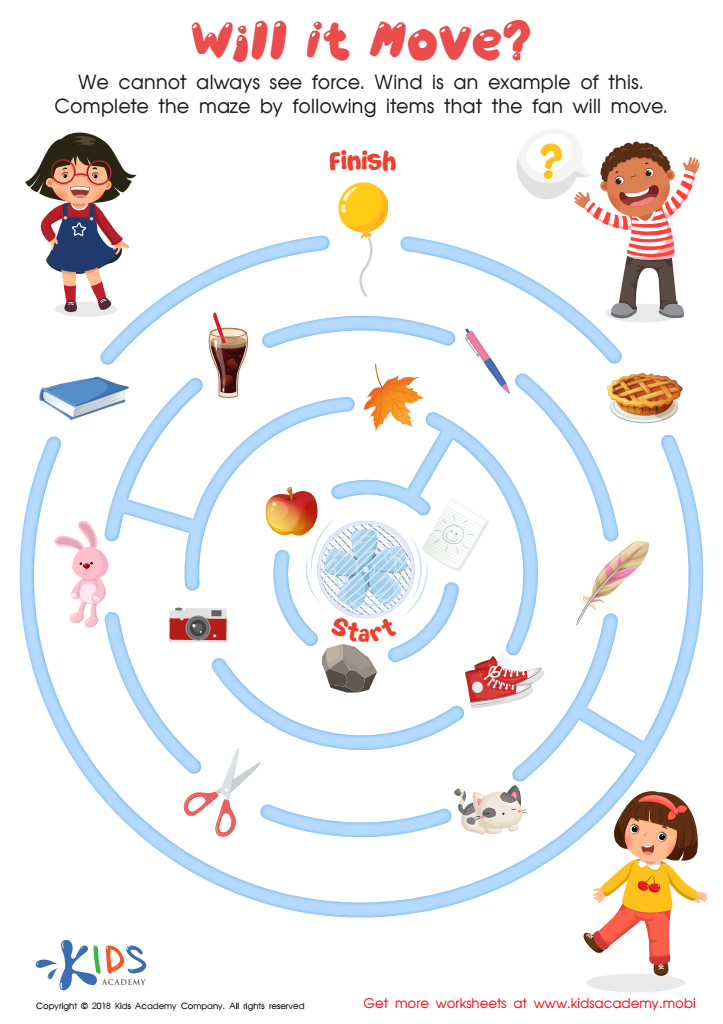
Does your child know about force? If yes/no, this worksheet can help. Force is invisible - like wind - but it moves objects. Ask your child to complete the maze, following the path of items moved by the wind. 80 words.
Will it Move? Worksheet
Worksheet
Which Direction Will it Go? Worksheet

Which Direction Will it Go? Worksheet

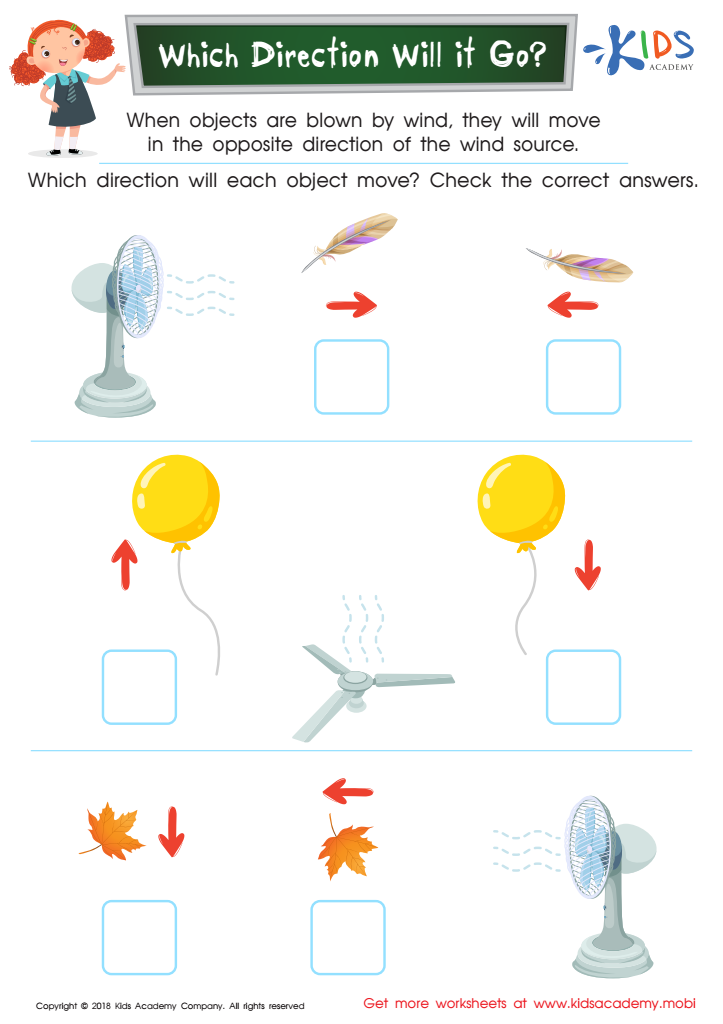
Explain to your students: when objects are blown by wind, they will move in the opposite direction. In the worksheet, there are pictures of wind sources and objects being blown by the wind. Ask your child to identify and check the direction each object will move.
Which Direction Will it Go? Worksheet
Worksheet
Down it Goes Worksheet

Down it Goes Worksheet

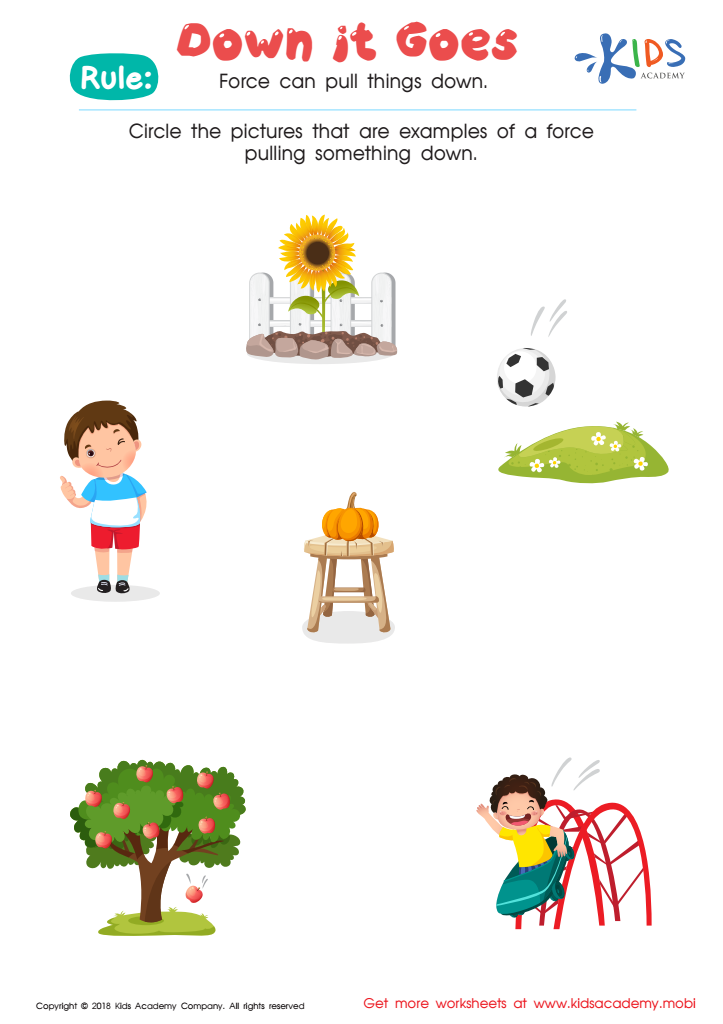
Explain gravity to your child using this fun worksheet. Ask them to give examples of things pulled down with force, then instruct them to circle the pictures that show this. It's a great way to help them understand the concept of gravity.
Down it Goes Worksheet
Worksheet
Precipitation: Solid or Liquid? Worksheet

Precipitation: Solid or Liquid? Worksheet

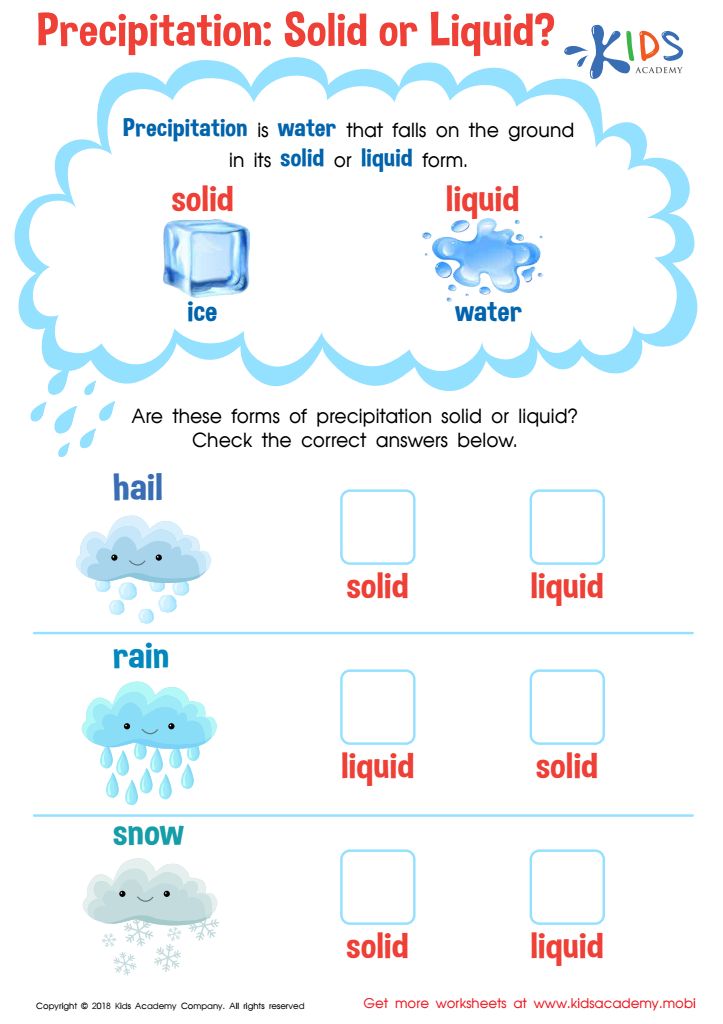
Teach students that precipitation is water from the clouds/sky in either solid or liquid form, e.g. rain is liquid and snow is frozen. Use the worksheet with them to check if the forms of precipitation pictured are solid or liquid.
Precipitation: Solid or Liquid? Worksheet
Worksheet
Forms of Precipitation Worksheet

Forms of Precipitation Worksheet

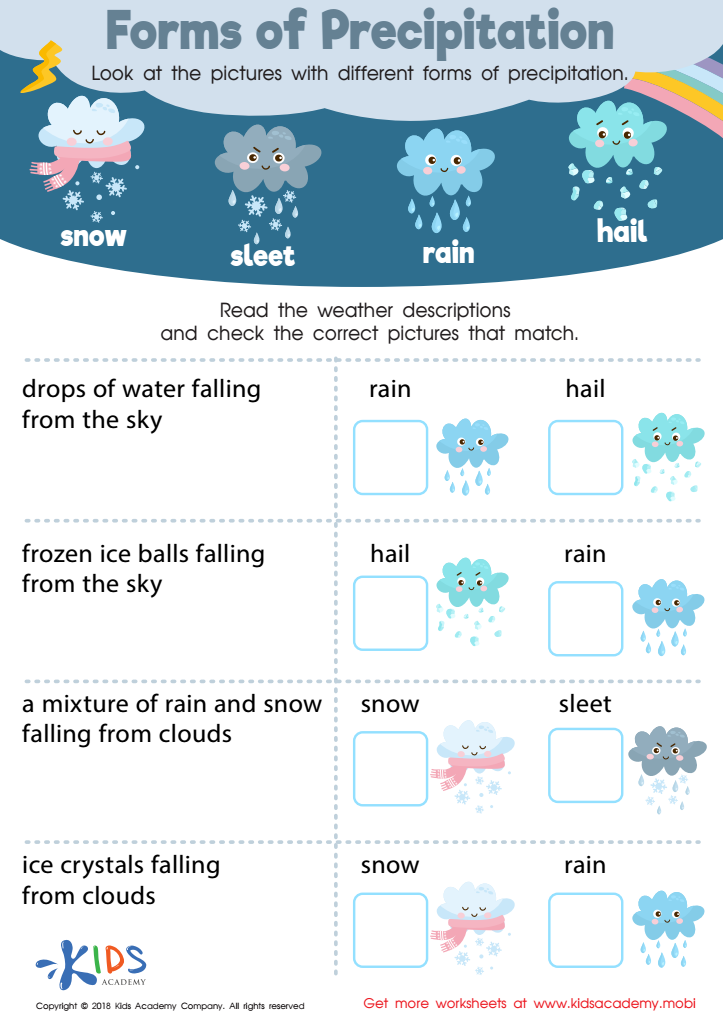
If your child knows the meaning of "precipitation", start the worksheet. Otherwise, explain that it's any form of water that falls from the sky. Ask them for examples then look at the PDF with pictures and weather descriptions. Read them together and check the right pictures.
Forms of Precipitation Worksheet
Worksheet
What Is Precipitation? Worksheet


What Is Precipitation? Worksheet
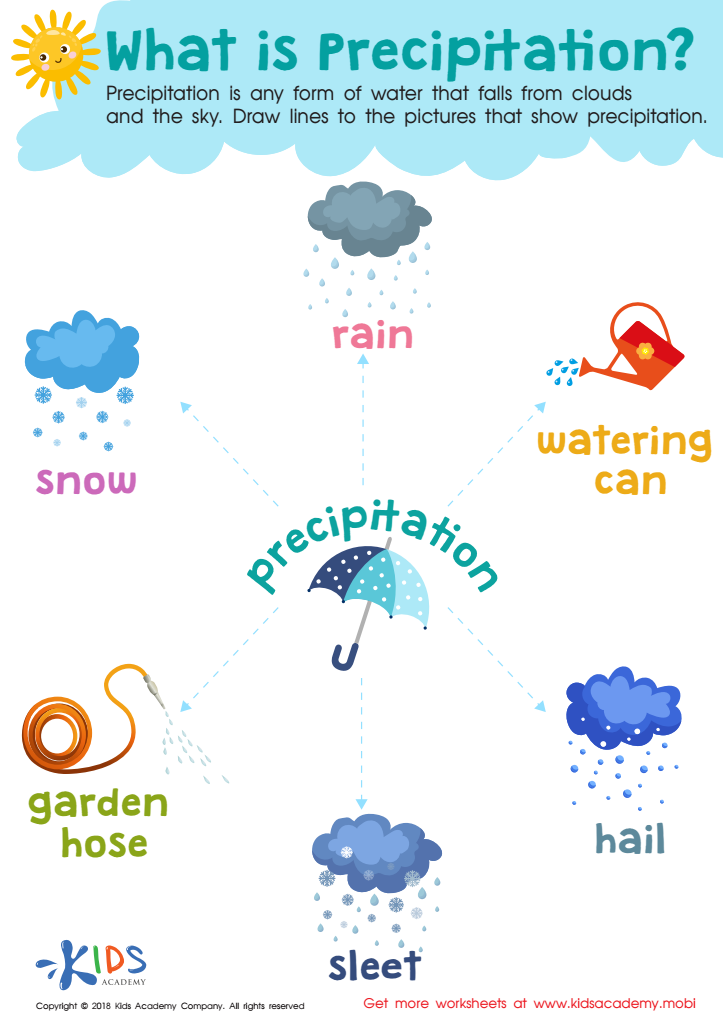
Explain to your child that precipitation is any form of water that falls from clouds and the sky. Ask them if it's a word they're familiar with? Show them this worksheet, with pictures of different weather conditions, and ask them to draw lines to the ones that show precipitation.
What Is Precipitation? Worksheet

Worksheet


Parents and teachers should care about science education for children aged 6-9 for several compelling reasons. At this formative age, children are naturally curious and eager to explore the world around them. Integrating science into their learning nurtures this innate curiosity, fostering critical thinking and problem-solving skills essential for their development.

Science education introduces young learners to fundamental concepts that are crucial for understanding the world. By engaging with topics such as weather, plants, and simple machines, children not only gain knowledge but also learn to ask questions, make predictions, and conduct experiments, forming a solid foundation for analytical thinking.

Moreover, understanding science enhances a child's ability to make informed decisions in their daily lives and encourages them to become lifelong learners. In a world increasingly driven by technology and innovation, a solid grounding in science prepares children for future academic and career opportunities.

Additionally, science promotes collaborative learning through group activities, which help develop social skills, communication, and teamwork. Supporting science education at an early age ensures that children grow up to be well-rounded individuals capable of navigating any challenge, both in school and in the broader society. Thus, fostering a love of science is a valuable investment in a child’s educational journey.