Problem-Solving Skills Worksheets for Ages 7-8 - Page 5
216 filtered results
Difficulty Level
Grade
Age
-
From - To
Subject
Activity
Standards
Favorites
With answer key
Interactive
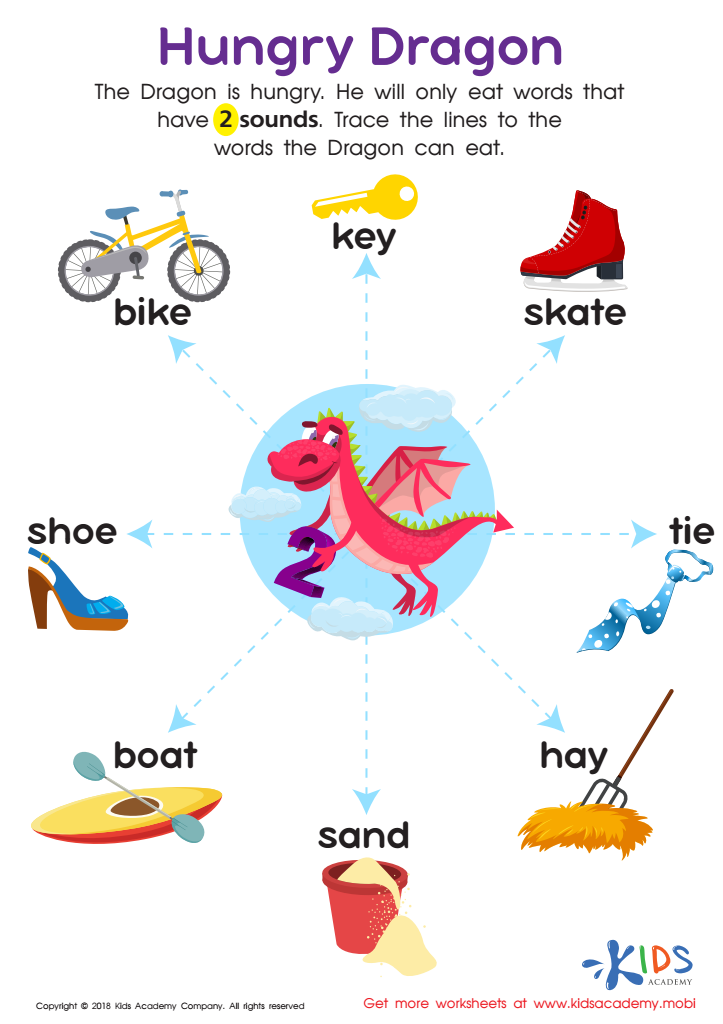
Hungry Dragon Worksheet
Feed the dragon words and watch your child strengthen their phonological awareness and auditory discrimination skills! Download this free PDF for tracing exercises that build their fine motor skills too. Kids will love spending time with the cute dragon while they unwittingly learn reading skills!
 Assign to My Students
Hungry Dragon Worksheet
Worksheet
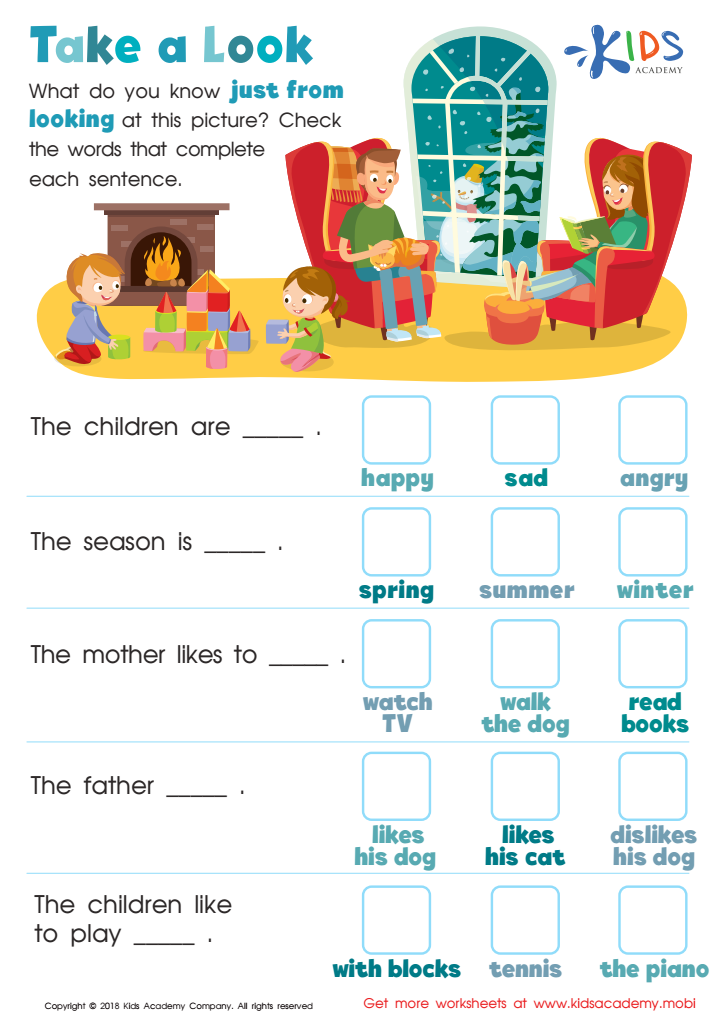
Take a Look - Part 1 Worksheet
Young learners gain understanding when using picture clues when reading. Looking at illustrations can help students learn the meaning of key vocabulary when reading fiction or informational text. Ask your students to look at the worksheet and observe what they can learn from the picture. It's a great comprehension strategy for early readers.
Take a Look - Part 1 Worksheet
Worksheet
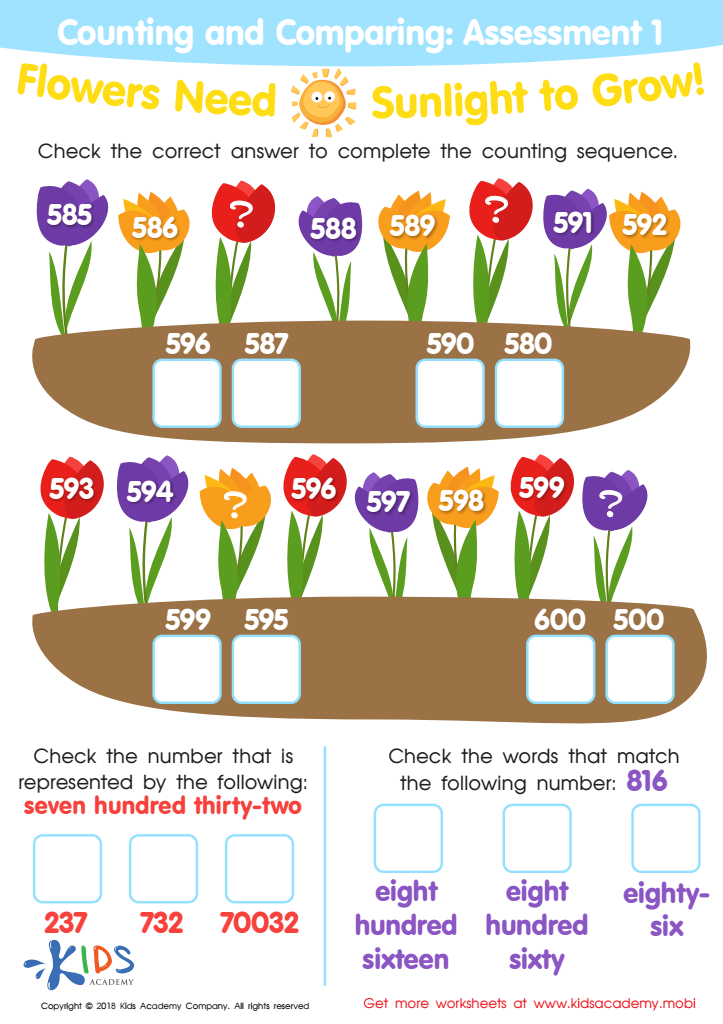
Counting and Comparing: Assessment 1 Worksheet
Download this worksheet and let your students show their progress in identifying, sequencing, and matching numbers and written forms. They'll practice number line skills and matching numeric expressions with numbers. Quickly see how well they understand computation concepts.
Counting and Comparing: Assessment 1 Worksheet
Worksheet
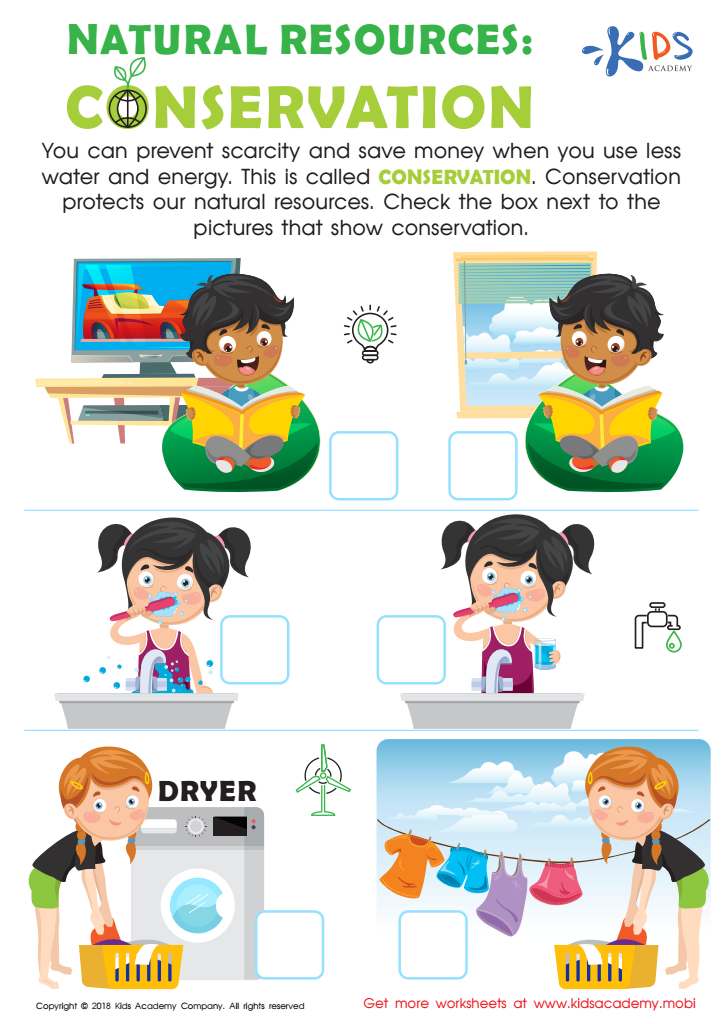
Natural Resources: Conservation Worksheet
Water scarcity is a challenge. When people don't have enough water, they can't do certain things. We can prevent this with conservation: using less energy and water. This helps protect our natural resources and saves money. Talk to your child about conservation and have them check the box next to the pictures that show it.
Natural Resources: Conservation Worksheet
Worksheet
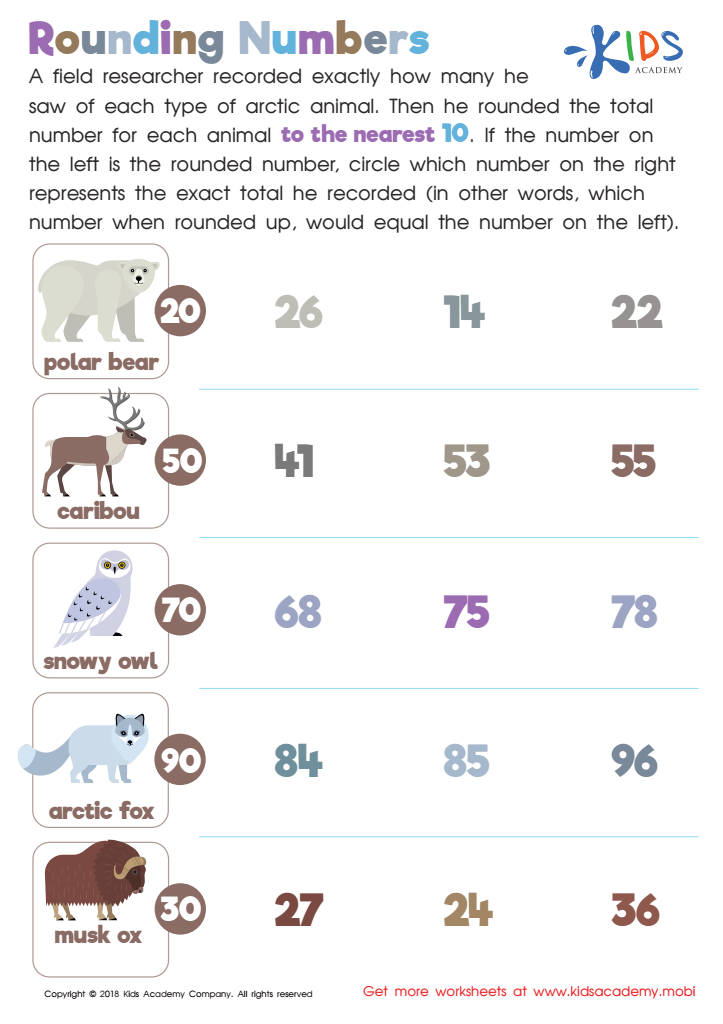
Rounding Numbers Worksheet
Take a trip north with this cute rounding math worksheet! Perfect for mastering number work, it adds a twist to the usual rounding practice. Help your child by getting them to view each animal picture to find the exact total of the rounded number. Then, look at the numbers on the right to determine what number was used to create the rounded total.
Rounding Numbers Worksheet
Worksheet
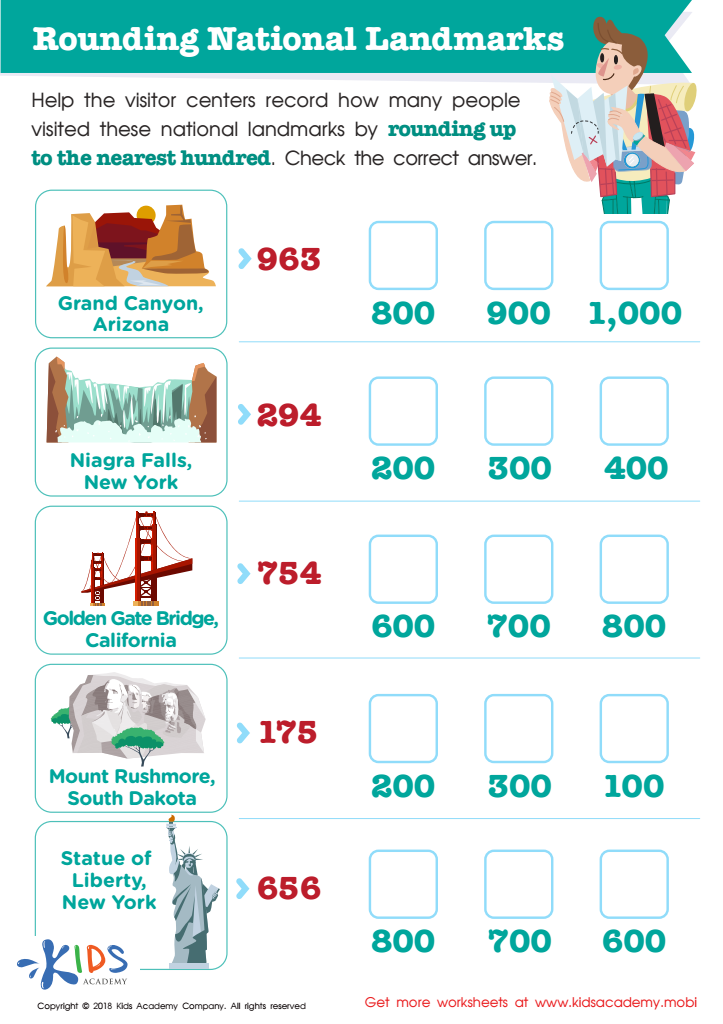
Rounding National Landmarks Worksheet
Does your city have tourist attractions? Help your kids count visitors to these national landmarks by rounding up to the nearest hundred. Then check the correct answer from the provided options. Or explore tourist centres in another state with your family.
Rounding National Landmarks Worksheet
Worksheet
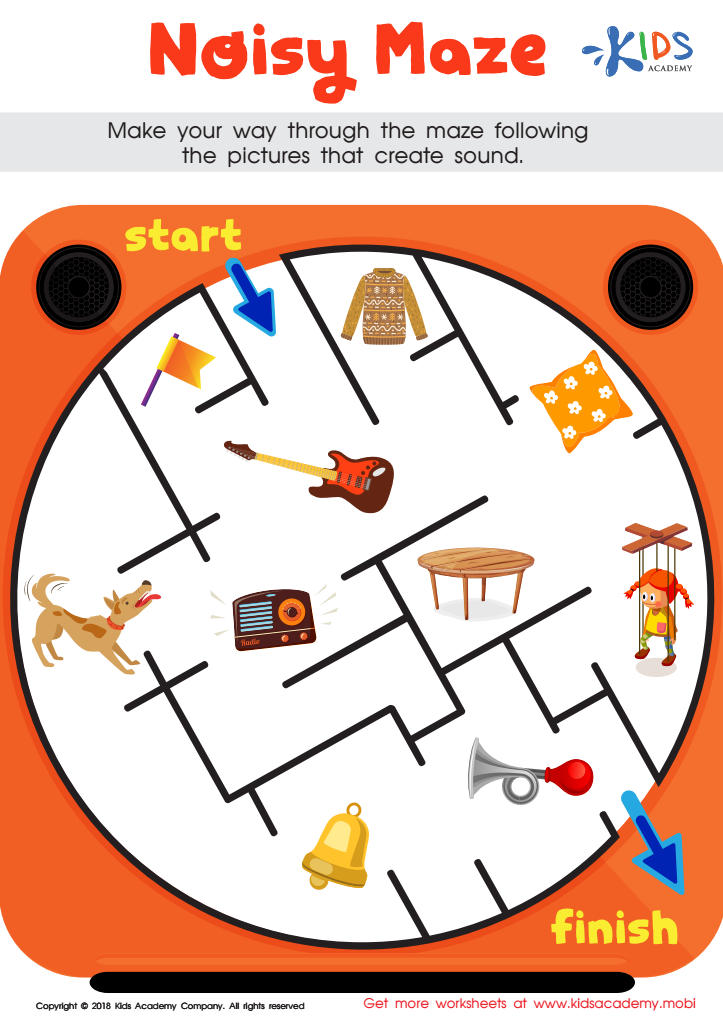
Noisy Maze Worksheet
Have your kids name some objects that make noise? Then, look at the worksheet with them and help them identify each object. Guide them through the maze, following the sound-producing pictures.
Noisy Maze Worksheet
Worksheet
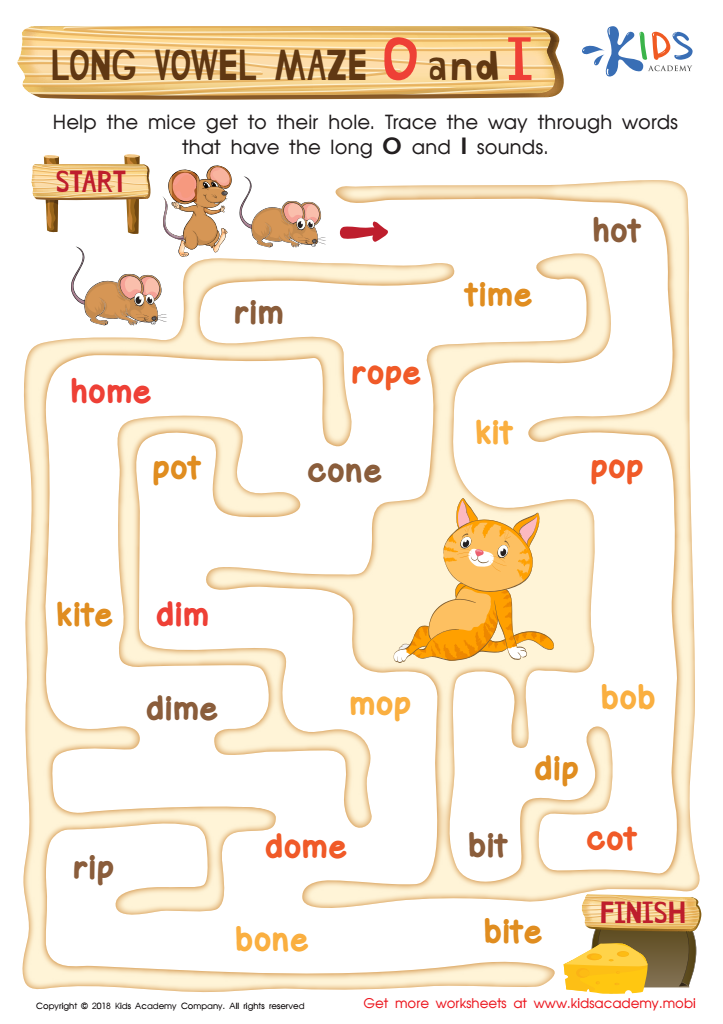
Long Vowel Maze /o/ and /i/ Worksheet
Help your new readers have fun and build their sight word vocabulary! Guide the mice to their prize cheese by having them trace the route on the worksheet, using words with the long o and long i sounds. But watch out for the kitty!
Long Vowel Maze /o/ and /i/ Worksheet
Worksheet
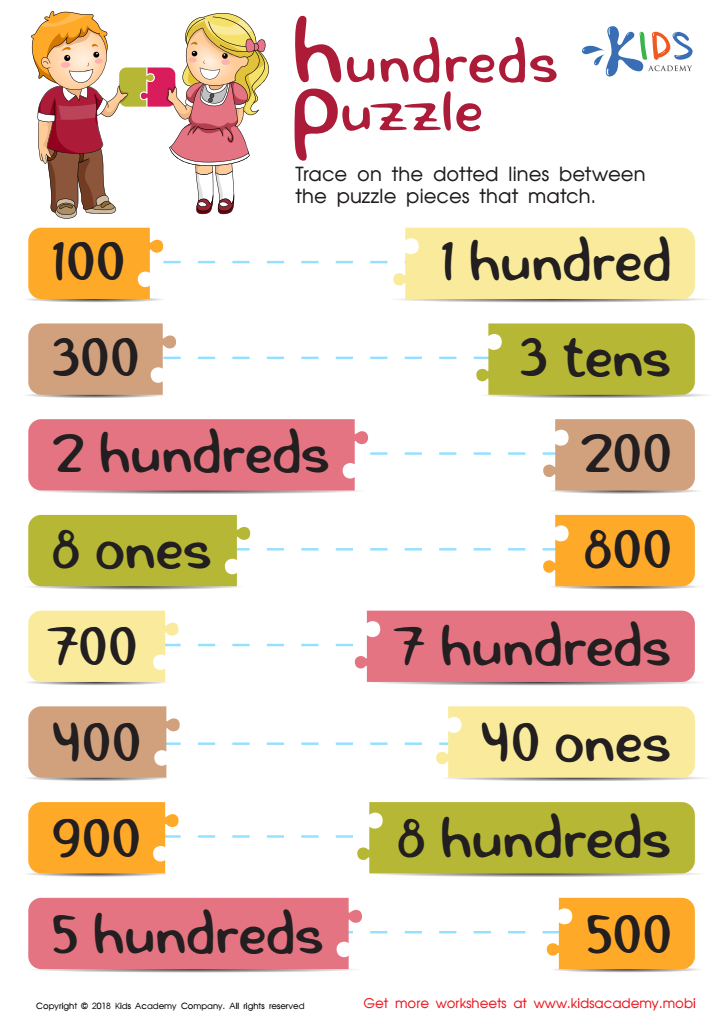
Hundreds Puzzle Worksheet
This tracing sheet can help your child improve their number knowledge, from hundreds to tens. On the left are different numbers, with the same on the right. Ask your child to connect the matching numbers with the dotted lines. Make learning numbers fun with this traceable printout.
Hundreds Puzzle Worksheet
Worksheet
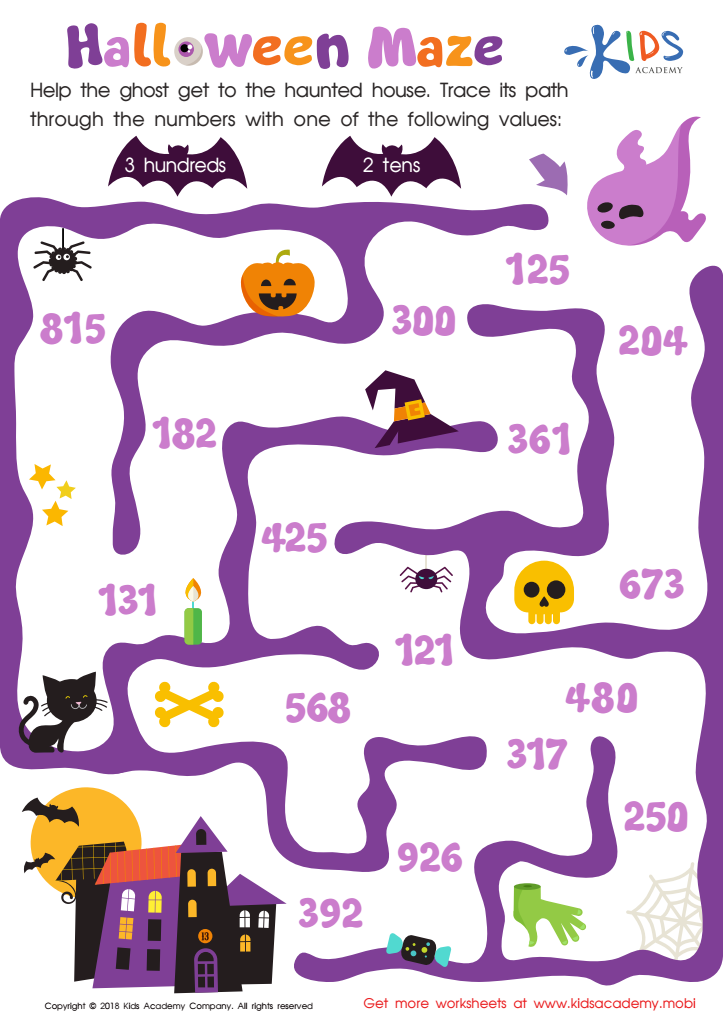
Place Value: Halloween Maze Worksheet
Kids who love haunted houses and Halloween will love this worksheet! Help the ghost reach its haunted house by tracing the path of 3 hundreds or 2 hundreds numbers. At the end is the ghost's spooky home. Have fun!
Place Value: Halloween Maze Worksheet
Worksheet
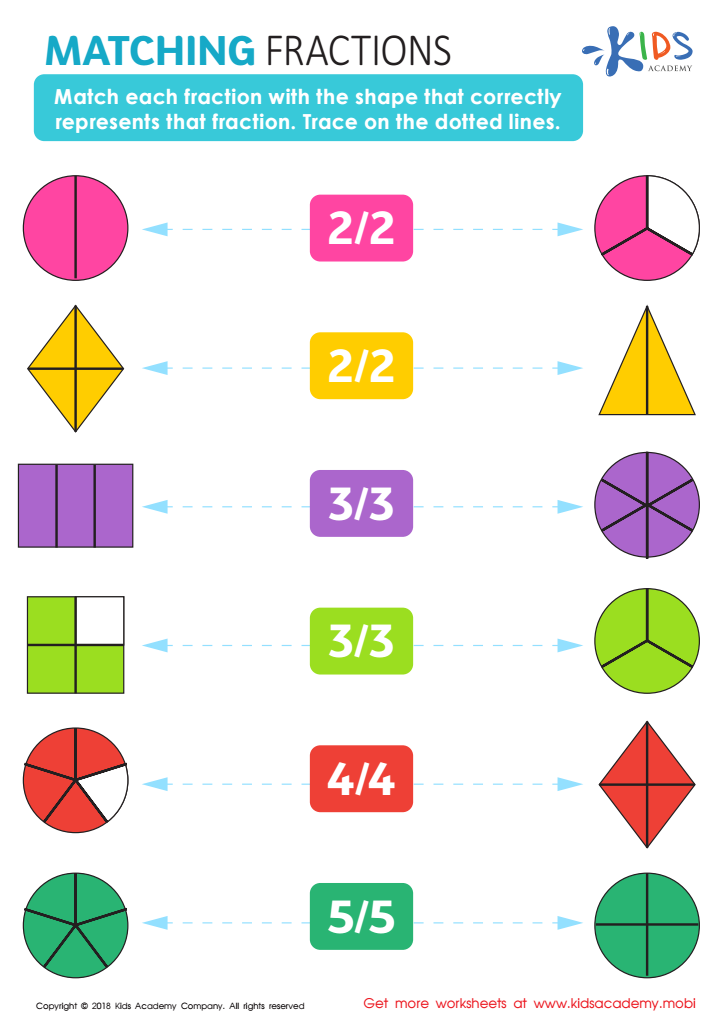
Matching Fractions Worksheet
This worksheet uses colorful images to engage students. On the left are six shapes, mirrored on the right, with fractions in the middle. Students must match up the fraction with the right shape. It's a fun way to sharpen fractions skills!
Matching Fractions Worksheet
Worksheet
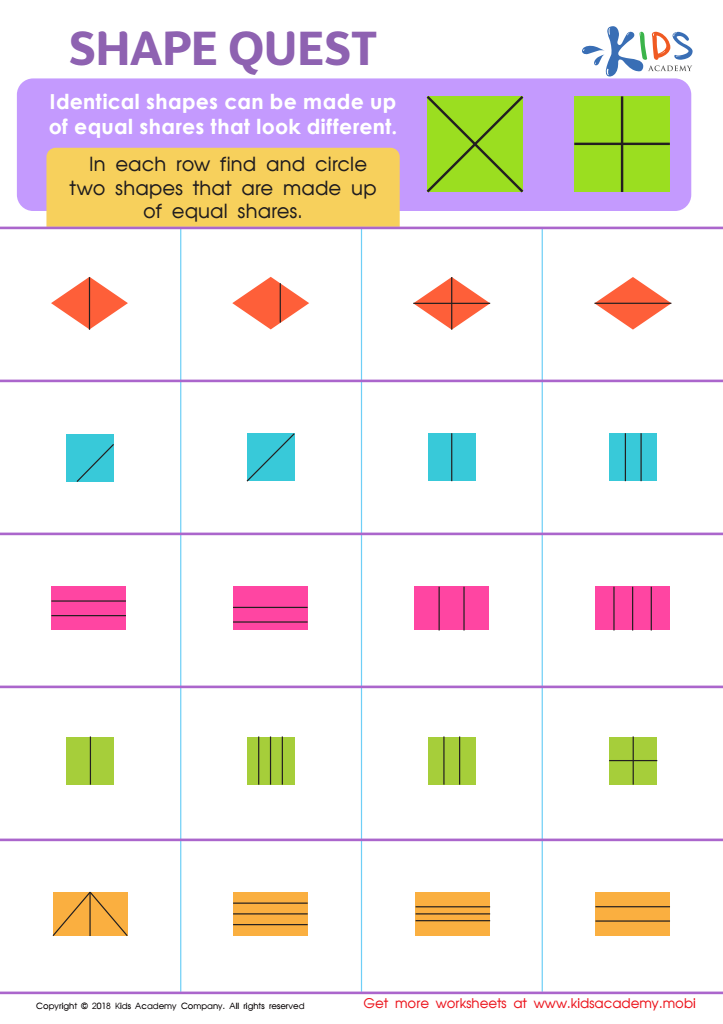
Shape Quest Worksheet
Help your child identify shapes by having them find shapes made up of equal parts. This colorful worksheet challenges them to look through each row and circle two matching shapes. It's a great way to teach them the unique features of each shape, while also helping them understand that identical shapes can look different.
Shape Quest Worksheet
Worksheet
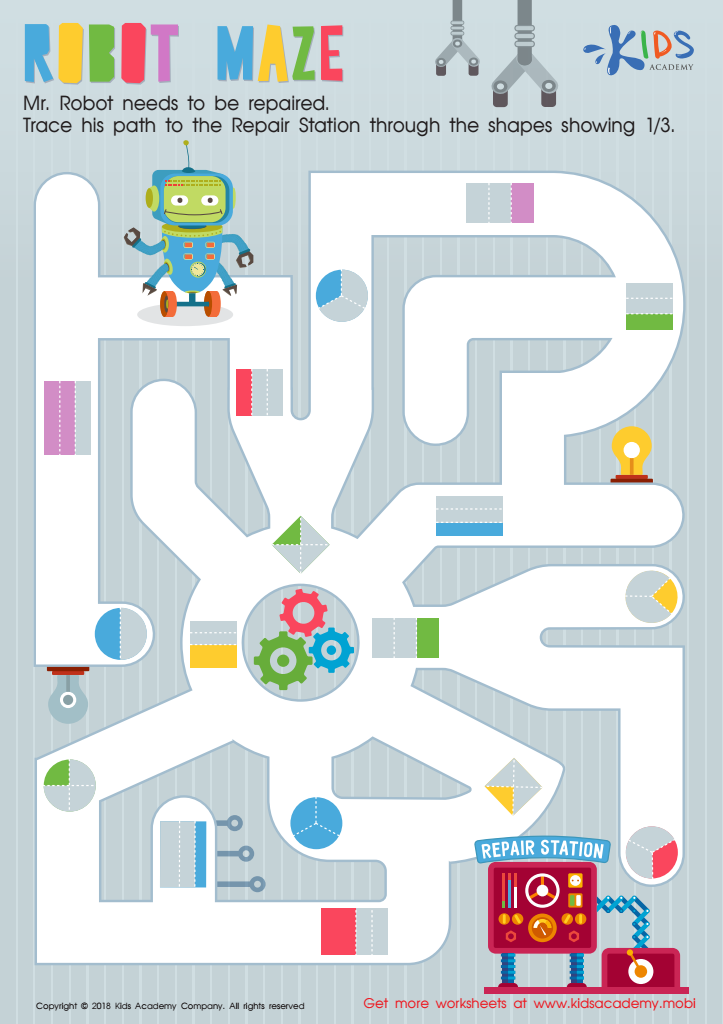
Robot Maze Worksheet
Help Mr. Robot get fixed! Give your students this fun worksheet where they need to guide him through the maze to the Repair Station. The paths they need to take are the ones with shapes that have 1/3 colored. Encourage them to look carefully and trace Mr. Robot through those paths.
Robot Maze Worksheet
Worksheet
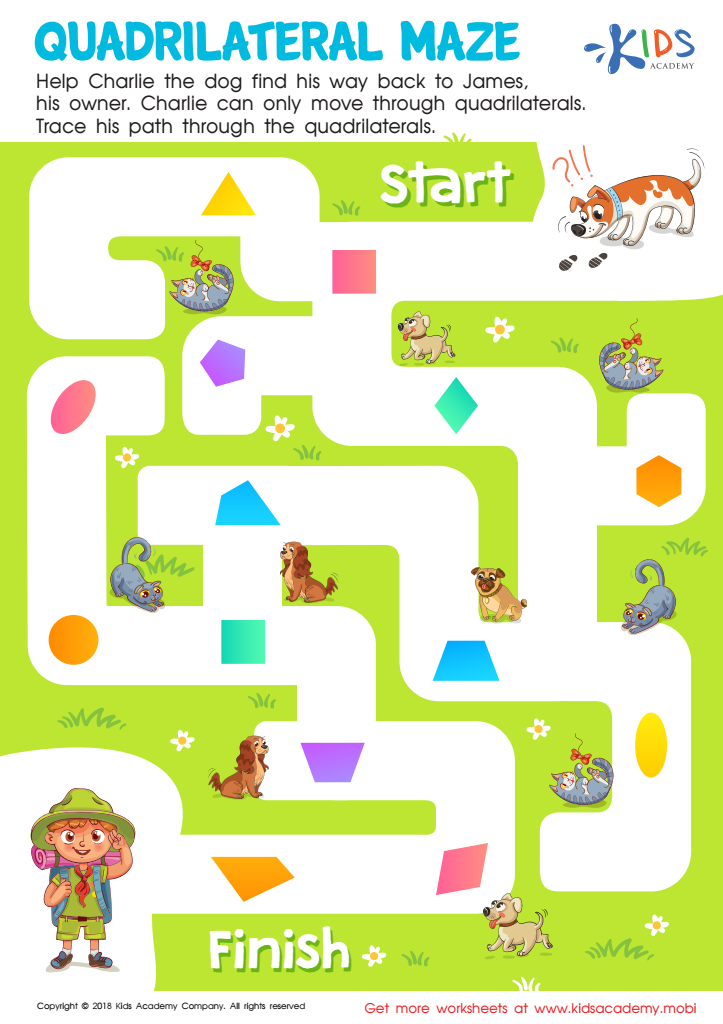
Quadrilateral Maze Worksheet
Does your kid love dogs? If so, this exercise is ideal for them! Help Charlie the pup find his way back to his owner, James, in the quadrilateral maze worksheet. Your child must trace Charlie's path only through squares and rhombuses in order to solve it. Careful planning is key!
Quadrilateral Maze Worksheet
Worksheet
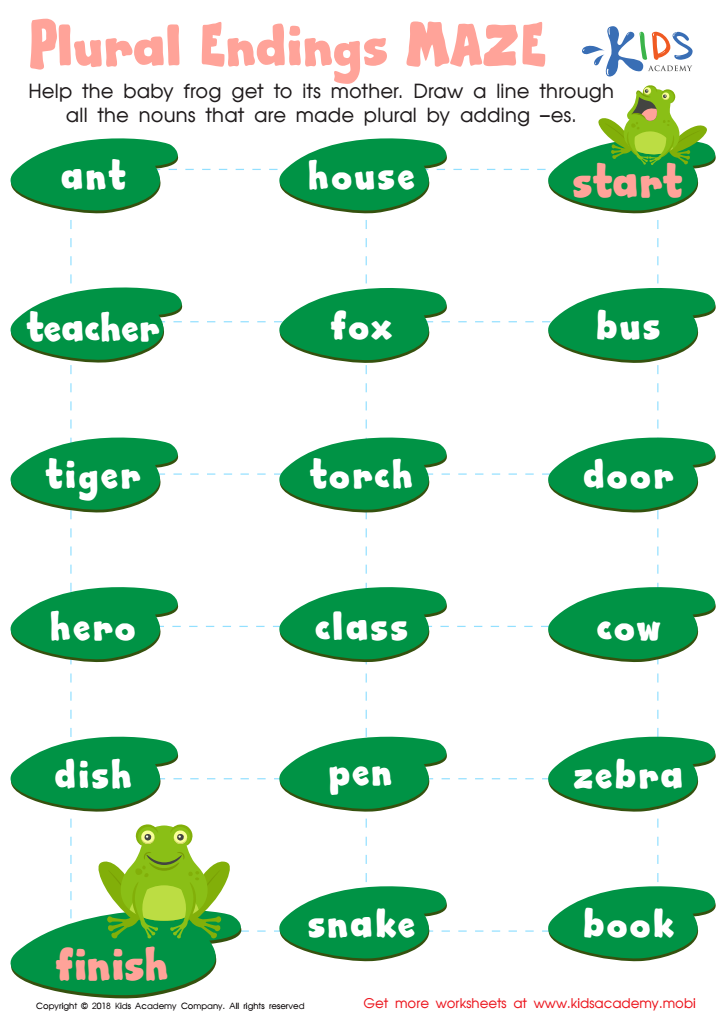
Plural Endings Maze Worksheet
Help your child have fun while learning new things with this worksheet. Does your child know that some nouns require '-es' to make them plural? Use this pdf to teach them the rule and get the little frog to its mother – draw a line through the words with '-es' plural forms.
Plural Endings Maze Worksheet
Worksheet
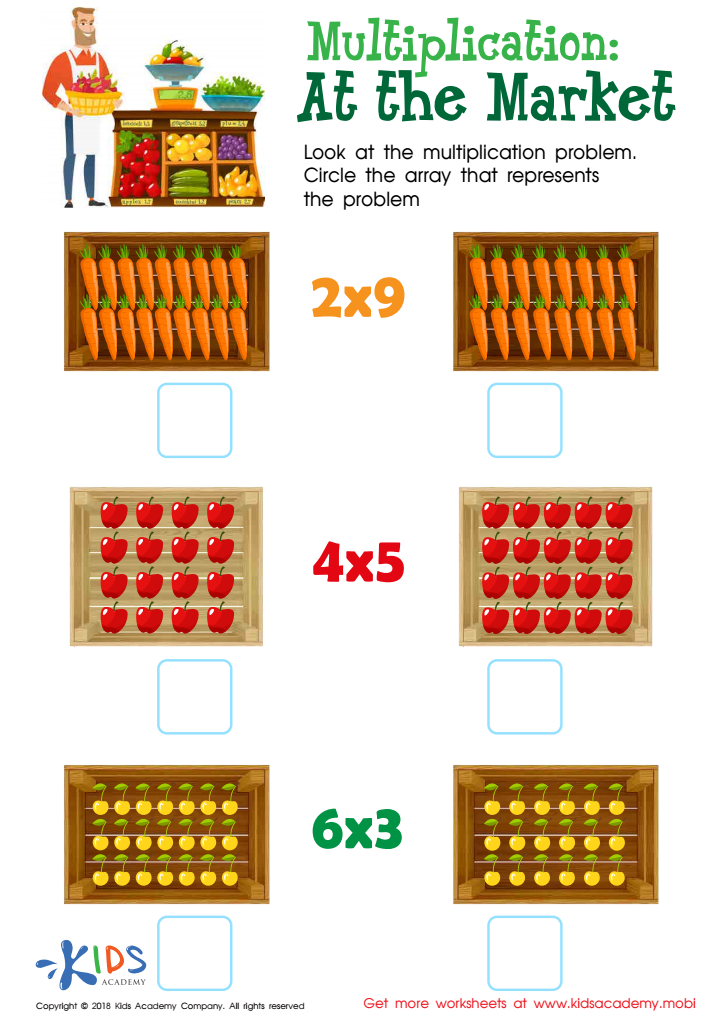
At the Market Worksheet
Head to At the Market! This attractive worksheet features arrays of delicious fruits and veggies that'll have 3rd graders working on their multiplication. Solve the problems, choose the correct answer, and learn while having fun!
At the Market Worksheet
Worksheet
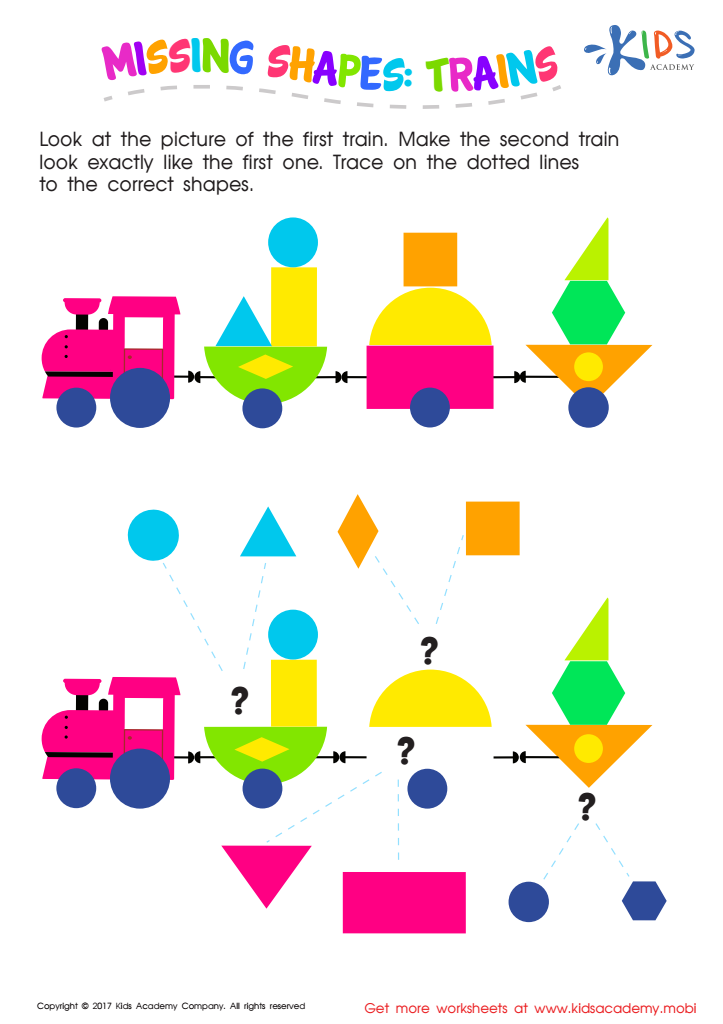
Missing Shapes: Trains Worksheet
Before beginning, ask your child what the object in the picture is, the sound it makes and where it can be found. If they know, confidently move on. Help them make the second train look like the first by tracing dotted lines. Hold their hand for guidance.
Missing Shapes: Trains Worksheet
Worksheet
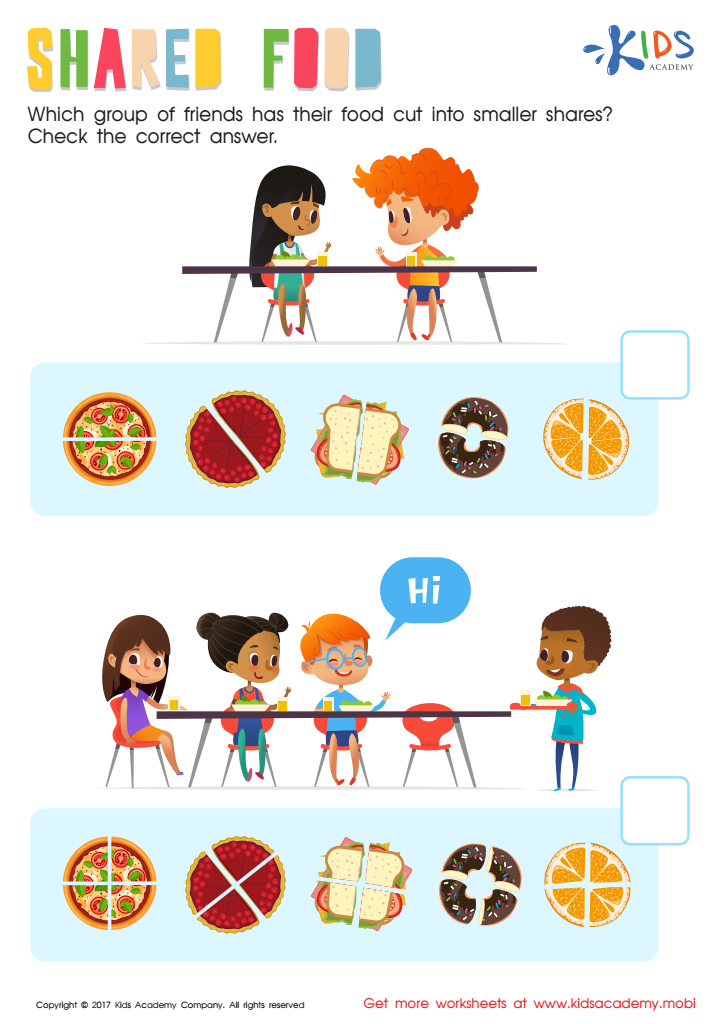
Shared Food Worksheet
In this worksheet, kids learn about sharing and cutting shapes into equal parts. There are two groups of friends: one with two, the other with four. Ask your child which group has their food cut into smaller shares, and help them find the right answer.
Shared Food Worksheet
Worksheet
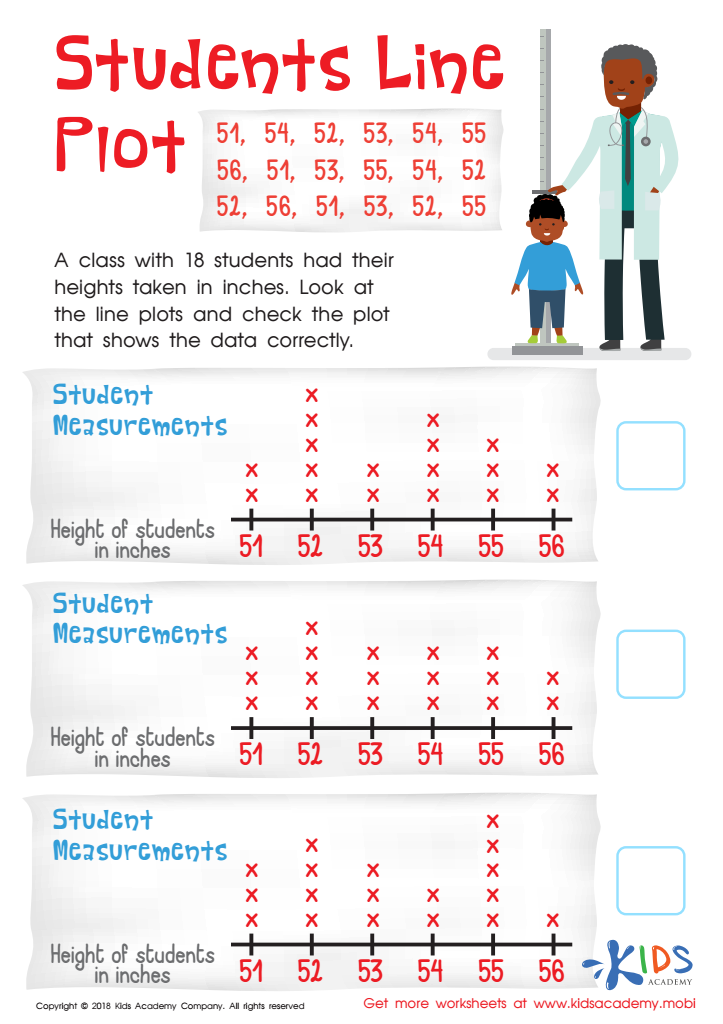
Students Line Plot Worksheet
Help your students learn to draw a line plot correctly by giving real examples. In this exercise, they must check the data of a class of 18 students' heights (in inches). Have them compare two line plots and figure out which one is correct.
Students Line Plot Worksheet
Worksheet
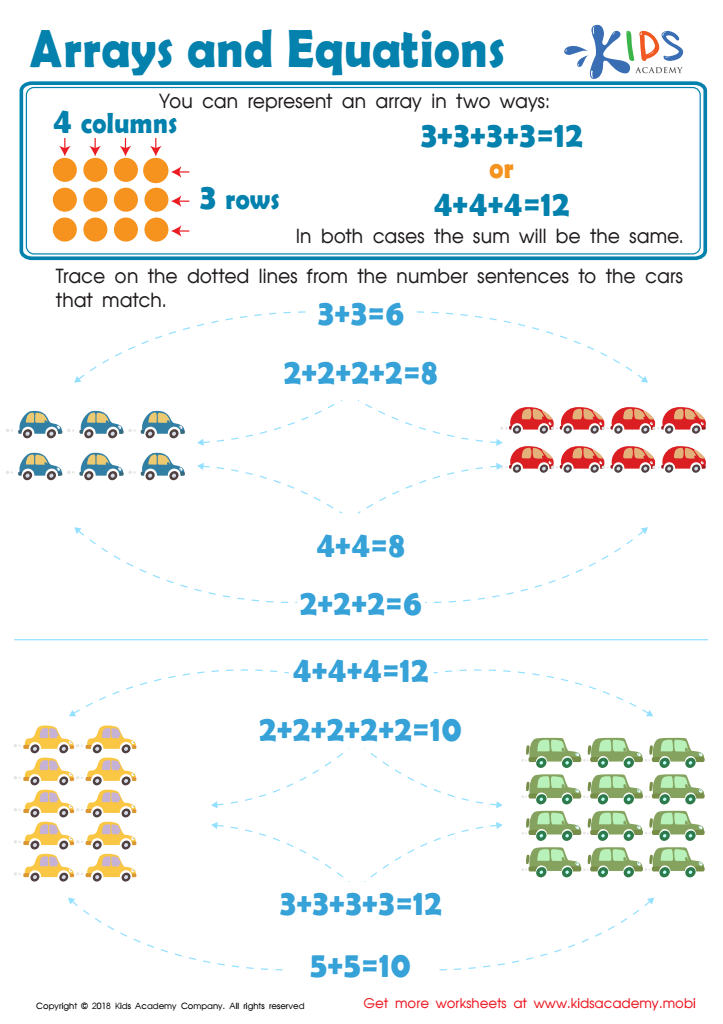
Arrays and Equations Worksheet
An array is objects, pix, or numbers organized in rows and columns. Show kids two ways to interpret this: 3 rows in 4 places = 12 and 4 columns in 3 places = 12. Help your child trace the number sentences to the matching cars. All equations always add up to the same amount.
Arrays and Equations Worksheet
Worksheet
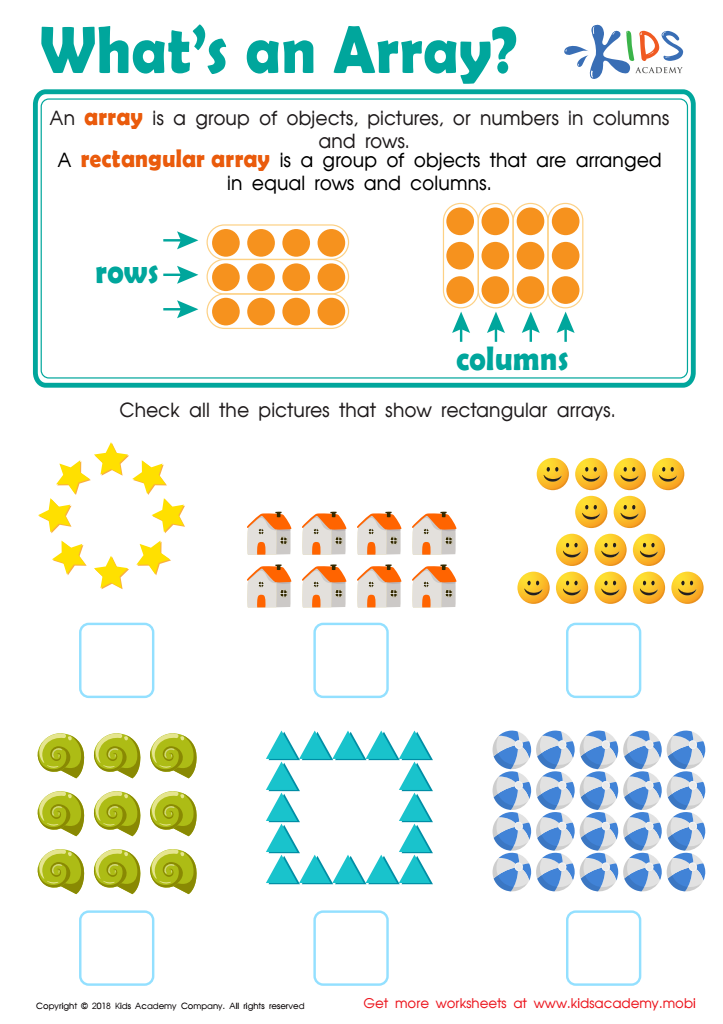
What's an Array? Worksheet
Explain to your child that an array is a group of objects, pictures, or numbers in columns and rows. Show them a rectangular array is a group of objects in equal rows and columns. Guide them to check the pictures in the worksheet to spot any rectangular arrays. Help them remember this concept.
What's an Array? Worksheet
Worksheet
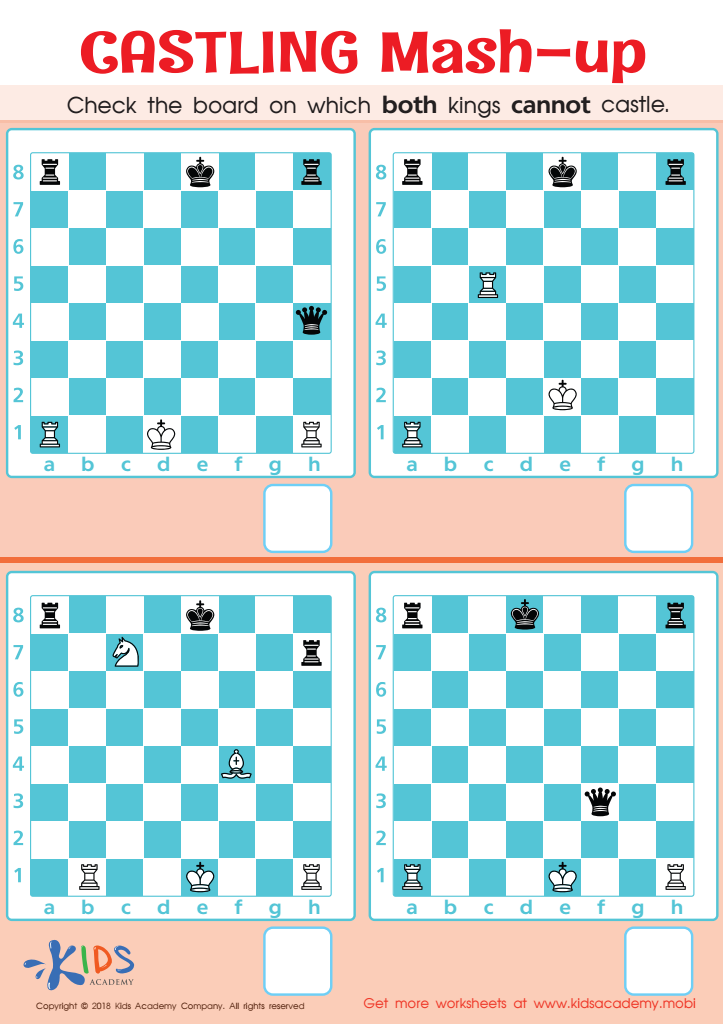
Castling Mash–up Worksheet
Before starting the worksheet, ensure your child understands castling in chess. If not, take time to explain it. Once they have a clear grasp of the rules, help them complete the exercise. Check the board to ensure that neither king can castle.
Castling Mash–up Worksheet
Worksheet
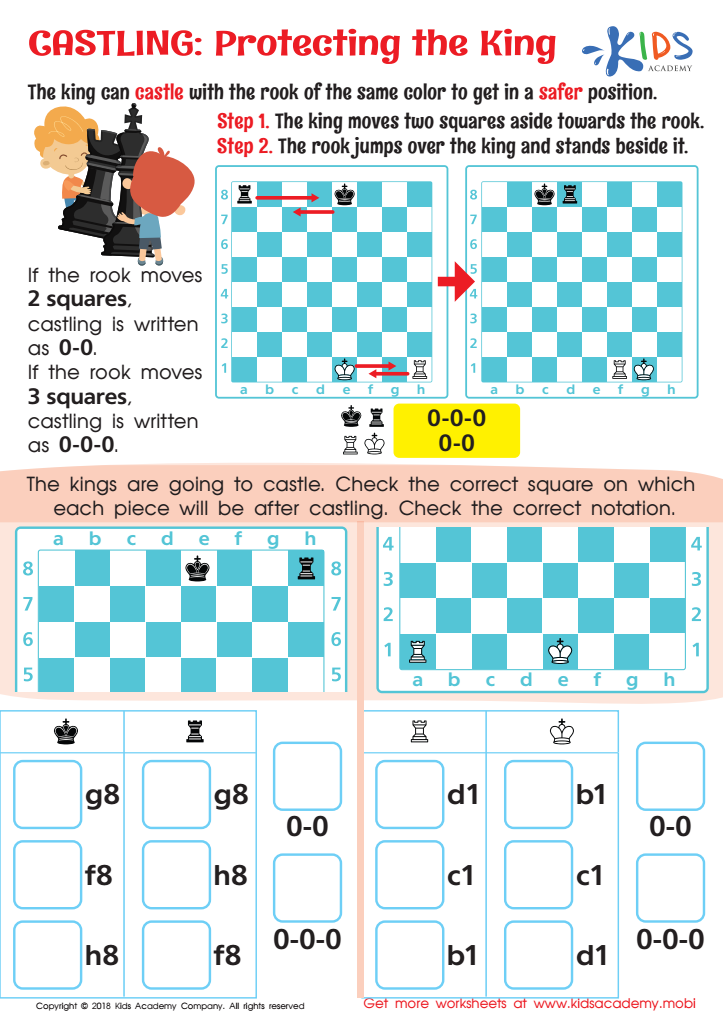
Castling: Protecting the King Worksheet
Castle your king with the rook to get into a safer position! Write 0-0 for a two-square move, or 0-0-0 for a three-square move. Look at the worksheet with your child; on the first chessboard, the king has moved two squares and the rook is beside it. On the second, the rook has jumped over the king. Let your child use their castling knowledge to answer the questions in the easy pdf.
Castling: Protecting the King Worksheet
Worksheet
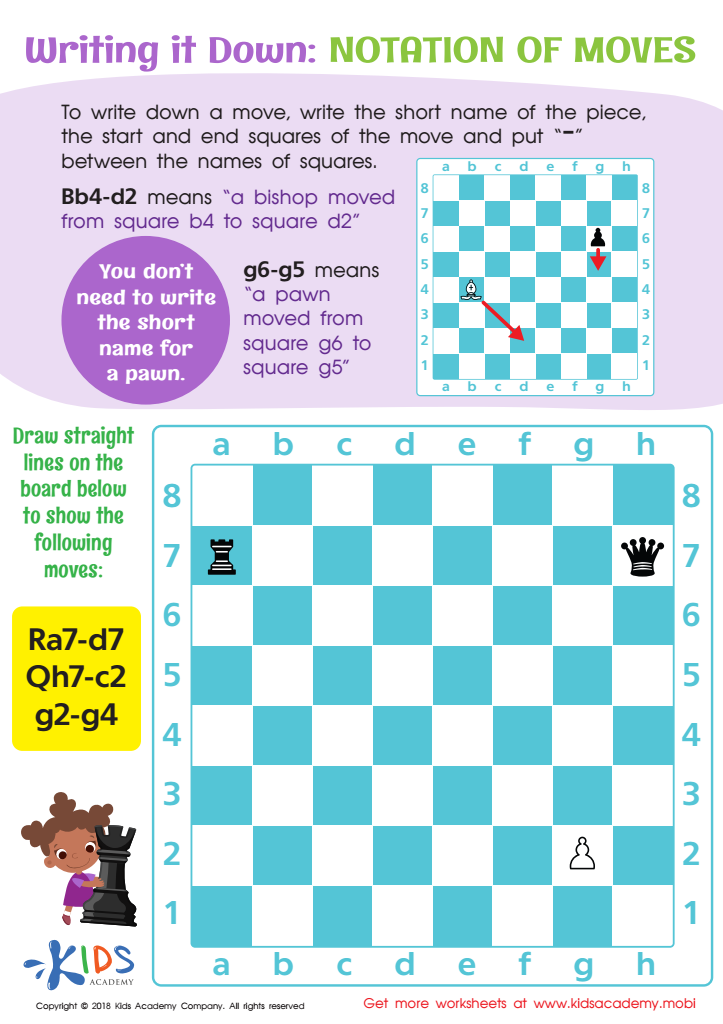
Notation of Moves Writing it Down Worksheet
Notating chess moves can be tricky for kids to learn. This worksheet will help them better understand it. To notate a move, write the piece's short name, start and end squares, and separate them with a "-". For instance, Bd4-d2 means a bishop moved from b4 to d2. No need to write pawns' short names.
Notation of Moves Writing it Down Worksheet
Worksheet
Join Kids Academy for Free
Who is primarily going to use this learning content?