
Letter recognition Phonics Worksheets
22 filtered results
Difficulty Level
Grade
Age
-
From - To
Subject
Activity
Standards
Our engaging Letter Recognition Phonics Worksheets are designed to help young learners master the alphabet through fun and interactive activities. Perfect for early grade students, these worksheets blend colorful visuals with phonetic exercises to reinforce letter sounds, identification, and proper usage. Each sheet focuses on building strong foundational skills essential for reading and writing. Suitable for both classroom use and at-home practice, our resources support educators and parents in nurturing confident, enthusiastic readers. Explore our extensive collection and watch your child's literacy skills blossom with every activity completed. Discover the joy of learning with our Letter Recognition Phonics Worksheets today!
Favorites
With answer key
Interactive
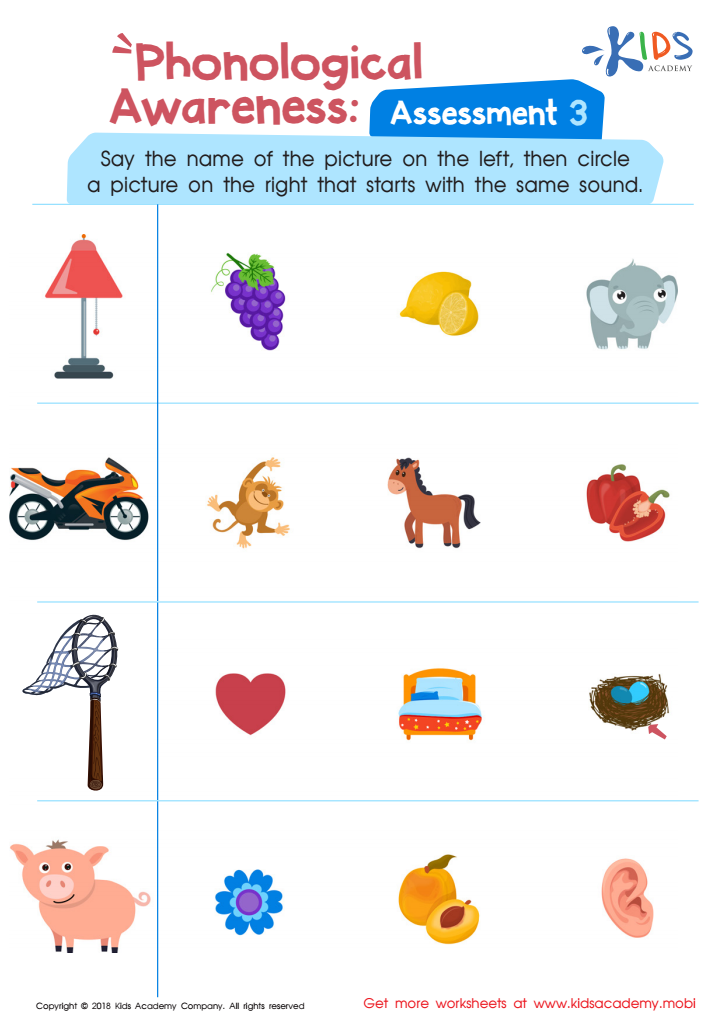
Phonological Awareness: Assessment 3 Worksheet
Test kids' reading readiness with a phonological awareness worksheet! With this PDF exercise, encourage children to name each picture aloud and match left to right. Help them learn to recognize word sounds at the start, middle and end of words. They'll be sure to remember that lamp doesn't sound like elephant!
 Assign to My Students
Phonological Awareness: Assessment 3 Worksheet
Worksheet
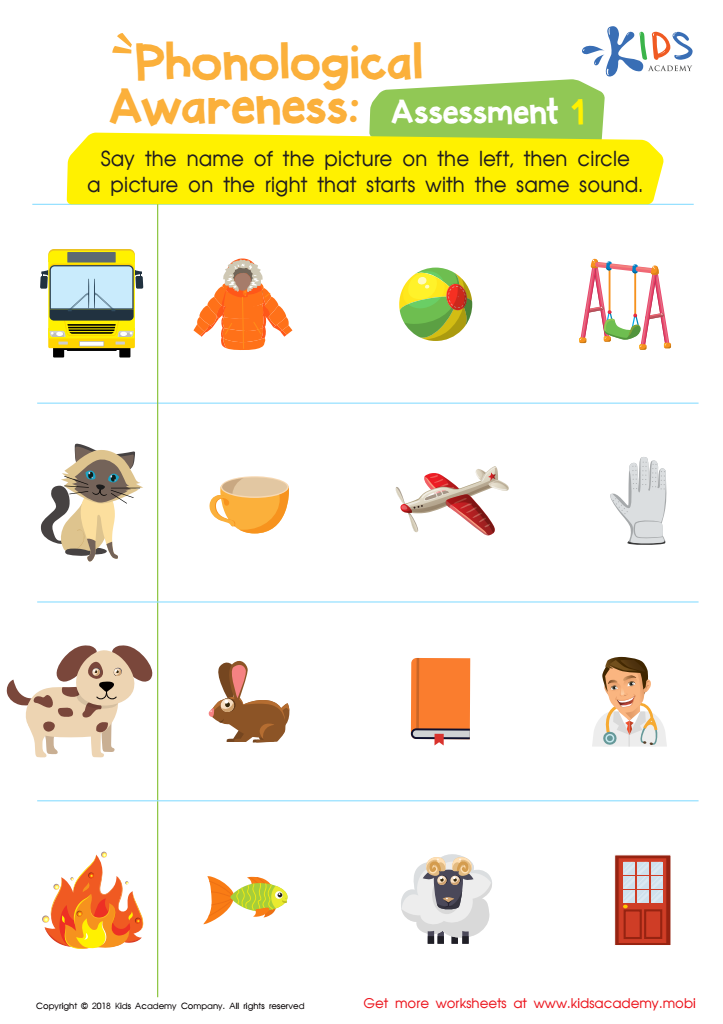
Phonological Awareness: Assessment 1 Worksheet
This worksheet helps kids build key phonics skills for pre-reading. They say each picture name aloud, focusing on the starting sound. Then, they match the sound with an image in the same row. Use as a checkpoint for kindergarten or grade 1 phonics readiness.
Phonological Awareness: Assessment 1 Worksheet
Worksheet
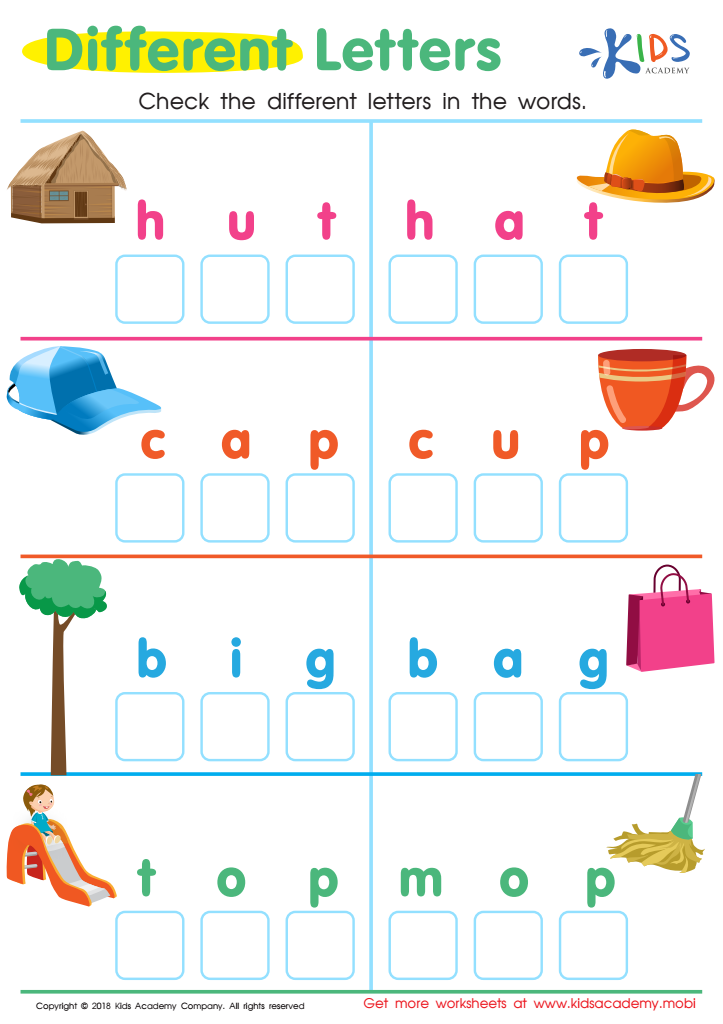
Different Letters Reading Worksheet
Download our phonics worksheet to help kids understand letter sounds. Have them sound out letters and join them to form words. Colorful pictures assist in recognition, making it perfect for kindergarteners. A great intro to phonics!
Different Letters Reading Worksheet
Worksheet
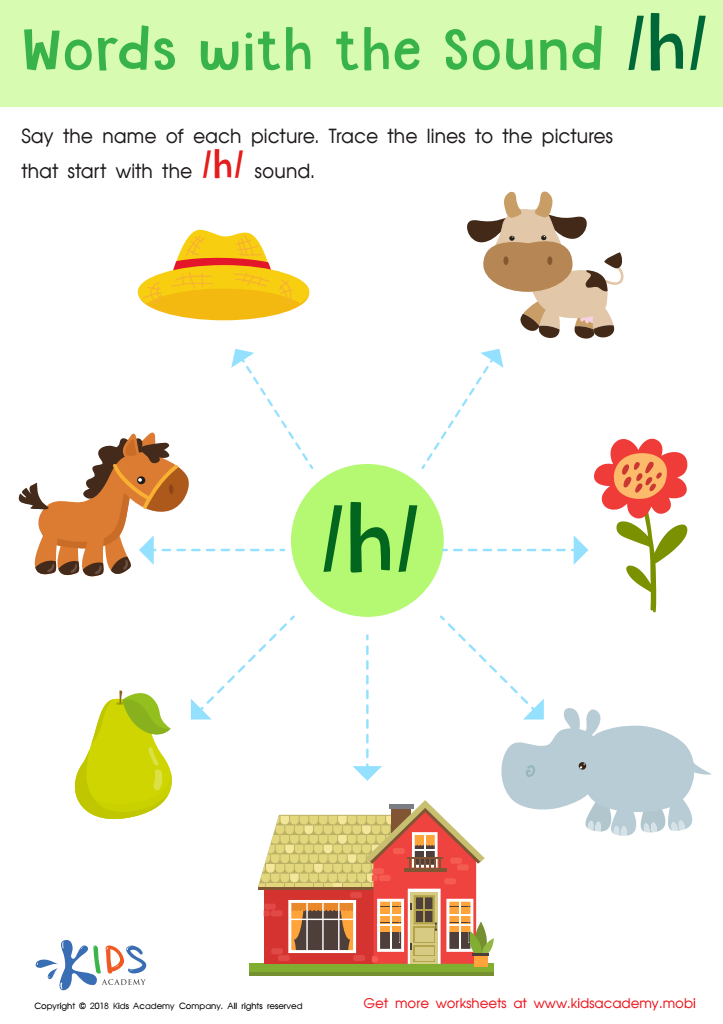
Words with sound h Reading Worksheet
The letter H can often be heard in words! Check your child's knowledge with an engaging worksheet from Kids Academy. Ask them to go around a circle and name each image aloud. Listen for the starting sound and trace the line from the middle letter to the images with the sound. This is a great way to practice phonics!
Words with sound h Reading Worksheet
Worksheet
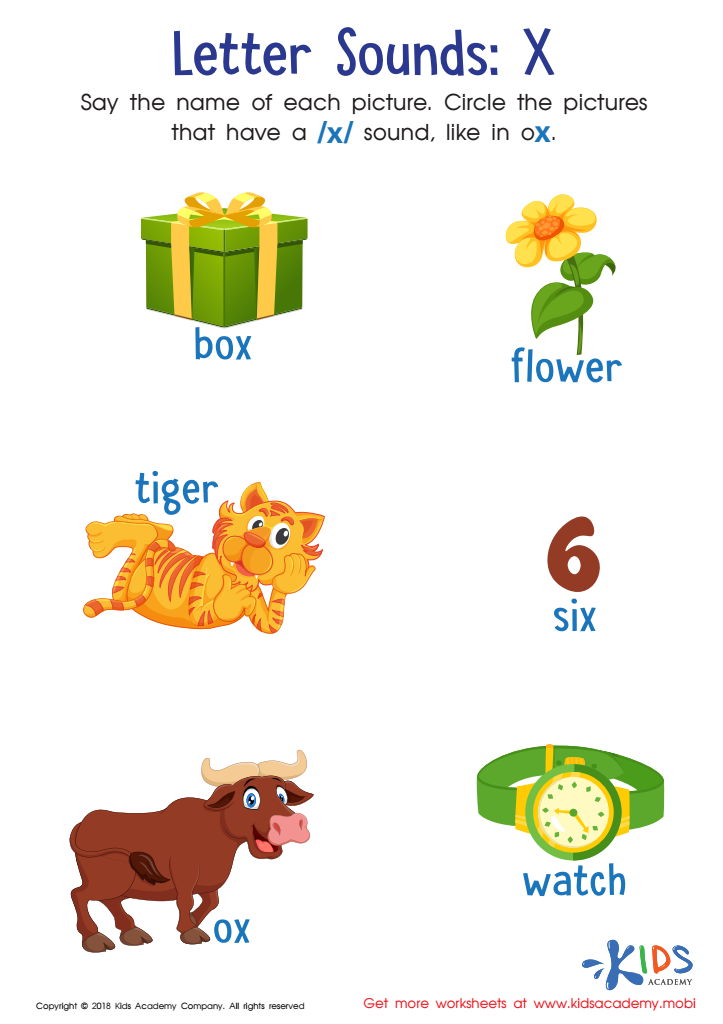
Letter X Sounds Worksheet
Help your early learner master the letter X sound with this fun, illustrated phonics worksheet. Have kids name the pictures, listening for the pronunciation of each. Have them circle only the pictures with the X sound, then double check by looking for the letter in the word below.
Letter X Sounds Worksheet
Worksheet
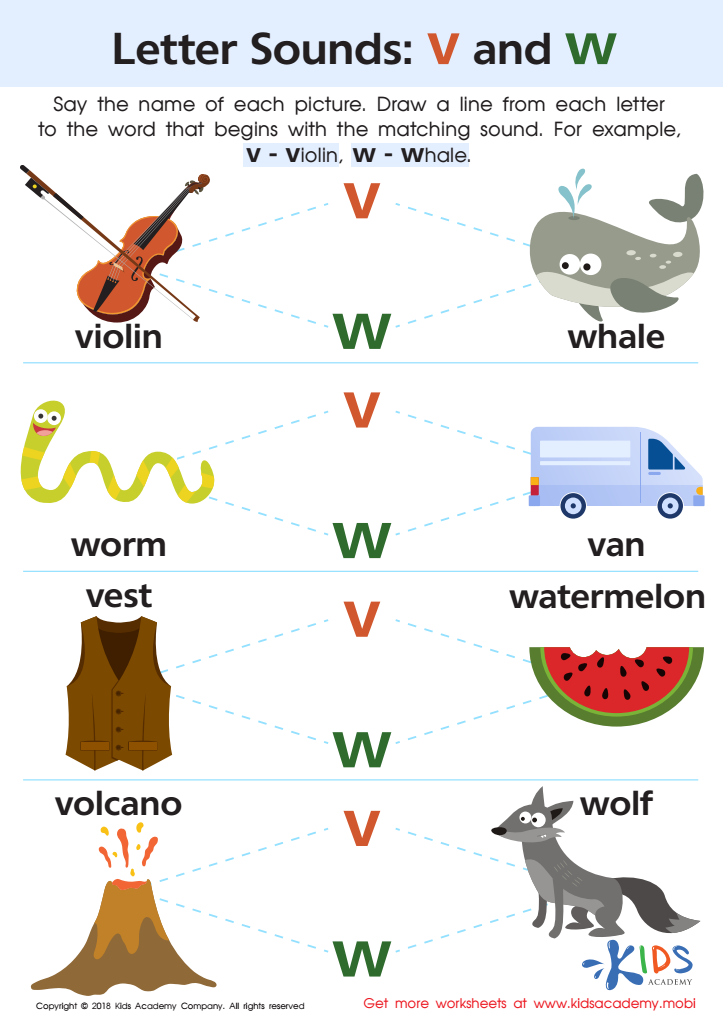
Letter V and W Sounds Worksheet
Help your child master the sounds of W & V while completing this fun phonics worksheet. Have them trace the dotted line from letter to picture while saying words like "worm", "violin" and "van" aloud to notice how each word begins with either W or V. Listen and pay attention to the pronunciation to complete the practice.
Letter V and W Sounds Worksheet
Worksheet
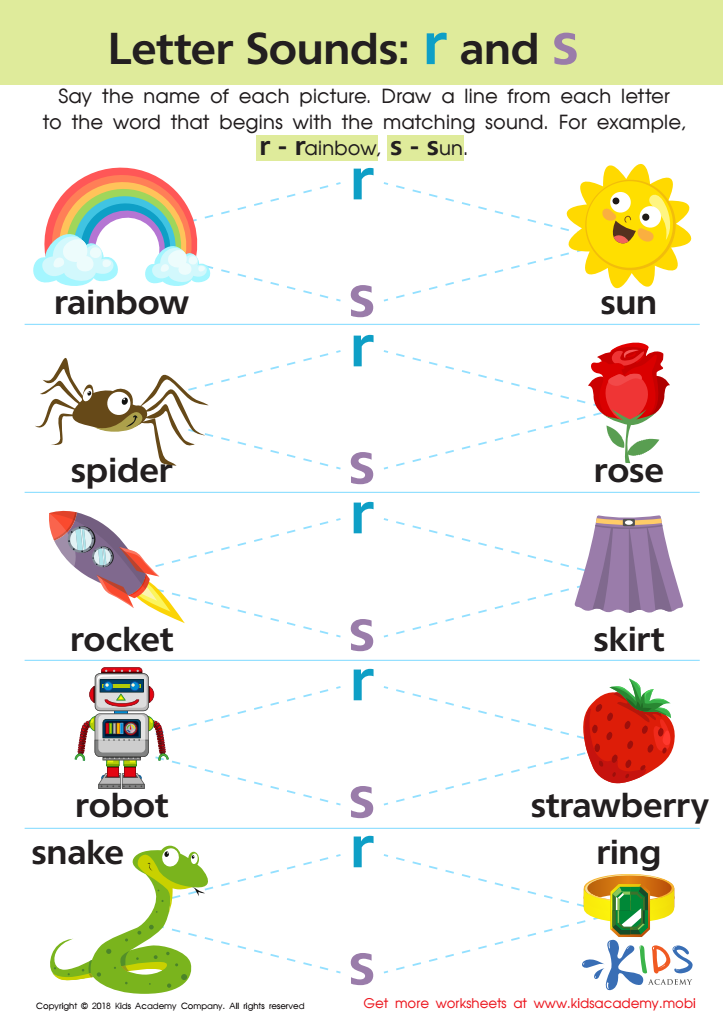
Letter R and S Sounds Worksheet
Kids Academy's phonics worksheet is full of fun and color! Help your child name the pictures and read the words under each one. Does it begin with an R or S? Then, use a pencil to trace the dotted line from the letter to its image. It's a great way to practice phonics skills!
Letter R and S Sounds Worksheet
Worksheet
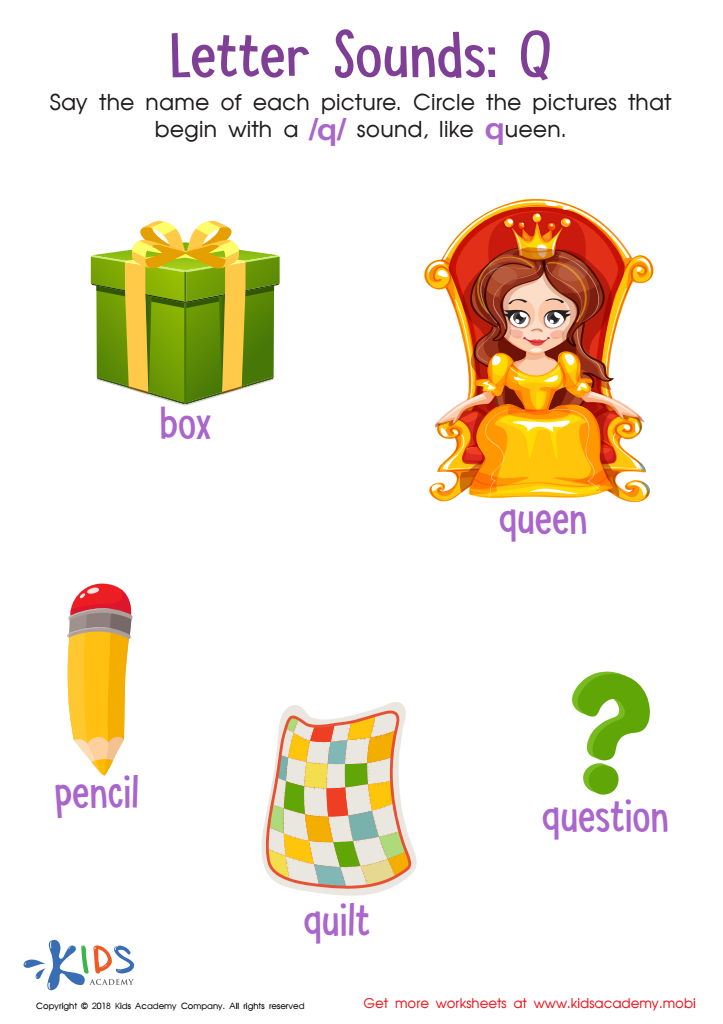
Letter Q Sounds Worksheet
Kids can get confused between "K" and "Q" sounds. Help them learn with this phonics worksheet. They'll name each image and read the word underneath. Point out that words with "Q" also have a "U" which affects how it sounds. Have them circle the matching pictures and watch as they learn this unique letter sound.
Letter Q Sounds Worksheet
Worksheet
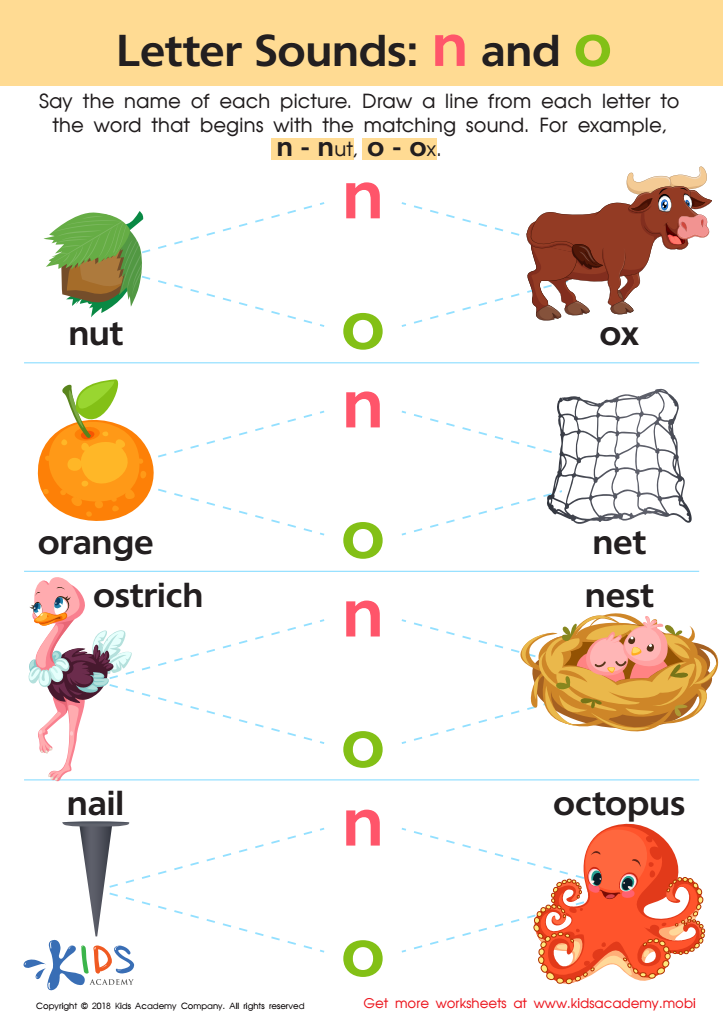
Letter N and O Sounds Worksheet
Help your preschooler learn to recognize the N and O letter sounds with this vibrant worksheet from Kids Academy! Have them say the name of each picture and listen for N or O. Trace the dotted line from letter to its match to complete the phonics review. It's a fun way to help them master the difference between the two sounds!
Letter N and O Sounds Worksheet
Worksheet
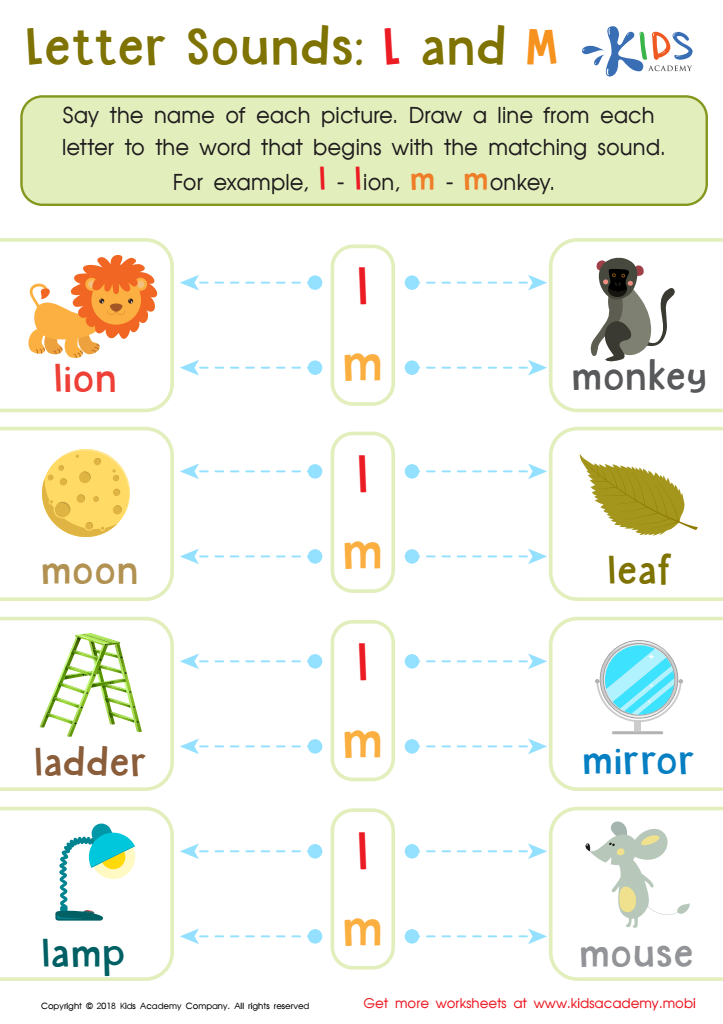
Letter l and M Sounds Worksheet
Our Kids Academy phonics practice pages give clear instructions and captivating pictures to pique children's interest. This fun worksheet helps kids identify a picture, then match its beginning sound. Listen and say each word - does it start with "L" or "M"? Trace the dotted line from the letter to the correct match and listen closely to the sound it makes.
Letter l and M Sounds Worksheet
Worksheet
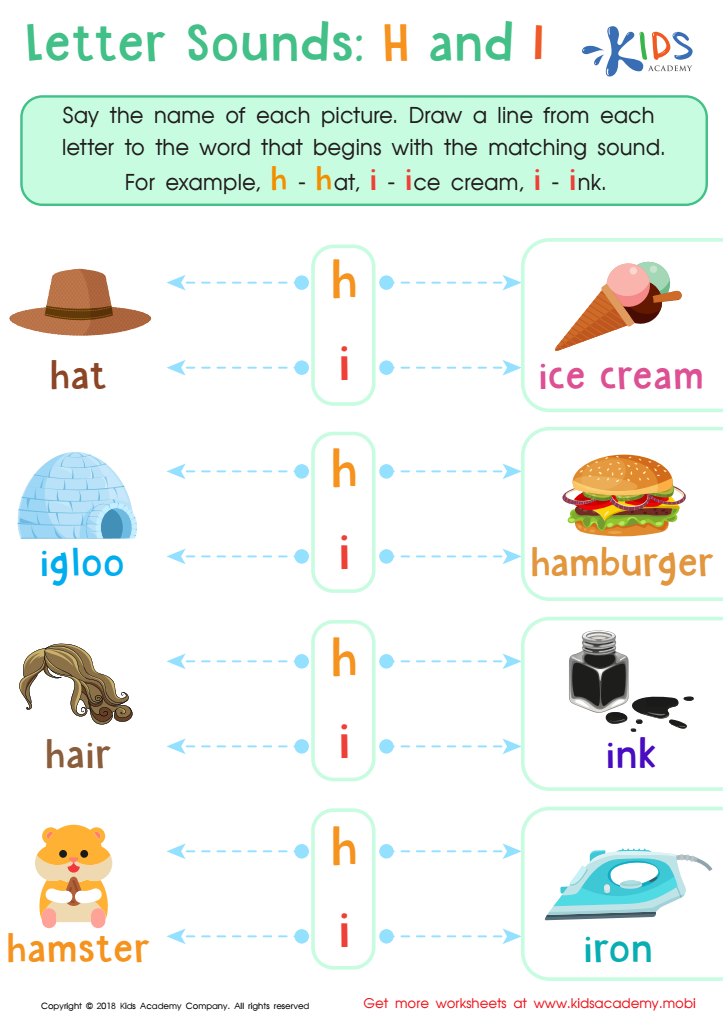
Letter H and I Sounds Worksheet
Preschoolers will have fun and develop reading and writing skills at the same time! They'll use pictures to recognize familiar words and differentiate between 'H' and 'I' sounds. Then they'll trace lines to connect each sound to the picture, improving their fine-motor skills. Bright and cheerful visuals make learning a breeze!
Letter H and I Sounds Worksheet
Worksheet
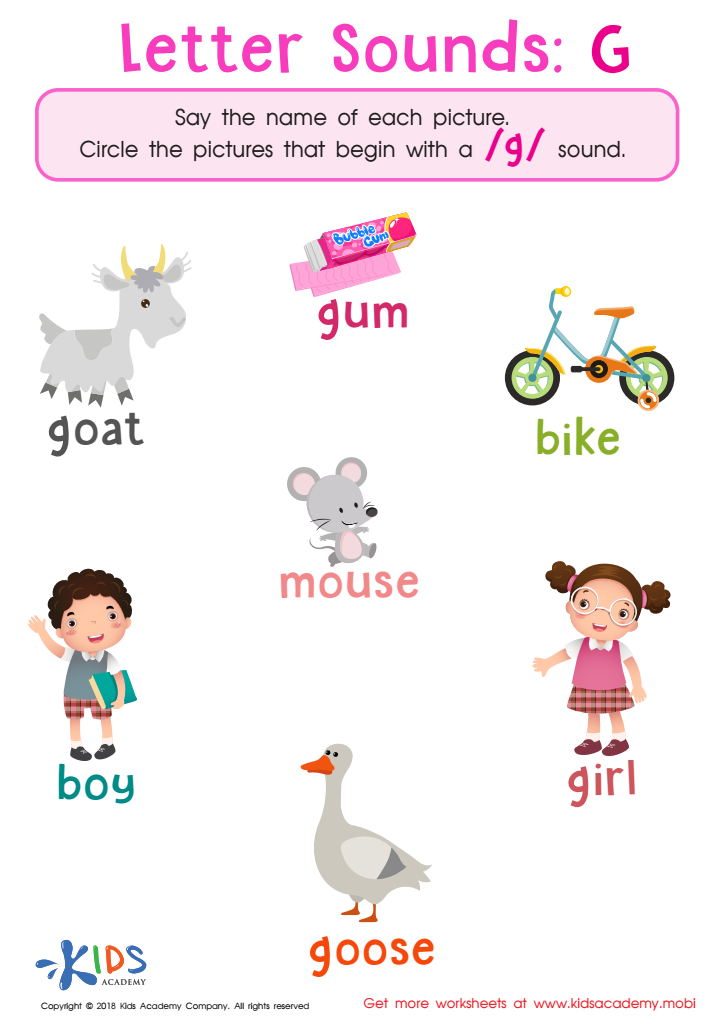
Letter G Sounds Worksheet
Help emerging readers build confidence by giving them practice identifying hard "G" with this free PDF worksheet. They'll use picture clues to name the words, and practice fine-motor skills tracing circles around the corresponding pics. It's a great way to introduce or reinforce hard "G" words.
Letter G Sounds Worksheet
Worksheet
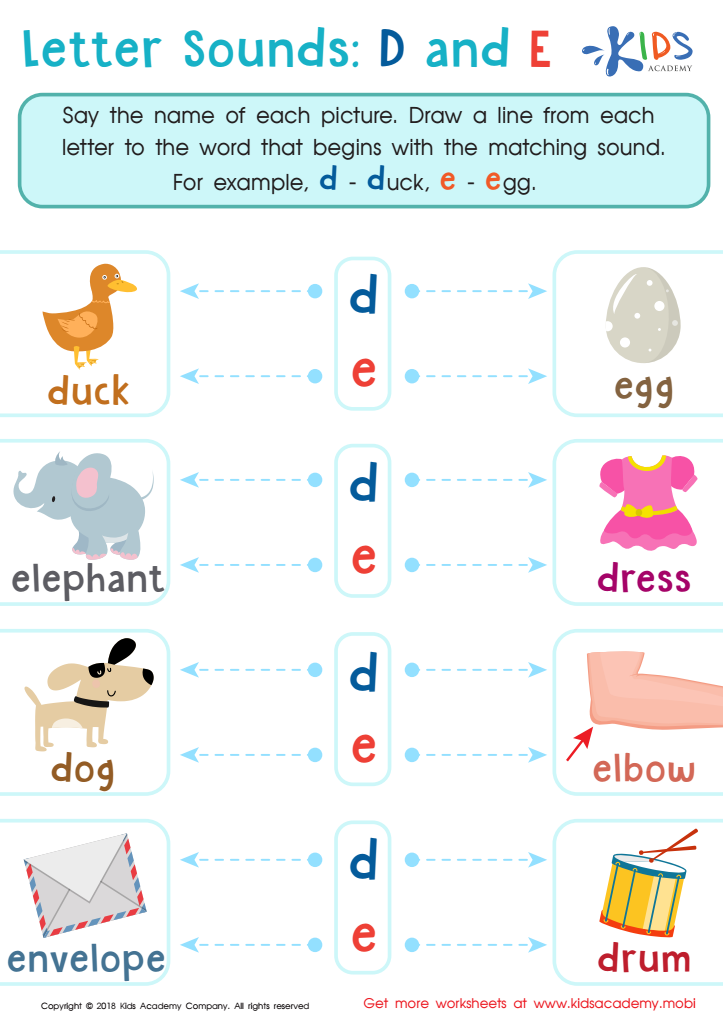
Letter D and E Sounds Worksheet
Kids can use picture clues and visual discrimination to name cheerful pics and isolate the beginning sound. This free PDF worksheet will help them develop phonological awareness, differentiate between "D" and "E", and hone fine-motor skills. It'll also boost their confidence as they become readers.
Letter D and E Sounds Worksheet
Worksheet
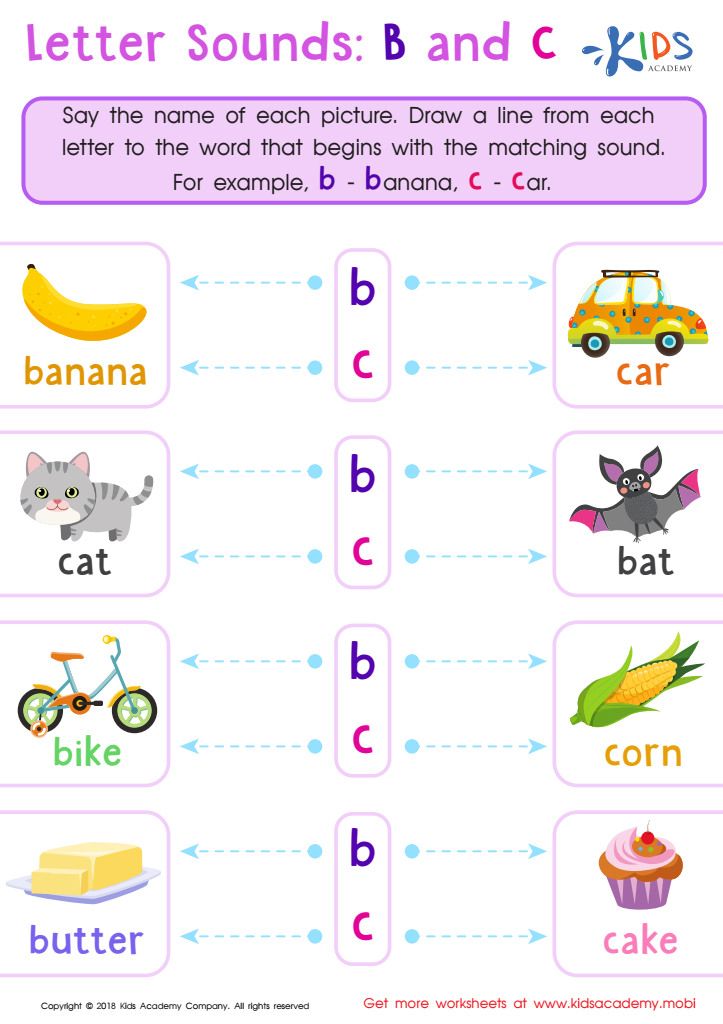
Letter B and C Sounds Worksheet
This fun worksheet offers bright, engaging pictures and helps kids learn to distinguish between the sounds of "B" and "C". With the use of pictures and familiar items, kids will trace lines to the correct initial consonant sound, while also developing fine-motor skills. It's a great way to build decoding ability!
Letter B and C Sounds Worksheet
Worksheet
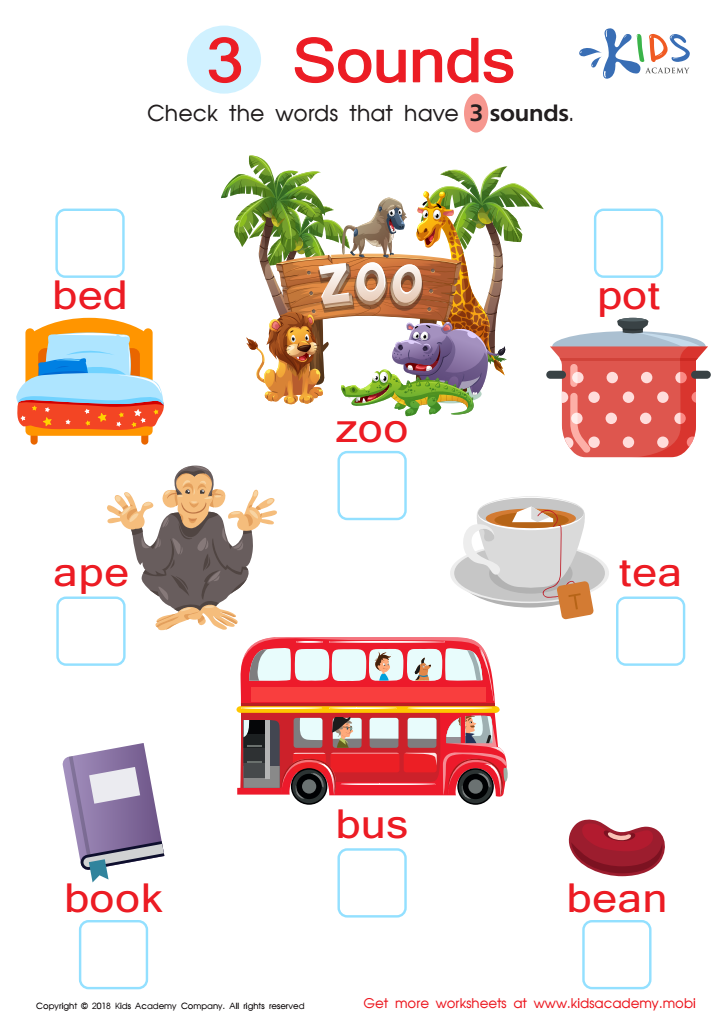
3 Sounds Worksheet
Kids will love learning with this free, colorful worksheet. It's full of familiar words they can name and sound out with three distinct sounds. This helps build decoding skills, plus they get to check off words they read. It's a fun way to teach children to identify and use sounds.
3 Sounds Worksheet
Worksheet
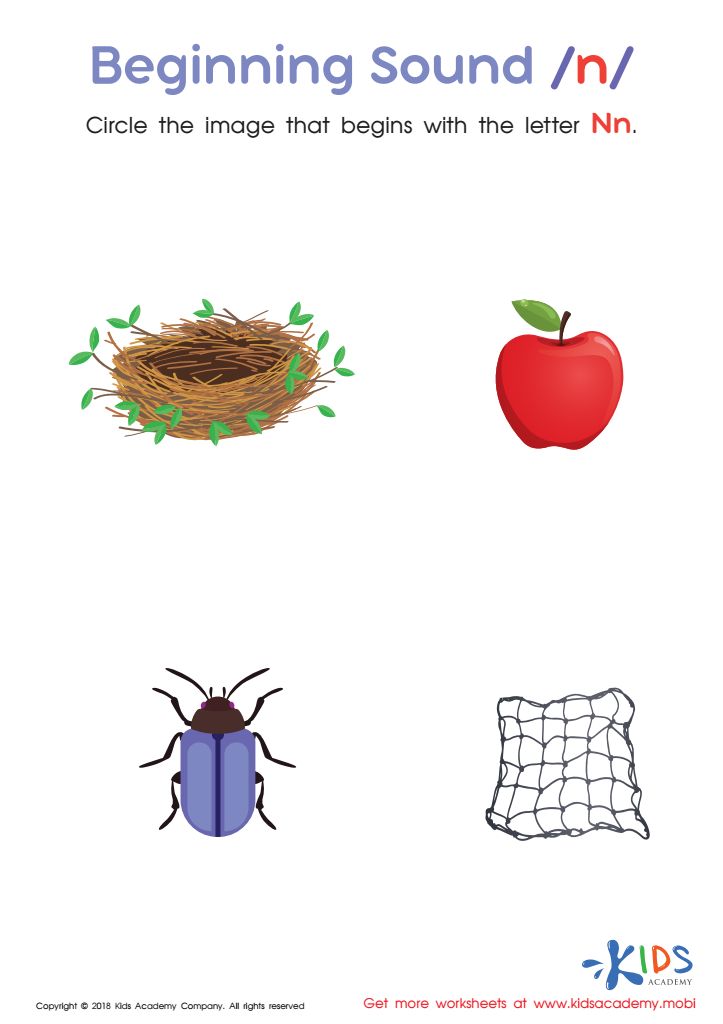
Beginning Sound «n» Worksheet
Help your emerging reader learn the initial «n» sound with this free PDF worksheet! Strengthen fine motor skills by tracing circles around words beginning with «n». Pictures are clear and engaging, giving beginning Phonics learners the right amount of practice and the confidence to succeed.
Beginning Sound «n» Worksheet
Worksheet
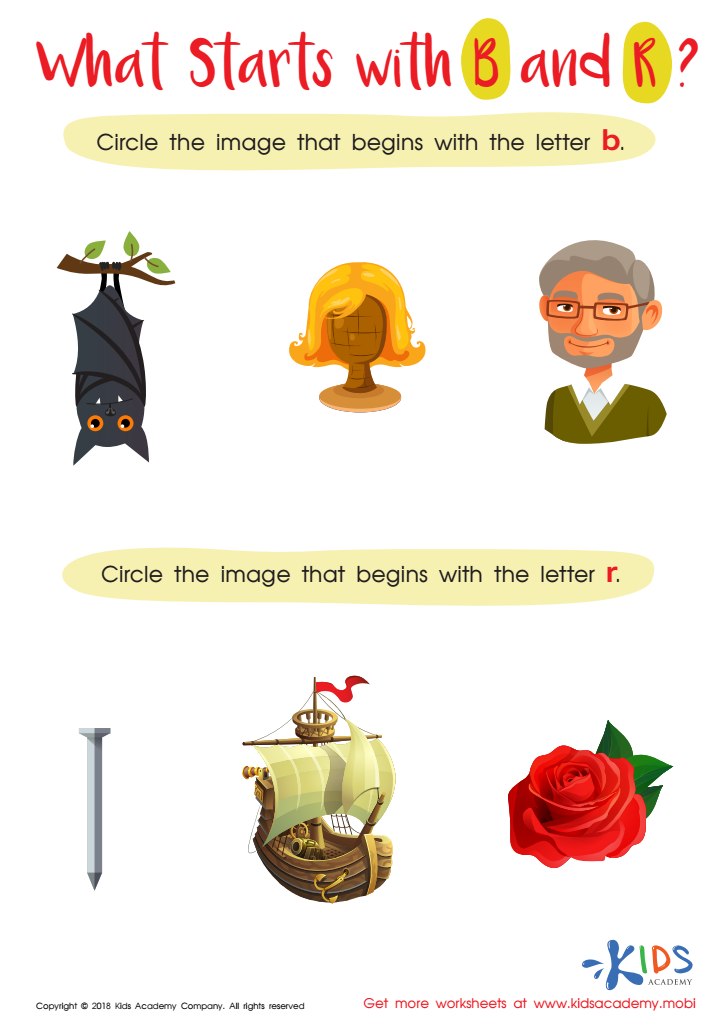
What Starts with B and R? Worksheet
Download this worksheet to help young readers practice visual and motor skills! They'll enjoy matching pictures with "B" and "R" letters while tracing the images. Bright and colorful, this engaging activity will help kids differentiate between words and have fun doing it.
What Starts with B and R? Worksheet
Worksheet
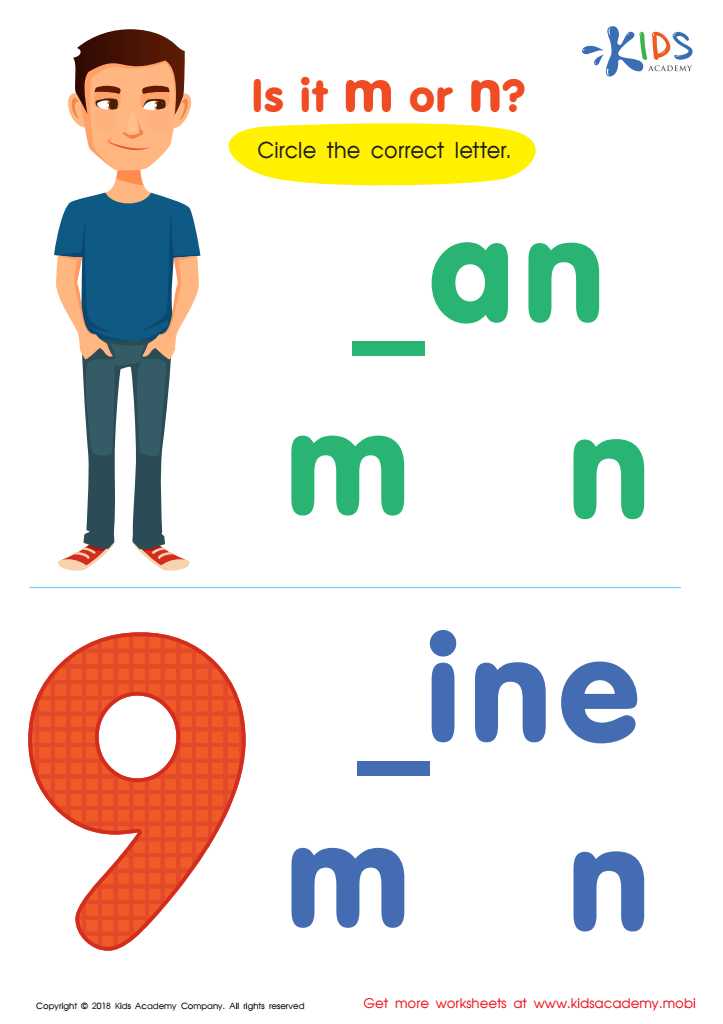
Is It m or n? Worksheet
Help your child circle the letter that begins the words "man" and "nine" in the picture. This is a great way for them to learn the alphabet.
Is It m or n? Worksheet
Worksheet
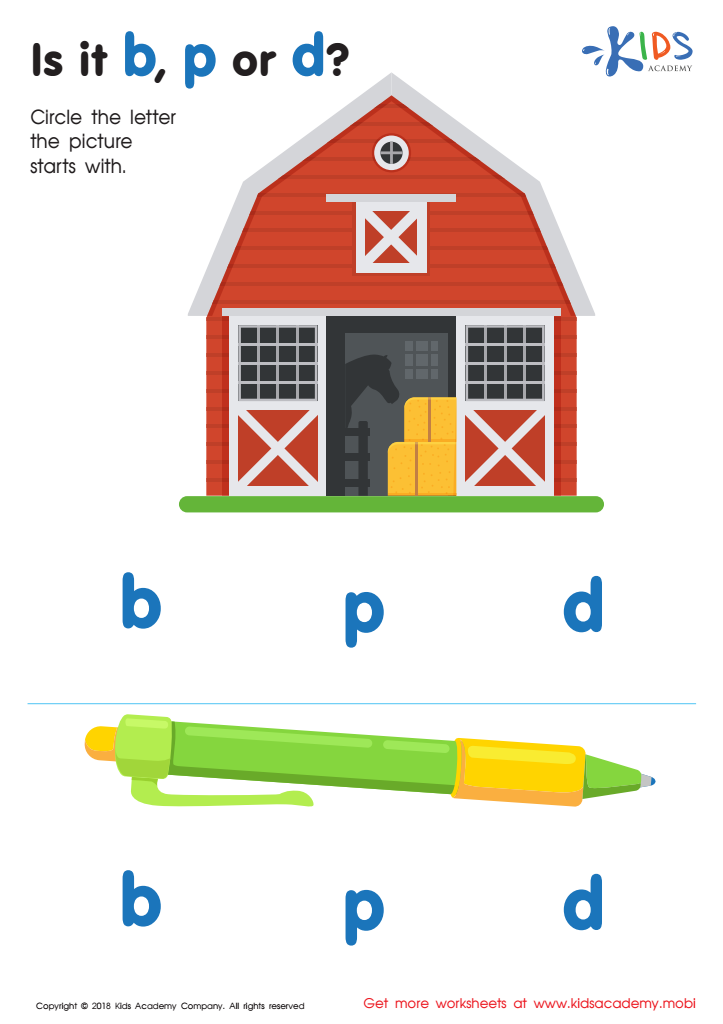
Is it b, p or d? Worksheet
Test your child's identification skills with this worksheet. They must identify the image and then circle the letter it begins with: 'b', 'p', or 'd' (e.g. an image of the sun would mean they circle 's').
Is it b, p or d? Worksheet
Worksheet
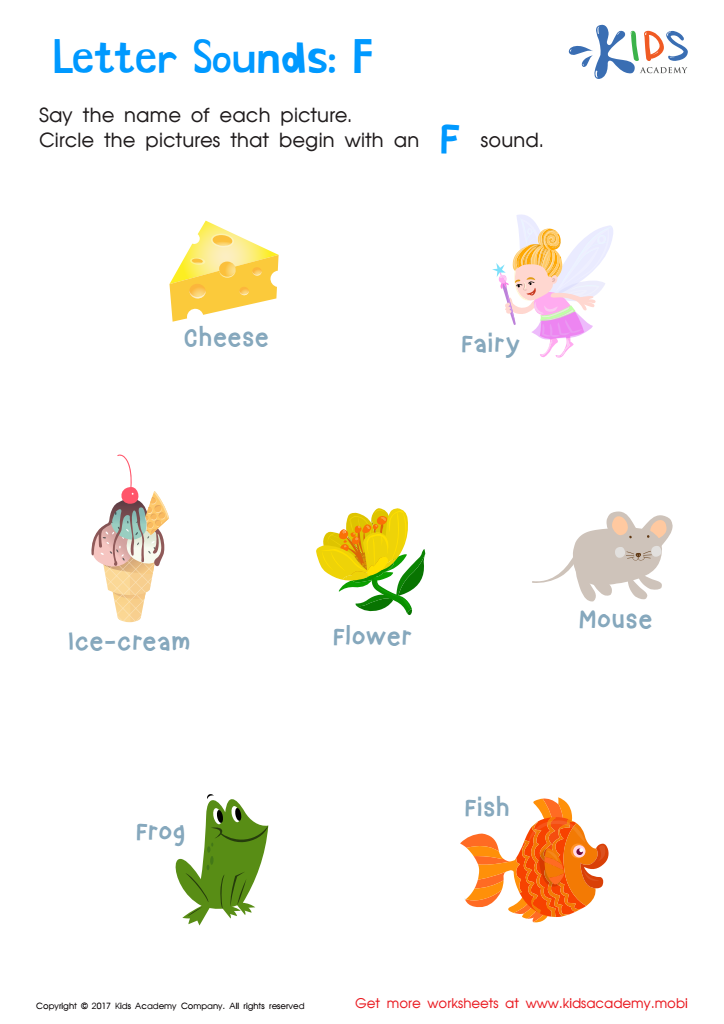
Letter F Sounds Worksheet
Kids will practice identifying 'f' words, tracing, and coloring the letter F for a great way to learn phonics.
Help your child discover the wonders of the letter 'F' with this fun worksheet! Kids will practice identifying 'F' words, tracing and coloring the letter, and building early reading skills. Stimulate their learning and let them connect letter sounds to words they know. An enjoyable way to practice phonics!
Letter F Sounds Worksheet
Worksheet
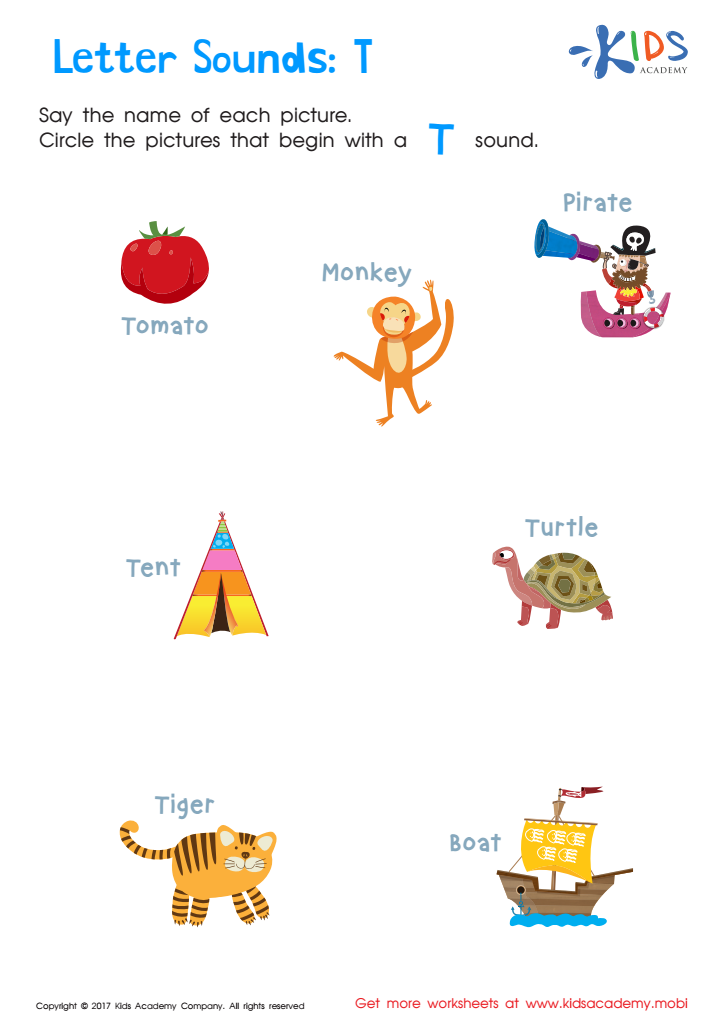
Letter T Sounds Worksheet
This worksheet is a fun way to help kids learn the t sound. It has familiar pictures and an easy-to-follow format, so kids can quickly recognize and learn the letter t.
Letter T Sounds Worksheet
Worksheet
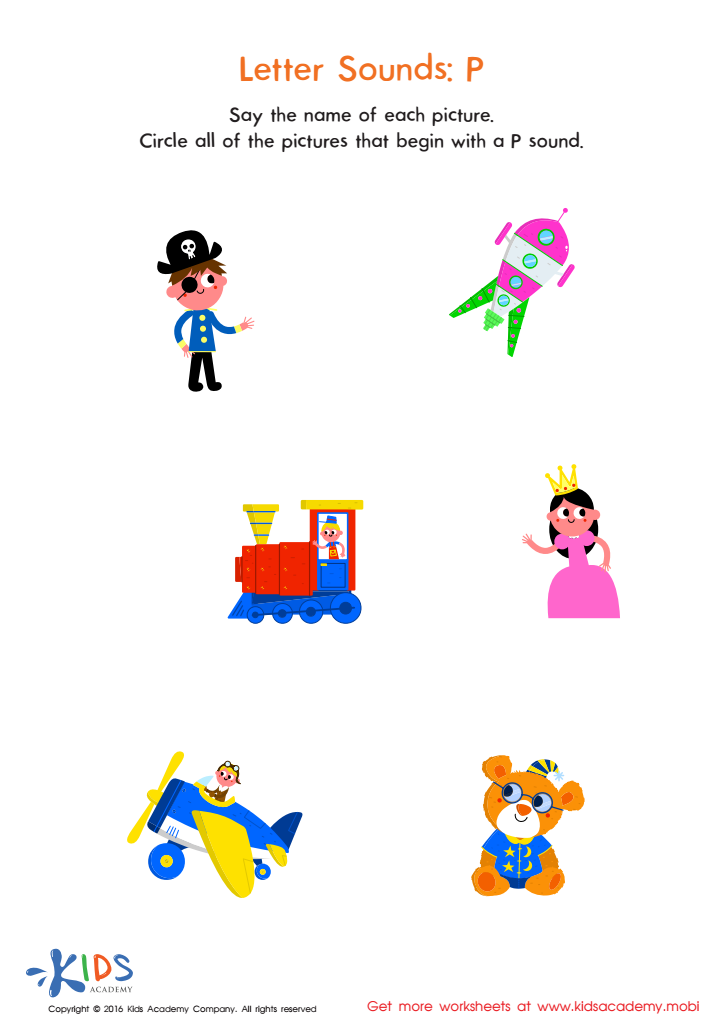
Letter P Sound Worksheet
Think P! Kids practice phonics with this fun letter P worksheet. With delightful illustrations, they'll sound out simple words and get closer to reading.
Letter P Sound Worksheet
Worksheet
Join Kids Academy for Free
Who is primarily going to use this learning content?








Letter recognition and phonics are fundamental building blocks for early literacy development, playing a crucial role in a child's ability to read and write effectively. Parents and teachers should prioritize these skills because they serve as the foundation for all future learning. Letter recognition helps children understand that written language consists of individual symbols, each with distinct sounds. This awareness enables them to decipher words, boosting their reading fluency and comprehension.
Phonics, the relationship between letters and their corresponding sounds, is essential for decoding unfamiliar words. With strong phonics skills, children can independently read new text, fostering confidence and a love for reading. Moreover, phonics instruction improves spelling abilities, as it reinforces understanding of sound-letter relationships.
Early mastery of these skills significantly impacts academic success across all subjects by enhancing cognitive development and vocabulary. Poor letter recognition and phonics skills can lead to reading difficulties, resulting in frustration and disengagement from learning. By focusing on letter recognition and phonics, teachers and parents ensure children develop critical reading skills that facilitate lifelong learning and open doors to new opportunities. Prioritizing these areas equips children with the necessary tools for educational achievement and intellectual growth.







