Easy Comparison Worksheets for Ages 3-8
3 filtered results
-
From - To
Discover a fun and engaging way to teach young learners the concept of comparison with our "Easy Comparison Worksheets for Ages 3-8." These printable worksheets are designed to help children understand sizes, quantities, and other comparative concepts through colorful and interactive exercises. Perfect for home or classroom use, they provide a variety of activities tailored to different age groups, ensuring that each child finds learning enjoyable. With our worksheets, children will develop critical thinking and problem-solving skills, making math essential and accessible. Download today and watch your child gain confidence in their comparison skills while having a blast!
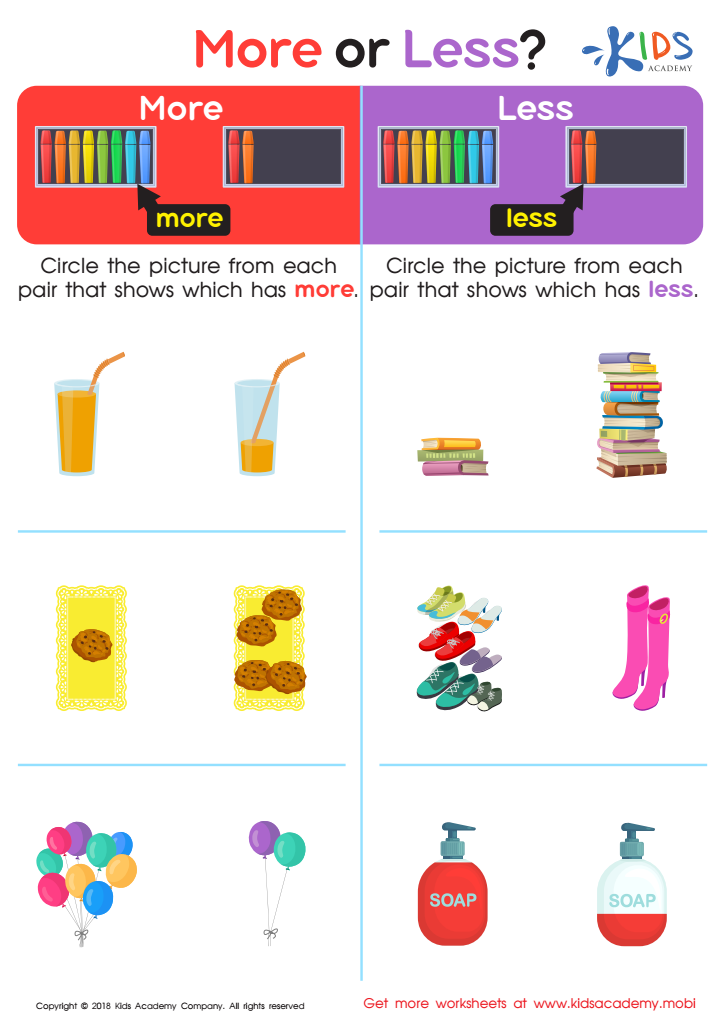
More or Less? Worksheet
 Assign to My Students
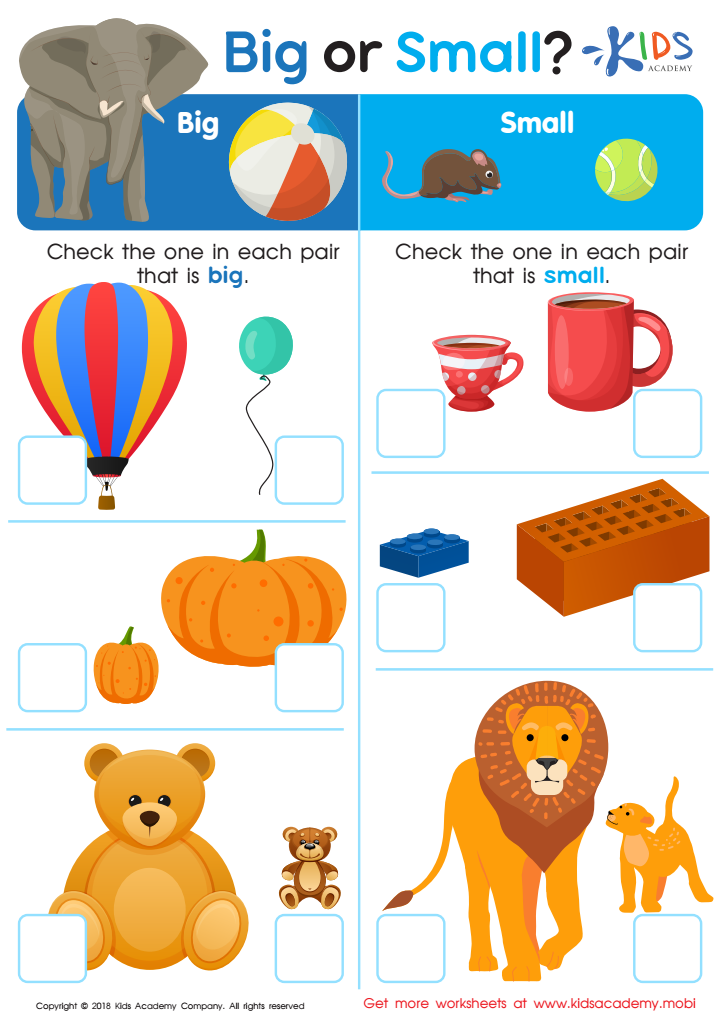
Big or Small? Worksheet
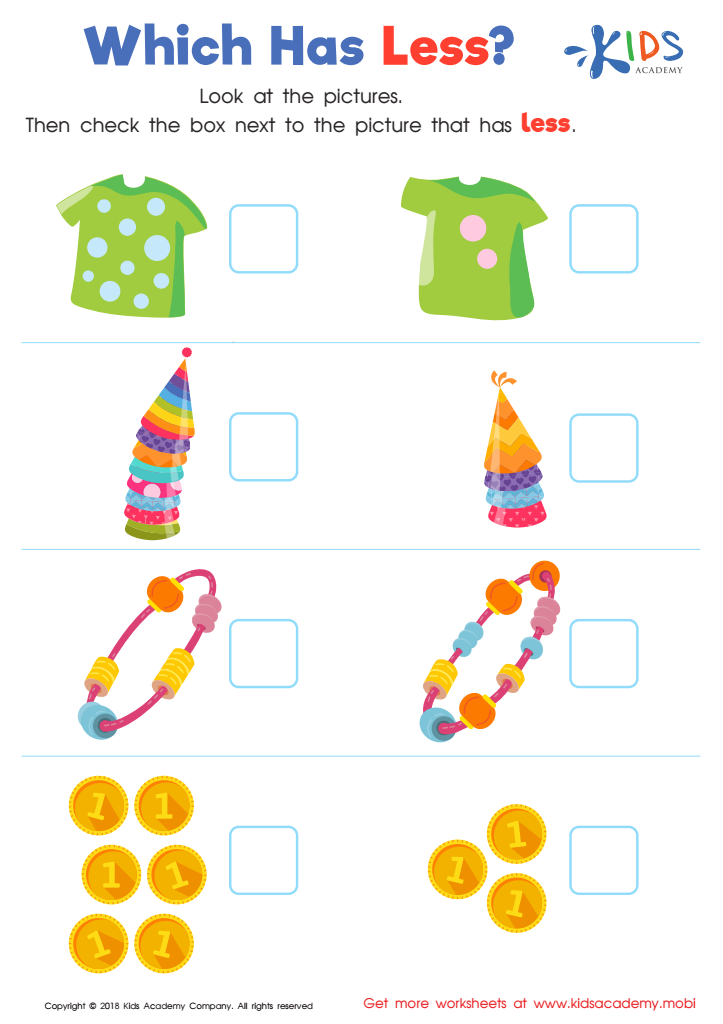
Which Has Less? Worksheet






Easy Comparison is a crucial concept for children aged 3-8 as it lays the foundation for critical thinking and analytical skills essential for later academic success. At this developmental stage, children are naturally curious and begin to observe and interpret their world. Introducing them to simple comparisons—like "bigger" or "smaller," "more" or "less," and "taller" or "shorter"—helps them understand and categorize their experiences, enhancing cognitive development.
Parents and teachers should care about Easy Comparison because it aids in language acquisition; children learn new vocabulary and concepts through comparative language. It also fosters social-emotional skills as they begin to recognize similarities and differences in their peers, promoting empathy and cooperation. Engaging in activities that involve comparison through sorting objects, comparing heights, or discussing preferences teaches decision-making and problem-solving.
Furthermore, surrounded by an increasingly data-driven world, these early skills are paramount. Children develop a sense of measure and proportion, critical for future math understanding and scientific reasoning. By emphasizing Easy Comparison in fun and engaging ways, caregivers can equip children with the tools they need for lifelong learning and growth, making it a foundational aspect of early education that deserves attention.








