Easy Punctuation Worksheets for Ages 4-6
4 filtered results
-
From - To
Introducing our Easy Punctuation worksheets, perfectly tailored for young learners aged 4-6! Designed with early education in mind, these engaging worksheets simplify the fundamentals of punctuation in a fun and accessible way. Our collection is packed with a variety of activities that not only introduce children to the basics of punctuation marks like periods, question marks, and exclamation points but also encourage them to practice and apply what they learn in their writing. Ideal for both classroom and home use, our Easy Punctuation worksheets for Ages 4-6 are the perfect tool to lay the groundwork for effective written communication from an early age.
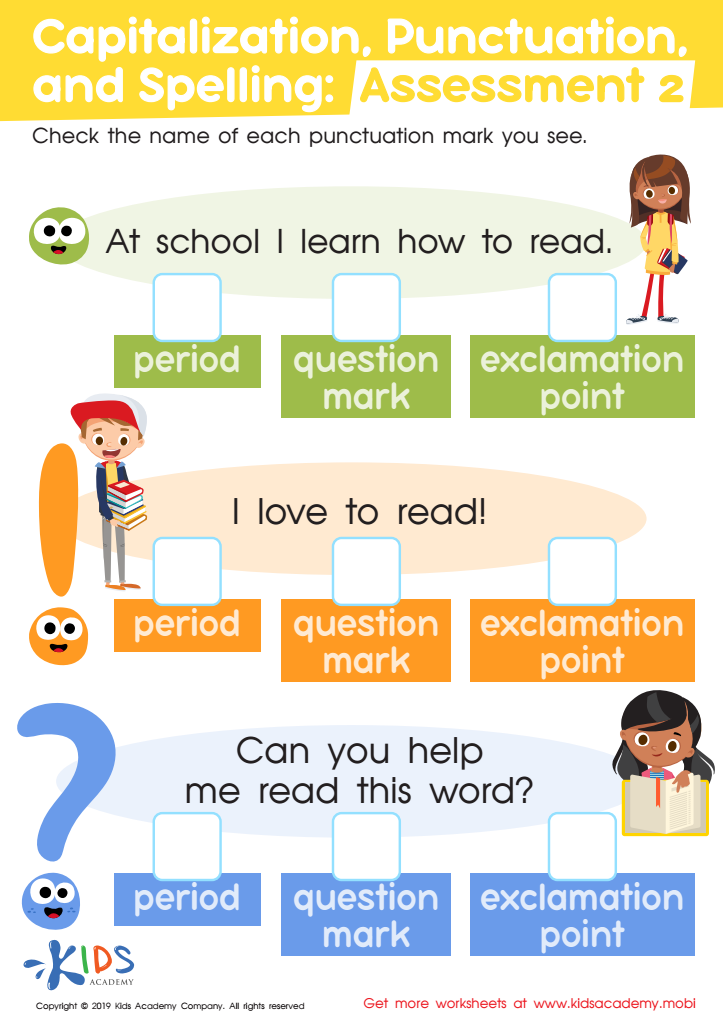
Capitalization. Punctuation. Spelling: Assessment 2 Worksheet
 Assign to My Students
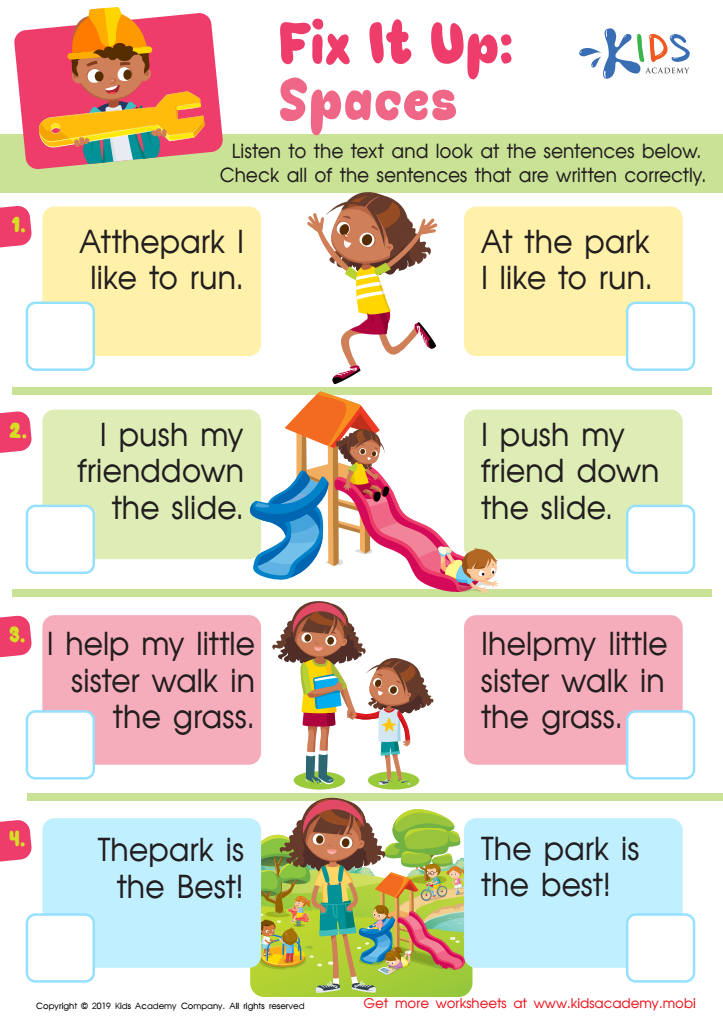
Fix Spaces Worksheet
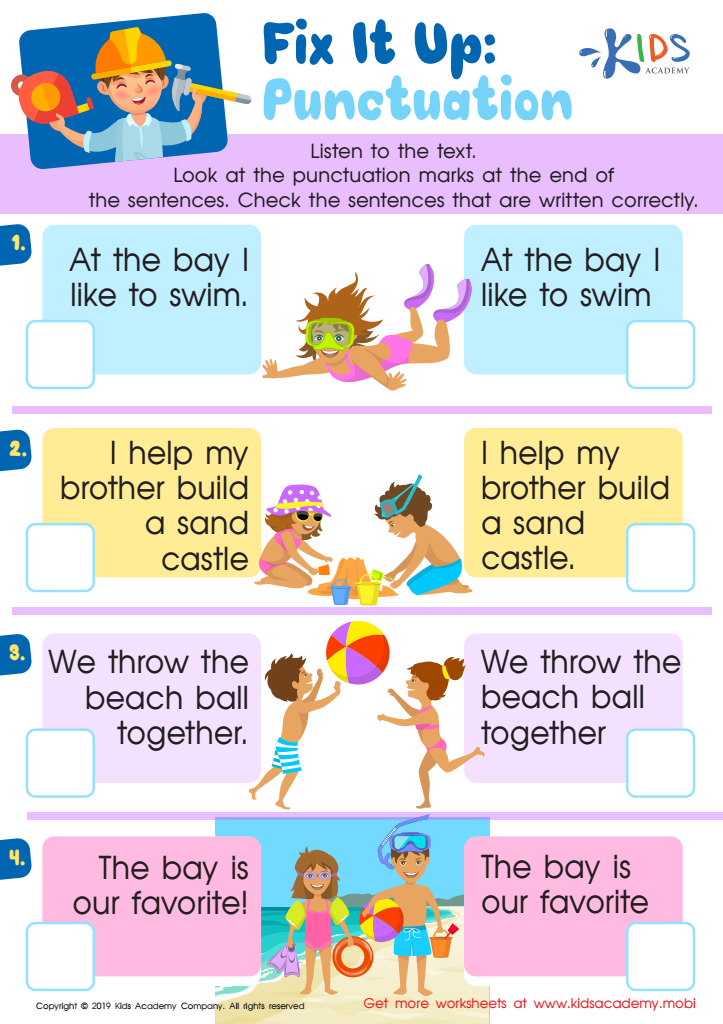
Fix Punctuation Worksheet
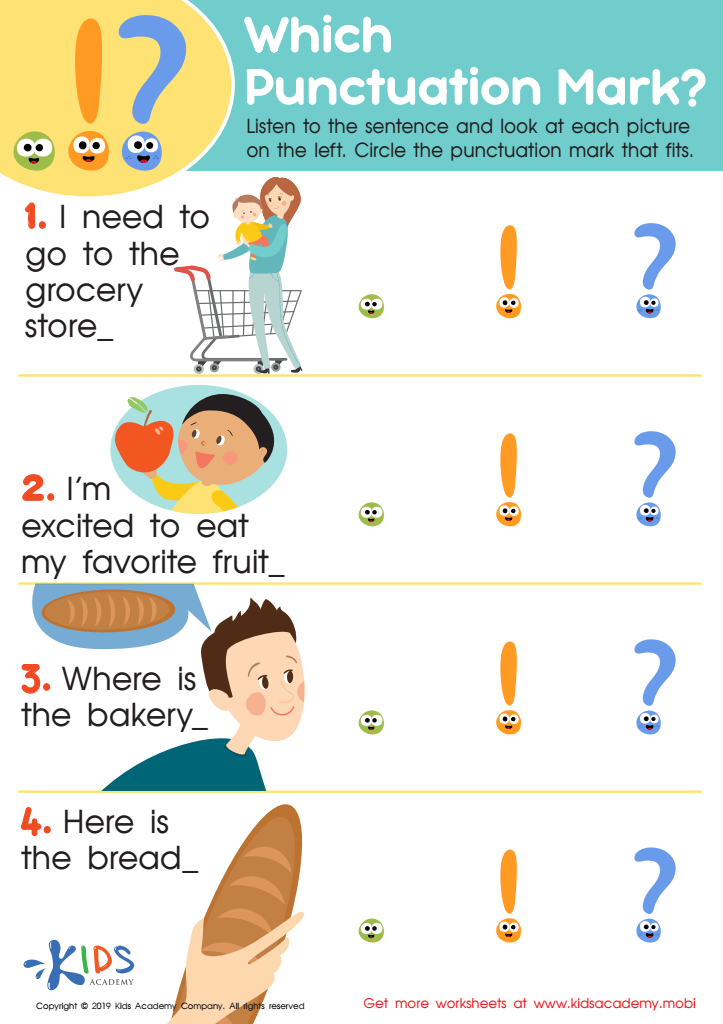
Which Punctuation Mark Worksheet








Easy Punctuation worksheets for Ages 4-6 serve as a fundamental stepping stone in a child’s educational journey. In the formative years of learning, children are like sponges, eager to absorb knowledge and understand the world of letters and words that surround them. Introducing them to the basics of punctuation through these easy-to-comprehend worksheets is not only beneficial but essential.
Punctuation marks are the traffic signals of language; they guide us on how to read and understand sentences. For young learners, mastering these signals early on ensures they develop a strong foundation in reading and writing. Easy Punctuation worksheets for Ages 4-6 are specifically designed with this age group in mind, focusing on simplicity and engagement to capture their attention and promote learning.
These worksheets introduce children to the basics of punctuation such as periods, question marks, and exclamation points in an enjoyable manner. The activities are crafted to be interactive and fun, turning a learning session into a playful experience. This approach enhances retention and encourages children to explore the rules of language with curiosity and delight.
Moreover, mastering punctuation at an early age boosts reading comprehension and writing skills, paving the way for academic success in the future. Easy Punctuation worksheets for Ages 4-6 are, therefore, not just educational tools but building blocks for a child’s lifelong literacy journey.