Easy Punctuation Worksheets for Ages 4-7
4 filtered results
-
From - To
Discover our "Easy Punctuation Worksheets for Ages 4-7" designed to help young learners build strong writing skills in a fun and engaging way. These printable worksheets focus on fundamental punctuation marks like periods, commas, and question marks, providing simple exercises accompanied by colorful illustrations. Perfect for both classroom and at-home learning, they support early elementary students in understanding and applying basic punctuation rules. Each worksheet aims to enhance reading comprehension and writing fluency, making the learning process enjoyable and effective. Give your child a head start in writing with our easy-to-use punctuation resources!
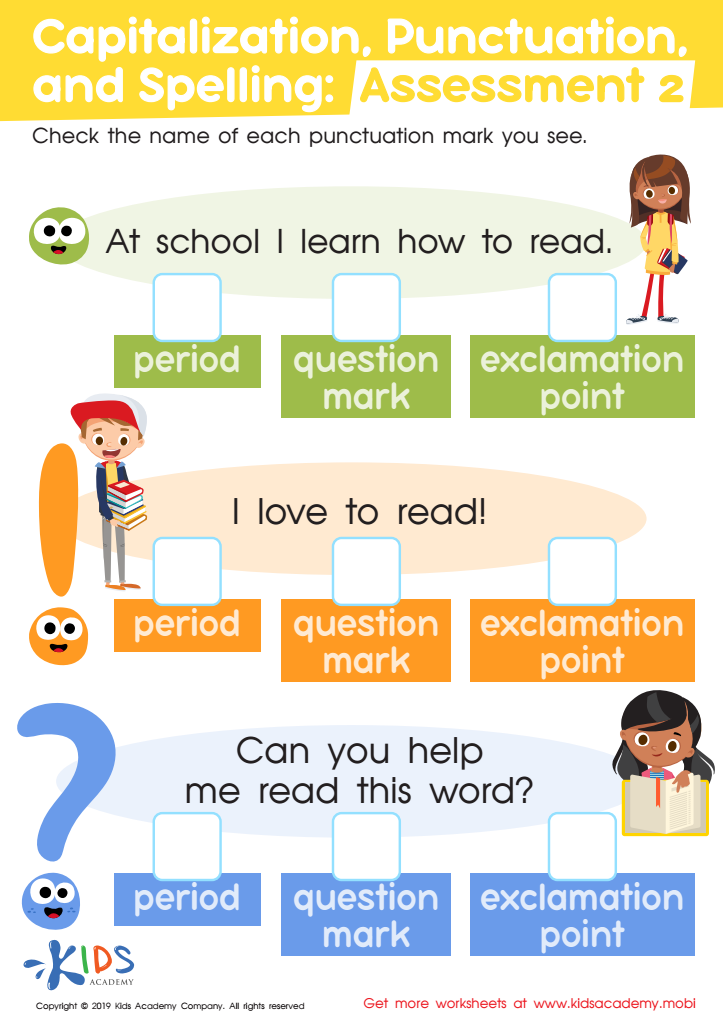
Capitalization. Punctuation. Spelling: Assessment 2 Worksheet
 Assign to My Students
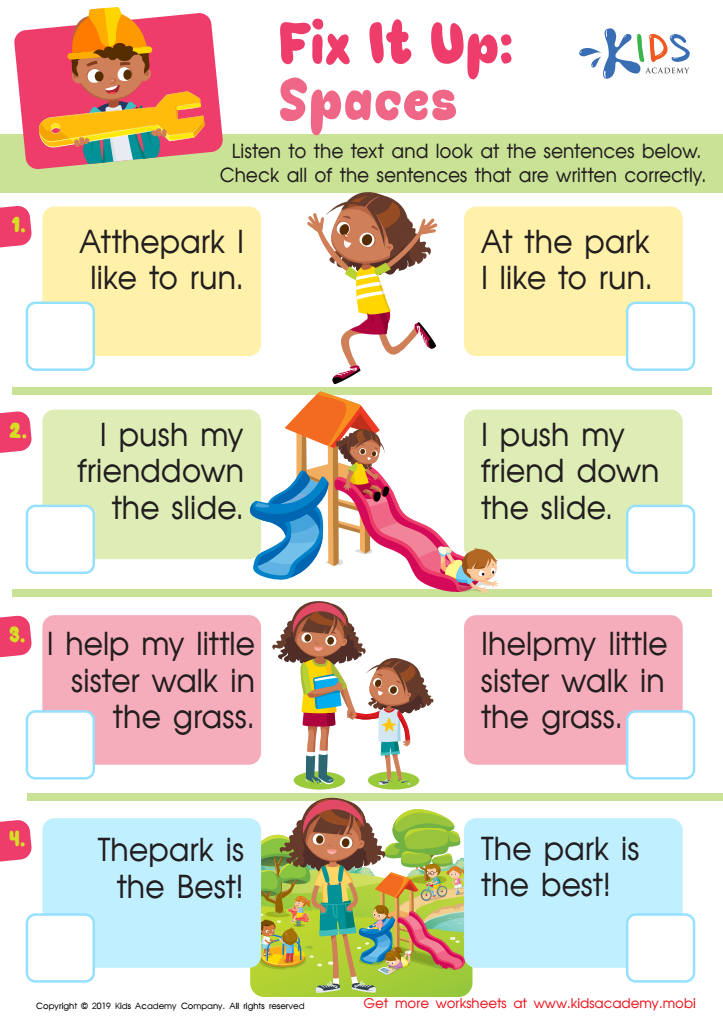
Fix Spaces Worksheet
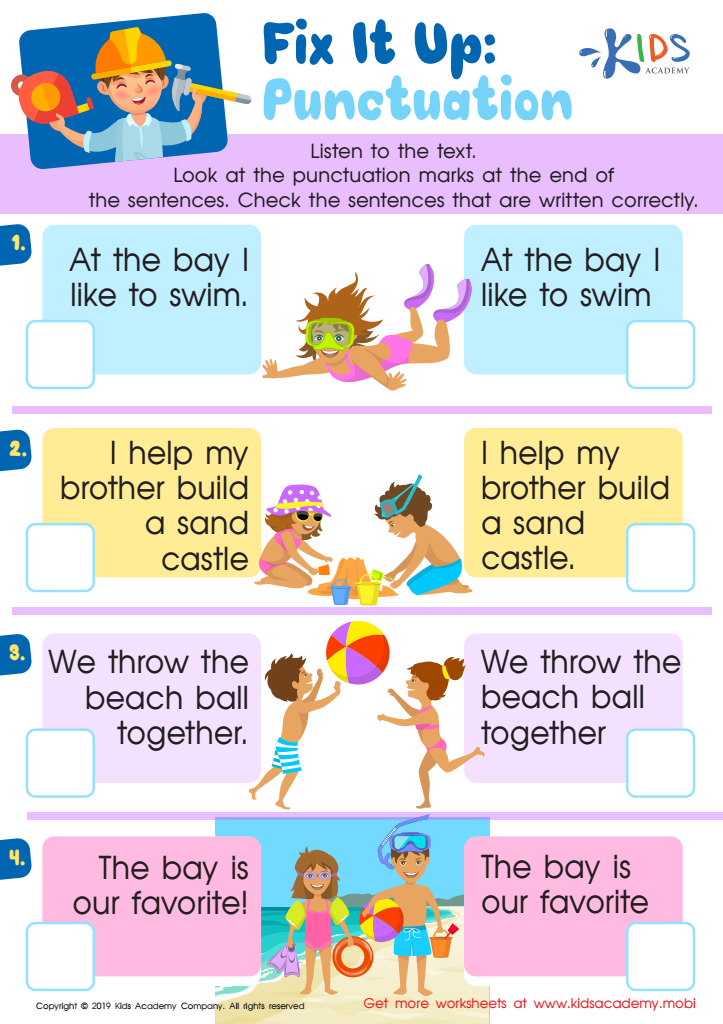
Fix Punctuation Worksheet
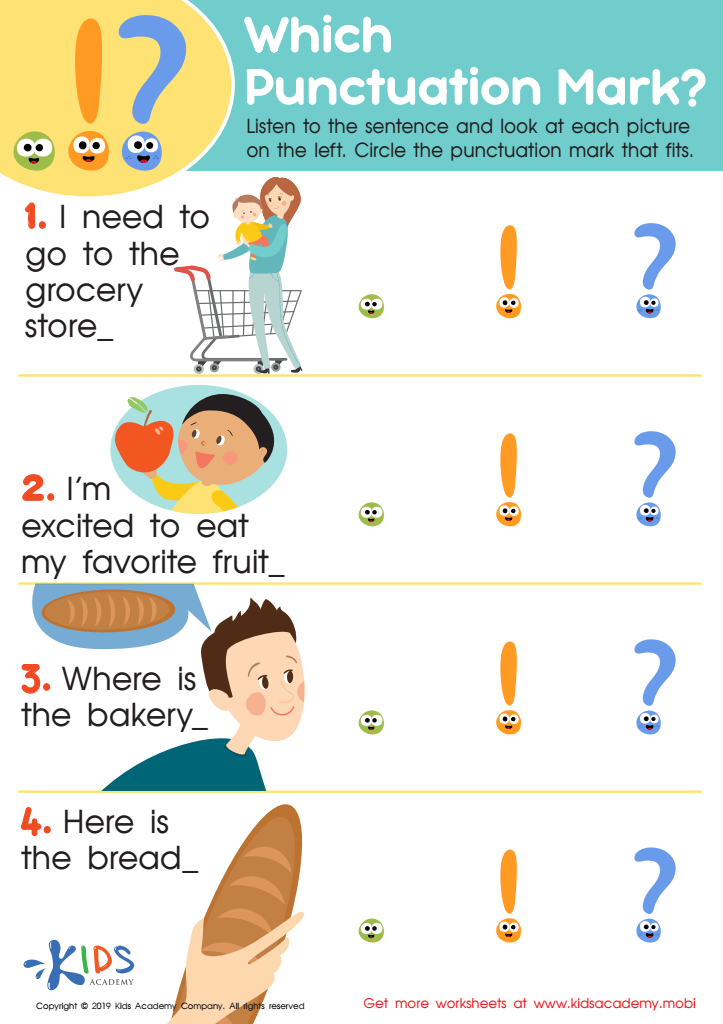
Which Punctuation Mark Worksheet






Easy punctuation is essential for young children, aged 4-7, because during these formative years, they are establishing foundational language and writing skills that will benefit them throughout their academic life and beyond. Parents and teachers should care about easy punctuation for several reasons:
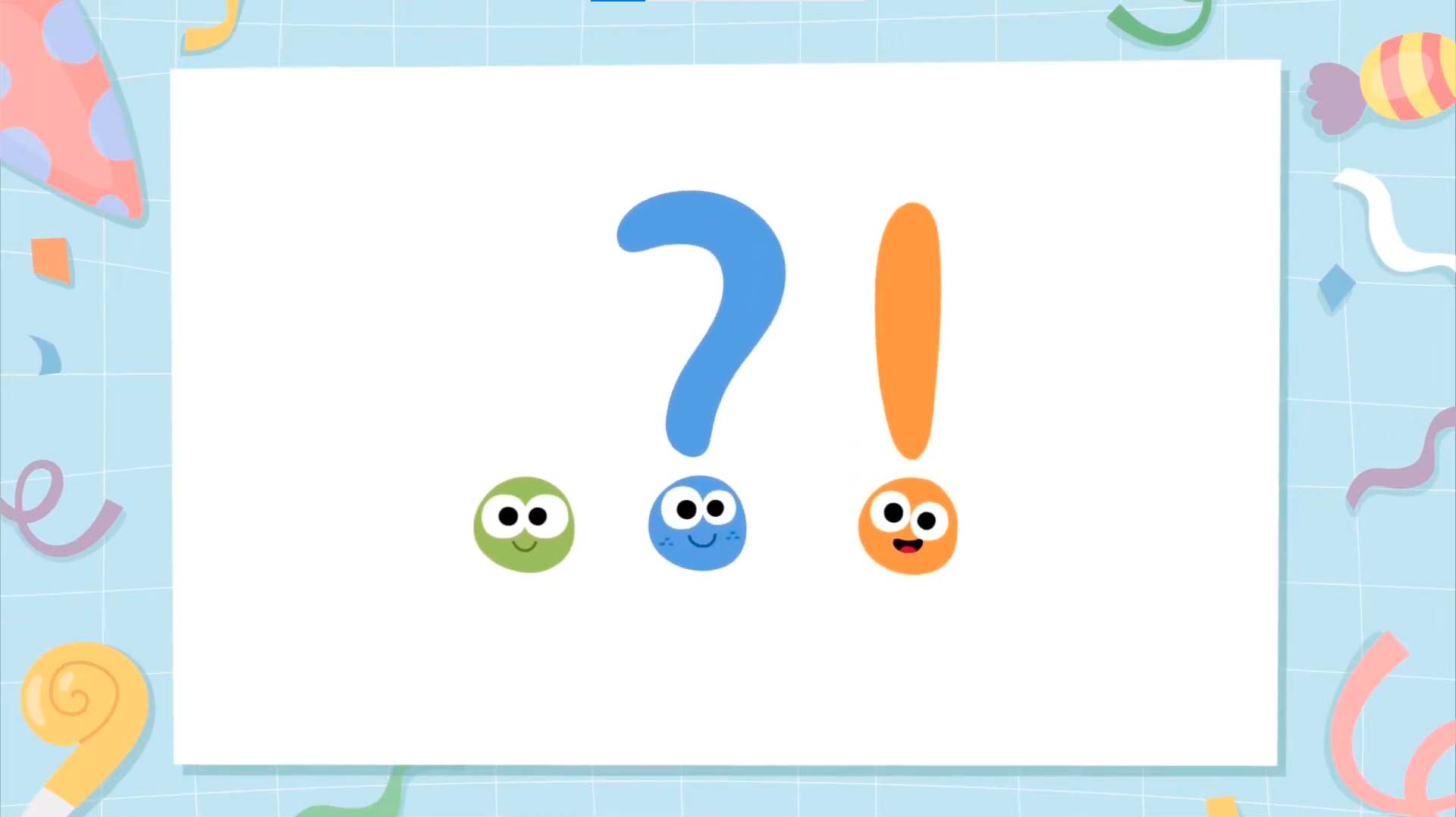
Firstly, it helps children understand the structure of sentences, including where thoughts begin and end. This clarity in communication aids in the comprehension of texts they read and the creation of their written work. Simple punctuation marks, like periods, question marks, and exclamation marks, signal the emotion and tone of a sentence, making stories and instructions more engaging and easily understood.
Secondly, early punctuation practice enhances literacy development. It encourages active reading and attentive listening as children learn to recognize pauses and sentence-endings, ultimately improving their verbal skills and overall fluency.
Moreover, mastering basic punctuation marks boosts a child's confidence in writing, promoting a positive attitude towards learning. When young writers see their stories and sentences making sense and being appreciated, it motivates them to keep practicing.
In conclusion, teaching easy punctuation to young children equips them with vital communication tools and makes learning enjoyable, setting a strong foundation for their future educational success. Parents and teachers play a crucial role in nurturing these skills by providing support, resources, and encouragement.