Easy Geometry Worksheets for Ages 4-8 - Page 3
52 filtered results
-
From - To
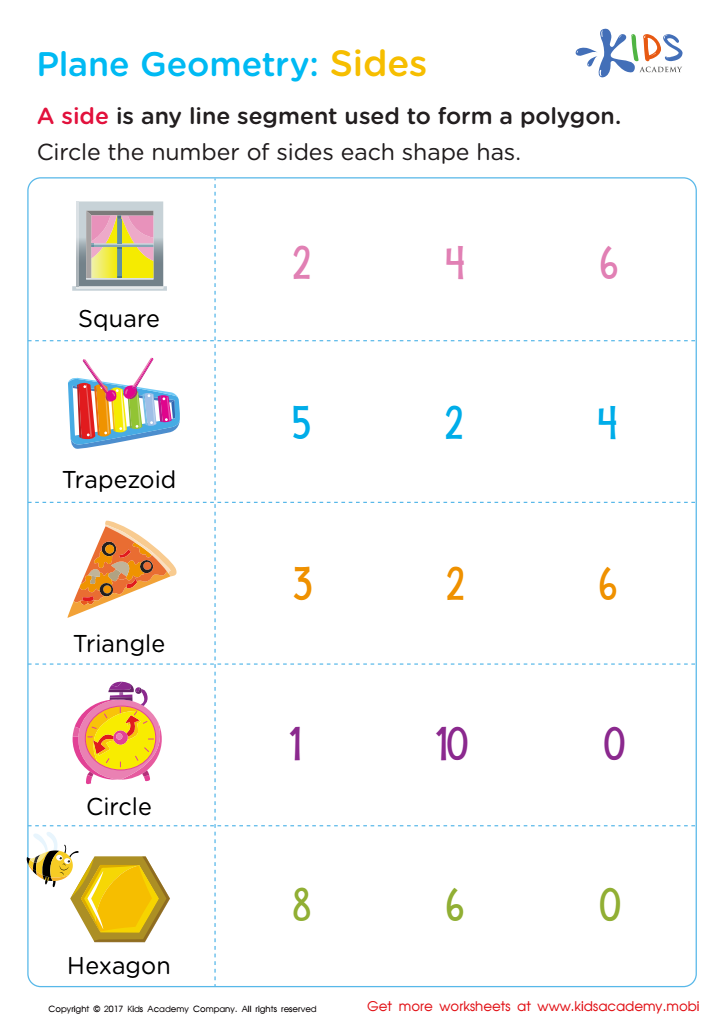
 Assign to My Students











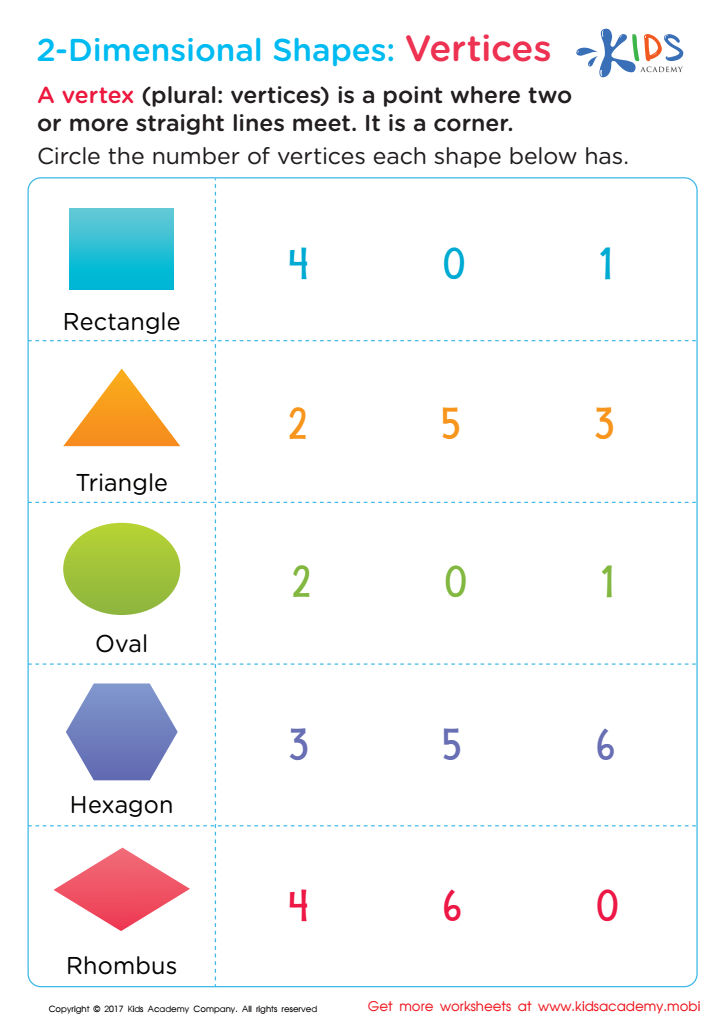
Two–Dimensional Shapes: Vertices Printable
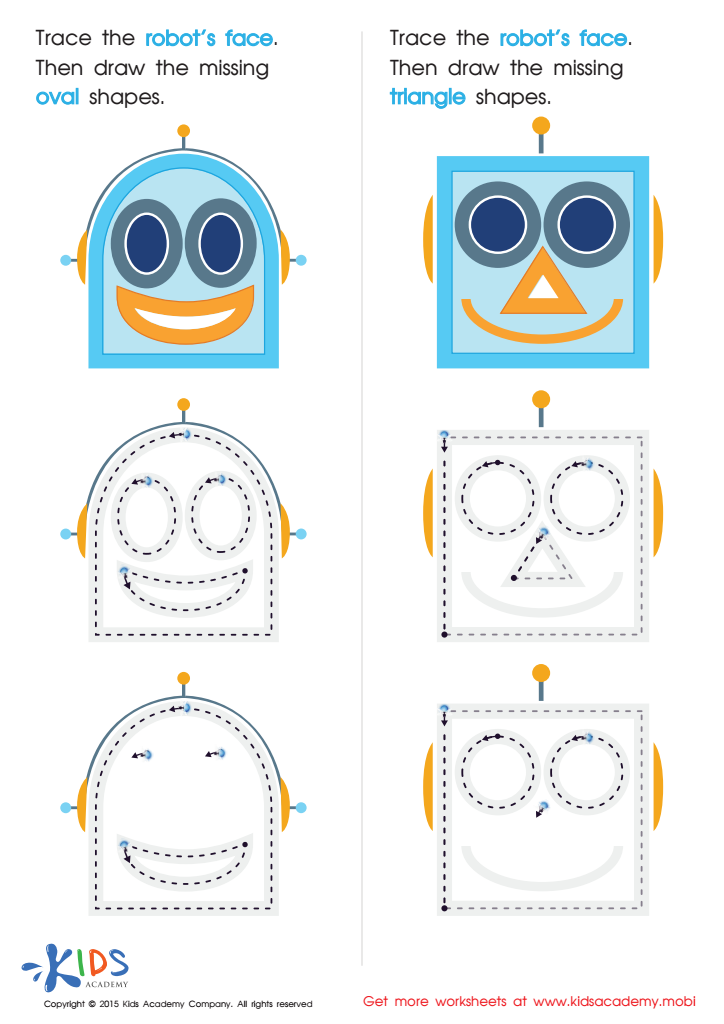
Drawing Ovals And Triangles with Fun Printable
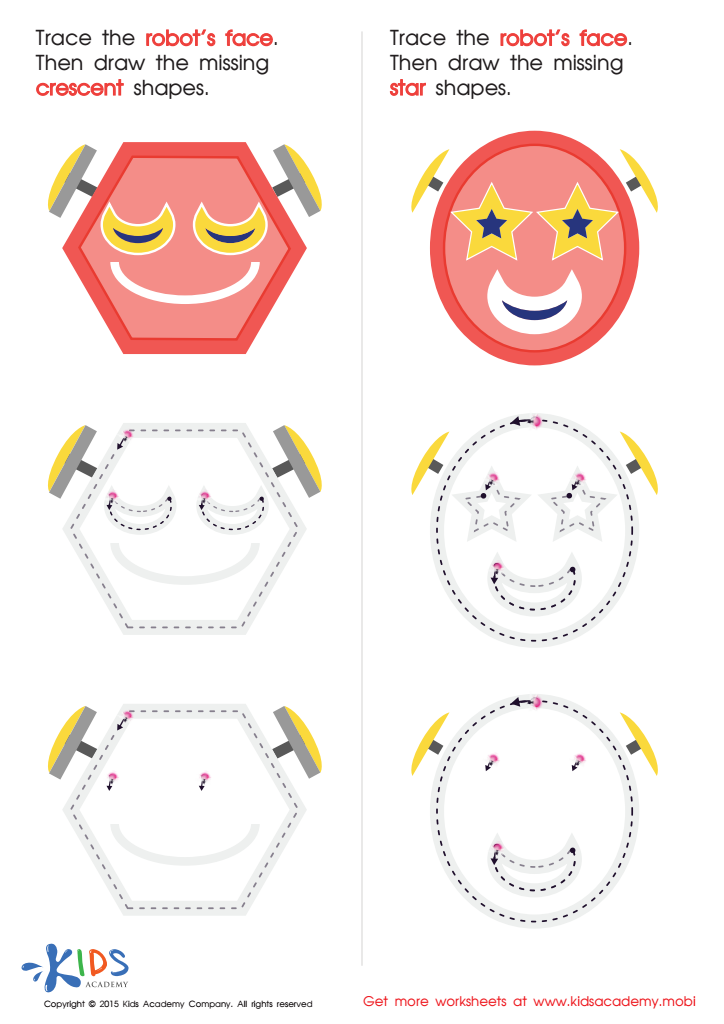
Composing a Robot's Face of Crescents And Stars Worksheet








Easy Geometry for Ages 4-8 is an essential educational tool that lays the foundation for spatial awareness and critical thinking in young learners. Early exposure to geometric concepts helps children develop problem-solving skills and understand the relationships between shapes and their properties, fostering a strong mathematical mindset from a young age.
Parents and teachers should prioritize this subject as it enhances cognitive development, encouraging skills such as visualization and pattern recognition. Engaging with geometry through playful activities, manipulative tools, and visual aids makes learning enjoyable, helping to foster a love for math that can last a lifetime.
Additionally, mastering geometric concepts at an early age can support other academic areas, including science, art, and even language development, by enhancing a child’s ability to categorize and describe the world around them. Geometry also encourages social skills through collaborative activities, as children often work together to solve problems or create geometric designs.
Ultimately, integrating Easy Geometry into early education empowers children with essential skills, preparing them for more complex mathematical concepts in the future and promoting overall academic success. Hence, it’s vital for caregivers and educators to focus on these foundational geometric skills at this crucial stage of development.








