Easy Comparison Worksheets for Ages 4-9
3 filtered results
-
From - To
Discover our "Easy Comparison Worksheets for Ages 4-9" designed to help young learners master the basics of comparing numbers, sizes, and objects in a fun and engaging way. Perfect for preschool through third grade, these worksheets provide a variety of activities that promote critical thinking and mathematical understanding. Whether comparing quantities, identifying greater or lesser values, or sorting sizes, each printable is created to enhance learning at a comfortable pace. Visit our website for an extensive collection of easy-to-use educational worksheets tailored to spark curiosity and build foundational skills in early childhood math.
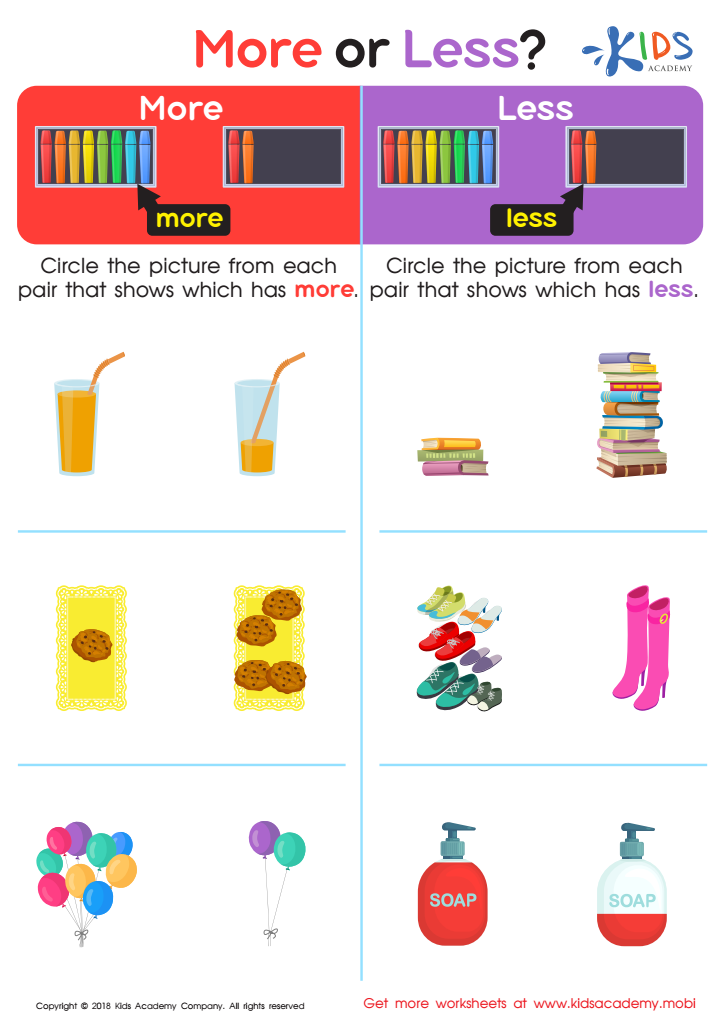
More or Less? Worksheet
 Assign to My Students
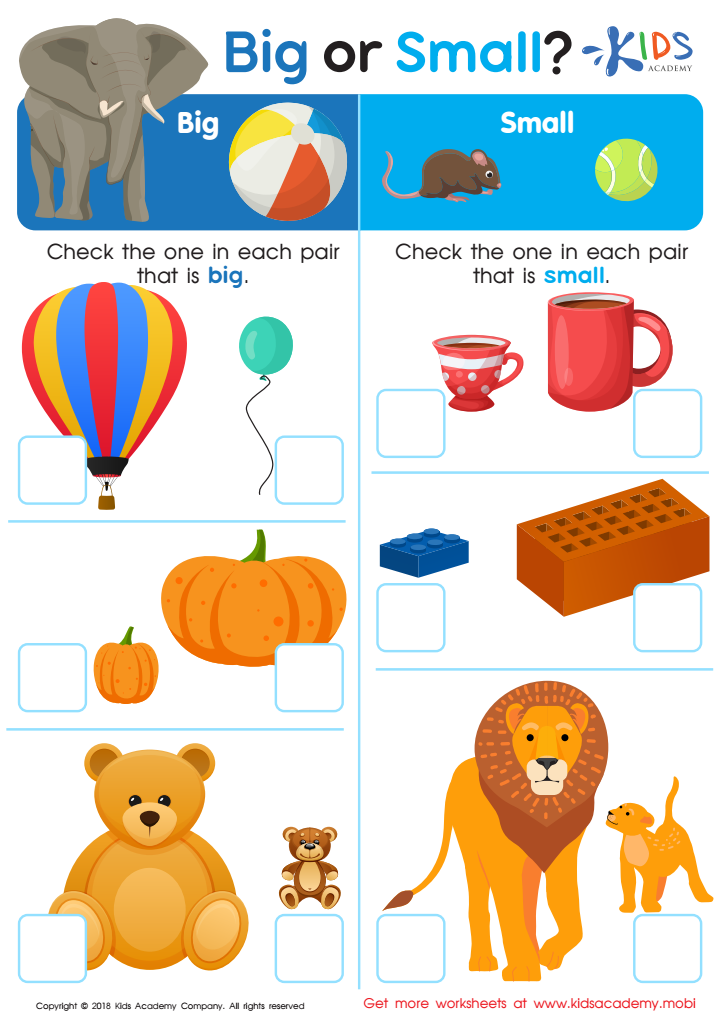
Big or Small? Worksheet
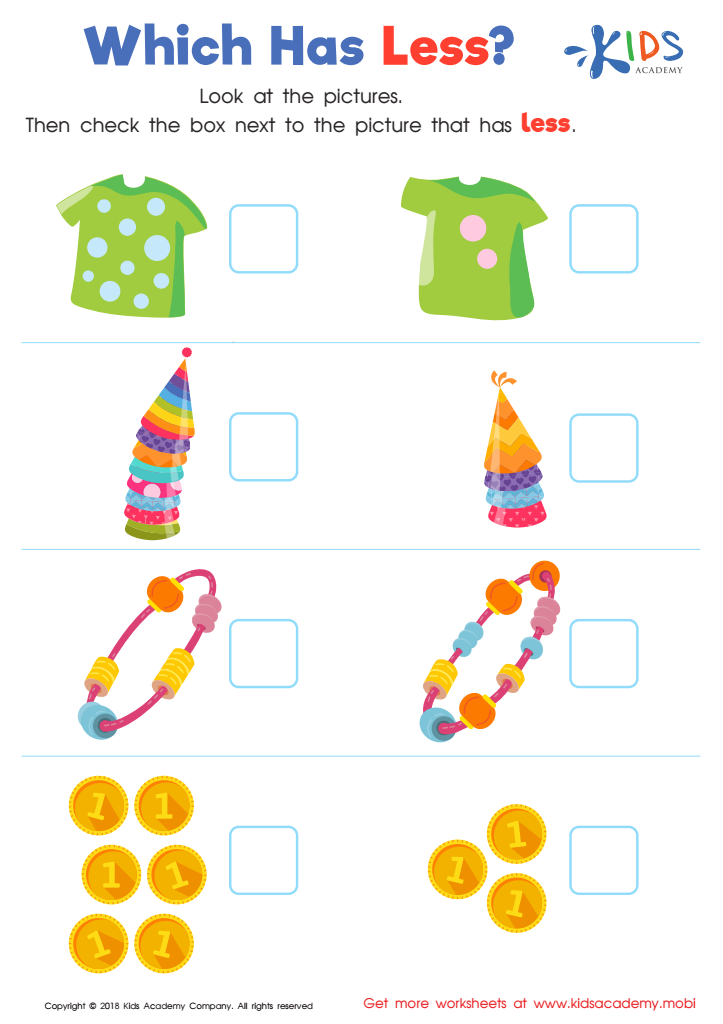
Which Has Less? Worksheet



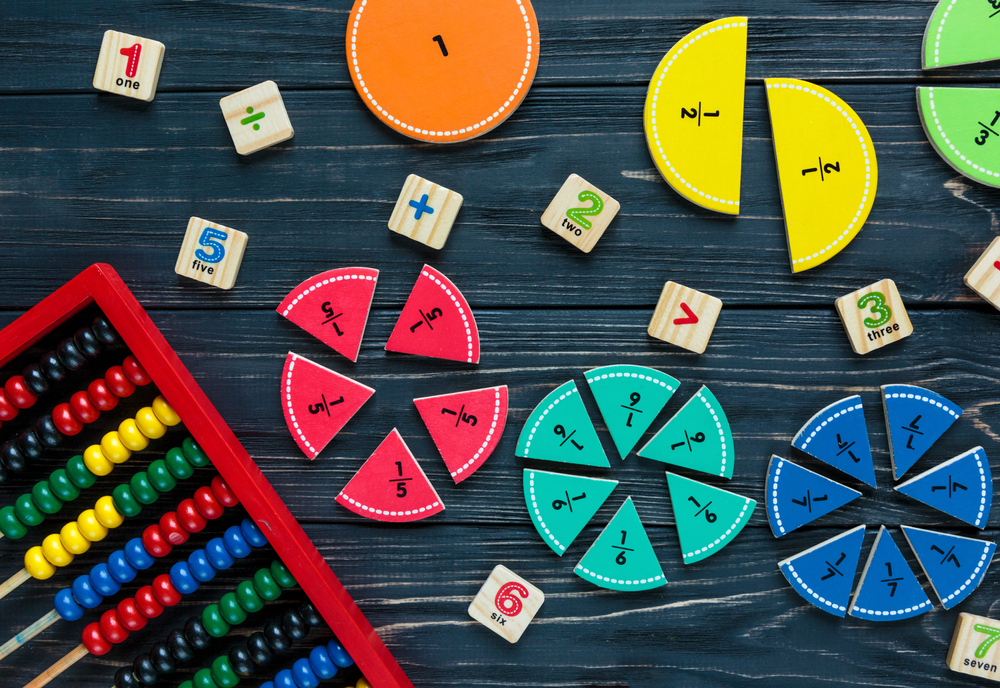




Easy Comparison is a crucial skill for children aged 4-9 as it lays the foundation for their cognitive and mathematical development. Parents and teachers should prioritize it because it helps in everyday problem-solving and decision-making. By learning to compare objects, quantities, lengths, and sizes, children develop a better understanding of the world around them.
This skill is directly related to numerous educational milestones. For instance, children who can easily compare and contrast are better equipped to understand number sense, which is essential for arithmetic and higher math. These children can distinguish between more and less, big and small, and near and far, which are fundamental aspects of early math curriculum.
Moreover, easy comparison fosters critical thinking. When children compare, they think about different attributes and learn to scrutinize similarities and differences. This process helps in honing observational skills and improving attention to detail.
In social contexts, the ability to compare also aids children in understanding fairness and making better interpersonal decisions. For example, sharing toys or looking at differences in tasks enhances cooperation and empathetic skills.
Incorporating comparison exercises in playful and interactive ways ensures that children remain engaged and view learning as a positive, enjoyable experience. Therefore, mastering the skill of easy comparison is key to fostering a well-rounded, thoughtful, and academically prepared child.








