Easy Punctuation Worksheets for Ages 5-9
4 filtered results
-
From - To
Discover our engaging Easy Punctuation Worksheets designed for children aged 5-9! Perfect for early learners, these worksheets provide fun and interactive ways to master essential punctuation skills. Through colorful illustrations and relatable examples, kids will confidently learn about periods, commas, question marks, and exclamation points. Our resources focus on developing critical writing and reading comprehension skills while making learning enjoyable. Whether at home or in the classroom, these printable worksheets are ideal for reinforcing punctuation concepts and fostering a love for writing. Unlock your child’s potential in literacy today with our exciting and user-friendly punctuation activities!
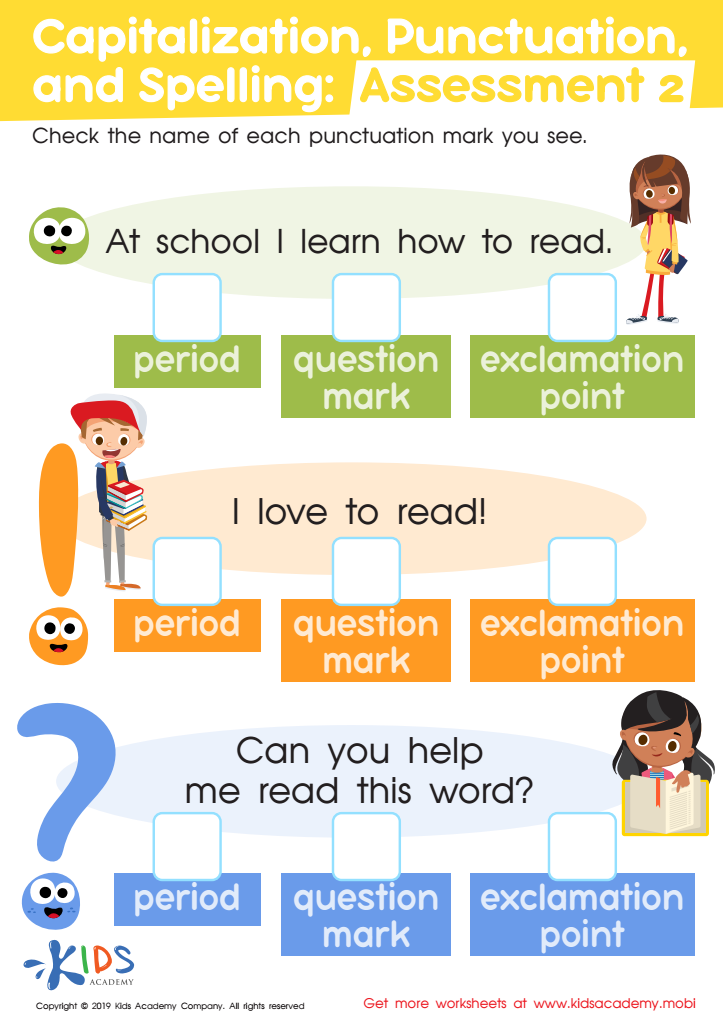
Capitalization. Punctuation. Spelling: Assessment 2 Worksheet
 Assign to My Students
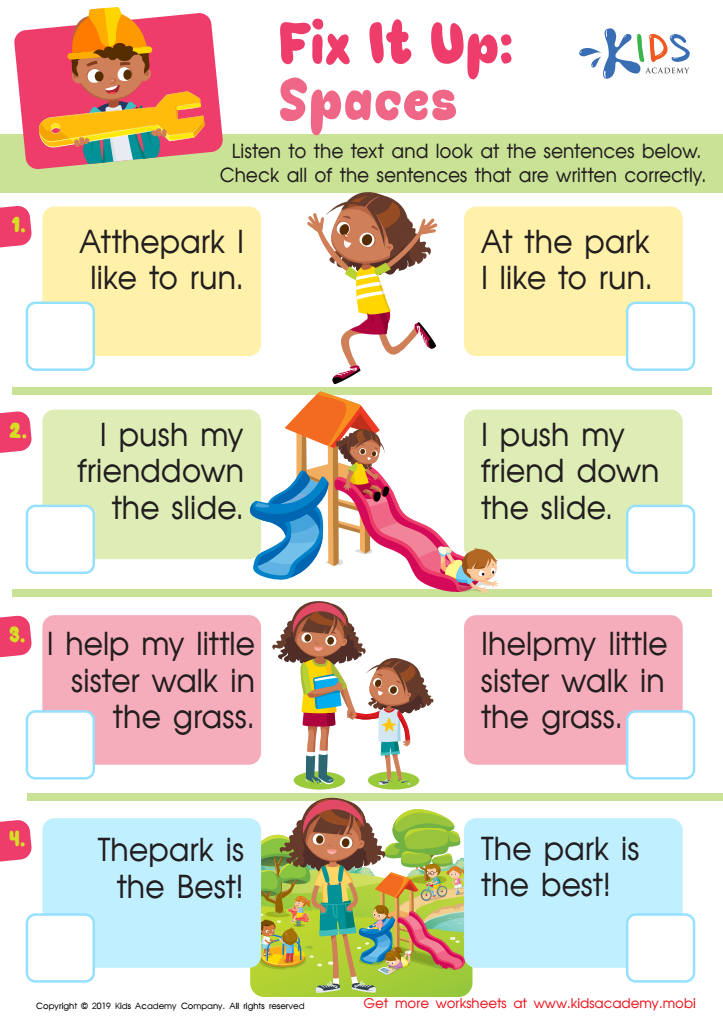
Fix Spaces Worksheet
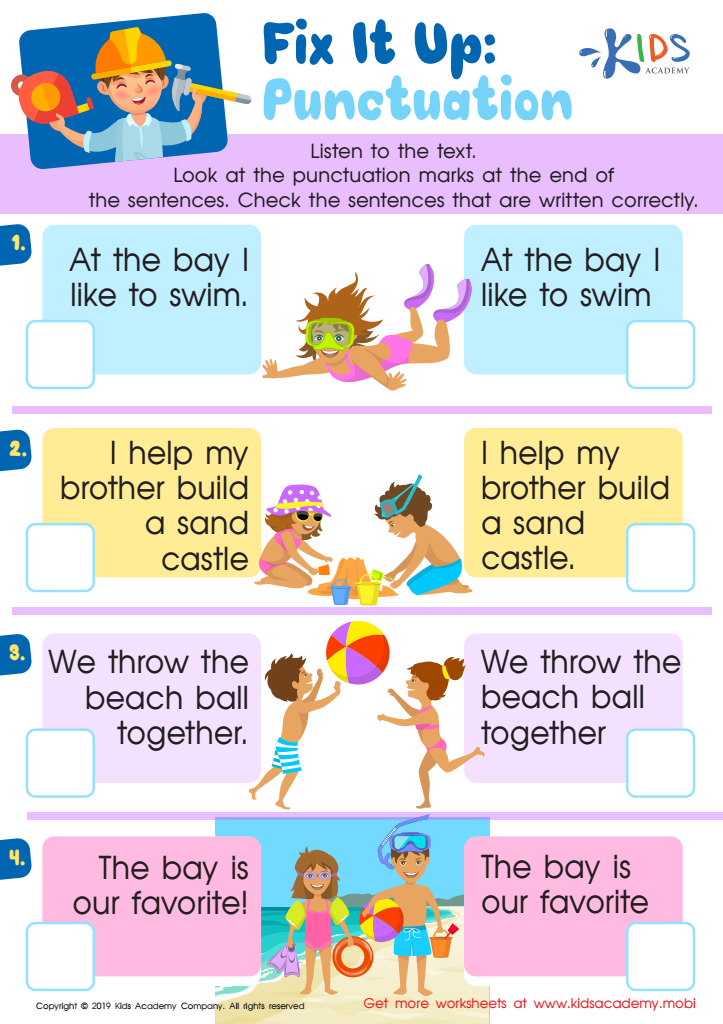
Fix Punctuation Worksheet
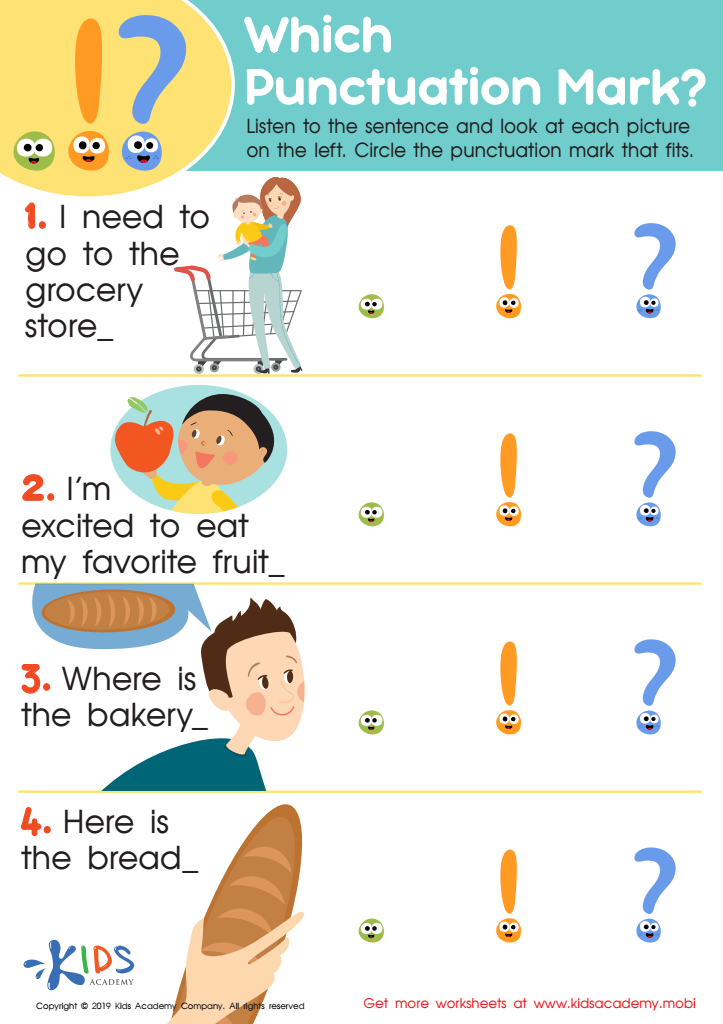
Which Punctuation Mark Worksheet








Easy Punctuation for Ages 5-9 is essential for both parents and teachers as it lays the foundation for children’s reading and writing skills. At this crucial developmental stage, children are beginning to express themselves through writing. Understanding punctuation helps them communicate their ideas clearly and effectively. When children learn to use basic punctuation, such as periods, commas, and question marks, they can create structured sentences, which enhances their overall comprehension and writing abilities.
Moreover, mastering punctuation fosters confidence in students as they embark on their literacy journey. It allows them to connect words and phrases meaningfully, promoting creativity in storytelling and expression. For teachers, incorporating Easy Punctuation into their curriculum aids in developing a cohesive classroom environment, where students are encouraged to pay attention to detail in their writing.
For parents, engaging with their children on punctuation reinforces learning at home, ensuring that these skills are supported beyond the classroom. In a world where clear communication is vital, investing time in young learners' punctuation skills serves as a building block for their success in literacy and beyond. Ultimately, Easy Punctuation shapes not only proficient writers but also thoughtful communicators, empowering children for future academic achievements.