Extra Challenge Science Worksheets for Ages 4-8 - Page 2
25 filtered results
-
From - To
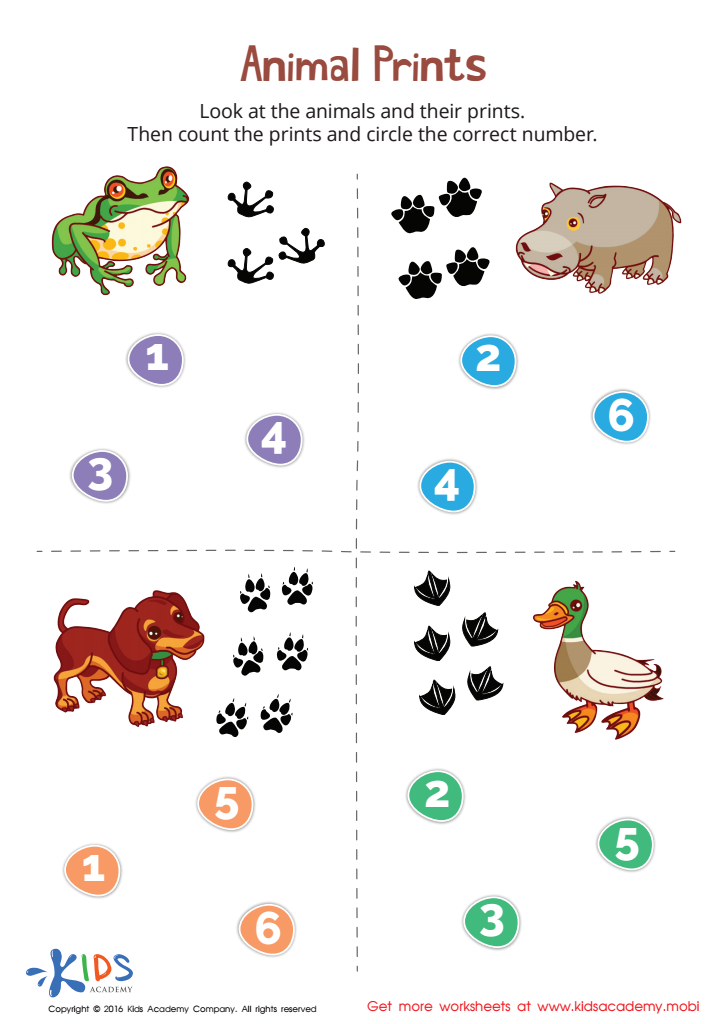
Animal Prints Match-Up Worksheet
 Assign to My Students







Extra Challenge Science for Ages 4-8 is crucial for young children's development because it provides an engaging way for them to explore fundamental scientific concepts. At this age, children are naturally curious and eager to learn about the world. Introducing science challenges captures their interest and channels their curiosity into structured, educational activities.
First, tackling extra challenges helps develop critical thinking and problem-solving skills. When children experiment, make predictions, and see outcomes, they learn to approach problems methodically. This type of thinking is foundational not only for scientific understanding but for success across various academic subjects and in everyday life.
Second, these challenges fuel creativity and innovation. By encouraging exploration and inquiry, children are motivated to think outside the box, try new solutions, and understand that failure is a stepping stone to learning.
Third, it fosters a love for science that can persist throughout their education and into their career choices. Enhancing scientific literacy from an early age ensures that children grow up with an appreciation for the sciences, promoting future generations of informed citizens and potential leaders in scientific fields.
Finally, participating in these activities at home or in school nourishes a growth mindset, resilience, and teamwork — essential skills that benefit both personal and social development. Prioritizing Extra Challenge Science encourages a deep, lasting interest and capability in essential life skills.