Filters

239 filtered results

Clear all filters
Favorites
With answer key
Interactive

239 filtered results

Difficulty Level

Grade


Check out this FREE Trial Lesson on Science for age 3-7!

The Sun and Seasons

Favorites
With answer key
Interactive
  • 3-7
  • Interactive
  • Science
  • Normal
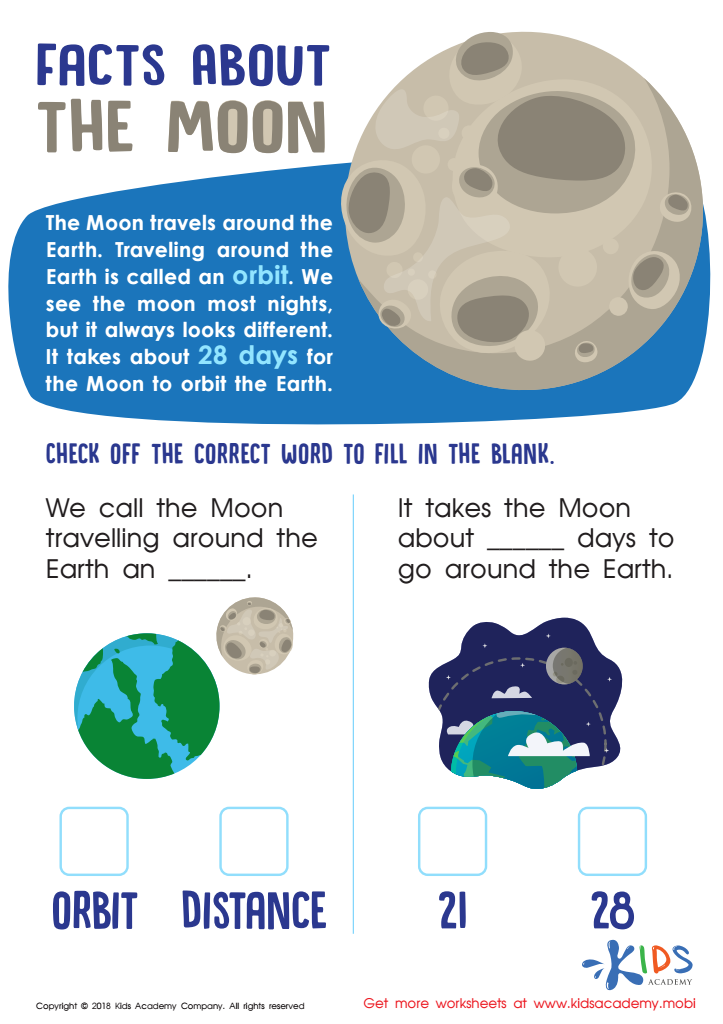
Facts About the Moon Worksheet

Facts About the Moon Worksheet

Have your child learn about our moon's orbit with this engaging worksheet! They can read the introductory paragraph for the required vocabulary, then read the sentences under the images and check off the correct boxes. Explore the wonders of the cosmos and our planet with this fun exercise!
Facts About the Moon Worksheet
Worksheet
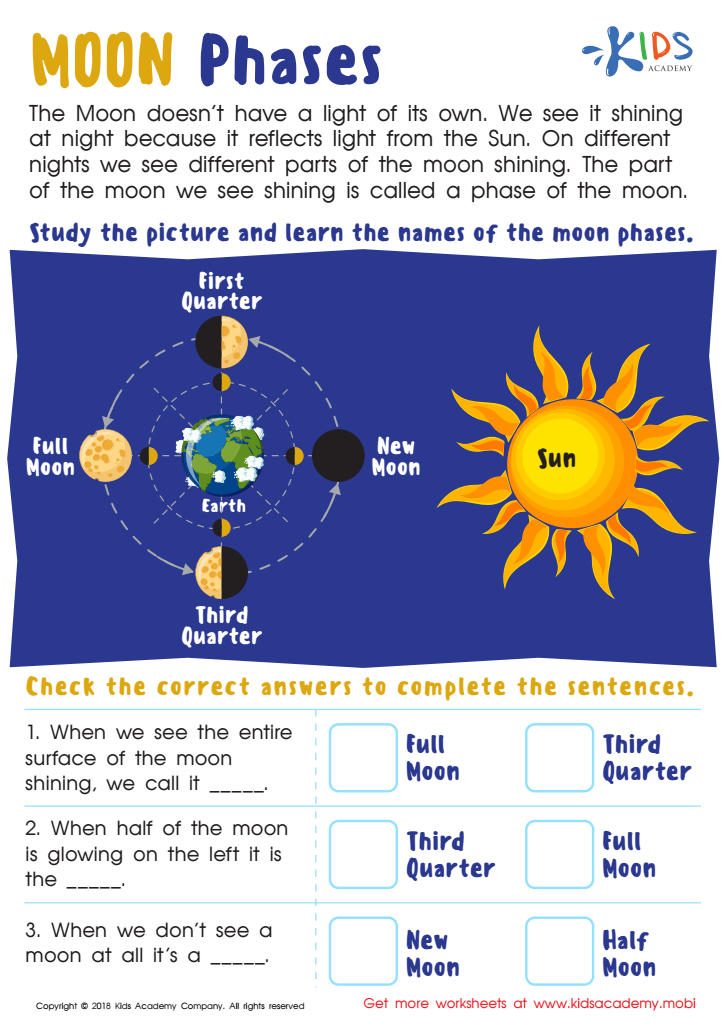
Moon Phases Worksheet

Moon Phases Worksheet

Gaze up at the night sky and the moon's appearance may change from night to night. Encourage your child to learn more about the sun, the moon, and space with this science worksheet. Have them read the text then study the picture. Finally, read the sentences and check the answers to identify the moon's phases.
Moon Phases Worksheet
Worksheet
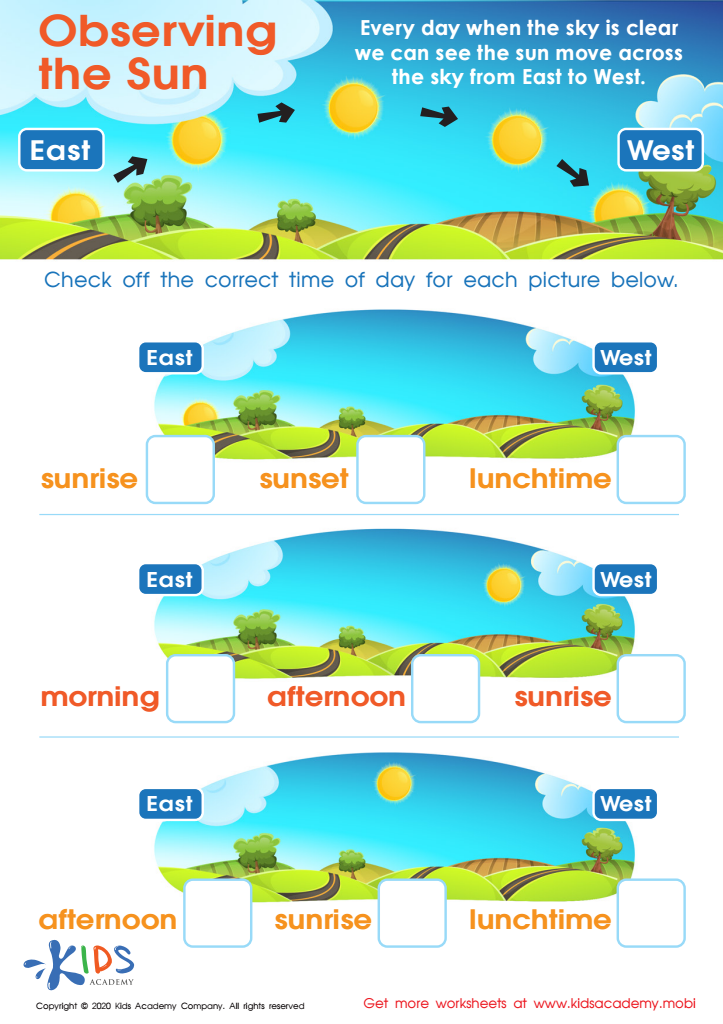
Observing the Sun Worksheet

Observing the Sun Worksheet

Observe the image of the sun's progression with your child and use it to complete this free printable worksheet from Kids Academy. Have your kid look at the pictures on the left and check off the numbers in the correct order from sunrise to sunset! This will expand their science knowledge and help them understand when it's time to rise, reach its highest point during midday and set again in the West.
Observing the Sun Worksheet
Worksheet
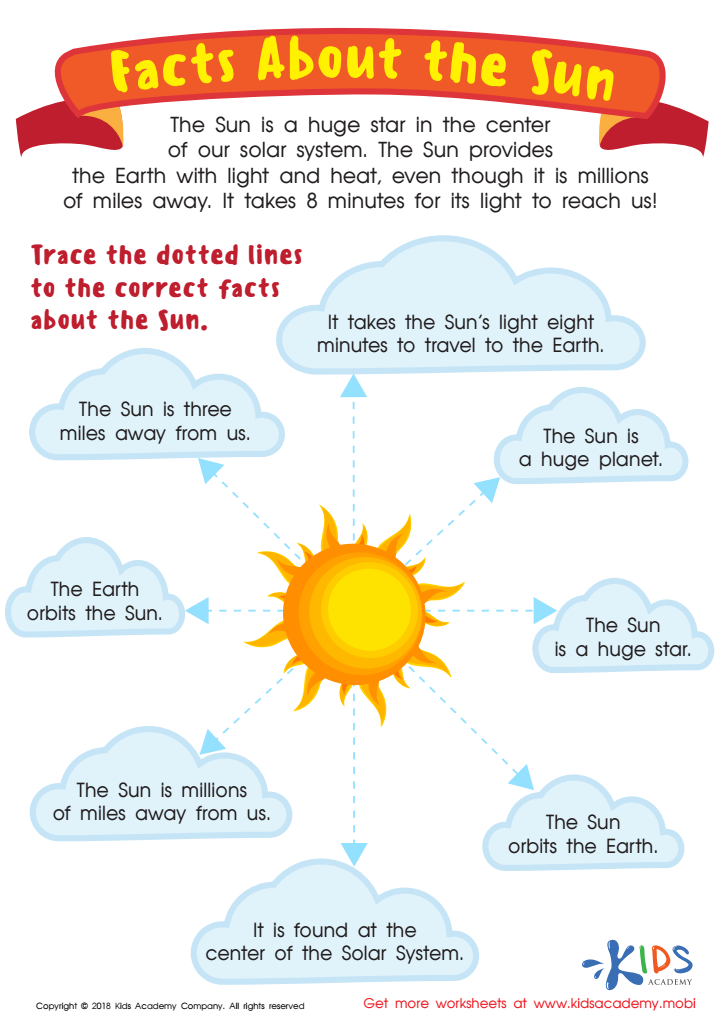
Facts About the Sun Worksheet

Facts About the Sun Worksheet

Long ago humans thought the Earth was the center of the solar system, but we now know it's really the sun! Use this science worksheet to review basic facts about the sun with your early learner. Have them recall prior knowledge about space before tackling the "true or false" questions. Trace from the sun in the center to the true facts in the clouds.
Facts About the Sun Worksheet
Worksheet
Sun and Seasons Worksheet

Sun and Seasons Worksheet

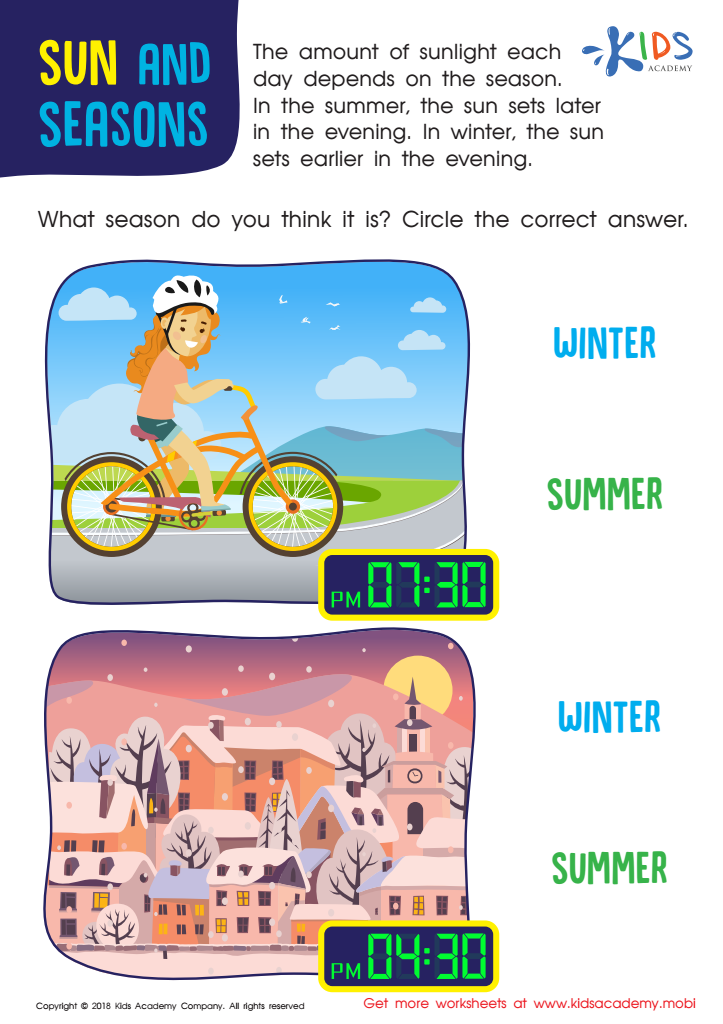
Help your child understand science and seasons with this Kids Academy worksheet! Discuss how the daylight varies in summer and winter with them. Guide them to note the digital clock on each page then circle the correct answers. With this sheet, your child will gain a better understanding of why days are longer in summer and shorter in winter!
Sun and Seasons Worksheet
Worksheet
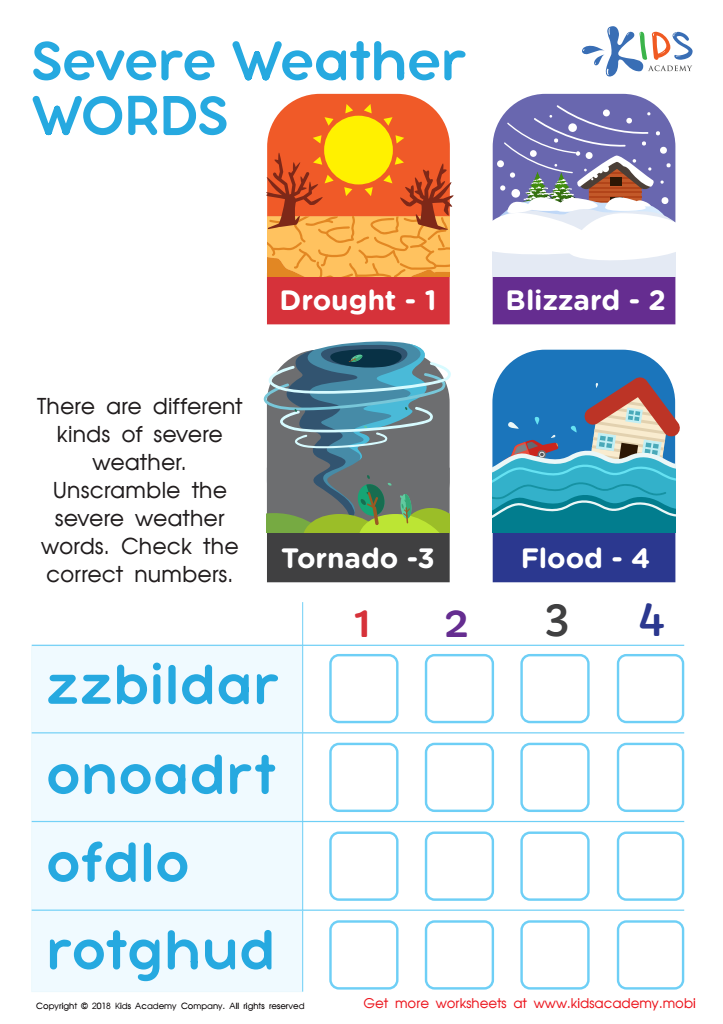
Severe Weather Words Worksheet

Severe Weather Words Worksheet

Help your child learn about severe weather with this PDF worksheet! Review each image's term and discuss, then have kids unscramble the words. Match the picture number to the term by selecting the correct box. Let your kids work through it and become weather-savvy!
Severe Weather Words Worksheet
Worksheet
Severe Weather Worksheet

Severe Weather Worksheet

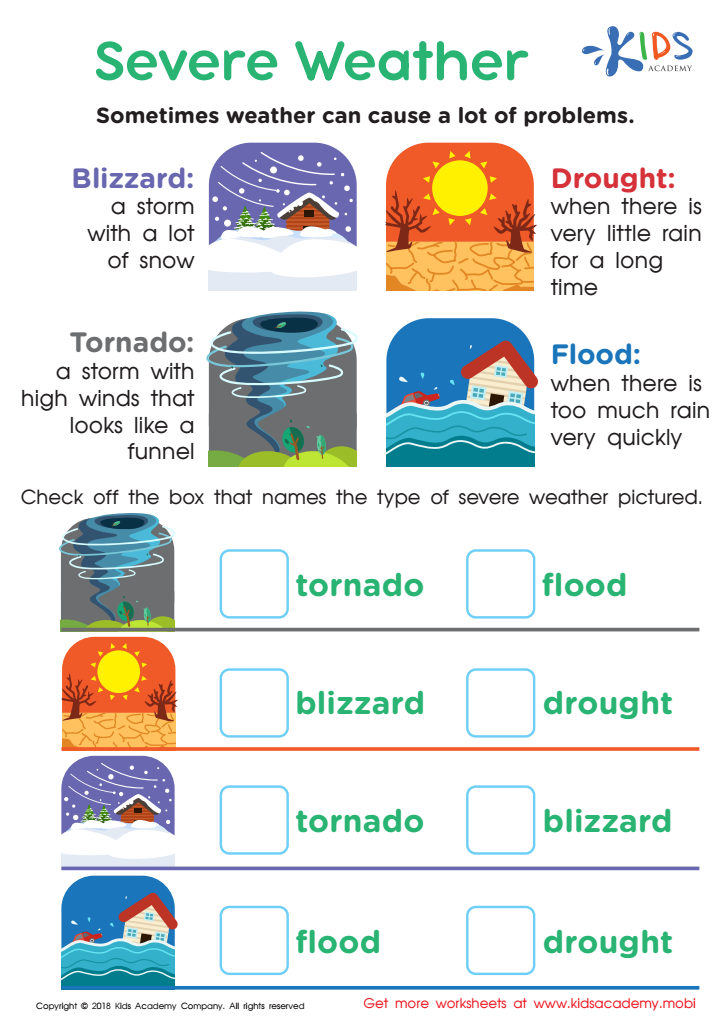
Weather can be dangerous, so teach your kids to stay safe with this interactive weather worksheet. Review the descriptions of tornadoes, blizzards, floods, and drought and match them with the colorful pictures. Tick the boxes to correctly identify each image and complete the sheet.
Severe Weather Worksheet
Worksheet
What's the Weather? Worksheet

What's the Weather? Worksheet

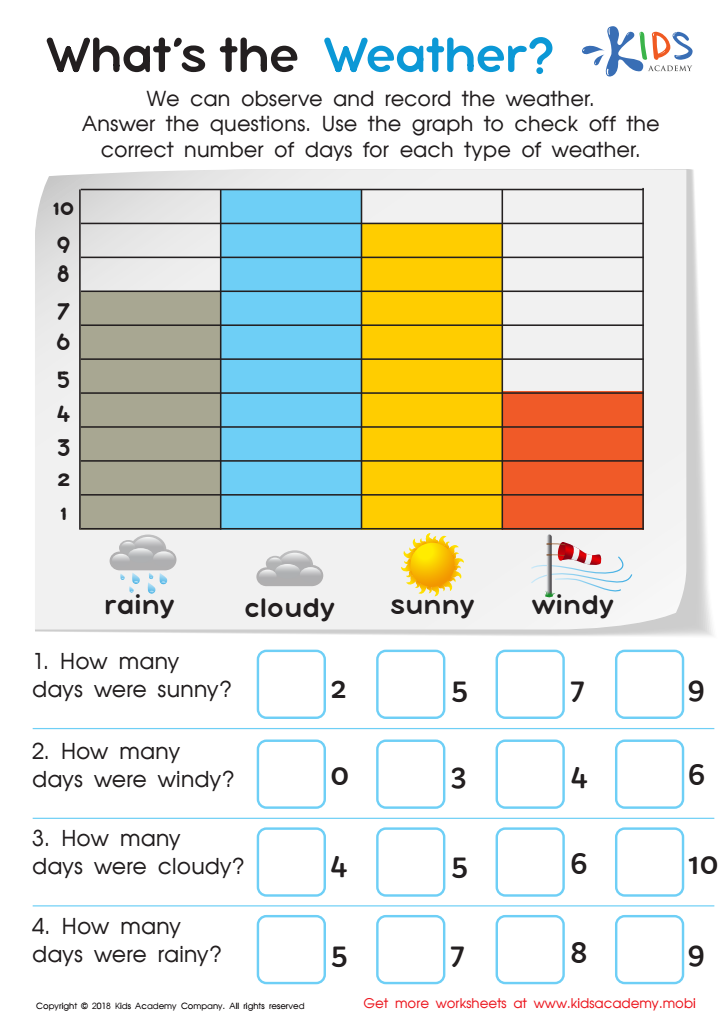
Check the weather outside. Help kids learn and practice science and math by tracking different types of days using this printable worksheet. Have them count bars next to weather types like cloudy, sunny, windy, and rainy. Answer the questions and take the lesson further by creating a bar graph to show the monthly weather.
What's the Weather? Worksheet
Worksheet
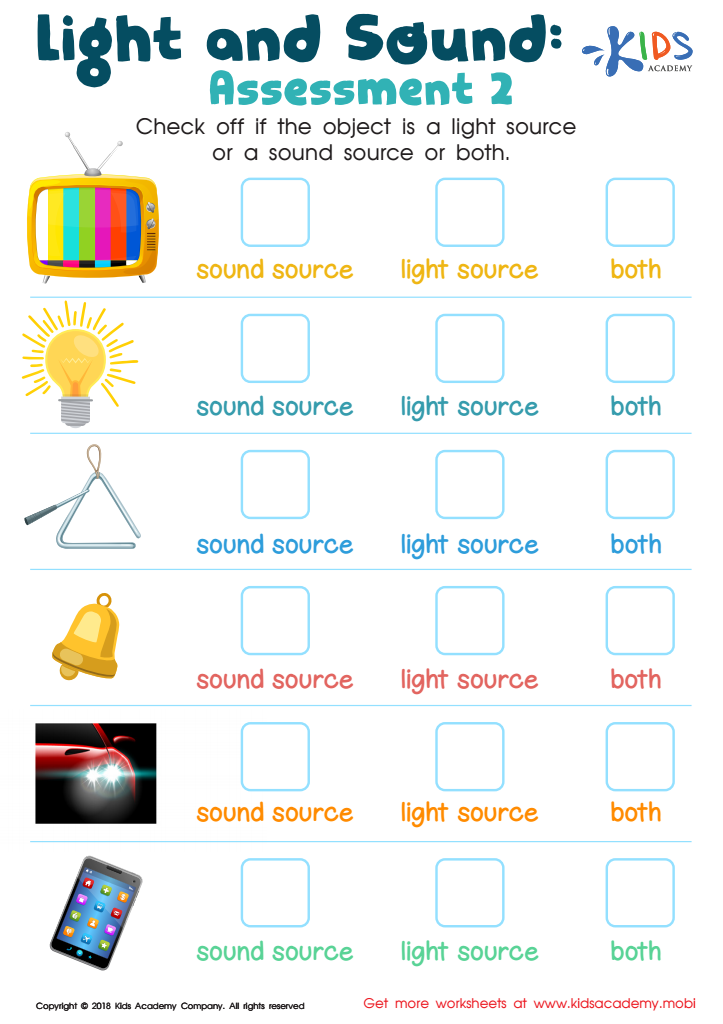
Light and Sound: Assessment 2 Worksheet

Light and Sound: Assessment 2 Worksheet

This worksheet introduces your kids to light and sound, with common sources of each. Identify the objects and help them check if it's a light source, a sound source, or both. Colourful and simple, it's a great way to teach your little ones! (80 words)
Light and Sound: Assessment 2 Worksheet
Worksheet
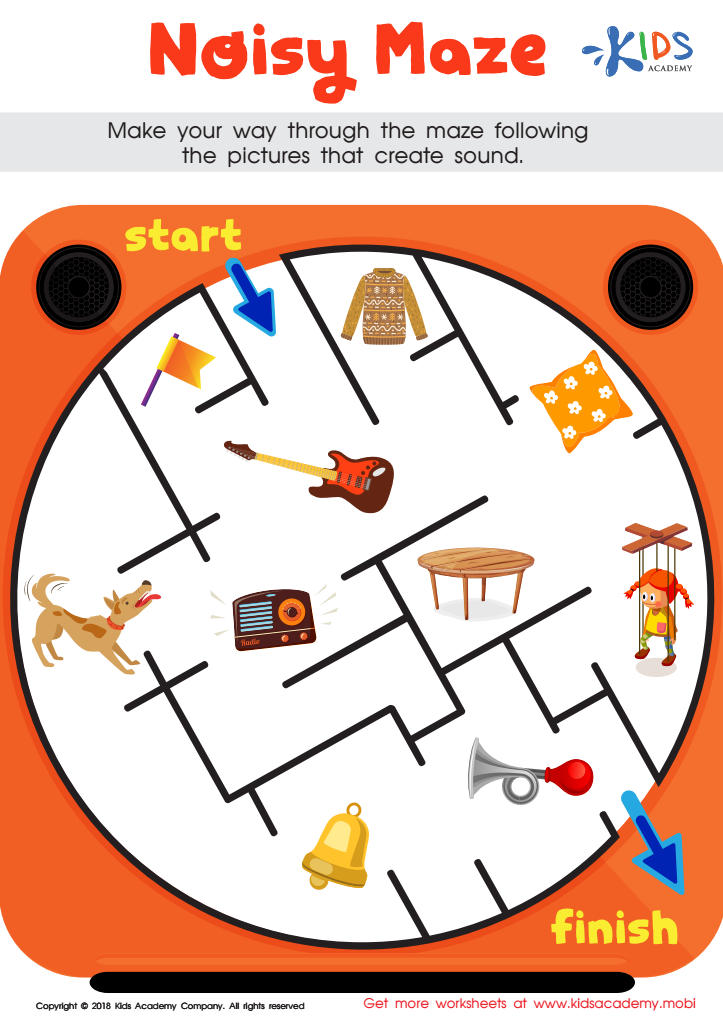
Noisy Maze Worksheet

Noisy Maze Worksheet

Have your kids name some objects that make noise? Then, look at the worksheet with them and help them identify each object. Guide them through the maze, following the sound-producing pictures.
Noisy Maze Worksheet
Worksheet
Light Sources and Shadows Worksheet

Light Sources and Shadows Worksheet

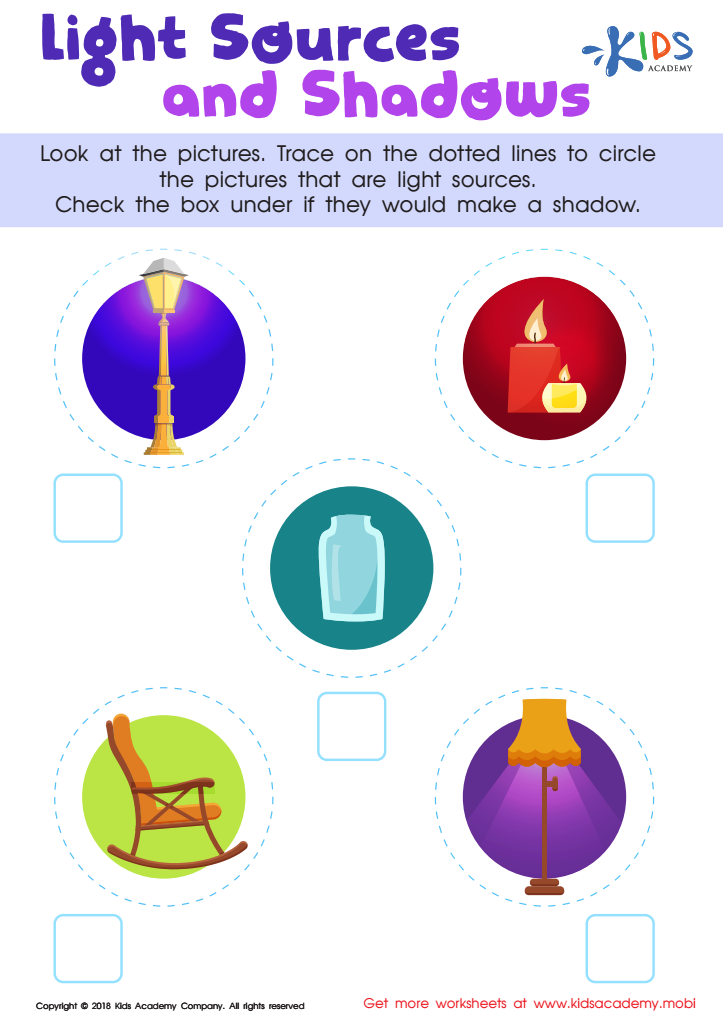
During the day, the sun radiates bright light. At night, when it's time for bed, the sun sets and darkness takes over. To light our way, we use other sources of light. With your students, trace the dotted lines around the pictures of light sources and check the boxes under the objects that will cast shadows.
Light Sources and Shadows Worksheet
Worksheet
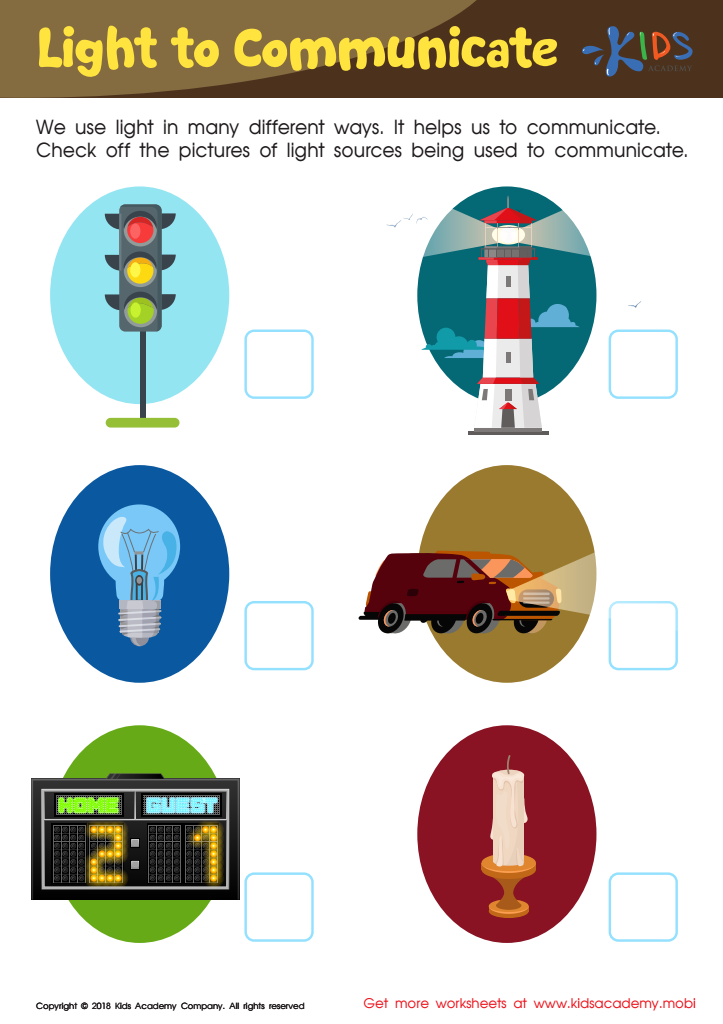
Light to Communicate Worksheet

Light to Communicate Worksheet

We can use lights to communicate effectively, like we use sounds. Ask your kids for examples and then help them tick off the pictures of light sources in the worksheet. This exercise will help them understand how light can be used to communicate.
Light to Communicate Worksheet
Worksheet
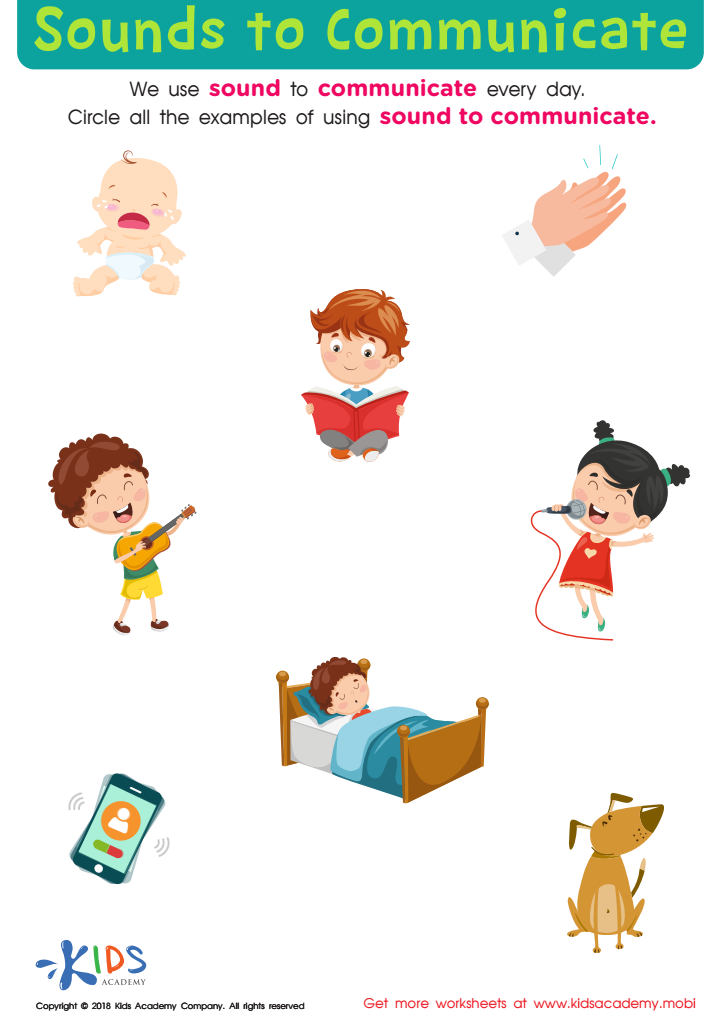
Sounds to Communicate Worksheet

Sounds to Communicate Worksheet

Sounds are important for communication. Ask your students to name sounds people, animals and things make. Then, review this worksheet with them and see if they can identify the activities. Ask them to circle examples of sounds used to communicate.
Sounds to Communicate Worksheet
Worksheet
Will It Make a Shadow? Worksheet

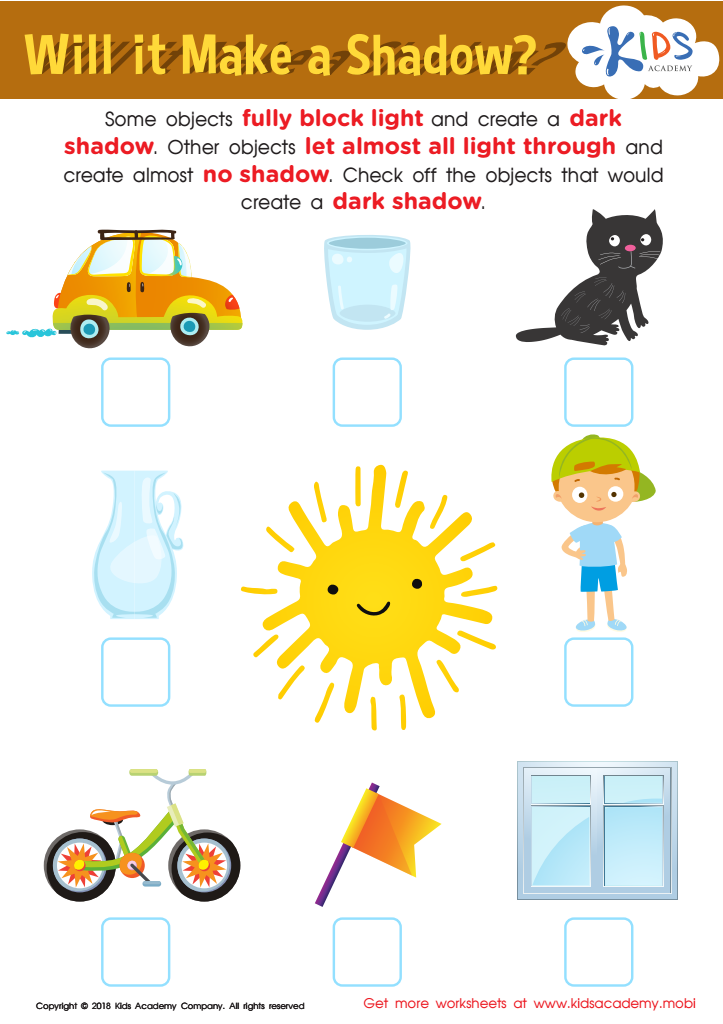
Will It Make a Shadow? Worksheet

Teach your students about shadows with this printout. Ask them to check off the boxes next to the pictures that create a shadow. Explain that some objects block light, forming a shadow, while others don't and thus don't create a shadow. Your students are likely already familiar with their own shadow.
Will It Make a Shadow? Worksheet
Worksheet
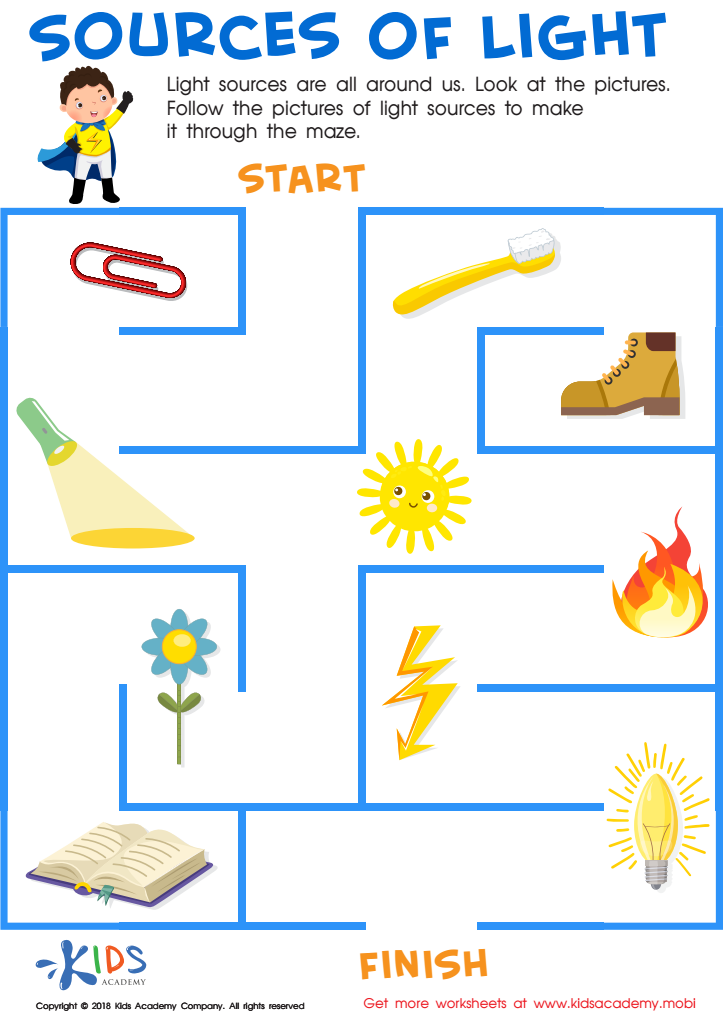
Sources of Light Worksheet

Sources of Light Worksheet

Help your child explore sources of light with this printout exercise. Ask them if they know the sun is the reason for day and night. Then point out other common light sources, then work together to guide them through the maze from start to finish.
Sources of Light Worksheet
Worksheet
Is It a Light Source? Worksheet

Is It a Light Source? Worksheet

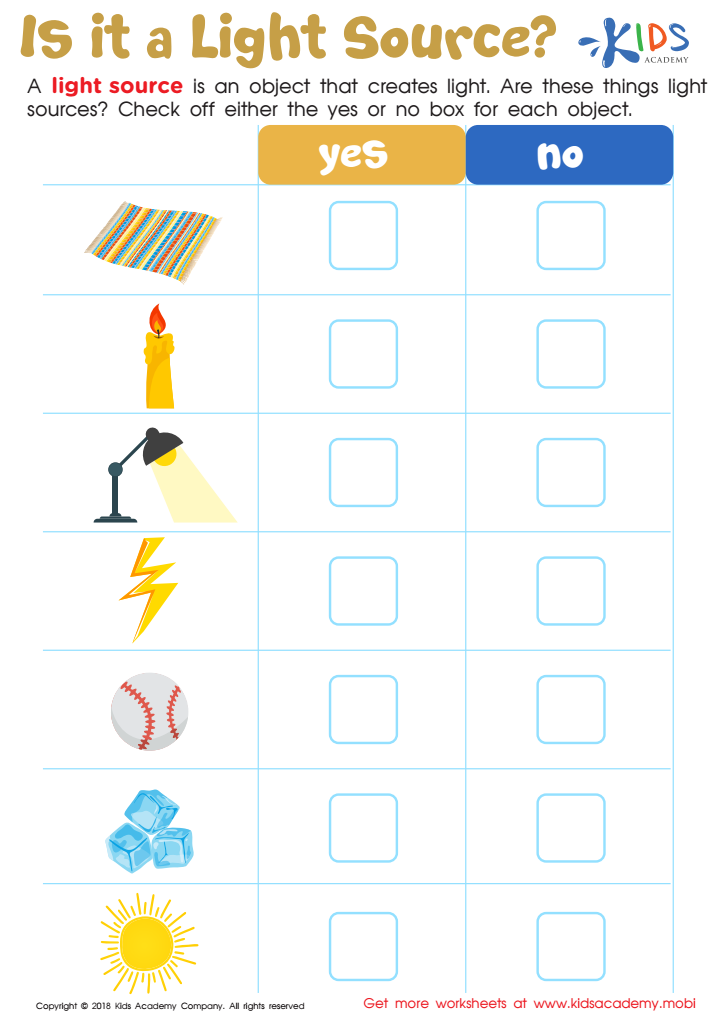
This worksheet is a fun way to teach kids about light sources. Children must identify natural sources like the sun and lightning, and man-made sources such as candles and lamps. Ask them to look at each object and check the box to indicate if it's a light source or not.
Is It a Light Source? Worksheet
Worksheet
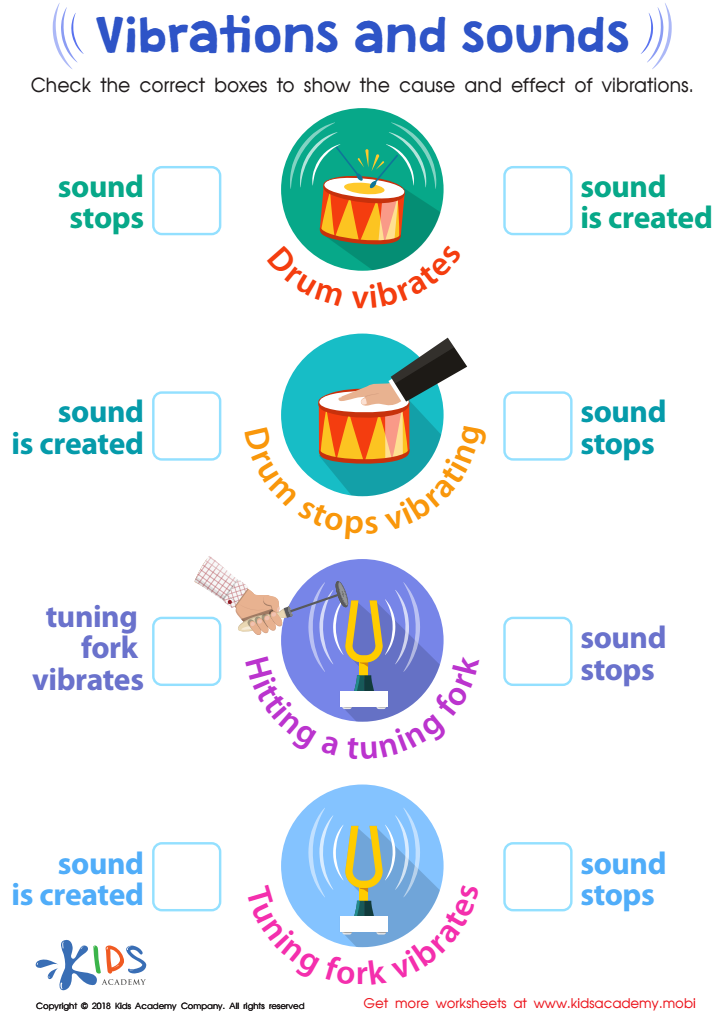
Vibrations and Sounds Worksheet

Vibrations and Sounds Worksheet

Many objects, creatures, and things make sounds. People talk, animals bark, hiss or meow, and things make sounds too. Ask your students to name others that produce sounds and why they do, such as when a drum is hit with a stick. Get them to learn about vibrations and cause/effect in this fun worksheet and check the answers.
Vibrations and Sounds Worksheet
Worksheet
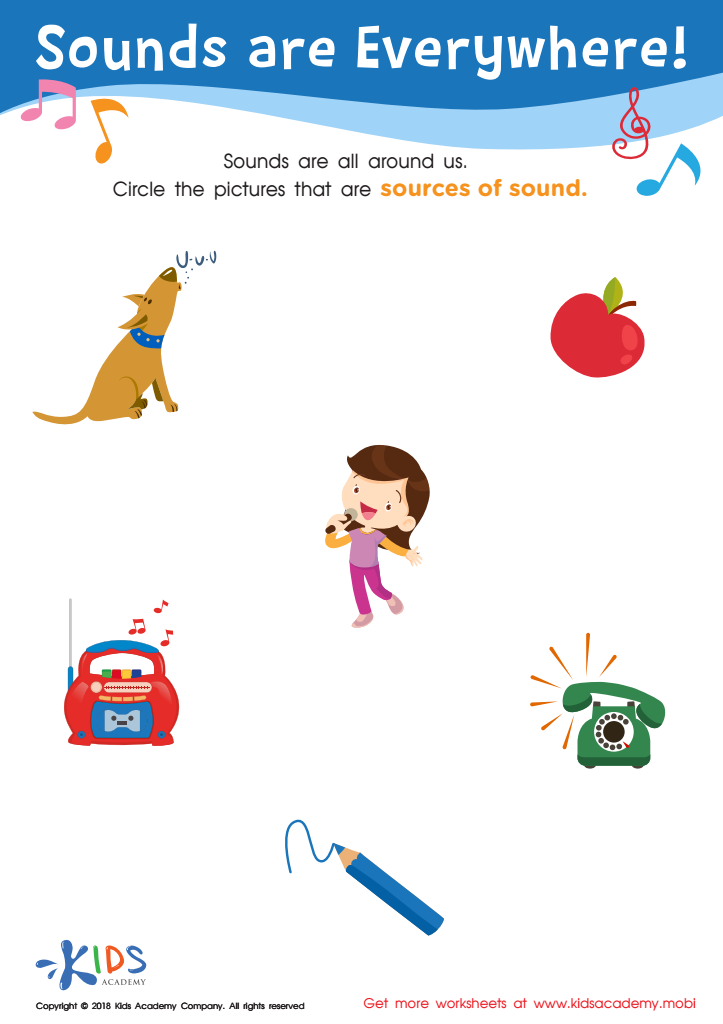
Sounds Are Everywhere! Worksheet

Sounds Are Everywhere! Worksheet

Ask your students to recall objects that make sound. Then, help them identify the sources of sound in the pictures of this worksheet.
Sounds Are Everywhere! Worksheet
Worksheet
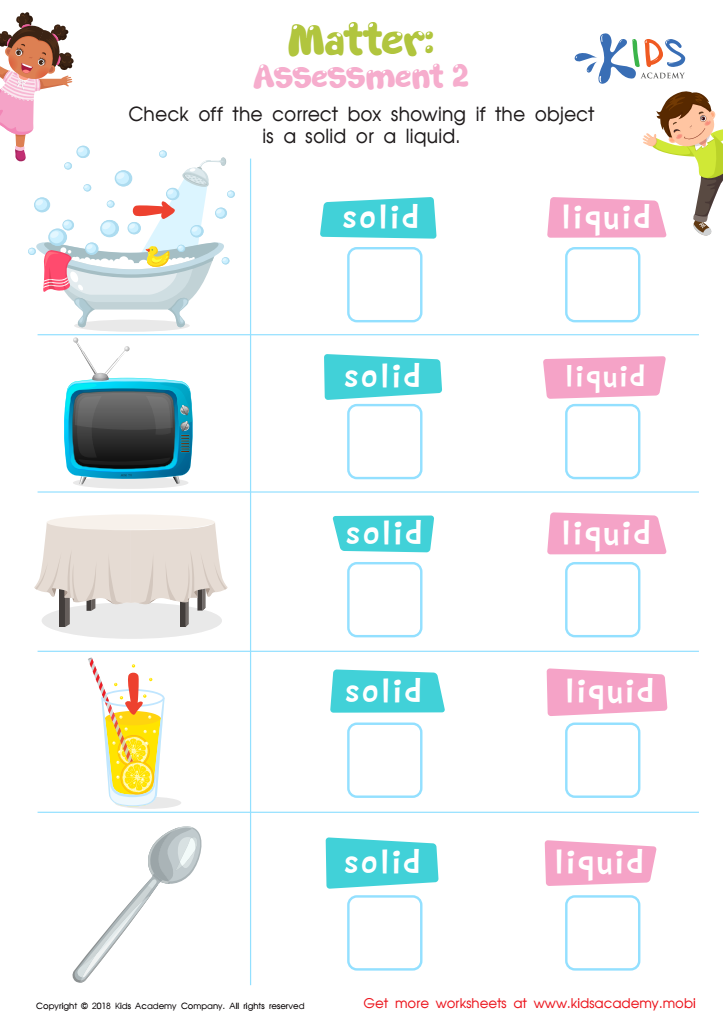
Matter: Assessment 2 Worksheet

Matter: Assessment 2 Worksheet

Identify the five objects in this worksheet as either solid or liquid. Ask your kids to check the correct box. Melting changes solids to liquids while freezing transforms liquids to solids.
Matter: Assessment 2 Worksheet
Worksheet
Matter: Assessment 1 Worksheet

Matter: Assessment 1 Worksheet

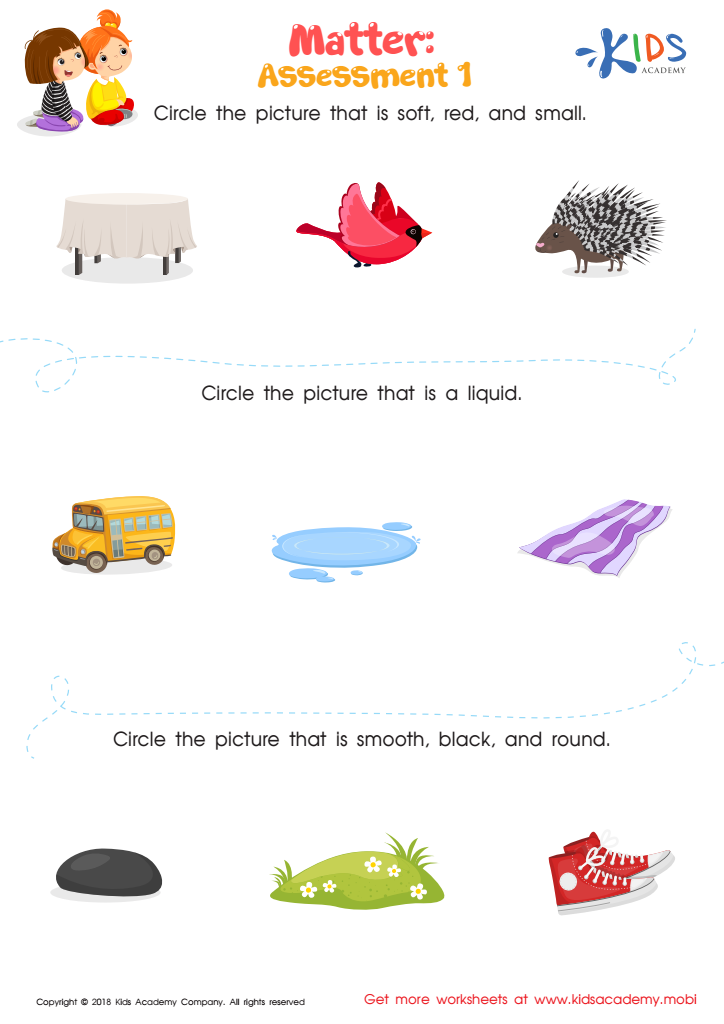
Have your children learn that anything that has weight and takes up space is matter. Examples include buses, tables, people, animals, and more. Use this worksheet to help them identify the objects and circle the soft, red, and small one; the liquid; and the smooth, black, and round one.
Matter: Assessment 1 Worksheet
Worksheet
States of Matter: Freezing and Melting Worksheet

States of Matter: Freezing and Melting Worksheet

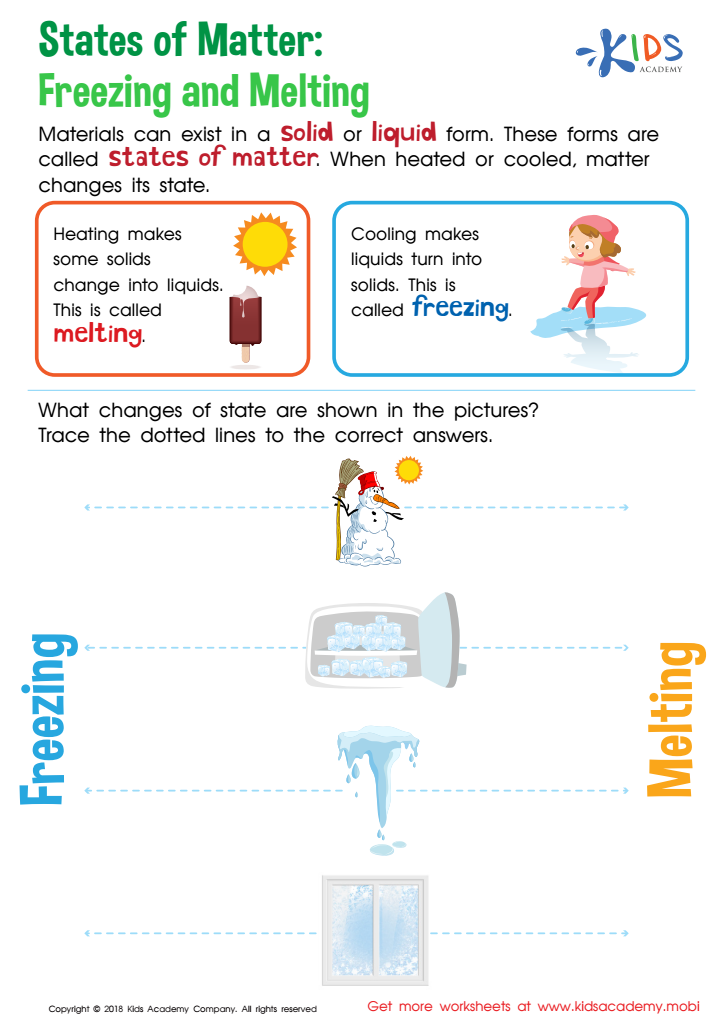
Have students look through the pics in the worksheet. Ask them what changes of state are shown, then trace the lines to the right answers. Matter can come in liquid or solid form, and changes between the two when heated or cooled (melting/freezing).
States of Matter: Freezing and Melting Worksheet
Worksheet
Matter all Around Worksheet

Matter all Around Worksheet

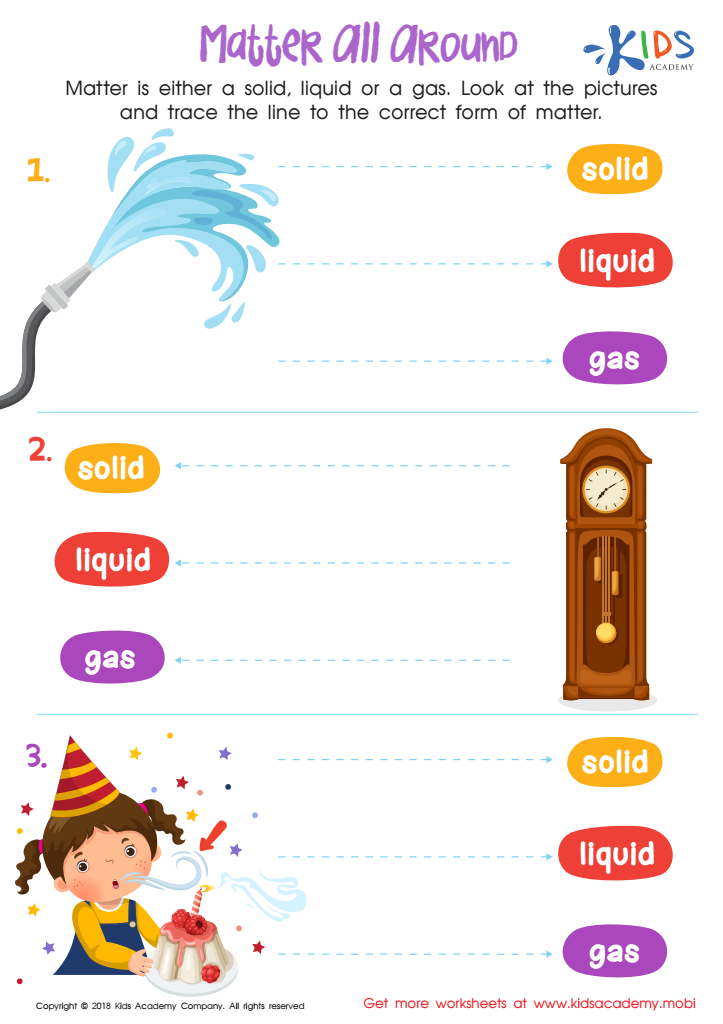
Have you taught your students about matter? Use this worksheet to help them understand that matter is anything that has weight and takes up space, either as a solid, liquid, or gas. Guide them to trace the line to the correct form of matter as they look at the pictures. This will be easy if they already know the topic, but it's also a great opportunity to teach them.
Matter all Around Worksheet
Worksheet
Observing Properties Worksheet

Observing Properties Worksheet

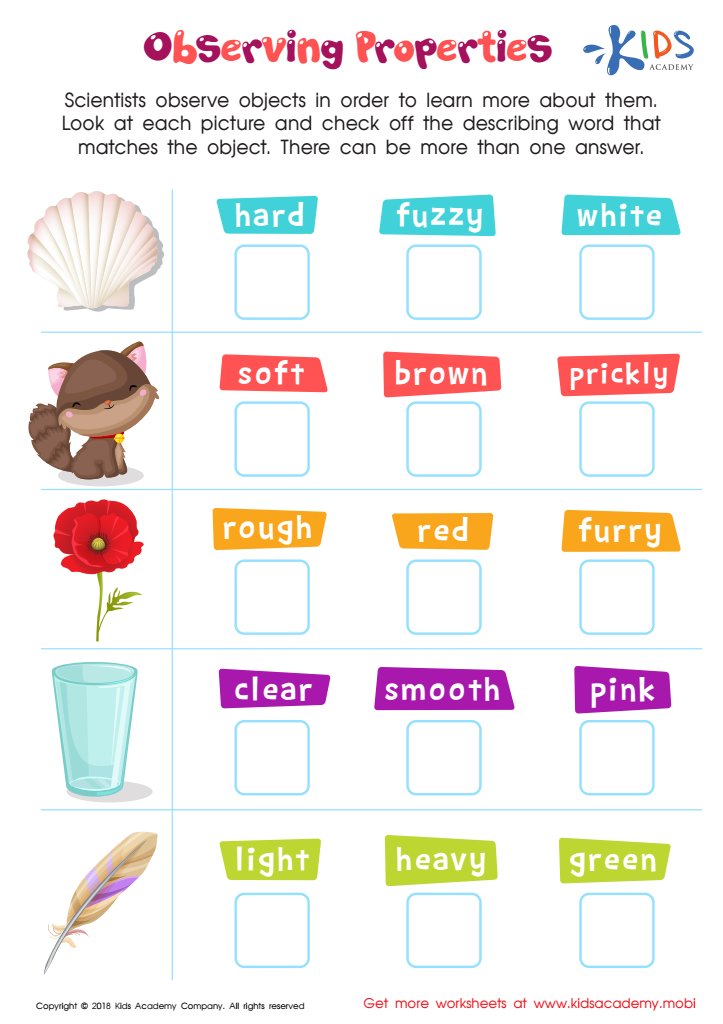
Encourage your kid's interest in science with this fun worksheet! Let them identify the five objects on the left, then choose the most accurate word from the options on the right. There might be more than one answer, so remind them to take their time observing the objects.
Observing Properties Worksheet
Worksheet
Sort and Count to the Moon Worksheet


Sort and Count to the Moon Worksheet
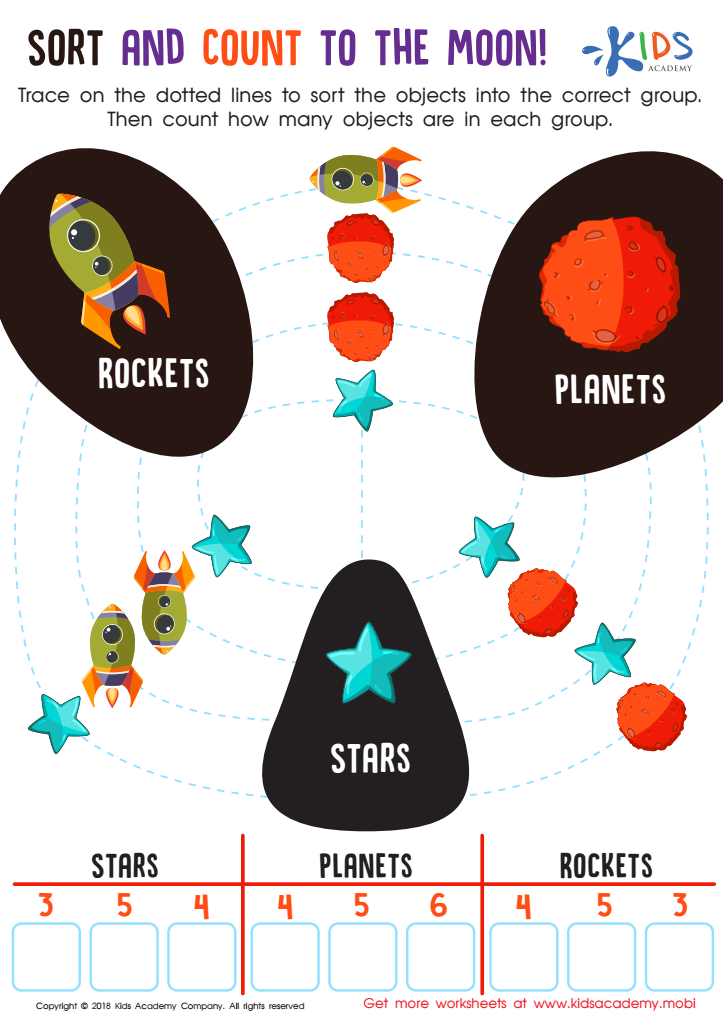
Little space explorers will love counting, sorting and strengthening number sense with this galactic worksheet! They'll use traceable lines to sort pictures of stars, planets and rockets into categories according to properties. After sorting, they'll count each item and fill in the boxes. Bold pictures make it fun and build critical thinking skills.
Sort and Count to the Moon Worksheet

Worksheet


Normal Science for Ages 3-7 focuses on nurturing curiosity and foundational scientific skills in young learners. Parents and teachers should care about this phase because early childhood is a critical period for cognitive and social development. Science concepts introduced at this stage help children make sense of the world around them, fostering critical thinking and problem-solving skills which are vital for future learning.

Engaging children in simple science-based activities cultivates their natural curiosity, encouraging them to ask questions, explore, and make observations. For instance, activities like observing weather patterns or exploring local ecosystems will not only support their scientific knowledge but also promote language development as they articulate their findings.

Furthermore, early exposure to science fosters a sense of wonder and a love for learning that can lead to lifelong engagement in exploration and discovery. Instilling a scientific mindset also lays the groundwork for later academic achievement, encouraging an interest in STEM (Science, Technology, Engineering, Math) fields. Moreover, these experiences can enhance social skills as children collaborate, share ideas, and learn to respect diverse perspectives in their inquiries. Ultimately, by supporting normal science at this age, parents and teachers invest in the holistic development of future problem solvers and thoughtful citizens.