Normal Geometry Worksheets for Ages 3-8 - Page 4
75 filtered results
-
From - To
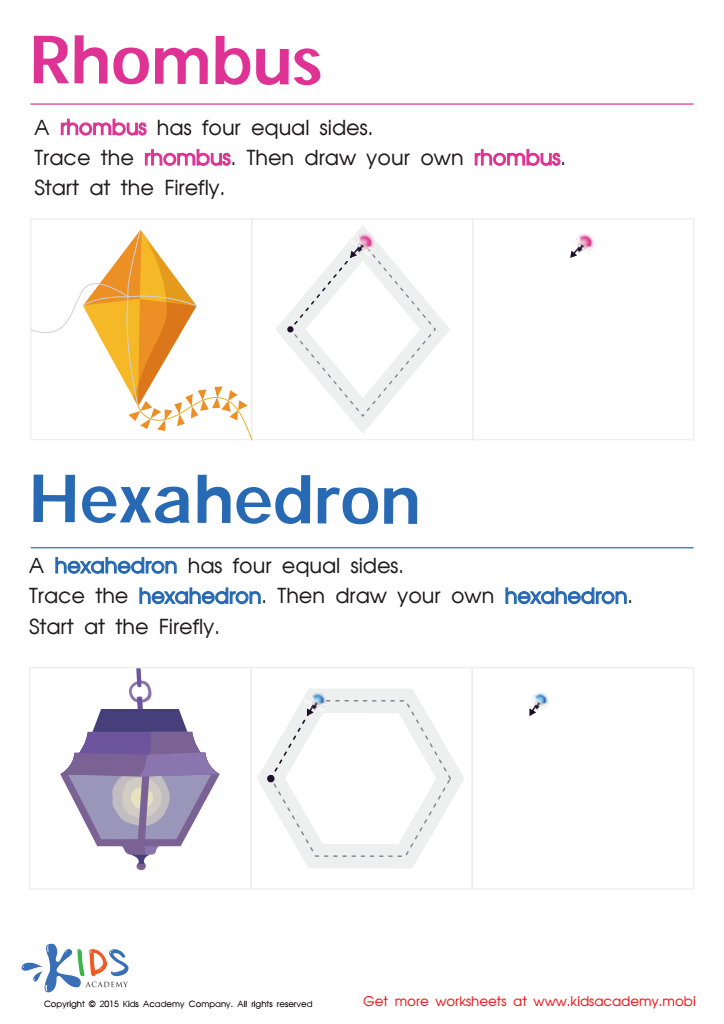
Draw a Rhombus And a Hexahedron Printable
 Assign to My Students











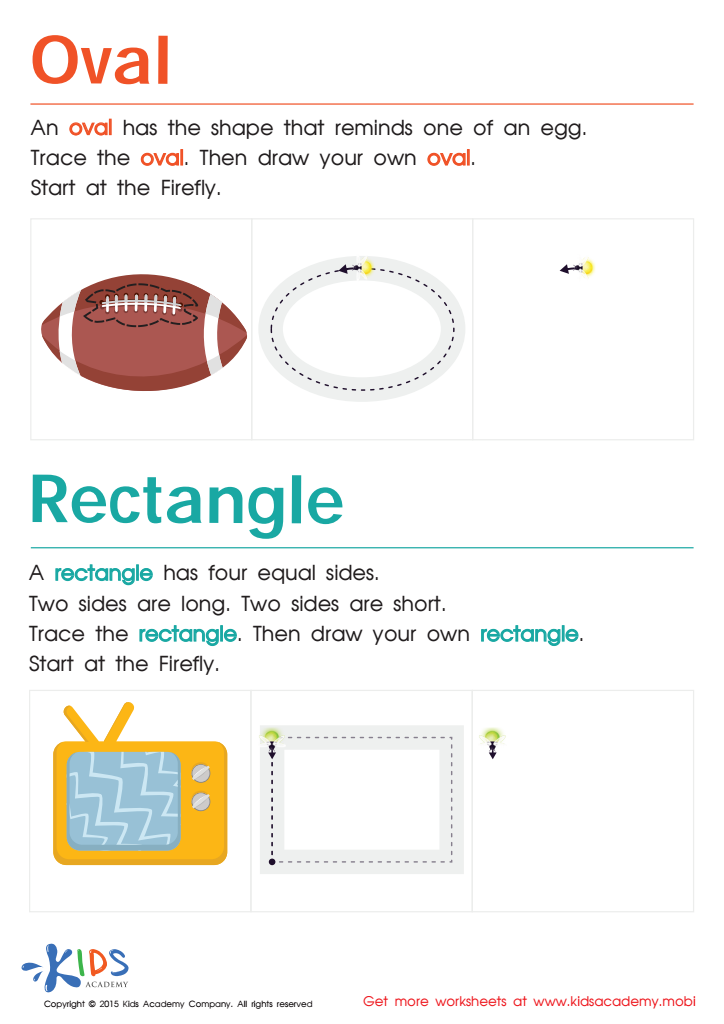
Easy Drawing of Ovals And Rectangles Worksheet
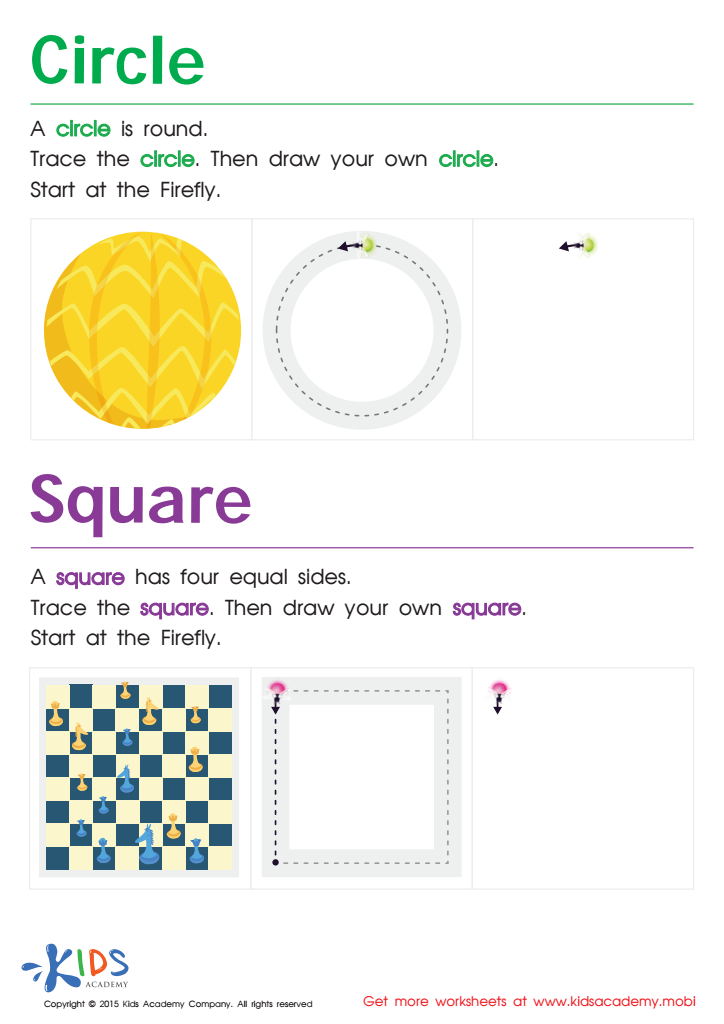
Trace And Draw a Circle And a Square Worksheet








Normal Geometry for ages 3-8 is essential because it lays the foundation for mathematical understanding and problem-solving skills. At this young age, children are naturally curious and eager to explore their surroundings. Teaching geometry helps them make sense of the world, as they learn to recognize shapes, patterns, and spatial relationships. This early exposure fosters critical thinking and enhances cognitive development.
Engaging with geometry through fun and interactive activities boosts a child's confidence in their abilities, promoting a positive attitude toward learning. Parents and teachers play a vital role in guiding children through this exploration. By incorporating everyday objects and experiences, they can make geometry relatable and enjoyable, reinforcing concepts in a practical way.
Moreover, understanding geometry supports essential skills for future subjects, as it builds a foundation for more advanced math topics. It also enhances language skills, as children learn to describe shapes, sizes, and locations, enriching their vocabulary.
Investing in geometric learning during these formative years prepares children for academic success, instills a love for math, and equips them with problem-solving abilities crucial for their personal and professional lives. Ultimately, a solid grasp of geometry is a stepping stone to lifelong learning.








