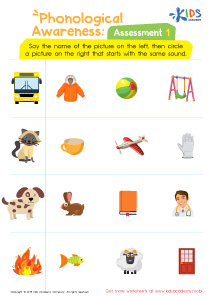
Normal Consonants Worksheets for Ages 3-9 - Page 2
26 filtered results
-
From - To
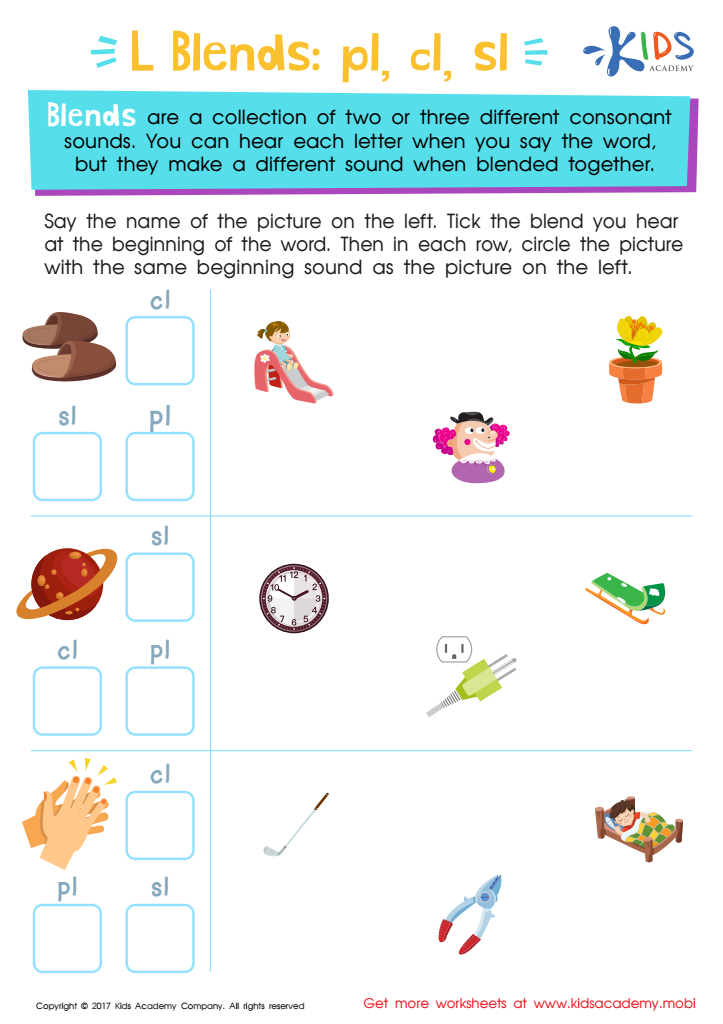
L Blends: "Pl", "Cl" and "Sl" Printable
 Assign to My Students
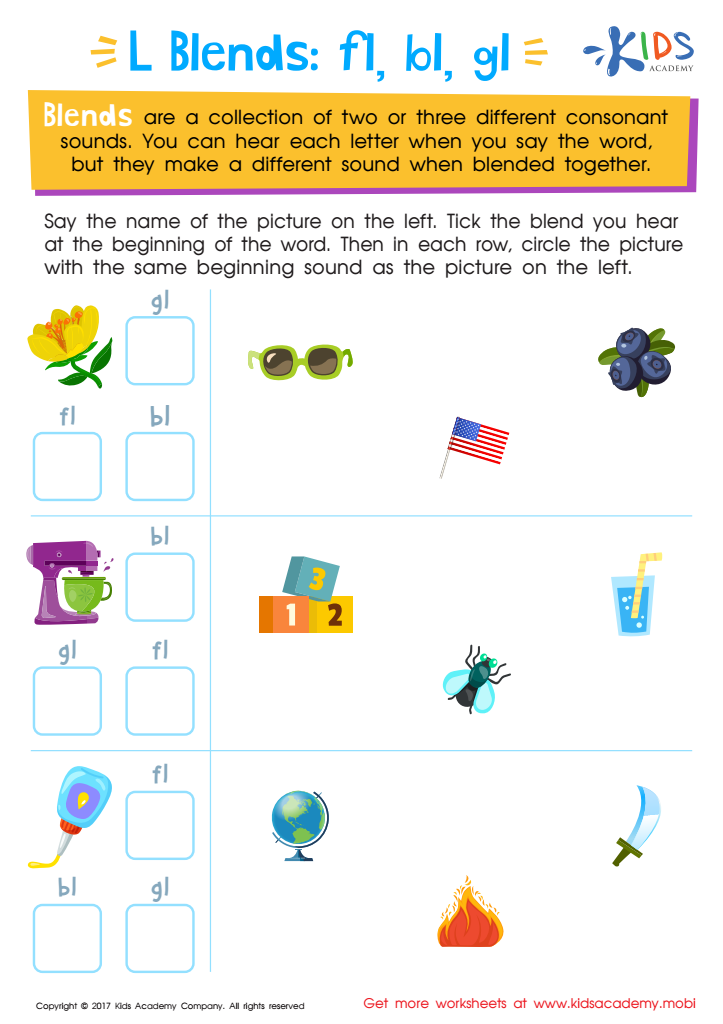
Blending Consonants: "Fl", "Bl" and "Gl" Printable



Understanding and developing normal consonants between the ages of 3 to 9 is crucial for children's speech and language development. This period encompasses significant milestones in which children’s ability to articulate various consonants correctly can have a comprehensive impact on their communication skills, academic progress, and social interactions.
During the early childhood years, children refine their pronunciation of consonants as their oral motor skills develop. Proper articulation ensures that children can be understood by others, helping to prevent frustration and enhance self-esteem. This clarity of speech is fundamental not just for effective verbal communication, but also for foundational literacy skills such as reading and writing. Many literacy skills are closely tied to phonemic awareness, the ability to hear, identify, and manipulate consonant sounds within words.
Parental and teacher involvement is vital because early identification of speech issues can lead to timely interventions. Misarticulations of consonants, if left untreated, can result in longstanding speech delays or disorders that affect children’s ability to interact with peers and succeed academically. Ensuring children master normal consonants within this crucial age range promotes their language development and sets a solid foundation for future learning and personal growth. Both parents and teachers play pivotal roles in recognizing, nurturing, and supporting this aspect of a child’s developmental journey.