Normal Vowel Diphthongs Worksheets for Ages 3-9 - Page 2
25 filtered results
-
From - To
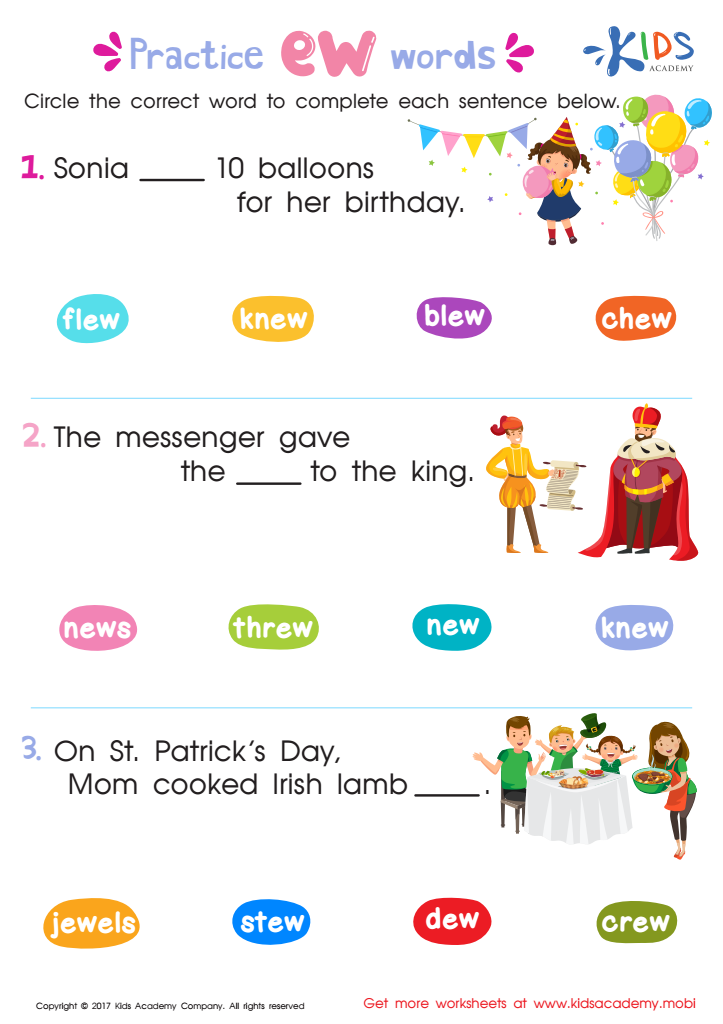
EW Words Worksheet
 Assign to My Students


Normal vowel diphthongs play a crucial role in the linguistic development of children aged 3-9, influencing both their speech and reading abilities. A diphthong occurs when two vowel sounds blend together within the same syllable, forming a distinct and complex sound, such as in the words "coin," "loud," or "tie." Mastering diphthongs is important for accurate pronunciation, enhancing a child's ability to communicate clearly and understand spoken language.
For early readers, recognizing and decoding diphthongs is essential for fluency. These vowel combinations often appear in common words. Knowing how diphthongs function helps children break down words into manageable parts, improving their decoding skills. As children become more adept at identifying diphthongs, they also expand their vocabulary and comprehension skills. This is particularly vital during these early years when foundational literacy skills are being developed.
Moreover, early exposure to diphthongs supports cognitive flexibility. It teaches children that language can be complex and dynamic, fostering critical thinking and problem-solving abilities. Teachers and parents should create environments rich in phonetic variety, incorporating activities like reading aloud, singing, and phonics games. This endeavor not only makes the learning process enjoyable but also promotes a strong linguistic groundwork that will benefit children throughout their academic journey and beyond.