Filters

258 filtered results

Clear all filters
Favorites
With answer key
Interactive

258 filtered results

Difficulty Level

Grade


Check out this FREE Trial Lesson on Reading for age 4-7!

Read Words in Order

Favorites
With answer key
Interactive
  • 4-7
  • Interactive
  • Reading
  • Normal
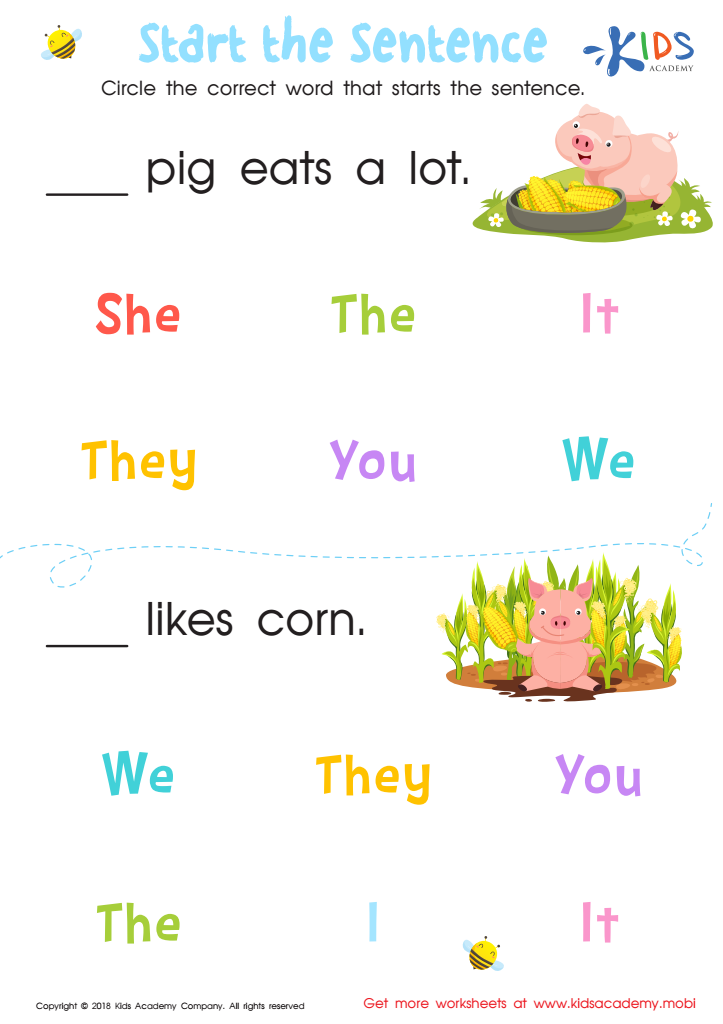
Start the Sentence Worksheet

Start the Sentence Worksheet

Test your students' understanding of sentences with this easy worksheet. Ask them to read the sentences and circle the correct word that starts each. This will show how well their lessons have paid off and if they can construct short simple sentences.
Start the Sentence Worksheet
Worksheet
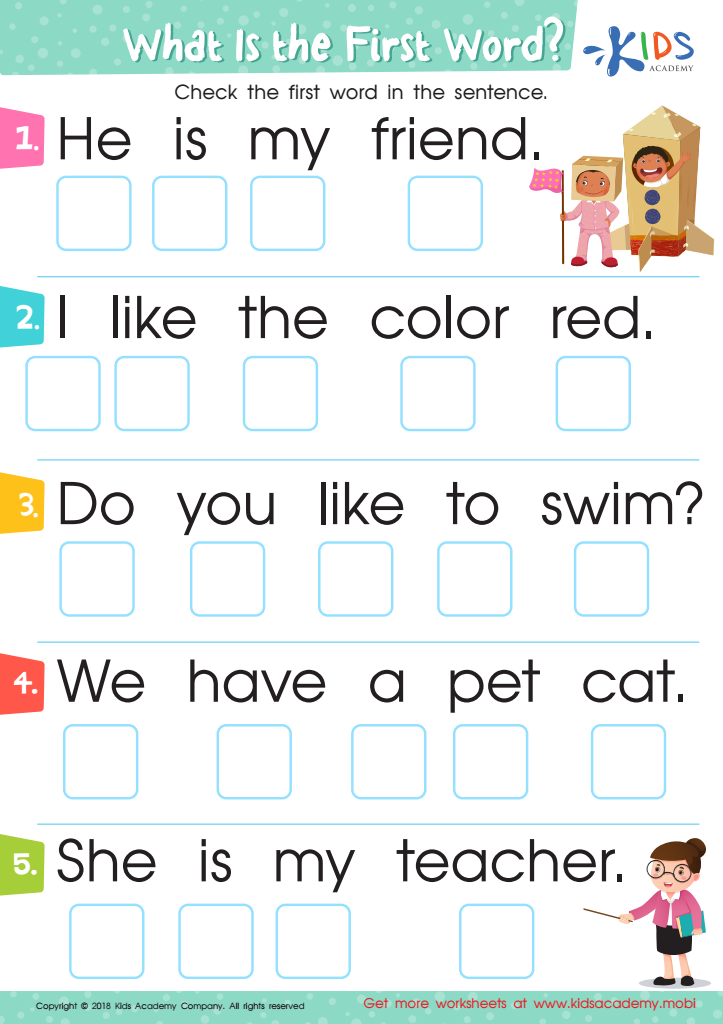
What is the First Word? Worksheet

What is the First Word? Worksheet

Help your students test their sentence-reading skills with this printout! After teaching the alphabet, have them identify and write the first word in each sentence. With this exercise, they'll gain reading proficiency and be better prepared to write their own sentences.
What is the First Word? Worksheet
Worksheet
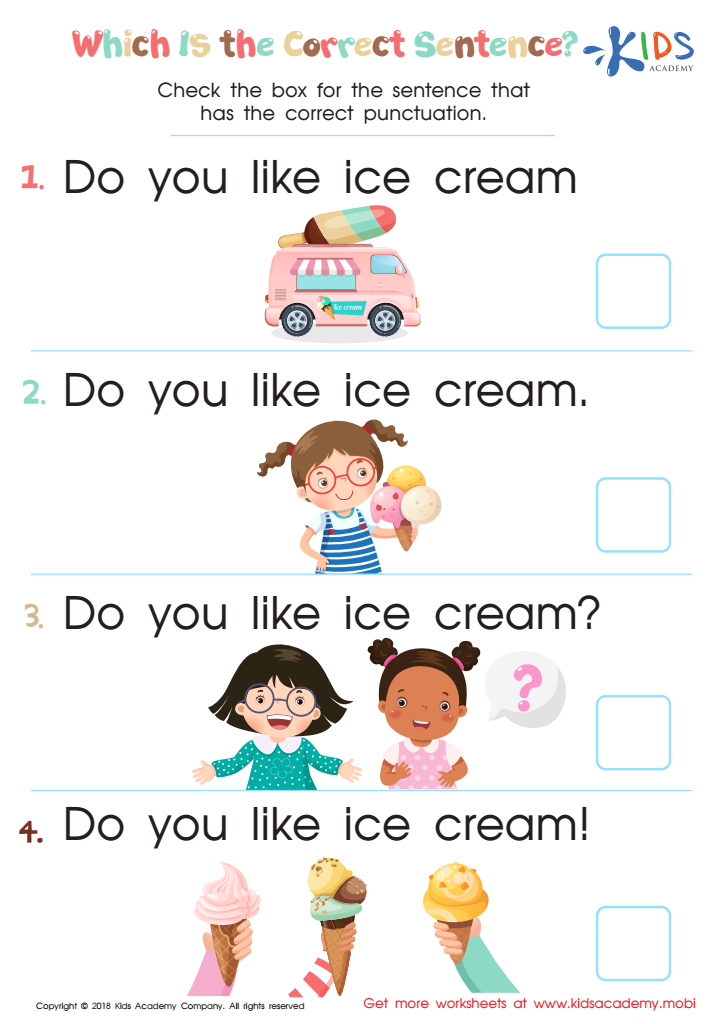
Which is the Correct Sentence? Worksheet

Which is the Correct Sentence? Worksheet

Punctuation is crucial in sentence formation. If your kid still doesn't grasp it, bigger hurdles await when writing sentences. Get them to read simple sentences, then ask if they know the right punctuation. Assist them in selecting the sentence that has the accurate punctuation.
Which is the Correct Sentence? Worksheet
Worksheet
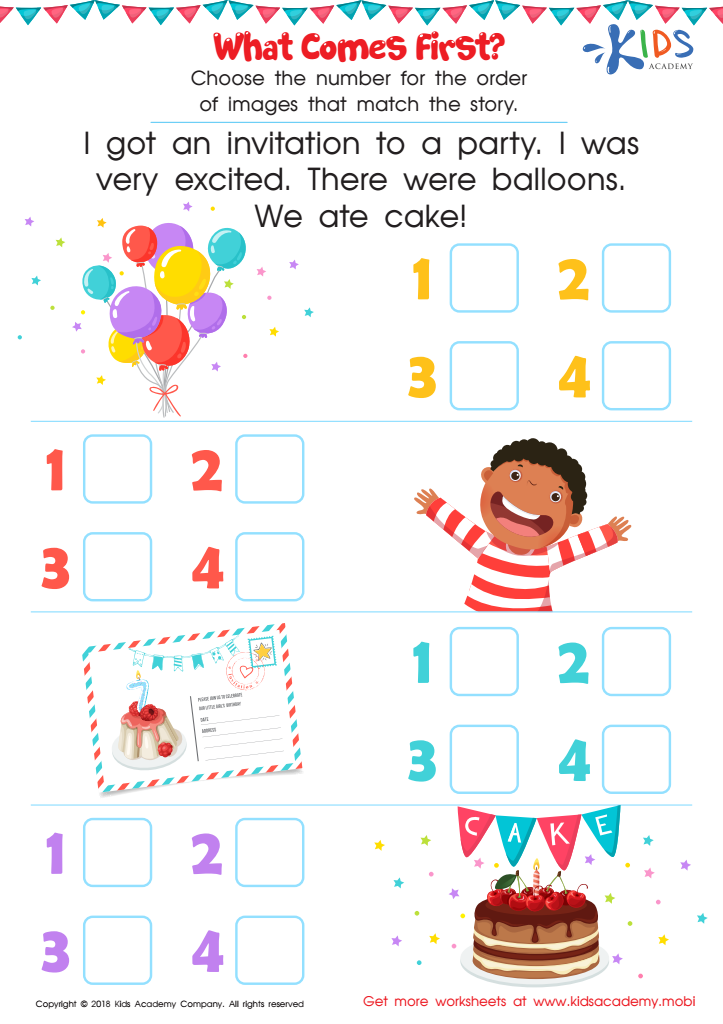
What Comes First Worksheet

What Comes First Worksheet

Before you start, ask your child what they see in the picture. Read the story aloud together, then show them the images in order, numbered 1-5. Ask them to choose the numbers that match the story. Have fun and enjoy this party worksheet with your little one! (80 words)
What Comes First Worksheet
Worksheet
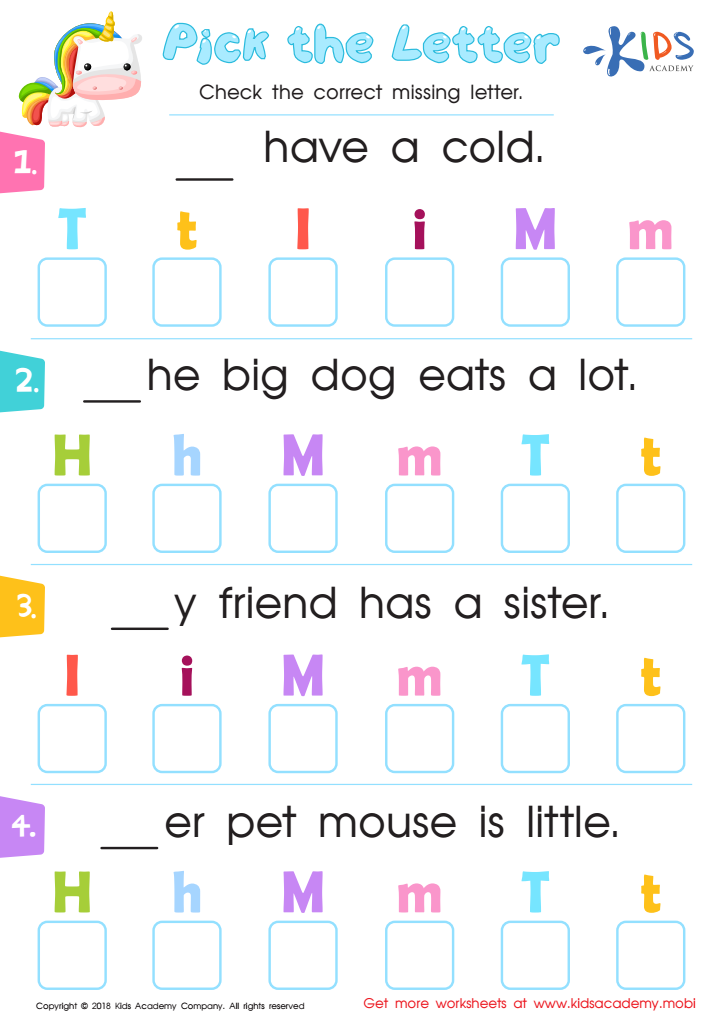
Pick the Letter Worksheet

Pick the Letter Worksheet

Put your child's capitalization and reading skills to the test with this missing letter worksheet! Have them look at each sentence, note the blank and review the letters below. Find the uppercase letter that should start each sentence and check the boxes to complete. Fun and colorful, this worksheet is sure to keep your child engaged!
Pick the Letter Worksheet
Worksheet
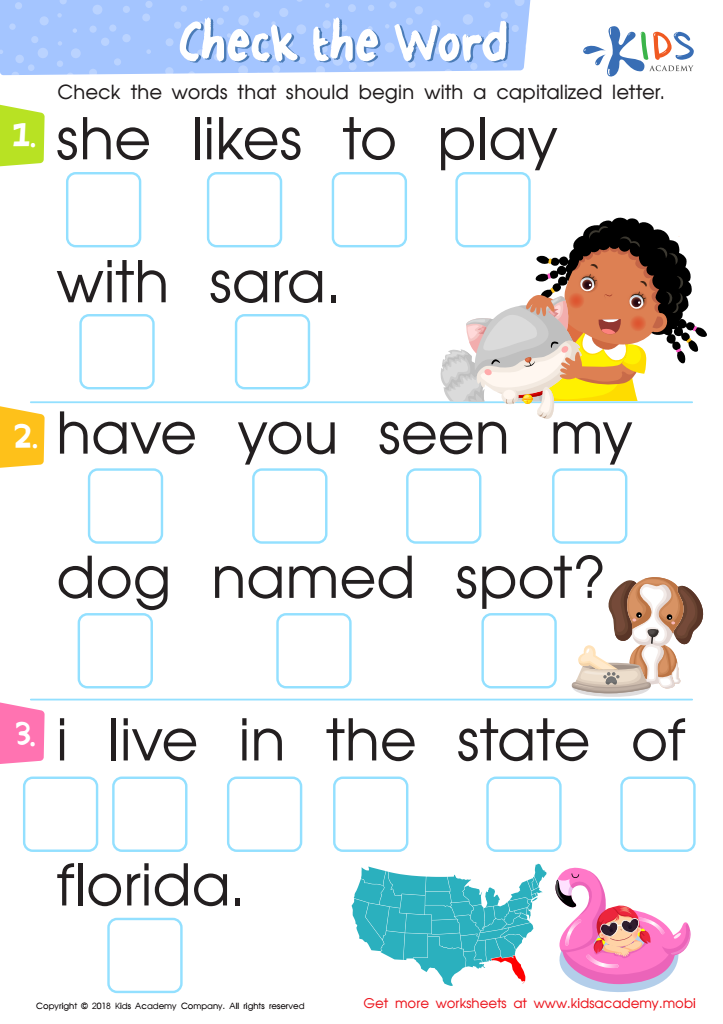
Check the Word Worksheet

Check the Word Worksheet

Help your kids learn the rules of capitalisation - that the first word of each sentence and nouns must start with a capital letter. Use this worksheet to test their understanding: ask them to identify which words should begin with a capital.
Check the Word Worksheet
Worksheet
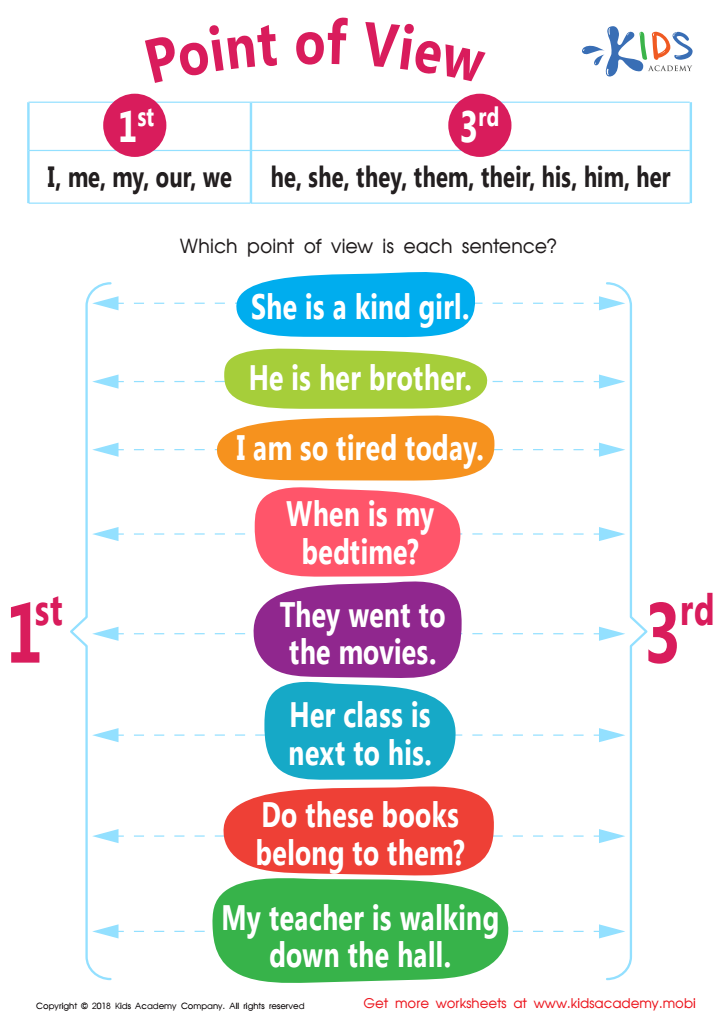
Point of View Worksheet

Point of View Worksheet

This printable worksheet helps kids understand Point of View by providing 1st and 3rd person choices. It's a fun way to practice differentiating between the two viewpoints and improve their reading comprehension. Match the sentences to 1st or 3rd person to strengthen understanding and enjoy the task!
Point of View Worksheet
Worksheet
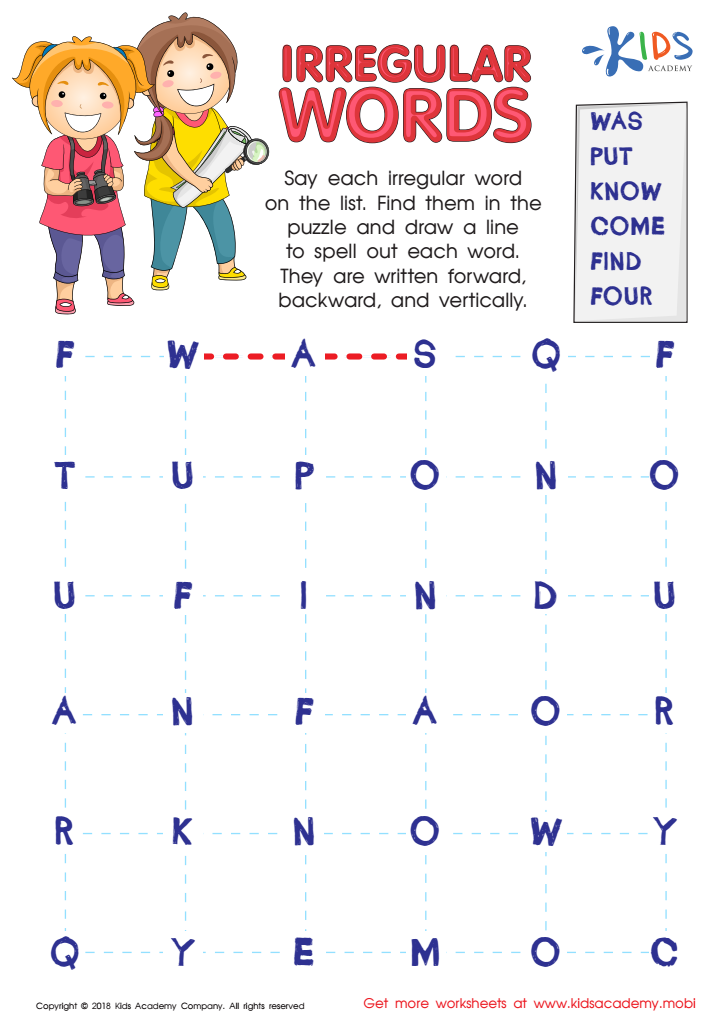
Irregular Words Worksheet

Irregular Words Worksheet

This fun word search worksheet helps kids practice reading irregular words and build their sight word banks. They'll also get practice with visual discrimination and fine motor skills as they hunt down the words.
Irregular Words Worksheet
Worksheet
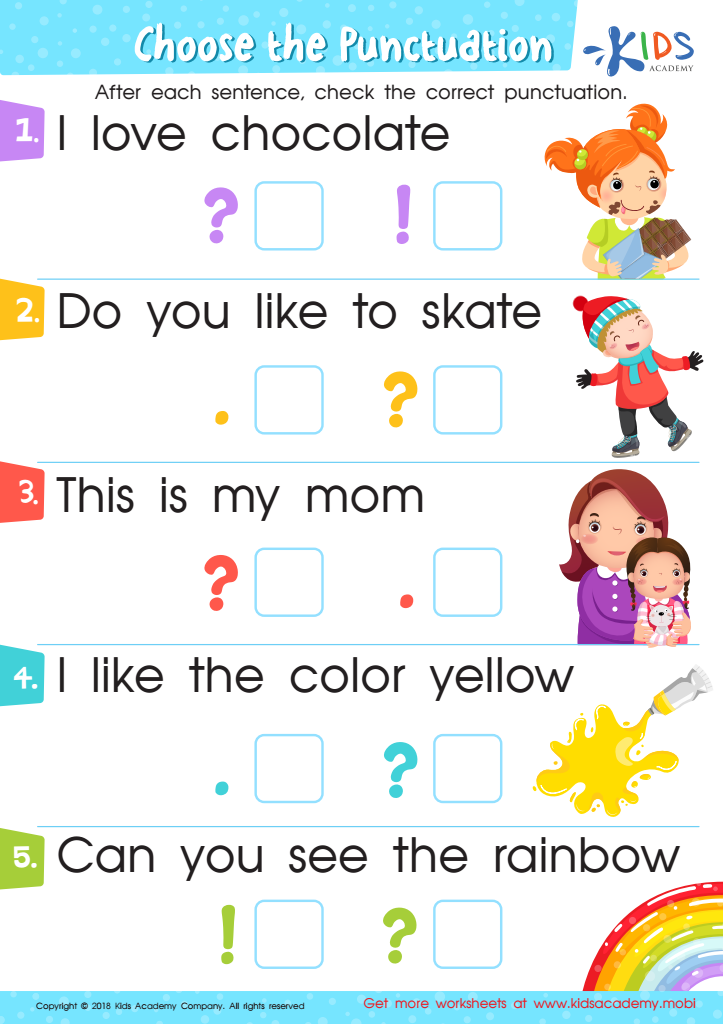
Choose the Punctuation: Assessment Worksheet

Choose the Punctuation: Assessment Worksheet

Does your child know punctuations? Found at the end of words, they signify the tone of the sentence. Ask them which punctuations they use daily. With your little one, look at a worksheet. Read each sentence aloud and ask them to identify the two punctuations given. Instruct them to choose the correct one. 80 words.
Choose the Punctuation: Assessment Worksheet
Worksheet
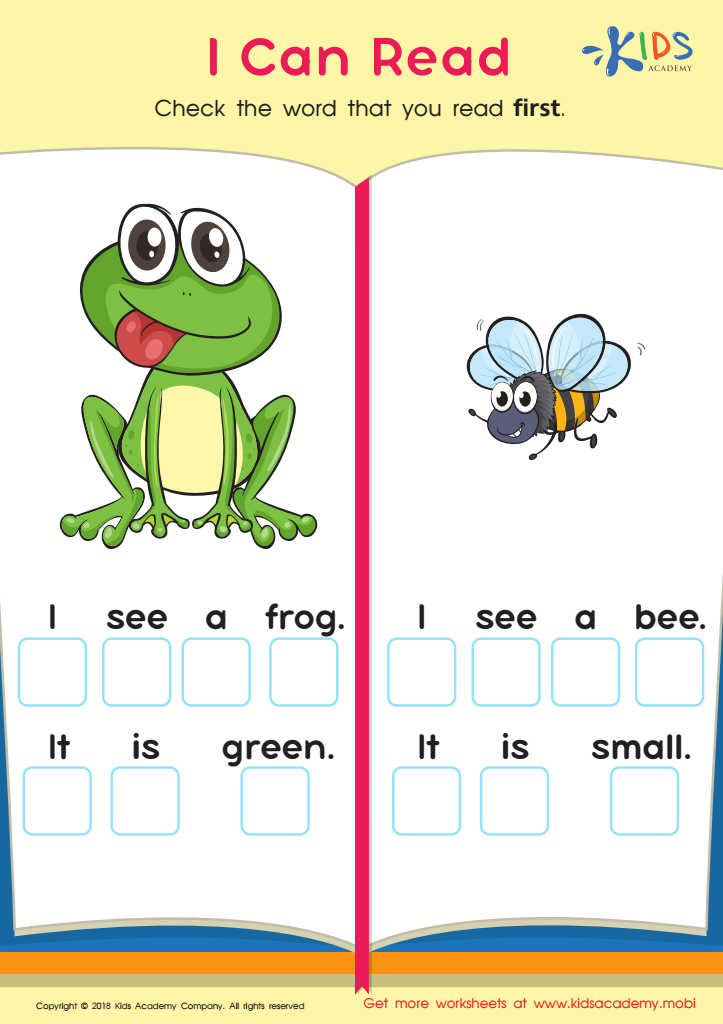
I Can Read Worksheet

I Can Read Worksheet

Test your child's reading skills with this fun worksheet. See how well they know one-letter, two-letter, and five-letter words. Ask your little one to read the sentences and tick the word they identify first. It's a great way to track their progress and help them become more confident readers.
I Can Read Worksheet
Worksheet
l or i? Worksheet
l or i? Worksheet

l or i? Worksheet

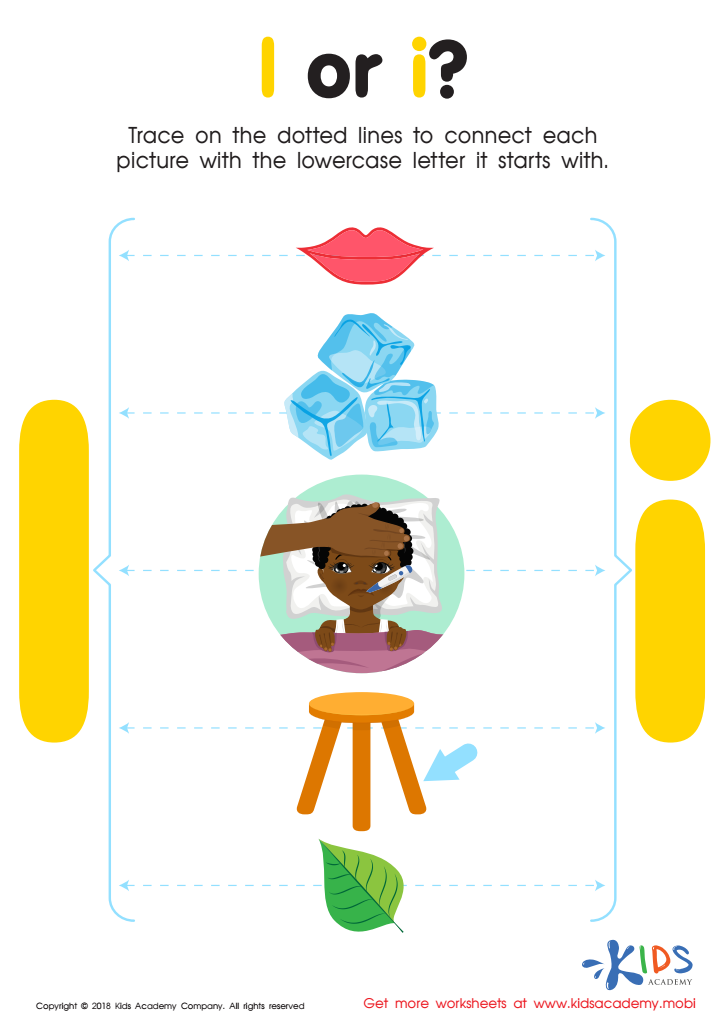
Trace the dotted lines on this worksheet to connect pictures with their lowercase letter. Ask your child what each picture is and the first letter of the word. Guide them to trace the letter with the dotted lines.
l or i? Worksheet
Worksheet
Recognize Letters l and i Worksheet

Recognize Letters l and i Worksheet

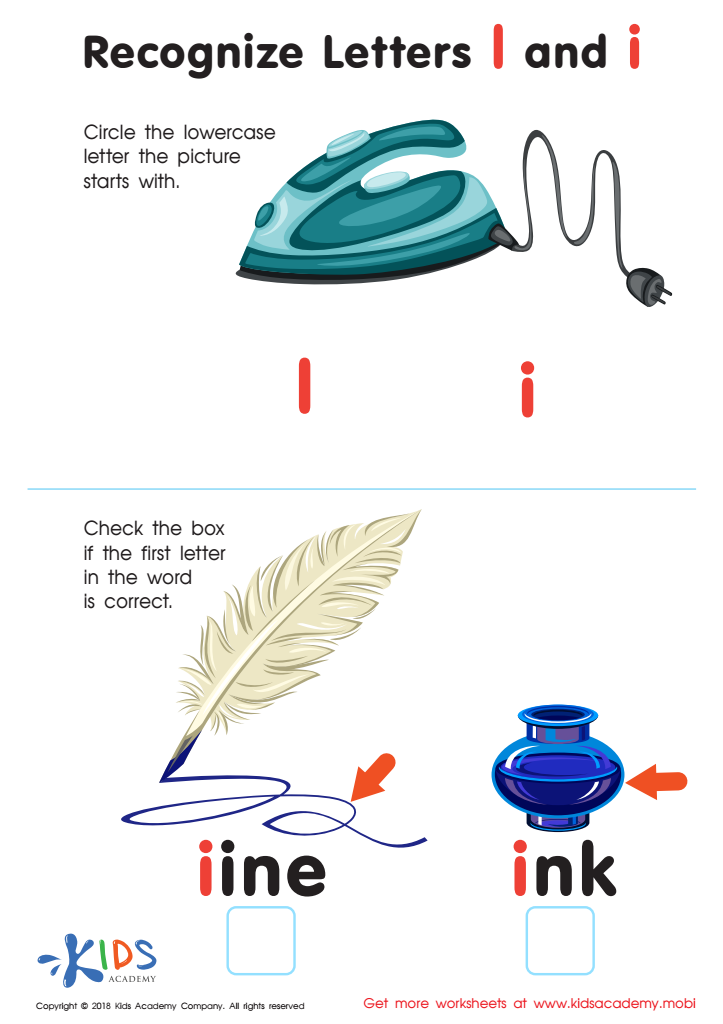
Help your child become familiar with uppercase and lowercase letters. Have them look at the pictures in the worksheet and circle the lowercase letter the picture starts with. For example: which one is the lowercase "i", the capital "I" or the small "i"?
Recognize Letters l and i Worksheet
Worksheet
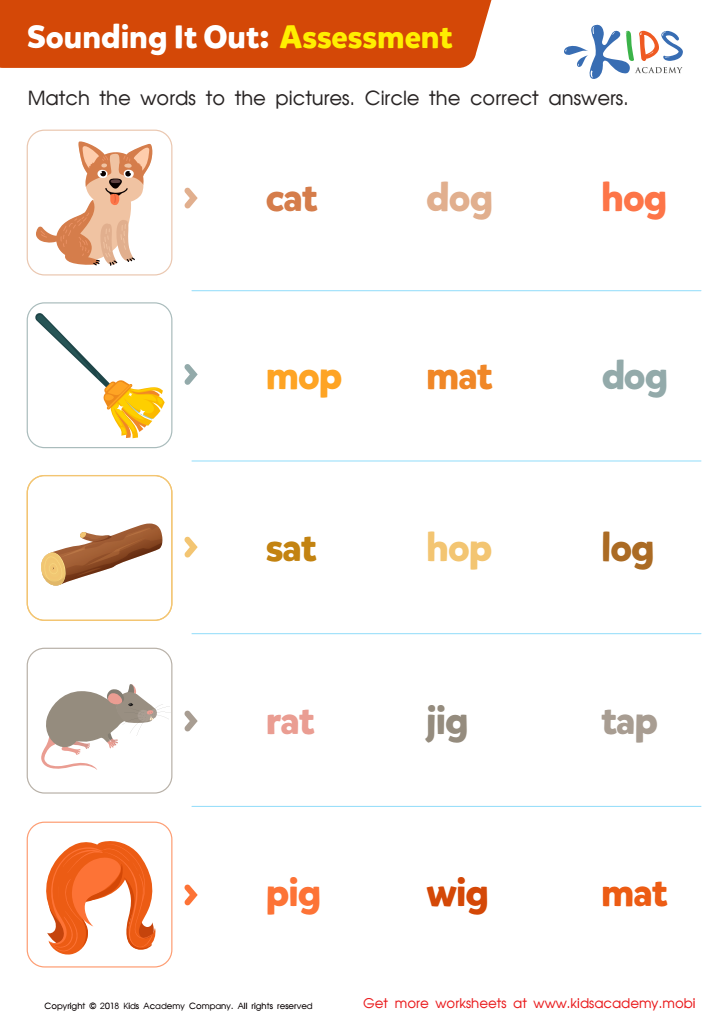
Sounding it Out: Assessment Worksheet

Sounding it Out: Assessment Worksheet

Give your little learner a fun challenge with this downloadable worksheet! With pictures to guide them, have them name the images and then sound out the words in the same row. Be careful though, as they all contain the same amount of similarly sounding letters. Once the correct word has been found, have them circle it!
Sounding it Out: Assessment Worksheet
Worksheet
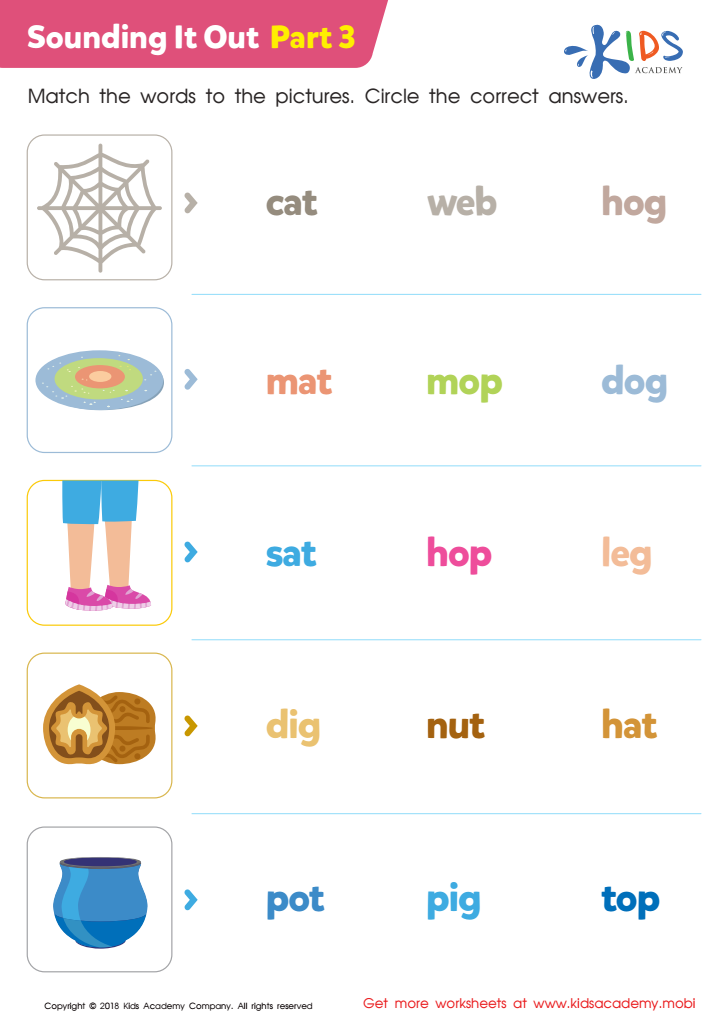
Sounding it Out: Part 3 Worksheet

Sounding it Out: Part 3 Worksheet

Once Parts 1 and 2 are complete, this printable phonics worksheet will help kids take their reading skills to the next level! As they gain confidence, give them hints less often and direct their attention to three words in a row. Ask them to read and circle the correct word to complete!
Sounding it Out: Part 3 Worksheet
Worksheet
Sounding it Out: Part 2 Worksheet

Sounding it Out: Part 2 Worksheet

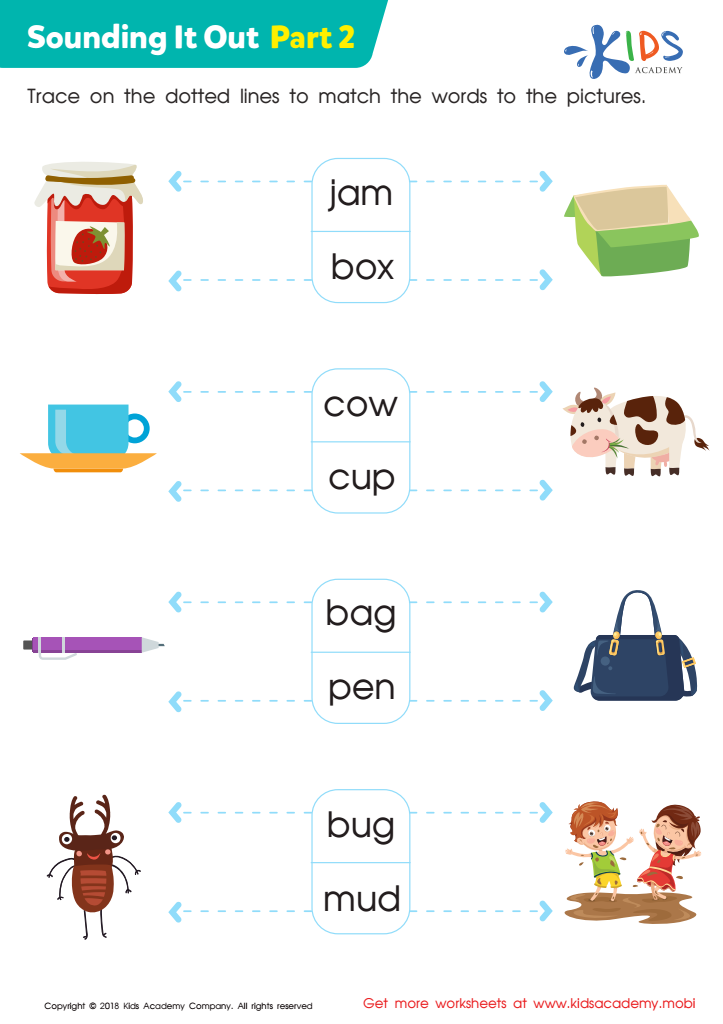
Mastering phonics is key for kids to learn to read! This free worksheet uses fun pictures to help them sound out words. Ask them to name the images, then use the hints to say each word. Kids will become accomplished readers in no time!
Sounding it Out: Part 2 Worksheet
Worksheet
Sounding it Out: Part 1 Worksheet

Sounding it Out: Part 1 Worksheet

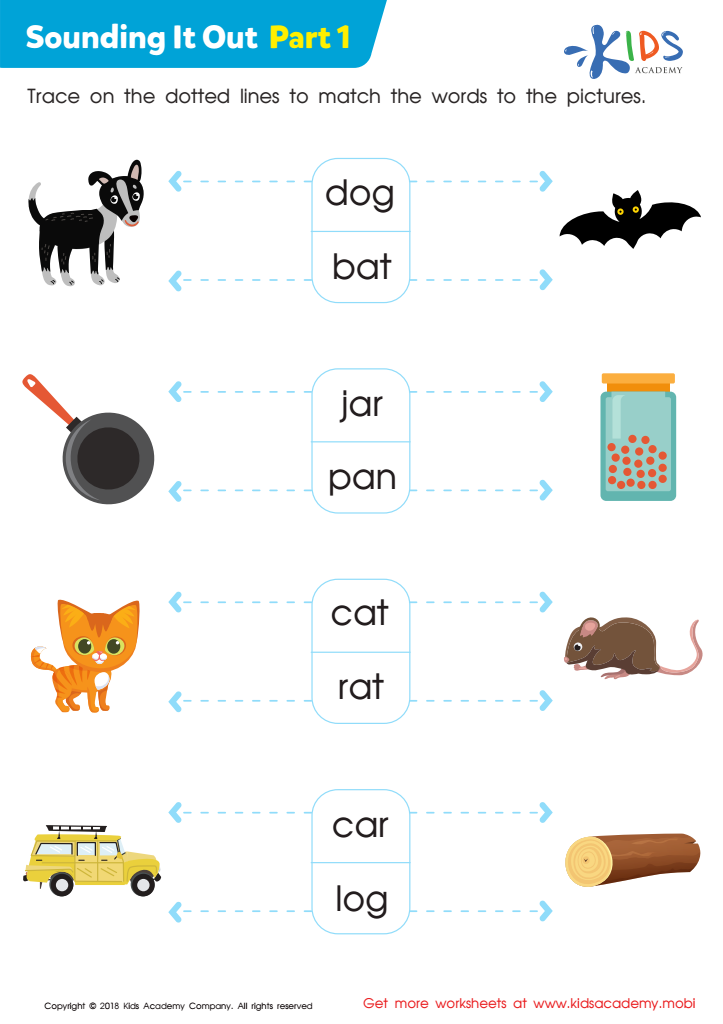
Help kids learn to read with this fun worksheet! Kids use picture clues to sound out words and trace the dotted lines to match each word to its corresponding image. Stimulating and interactive, this printable is a great way for little learners to practice phonics.
Sounding it Out: Part 1 Worksheet
Worksheet
Identify Individual Words Worksheet

Identify Individual Words Worksheet

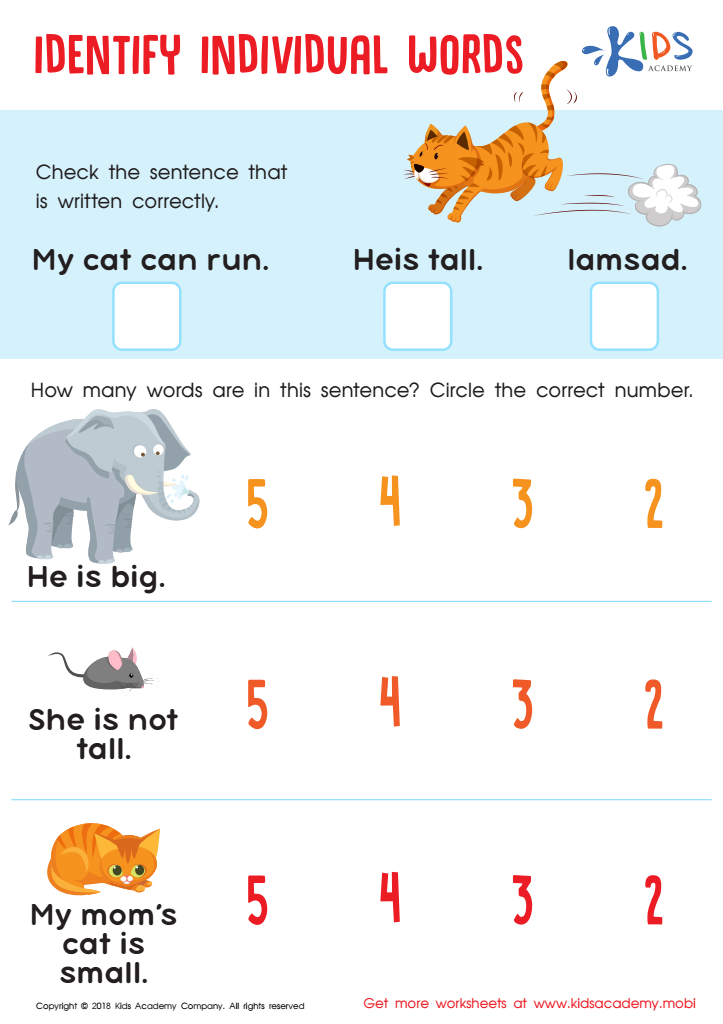
Does your child have trouble constructing sentences? Check out this worksheet! It will help them identify words that make up sentences and assess how well they can read and answer questions. The first part tests how well they can recognize a written sentence. The second part has them read questions and circle the correct number of words. Give it a try!
Identify Individual Words Worksheet
Worksheet
Read Words Order Part 2 Worksheet

Read Words Order Part 2 Worksheet

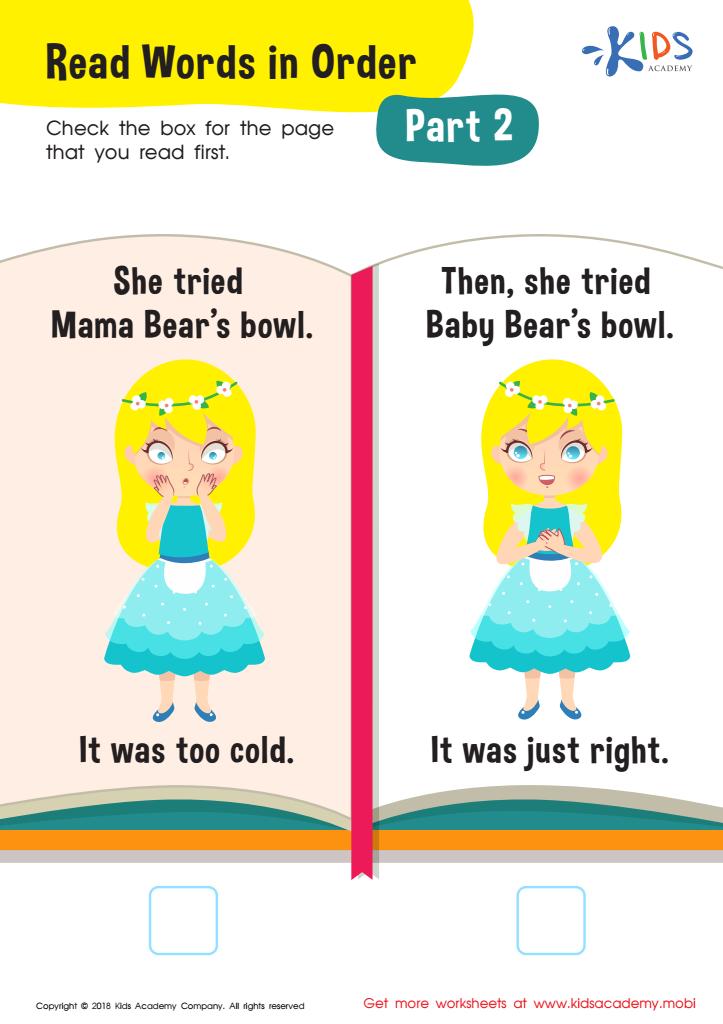
Help your students make progress with reading by using this easy worksheet. It includes two pictures with short sentences your child should be able to read. Ask them to read these out loud, and if they're struggling, help them. Then, they should check the box that shows the page they'd read first.
Read Words Order Part 2 Worksheet
Worksheet
Read Words Order Part 1 Worksheet

Read Words Order Part 1 Worksheet

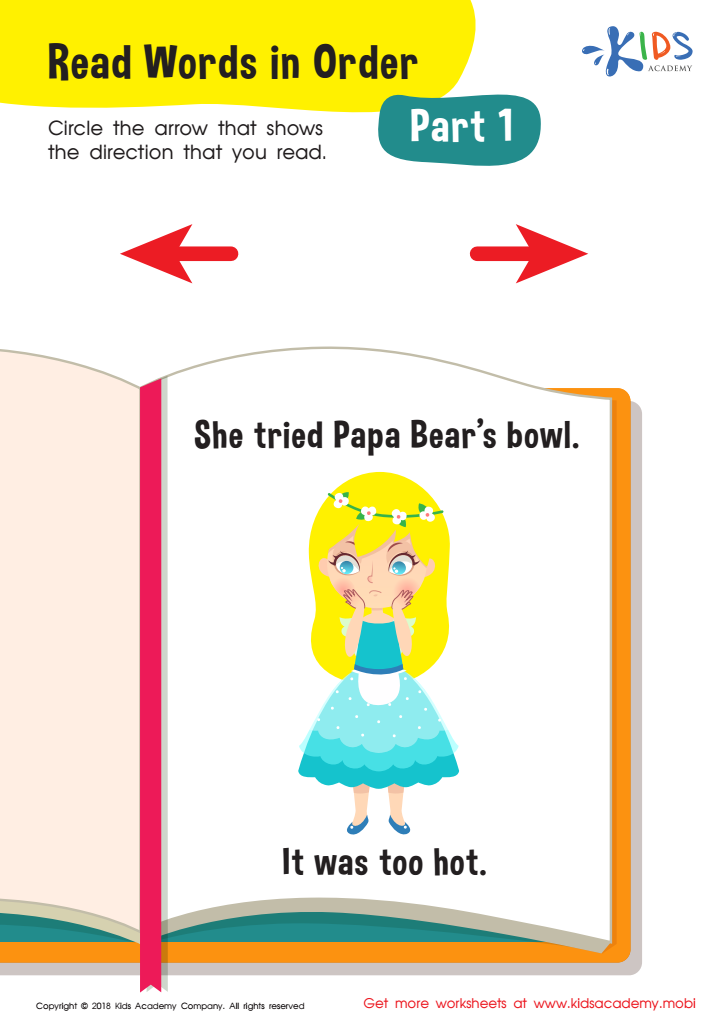
Is your child just starting out with reading or having trouble? This worksheet is perfect! It'll help them learn the right way to read. Ask them to circle the arrow that shows the right direction to read. With this exercise, your child can overcome some of their reading challenges.
Read Words Order Part 1 Worksheet
Worksheet
Tricky Sight Words Worksheet

Tricky Sight Words Worksheet

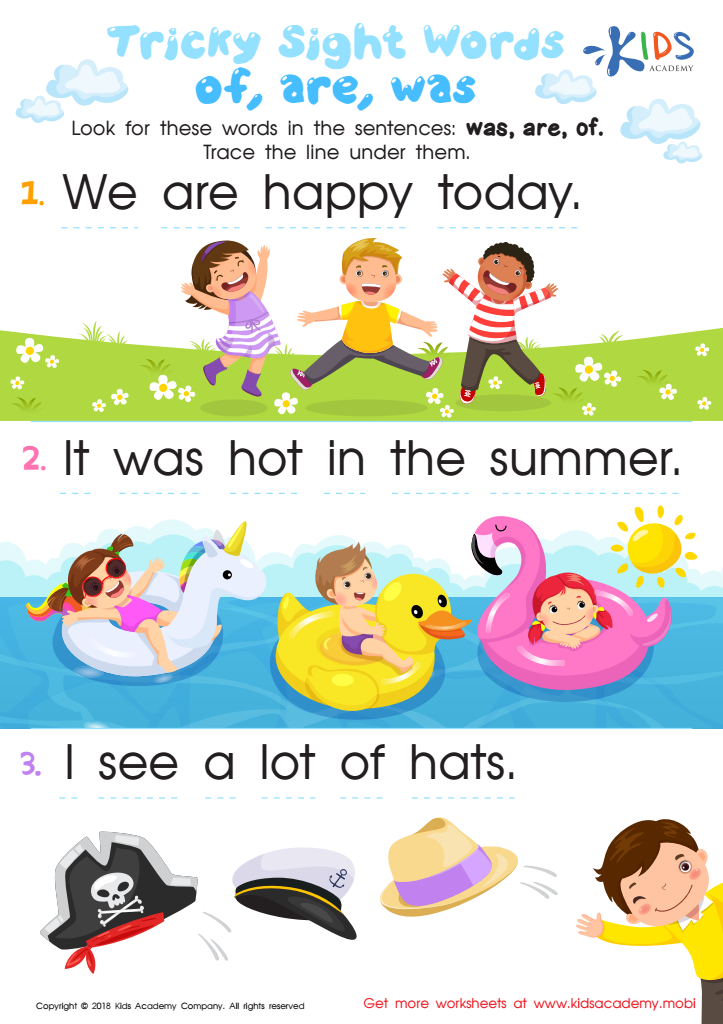
Read the sentences to your students. Ask them to spot words 'of, are, was' and trace the line under them. It could be challenging for them to use them correctly or understand their meanings. Provide help where needed.
Tricky Sight Words Worksheet
Worksheet
Long /u/ Words Worksheet
Long /u/ Words Worksheet

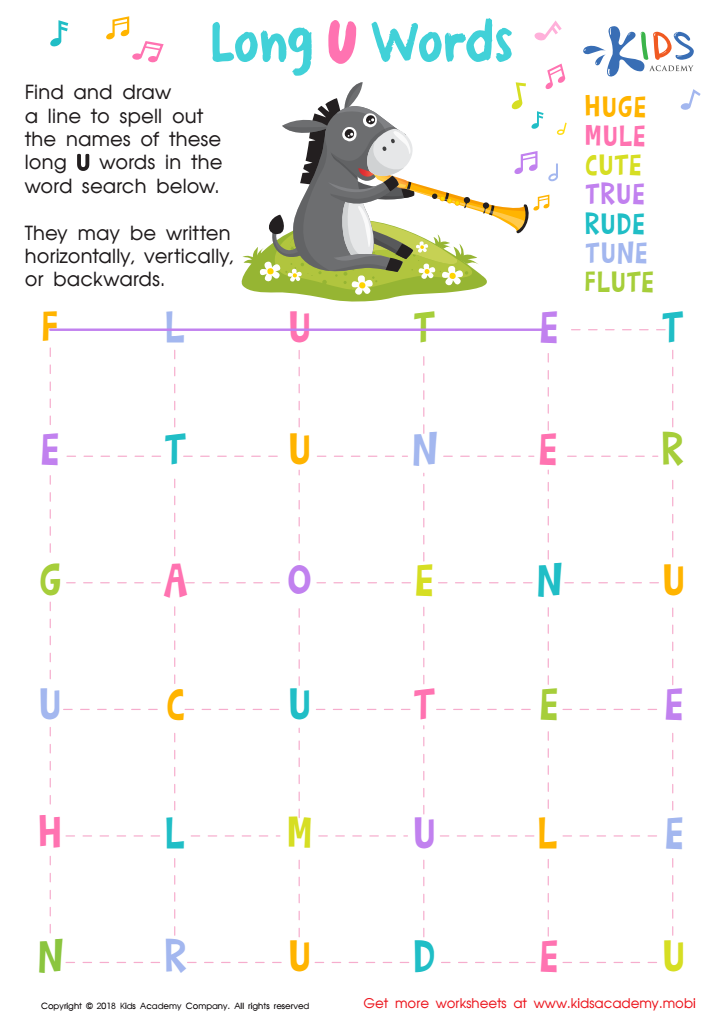
Your child needs to learn phonetics to enunciate and differentiate words. This fun worksheet encourages them to find and draw lines connecting the long 'U' words in the word search. Help them read the words on the right side of the picture, then look for them in the word search (horizontally, backwards or vertically).
Long /u/ Words Worksheet
Worksheet
Sight Words with Blends Worksheet

Sight Words with Blends Worksheet

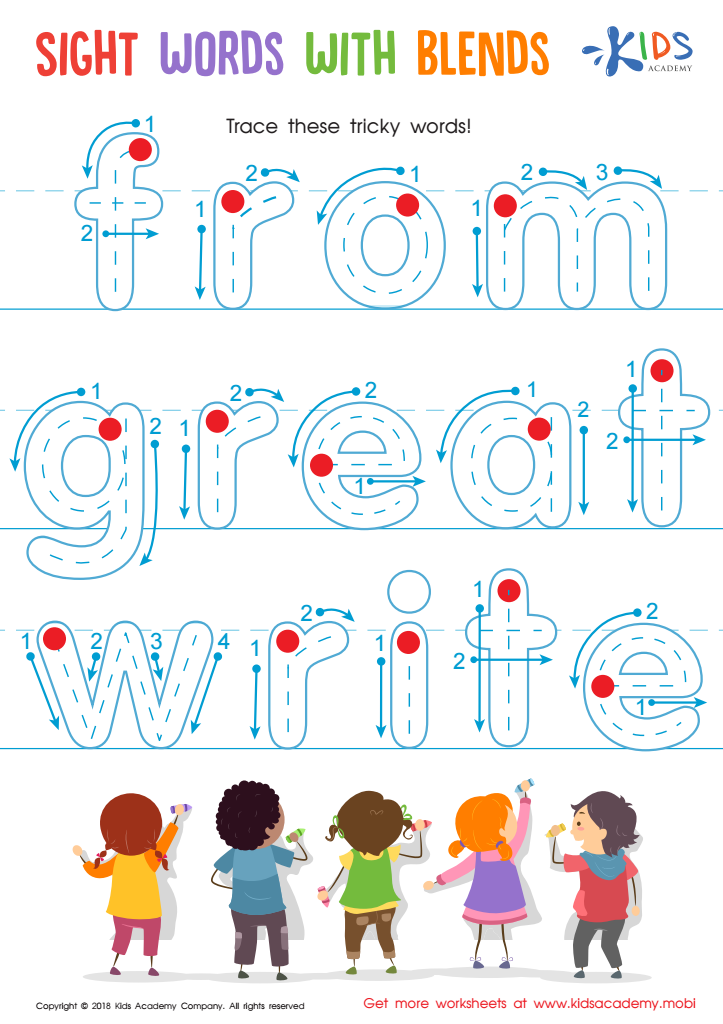
This free PDF lets your children trace and write sight words with tricky blends. The guide numbers help them start from the top, building fine motor skills and enhancing sight word vocab. It's a great way to give your kids a solid foundation for reading!
Sight Words with Blends Worksheet
Worksheet
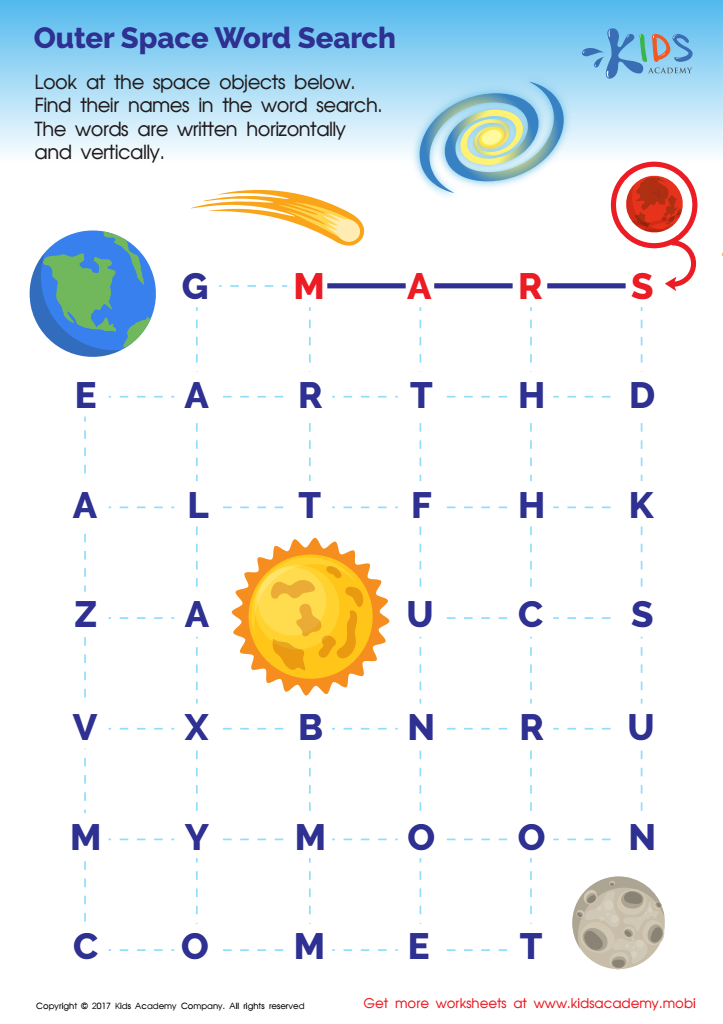
Space word search printable

Outer Space Word Search Printable

Test your child's space knowledge with this fun outer space word search printable! With pictures as clues, they'll hardly realize they're learning and thinking hard. Let them have a blast finding each of the words!
Outer Space Word Search Printable
Worksheet
Worksheet places in your community

Places in Your Community Worksheet

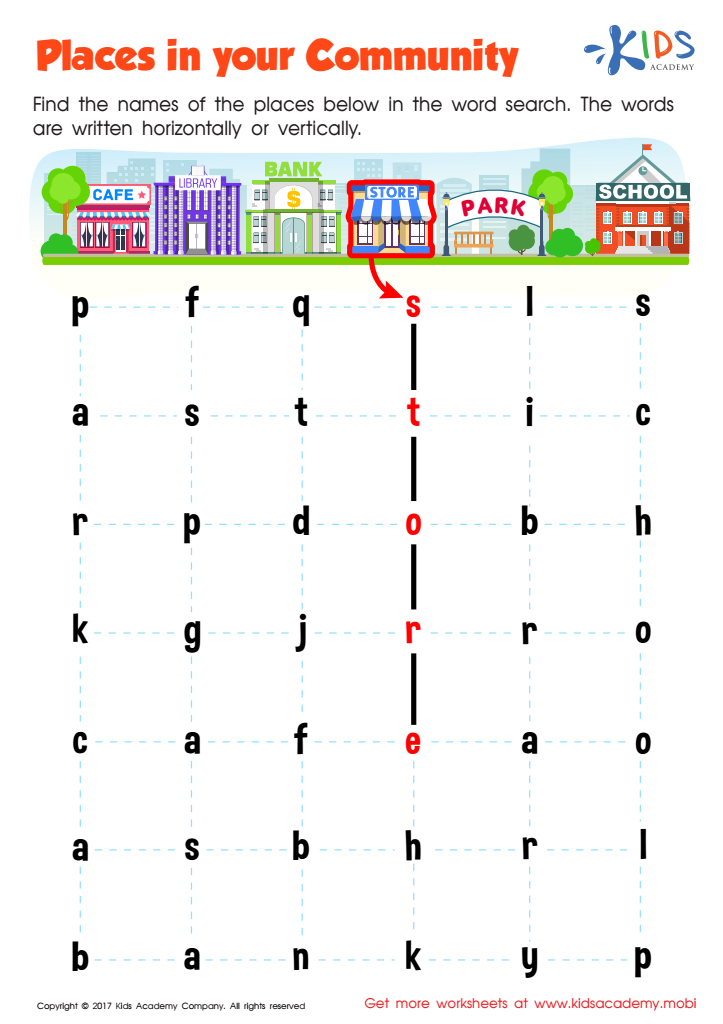
Find and circle words related to common places in your community, like library, fire station, and more. Practicing vocabulary and spelling, your child will gain a better understanding of their community.
Places in Your Community Worksheet

Worksheet


Parents and teachers should care about normal reading development for children aged 4-7 because these early years are critical for building foundational literacy skills essential for future academic success. During this formative period, children develop phonemic awareness, which is the ability to recognize and manipulate sounds in words, and phonics, understanding the connection between letters and sounds. These skills are crucial for decoding words, a fundamental aspect of reading fluently and comprehending text.

Normal reading development in early childhood sets the stage for proficiency in other subject areas, as strong reading skills are crucial for understanding math problems, following scientific instructions, and grasping social studies concepts. Children who struggle with reading at this age are at a higher risk for academic difficulties and may develop negative attitudes towards schooling and learning in general. Early reading success also boosts self-esteem and confidence, critical components for lifelong learning and curiosity.

Furthermore, reading at this age enhances vocabulary, language understanding, and communication skills. Early readers are exposed to a wider range of words and sentence structures, enriching their expressive and receptive language abilities. For these reasons, fostering normal reading development in children aged 4-7 is paramount for their overall educational growth, personal development, and future academic achievement.