Normal Silent Vowels Worksheets for Ages 4-8
5 filtered results
-
From - To
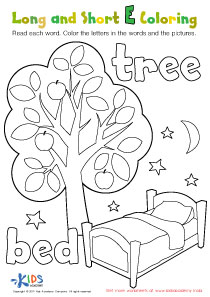
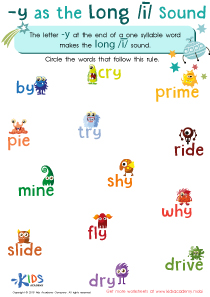
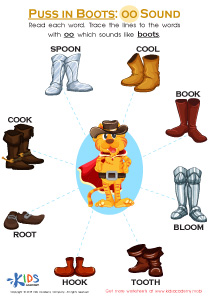
Introduce your little learners to the intriguing world of silent vowels with our engaging worksheets crafted for ages 4-8! These easy-to-use resources are perfect for enhancing reading skills and phonemic awareness. Each worksheet focuses on identifying and practicing silent vowels in a fun and interactive way, making learning enjoyable. With colorful illustrations and age-appropriate activities, your child will build confidence in their reading abilities while enjoying the process. Ideal for homeschooling, classroom activities, or supplemental learning, these normal silent vowel worksheets cater to young minds eager to explore language literacy. Download now and watch your child's reading skills flourish!
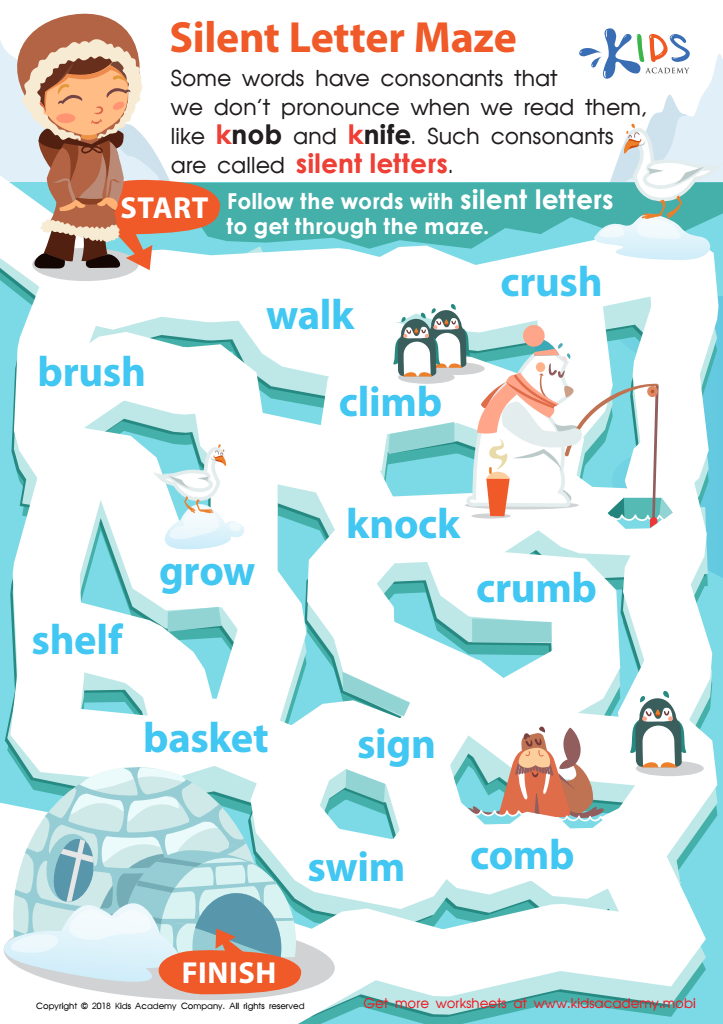
Silent Letter Maze Worksheet
 Assign to My Students
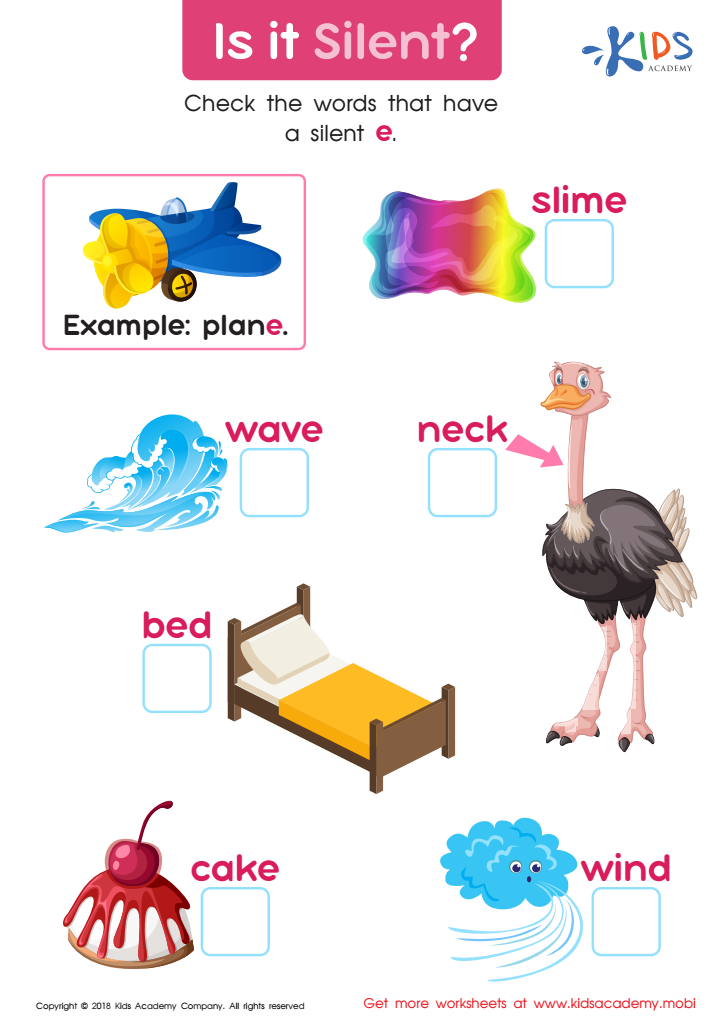
Is It Silent? Worksheet
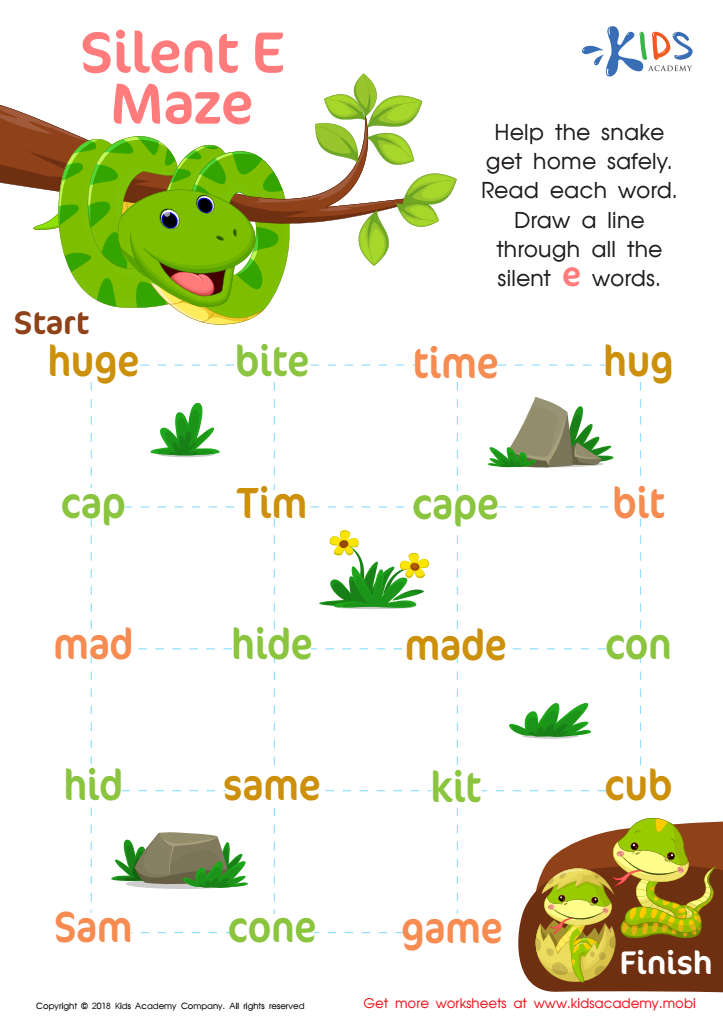
Silent E Maze Worksheet
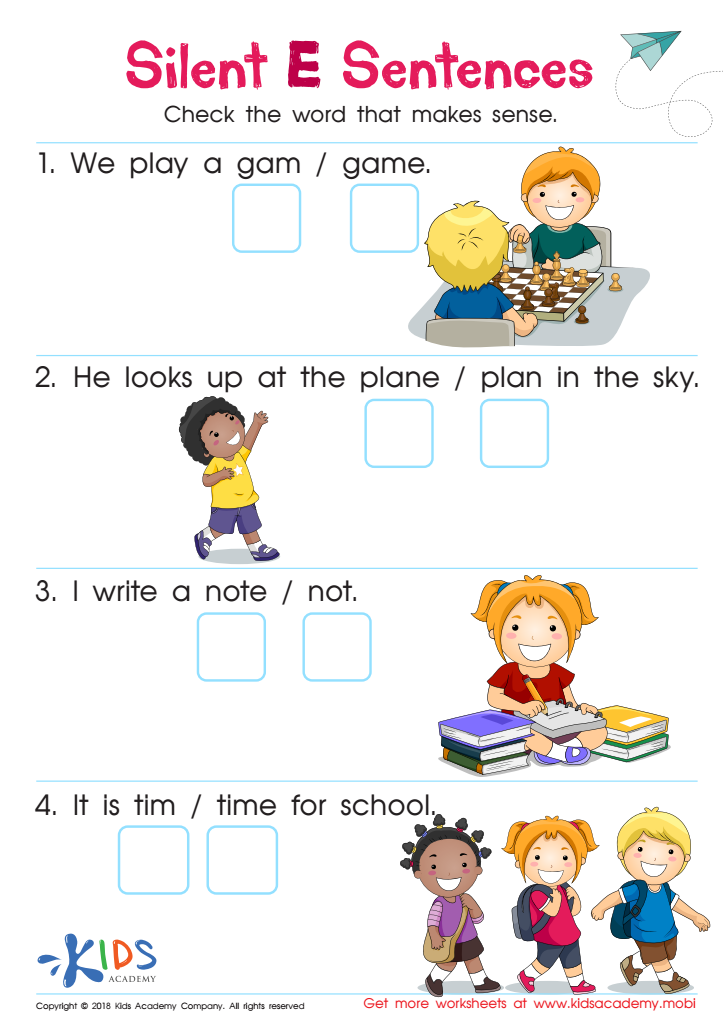
Silent E Sentences Worksheet
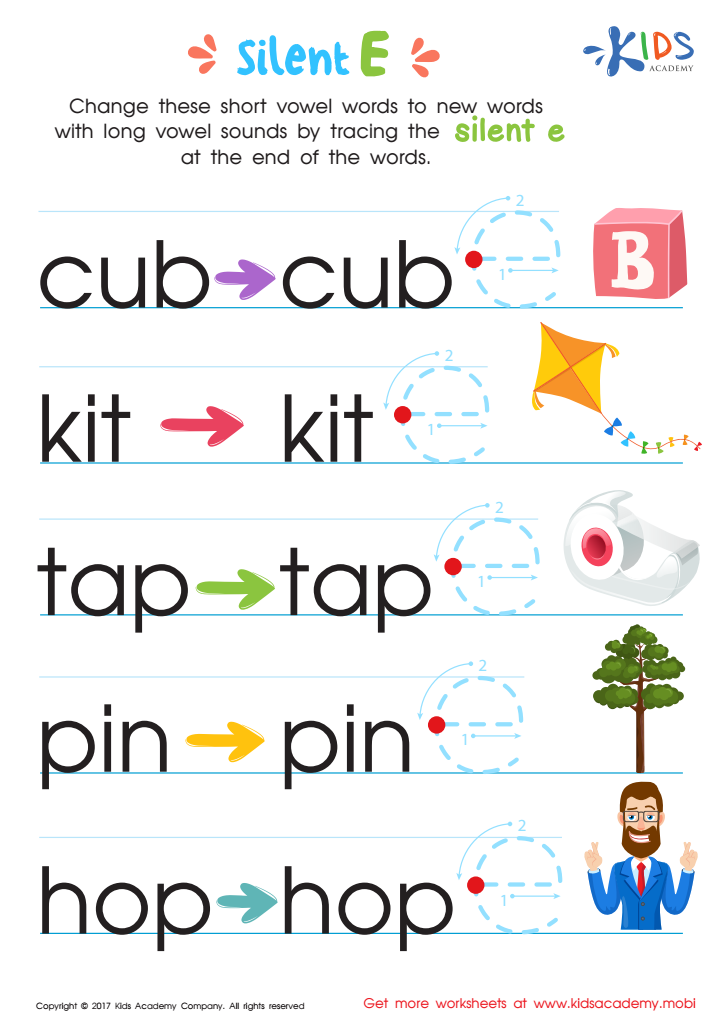
Silent E Words Worksheet


Normal Silent Vowels are crucial in early literacy development for children aged 4-8. They play an essential role in phonics, helping children decode words as they read. Understanding silent vowels supports spelling and pronunciation skills, allowing kids to form a solid foundation for effective communication. Furthermore, demonstrating how silent vowels operate enriches vocabulary, boosting children's reading confidence and comprehension as they encounter more complex texts.
In early education, recognizing silent vowels also amplifies children's phonological awareness, critical for tackling future linguistic challenges. Teachers and parents should prioritize activities that engage children with these vowels, such as interactive games, storytelling, and phonics exercises. By doing so, they can make learning enjoyable and relatable, enhancing children's interest in reading.
Moreover, mastering silent vowels helps children transition from "learning to read" to "reading to learn," enabling them to explore other subject areas independently. This skill not only aids in academic success but also fosters a lifelong love for reading. Thus, it is essential for adults guiding young learners to understand the importance of Normal Silent Vowels, facilitating their journey toward becoming proficient readers and confident communicators.