Filters

17 filtered results

Clear all filters
Favorites
With answer key
Interactive

17 filtered results

Difficulty Level

Grade


Explore our "Normal Community Worksheets for Ages 4-8," designed to introduce young learners to the fascinating world of their local communities. These printable worksheets engage children through fun activities that cover essential concepts like community helpers, local places, and social interactions. Ideal for early grade teachers and parents, these resources support social studies curricula and promote critical thinking. With vibrant illustrations and interactive prompts, each worksheet helps children understand their surroundings better, fostering a sense of belonging and community awareness. Perfect for classroom use or home learning, our worksheets make learning about communities enjoyable and educational!

Check out this FREE Trial Lesson on Community for age 4-8!

My Family

Favorites
With answer key
Interactive
  • 4-8
  • Interactive
  • Community
  • Normal
Why Do We Go To School? Worksheet

Why Do We Go To School? Worksheet

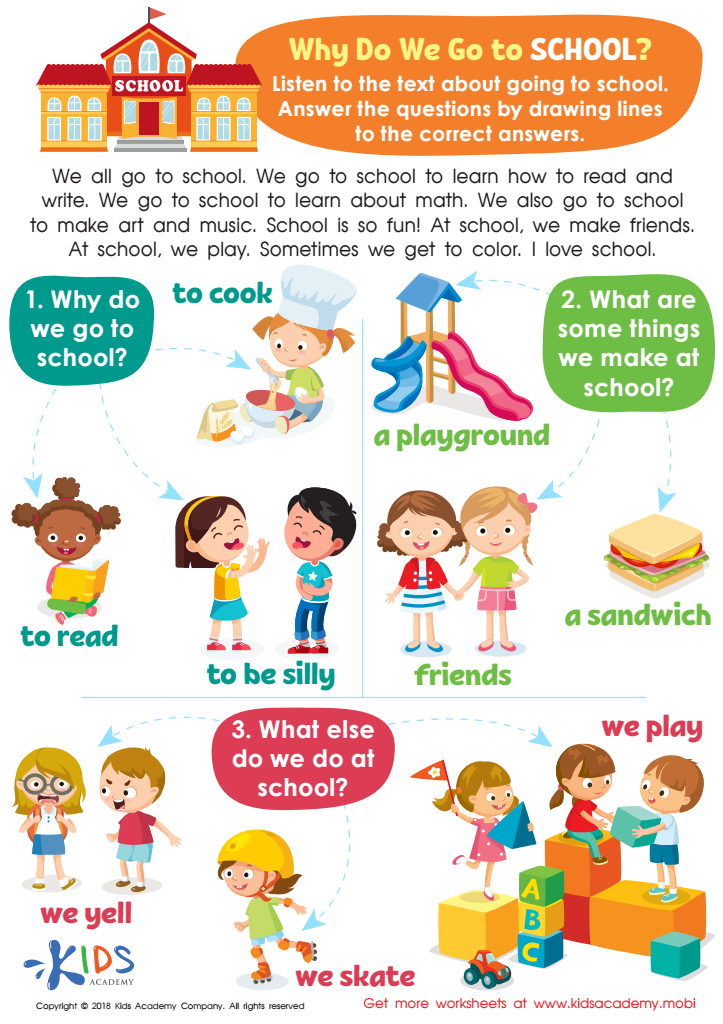
Ask your kids why they go to school and what they learn. Explain that some schools specialise in certain subjects like music or art. Show them the pictures and help them answer the questions by drawing lines to the correct answers. School is important and helps us learn, even though it may not feel enjoyable at times.
Why Do We Go To School? Worksheet
Worksheet
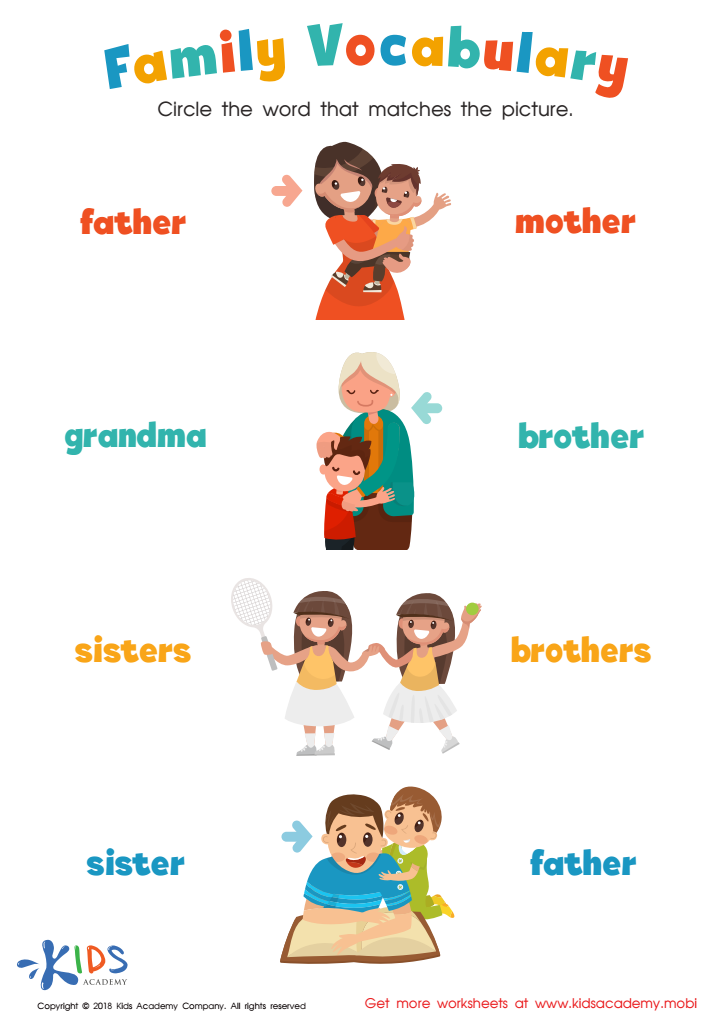
Family Vocabulary Worksheet

Family Vocabulary Worksheet

Students learn about families in social studies. This worksheet helps them identify family members by looking at a picture and circling the corresponding word. To extend their learning, ask them to talk about their own family members.
Family Vocabulary Worksheet
Worksheet
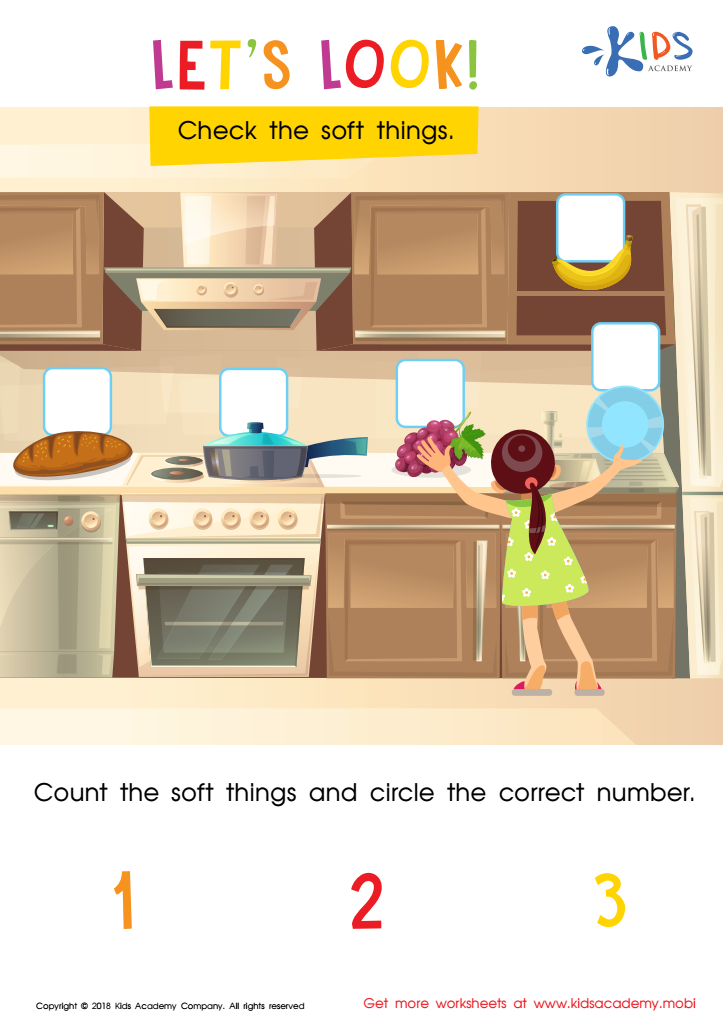
Let's Look! Assessment Worksheet

Let's Look! Assessment Worksheet

Have your child look at the picture in the printout and name the objects. Ask which ones are soft and hard and have them count the soft objects and circle the number. This worksheet will engage your child's thinking and teach them about texture.
Let's Look! Assessment Worksheet
Worksheet
Let's Check! Assessment Worksheet

Let's Check! Assessment Worksheet

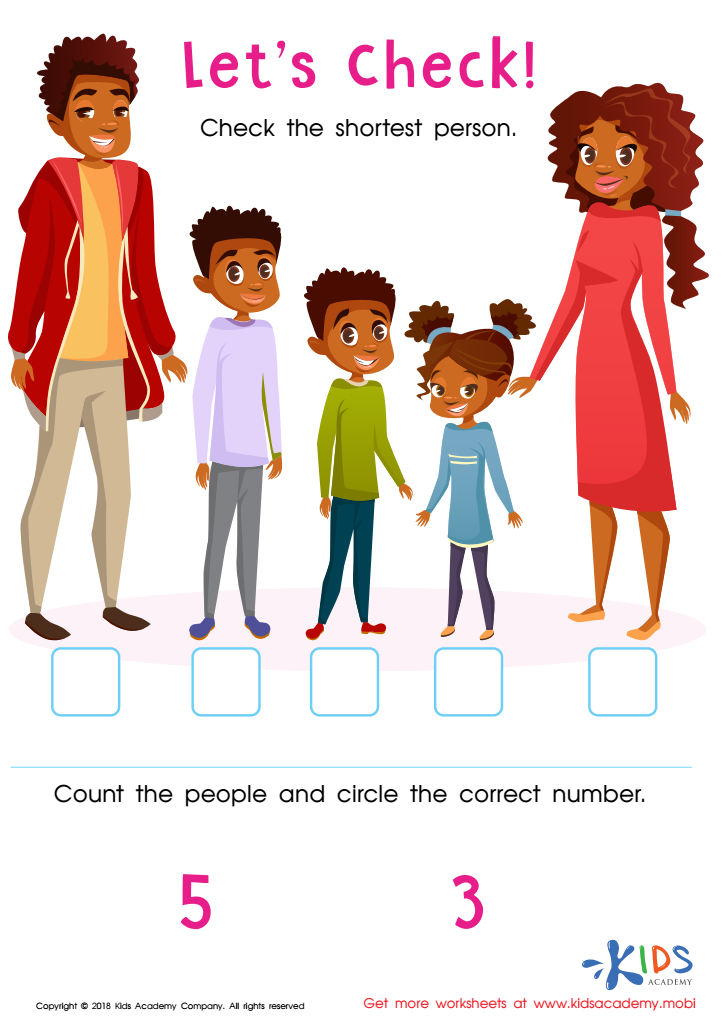
Check your child's understanding of height with this worksheet. Ask them to sort the objects in order of size and identify the tallest and shortest member of the family in the picture. See if they can correctly arrange the items from tallest to shortest.
Let's Check! Assessment Worksheet
Worksheet
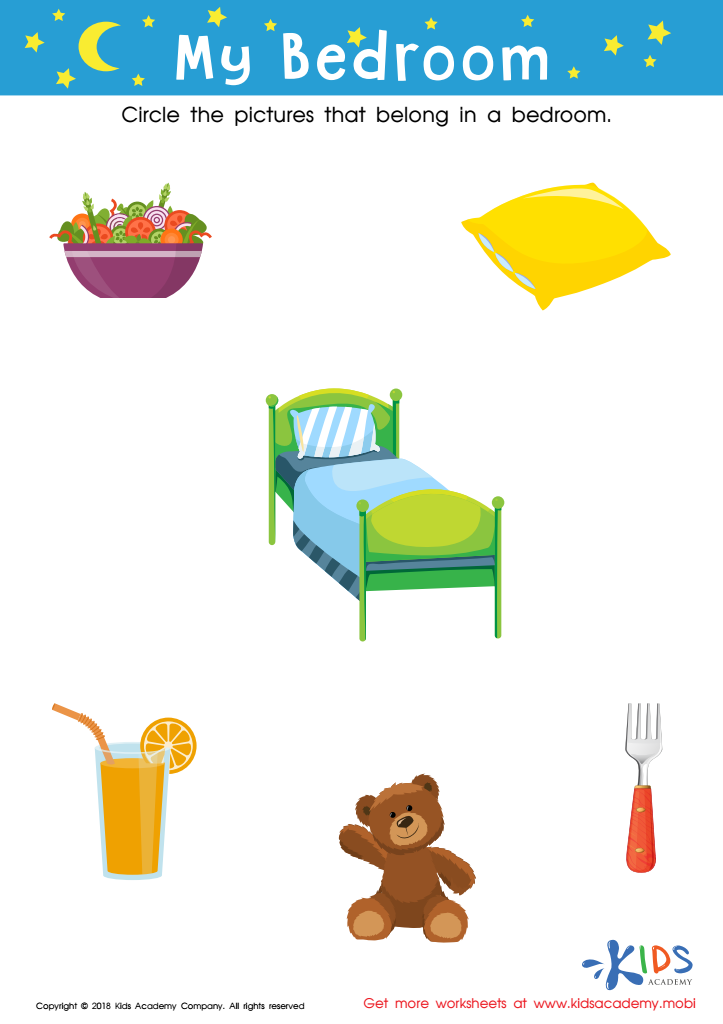
My Bedroom Worksheet

My Bedroom Worksheet

Your child's room is their special space, where only a few are allowed in. You may have let them choose some special decorations, like wall stickers and toys. This exercise will be easy for your child, as they know their bedroom well. Ask them to circle the pictures that belong in a bedroom.
My Bedroom Worksheet
Worksheet
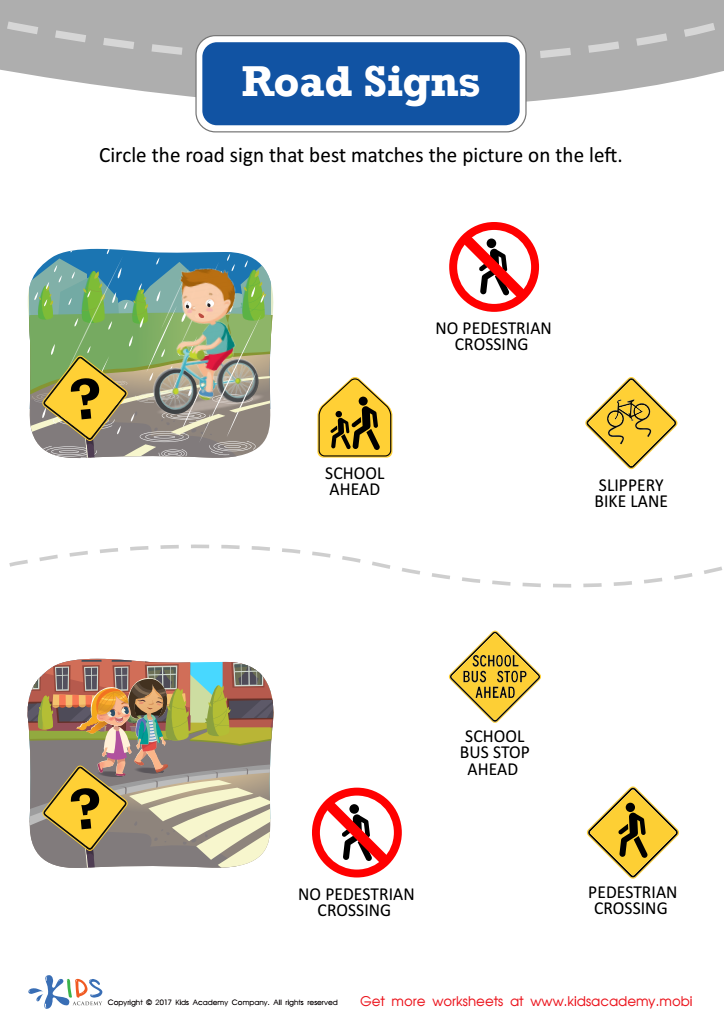
Road Signs for Kids Worksheets

Road Signs (Part 2) Printable

Help your child stay safe with road sign worksheets! These worksheets help kids recognize common traffic signs, boost comprehension and symbol recognition, and know when to stay safe near or on roads. Use the sheets to start a conversation, and take your child out to spot signs near home or school.
Road Signs (Part 2) Printable
Worksheet
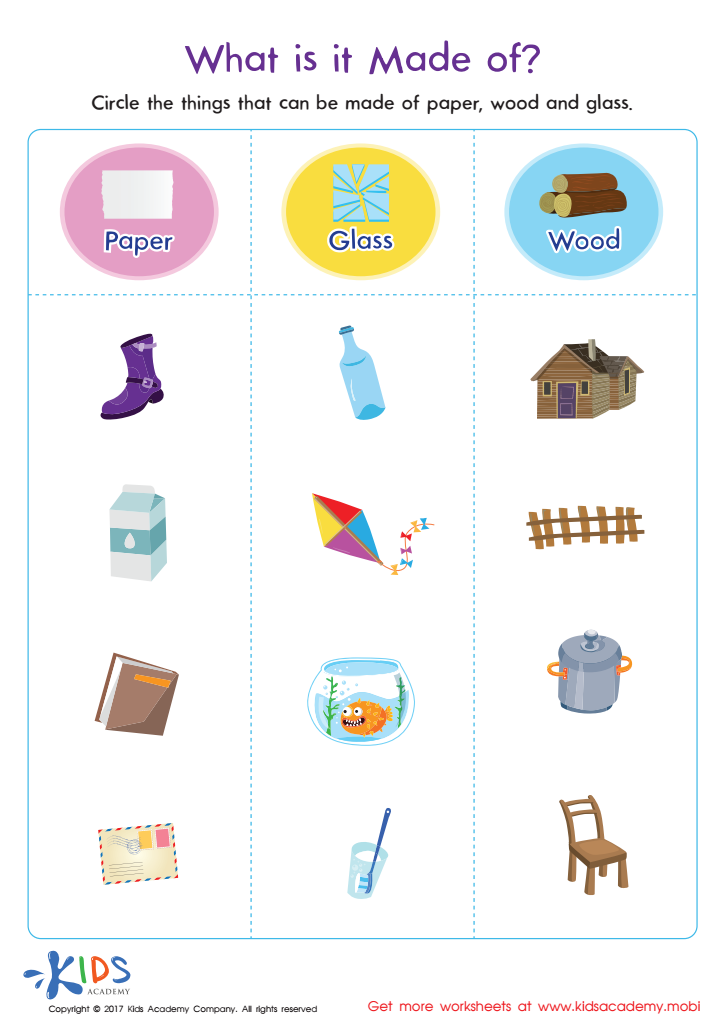
What Is It Made of Worksheet

What Is It Made of Worksheet

What Is It Made of Worksheet
Worksheet
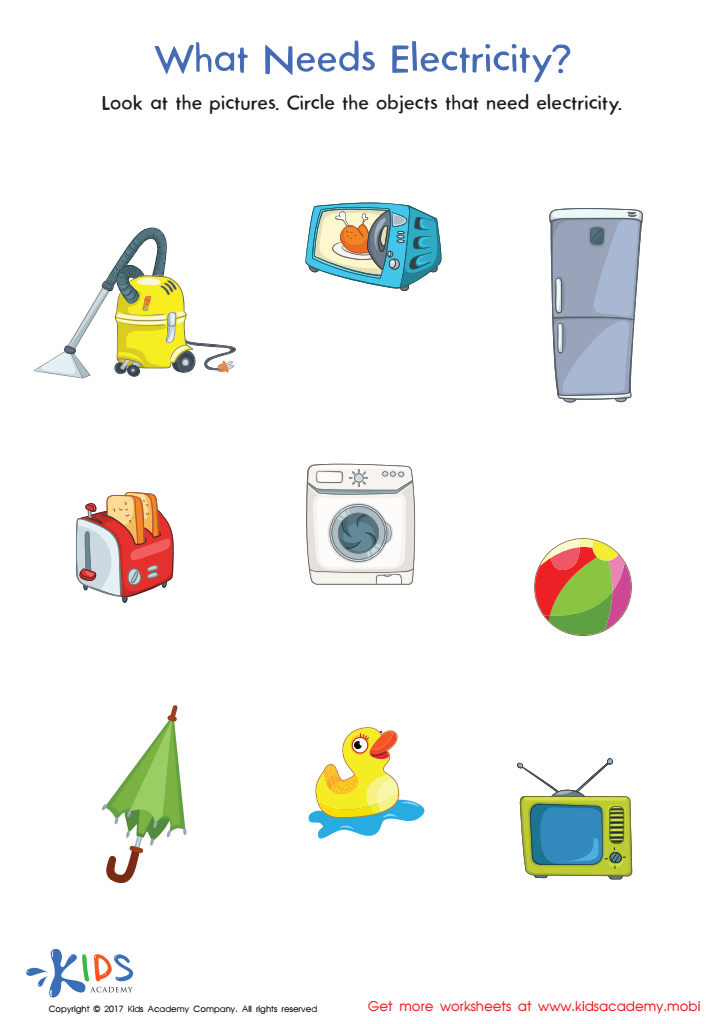
Electricity Worksheet for Kids

What Needs Electricity Printable

Up to 80 words: This worksheet will help your child use sorting skills to find the right objects that need electricity, strengthen problem solving skills, and learn more about electricity and electrical appliances. Let this fascinating science topic teach your little learner about the objects in their lives that need electricity!
What Needs Electricity Printable
Worksheet
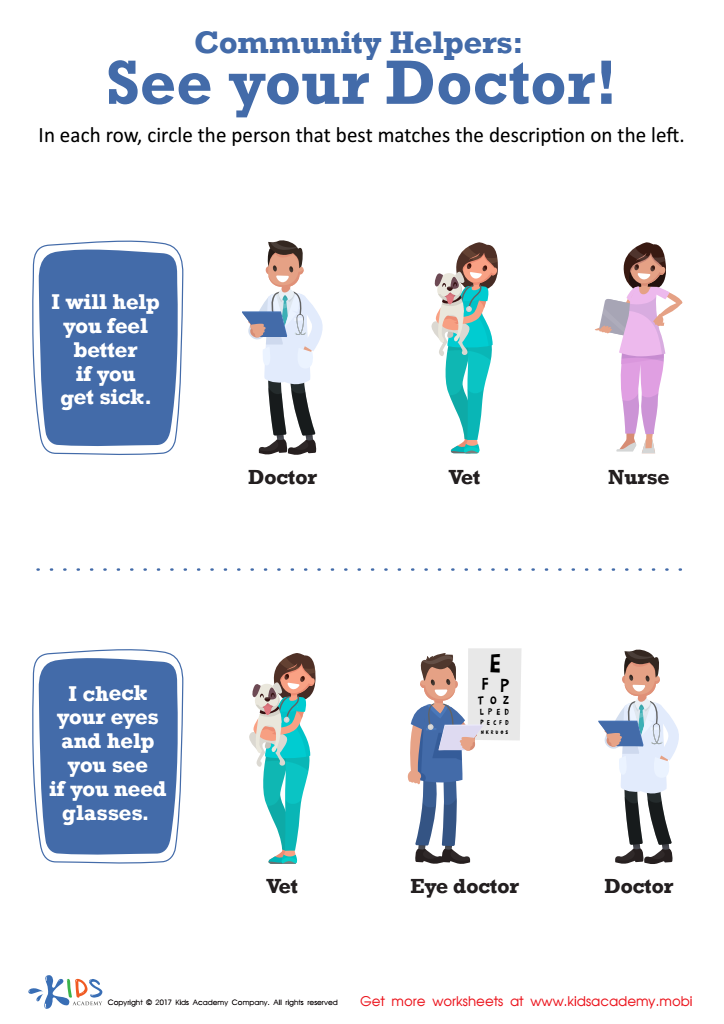
See Your Doctor Worksheet

See Your Doctor (Part 1) Printable

Your child may be scared of doctors, but this worksheet can help them appreciate them. It teaches about different types of doctors and helps them understand more about their community. Learning about different professions is a great way to discover potential interests, so let's get started with community helpers!
See Your Doctor (Part 1) Printable
Worksheet
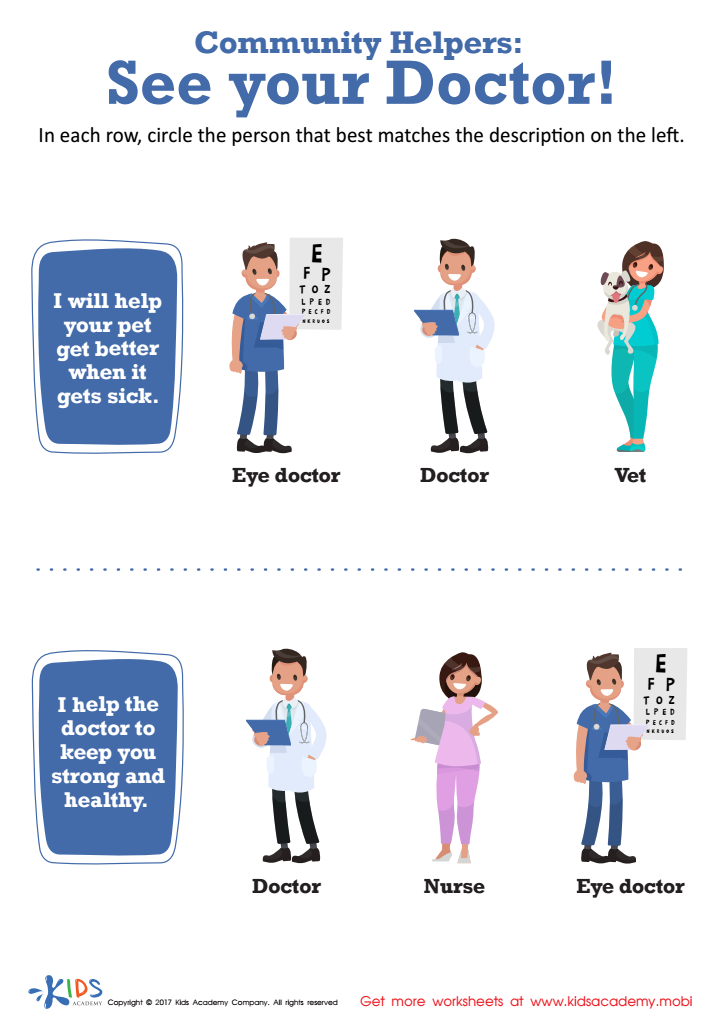
See Your Doctor Worksheet

See Your Doctor (Part 2) Printable

Nurses, vets and eye doctors fulfill important needs in our communities. With this worksheet, your child can recognize and classify different types of doctors and explore potential interests. Learn more about the people in our community, and start a conversation about potential interests. A great way to make your child think about different types of doctors!
See Your Doctor (Part 2) Printable
Worksheet
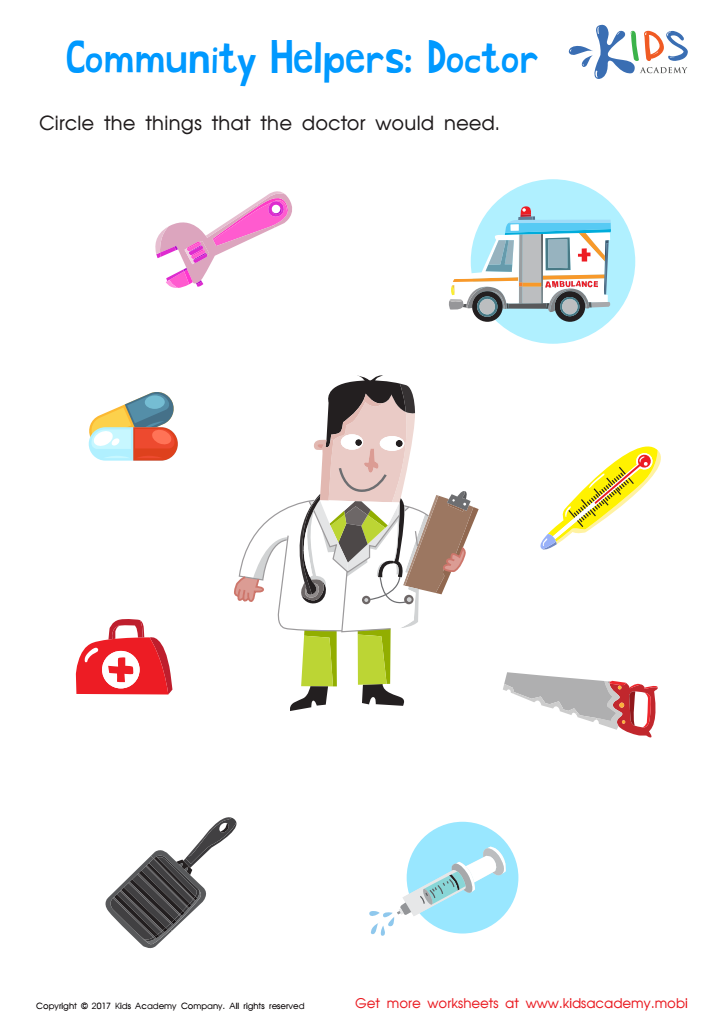
Community Helpers Doctor

Doctor Community Helpers Worksheet

Doctor Community Helpers Worksheet
Worksheet
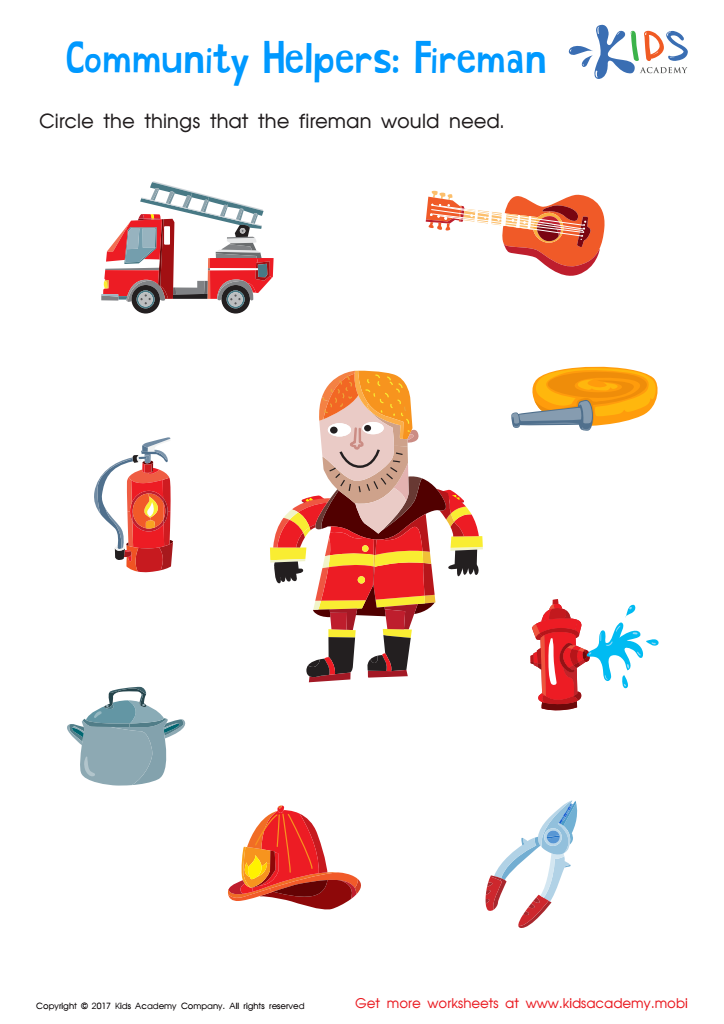
Community Helpers Fireman

Fireman Worksheet

Kids love firemen and their big fire engines! Inspire your child to learn about their duties with this fun fireman worksheet. It'll help your child understand the role of firemen, as well as develop matching and problem solving skills. Get your kid started on understanding a key role in society and have fun too!
Fireman Worksheet
Worksheet
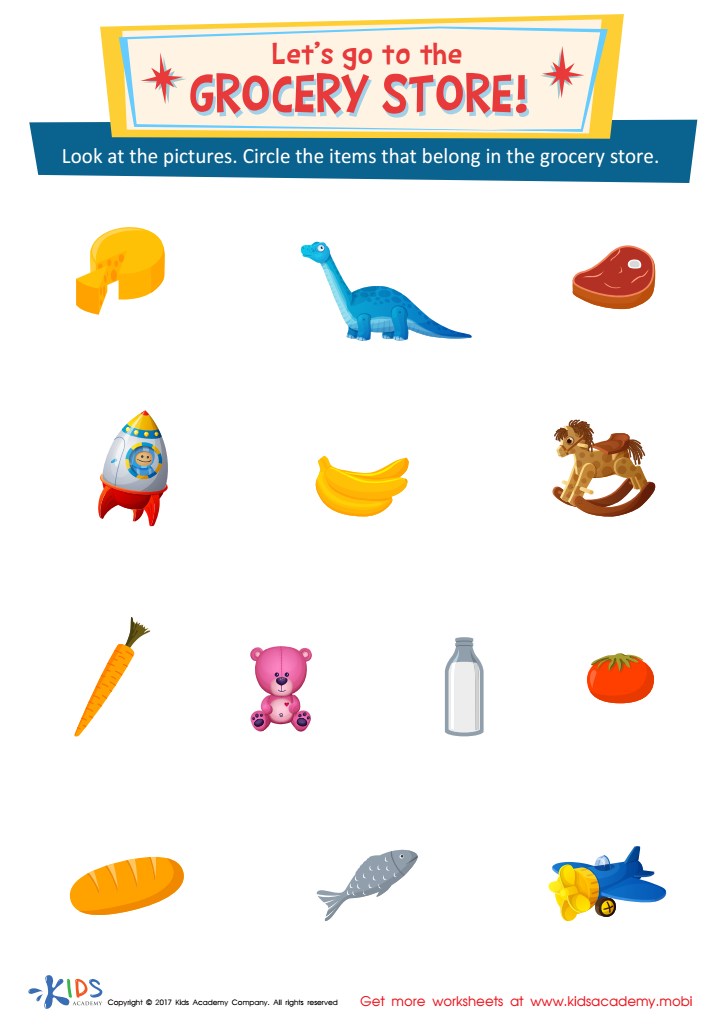
Grocery Store Sorting Worksheet

Grocery Store Worksheet

Kids love going to the grocery store for free samples and munchies! With this grocery store sorting worksheet, they can practice sorting, problem-solving and thinking skills. Learning experiences from real life, like grocery shopping, can be brought to your child's desk for fun matching activities. Try it out and look for these items the next time you go to the store!
Grocery Store Worksheet
Worksheet
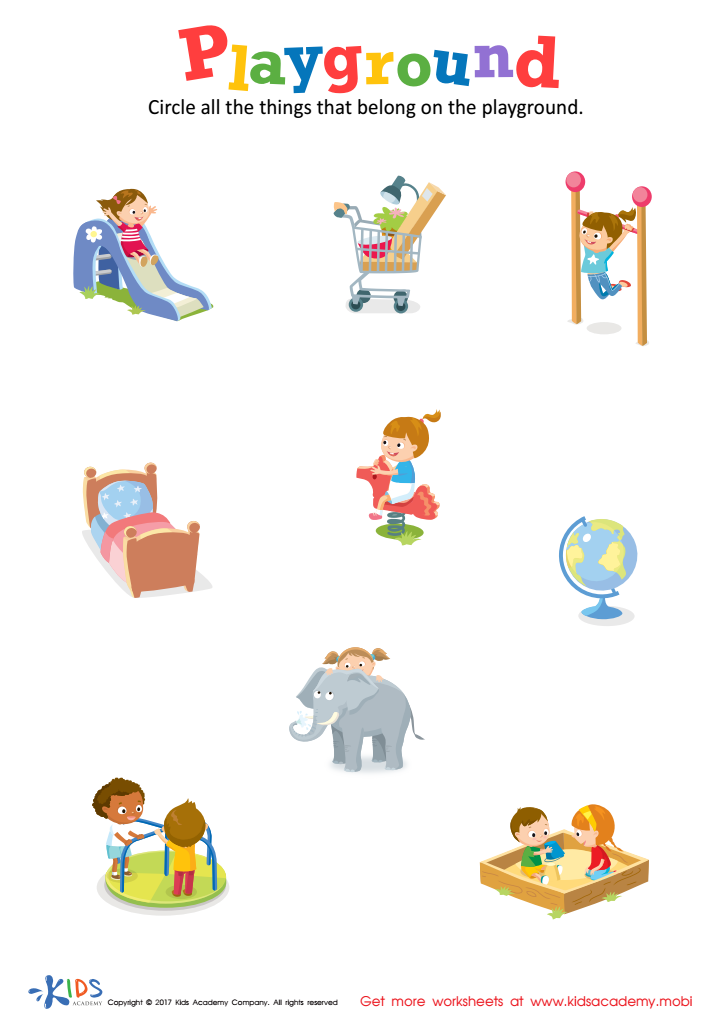
Playground Sorting Worksheet

Playground Worksheet

Head to the park with this playground worksheet! It strengthens sorting and cognitive skills while encouraging problem solving. Plus, it's fun-filled and engaging! When finished, head out to the park to see what items your child finds in the playground!
Playground Worksheet
Worksheet
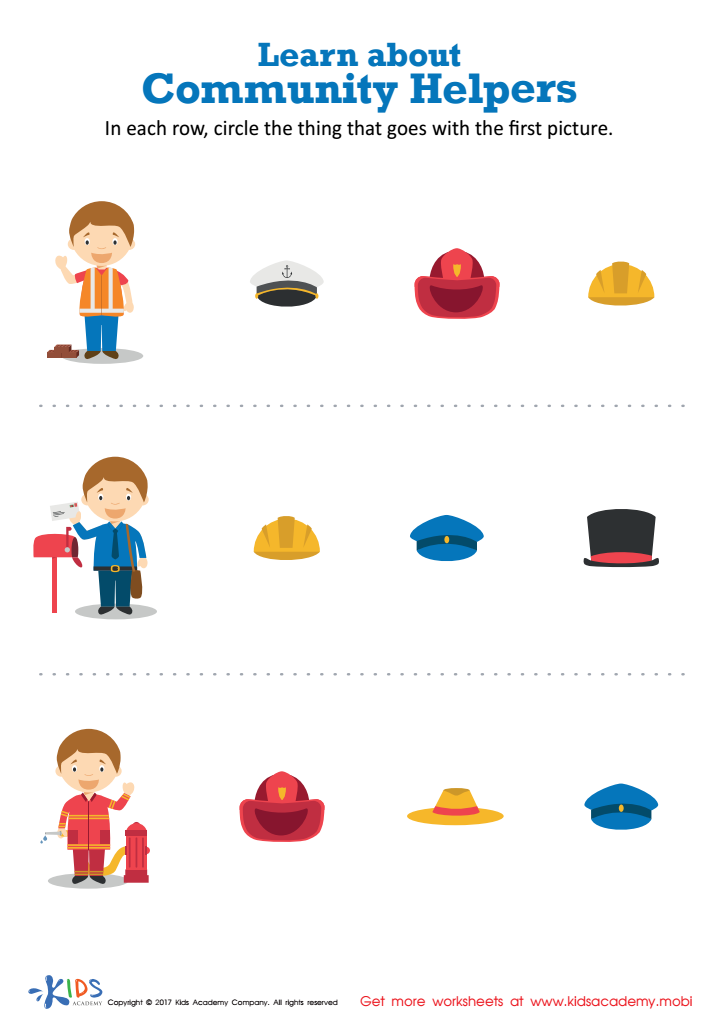
Community Helpers Printable Worksheet

Learn about Community Helpers Printable
Introduce your little one to the amazing and hard-working people in the community with this free worksheet. It will help them use matching and observational skills to match the correct hat to its worker and recognize community helpers. Perfect for early learners, this worksheet uses familiar images to help them gain a deeper appreciation for their community helpers!
Learn about Community Helpers Printable
Worksheet
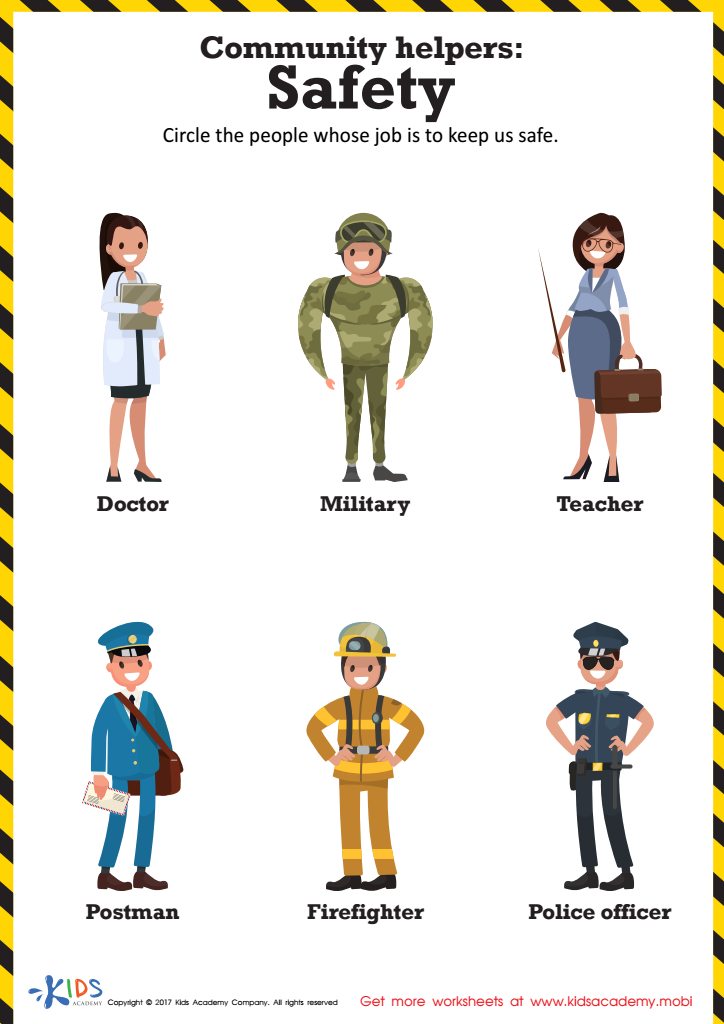
Community Helpers: Safety Printable

Safety Worksheet

Safety Worksheet
Worksheet
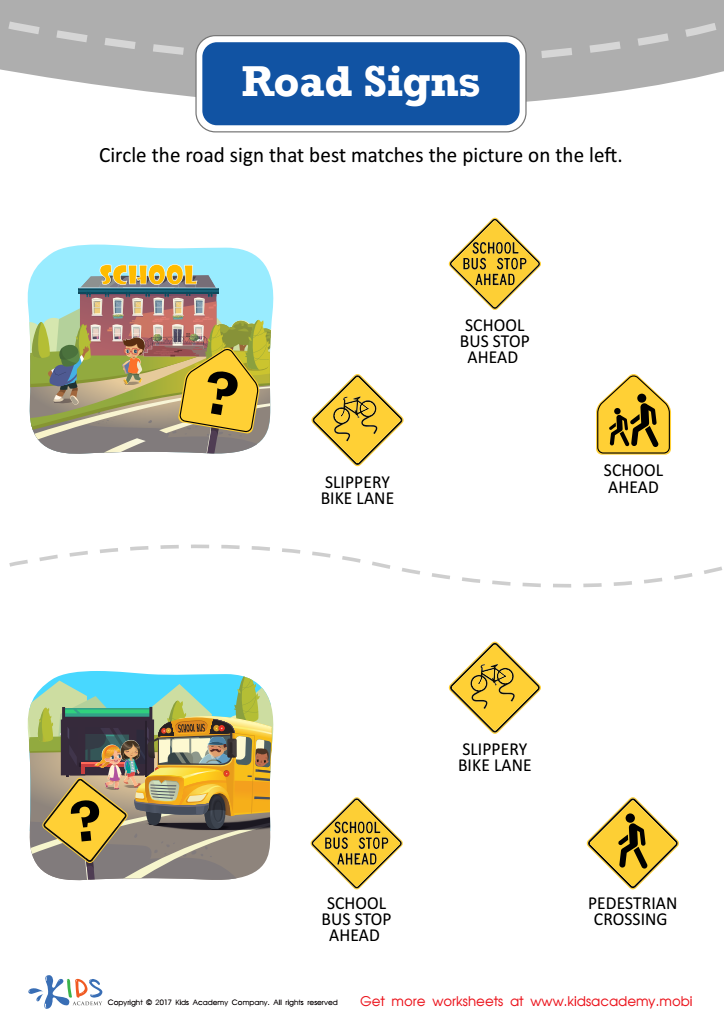
Road Signs Worksheet Printable

Road Signs (Part 1) Worksheet

Kids are exposed to danger near roads, so help them recognize traffic signs with this printable. It'll foster their reading comprehension and symbol recognition, while keeping them safe.
Road Signs (Part 1) Worksheet
Worksheet


Parents and teachers play a vital role in shaping a child's experiences during their formative years, particularly for those aged 4 to 8. The concepts and social tools learned within a community directly influence a child's development, including their emotional, social, and cognitive skills. A supportive normal community serves as a safe environment for children to explore, learn, and interact with their peers, fostering positive relationships and communication.

Participating in a nurturing community equips children with resilience, empathy, and cooperation—skills essential for lifelong success. Parents and teachers should actively engage with such communities to ensure that children have access to enriching activities, diverse food, and educational resources that encourage exploration and stimulate creativity.

Furthermore, a strong community reduces feelings of isolation, creating a sense of belonging that is crucial during these formative years. Interactive play, group projects, and shared cultural lessons can ignite a child's enthusiasm for learning while enhancing their emotional intelligence. Ultimately, investments in such normal communities enhance the collective growth of children, guiding them toward becoming well-rounded individuals who are prepared for the challenges of the future. Investing in nurturing environments truly benefits children, fostering their well-being and laying the foundation for lifelong learning.