Normal Geometry Worksheets for Ages 5-8 - Page 4
75 filtered results
-
From - To
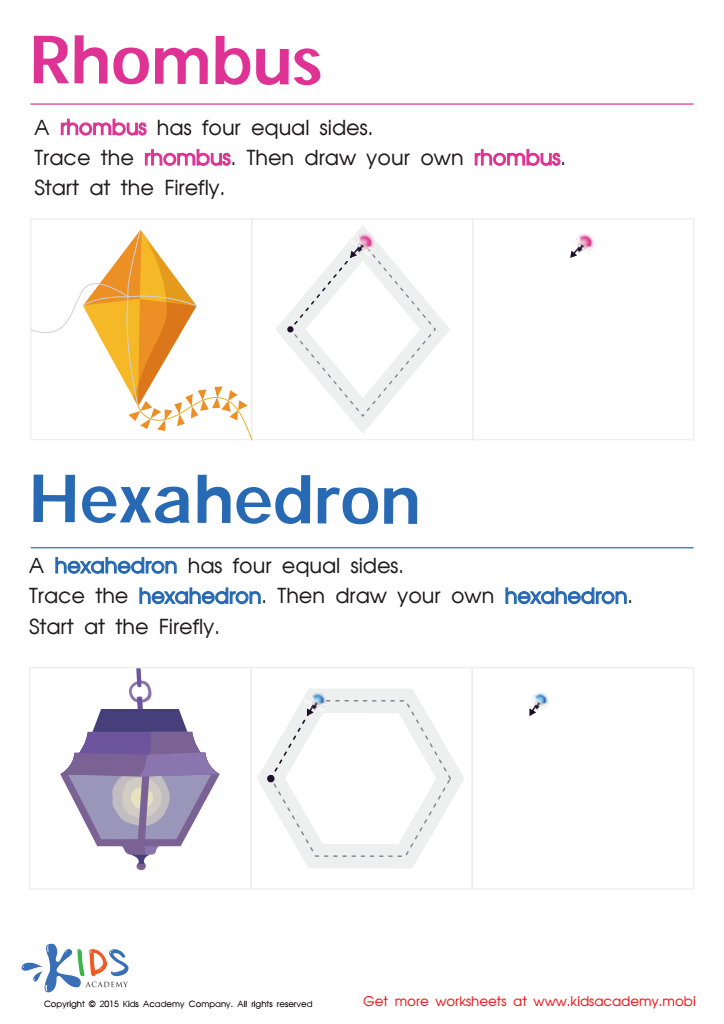
Draw a Rhombus And a Hexahedron Printable
 Assign to My Students











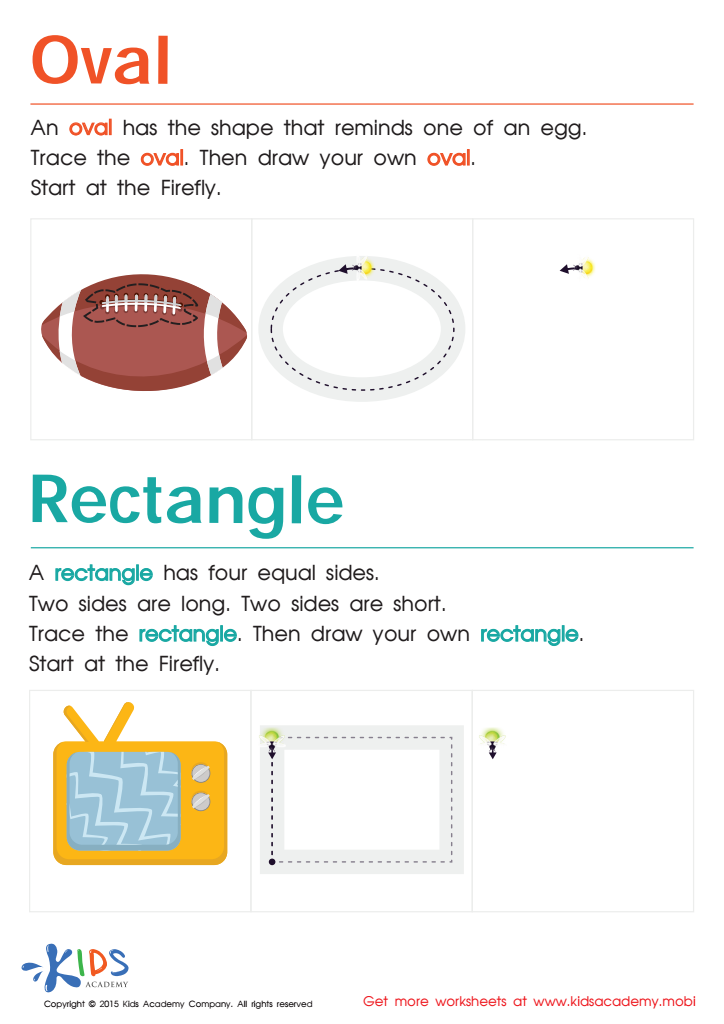
Easy Drawing of Ovals And Rectangles Worksheet
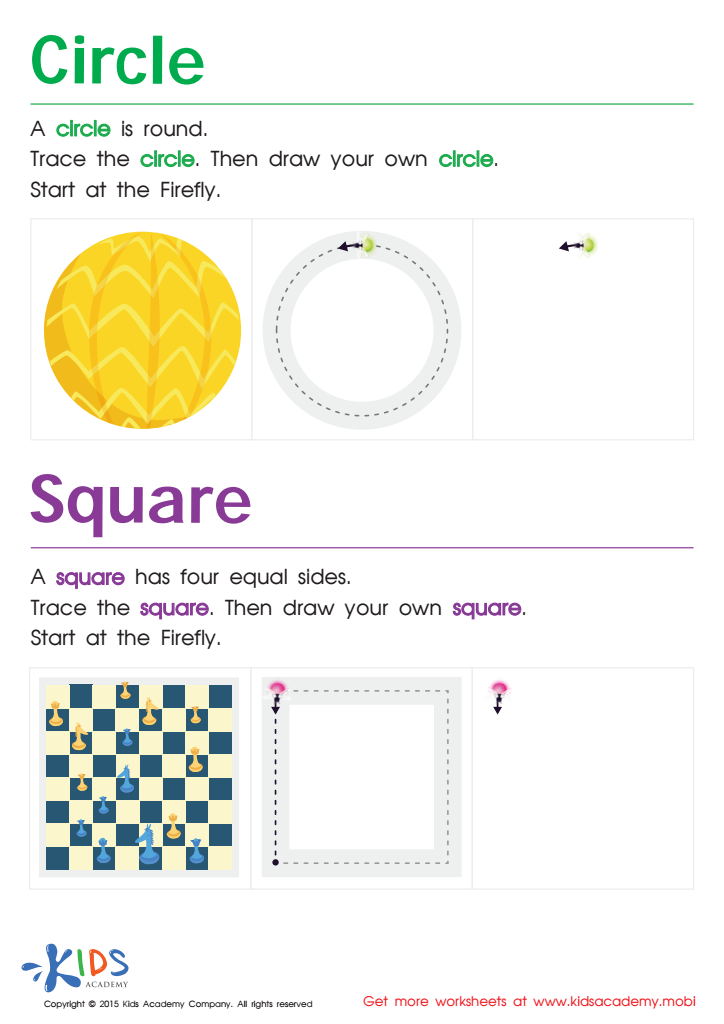
Trace And Draw a Circle And a Square Worksheet








Understanding normal geometry is crucial for children aged 5-8 as it lays the foundation for essential cognitive skills and critical thinking. During these formative years, children begin to explore patterns, shapes, and spatial relationships, which are integral parts of their overall learning experience.
Firstly, geometry enhances a child's ability to observe and describe the world around them. Familiarizing young learners with shapes—both two-dimensional and three-dimensional—helps them recognize and articulate differences, enhancing verbal skills and observational learning.
Moreover, engaging with geometric concepts encourages problem-solving and critical thinking. Children learn to manipulate shapes, which can boost their spatial awareness and mental visualization skills. This can foster later mathematical proficiency, as well, as geometry forms the basis of more complex mathematical concepts.
In addition to cognitive skills, elementary geometry can support creativity. When children engage in hands-on activities, like creating patterns or constructing models, they also develop fine motor skills while expressing their imaginative ideas.
Ultimately, parents and teachers should prioritize normal geometry, as it not only underpins academic achievement but also nurtures essential life skills. By investing in early geometry education, they pave the way for a well-rounded learning journey.








