Normal Graphs Worksheets for Ages 5-8
4 filtered results
-
From - To
Discover our engaging Normal Graphs Worksheets designed specifically for children aged 5-8. These resources help young learners develop foundational skills in interpreting and creating simple graphs. With colorful visuals and age-appropriate exercises, kids will enjoy representing data using bar graphs, pictographs, and line plots. Our worksheets encourage problem-solving and critical thinking, making math interactive and fun. Perfect for classroom use or at-home learning, these worksheets align with early math curriculum standards. Download now to help your child build confidence in their graphing abilities while fostering a love for math that lasts a lifetime!
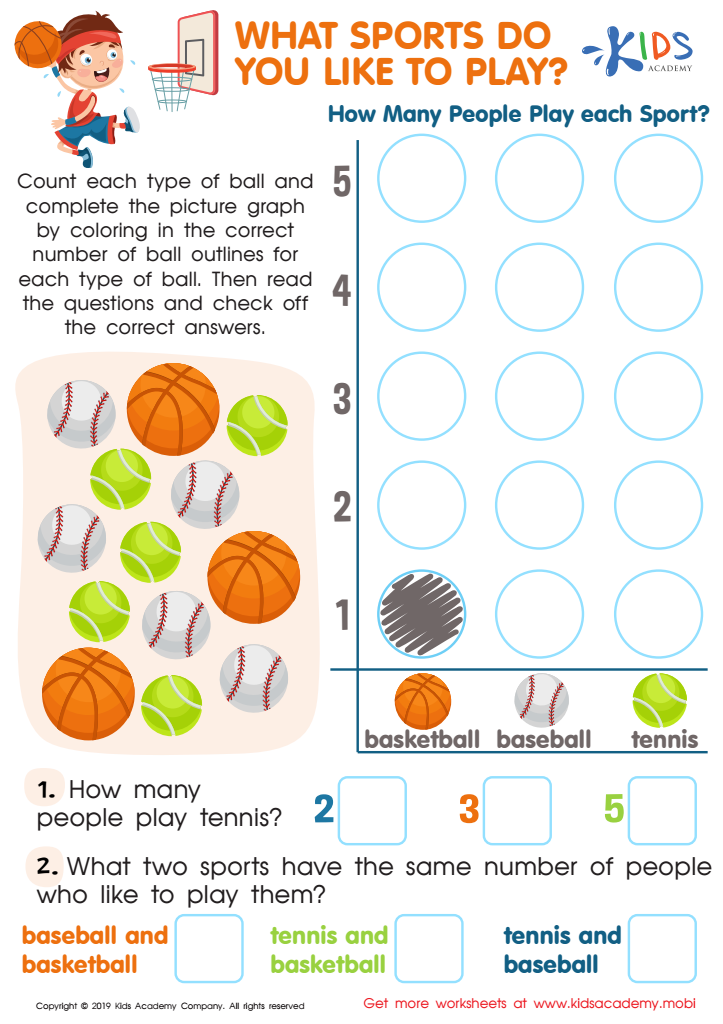
What Sports Do You Like to Play Worksheet
 Assign to My Students
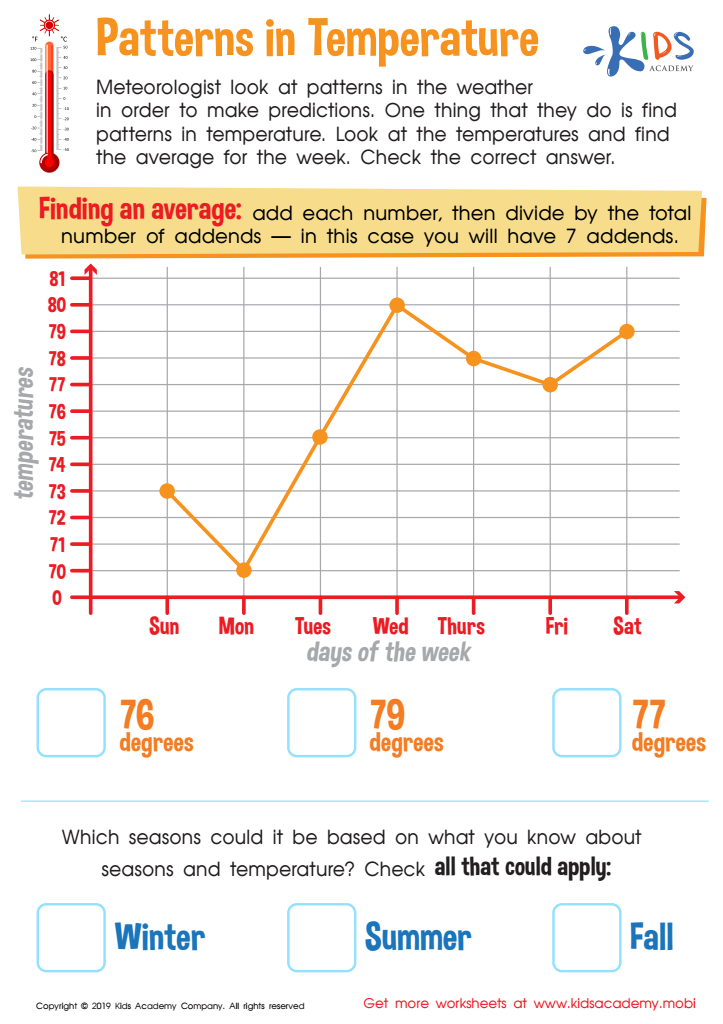
Patterns in Temperature Worksheet
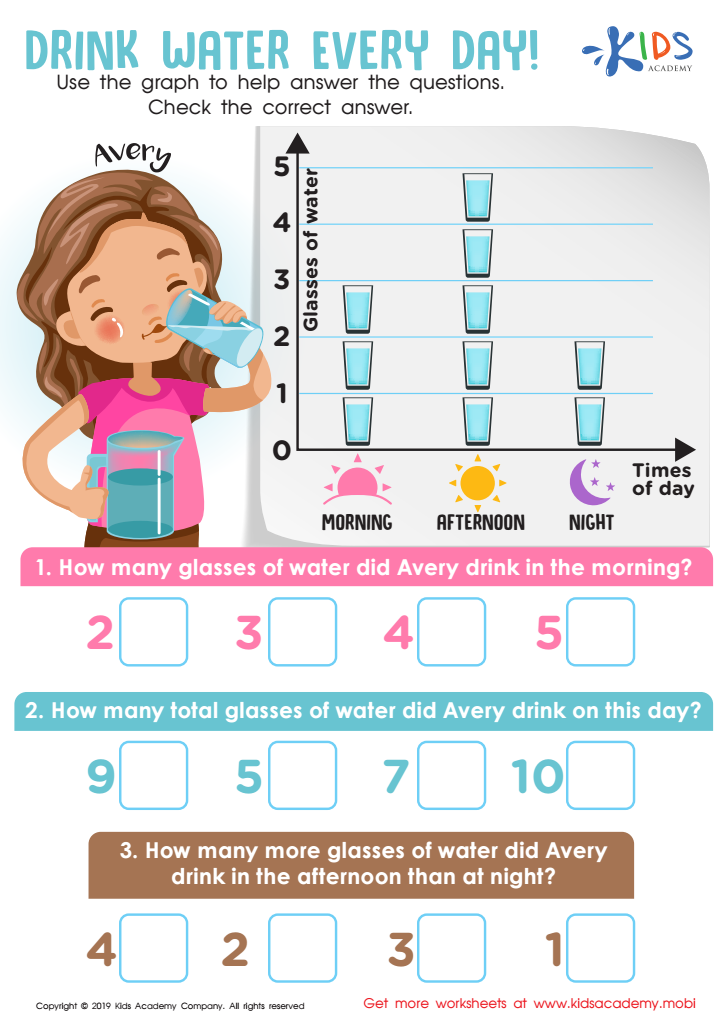
Drink Water Every Day! Worksheet
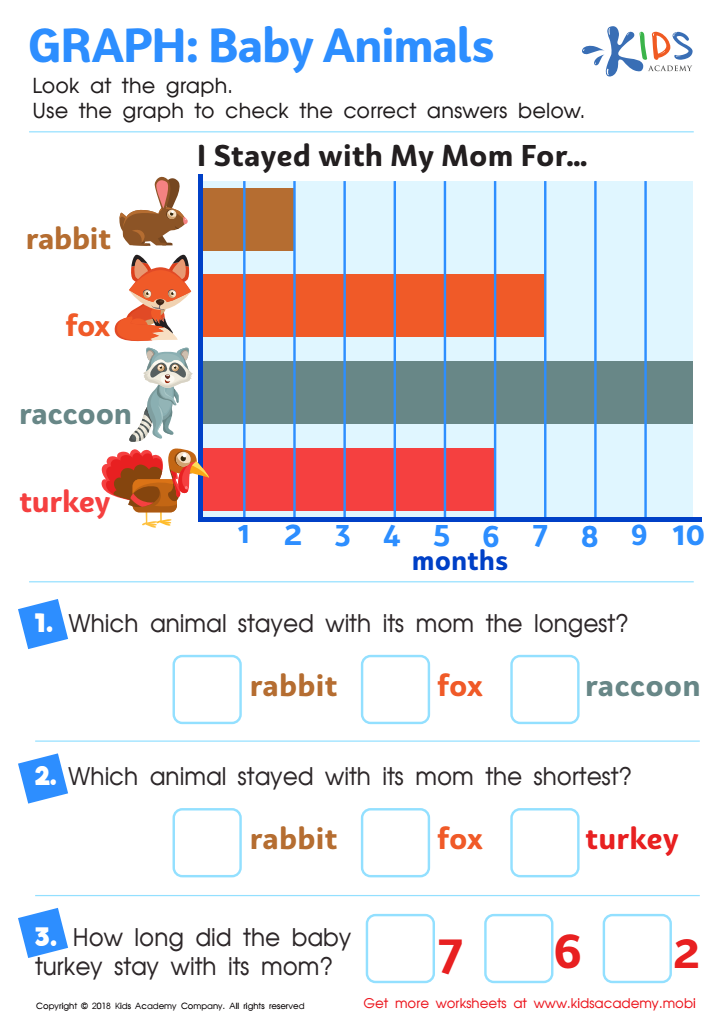
Graph: Baby Animals Worksheet








Normal graphs are essential tools for parents and teachers of children ages 5-8 because they provide visual representations of data that help young learners understand and interpret information. As children begin to explore basic math concepts, familiarizing them with graphs lays the foundation for critical thinking and problem-solving skills.
Graphs help students visualize relationships between quantities, making abstract mathematical ideas more tangible. For example, a bar graph displaying favorite fruits allows children to compare data and identify patterns. This visualization fosters reasoning skills, as children analyze what the graph shows and draw conclusions based on the information presented.
Moreover, normal graphs encourage discussions around data interpretation, helping students engage in collaborative learning. Parents and teachers can use these discussions to reinforce vocabulary related to data analysis, enhance literacy skills, and promote mathematical language.
Additionally, early exposure to normal graphs nurtures analytics skills vital for future academic success. By integrating graph-based learning experiences into educational activities, parents and teachers contribute to well-rounded cognitive development. Ultimately, embracing normal graphs as part of early education enriches children's understanding of the world around them, instilling a sense of curiosity and a love for learning.








