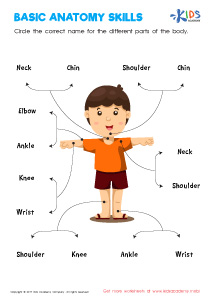
Normal Physical Science Worksheets for Ages 5-8
3 filtered results
-
From - To
Discover our collection of Normal Physical Science Worksheets designed for children aged 5-8! These interactive and engaging worksheets help young learners explore the fascinating world of physical science. With vibrant illustrations and age-appropriate content, students will delve into essential concepts such as matter, energy, force, and motion. Our worksheets support hands-on learning, encouraging kids to ask questions, conduct simple experiments, and develop critical thinking skills. Perfect for home or classroom use, these resources promote curiosity and a passion for science in early education. Download and start your child's scientific journey today with Kid Academy's fun and educational worksheets!
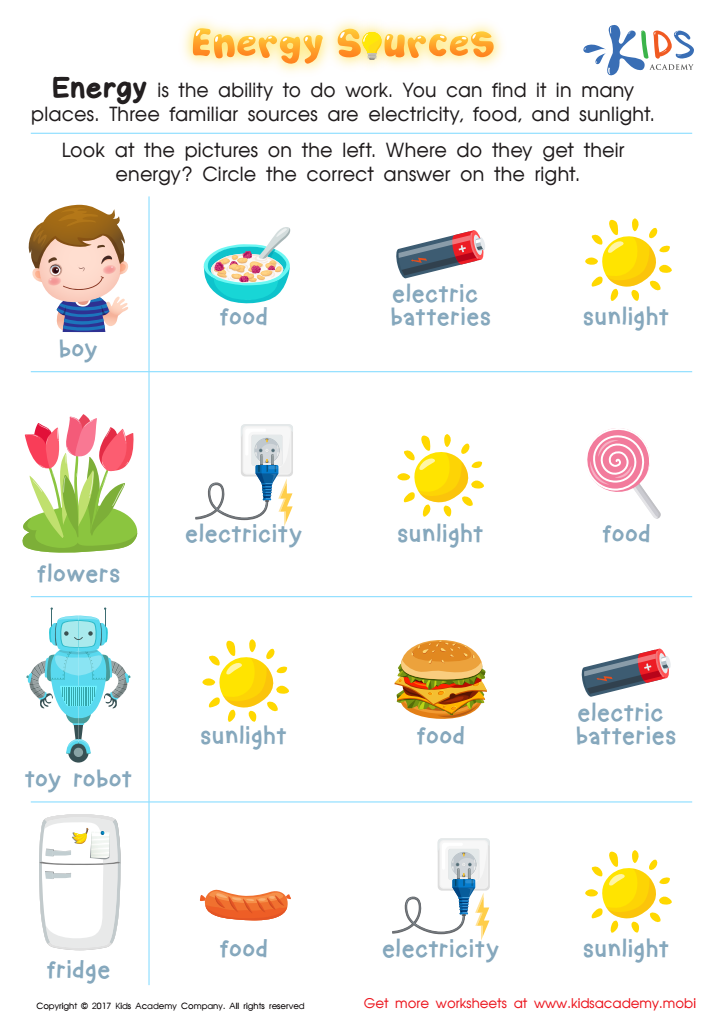
Energy Sources Printable
 Assign to My Students
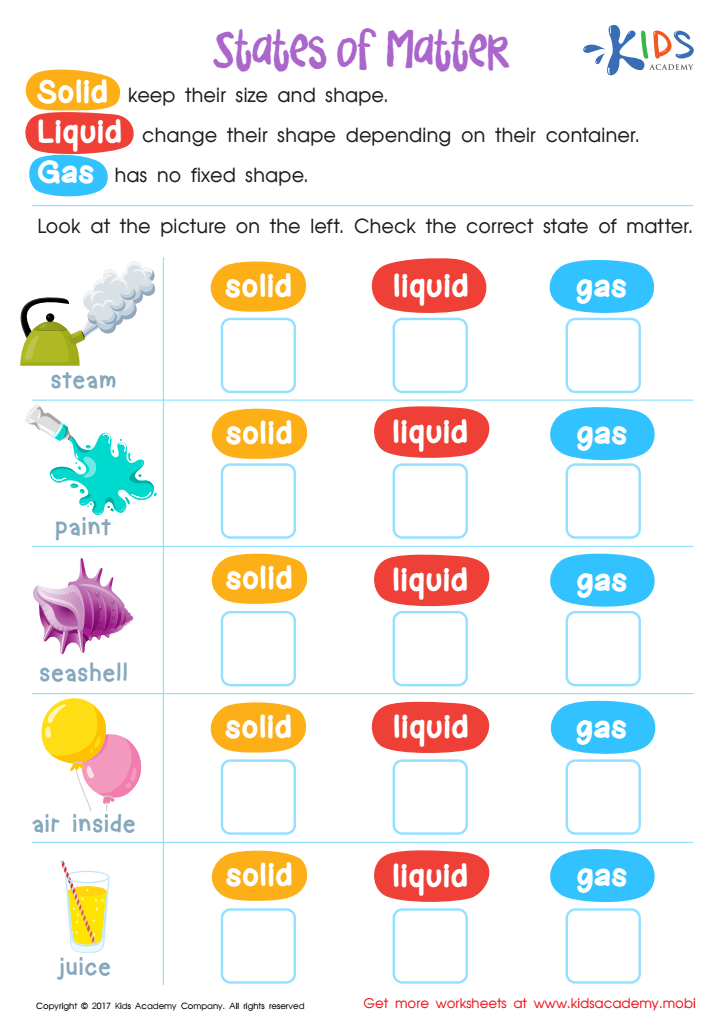
Physical Science: States of Matter Worksheet
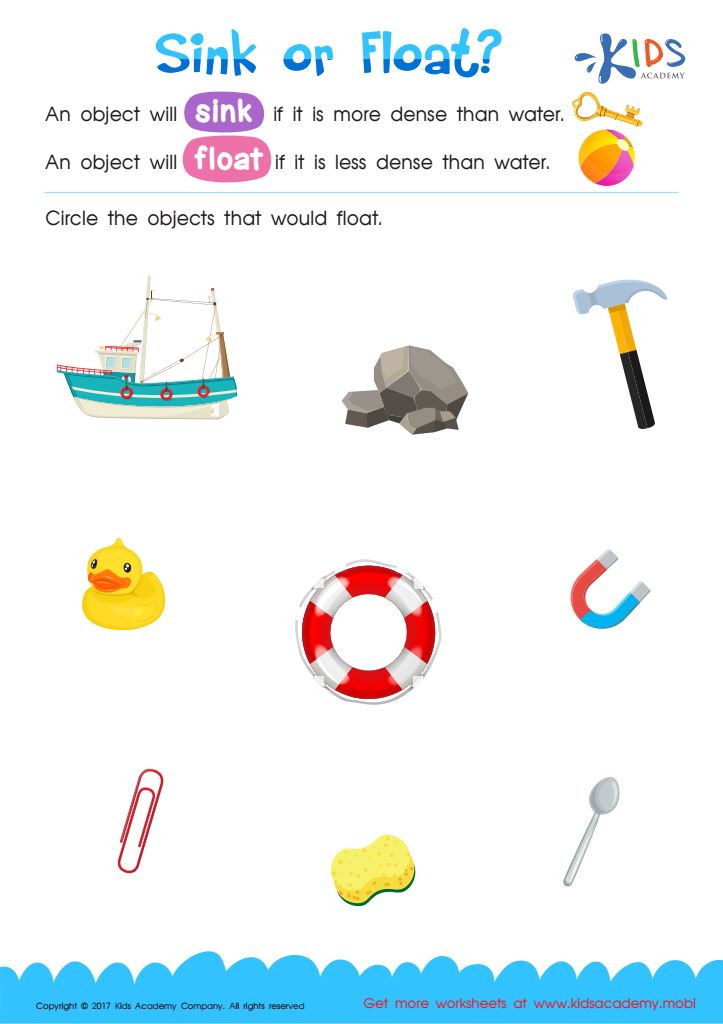
Sink or Float Printable







Normal Physical Science for ages 5-8 is crucial in nurturing young minds and fostering a love for learning. At this age, children exhibit an innate curiosity about the world around them. Understanding basic physical science concepts helps satisfy this curiosity, as they begin to ask fundamental questions about how things work.
Introducing topics like force, motion, matter, and energy aligns with their developmental stage, encouraging inquiry-based learning. Engaging young learners through hands-on experiments and interactive activities enhances critical thinking, problem-solving, and creativity, laying the groundwork for future scientific understanding.
Moreover, early exposure to physical science cultivates important skills like observation, measurement, and pattern recognition, which are transferable to other subjects. As they learn to explore, predict, and analyze outcomes, children develop a systematic way of thinking.
Parents and teachers should care about incorporating physical science in early education because it is not just about imparting knowledge; it is about fostering a lifelong appreciation for science. This foundational knowledge and curiosity may inspire future innovation and academic pursuits, ultimately benefiting society as a whole. By supporting physical science education, parents and teachers play a vital role in shaping the next generation of thinkers and problem-solvers.