Normal Fractions of Shapes Worksheets for Ages 6-7
5 filtered results
-
From - To
Unveil the world of fractions in a fun and engaging way with our "Normal Fractions of Shapes for Ages 6-7" worksheets. Specially crafted for young learners, these worksheets introduce the concept of fractions through colorful and interactive shapes, making complex ideas easily understandable. Children will explore halves, thirds, and quarters, applying their knowledge to familiar geometric shapes. Perfect for building a strong mathematical foundation, these worksheets are designed to boost confidence and encourage curiosity in budding mathematicians. Dive into the basics of fractions and watch your child's skills blossom with our Normal Fractions of Shapes worksheets—where learning meets creativity and fun!
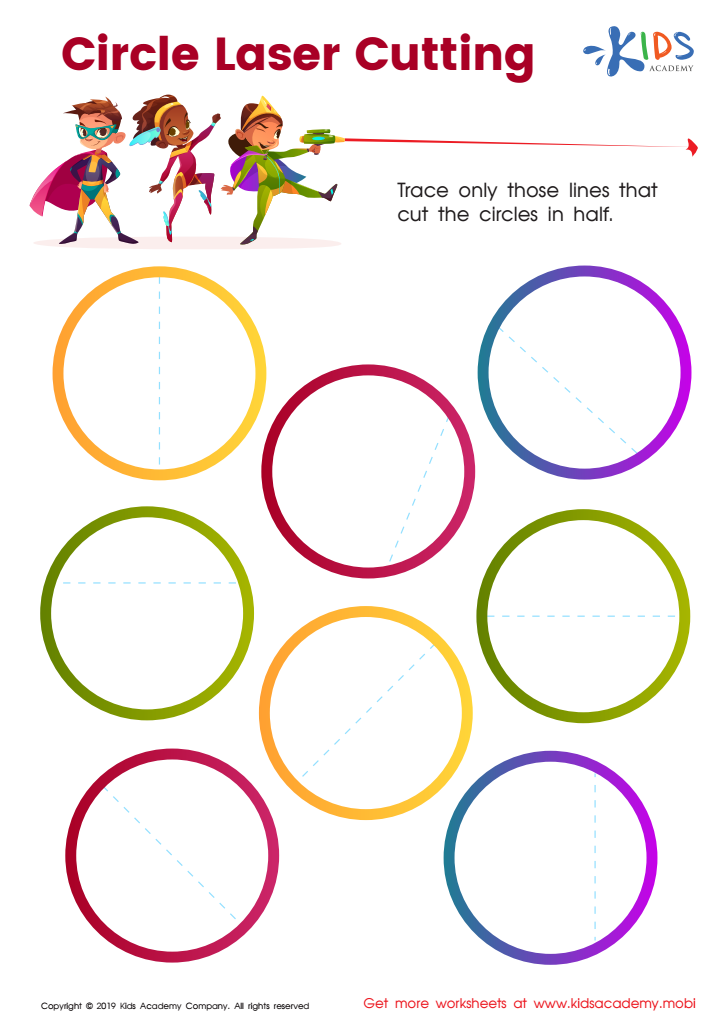
Circle Laser Cutting Worksheet
 Assign to My Students
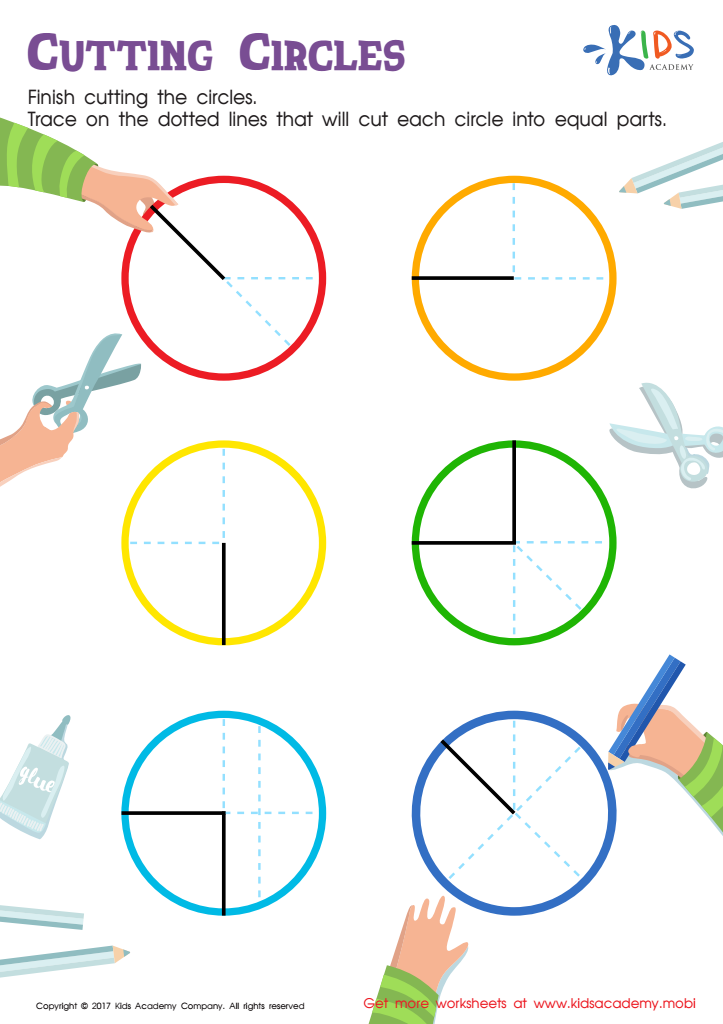
Cutting Circles Worksheet
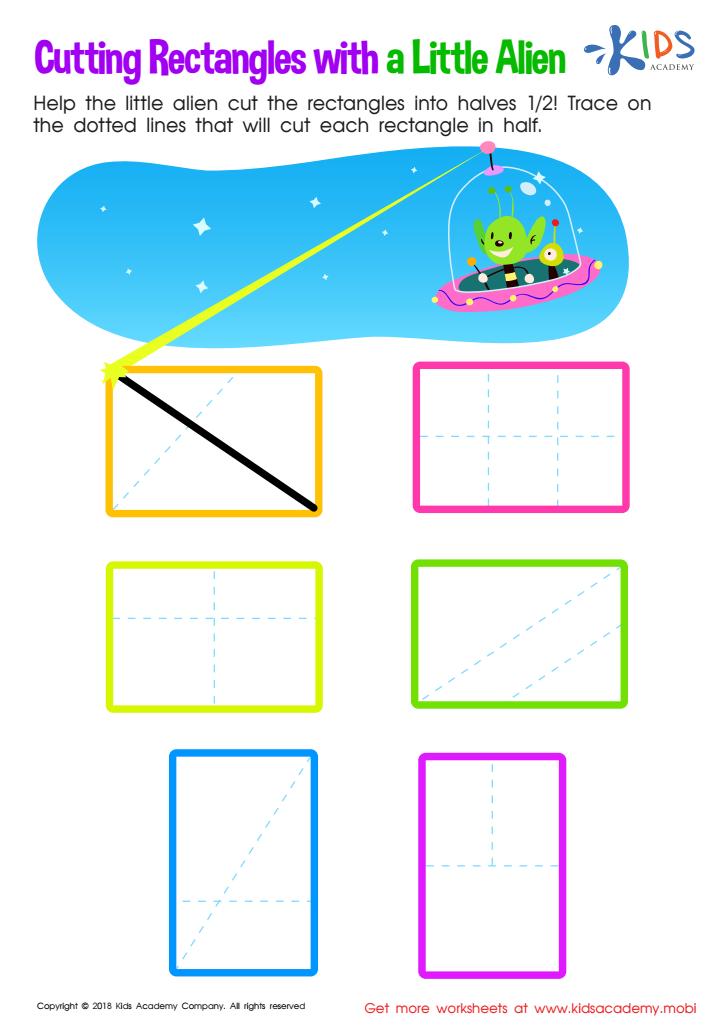
Cutting Rectangles with Alien Worksheet
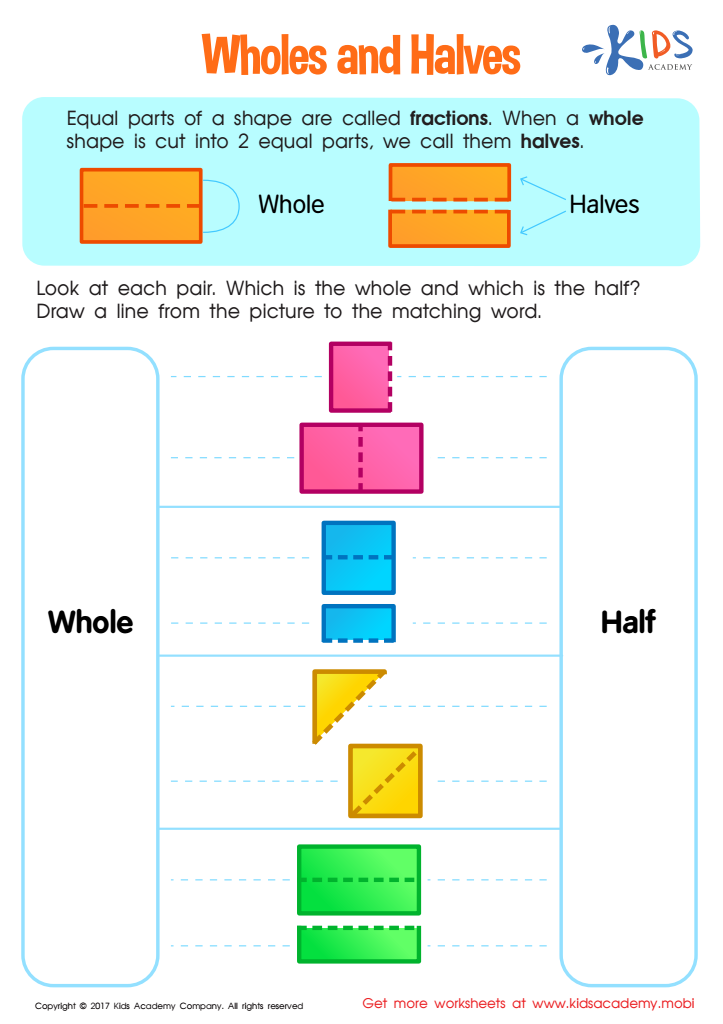
Wholes and Halves Worksheet
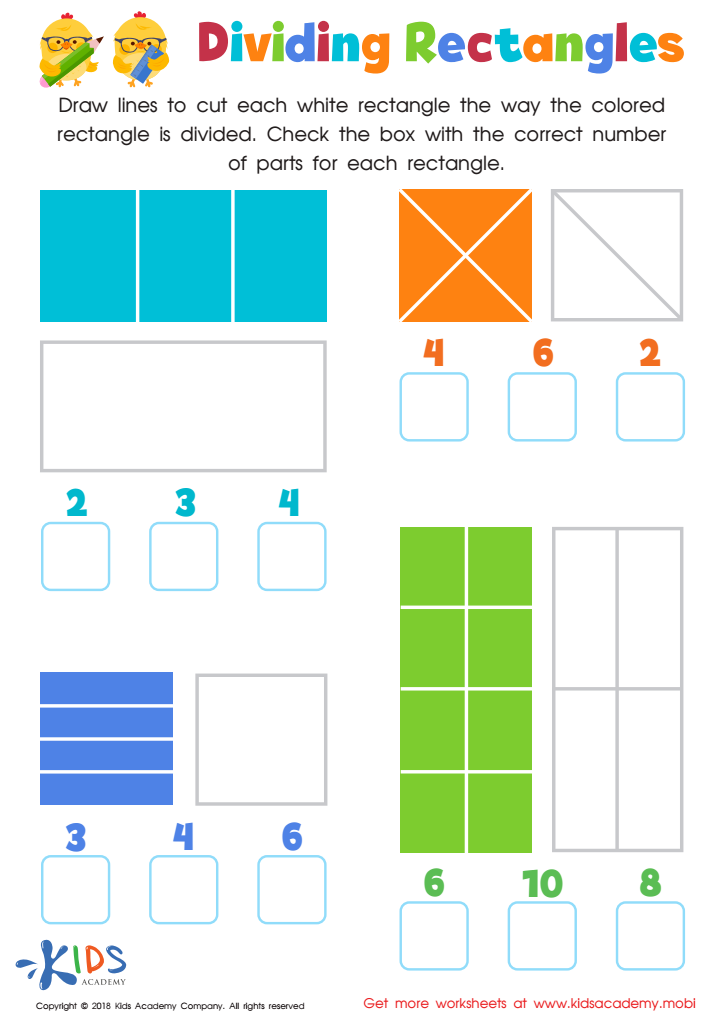
Dividing Rectangles Worksheet








Normal Fractions of Shapes worksheets for Ages 6-7 are an invaluable resource for young learners embarking on their mathematical journey. At this crucial age, children begin to grasp the foundational concepts that will support their understanding of more complex mathematical ideas in the future. These worksheets are specifically designed to introduce the concept of fractions in a highly visual and engaging manner, using shapes to represent parts of a whole, thus making an abstract concept much more concrete and understandable for young minds.
The use of shapes not only draws the interest of 6-7-year-olds, who are naturally curious about the world around them, but also helps them visually and practically understand how a whole can be divided into parts. This early exposure to fractions sets the stage for a deeper understanding of division, ratios, and proportions as they progress through their education. Furthermore, these worksheets enhance critical thinking and problem-solving skills, as children learn to compare, contrast, and conceptualize fractions of different shapes.
By integrating Normal Fractions of Shapes worksheets into the curriculum for Ages 6-7, educators and parents provide children with a fun, engaging, and effective way to develop a strong mathematical foundation. These worksheets not only foster a love for math but also build confidence in young learners as they successfully navigate the challenges presented to them, preparing them for more advanced mathematical concepts in the future.