Normal Vowels and Consonants Worksheets for Ages 6-8 - Page 2
26 filtered results
-
From - To
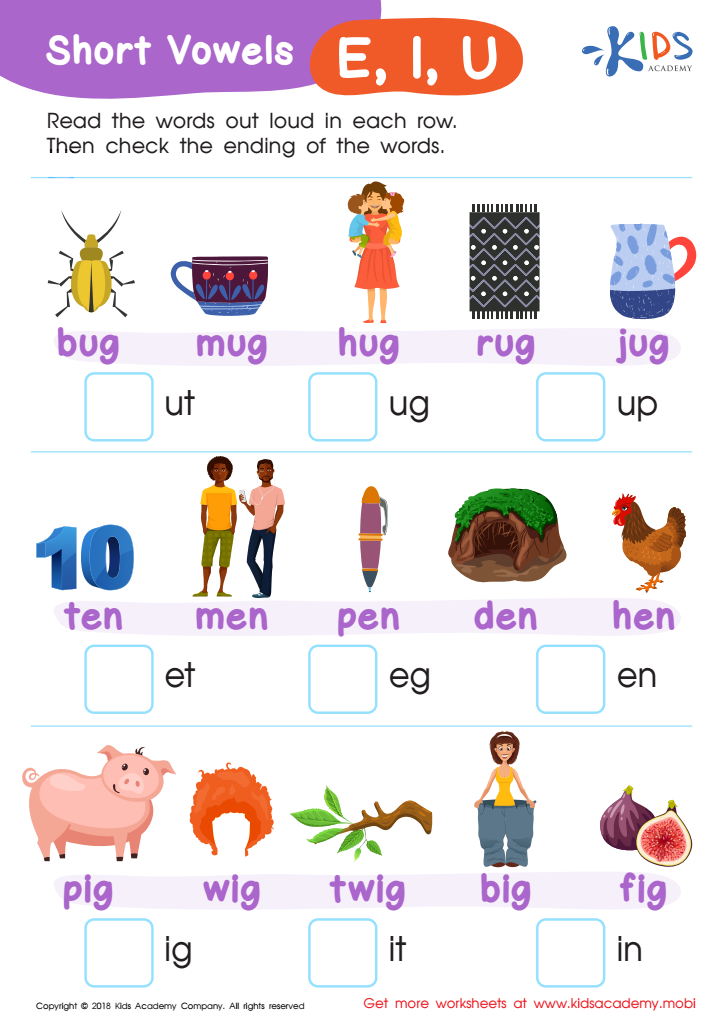
Short Vowels /e/, /i/, and /u/ Worksheet
 Assign to My Students
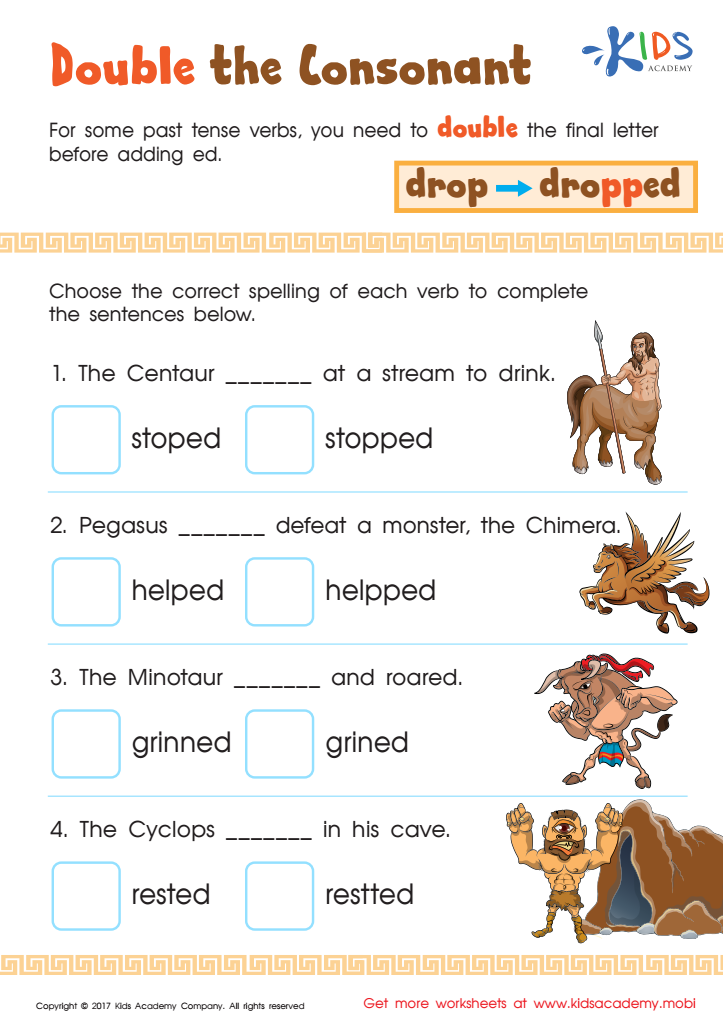
Double Consonant Spelling Worksheet



Understanding normal vowels and consonants is crucial for children aged 6-8 as they lay the foundation for reading and writing. At this age, children are transitioning from recognizing letters to understanding their sounds and how they combine to form words. This knowledge supports phonemic awareness, a critical skill for decoding words and developing fluent reading abilities.
Parents and teachers should care about these elements because they directly impact literacy development. Familiarity with vowels and consonants allows children to tackle word formation, improve their spelling, and enhance their comprehension skills. By recognizing patterns in these sounds, children can more easily understand and predict new words, making reading a more enjoyable and less frustrating experience.
Moreover, proficiency in vowels and consonants boosts confidence. When children correctly pronounce words and understand their structure, their self-esteem is likely to improve, fostering a positive attitude towards learning. This confidence can lead to greater participation in classroom activities and better academic performance overall.
In summary, focusing on vowels and consonants during the ages of 6-8 helps establish essential reading and writing skills, promotes greater academic success, and builds a strong foundation for future language development. This emphasis is vital for nurturing literate, confident, and motivated learners.






