Normal Chess Worksheets for Ages 6-8
47 filtered results
-
From - To
Discover a fun and engaging way for children aged 6-8 to learn chess with our Normal Chess Worksheets! Designed specifically for young learners, these worksheets focus on fundamental chess concepts, including piece movements, game rules, and basic strategies. Each worksheet promotes critical thinking and problem-solving skills while ensuring plenty of practice. Ideal for use in classrooms or at home, our printable resources help develop a solid foundation in chess, nurturing a lifelong interest in the game. With colorful illustrations and age-appropriate content, these worksheets make learning chess enjoyable and accessible for young minds. Start your child's chess journey today!
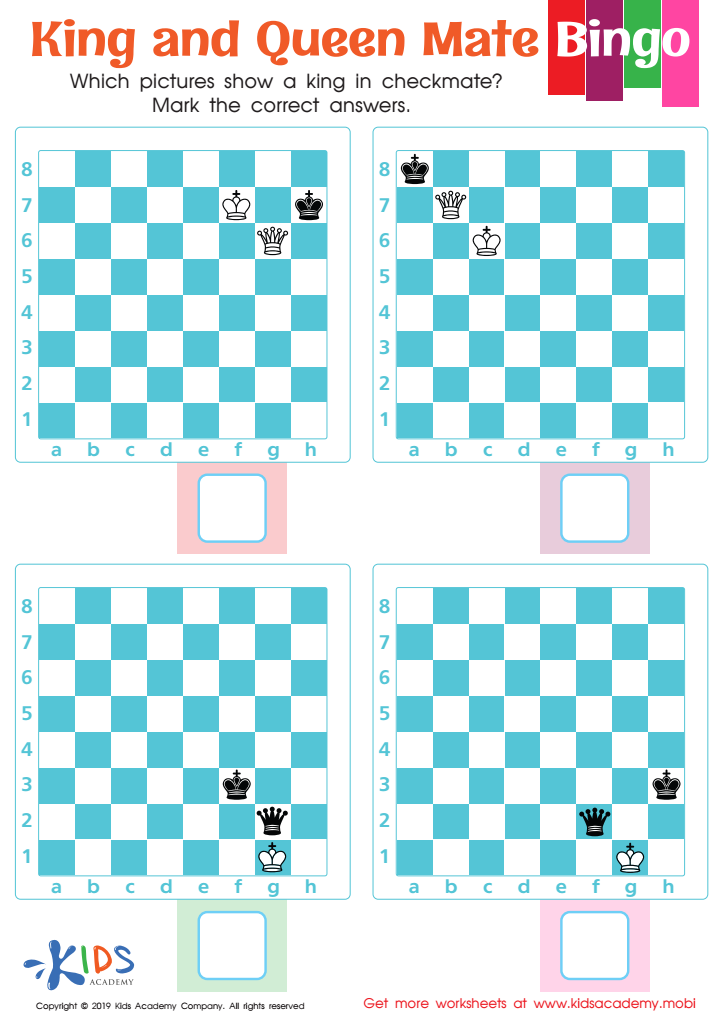
King and Queen Mate: Bingo Worksheet
 Assign to My Students
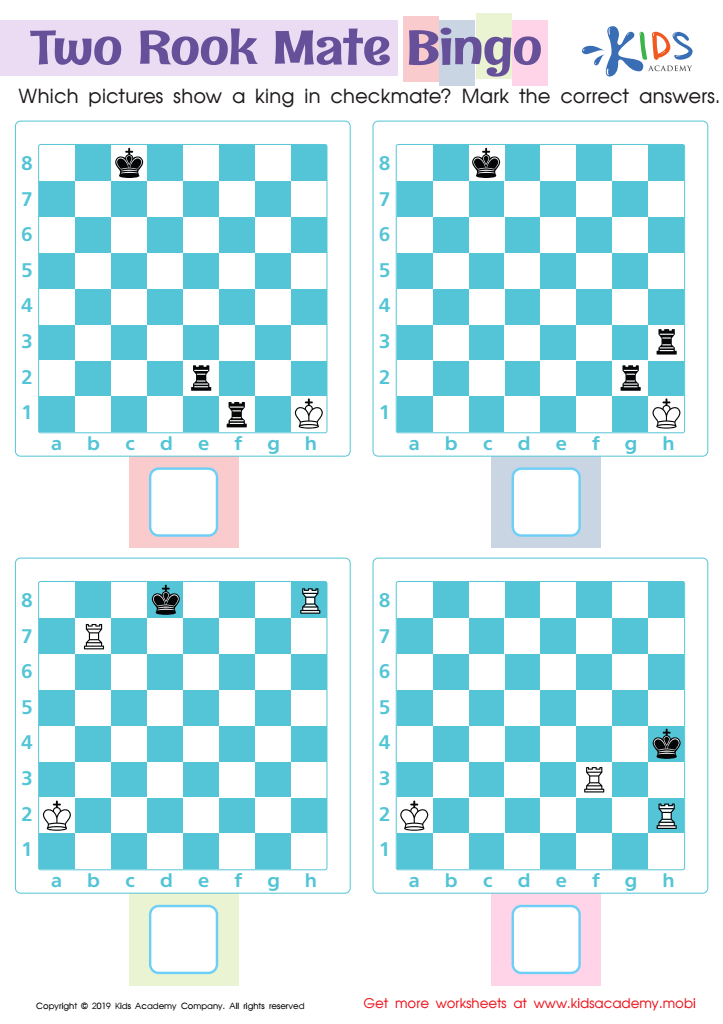
Two Rook Bingo Worksheet
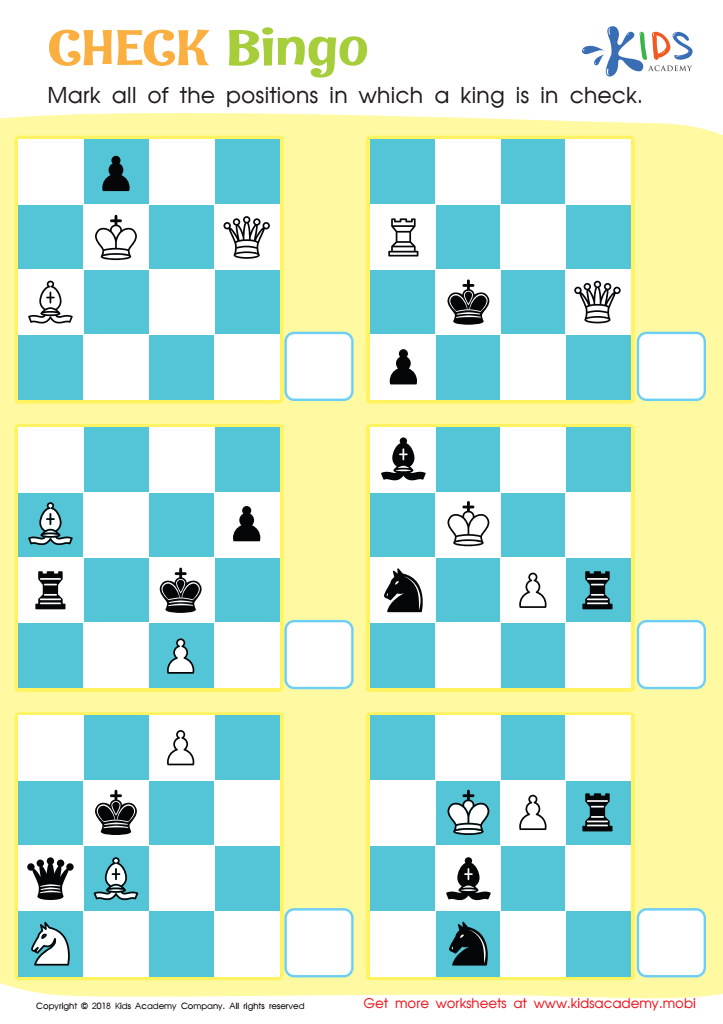
Check Bingo Worksheet
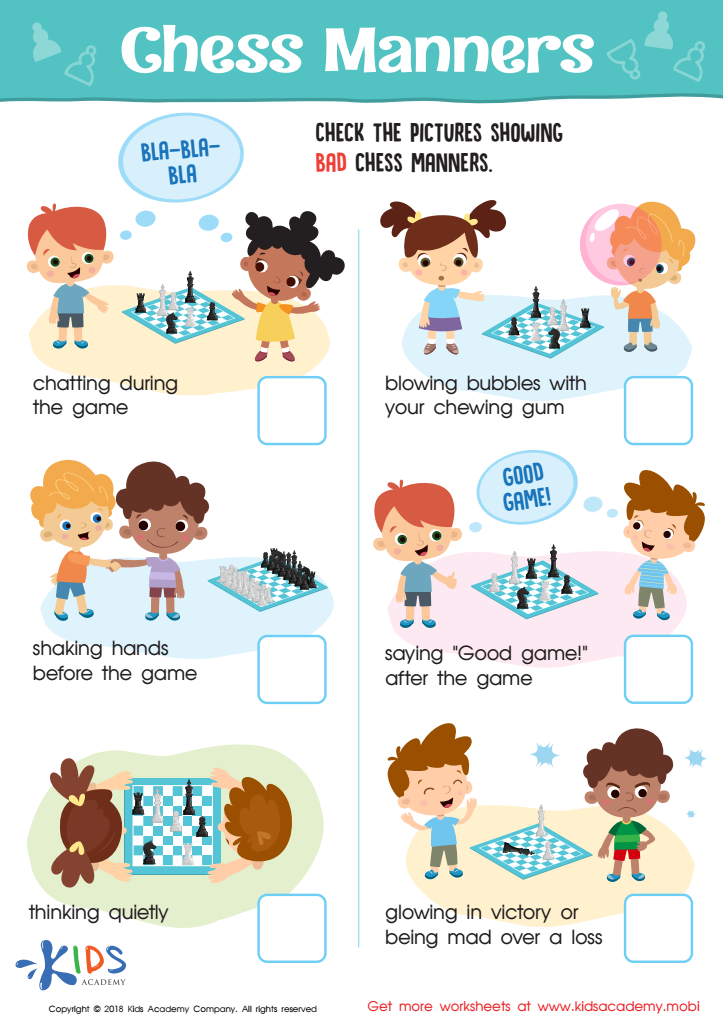
Chess Manners Worksheet
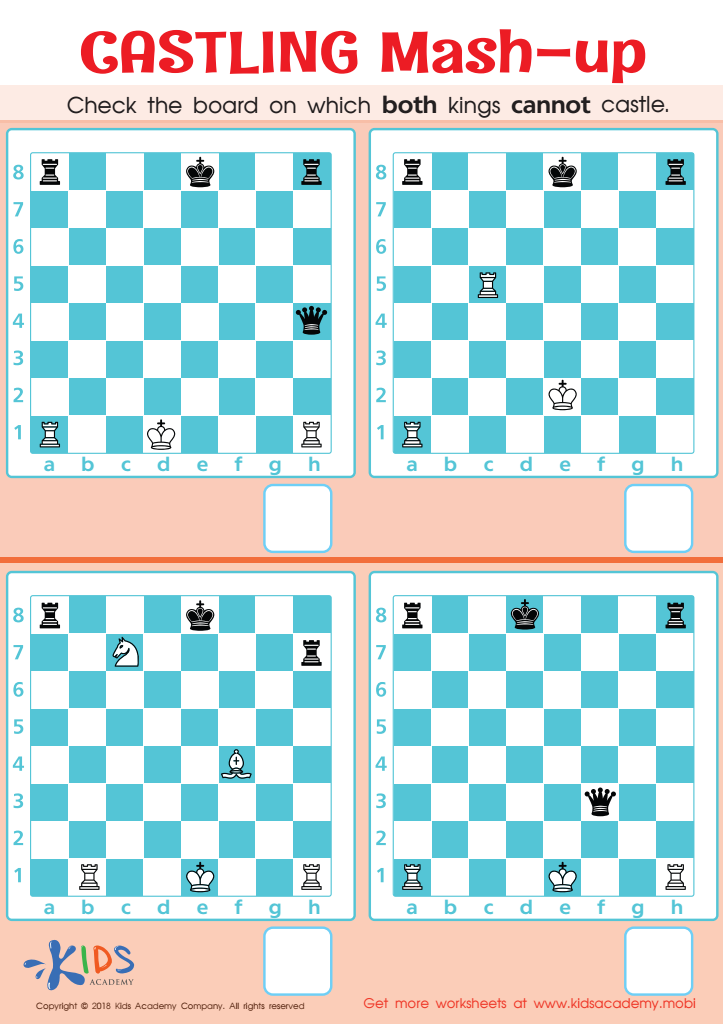
Castling Mash–up Worksheet
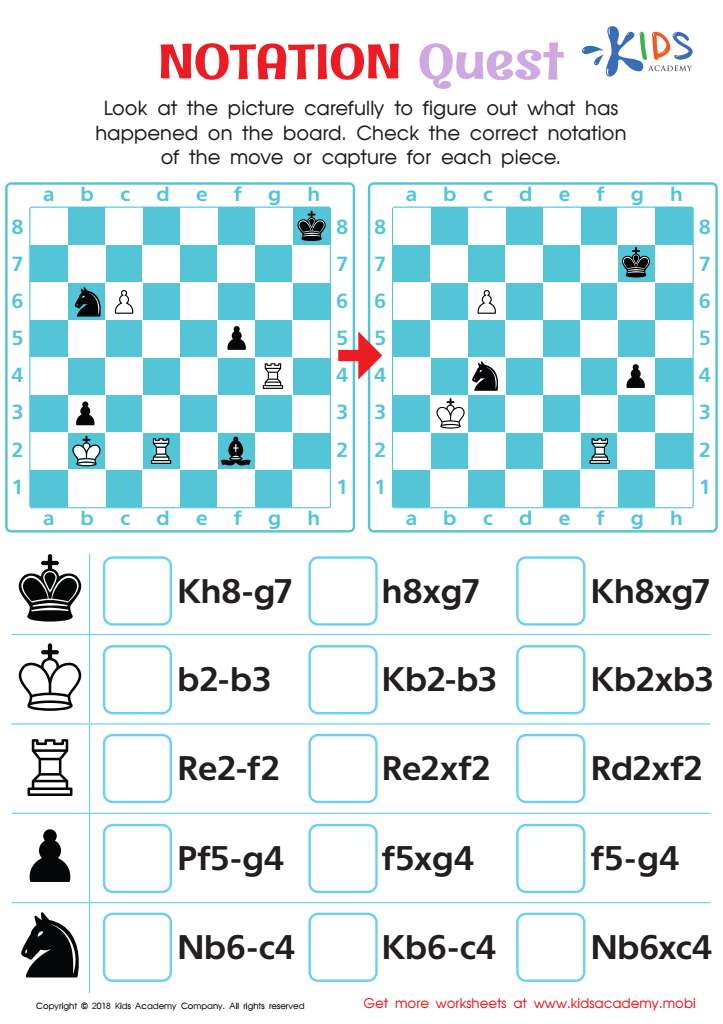
Notation Quest Worksheet
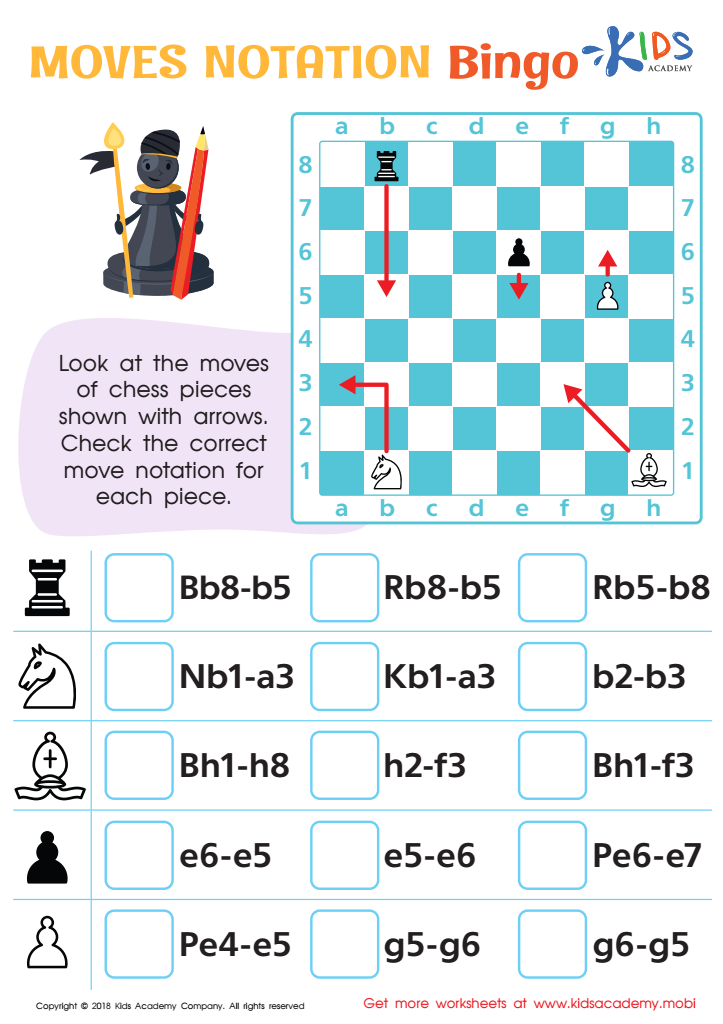
Moves Notation Bingo Worksheet
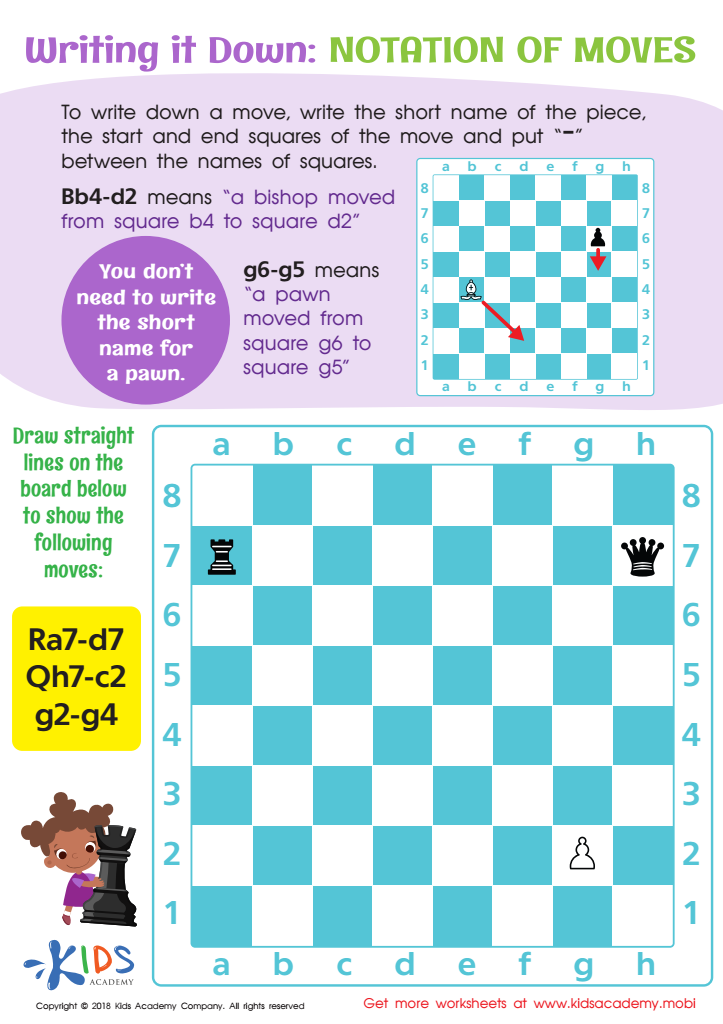
Notation of Moves Writing it Down Worksheet
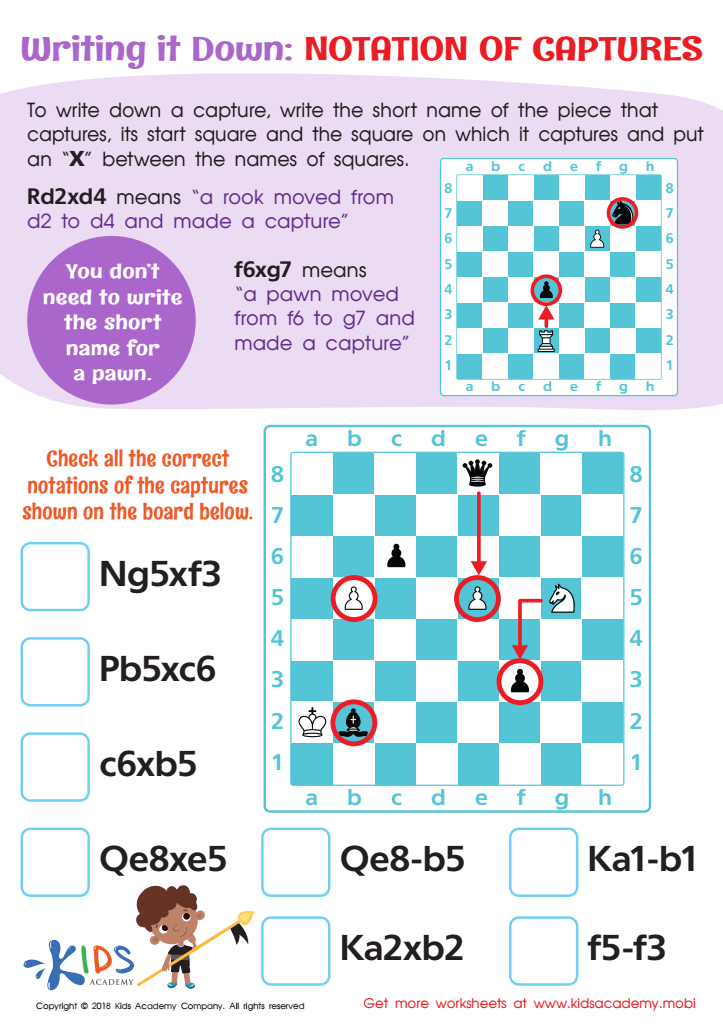
Notation of Captures Writing it Down Worksheet
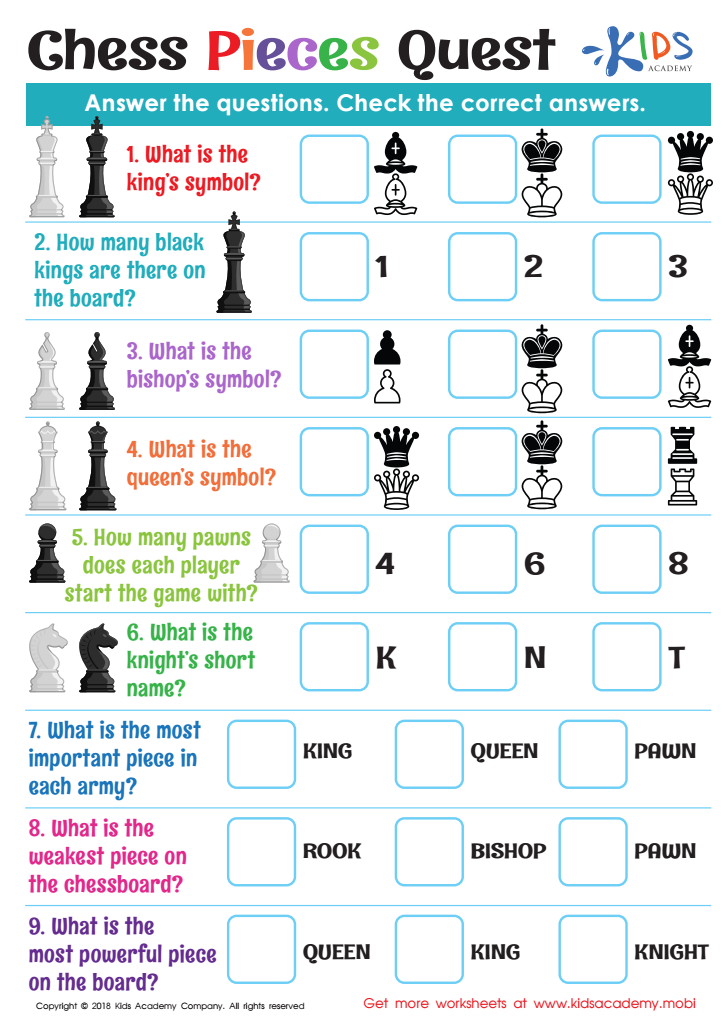
Chess Pieces Quest Worksheet
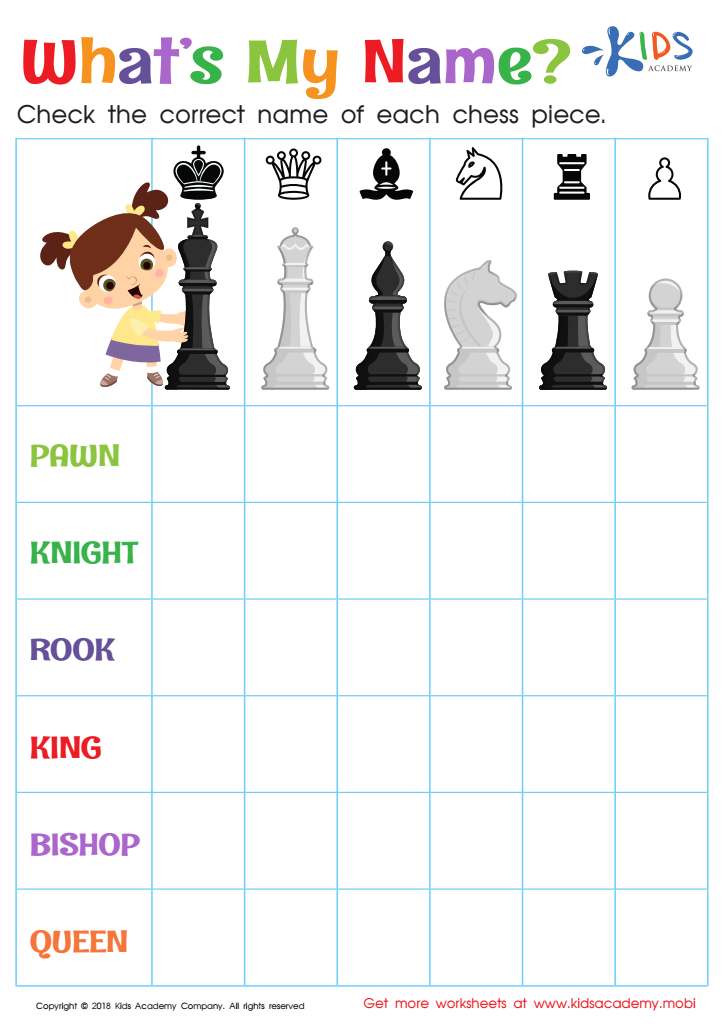
What's My Name? Worksheet
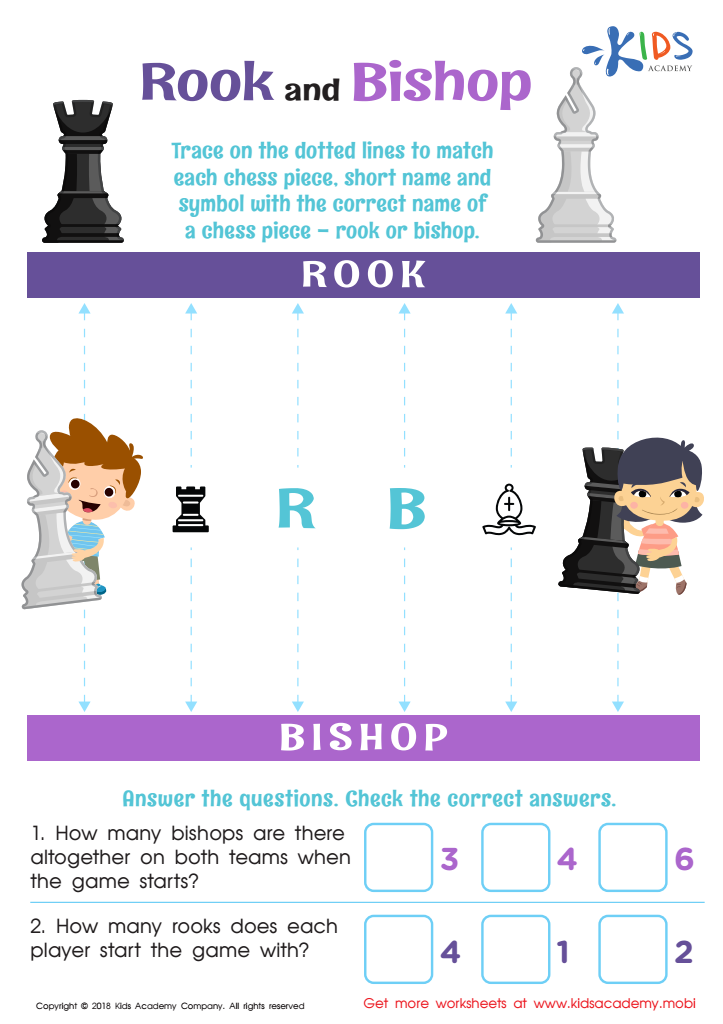
Rook and Bishop Worksheet
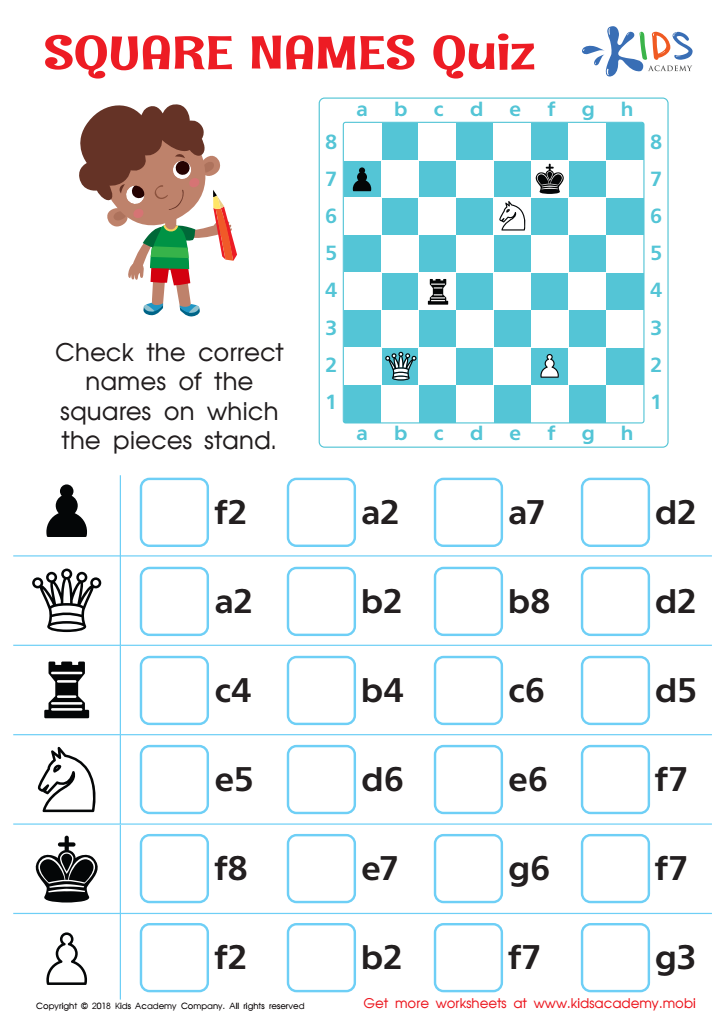
Square Names Quiz Worksheet
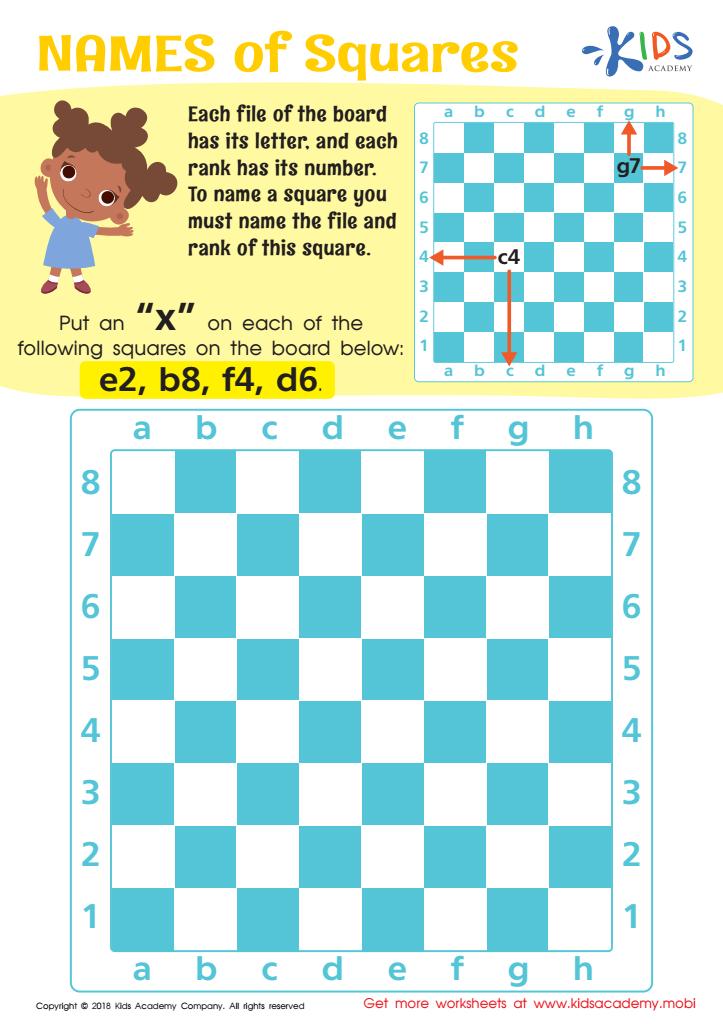
Names of Squares Worksheet
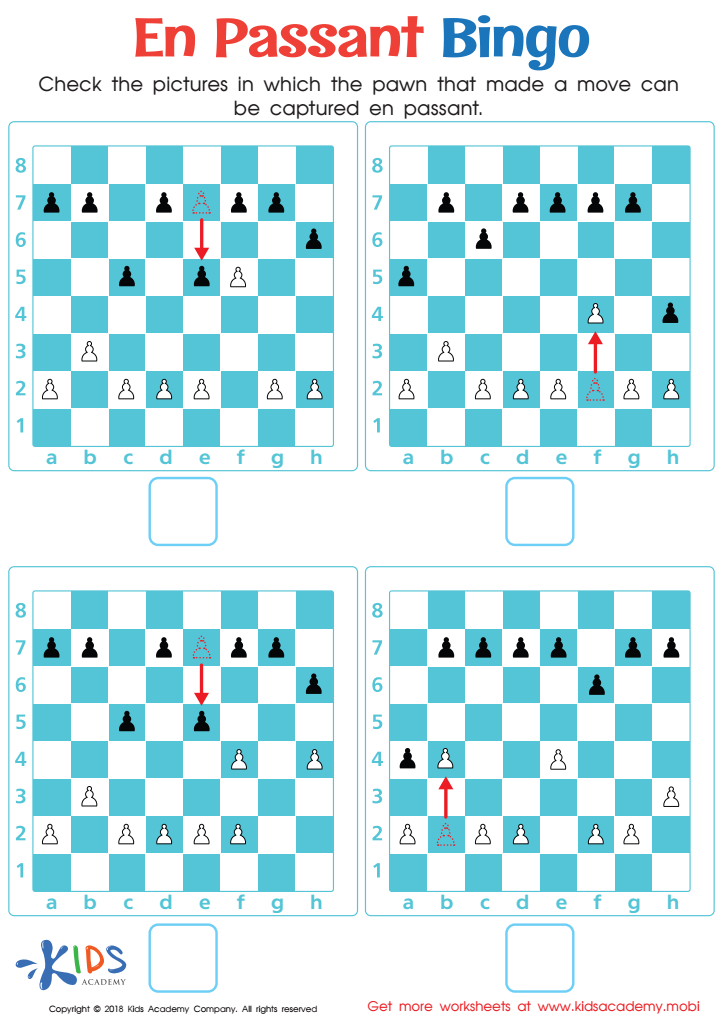
En Passant Bingo Worksheet
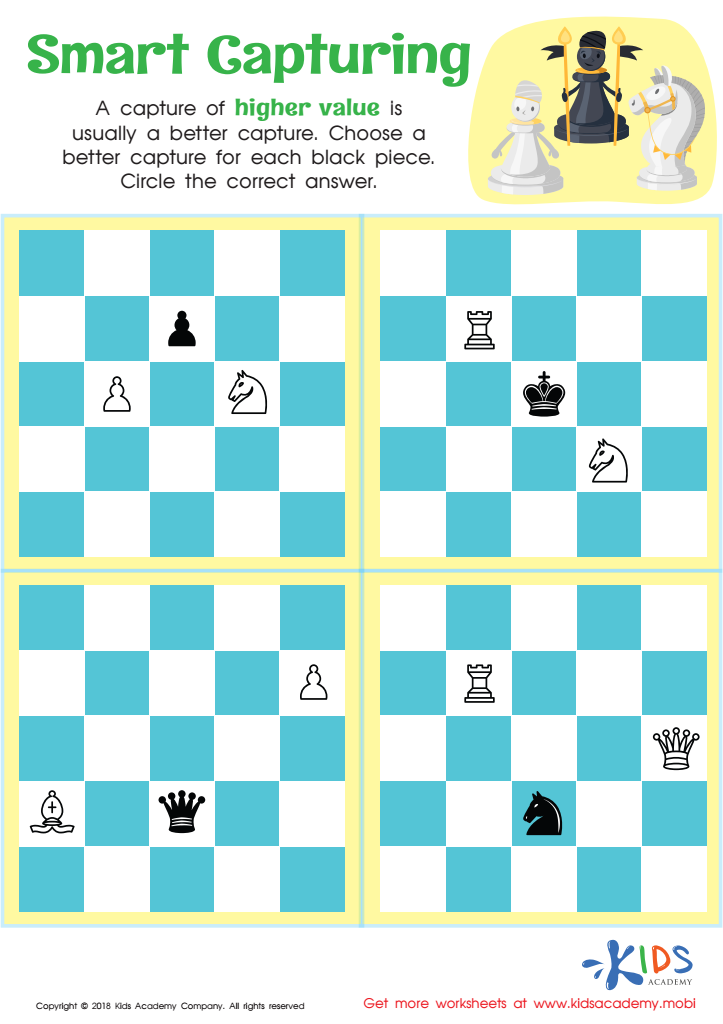
Smart Capturing Worksheet
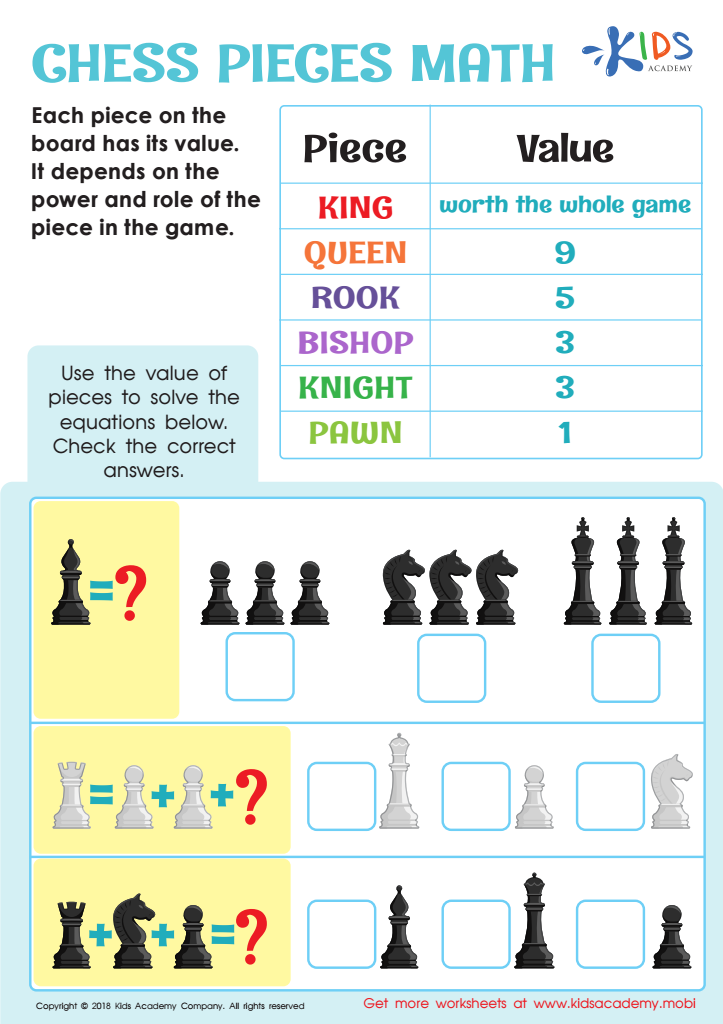
Chess Pieces Math Worksheet
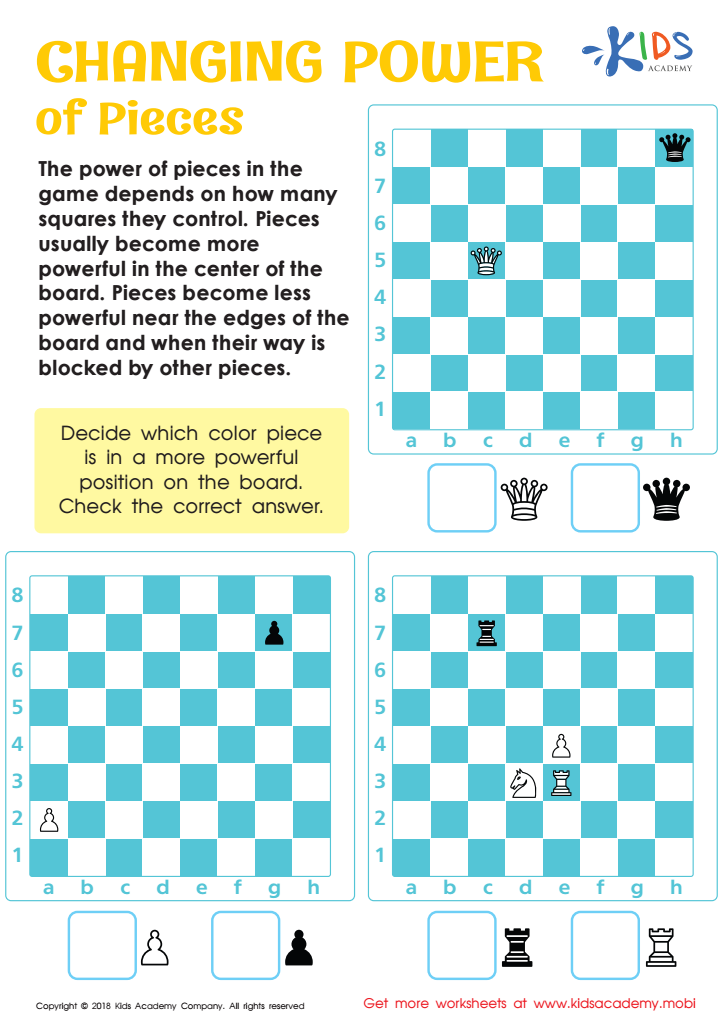
Changing Power of Chess Pieces Worksheet
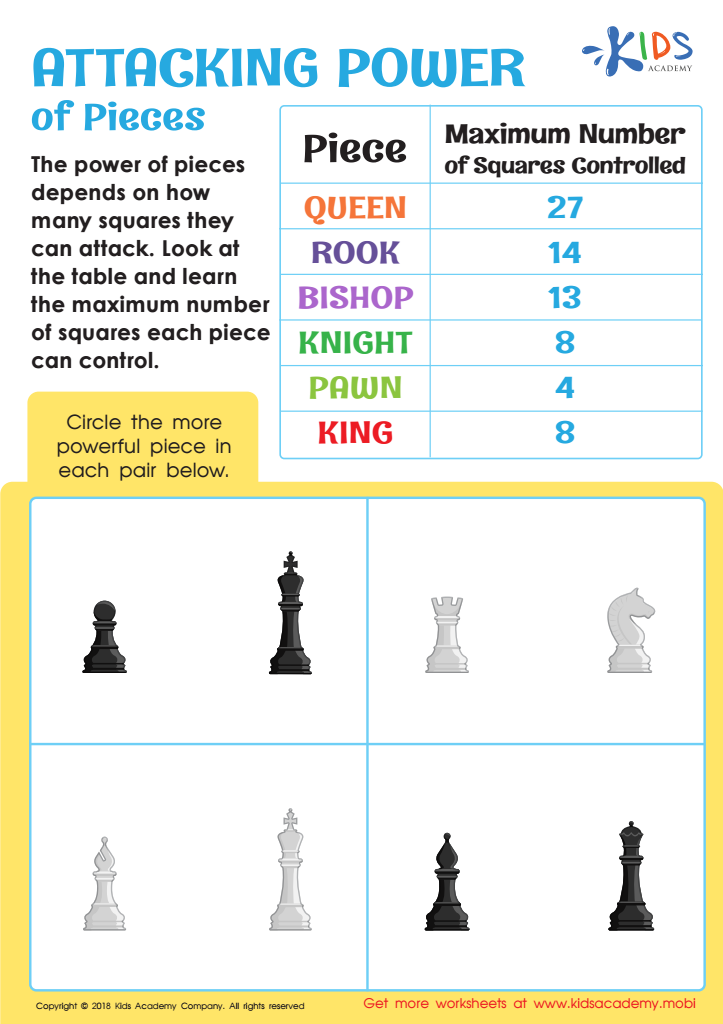
Attacking Power of Chess Pieces Worksheet
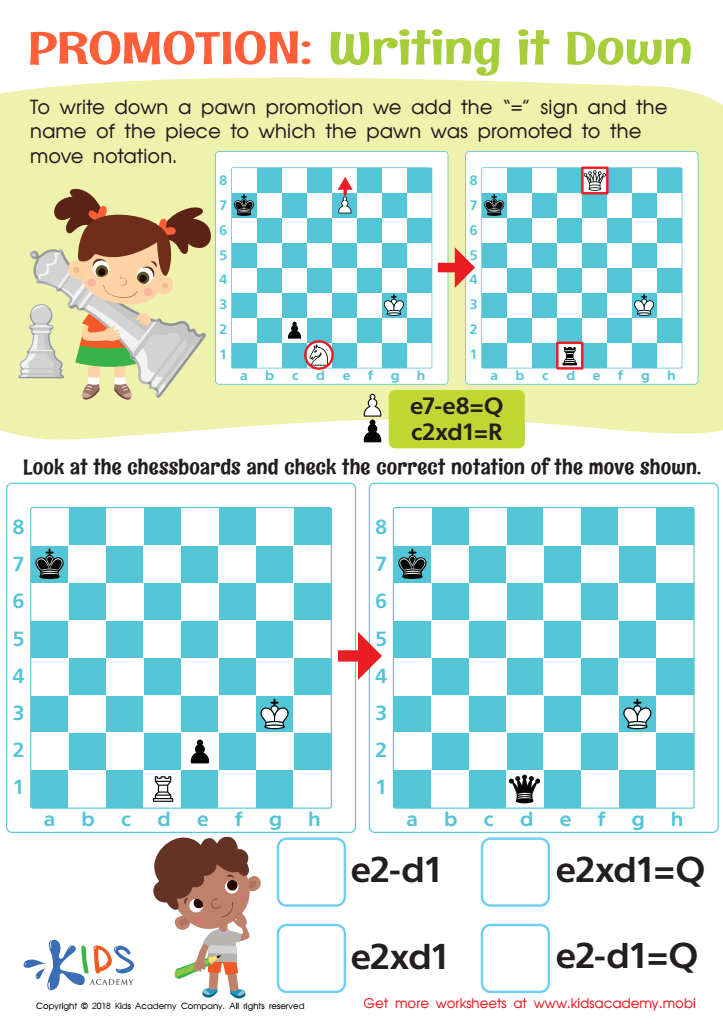
Writing it Down Worksheet
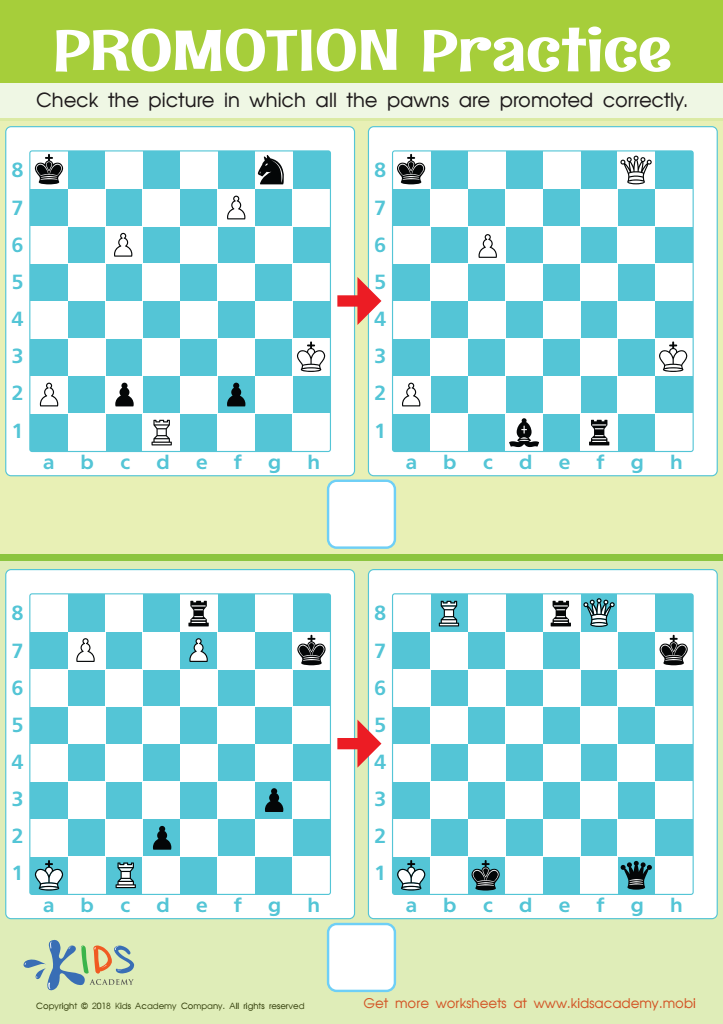
Promotion Practice Worksheet
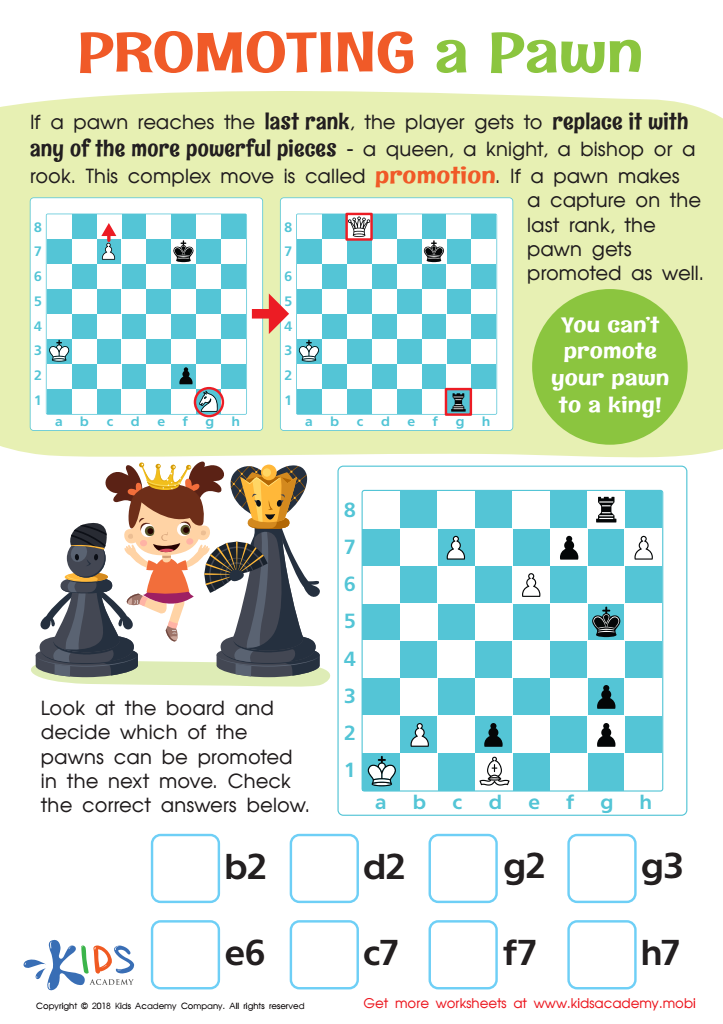
Promoting a Pawn Worksheet
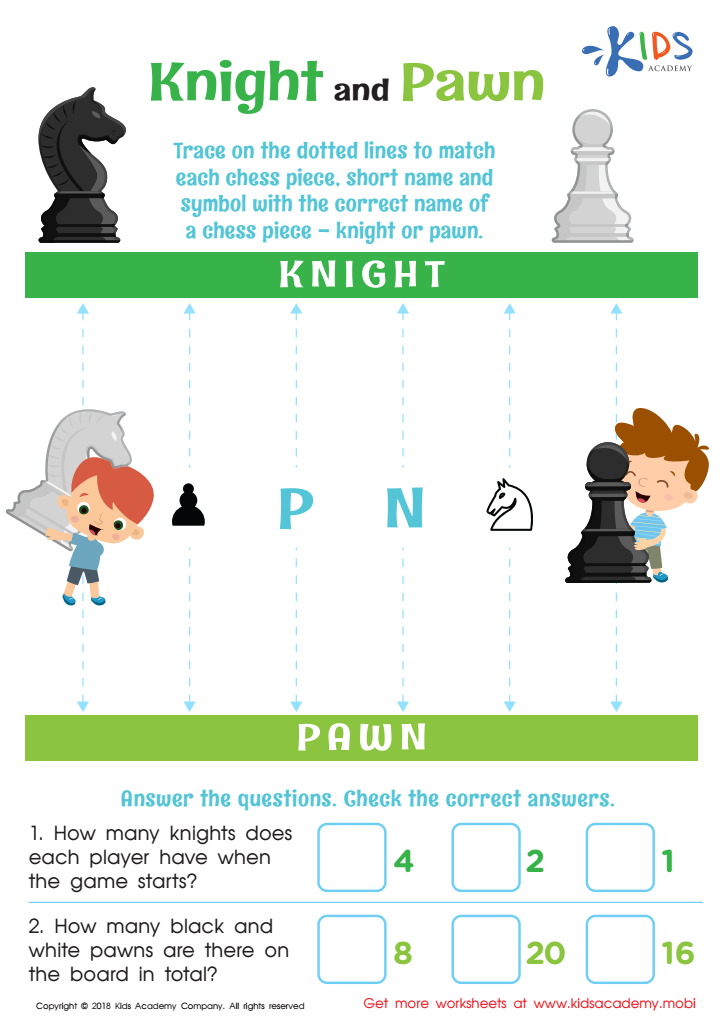
Knight and Pawn Worksheet
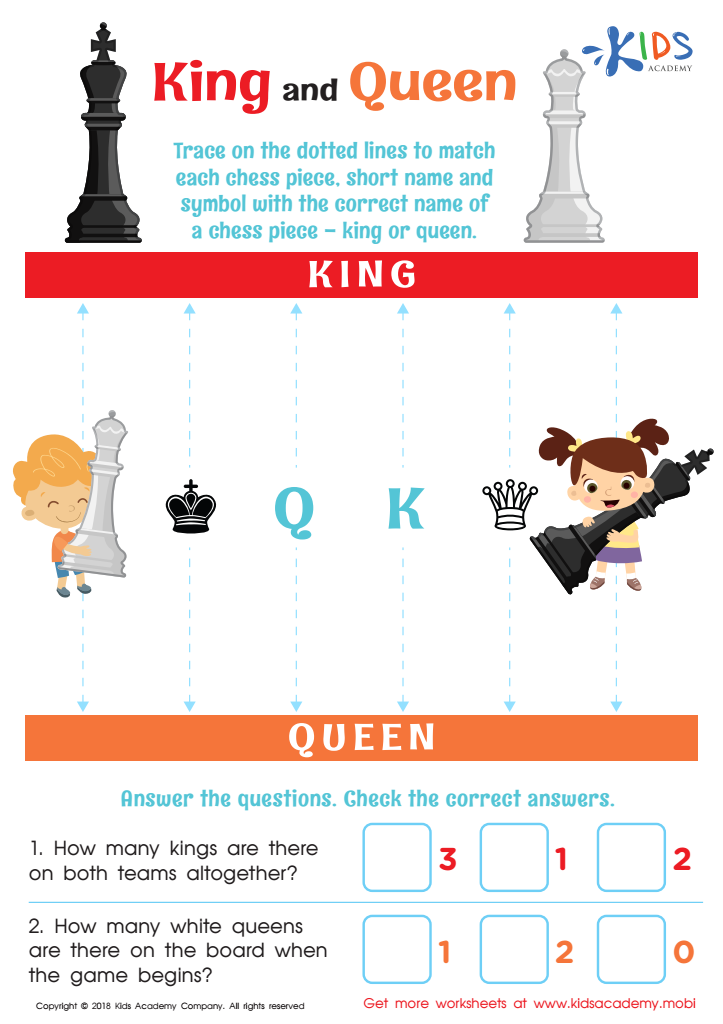
King and Queen Worksheet


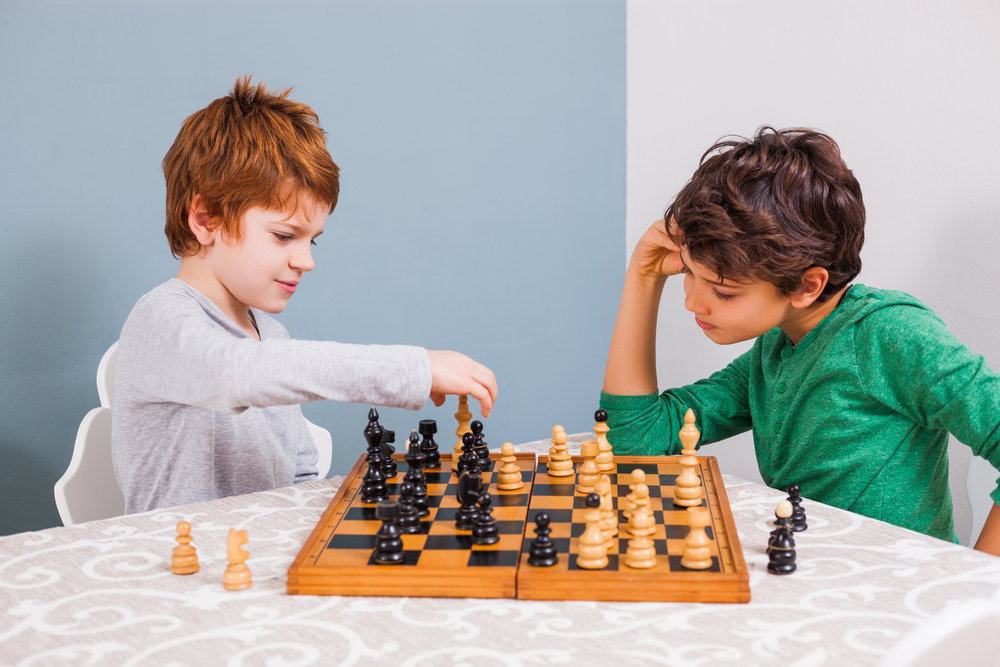
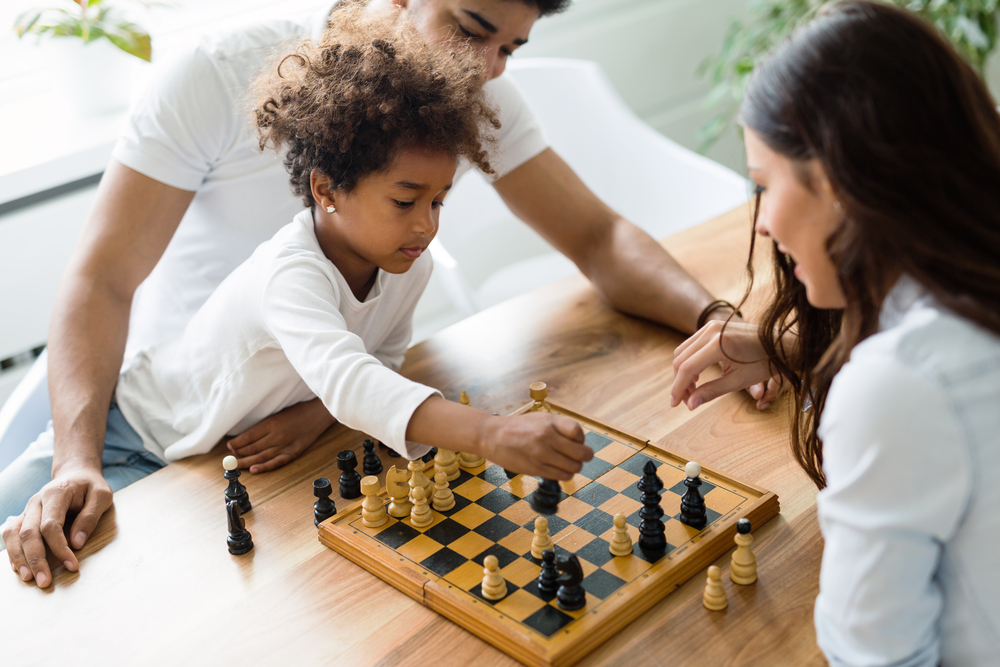

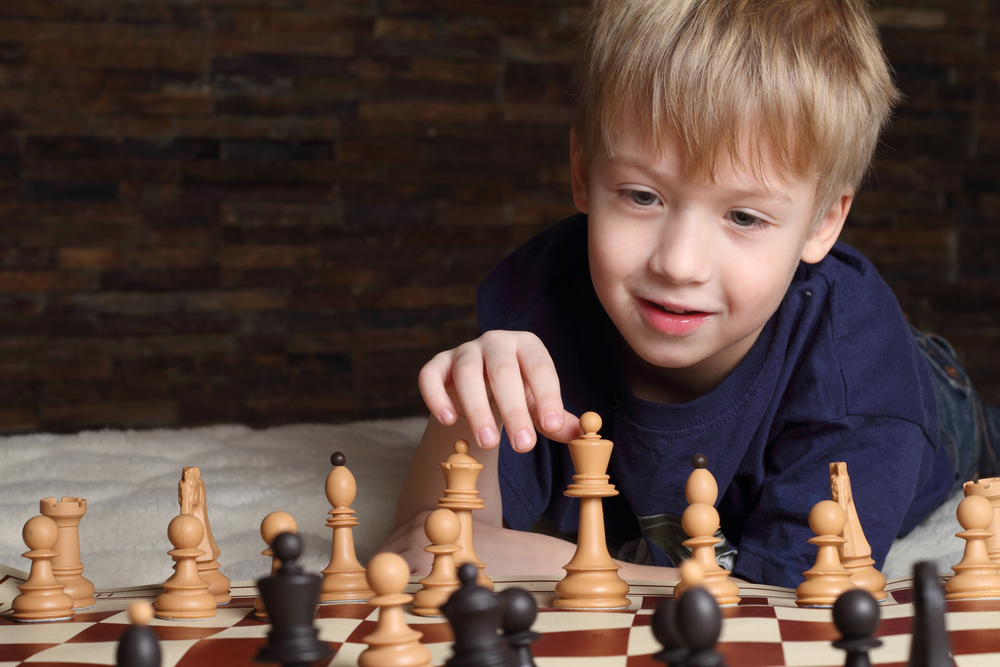

Parents and teachers should care about Normal Chess for ages 6-8 because it offers numerous cognitive, social, and emotional benefits that contribute to early childhood development. Chess promotes critical thinking and problem-solving skills by requiring children to evaluate positions, anticipate opponents’ moves, and devise strategies. This fosters logical reasoning and enhances cognitive flexibility, which are vital skills in academic settings and later life.
Furthermore, chess encourages patience and concentration, teaching children the value of focus and sustained effort in achieving goals. As they learn to take turns and deal with winning and losing, they cultivate important social skills such as sportsmanship and resilience. These experiences can positively impact their interpersonal relationships both in and out of the classroom.
Introducing chess at this age also enhances memory skills as students must recall various chess pieces, their movements, and potential combinations, leading to improved overall academic performance. Lastly, it introduces children to a rich cultural tradition and encourages a lifelong interest in games and strategies. Overall, Normal Chess is not merely a game; it is a powerful educational tool that equips young learners with essential life skills while ensuring they engage in social and cooperative play.