Filters

176 filtered results

Clear all filters
Favorites
With answer key
Interactive

176 filtered results

Difficulty Level

Grade


At Kids Academy, we offer engaging and educational writing worksheets designed specifically for children aged 6-8. Our worksheets help young learners develop essential writing skills through interactive activities that make learning fun and effective. Each worksheet is carefully crafted by educational experts to include age-appropriate content that nurtures creativity and improves handwriting, spelling, and grammar. Whether it's practicing sentence formation or exploring new vocabulary, our normal writing worksheets provide rich opportunities for kids to grow into confident writers. Visit our website to explore our range of printable worksheets and give your child the tools they need to excel in writing.

Check out this FREE Trial Lesson on Writing for age 6-8!

Recognize and Name End Punctuation

Favorites
With answer key
Interactive
  • 6-8
  • Interactive
  • Writing
  • Normal
Recognize Punctuation Marks Worksheet

Recognize Punctuation Marks Worksheet

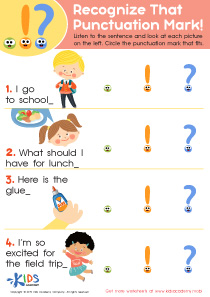
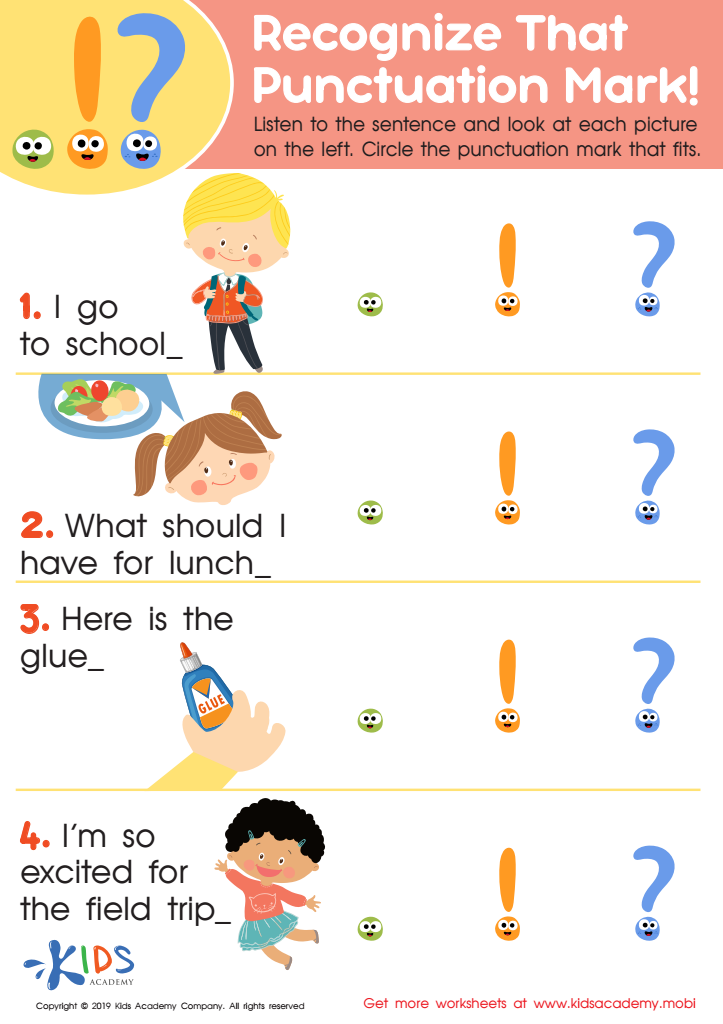
Before beginning the worksheet, ask your students to name punctuation marks they know and what they mean. Common punctuation marks are full stop, question mark and exclamation mark. Point out each one in the picture and read the sentences, helping them circle the right punctuation.
Recognize Punctuation Marks Worksheet
Worksheet
Article Ants Worksheet

Article Ants Worksheet

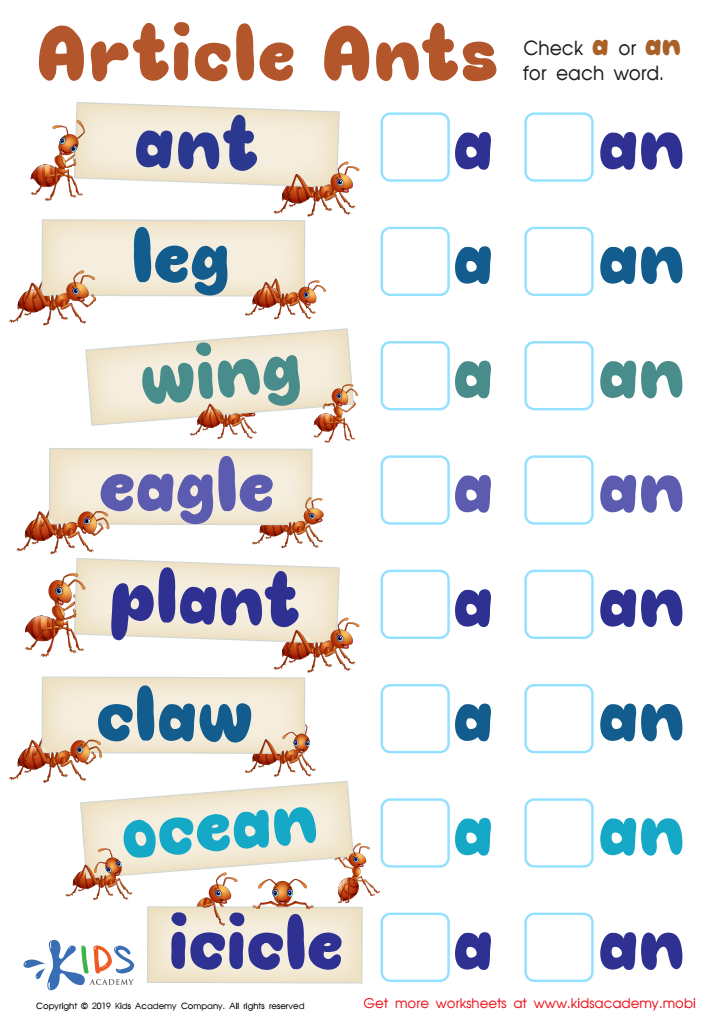
Help your child master using "a" and "an" with this fun worksheet! Remind them that "an" goes with vowel sounds, while "a" is used for consonants. Have them check the right box next to each word to complete the activity.
Article Ants Worksheet
Worksheet
Tasty Verbs Worksheet

Tasty Verbs Worksheet

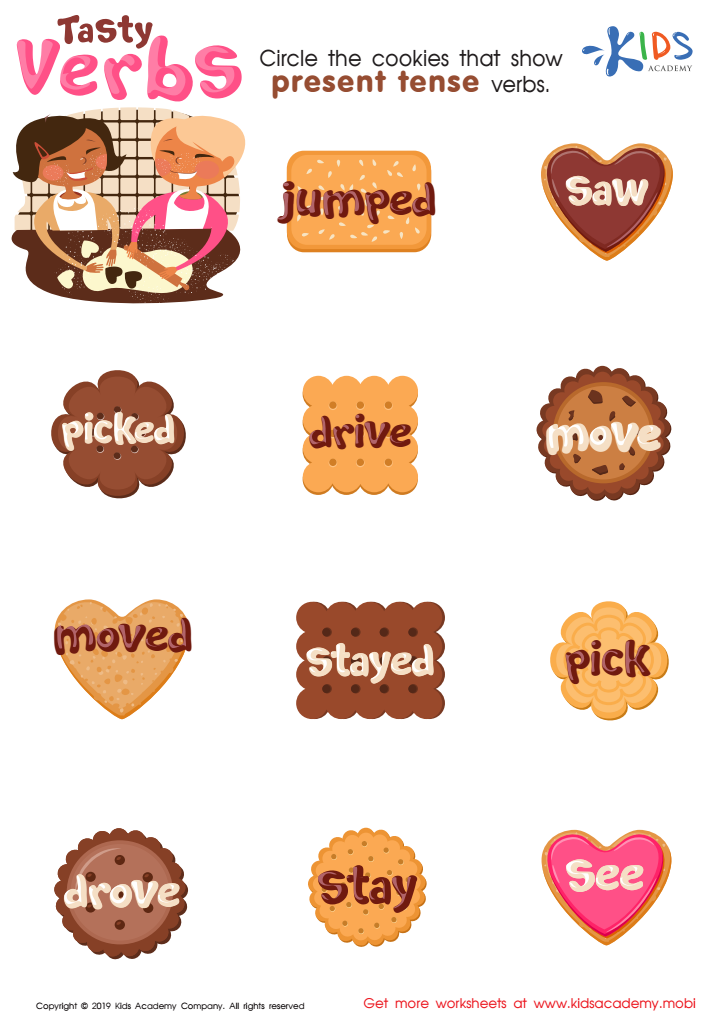
Verbs can show actions, past events, and future happenings. Master present tense verbs with this cookie-themed worksheet! Read the verbs on each cookie and help kids form sentences using the word in present tense. Circle the correct answers for each cookie. Give them a tasty treat while learning something new!
Tasty Verbs Worksheet
Worksheet
Where Are Pronouns? Worksheet

Where Are Pronouns? Worksheet

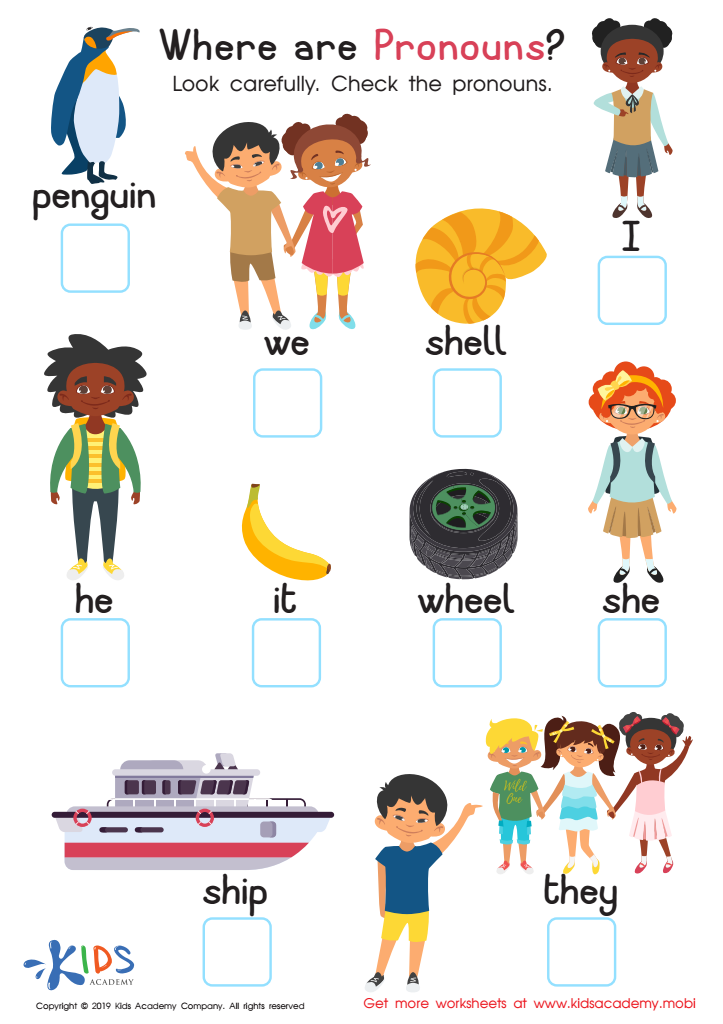
Pronouns make language flow, substituting "he" or "she" for names. Kids know and use them in their speech, but identifying pronouns in grammar helps build writing skills. This worksheet challenges kids to pick out pronouns from other nouns. Go through the worksheet, view the pictures and read the words. Ask kids to check boxes in front of pronouns to mark answers.
Where Are Pronouns? Worksheet
Worksheet
Adjectives in Sentences Worksheet

Adjectives in Sentences Worksheet

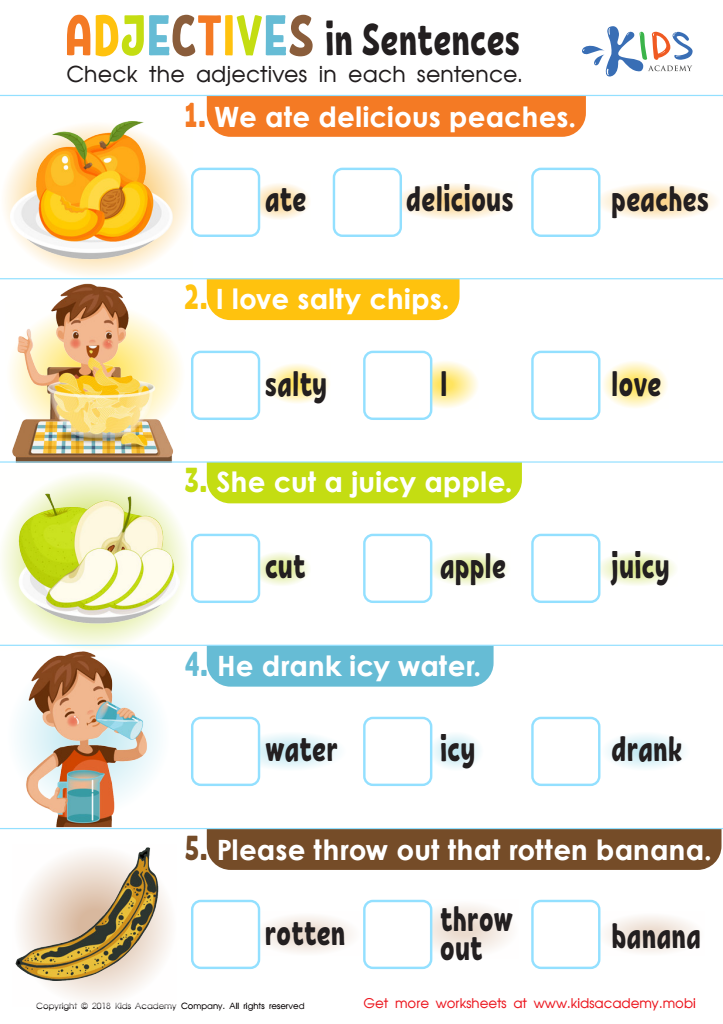
Our learners can find it hard to use writing to add detail, but adjectives can help. With this fun worksheet, kids can identify adjectives that describe food and drink. Guide them through each sentence, discussing the words and having them choose the one that gives information about the food/drink.
Adjectives in Sentences Worksheet
Worksheet
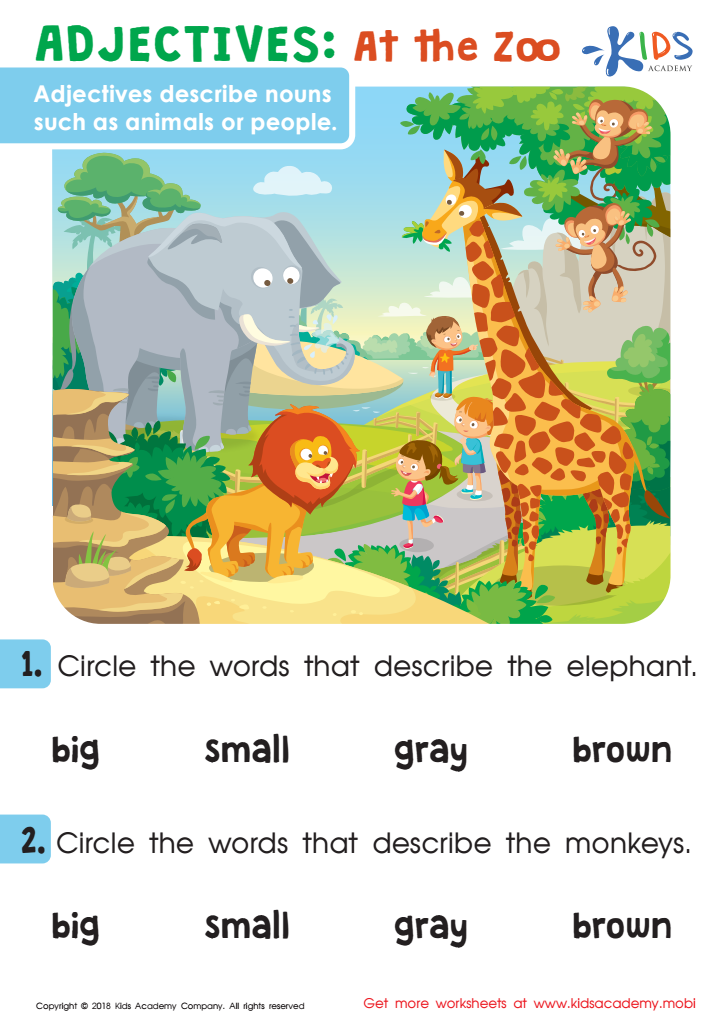
Adjectives: At The Zoo Worksheet

Adjectives: At The Zoo Worksheet

Take your kids to the zoo and ask them about their favorite activities and animals. This worksheet is a great way for kids to learn about adjectives. Explain that adjectives describe nouns like people or animals (e.g. big, tall, dark). Look at the printout with your kids and help them circle words that describe the animals in the picture.
Adjectives: At The Zoo Worksheet
Worksheet
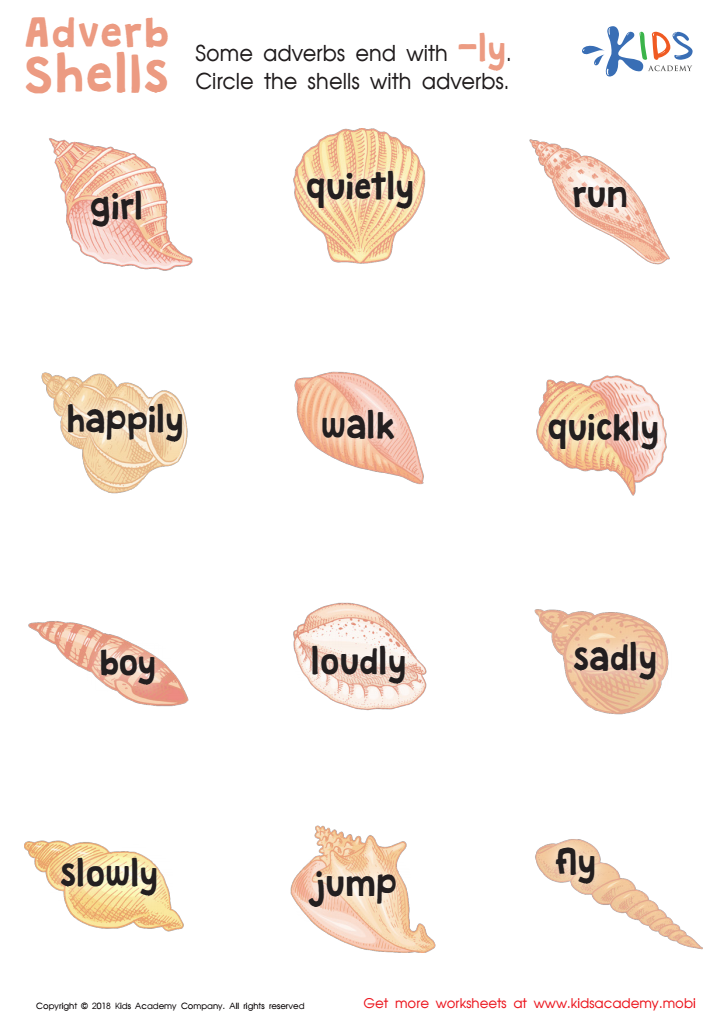
Adverb Shells Worksheet

Adverb Shells Worksheet

Help your kids understand adverbs by giving them an example with an adverb. Ask them to point it out. Adverbs often end with –ly. Give them a worksheet to circle adverbs in a picture. This way, they'll easily identify them in a sentence.
Adverb Shells Worksheet
Worksheet
Adverbs That Tell Where Worksheet

Adverbs That Tell Where Worksheet

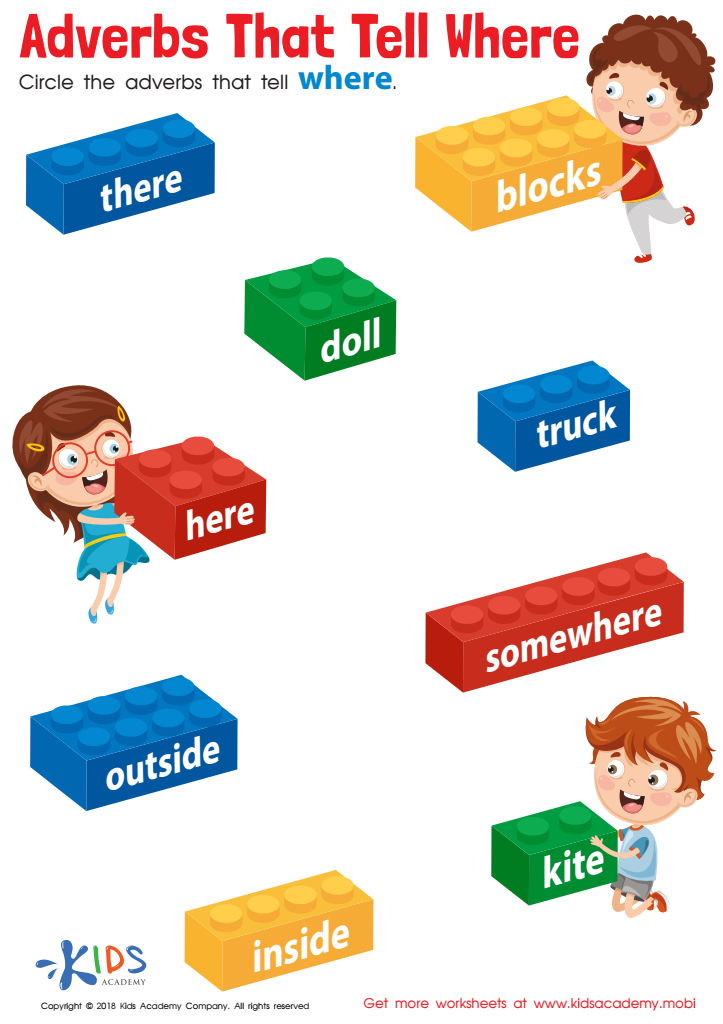
Help your kids identify adverbs with a fun worksheet. Read the words aloud and ask them to circle the adverbs showing 'where.' Give them easy examples, like 'the girl stood over there.' See if they can create their own examples. This activity makes learning adverbs fun!
Adverbs That Tell Where Worksheet
Worksheet
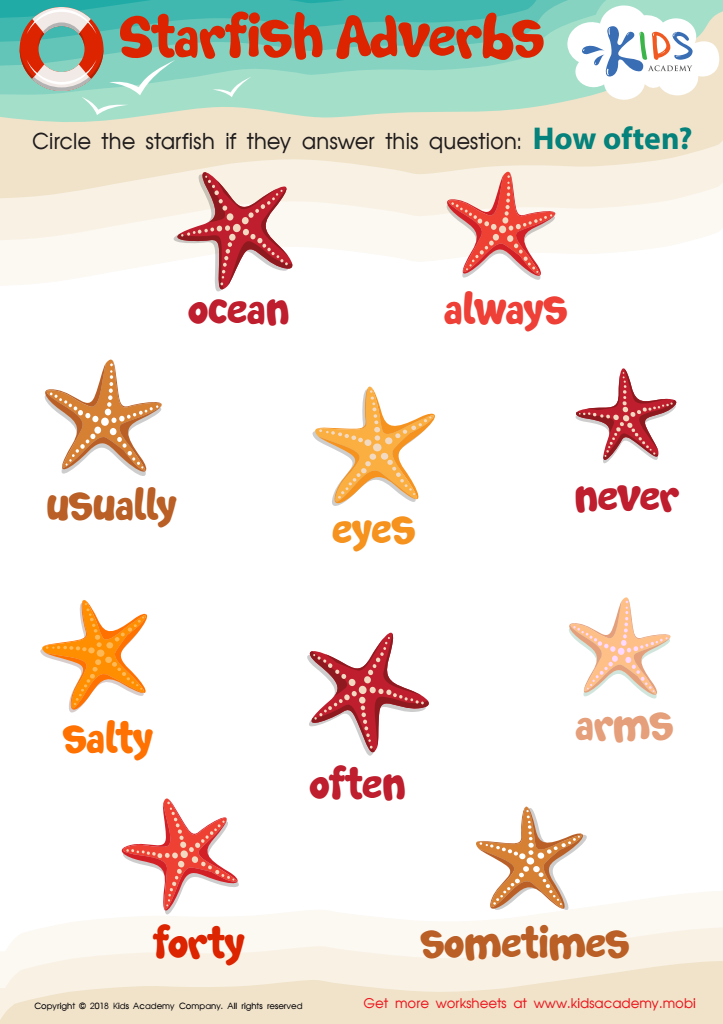
Starfish Adverbs Worksheet

Starfish Adverbs Worksheet

Students will gain exposure to new words and parts of speech as they learn more. After nouns and verbs, adverbs are next. Ask students to give examples, like ‘quickly’ and ‘heavily’. Finally, help them circle the starfish that answer the question 'how often?' on the worksheet.
Starfish Adverbs Worksheet
Worksheet
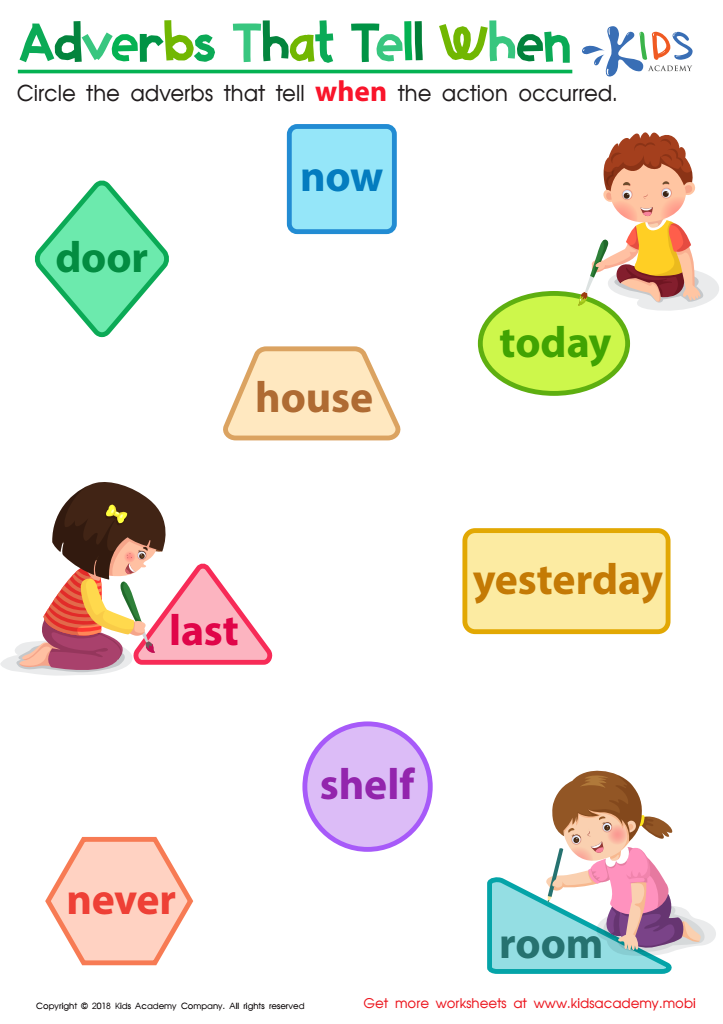
Adverbs That Tell us When Worksheet

Adverbs That Tell us When Worksheet

Explain to your kids what an adverb is - a word which adds meaning to a verb - and provide simple examples. Ask them if they can also give examples. Now, help them circle adverbs which tell the time when an action occurred in this worksheet.
Adverbs That Tell us When Worksheet
Worksheet
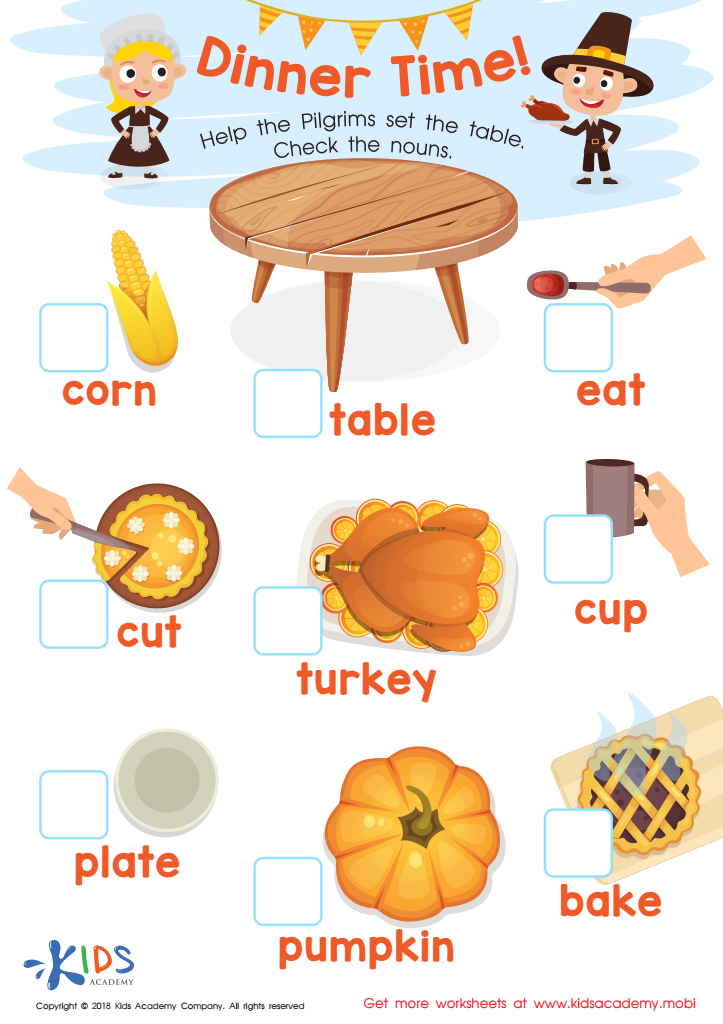
Dinner Time! Worksheet

Dinner Time! Worksheet

Help your child learn about the Pilgrims by completing this worksheet! The Pilgrims set sail on the Mayflower in 1620 and colonized America, meeting the Native Americans already living there and picking up some of their traditions, like Thanksgiving dinner. Check the nouns in the picture and help your child set the table with the celebratory turkey!
Dinner Time! Worksheet
Worksheet
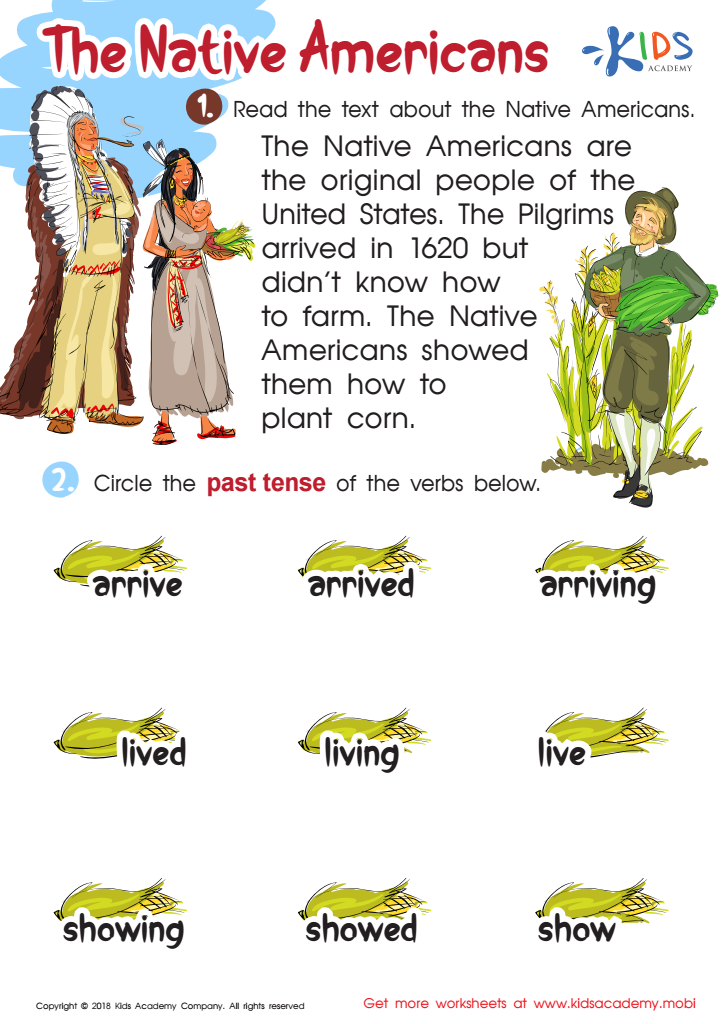
The Native Americans Worksheet

The Native Americans Worksheet

Ask your students who the Native Americans are and give them a history lesson if needed. Read the text about the Native Americans and circle the past tense verbs. The text describes events that occurred when the first Pilgrims arrived in America.
The Native Americans Worksheet
Worksheet
Contractions Worksheet

Contractions Worksheet

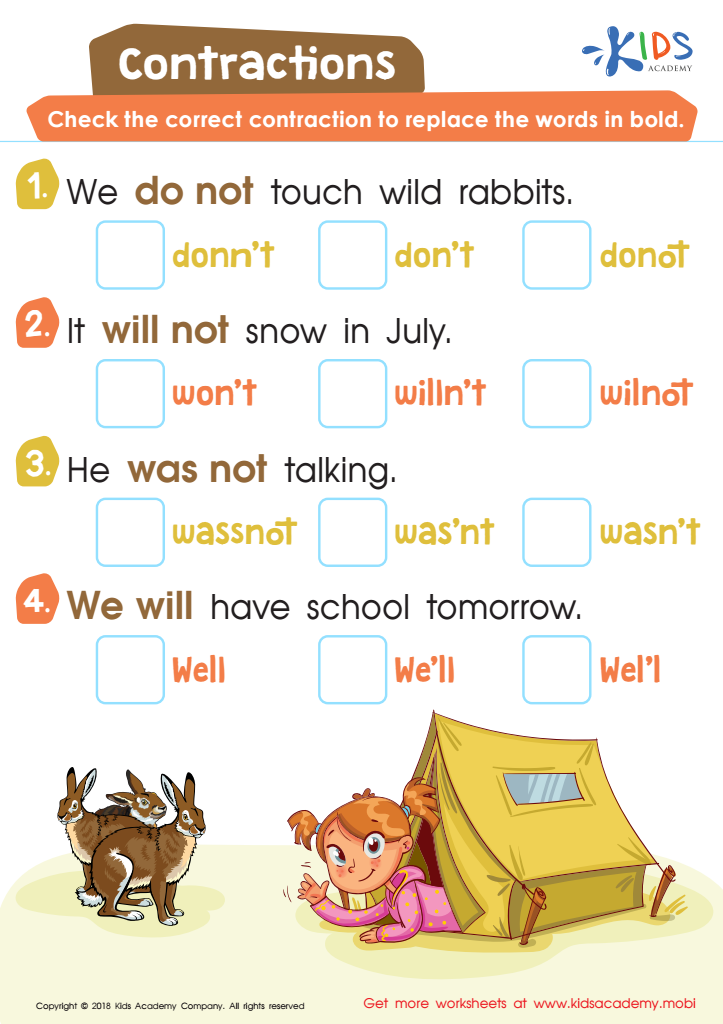
Contractions are popular in English and make writing/reading easier. For example: I'm, they're, she's. Ask your students to give more examples. Then, read the sentences in this worksheet and help them check the correct contraction to replace the words in bold.
Contractions Worksheet
Worksheet
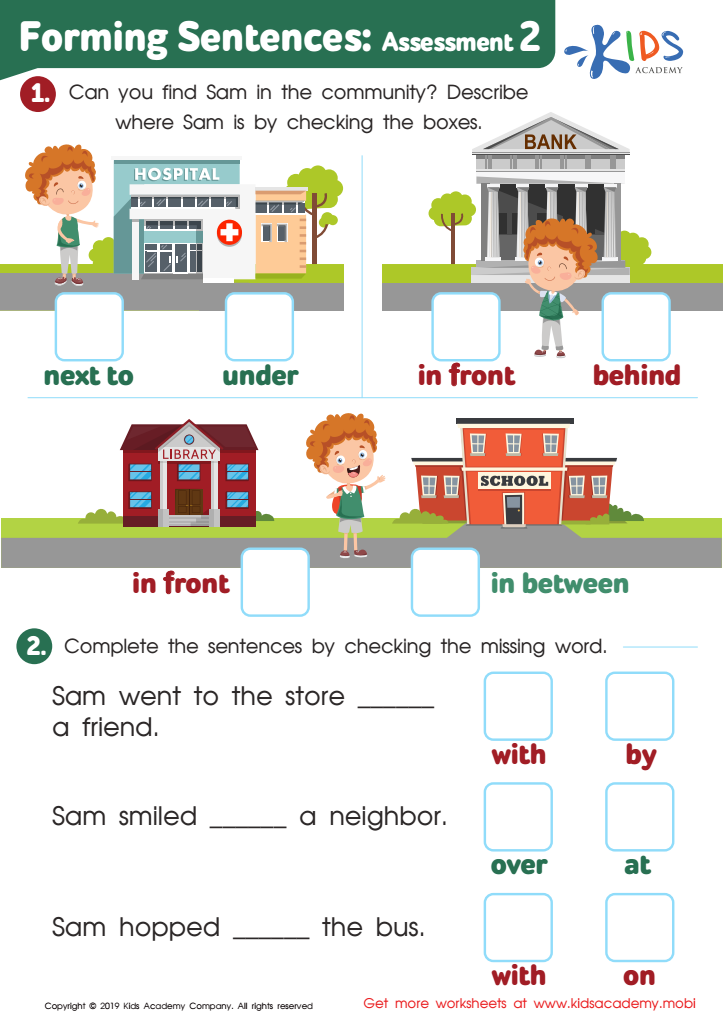
Forming Sentences: Assessment 2 Worksheet

Forming Sentences: Assessment 2 Worksheet

A community is an area with different people, buildings and professionals. Ask students to list buildings in their area, then help find Sam. Describe where he is and check the boxes in the worksheet. At the bottom, help complete the sentences by checking the missing word.
Forming Sentences: Assessment 2 Worksheet
Worksheet
Preposition Planets Worksheet

Preposition Planets Worksheet

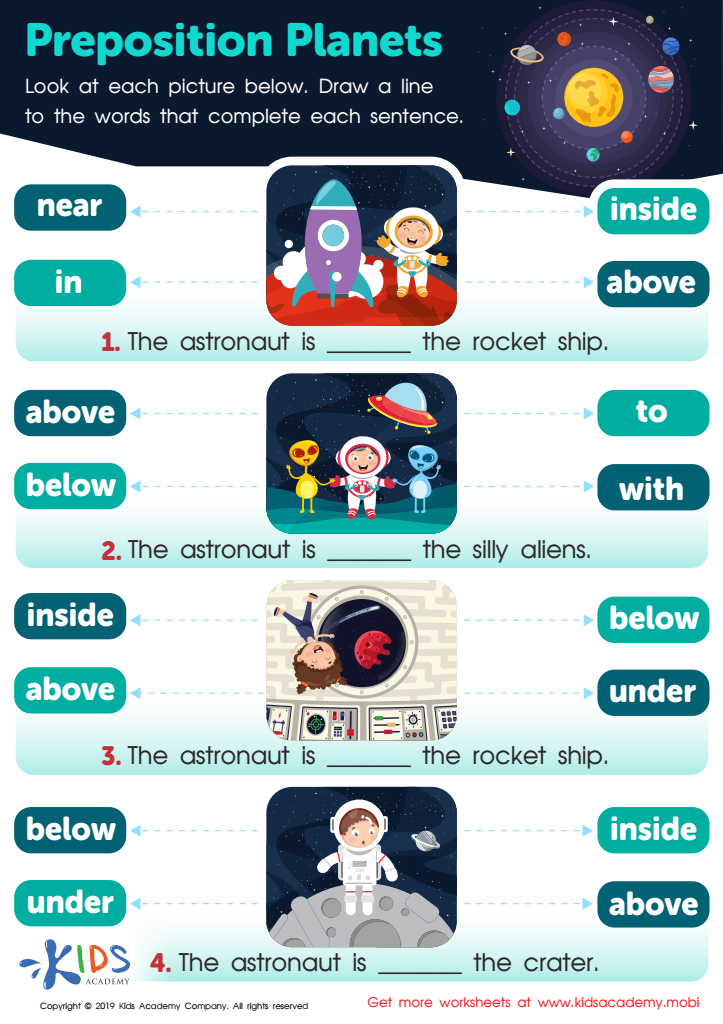
Remind your child about outer space: which planet do we live on, and who travels there for research? Explain that prepositions show location, direction, and time. Look at the worksheet with colorful pictures of astronauts. Help your kids draw lines to the words that complete each sentence.
Preposition Planets Worksheet
Worksheet
Down by the Bay: Choose the Verb Worksheet

Down by the Bay: Choose the Verb Worksheet

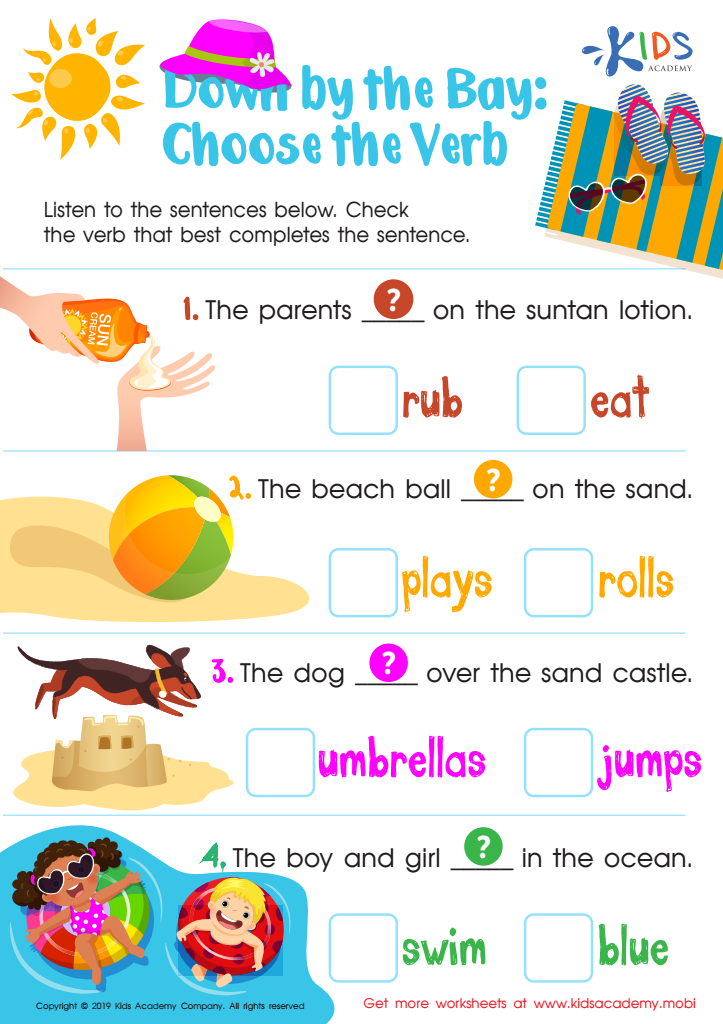
Teach your kids about verbs: words that describe actions, like 'playing', 'eating', 'talking'. Ask your child to give their own verbs, then read the sentences in a worksheet and help them pick the best one for each question.
Down by the Bay: Choose the Verb Worksheet
Worksheet
Where Is the Ant? Worksheet

Where Is the Ant? Worksheet

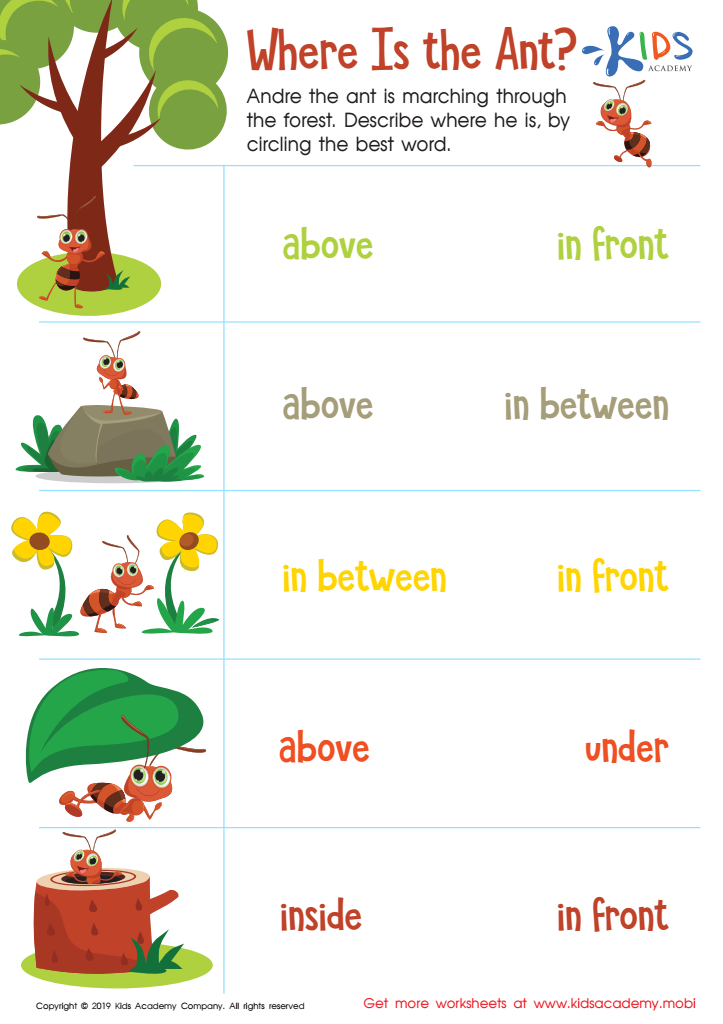
Kids are captivated by ants. Andre is a busy ant, marching through the forest. Help your child circle the best word that best describes what he's doing in each picture. This colorful printout will show them the way.
Where Is the Ant? Worksheet
Worksheet
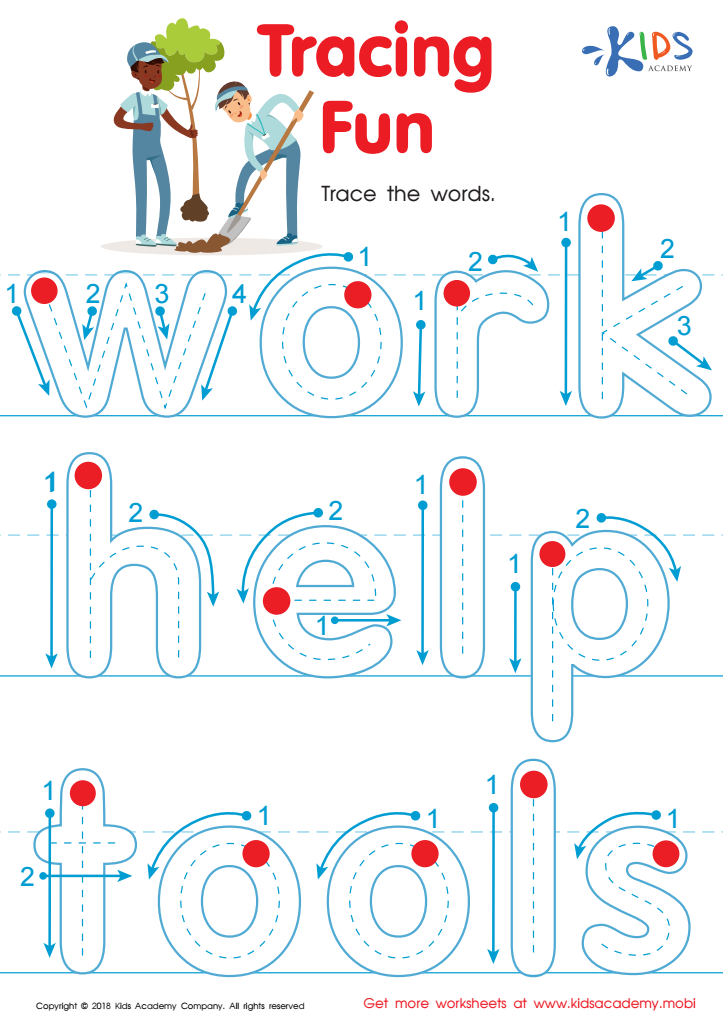
Tracing Fun Worksheet

Tracing Fun Worksheet

Believe it or not, good handwriting helps with reading! Starting at the top left and writing legibly builds reading skills. This free worksheet helps little learners practice basic sight words. Red dots show them where to start and the words provide reinforcement without them realising. An enjoyable way to boost their reading and writing.
Tracing Fun Worksheet
Worksheet
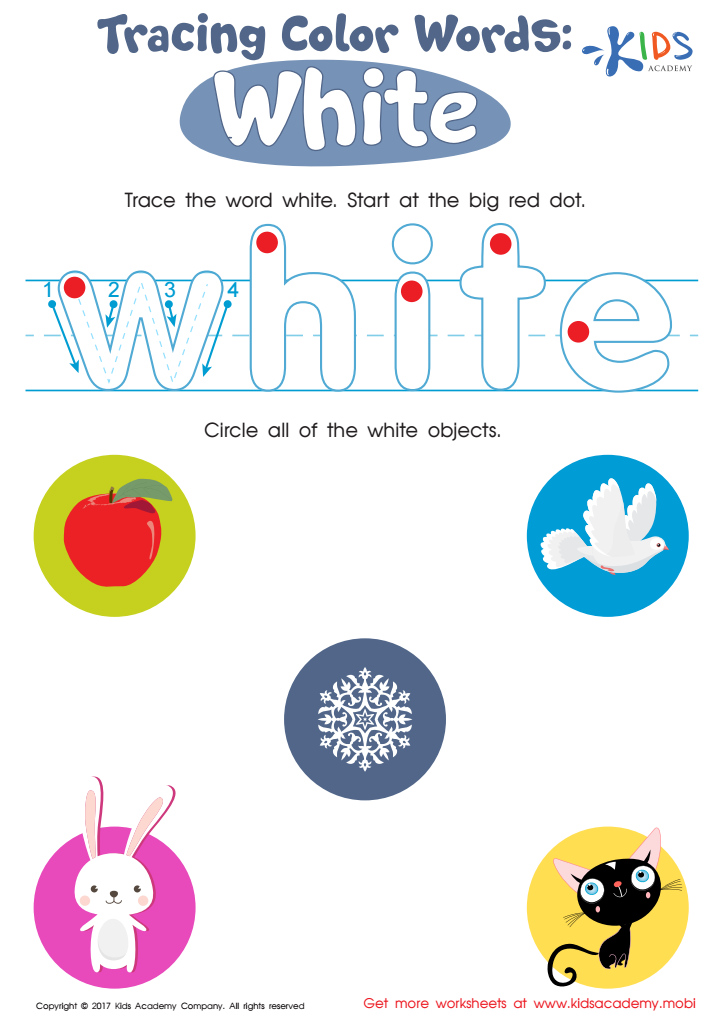
White Tracing Color Words Worksheet

White Tracing Color Words Worksheet

This fun worksheet helps children learn color words quickly. They trace the letters and circle pictures of the color. This helps them practice reading and identifying objects, and they can do it without needing to read phonetically. Download it now and watch your child's skill grow!
White Tracing Color Words Worksheet
Worksheet
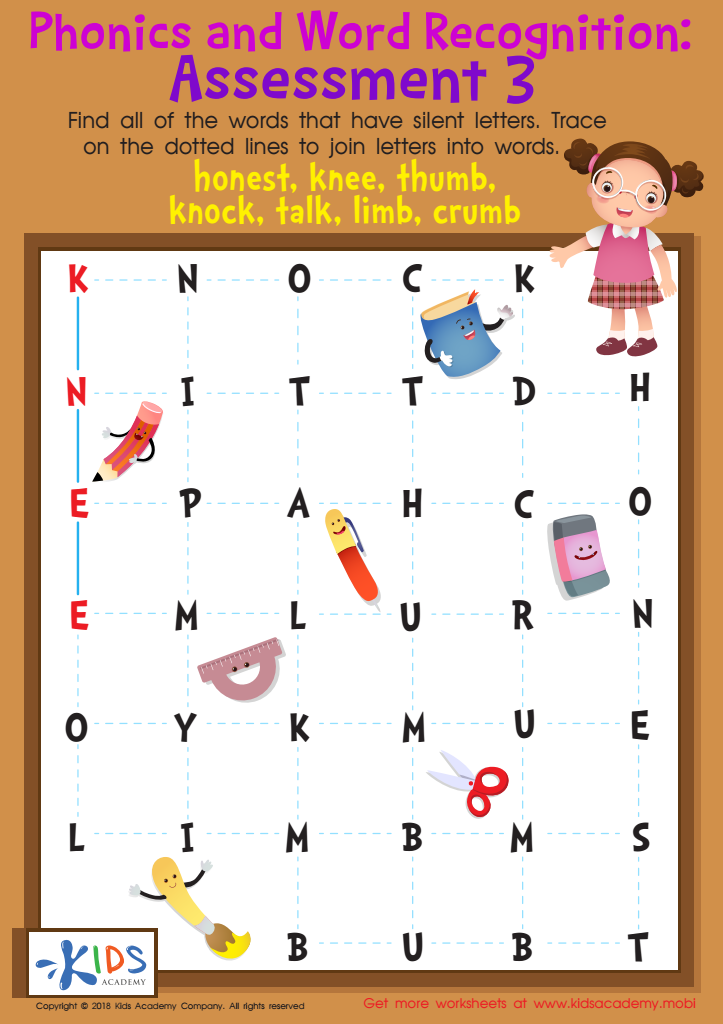
Phonics and Word Recognition: Assessment 3 Worksheet

Phonics and Word Recognition: Assessment 3 Worksheet

Silent letters can be tricky for kids learning to read and write. Show them how they work with words like 'knee' and 'dumb'. Then, challenge them to come up with their own. Give them a worksheet with silent letters and trace the lines to join the letters into words.
Phonics and Word Recognition: Assessment 3 Worksheet
Worksheet
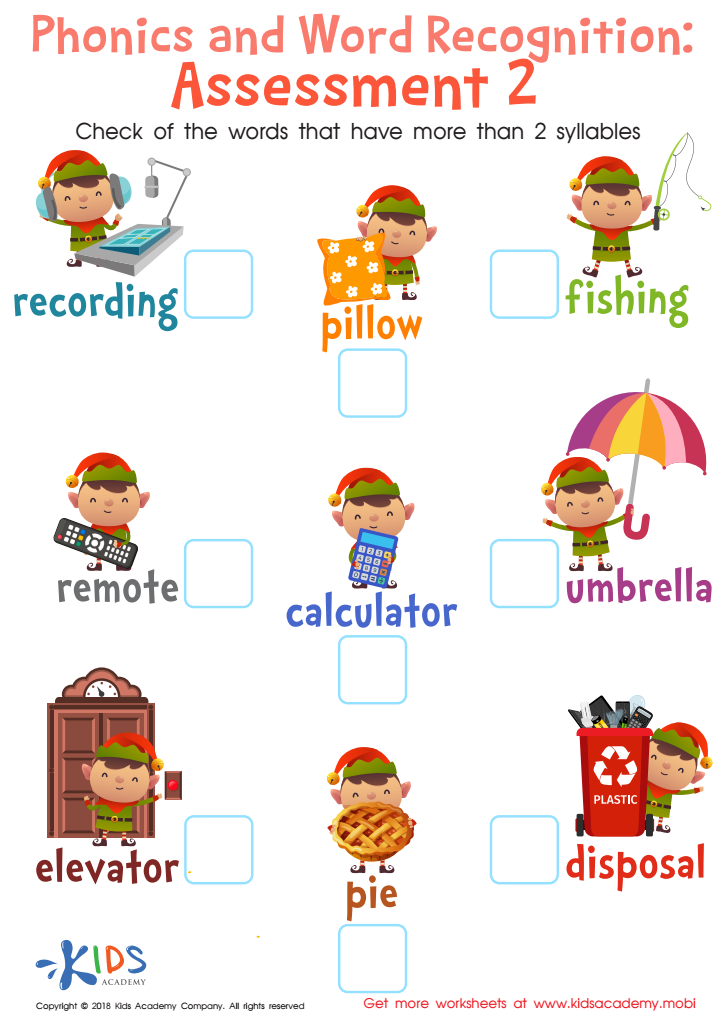
Phonics and Word Recognition: Assessment 2 Worksheet

Phonics and Word Recognition: Assessment 2 Worksheet

Help your kids learn proper pronunciation by counting syllables. Most words they'll encounter have 1-3 syllables, making them simple to say. Have them repeat the words in your worksheet after you. Focus on longer words with more than two syllables.
Phonics and Word Recognition: Assessment 2 Worksheet
Worksheet
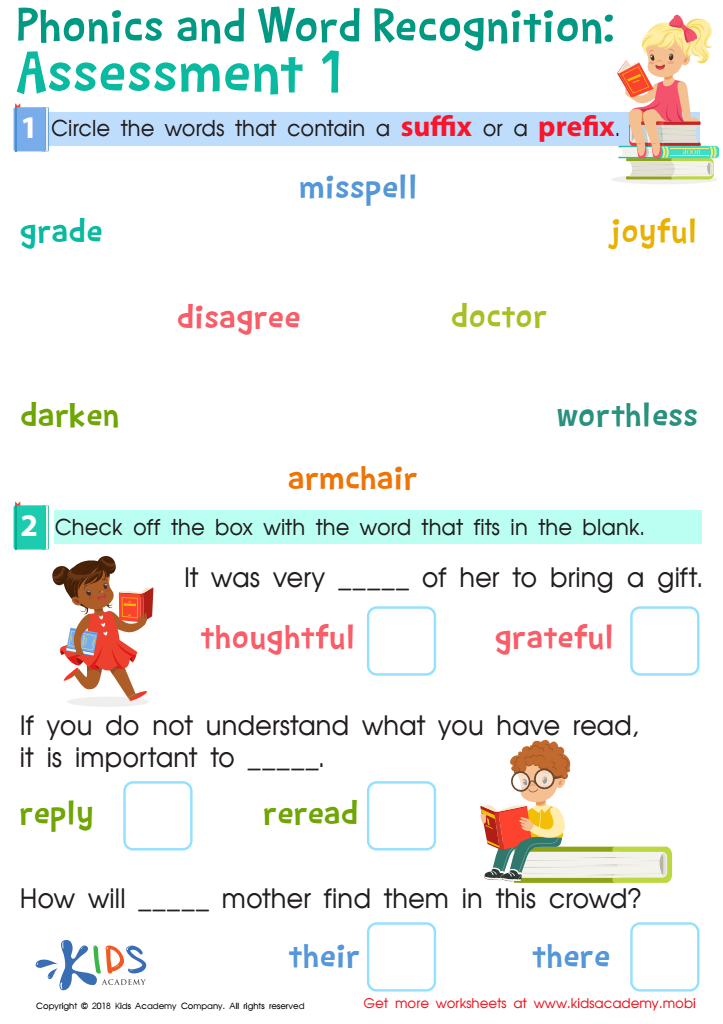
Phonics and Word Recognition: Assessment 1 Worksheet

Phonics and Word Recognition: Assessment 1 Worksheet

Explain prefixes (words added to start of another word to give it a new meaning) and suffixes (added to end of word to change its meaning) to your kids with examples like 'unhappy' (prefix) and 'forgetful' (suffix). Now, help your child complete this worksheet, including circling words and checking boxes.
Phonics and Word Recognition: Assessment 1 Worksheet
Worksheet
Greek and Latin Roots Worksheet

Greek and Latin Roots Worksheet

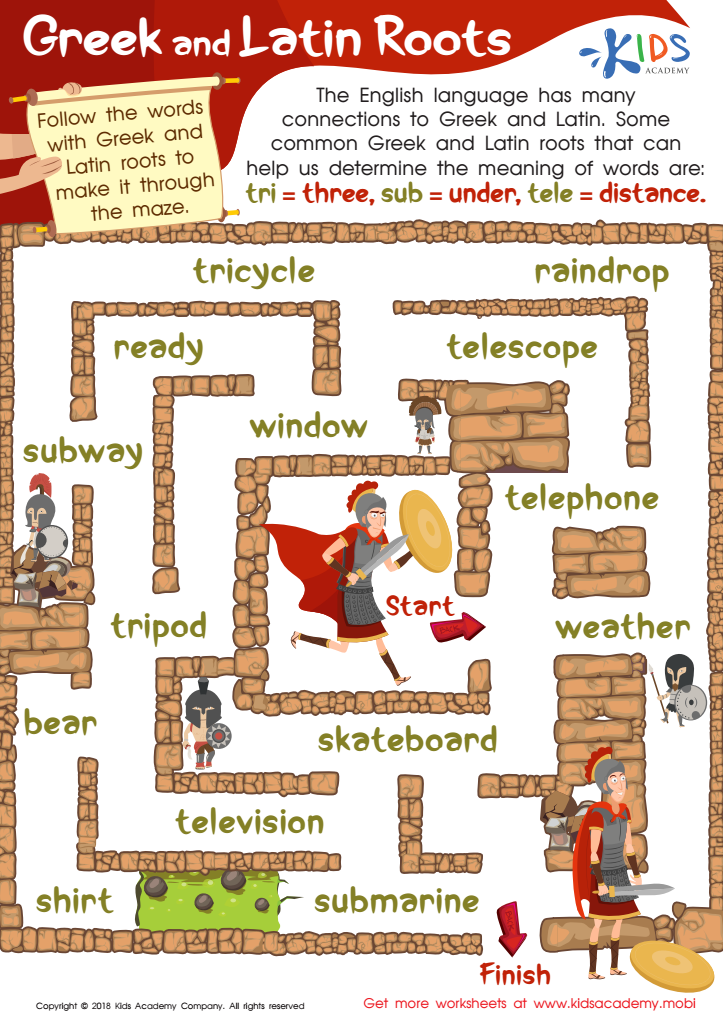
English borrows lots of words from other languages, and it has many ties to Greek and Latin. For example, 'tri', 'sub' and 'tele' (all from Greek and Latin) mean 'three', 'under' and 'distance' respectively. Help your child understand the meanings of words by having them work through a maze with words from these languages.
Greek and Latin Roots Worksheet
Worksheet
Action! Worksheet
Action! Worksheet

Action! Worksheet

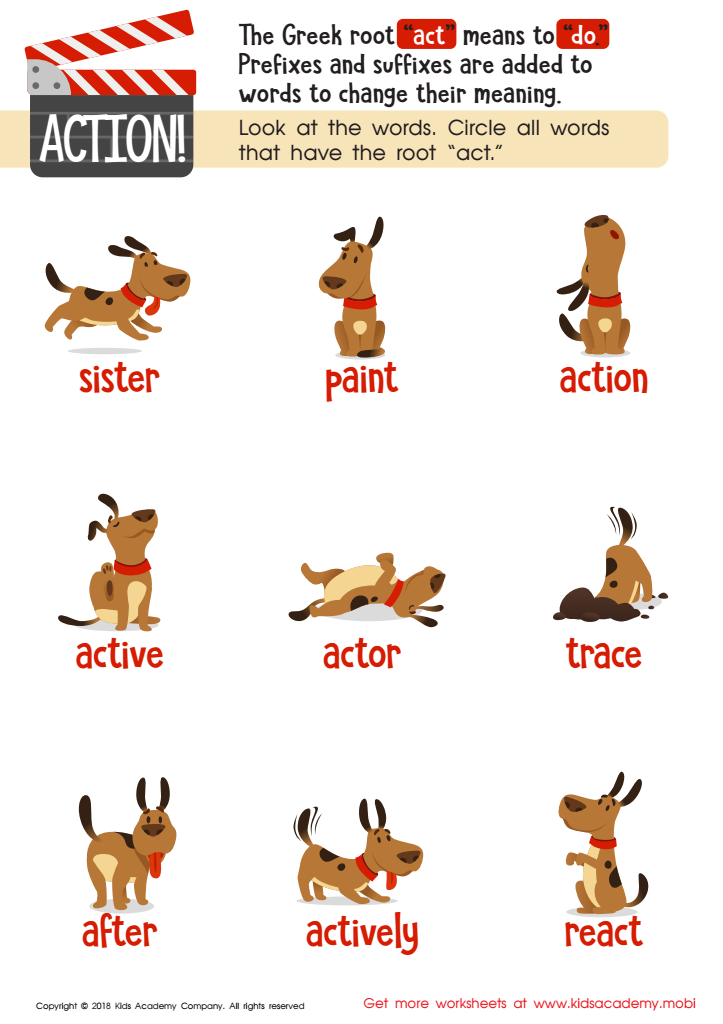
Most English words are borrowed, and prefixes and suffixes are added to change the meaning. A popular prefix is 'act', from the Greek root meaning 'to do'. With your kids, look at the words in this worksheet and circle those with the root 'act'.
Action! Worksheet
Worksheet


Ensuring normal writing development for children aged 6-8 is crucial for several reasons. At this stage, children are transitioning from basic scribbling and letter formation to more coherent and structured writing. This developmental phase is foundational for their future academic success and cognitive development. Encouraging proper writing skills helps children develop fine motor control, hand-eye coordination, and spatial awareness, essential for everyday activities and other academic areas.

Writing serves as a primary mode of communication, allowing children to express their thoughts, feelings, and creativity effectively. When children write clearly, they can share ideas more efficiently and build stronger relationships with peers and adults. Furthermore, writing enhances reading skills; as children write, they reinforce their understanding of phonetics, vocabulary, and sentence structure, benefiting their reading comprehension.

Teachers and parents who actively support normal writing development help build children’s confidence and motivation. Praise and constructive feedback during this critical period instill a positive attitude toward learning and perseverance. Addressing writing issues early also helps identify and mitigate learning disabilities or difficulties, ensuring the child receives the necessary support.

In essence, prioritizing normal writing development in early years sets a strong foundation for a child's academic journey and holistic growth, making it a key area of focus for parents and teachers.