Normal Fractions of Shapes Worksheets for Ages 6-9
5 filtered results
-
From - To
Discover engaging Normal Fractions of Shapes Worksheets designed for children aged 6-9! Our interactive and printable worksheets help young learners understand fractions visually through fun shapes and vibrant illustrations. These resources are perfect for introducing the concept of fractions in a hands-on way, fostering early math skills. Students will learn to identify and color different fractions of shapes, enhancing their comprehension and retention. Ideal for homeschooling or classroom activities, our worksheets provide clear instructions and varied exercises to cater to all learning styles. Encourage your child’s mathematical journey with our creative and educational fraction worksheets today!
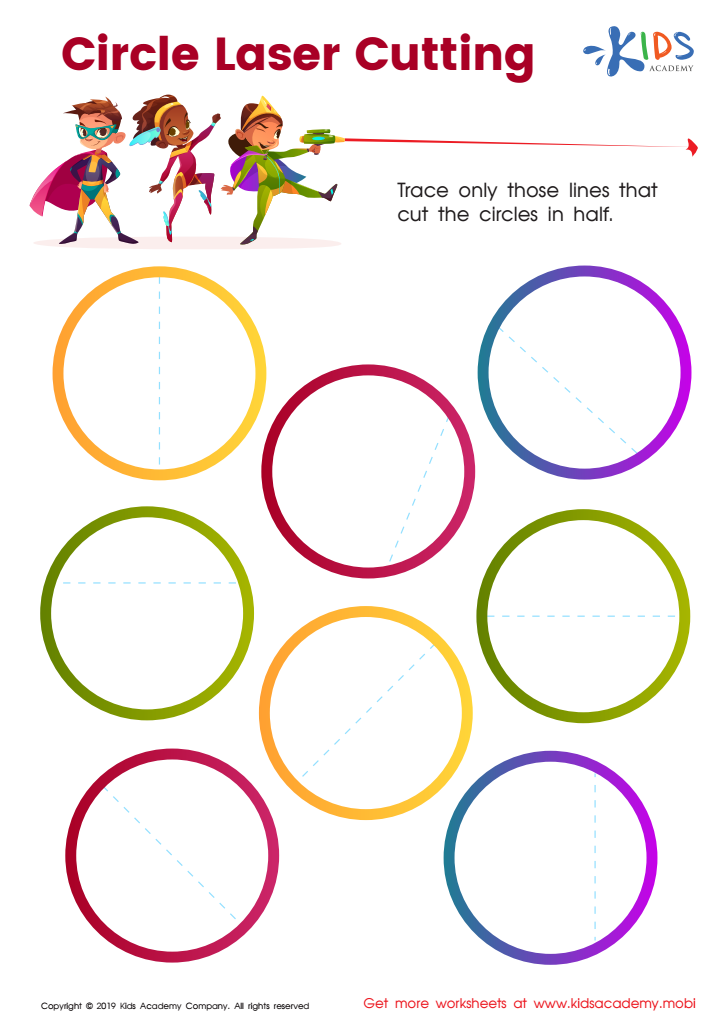
Circle Laser Cutting Worksheet
 Assign to My Students
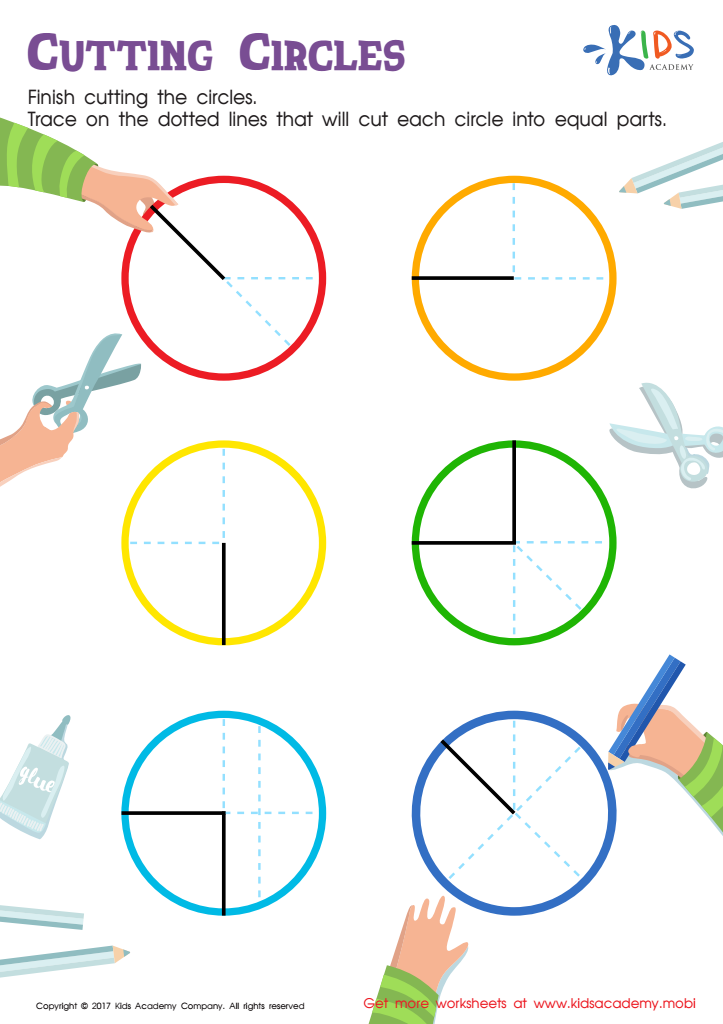
Cutting Circles Worksheet
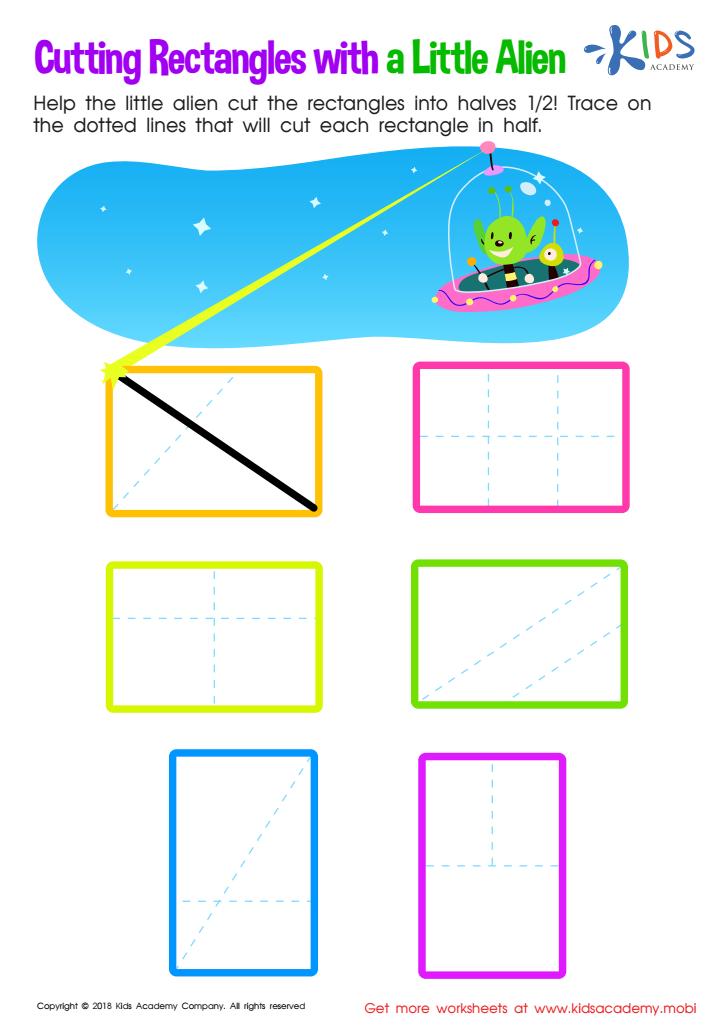
Cutting Rectangles with Alien Worksheet
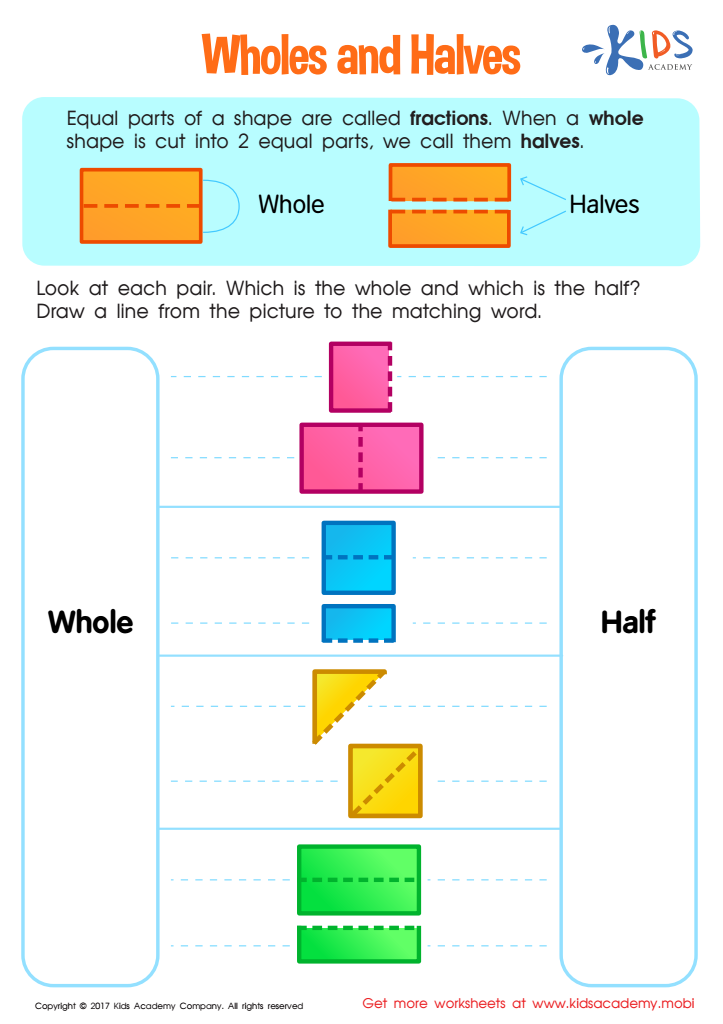
Wholes and Halves Worksheet
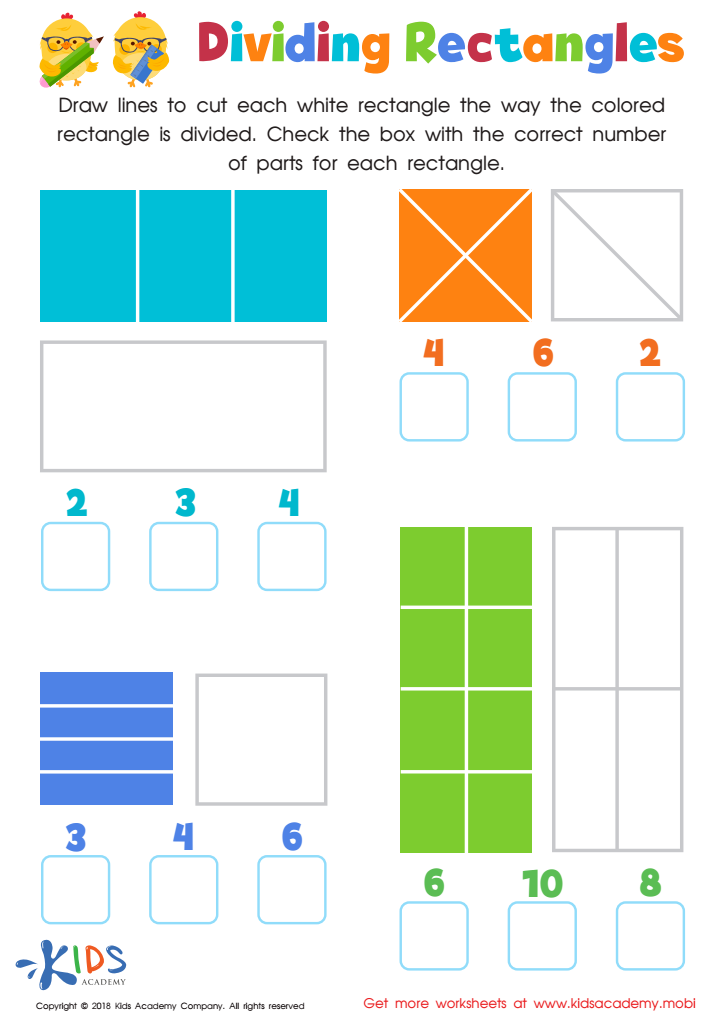
Dividing Rectangles Worksheet








Understanding normal fractions of shapes is vital for children aged 6-9, as it builds foundational skills in mathematical reasoning, spatial awareness, and problem-solving. At this developmental stage, children are highly visual learners, making shape fractions an ideal concept to explore. When they learn to recognize and manipulate fractions visually, such as dividing a circle into halves or quarters, they gain a deeper understanding of the idea of part-to-whole relationships, which is crucial in mathematics.
Parents and teachers should care because mastery of fractions lays the groundwork for more advanced mathematical concepts later on, such as decimals, percentages, and ratios. By engaging in activities involving shapes—like cutting, coloring, or creating fraction models—children develop critical thinking and enhance their fine motor skills.
Moreover, strong fractional knowledge promotes confidence in math, helping to combat math anxiety early on. This reinforcement supports a positive attitude toward learning. Furthermore, children start to recognize fractions in everyday life, from sharing food to measuring ingredients in cooking. By fostering this knowledge early, parents and teachers contribute to a child's overall mathematical literacy, setting them up for academic success across numerous subjects, not just math.