Filters

7 filtered results

Clear all filters
Favorites
With answer key
Interactive

7 filtered results

Difficulty Level

Grade


Introduce your child to essential math concepts with our "Normal Area and Perimeter Worksheets for Ages 7-9." These engaging, educational worksheets from Kids Academy are perfect for young learners, offering a fun way to grasp the basics of area and perimeter. Designed specifically for children aged 7-9, they combine colorful illustrations and practical exercises to enhance understanding and skills. From simple shapes to more complex figures, our worksheets ensure foundational math learning is both effective and enjoyable. Boost your child's confidence and proficiency in math—explore our collection today!

Check out this FREE Trial Lesson on Area and Perimeter for age 7-9!

Understanding Perimeter

Favorites
With answer key
Interactive
  • 7-9
  • Interactive
  • Area and Perimeter
  • Normal
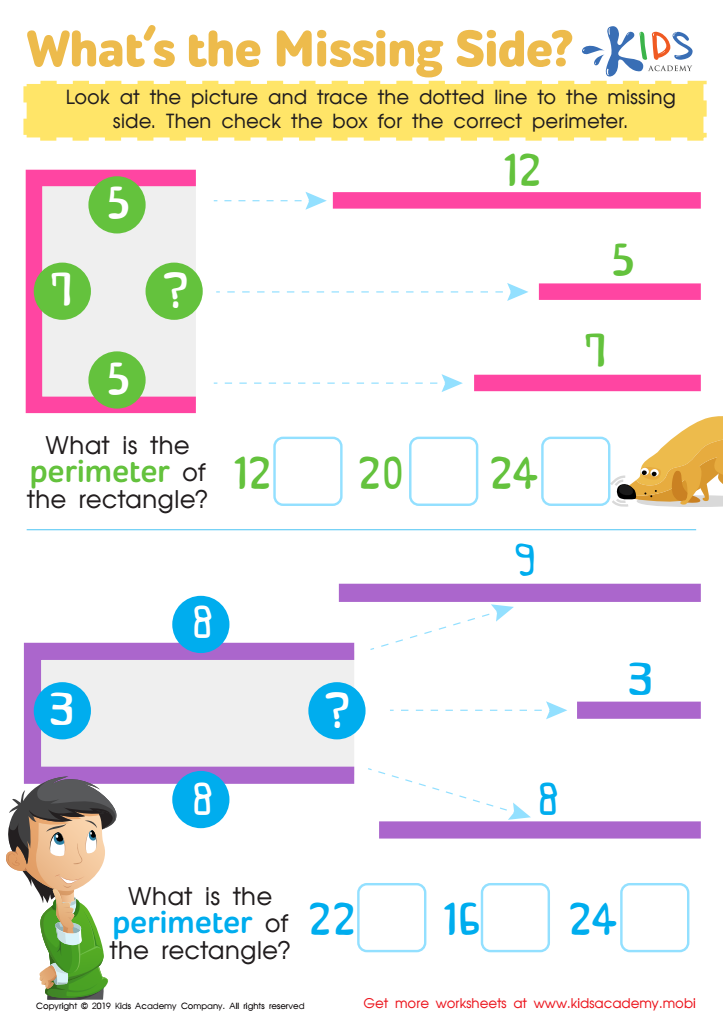
What's the Missing Side Worksheet

What's the Missing Side Worksheet

Assist your pupils in improving math skills with fun exercises like the tracing sheet. Show them the picture and guide them to trace the missing side. Ask them to check the box of the right perimeter afterwards. Doing this regularly can help them to enjoy and appreciate the subject more.
What's the Missing Side Worksheet
Worksheet
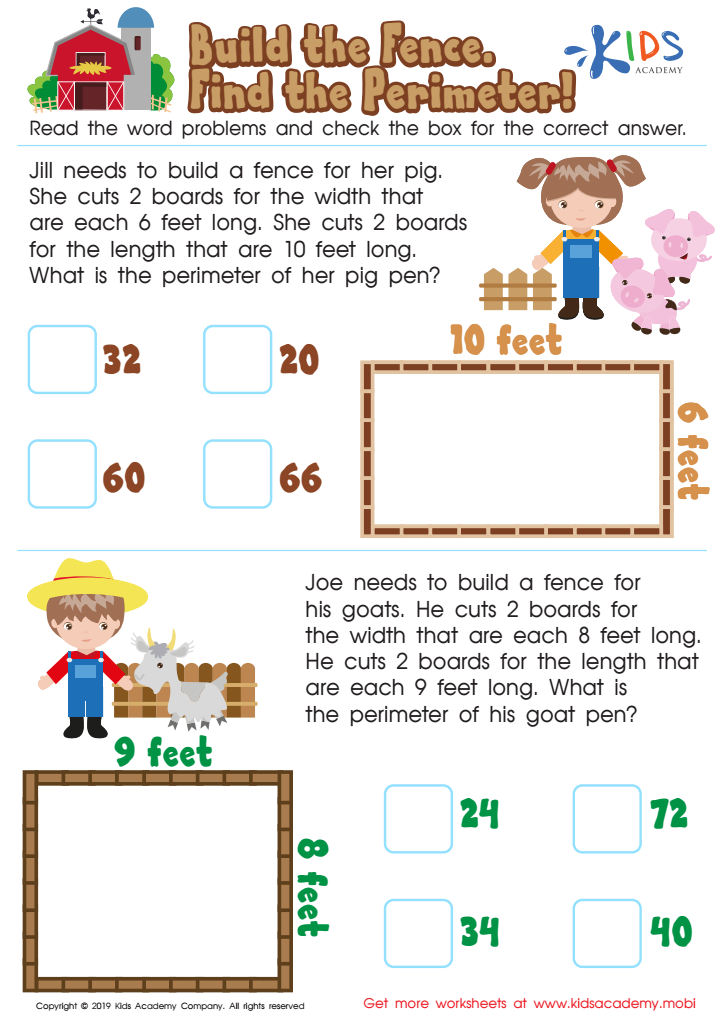
Build the Fence, Find the Perimeter Worksheet

Build the Fence, Find the Perimeter Worksheet

This worksheet is great for kids needing extra help with geometry and maths. Read the problems to your kids and assist them in answering them correctly by ticking the box. This way, they'll be combining their addition and subtraction skills with literacy to help them learn.
Build the Fence, Find the Perimeter Worksheet
Worksheet
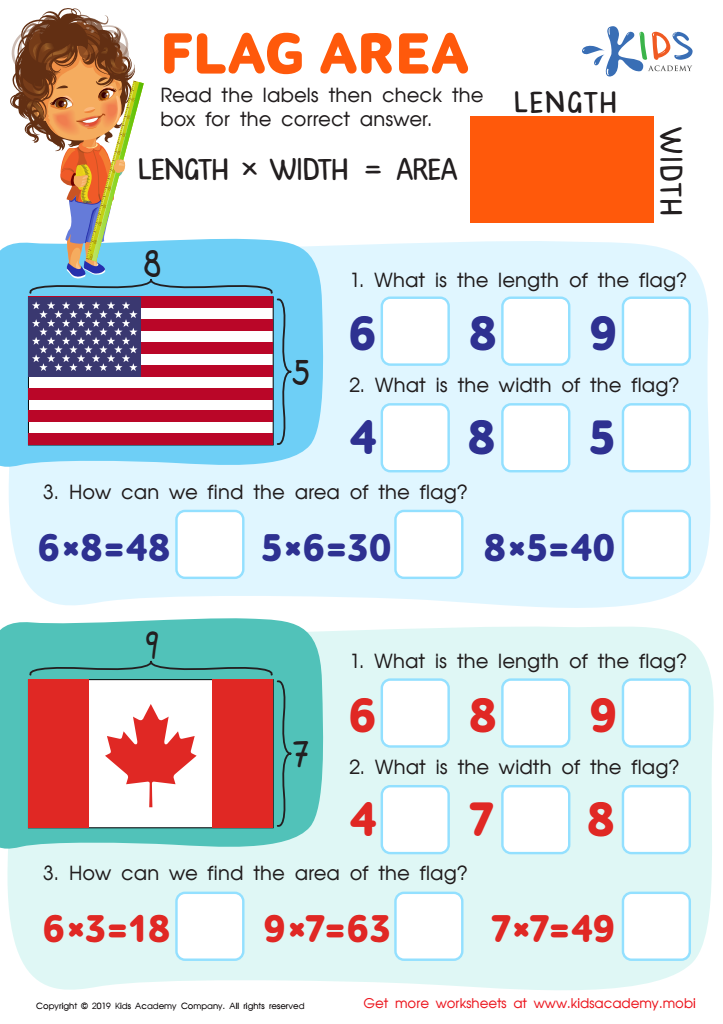
Flag Area Worksheet
Flag Area Worksheet

Flag Area Worksheet

Test your child's knowledge of flags by asking which ones they can identify in the image. Then, study the worksheet together. There are 6 questions with labels. Have them read each label and check the box for the correct answer.
Flag Area Worksheet
Worksheet
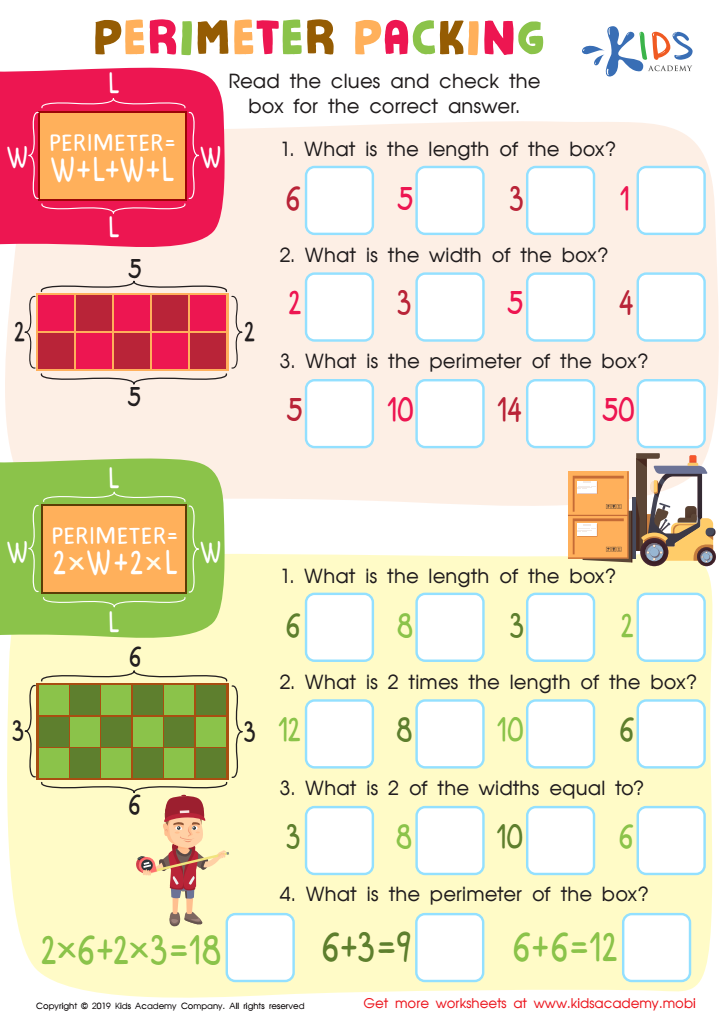
Perimeter Parking Worksheet

Perimeter Parking Worksheet

Geometry can be daunting for kids, but you can make it easy with simple exercises and familiar objects. Check out this worksheet with two sections of questions. Guide your kids to read clues and check the correct answer box. Help them become better at solving geometry problems.
Perimeter Parking Worksheet
Worksheet
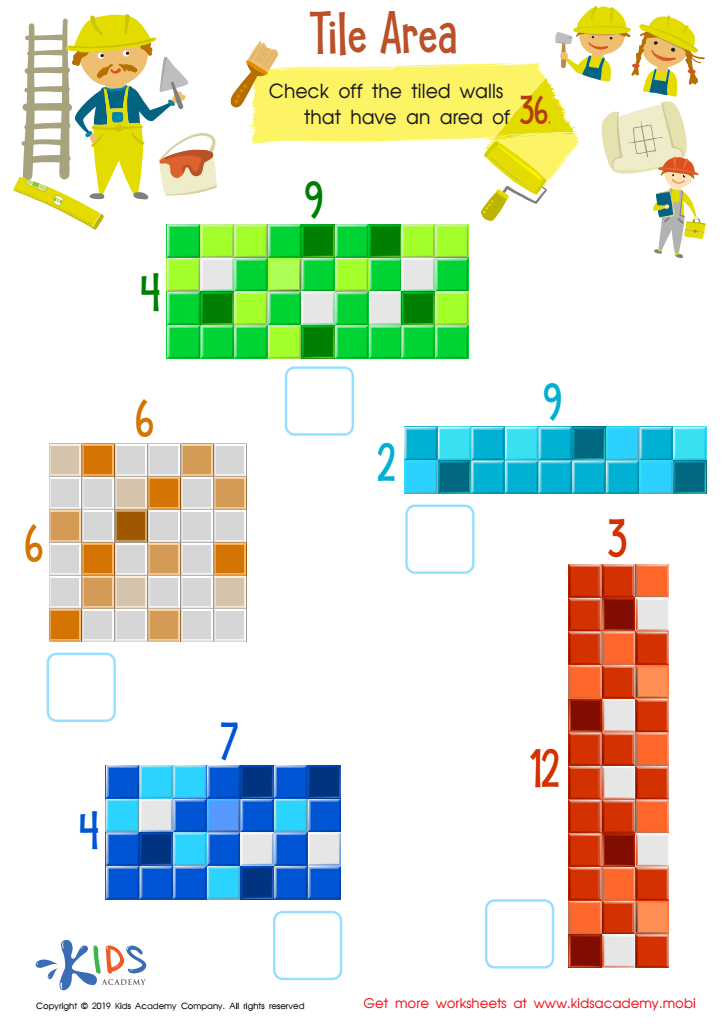
Tile Area Worksheet
Tile Area Worksheet

Tile Area Worksheet

Help kindergartners become experts in solving simple math problems. Teach them about measuring, the parts to measure, and how to measure the area of tiled walls. Use the worksheet to check off the walls with an area of 36. This can help them understand the concepts and make measuring objects less intimidating.
Tile Area Worksheet
Worksheet
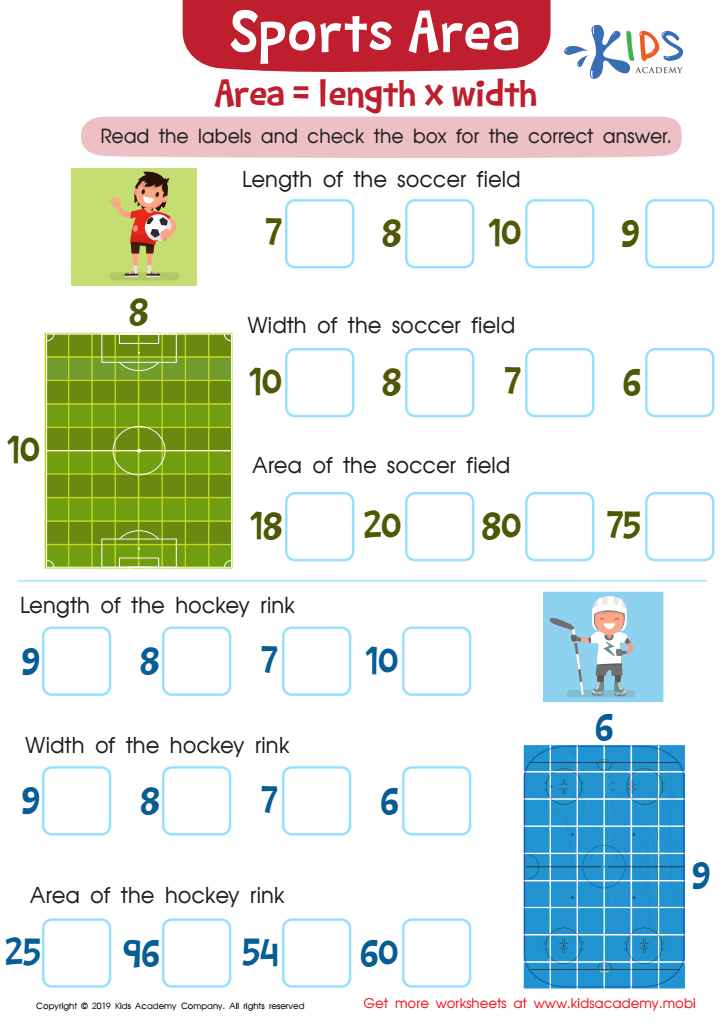
Sports Area Worksheet

Sports Area Worksheet

Help your preschoolers understand area by showing them it's just length x width. Point to the picture in the worksheet, get them to read the labels and select the right answer. Encourage them that calculating areas of shapes, objects and places isn't too hard!
Sports Area Worksheet
Worksheet
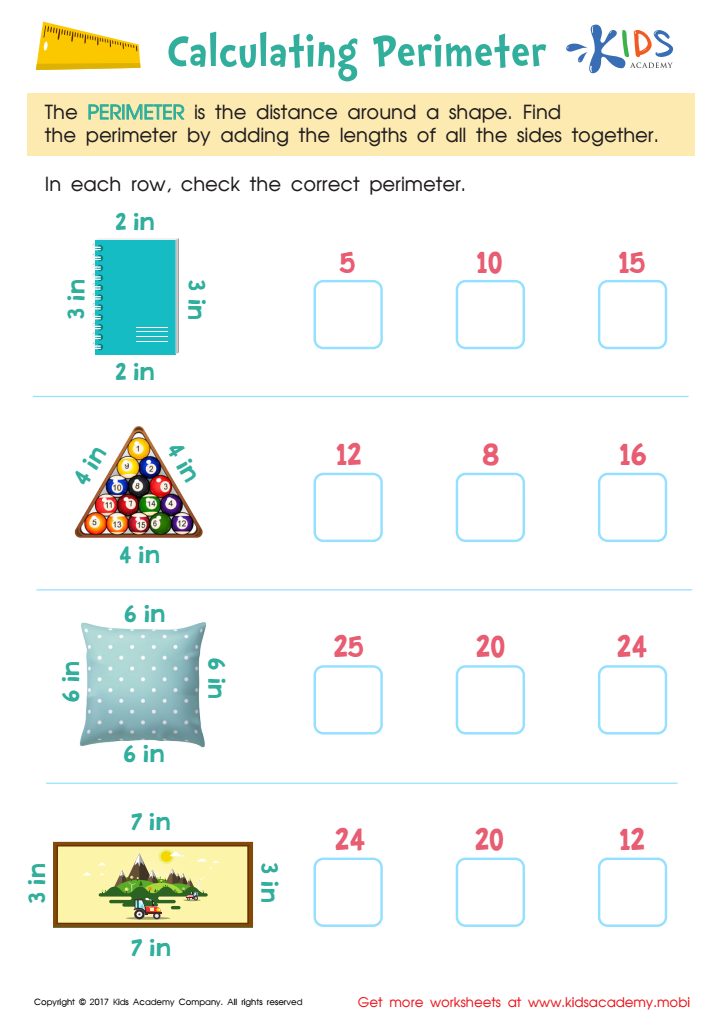
Calculating Perimeter Worksheet Grade 3


Calculating Perimeter Worksheet

Check out this worksheet to help kids calculate perimeter! Kids can use it to practice important math skills such as geometry. With everyday objects pictured, they'll find the perimeter and master this useful skill.
Calculating Perimeter Worksheet
Worksheet


Understanding the concepts of area and perimeter is crucial for children aged 7-9, and it is important for parents and teachers to encourage this learning for several reasons. First, these mathematical concepts are foundational skills that bolster other areas of math, such as multiplication, addition, and division. Grasping area and perimeter early helps build a strong mathematical base that supports their future learning.

Second, real-world application is significant. From understanding the space needed for a garden to determining the amount of paint required for a wall, knowing how to calculate area and perimeter has immense practical value. This real-world relevance makes learning more engaging and meaningful for children.

Third, developing spatial awareness and problem-solving skills is another major benefit. Working with area and perimeter encourages children to visualize and manipulate shapes, thereby enhancing their cognitive abilities related to space and structure.

Lastly, introducing these concepts early fosters confidence and interest in mathematics. Early exposure demystifies the topic, helping students view mathematics as approachable rather than intimidating. For both cognitive development and real-life practicality, it is essential for parents and teachers to ensure children grasp these concepts within the age of 7-9. This foundational knowledge not only aids academic success but also promotes lifelong analytical and problem-solving skills.