Normal Place Value Worksheets for Ages 7-9 - Page 2
43 filtered results
-
From - To
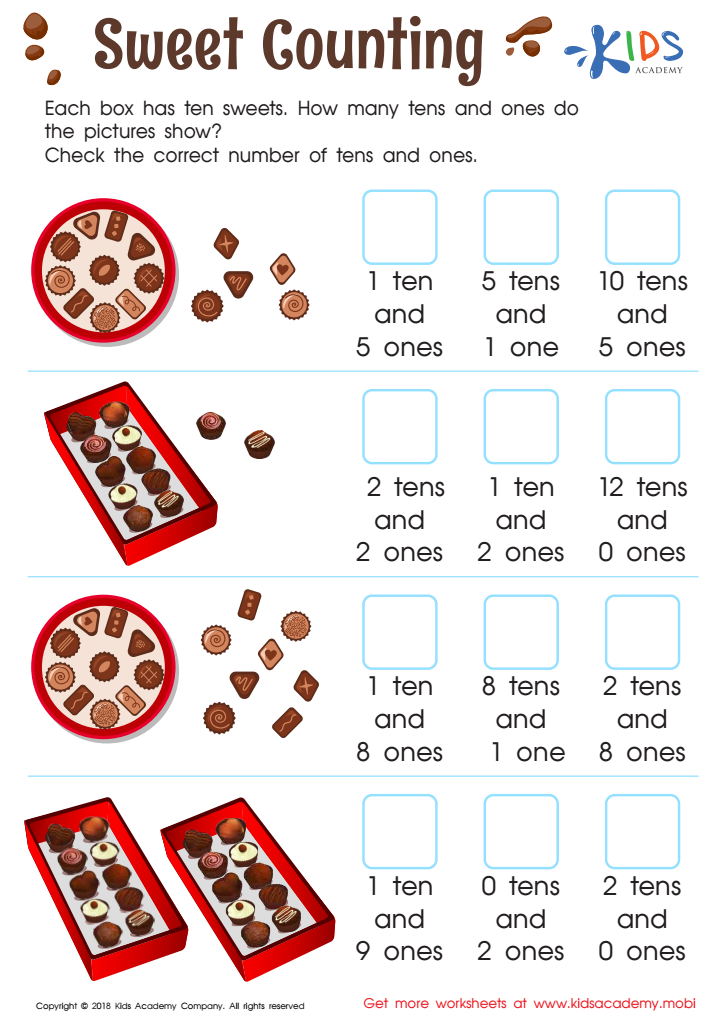
Sweet Counting - Part 2 Worksheet
 Assign to My Students
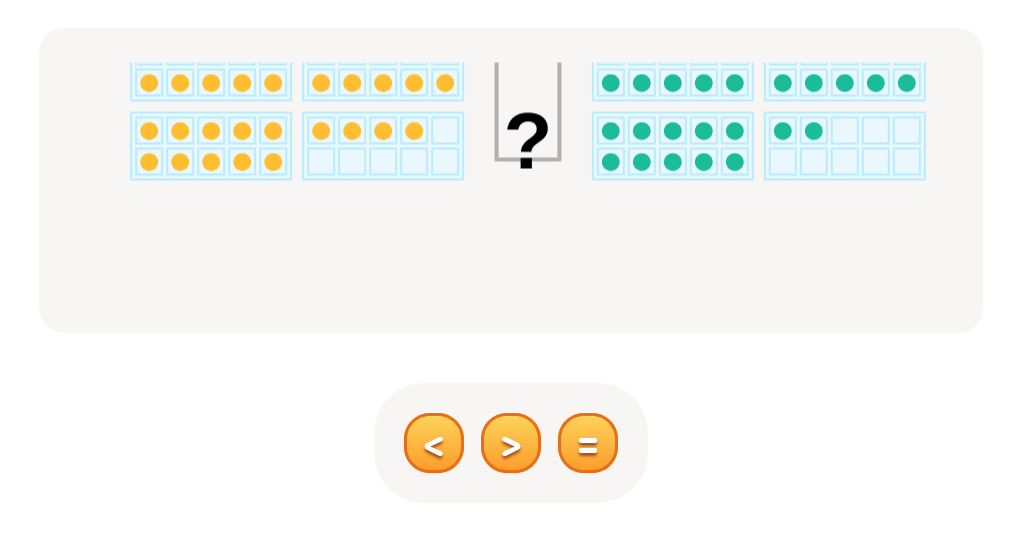

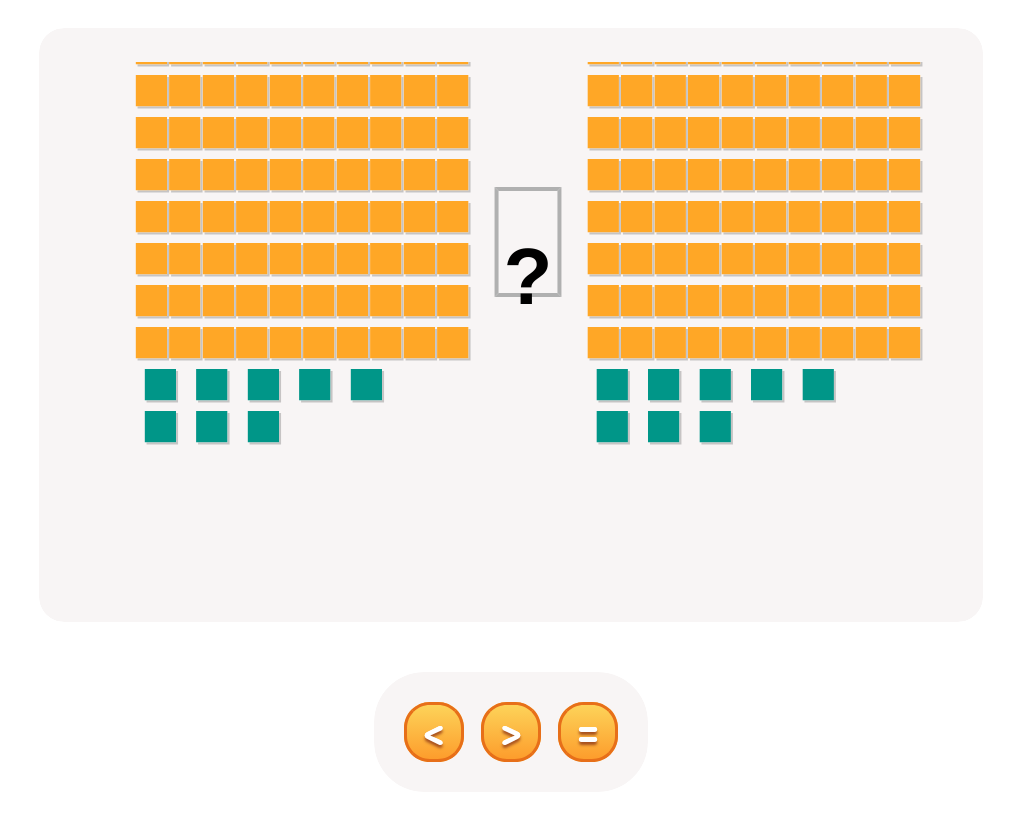
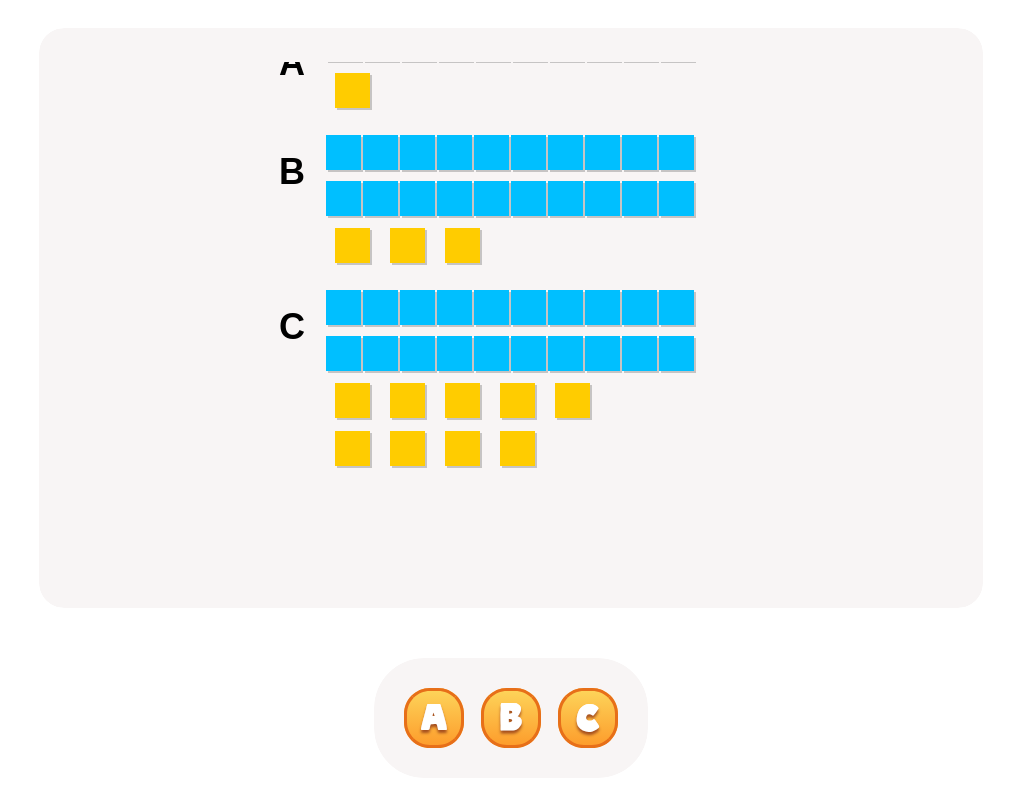
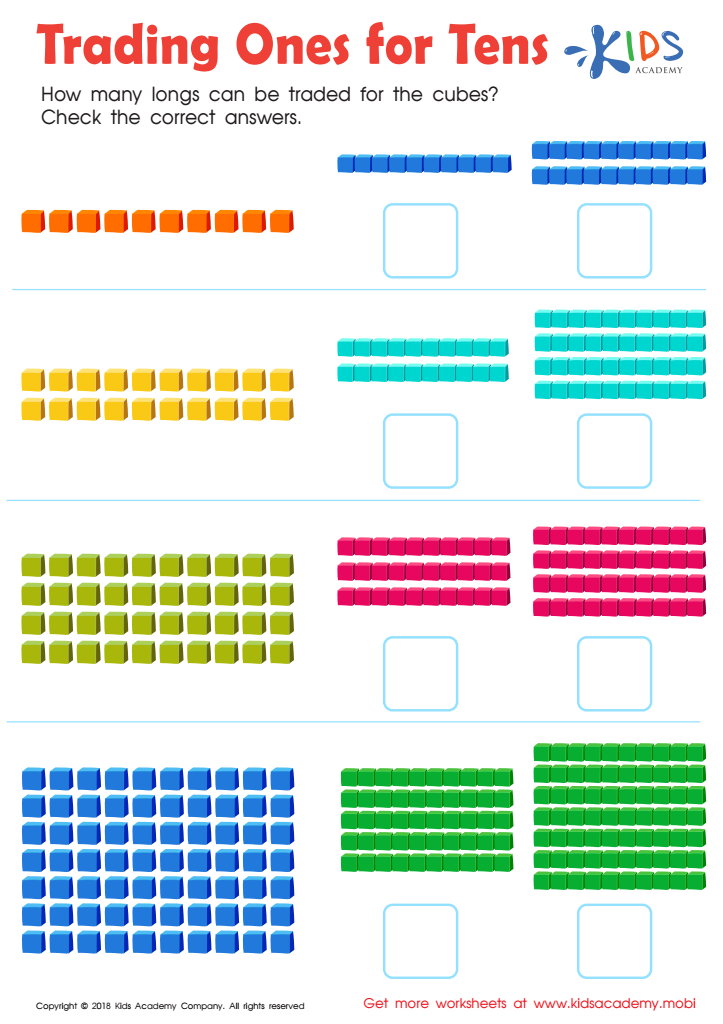
Trading Ones for Tens Worksheet: Part 2
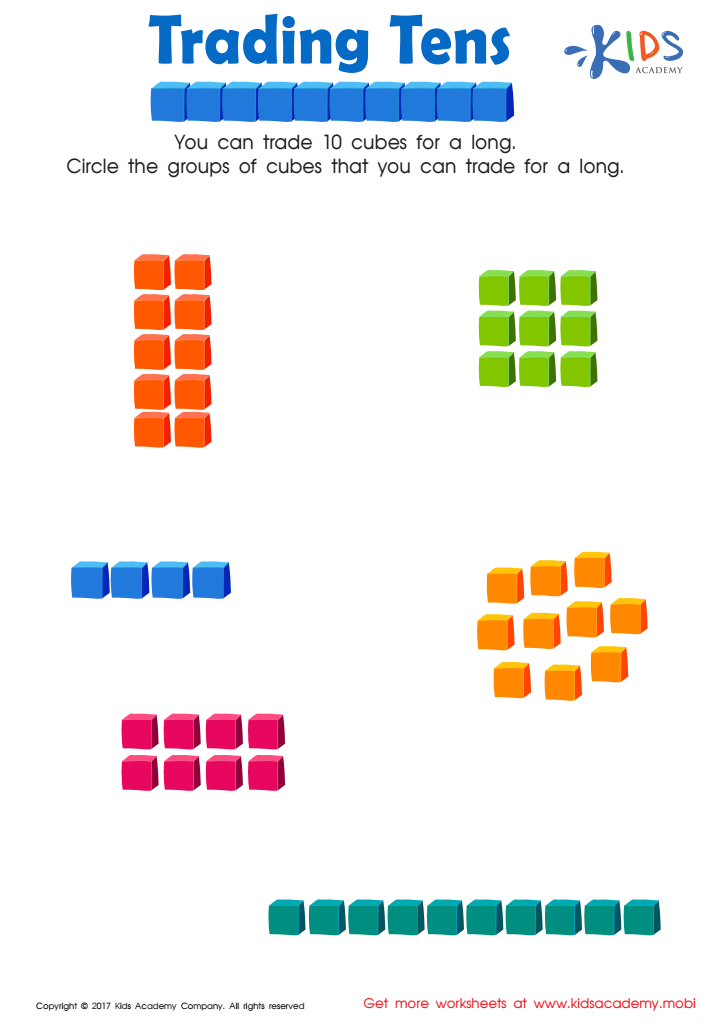
Trading Tens Worksheet
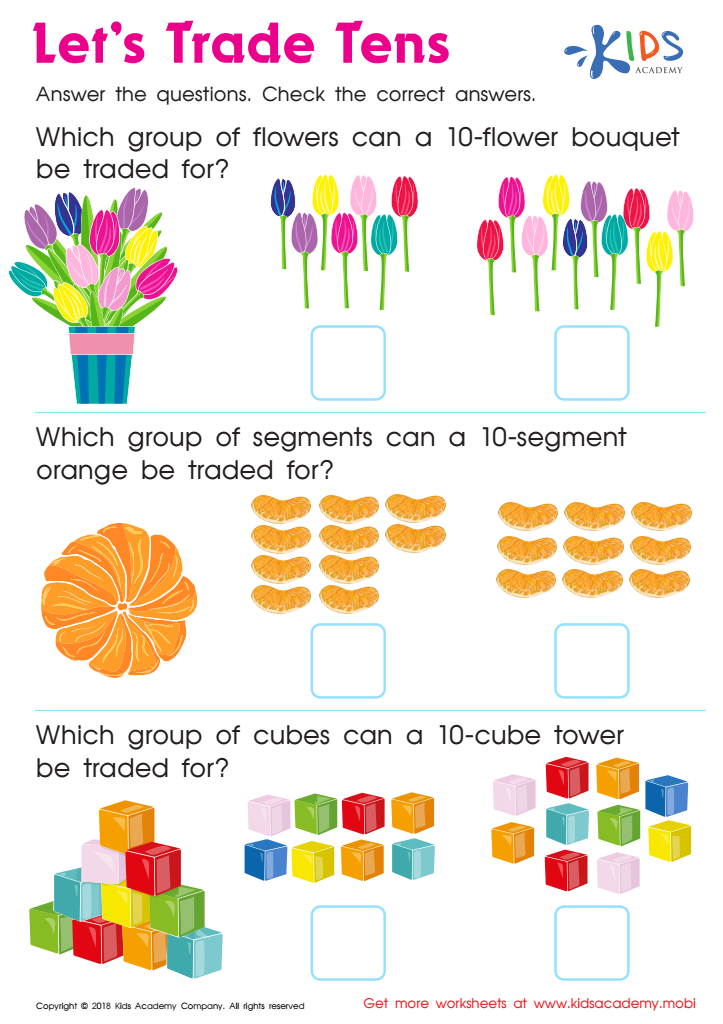
Lets Trade Tens Worksheet
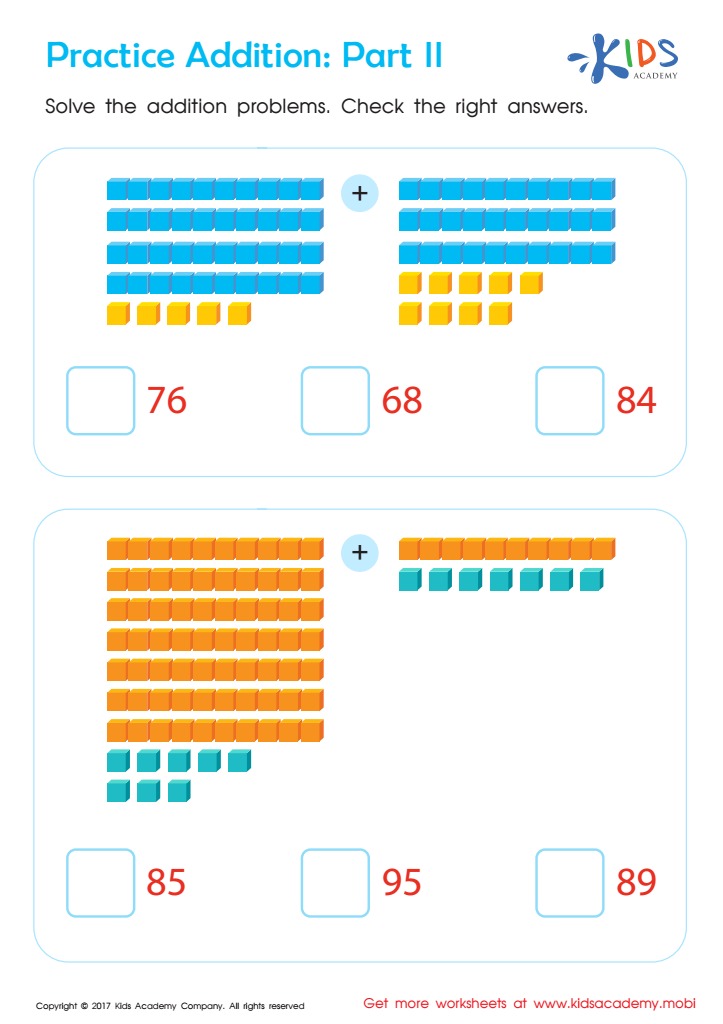
Practice Addition: Part 2 Worksheet
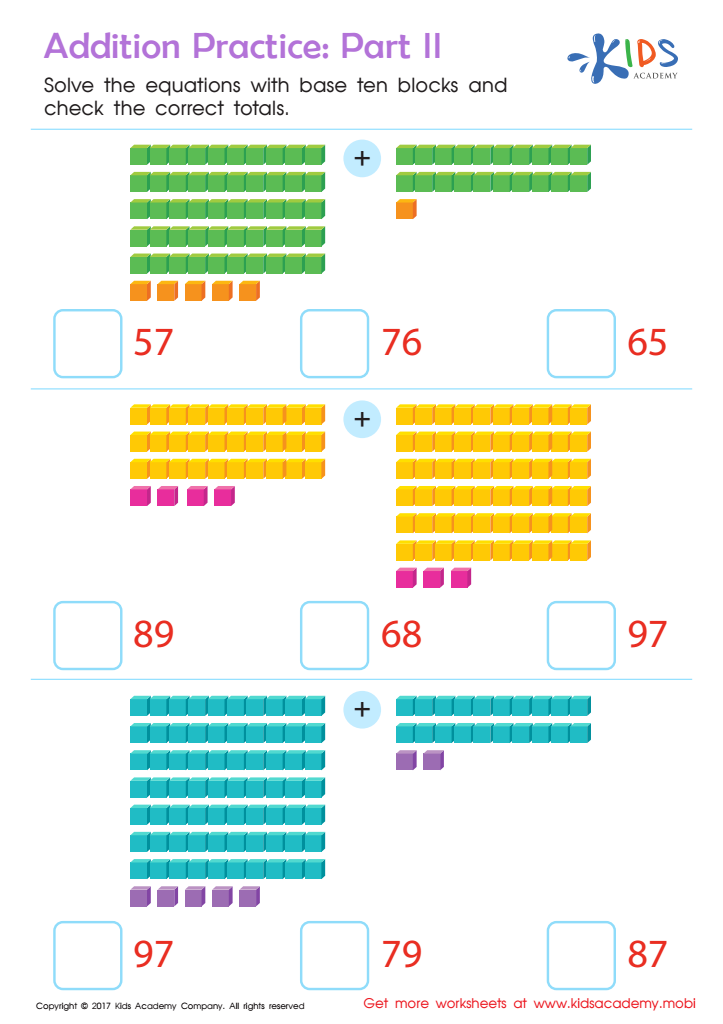
Addition Practice Sheet: Part 2
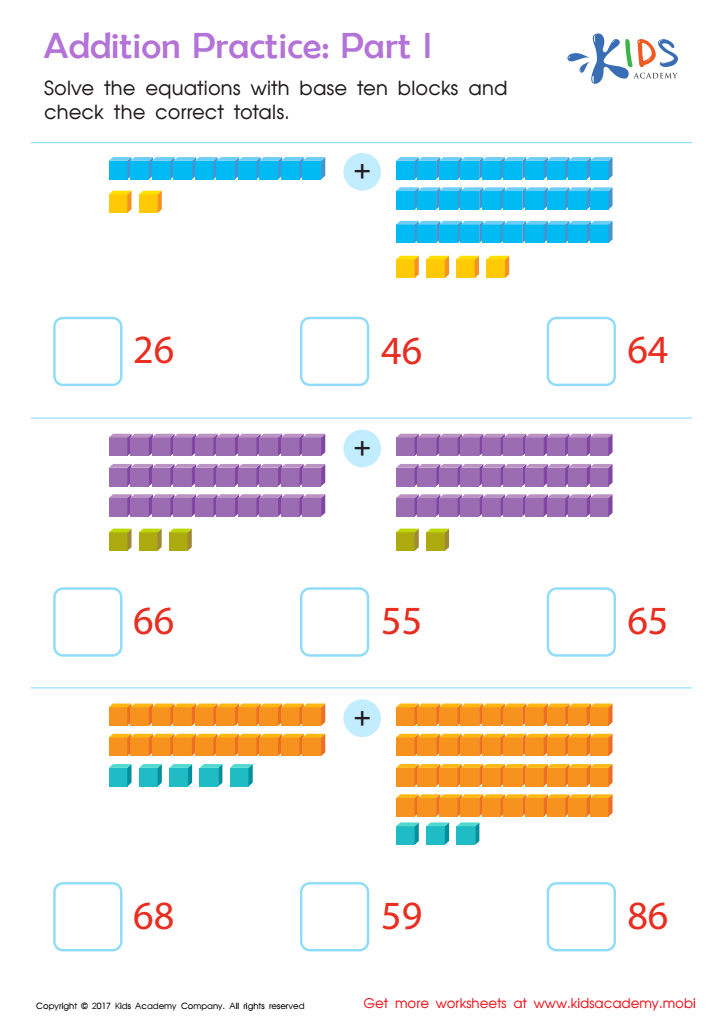
Addition Practice Sheet: Part 1
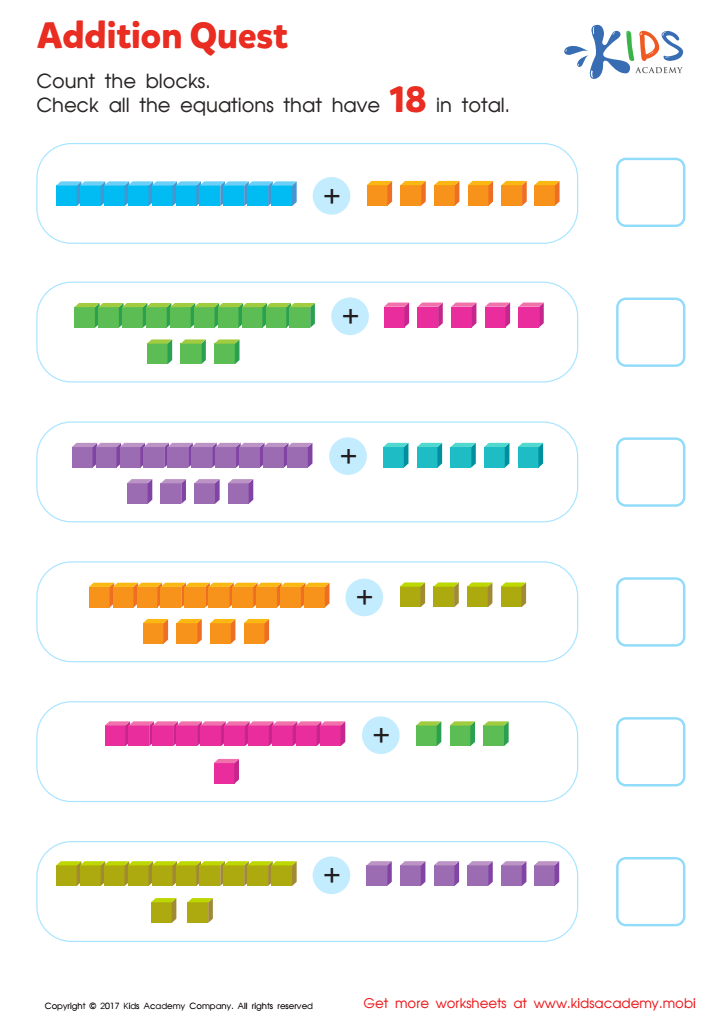
Addition Quest Worksheet: Part 2
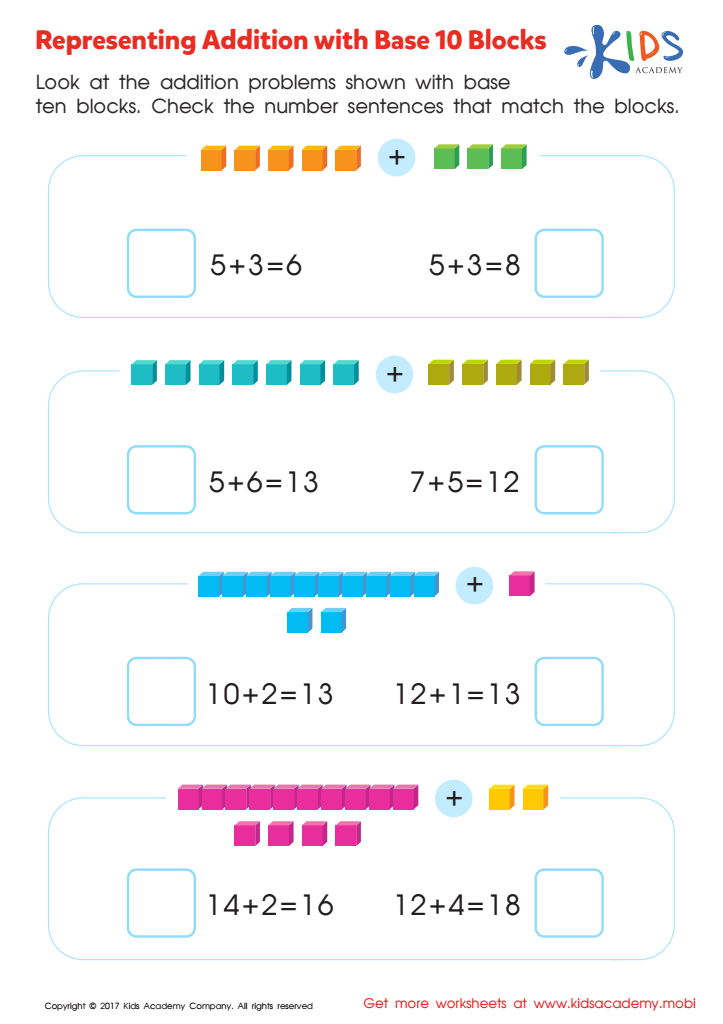
Representing Addition with Base 10 Blocks Worksheet
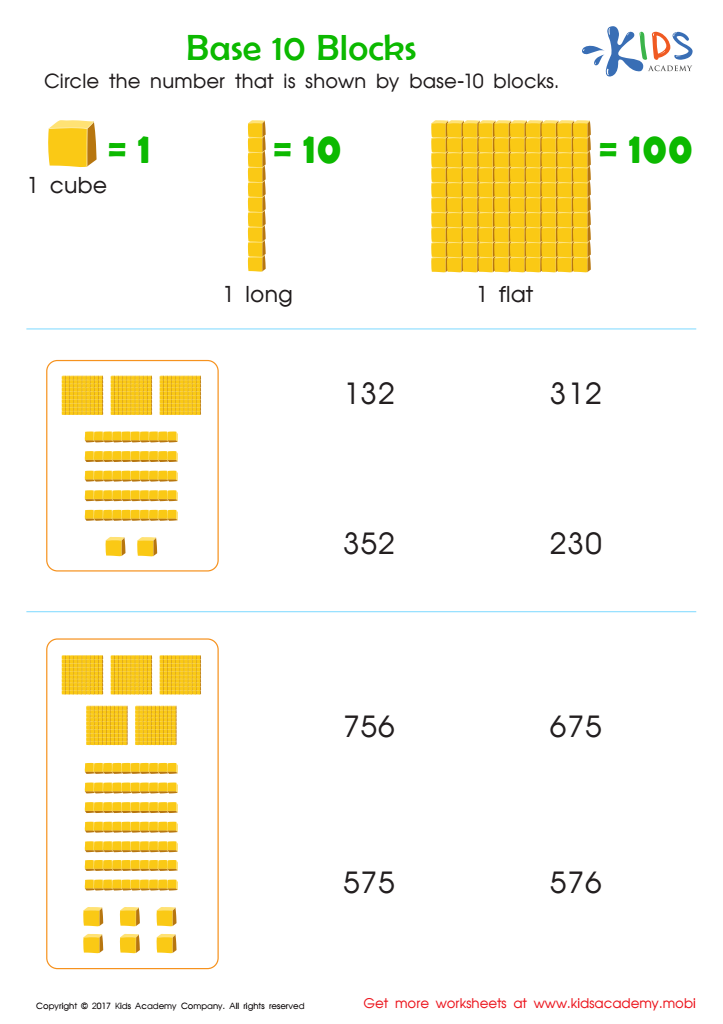
Base Ten Blocks Worksheet
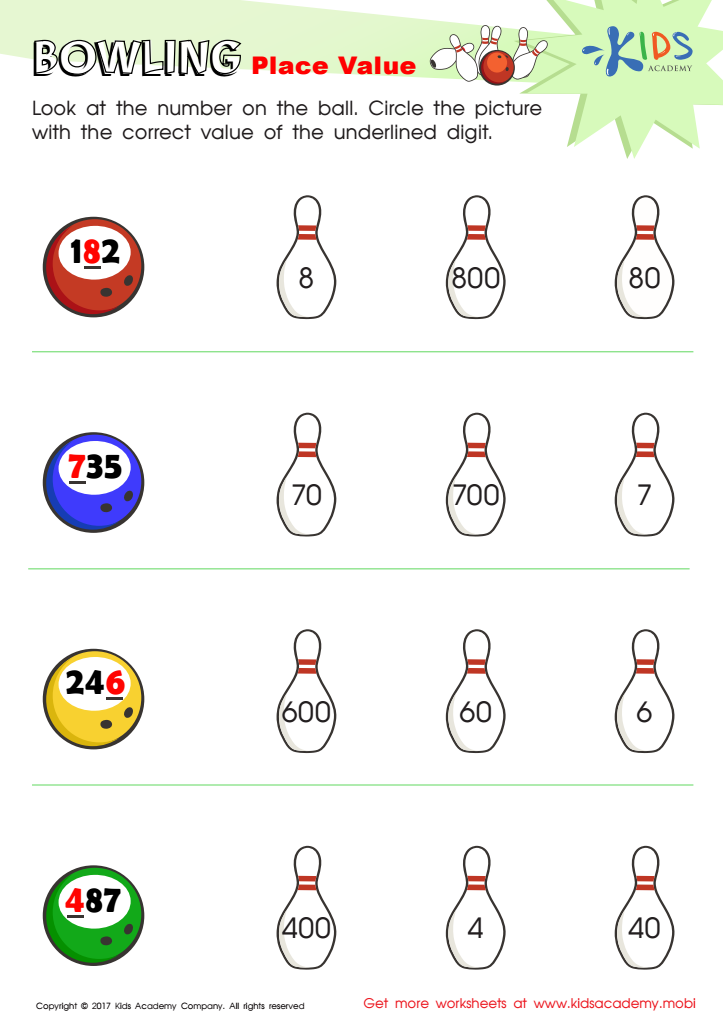
Place Value Worksheet
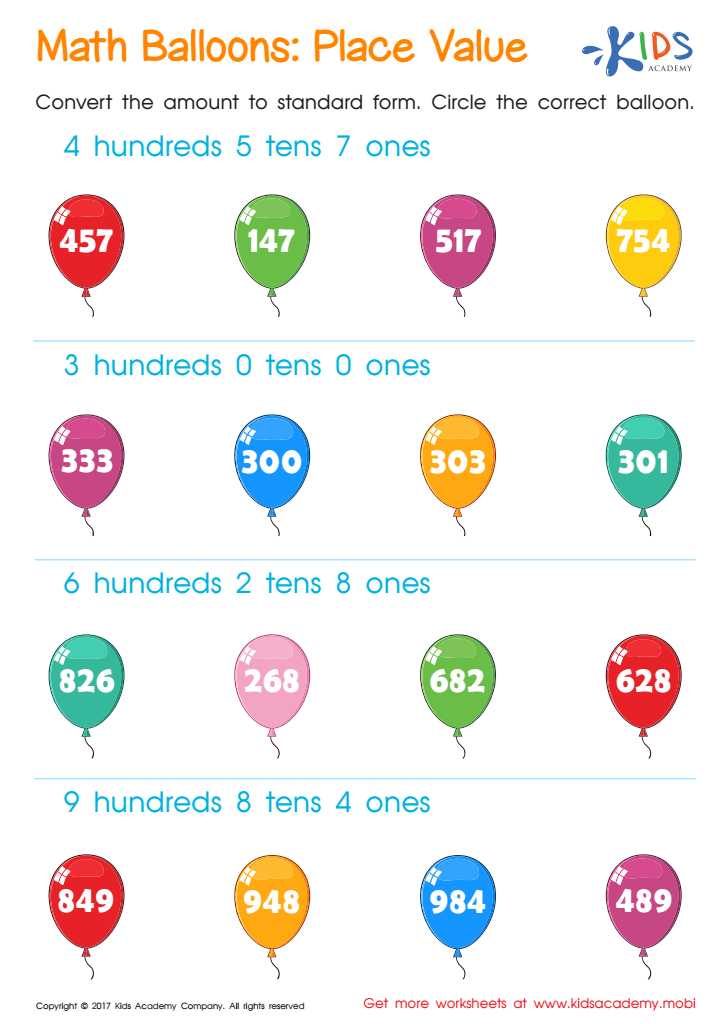
Place Value Printable Worksheet
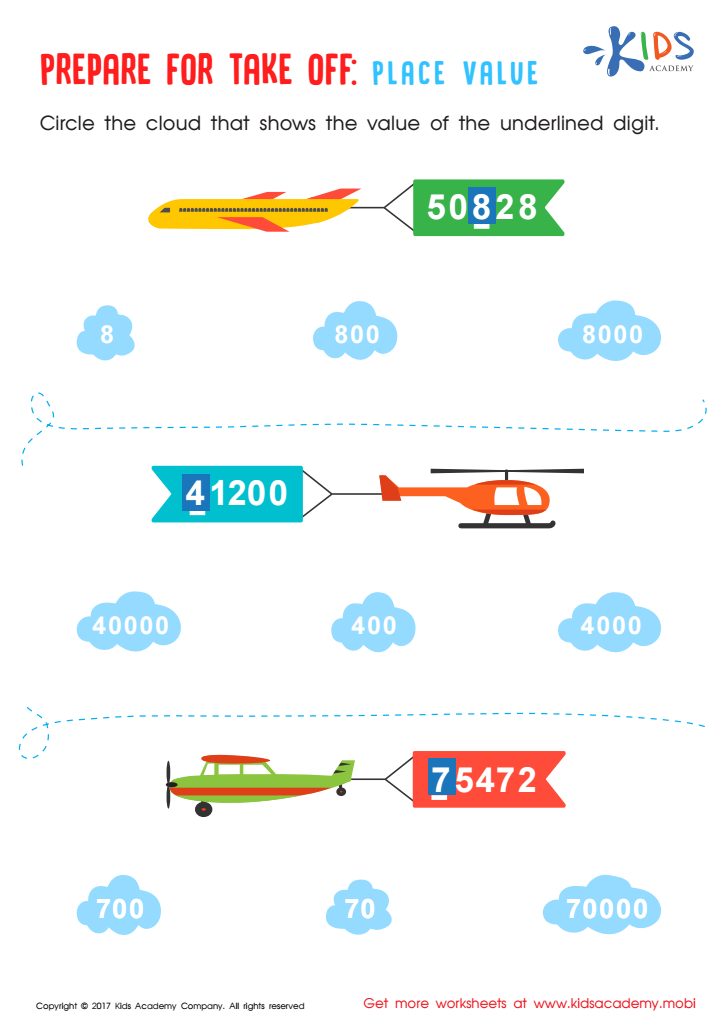
Free Place Value Worksheet for 3rd Grade
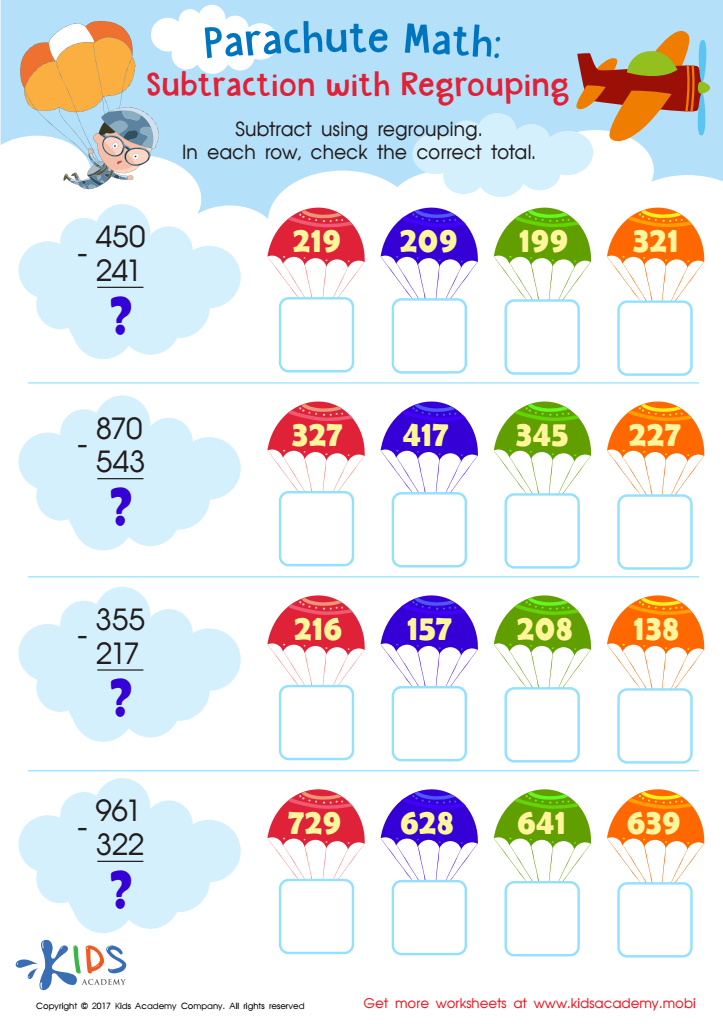
Subtraction with Regrouping for 3rd Grade Worksheet
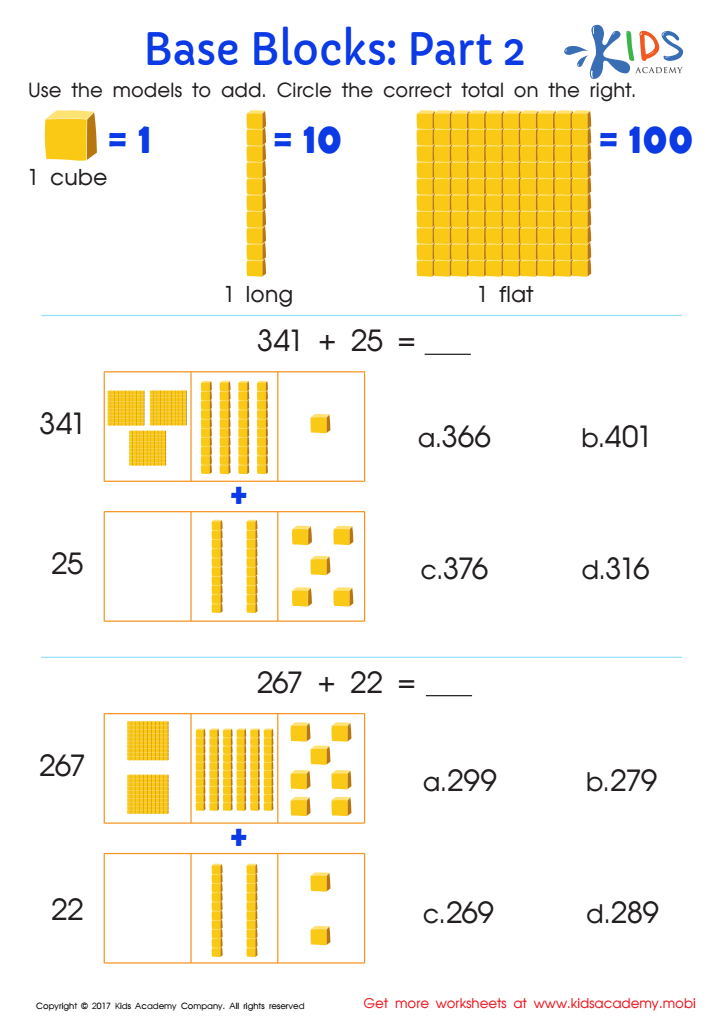
Base Ten Blocks Worksheet: Part 2
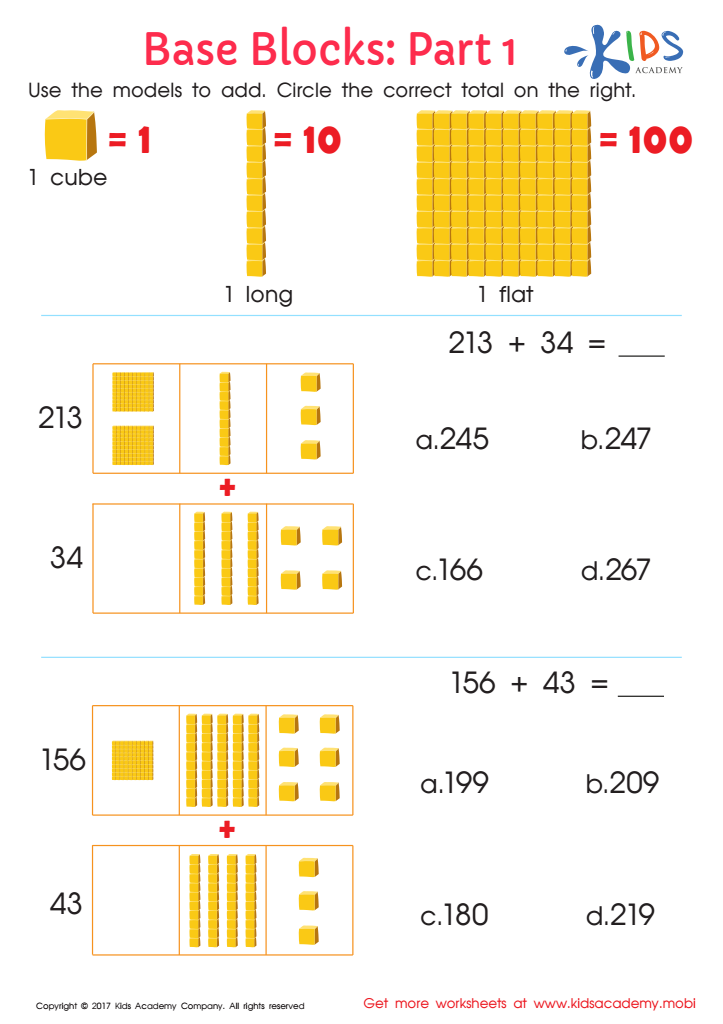
Base Ten Blocks Worksheet: Part 1
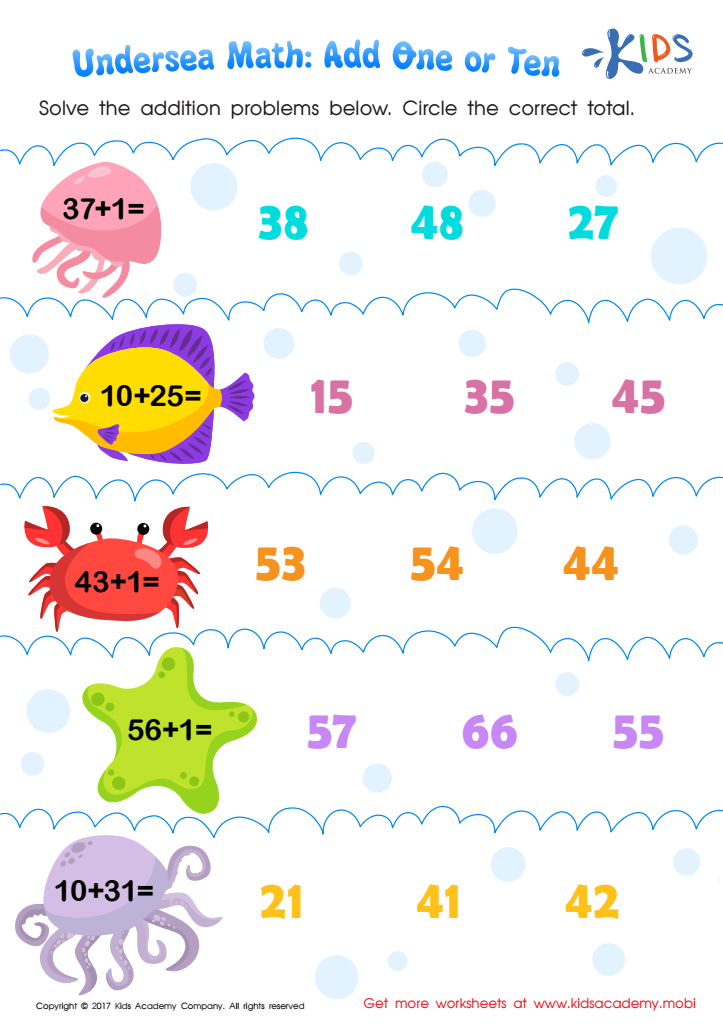
Undersea Math Worksheet
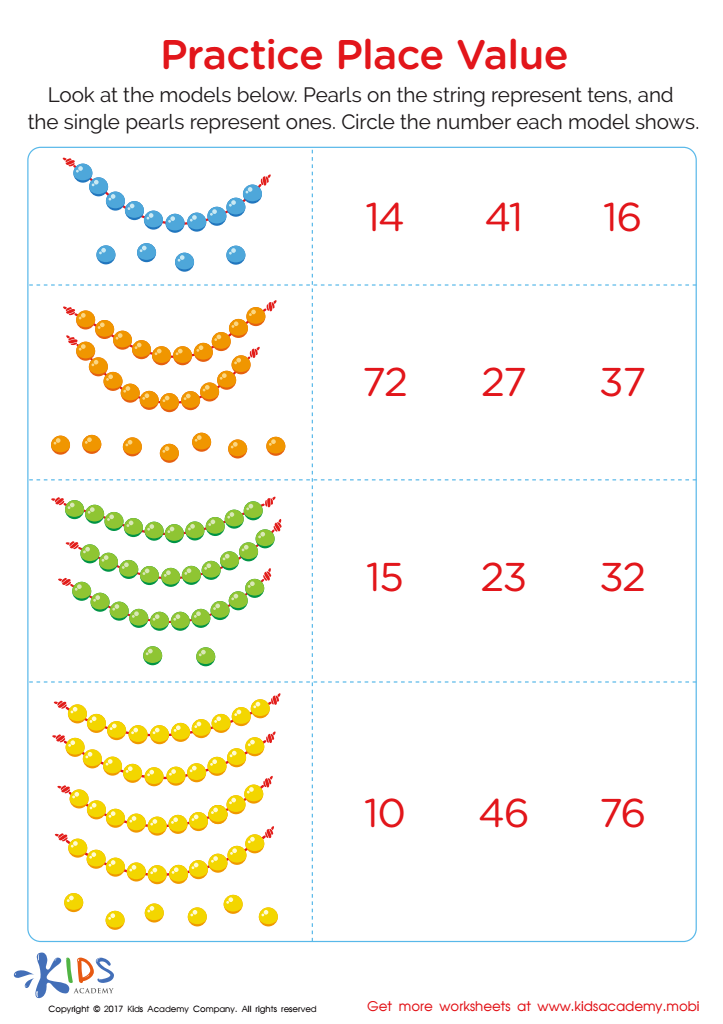
Practice Place Value Printable
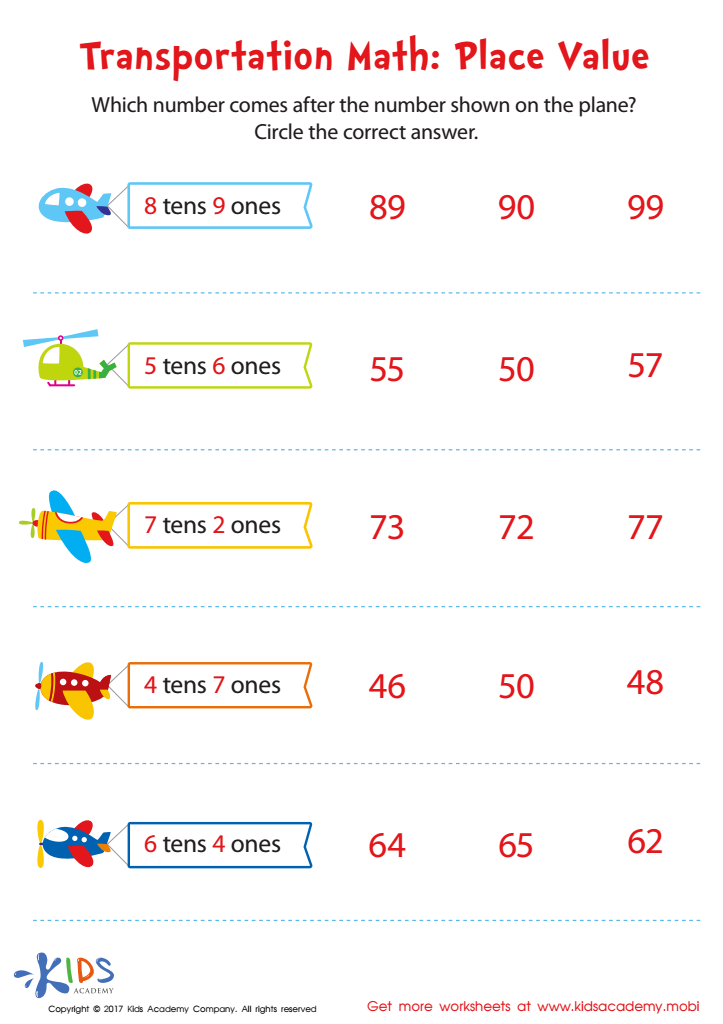
Transportation Math Printable







Understanding normal place value is essential for children aged 7-9 as it forms a crucial foundation for their mathematical development. At this stage, students learn to recognize the hierarchical system of digits, where the position of a digit in a number determines its value. Mastery of place value is key for grasping more complex concepts such as addition, subtraction, multiplication, and division, and lays the groundwork for future topics like fractions and decimals.
When parents and teachers emphasize place value, they empower children to develop strong number sense, enabling them to compare and order numbers effectively and understand the relationships between them. This understanding also allows for greater confidence in problem-solving situations, as students learn to decompose numbers into tens and ones, facilitating mental calculations and estimations.
Moreover, a solid grip on place value practices enhances students’ ability to communicate mathematical thinking clearly, fostering collaboration and discussions among peers. As parent and teacher support is critical in reinforcing these concepts at home and in the classroom, investing time in place value activities—like using manipulatives or games—can make learning engaging, interactive, and enjoyable, helping prepare students for future mathematical challenges.