Filters

77 filtered results

Clear all filters
Favorites
With answer key
Interactive

77 filtered results

Difficulty Level

Grade


Check out this FREE Trial Lesson on Reading Fiction for age 7-9!

Retell Familiar Stories

Favorites
With answer key
Interactive
  • 7-9
  • Interactive
  • Reading Fiction
  • Normal
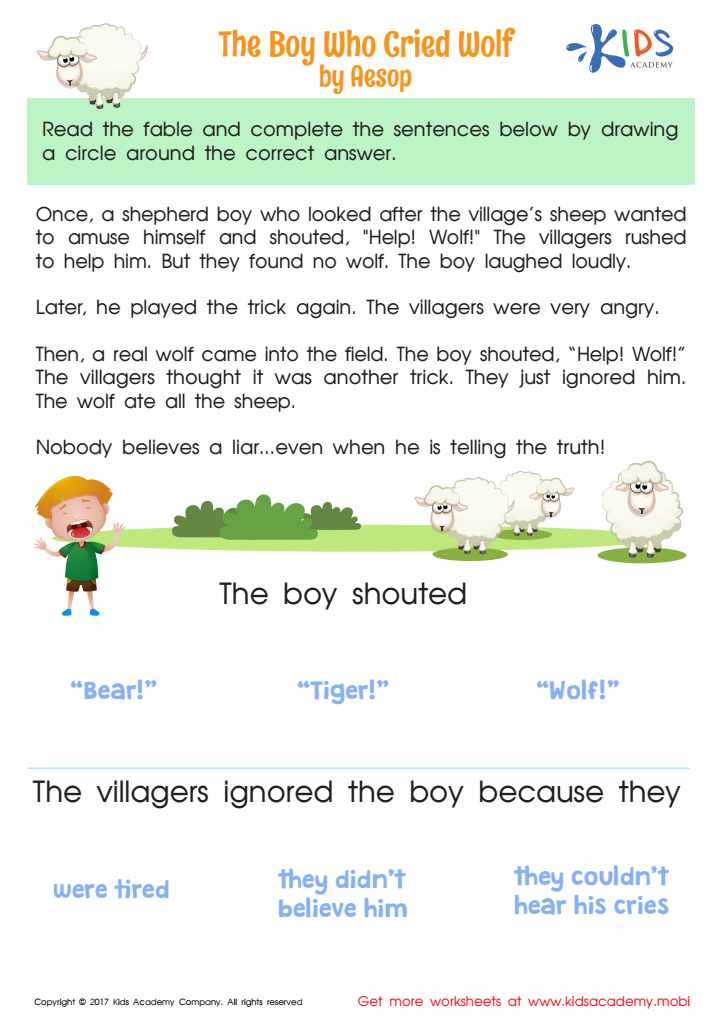
Worksheet: The Boy Who Cried Wolf

The Boy Who Cried Wolf Worksheet

Test your child's reading comprehension with The Boy Who Cried Wolf worksheet. Read the fable, then answer the questions. Use the text to help your child check their answers are correct. Boost reading skills in a fun, interactive way!
The Boy Who Cried Wolf Worksheet
Worksheet
Worksheet: Story Elements

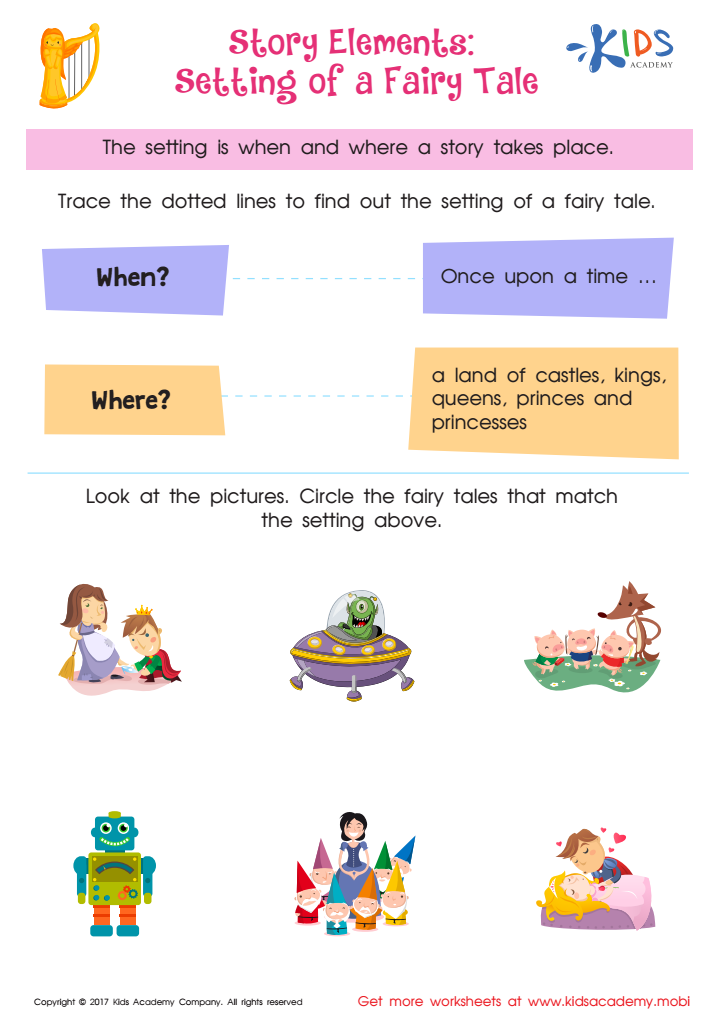
Story Elements: Setting of a Fairy Tale Printable
Help your child learn to analyze stories starting with setting. Use Story Elements worksheet to break down setting into two parts. This will help your child recognize setting quickly and understand its importance in the plot.
Story Elements: Setting of a Fairy Tale Printable
Worksheet
Reading Comprehension Worksheet: Cinderella

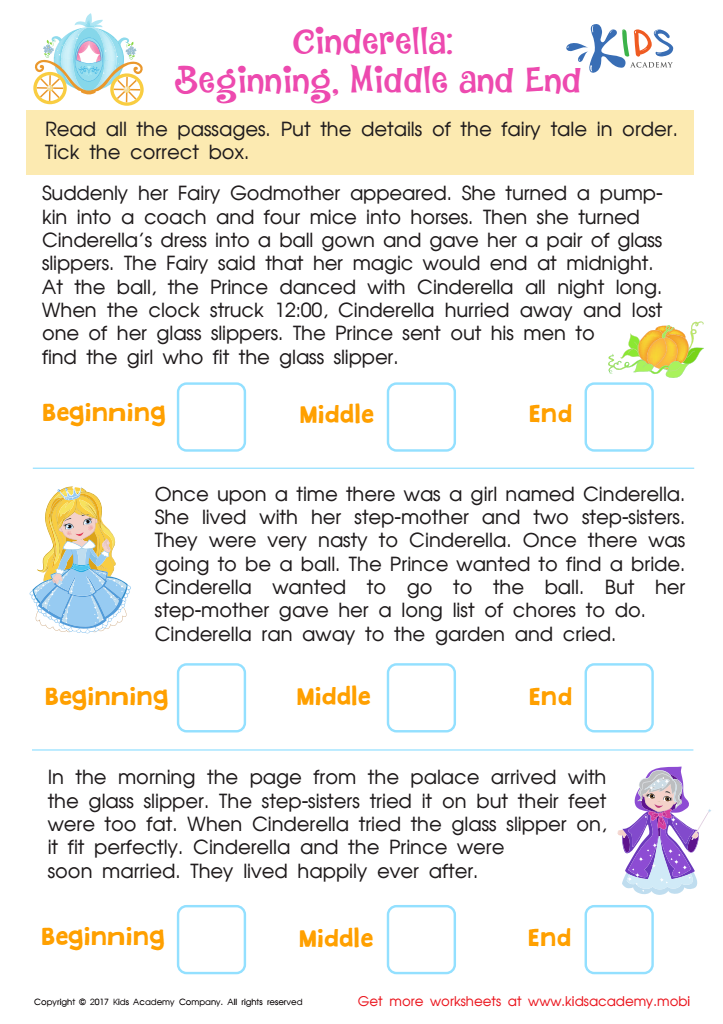
Cinderella: Beginning, Middle and End Worksheet
This Cinderella-themed worksheet provides an excellent opportunity for your child to practice reading comprehension and understanding the basics of story structure. Help your child learn a key story concept with this Cinderella-themed reading comprehension worksheet. It's an excellent way for them to practice understanding the different parts of a story, from the beginning to the end. Kids will love getting to know the beloved fairy tale of Cinderella!
Cinderella: Beginning, Middle and End Worksheet
Worksheet
Comprehension Worksheet: Little Red Riding Hood

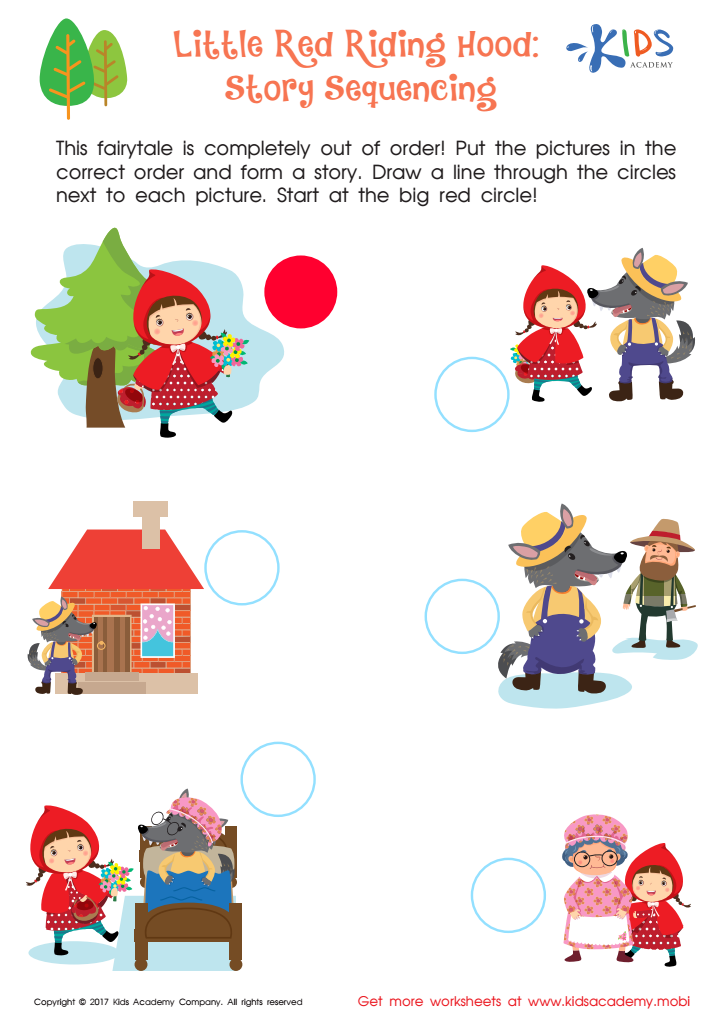
Story Sequencing Printable

Children must identify story events in sequential order to build a better understanding of plot. Help your child learn how to understand plot with this fun comprehension worksheet: Little Red Riding Hood! Guide them to identify story events and order them correctly to boost their reading skills.
Story Sequencing Printable
Worksheet
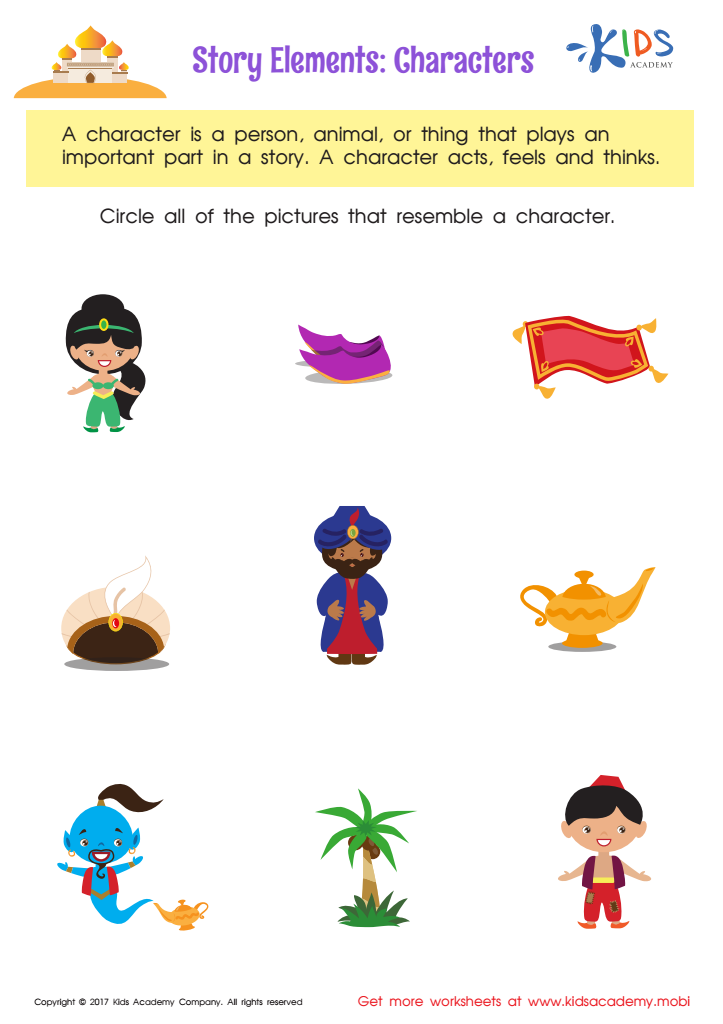
Reading Comprehension Worksheet: Aladdin

Story Elements Printable

Read the text and review the characters, settings and plot in a guided discussion. Take your child on a journey to the Middle East and review the characters, settings and plot of their favorite childhood stories with this Aladdin-themed worksheet! It'll help them master early analysis skills and learn about characterization. Enjoy a fun, guided discussion with your child as you review important story elements.
Story Elements Printable
Worksheet


... 3 4

Parents and teachers should care deeply about normal reading fiction for ages 7-9 because it is a critical period in a child's literacy and cognitive development. During these years, children are transitioning from learning to read, to reading to learn. Well-written fiction serves as more than mere entertainment; it’s an educational tool that broadens vocabulary, enhances comprehension skills, and fosters imagination.

Firstly, engaging stories captivate children’s interest, making reading a pleasurable activity. This intrinsic enjoyment fosters a positive attitude towards reading, which is essential for academic success. Furthermore, literature allows children to encounter diverse perspectives, fostering empathy and social understanding as they identify with characters and explore different cultures and experiences.

Fiction also aids in critical thinking development. As children follow storylines and anticipate plot developments, they practice inference and prediction, key components of analytic skills. Regular exposure to well-crafted narrative structure helps children understand parts of storytelling, improving their writing abilities.

Moreover, consistent reading supports mastery of language, encouraging better grammar, syntax, and overall communication skills. By embedding lessons within compelling tales, fiction teaches life’s values and morals subtly but effectively.

Encouraging a 7-9-year-old child to enjoy fiction is investing in their intellectual, emotional, and social growth, laying a strong foundation for lifelong learning and curiosity.