Filters

107 filtered results

Clear all filters
Favorites
With answer key
Interactive

107 filtered results

Difficulty Level

Grade


Check out this FREE Trial Lesson on Reading Comprehension for age 7!

Lessons in Fables and Folktales

Favorites
With answer key
Interactive
  • 7
  • Interactive
  • Reading Comprehension
  • Normal
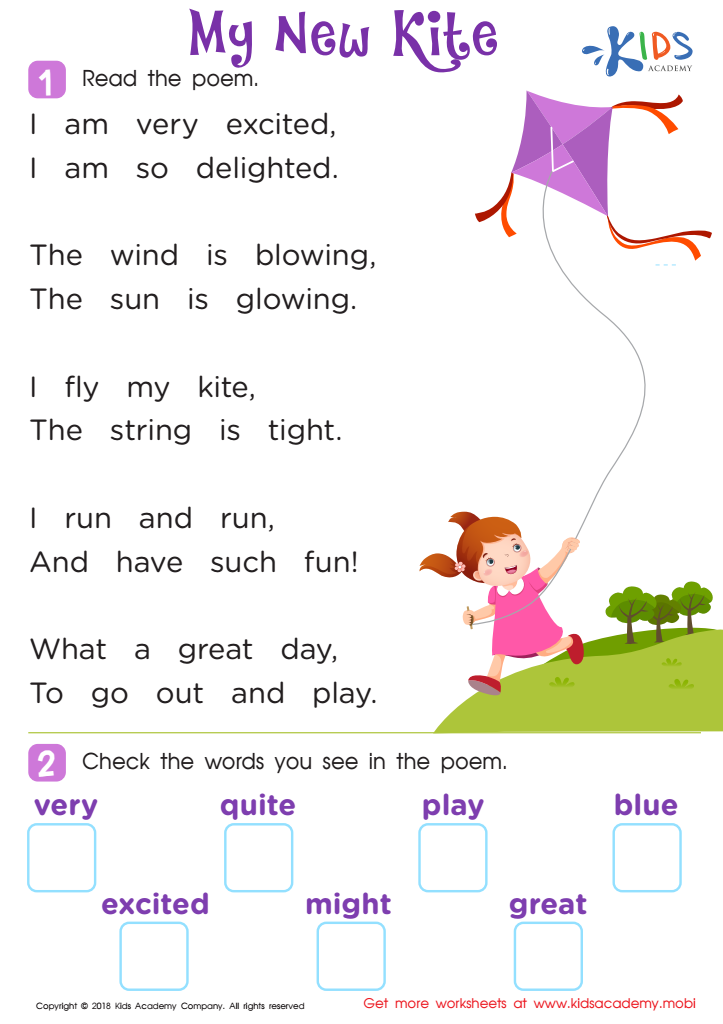
Poem: My New Kite Worksheet

Poem: My New Kite Worksheet

Read a cheerful poem with your child and have them check the boxes next to the words that appear. Then, ask them to identify rhyming words, noting that these won't appear at the bottom of the page. This is a delightful reading activity to help your child remember what they read.
Poem: My New Kite Worksheet
Worksheet
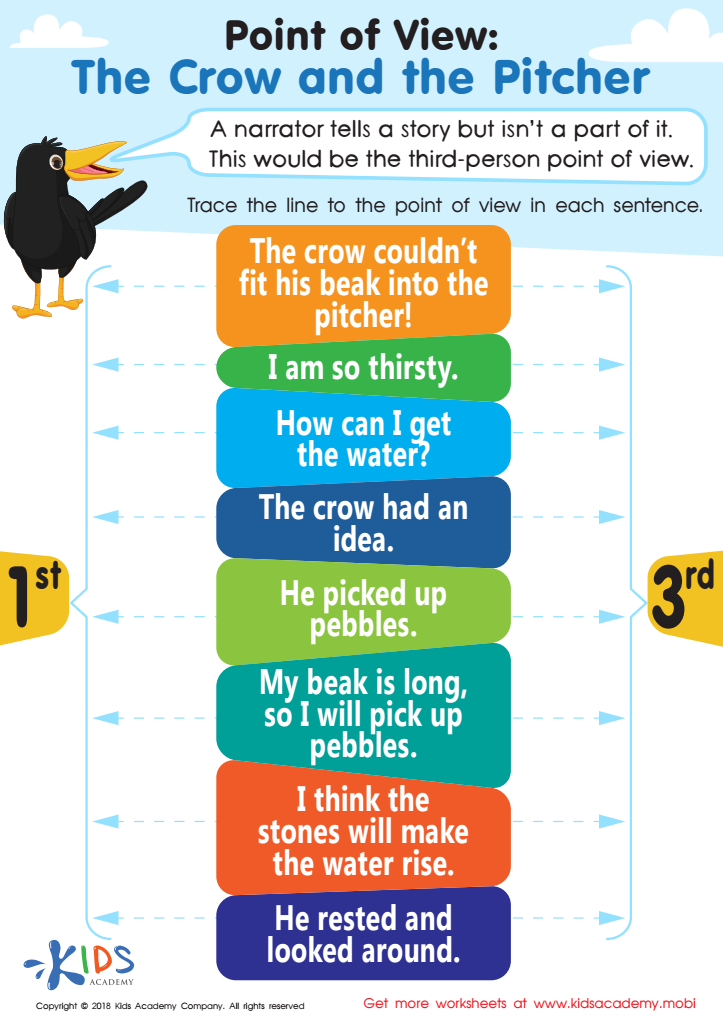
Point of View: The Crow and the Pitcher Worksheet

Point of View: The Crow and the Pitcher Worksheet

Help your child learn 1st and 3rd person point of view with our free downloadable worksheet! Using the fable The Crow and the Pitcher, learners read the sentences in each colorful box, then determine which ones are written in 1st or 3rd person. Trace a line from each box to its answer and complete!
Point of View: The Crow and the Pitcher Worksheet
Worksheet
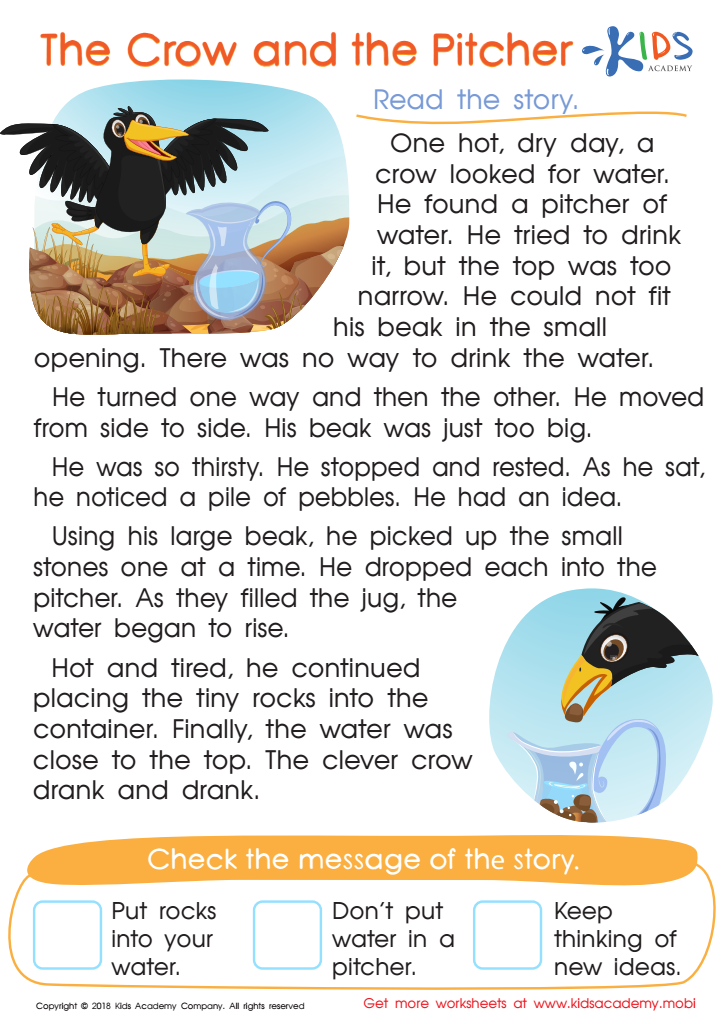
The Crow and the Pitcher Worksheet

The Crow and the Pitcher Worksheet

Introduce your child to reading comprehension with this fascinating worksheet from Kids Academy! Featuring Aesop's fable of a thirsty crow, your child will enjoy reading and determining the central theme of the passage. This worksheet is a great way to give your child a purpose for reading while helping to build their comprehension skills.
The Crow and the Pitcher Worksheet
Worksheet
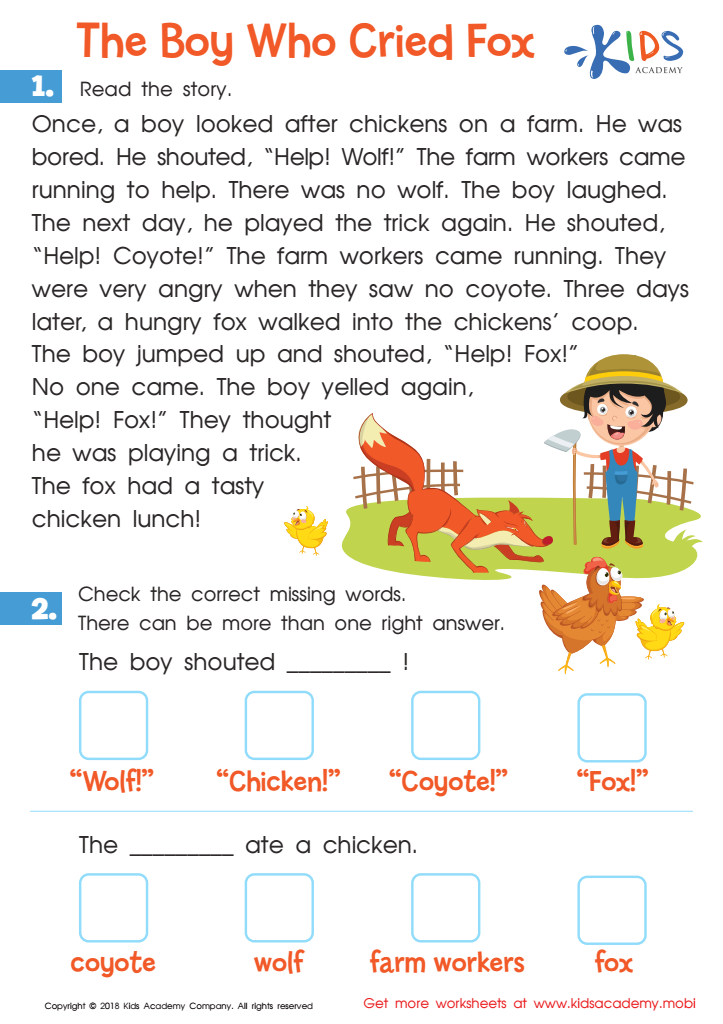
The Boy Who Cried Fox Worksheet

The Boy Who Cried Fox Worksheet

This worksheet encourages students to recall details from a story and answer questions to test their comprehension. Perfect for reading lessons, enrichment, or extra help.
The Boy Who Cried Fox Worksheet
Worksheet
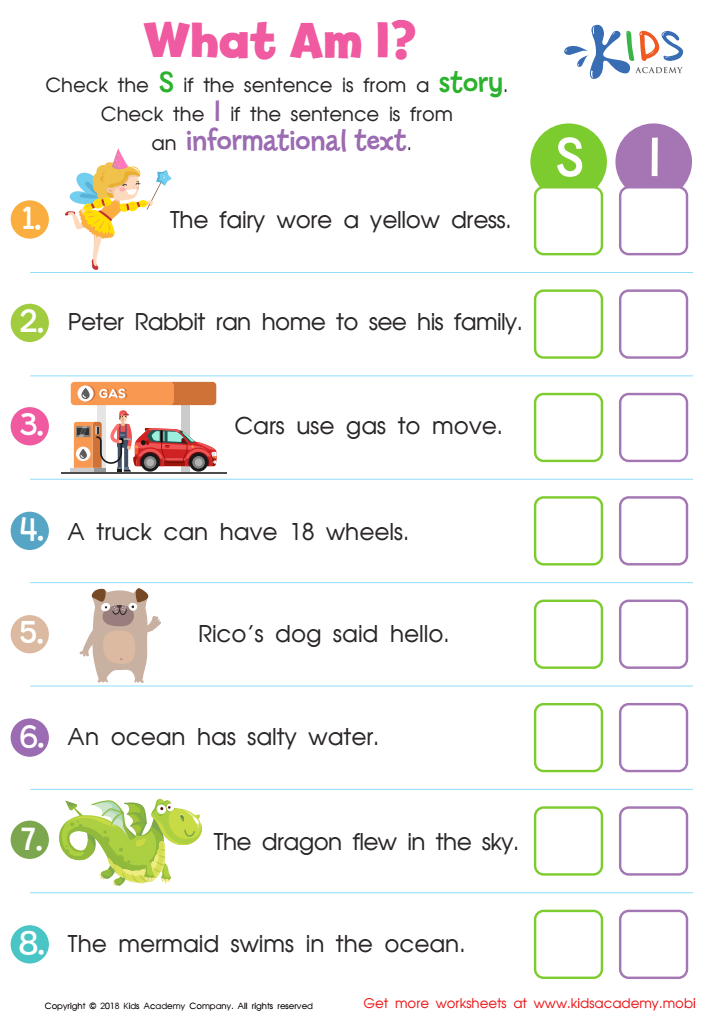
What Am I? Worksheet

What Am I? Worksheet

This worksheet assesses students' ability to differentiate between stories and texts they read for facts. Students learn to distinguish between reading for pleasure and reading for information. It includes statements from both a story and an informational text, and students must decide what type of text it is.
What Am I? Worksheet
Worksheet
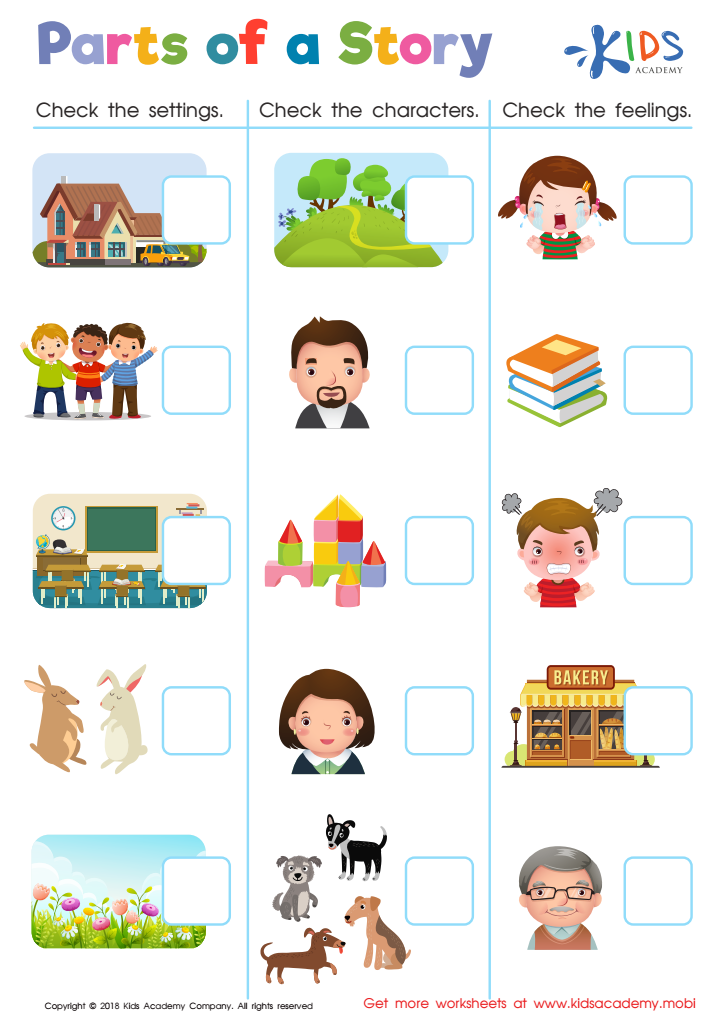
Parts of a Story Worksheet

Parts of a Story Worksheet

This worksheet is great for emerging readers to identify story elements without needing to read. It features pictures and students decide the right answers. Perfect for aiding understanding of characters, setting, and feelings in a story. Incorporate it into your lessons today!
Parts of a Story Worksheet
Worksheet
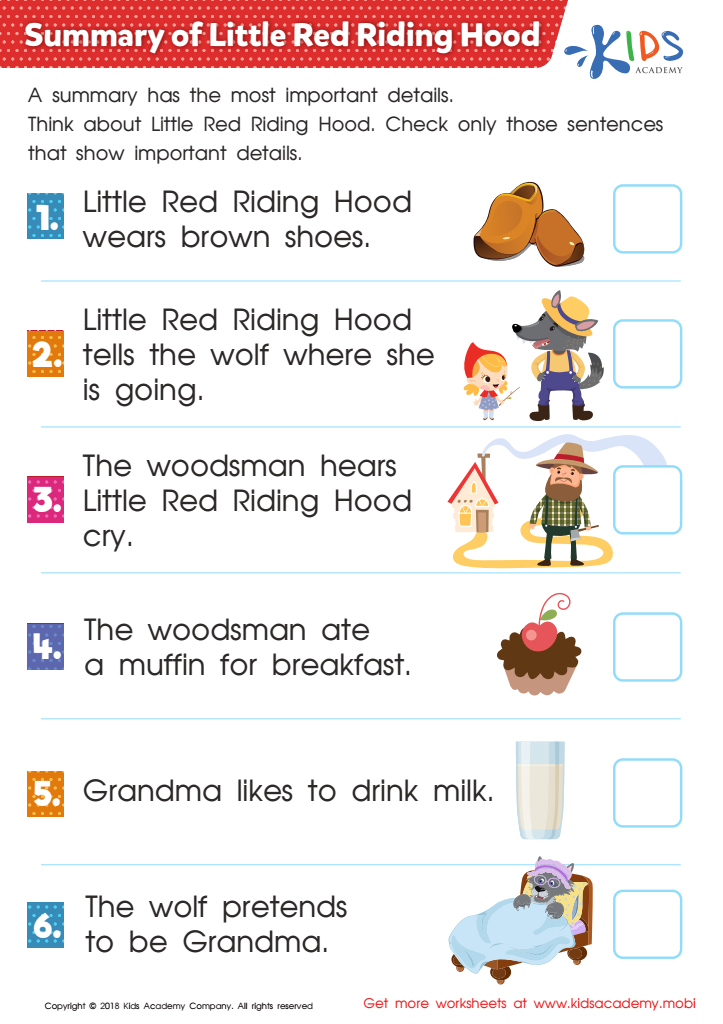
Summary of Little Red Riding Hood Worksheet

Summary of Little Red Riding Hood Worksheet

Young students may find it hard to summarize stories. This worksheet helps them learn to distinguish between important story details and unimportant ones. Practice reading Little Red Riding Hood and pick out only the important details with the help of this downloadable worksheet.
Summary of Little Red Riding Hood Worksheet
Worksheet
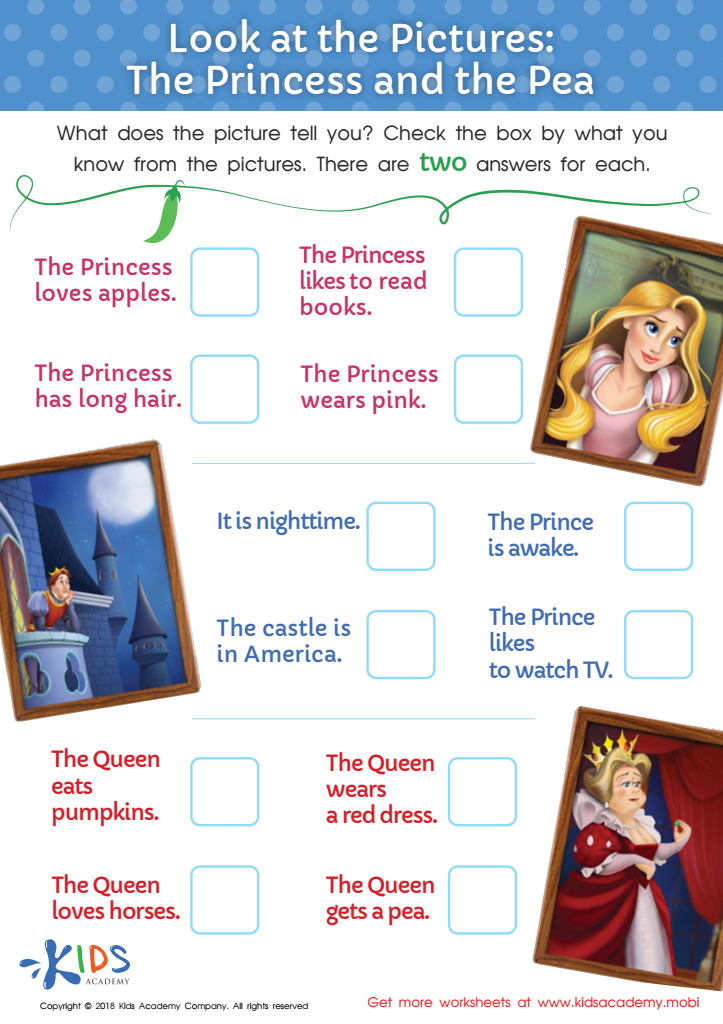
Look at the Pictures: The Princess and the Pea Worksheet

Look at the Pictures: The Princess and the Pea Worksheet

Early readers can benefit from picture clues to understand stories and text. Looking at images helps them learn the meaning of words and comprehend events. Use this worksheet on The Princess and the Pea to let students observe and learn from the pictures. It's a great way to help them comprehend early reading materials.
Look at the Pictures: The Princess and the Pea Worksheet
Worksheet
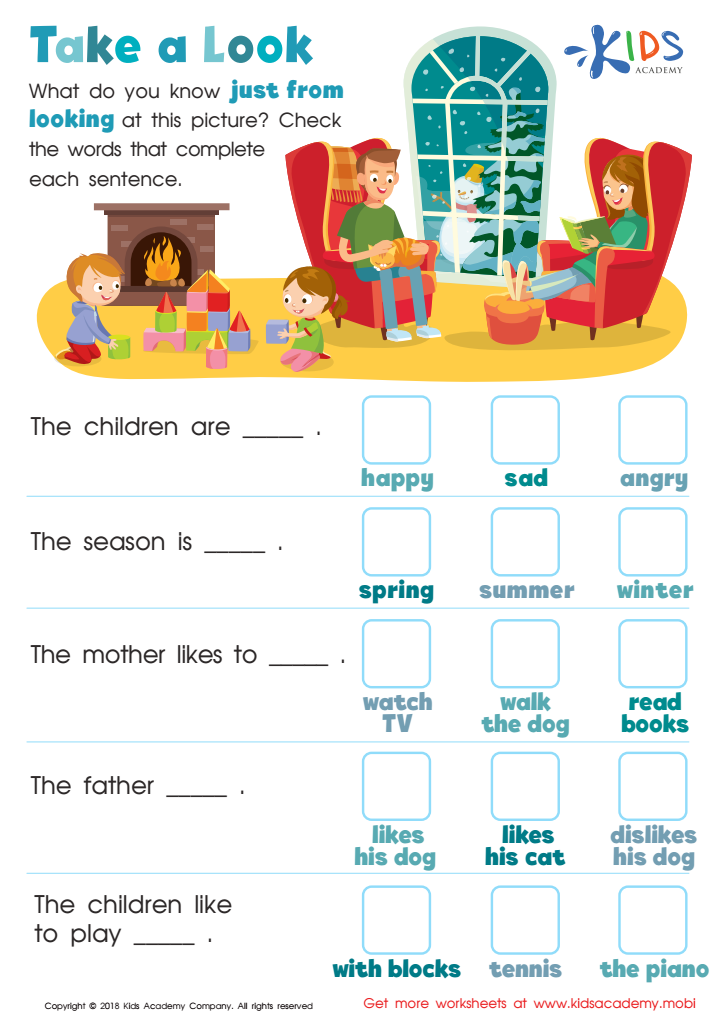
Take a Look - Part 1 Worksheet

Take a Look - Part 1 Worksheet

Young learners gain understanding when using picture clues when reading. Looking at illustrations can help students learn the meaning of key vocabulary when reading fiction or informational text. Ask your students to look at the worksheet and observe what they can learn from the picture. It's a great comprehension strategy for early readers.
Take a Look - Part 1 Worksheet
Worksheet
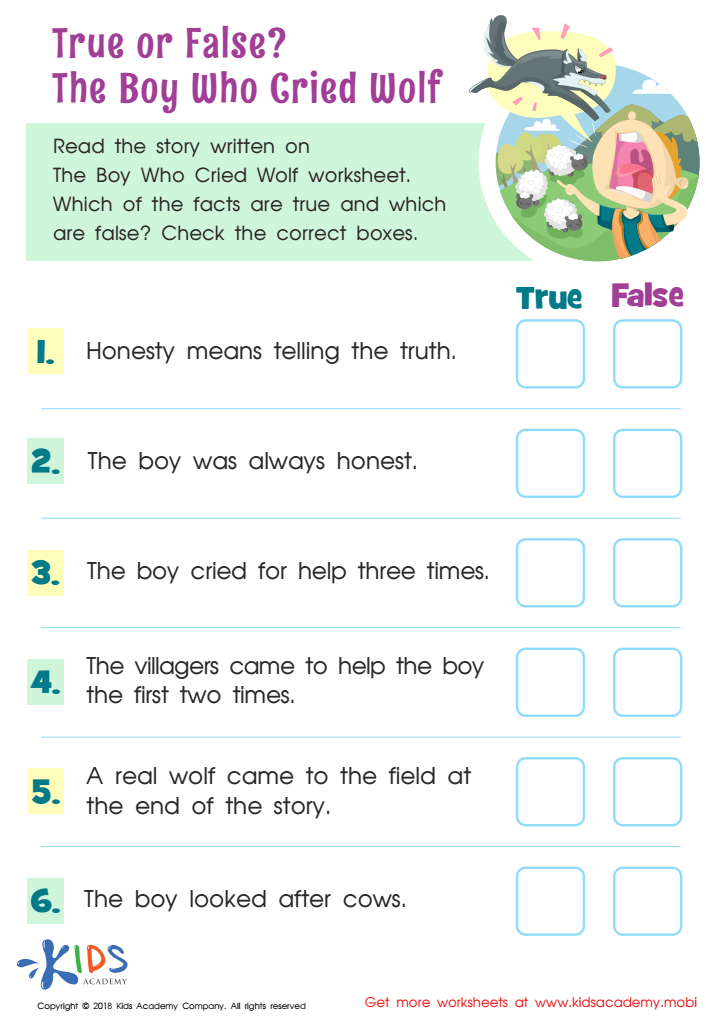
True or False? The Boy Who Cried Wolf Worksheet

True or False? The Boy Who Cried Wolf Worksheet

Test students' understanding of The Boy Who Cried Wolf with this free downloadable worksheet. It contains true/false questions to assess comprehension of key events. Easy to complete, it checks students can recall facts from the story. Try it and see!
True or False? The Boy Who Cried Wolf Worksheet
Worksheet
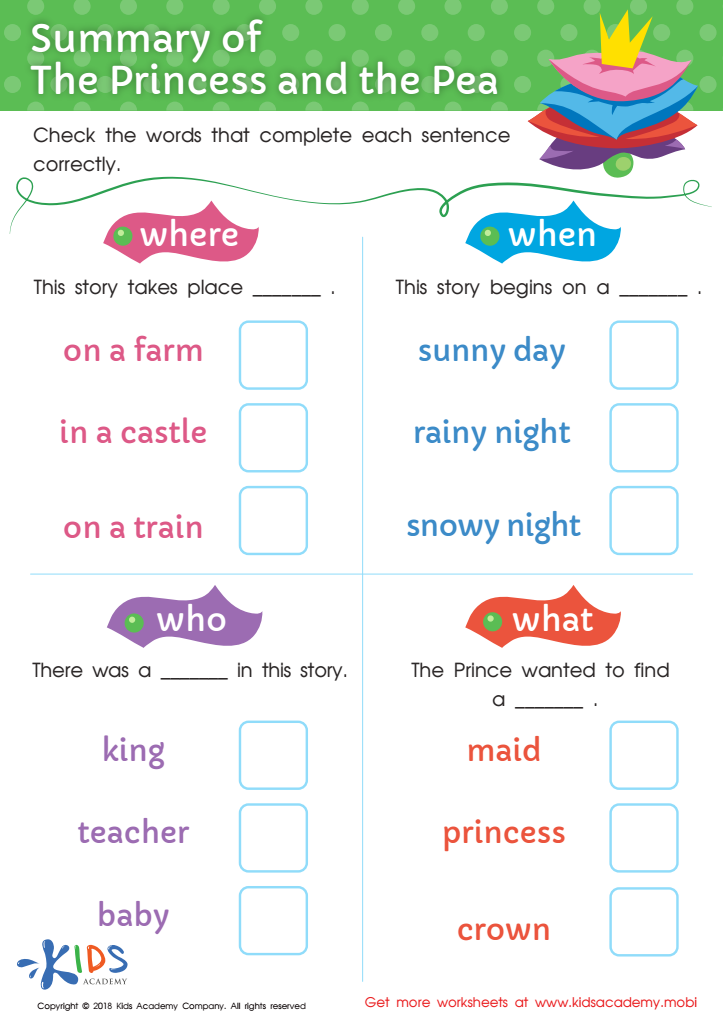
The Summary of the Princess and the Pea Worksheet

The Summary of the Princess and the Pea Worksheet

Test your student’s knowledge of the story The Princess and the Pea with this quick worksheet. With who, what, when and where questions, it's a great way to assess comprehension skills. It's a perfect resource for school or home classrooms. Download it now and start improving comprehension skills!
The Summary of the Princess and the Pea Worksheet
Worksheet
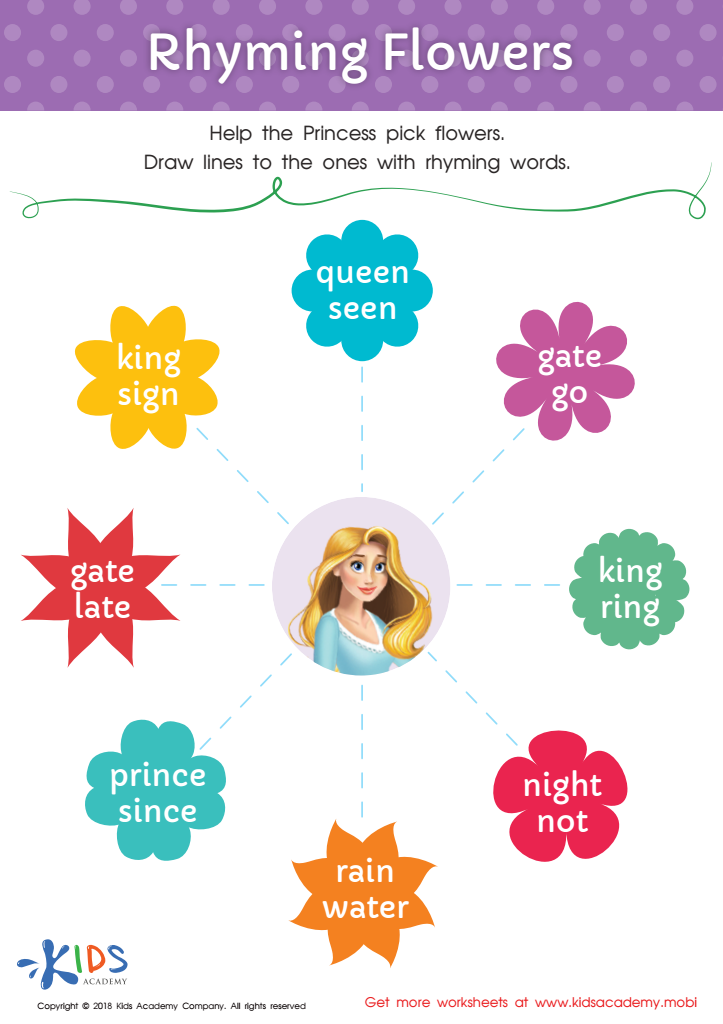
Rhyming Flowers Worksheet

Rhyming Flowers Worksheet

Recognizing rhyming words boosts phonological awareness. With this skill, students can identify similar sounds in words and predict new words more accurately. This worksheet provides practice and is ideal for the reading classroom. Download and find the rhyming words! (80 words)
Rhyming Flowers Worksheet
Worksheet
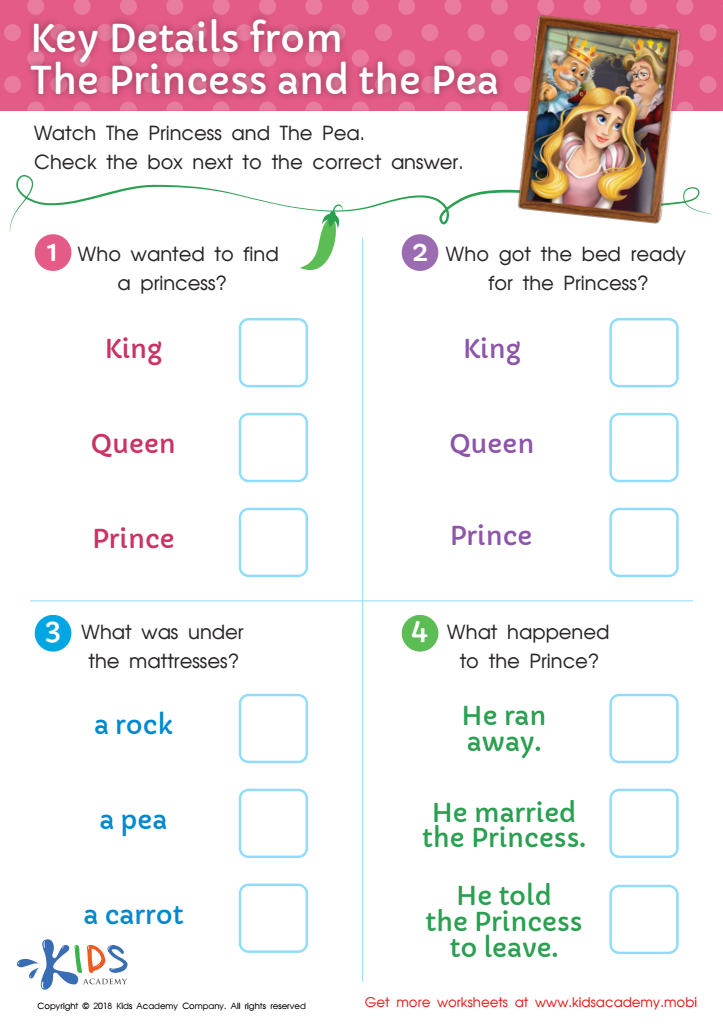
Key Details from the Princess and the Pea Worksheet

Key Details from the Princess and the Pea Worksheet

After reading The Princess and the Pea, ask your students questions to assess their comprehension of the story. Check their knowledge of key details. This printable can be used to help evaluate their understanding. Encouraging the recall of story events helps build important reading skills.
Key Details from the Princess and the Pea Worksheet
Worksheet
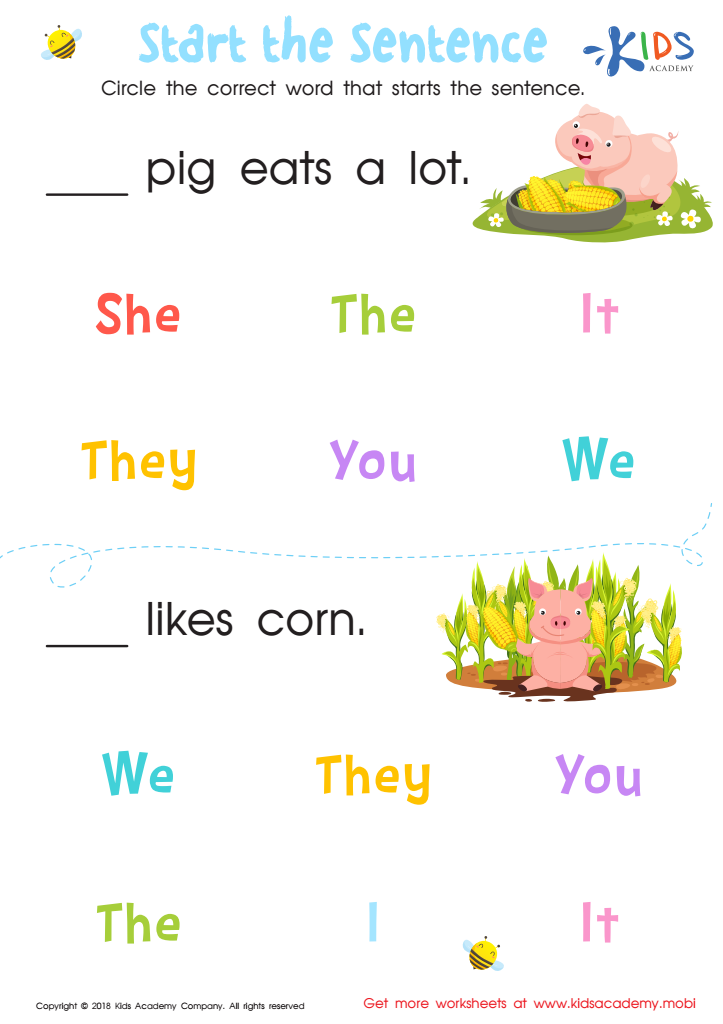
Start the Sentence Worksheet

Start the Sentence Worksheet

Test your students' understanding of sentences with this easy worksheet. Ask them to read the sentences and circle the correct word that starts each. This will show how well their lessons have paid off and if they can construct short simple sentences.
Start the Sentence Worksheet
Worksheet
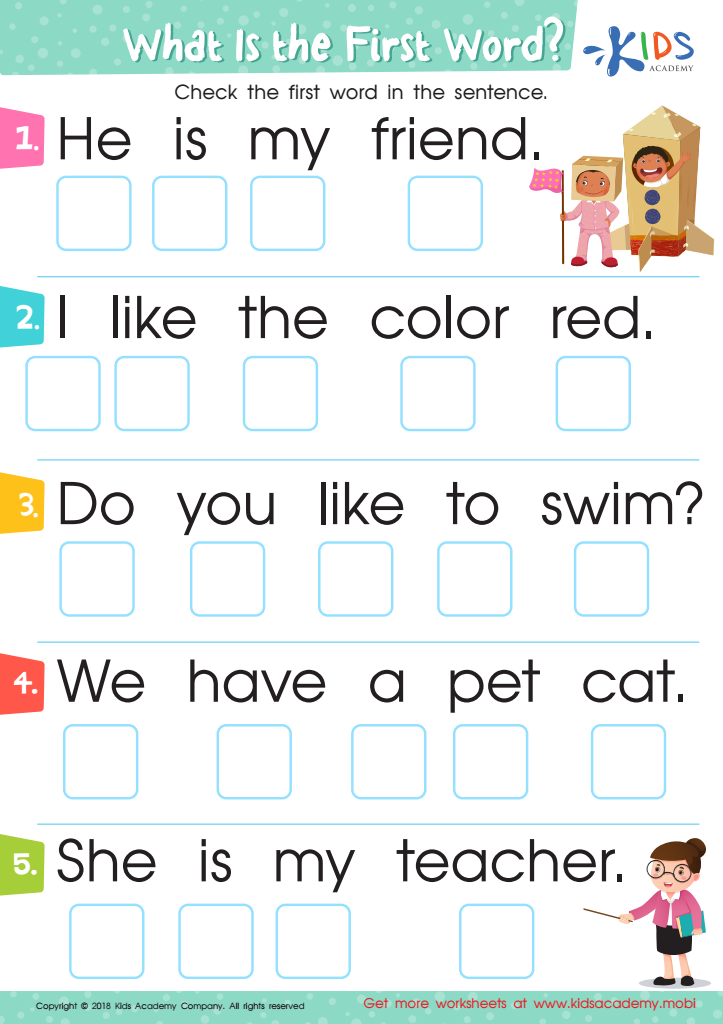
What is the First Word? Worksheet

What is the First Word? Worksheet

Help your students test their sentence-reading skills with this printout! After teaching the alphabet, have them identify and write the first word in each sentence. With this exercise, they'll gain reading proficiency and be better prepared to write their own sentences.
What is the First Word? Worksheet
Worksheet
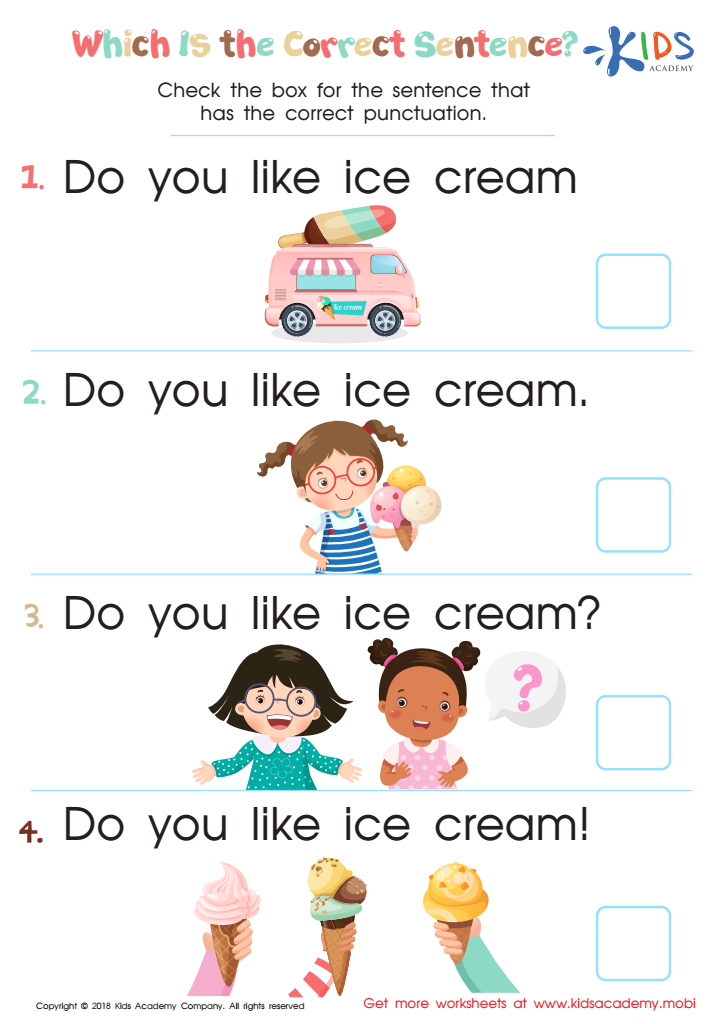
Which is the Correct Sentence? Worksheet

Which is the Correct Sentence? Worksheet

Punctuation is crucial in sentence formation. If your kid still doesn't grasp it, bigger hurdles await when writing sentences. Get them to read simple sentences, then ask if they know the right punctuation. Assist them in selecting the sentence that has the accurate punctuation.
Which is the Correct Sentence? Worksheet
Worksheet
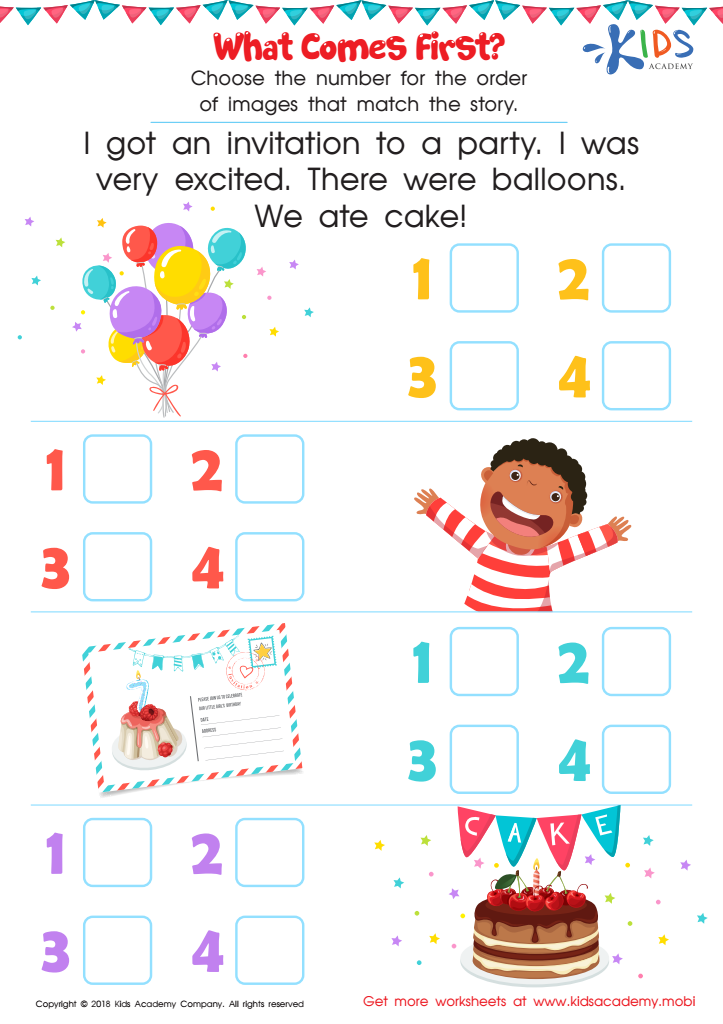
What Comes First Worksheet

What Comes First Worksheet

Before you start, ask your child what they see in the picture. Read the story aloud together, then show them the images in order, numbered 1-5. Ask them to choose the numbers that match the story. Have fun and enjoy this party worksheet with your little one! (80 words)
What Comes First Worksheet
Worksheet
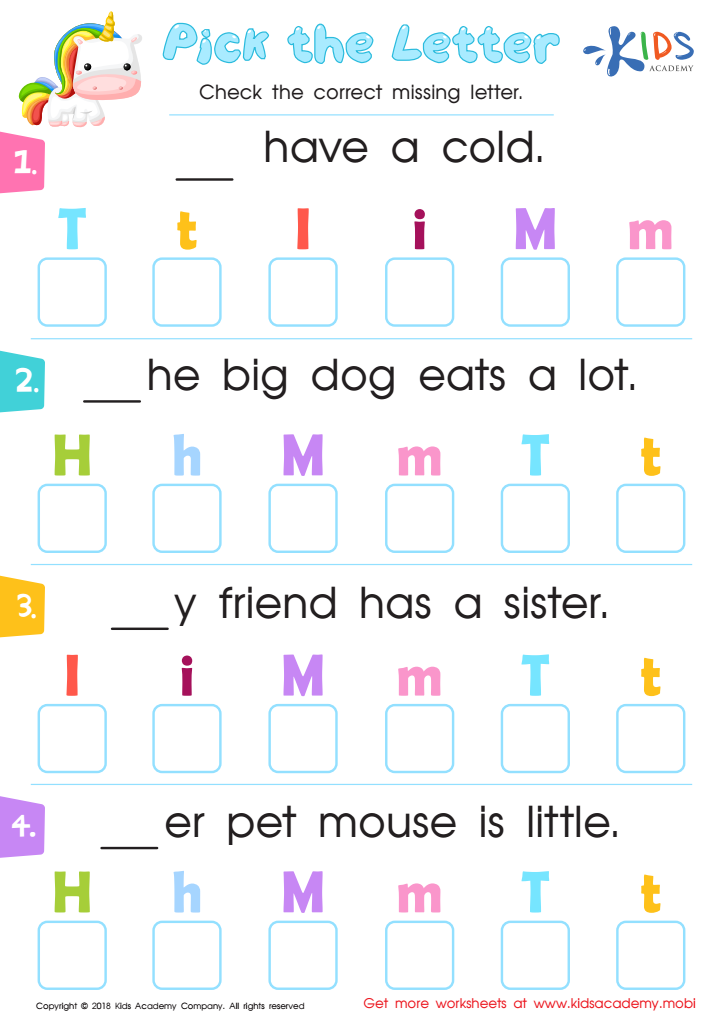
Pick the Letter Worksheet

Pick the Letter Worksheet

Put your child's capitalization and reading skills to the test with this missing letter worksheet! Have them look at each sentence, note the blank and review the letters below. Find the uppercase letter that should start each sentence and check the boxes to complete. Fun and colorful, this worksheet is sure to keep your child engaged!
Pick the Letter Worksheet
Worksheet
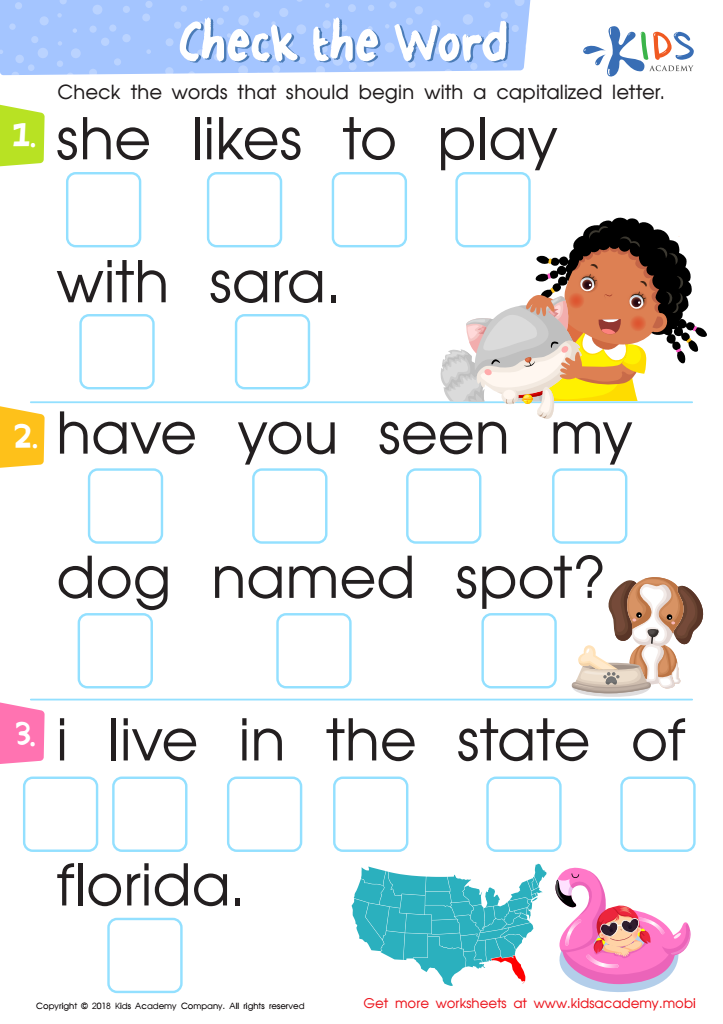
Check the Word Worksheet

Check the Word Worksheet

Help your kids learn the rules of capitalisation - that the first word of each sentence and nouns must start with a capital letter. Use this worksheet to test their understanding: ask them to identify which words should begin with a capital.
Check the Word Worksheet
Worksheet
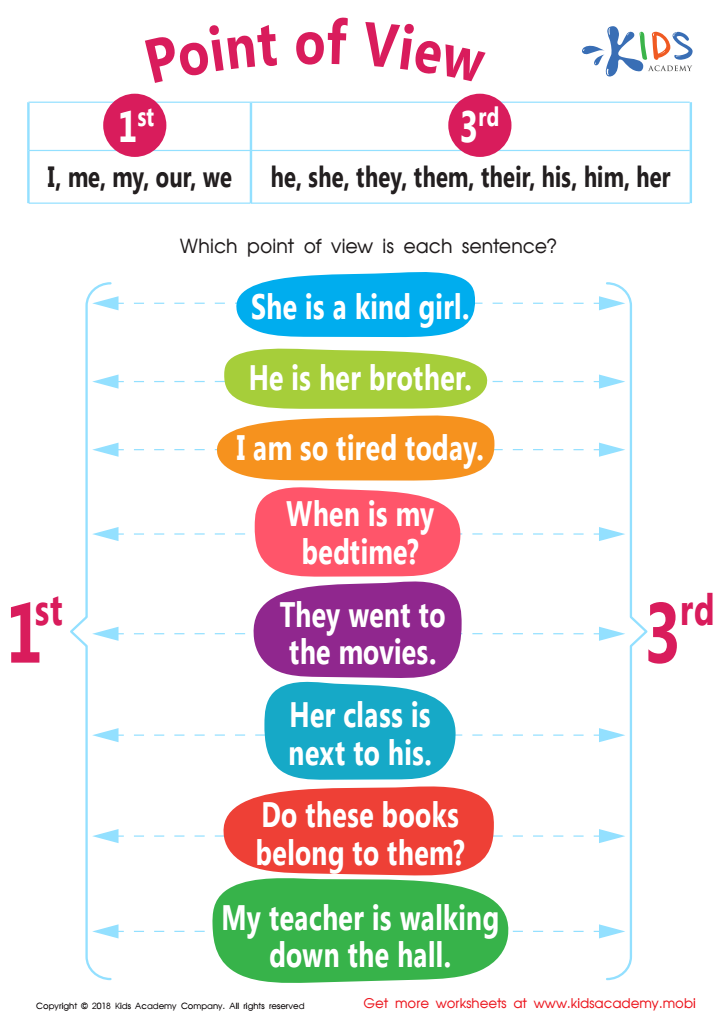
Point of View Worksheet

Point of View Worksheet

This printable worksheet helps kids understand Point of View by providing 1st and 3rd person choices. It's a fun way to practice differentiating between the two viewpoints and improve their reading comprehension. Match the sentences to 1st or 3rd person to strengthen understanding and enjoy the task!
Point of View Worksheet
Worksheet
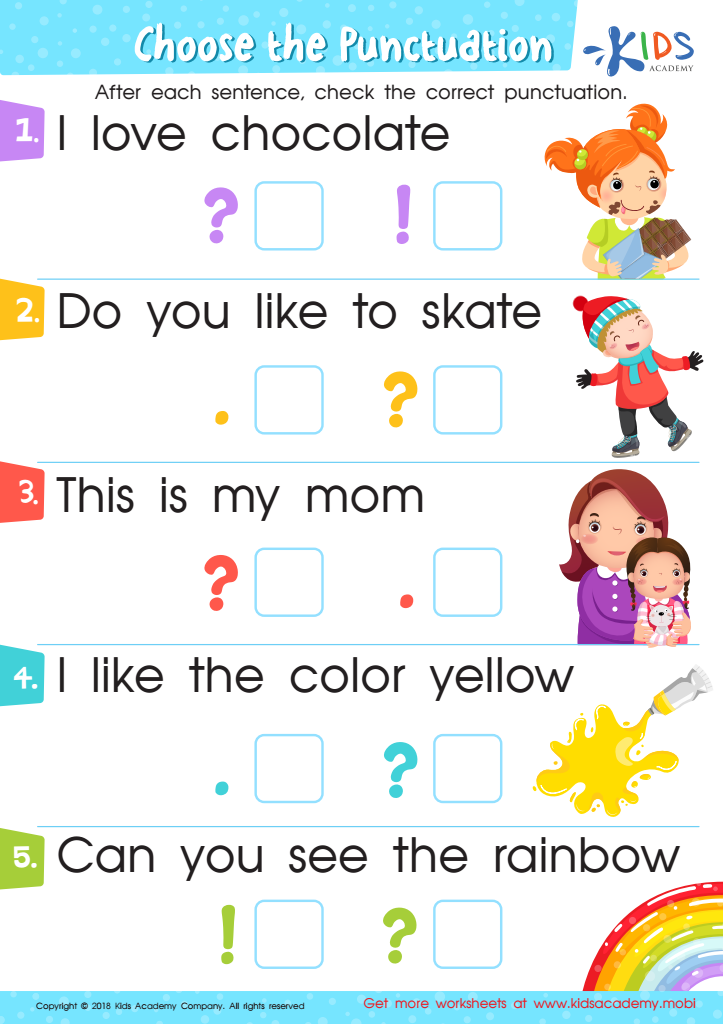
Choose the Punctuation: Assessment Worksheet

Choose the Punctuation: Assessment Worksheet

Does your child know punctuations? Found at the end of words, they signify the tone of the sentence. Ask them which punctuations they use daily. With your little one, look at a worksheet. Read each sentence aloud and ask them to identify the two punctuations given. Instruct them to choose the correct one. 80 words.
Choose the Punctuation: Assessment Worksheet
Worksheet
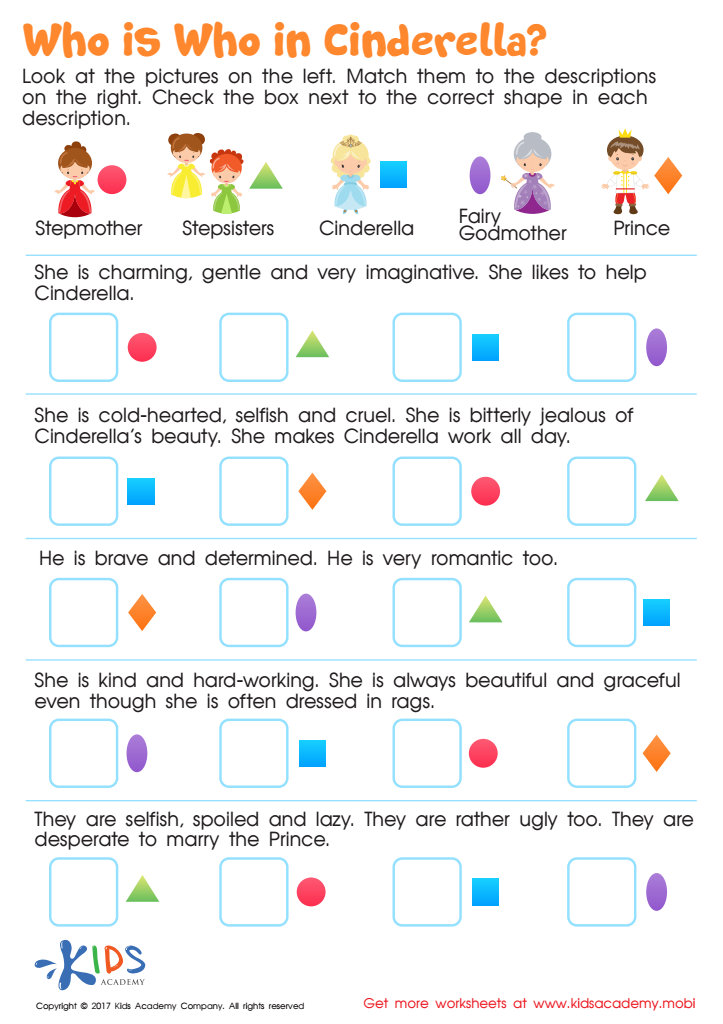
Cinderella comprehension worksheet

Cinderella Comprehension Worksheet
Help your child hone reading comprehension and analysis skills with this fun Cinderella worksheet! They'll practice identifying character traits and building a deeper understanding of the story.
Cinderella Comprehension Worksheet
Worksheet
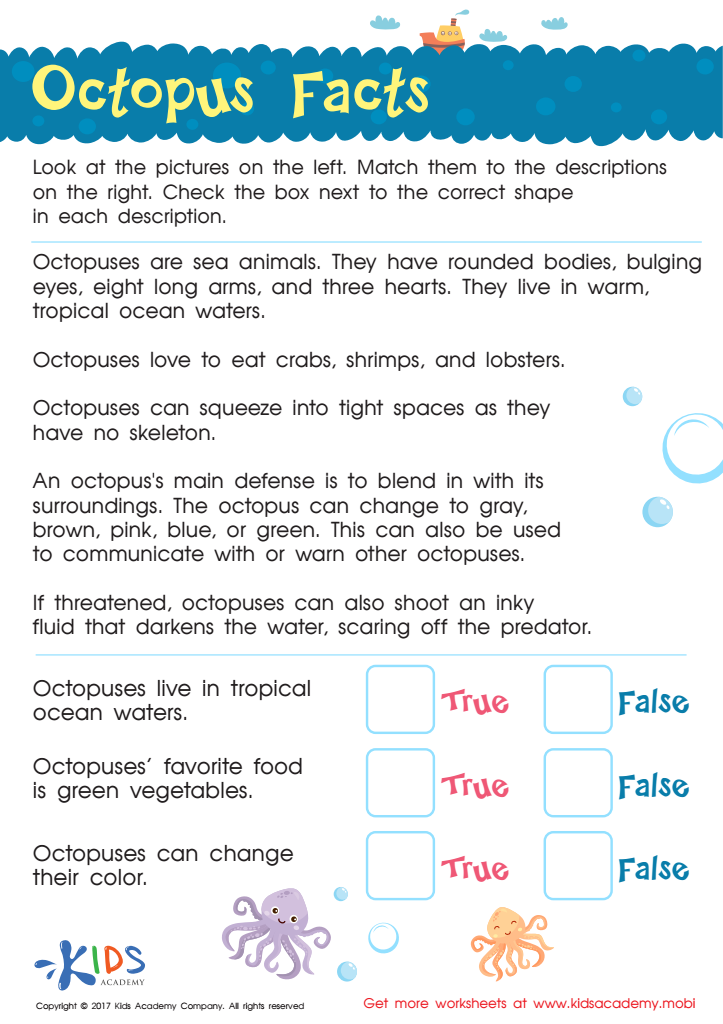
Octopus facts worksheet for kids

Octopus Facts Worksheet For Kids

Let your child dive into the world of octopuses with this fun worksheet. It offers invaluable practice in reading non-fiction texts, while they learn interesting facts about these strange sea creatures. It's a great way to help them hone their skills in reading comprehension.
Octopus Facts Worksheet For Kids
Worksheet
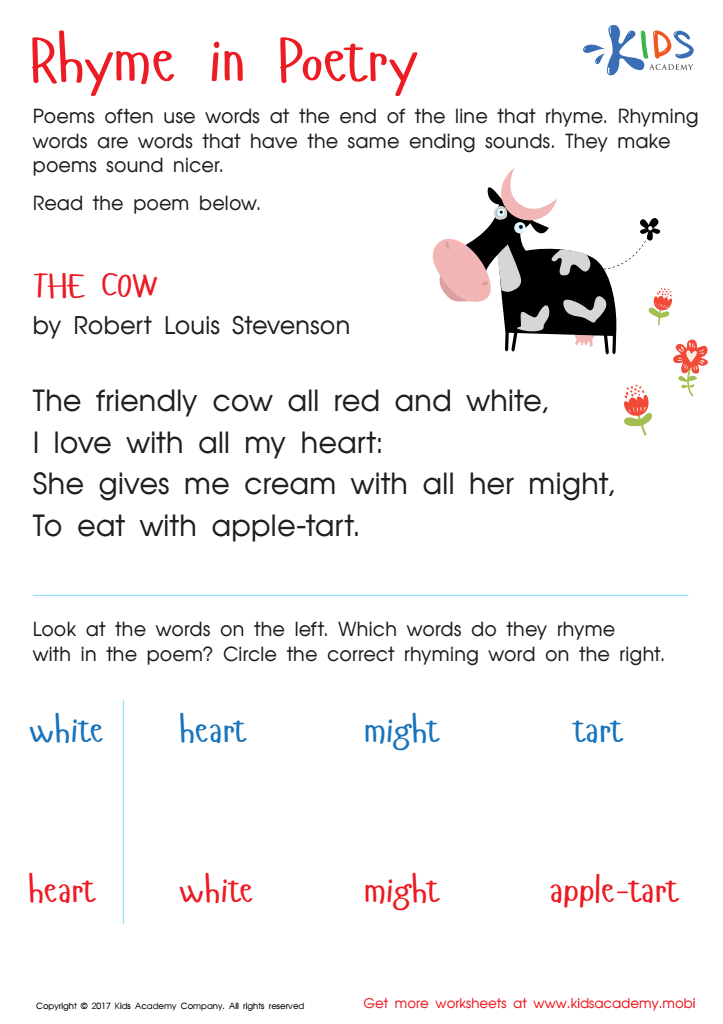
Кhyme in poetry worksheet

Rhyme In Poetry Worksheet

Introduce your child to poetic devices and help build their ear for poetry with Robert Louis Stevenson's adorable poem about a cow! Through this rhyming worksheet, your child will gain an appreciation for poetry and language.
Rhyme In Poetry Worksheet
Worksheet


Normal Reading Comprehension worksheets designed specifically for 7-year-olds are incredibly useful tools in the foundational years of a child's education. At this developmental stage, children are not only learning how to read but are also beginning to understand and interpret the meaning of texts. These tailored worksheets serve several vital purposes in enhancing a child’s literacy skills.

Firstly, Normal Reading Comprehension for 7-Year-Olds helps in building vocabulary. Through engaging stories and texts, children encounter new words in context, which significantly aids in vocabulary acquisition and usage. Secondly, these worksheets are crafted to develop critical thinking skills. Children are prompted to think about the stories or texts they read, answer questions about them, and express their understanding, which cultivates analytical thinking and comprehension abilities.

Moreover, practice with these worksheets enhances focus and attention to detail. As children read through the passages and answer the questions, they learn to pay close attention to the details within the texts, an essential skill for comprehension and learning across all subjects. Lastly, these worksheets also boost confidence; as children become more proficient in reading and understanding texts, their confidence in their reading abilities and overall academic skills increases.

In conclusion, Normal Reading Comprehension worksheets for 7-Year-Olds are not just about learning to read; they are about setting a strong foundation for a lifetime of learning and understanding. Through consistent practice, children can improve their vocabulary, critical thinking, attention to detail, and gain confidence in their academic journey.