Normal Rounding Worksheets for Ages 8-9
16 filtered results
Difficulty Level
Grade
Age
-
From - To
Subject
Activity
Standards
Introducing our Normal Rounding Worksheets, meticulously crafted for Ages 8-9. Embark on a mathematical journey designed to solidify the foundational concept of rounding numbers. These worksheets are tailored specifically to engage young learners, turning the challenge of understanding rounding into an enjoyable learning experience. Through a variety of exercises, students will master normal rounding techniques, enhancing their mathematical fluency and confidence. Ideal for both classroom use and home practice, our worksheets offer a comprehensive approach to learning this essential math skill. Equip your child with the tools they need for success—choose our Normal Rounding Worksheets for Ages 8-9.
Favorites
With answer key
Interactive
Rounding Down Printable Worksheet
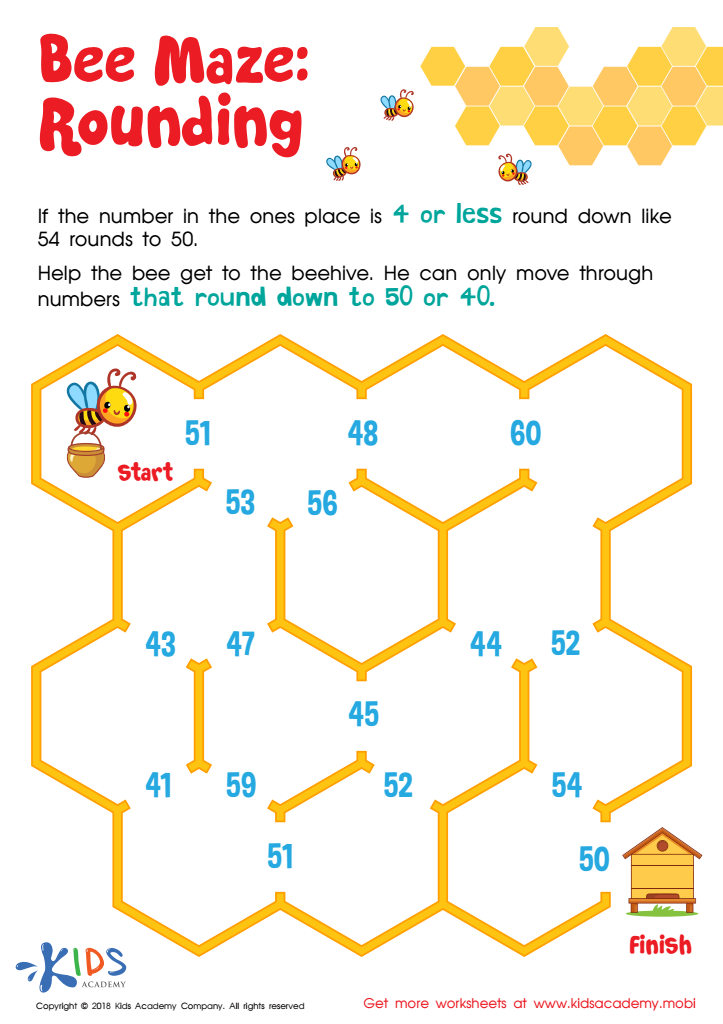
Help our bee friend take its honey pot back to the hive! With this worksheet, your kid can practice rounding numbers down. Have them guide the bee through the maze, choosing only numbers that round to 50 or 40.
 Assign to My Students
Rounding Down Printable Worksheet
Worksheet
Worm Math Rounding Down to the Nearest Ten Worksheet
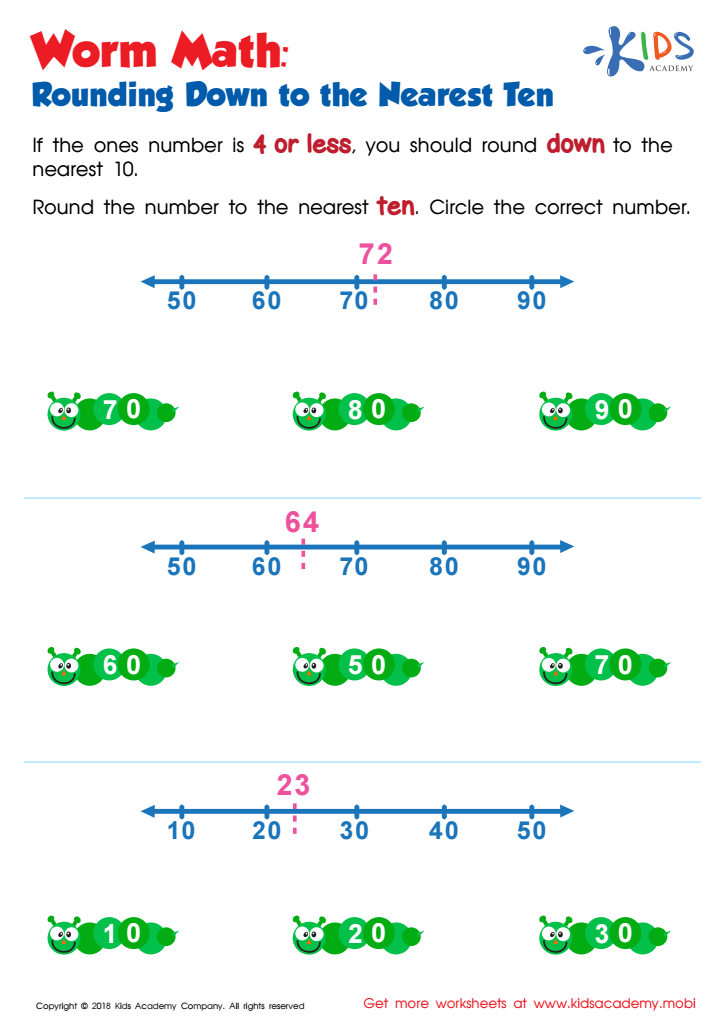
Look at the full of smiles worms carrying two-digit numbers. Is the number in the ones spot 4 or less? Round down to the nearest ten! Help kids learn the tricky concept of rounding with this math worksheet. Perfect for clearing up confusion and practicing rounding down to the nearest ten!
Worm Math Rounding Down to the Nearest Ten Worksheet
Worksheet
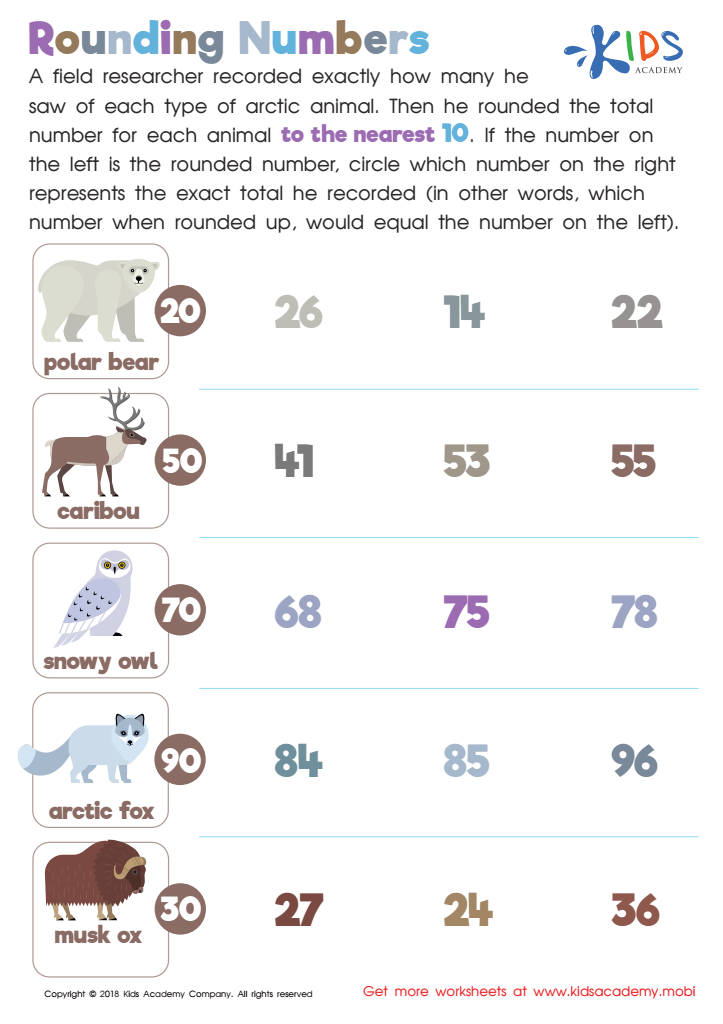
Rounding Numbers Worksheet
Take a trip north with this cute rounding math worksheet! Perfect for mastering number work, it adds a twist to the usual rounding practice. Help your child by getting them to view each animal picture to find the exact total of the rounded number. Then, look at the numbers on the right to determine what number was used to create the rounded total.
Rounding Numbers Worksheet
Worksheet
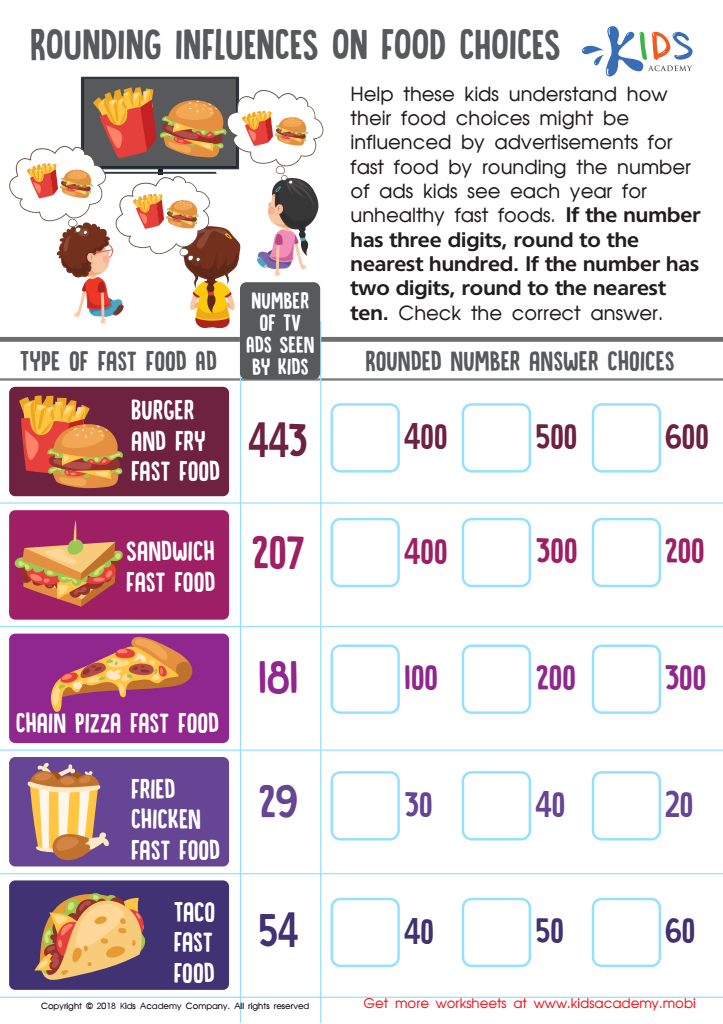
Rounding Influences Food Choices Worksheet
Kids find math more enjoyable when it reflects real-life scenarios. This free worksheet combines math and health! Kids view data on the number of ads they're exposed to in a year and must round the numbers to the nearest ten or hundred. Solve and check the correct answers to finish.
Rounding Influences Food Choices Worksheet
Worksheet
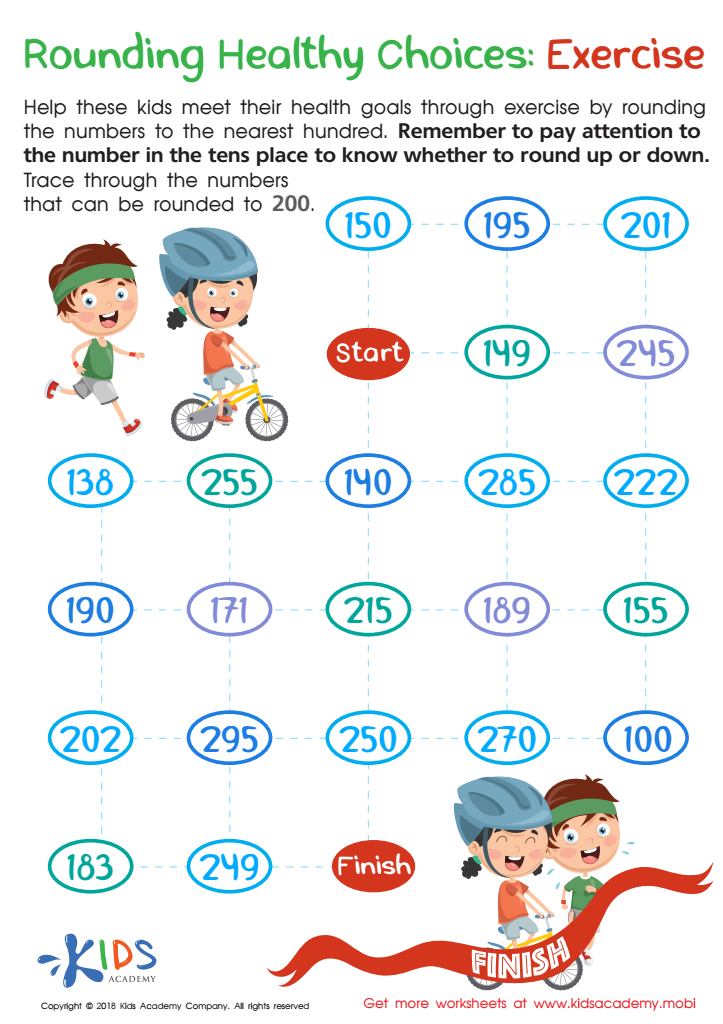
Rounding Healthy Choices Exercise Worksheet
Tired of boring math worksheets? Check out this fun rounding maze printout! Help the kids reach their goals by going from start to finish. To move through the maze, they must find numbers to round to 200. Teach them to pay close attention to the tens place to know whether to round up or down. Have fun and reach the finish line to complete the maze!
Rounding Healthy Choices Exercise Worksheet
Worksheet
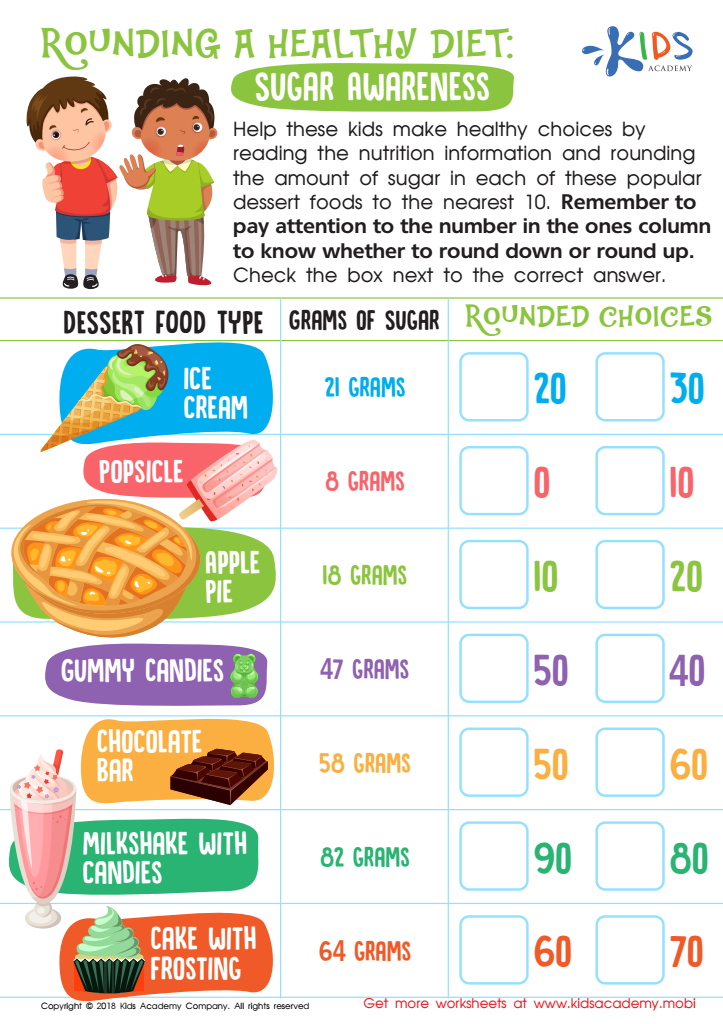
Rounding Healthy Diet Worksheet
Kids Academy understands the value of making math relevant. Check out this energizing rounding worksheet which merges math concepts with health class! Kids get to be aware of sugary treats and work out how many grams of sugar they contain. To complete, they view each item and round the number to the nearest 10. Remind them to focus on the ones column to decide if the number rounds up or down.
Rounding Healthy Diet Worksheet
Worksheet
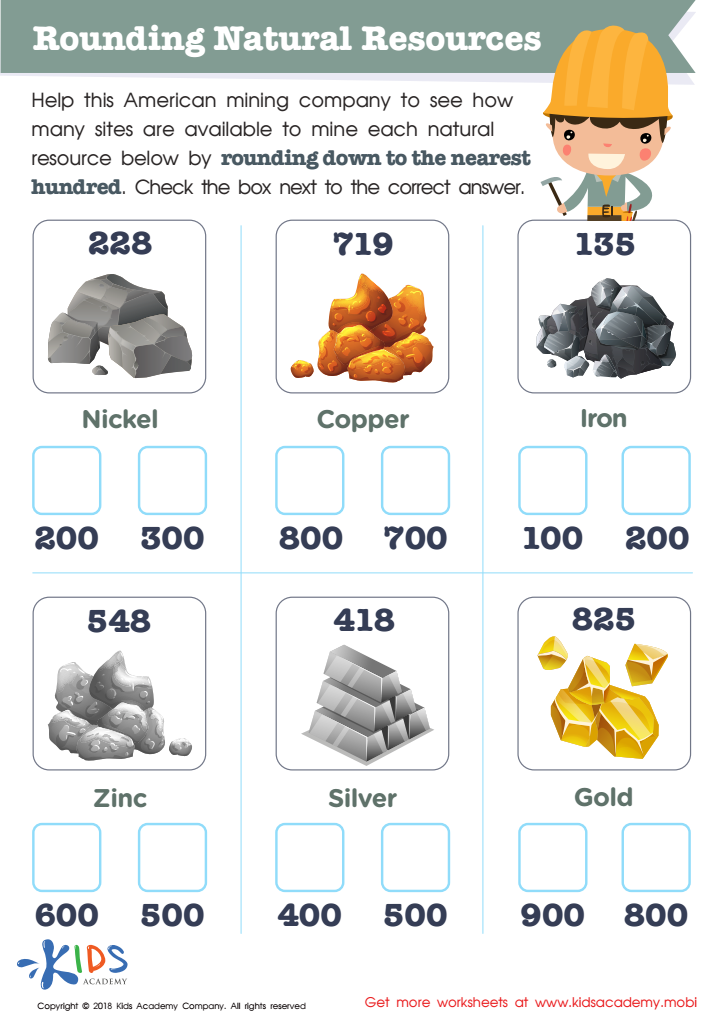
Rounding Natural Resources Worksheet
This worksheet from Kids Academy helps review rounding skills while reviewing natural resources. Learners view pictures of natural resources and round down to the nearest hundred. Use it to jumpstart a science discussion about the various resources found on the planet. A great way to make math relevant to real life!
Rounding Natural Resources Worksheet
Worksheet
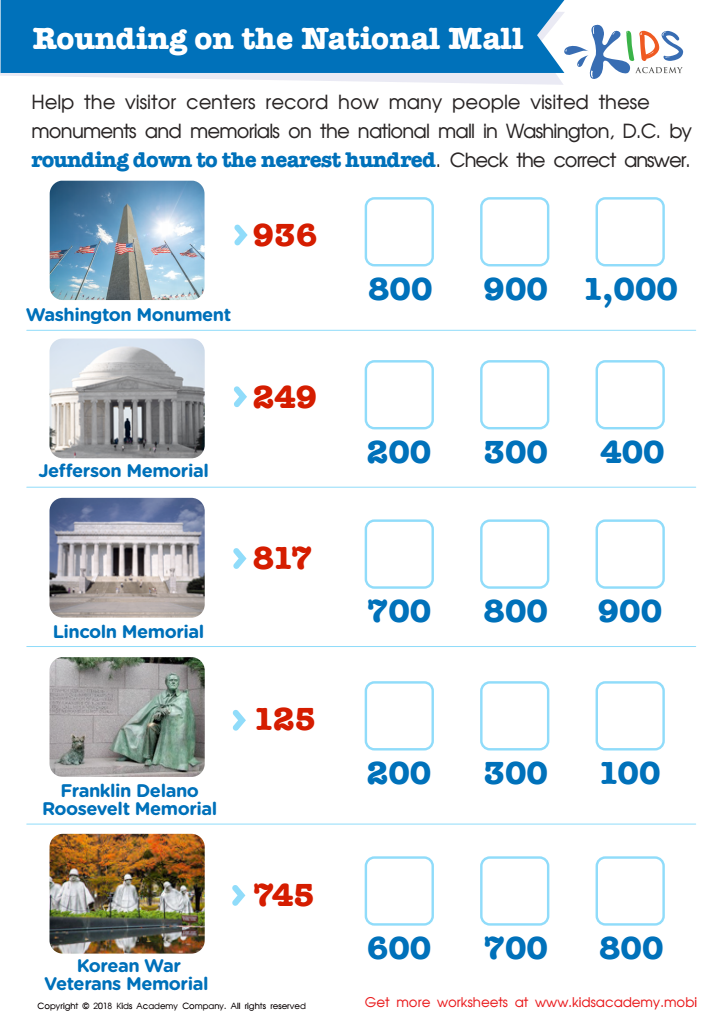
Rounding on the National Mall Worksheet
Math and social studies come together in this worksheet. Learners must round numbers to record attendance at Washington D.C. monuments and memorials. Remind them to round down to the nearest hundred. Extend the lesson by talking about each monument - a great way to teach or refresh your child's knowledge of these national landmarks!
Rounding on the National Mall Worksheet
Worksheet
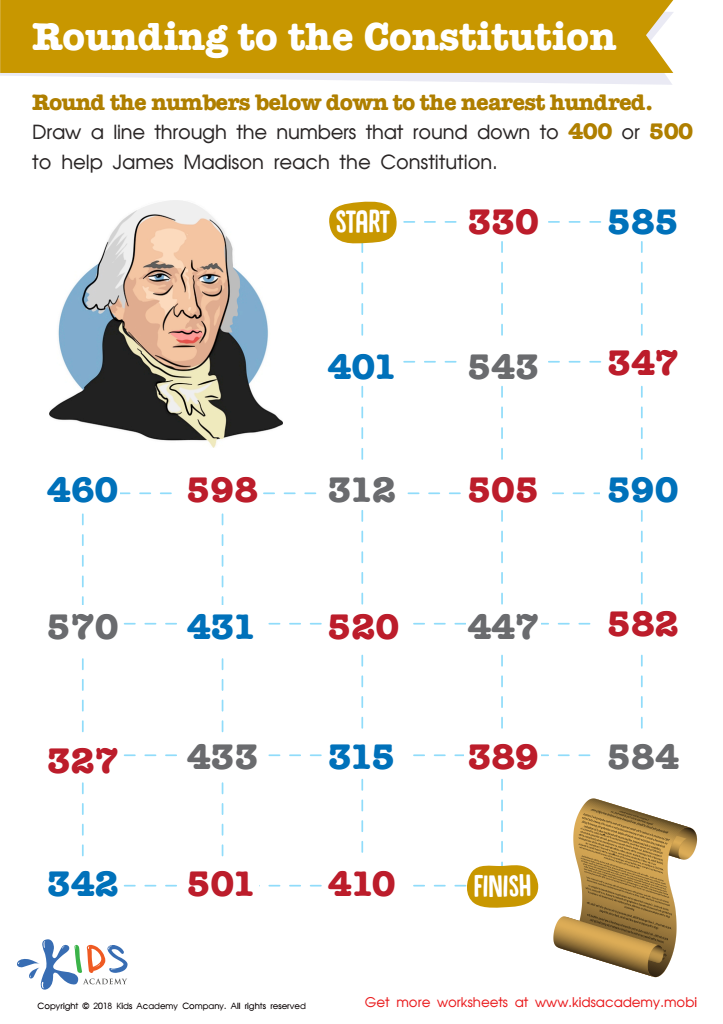
Rounding to the Constitution Worksheet
Before starting this traceable worksheet, ask your students: who is James Madison? If they know, you're doing great! If not, now's your chance to give a quick history lesson. Then, ask them to round the numbers to the nearest numbers. Get your students to draw a line through the numbers that round down to 400/500, to help James Madison reach the Constitution.
Rounding to the Constitution Worksheet
Worksheet
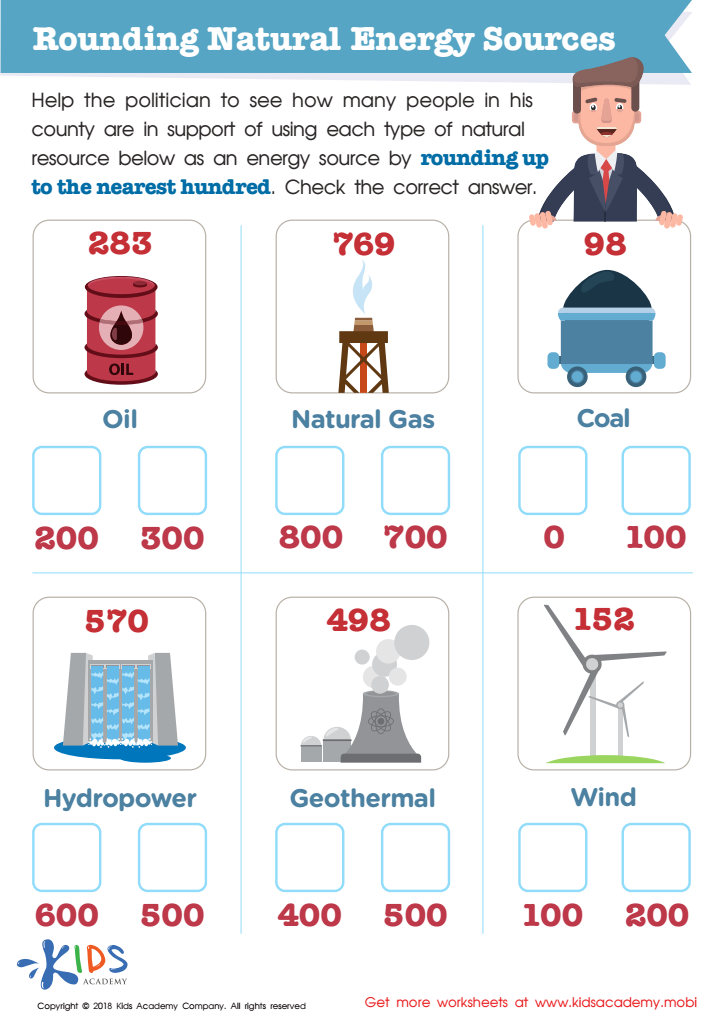
Rounding Natural Energy Sources Worksheet
Ask your kids what policies they would love to see if a politician is voted into power. Then, have them help the politician in this worksheet, downloading the PDF and rounding up the number of people to the nearest hundred in support of using different natural resources as an energy source. Guide them to the correct answer.
Rounding Natural Energy Sources Worksheet
Worksheet
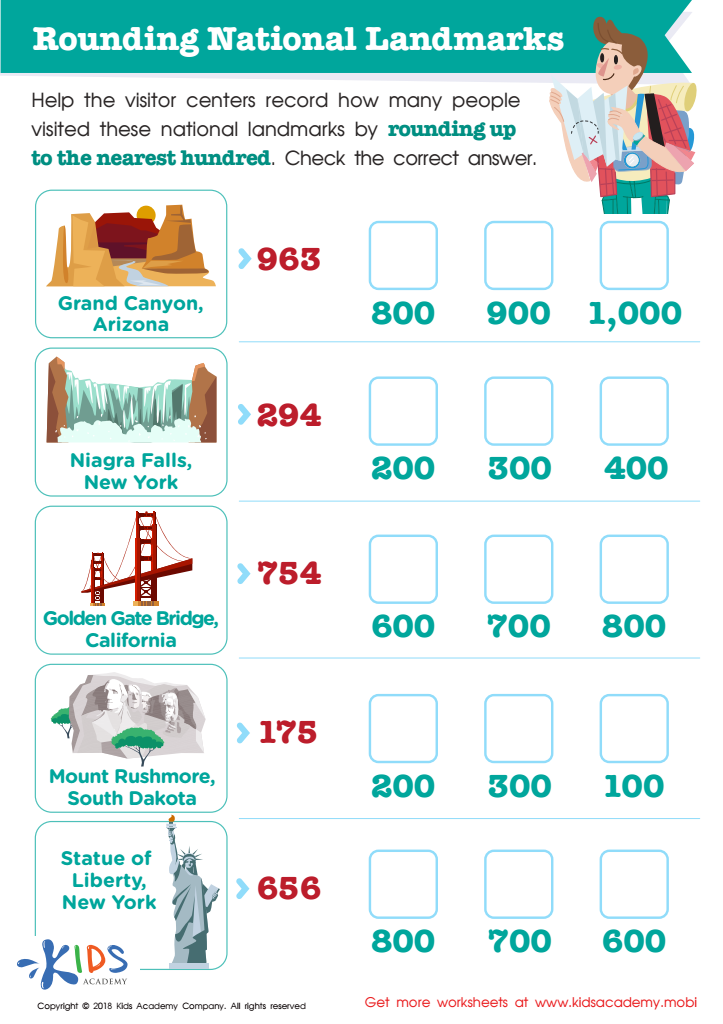
Rounding National Landmarks Worksheet
Does your city have tourist attractions? Help your kids count visitors to these national landmarks by rounding up to the nearest hundred. Then check the correct answer from the provided options. Or explore tourist centres in another state with your family.
Rounding National Landmarks Worksheet
Worksheet
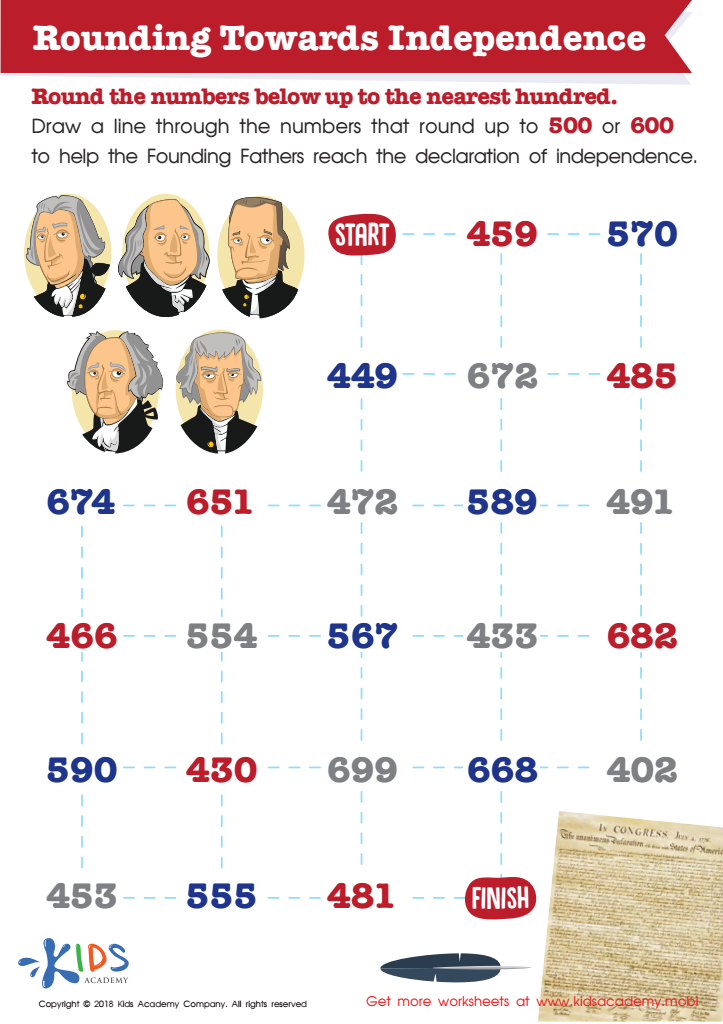
Rounding Towards Independence Worksheet
Help your child learn their history. Ask if they can name their country's Independence Day, then check it with this colourful worksheet. Let them draw a line through the numbers that total 500 or 600 to help the Founding Fathers reach the declaration of Independence. It's a great way to spark their interest in history!
Rounding Towards Independence Worksheet
Worksheet
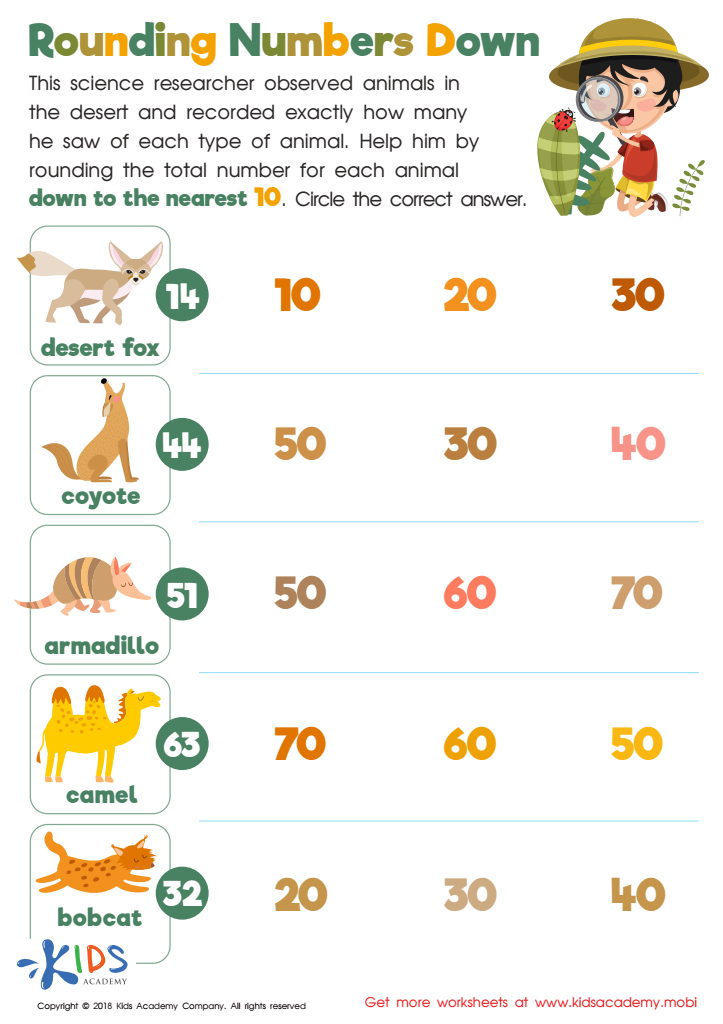
Rounding Numbers Down Worksheet
Does your child aspire to be a science researcher? This worksheet is the perfect place to start! Help your little one round the total number of animals seen in the desert to the nearest 10, then circle the correct answer for each. Fun and educational, this activity is a great way to help your kids get a taste of the science researcher lifestyle.
Rounding Numbers Down Worksheet
Worksheet
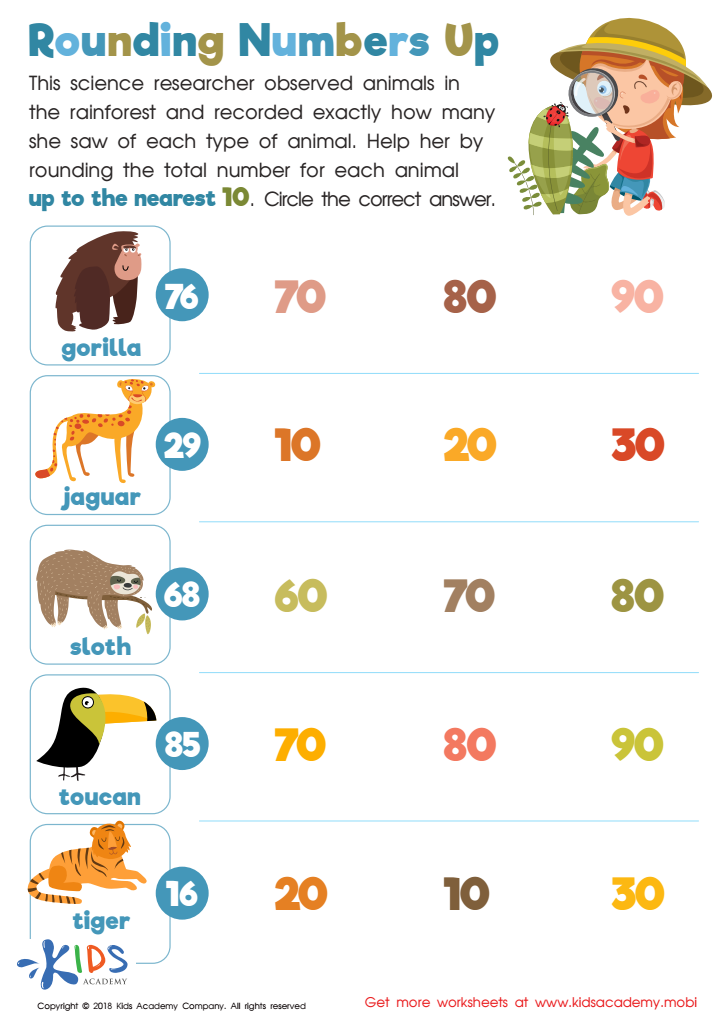
Rounding Numbers Up Worksheet
Does your child want to be a science researcher? If so, they share something in common with the person in this worksheet. She observed rainforest animals and counted them. Your child can help by rounding the totals to the nearest 10 and circling the correct answer for each type.
Rounding Numbers Up Worksheet
Worksheet
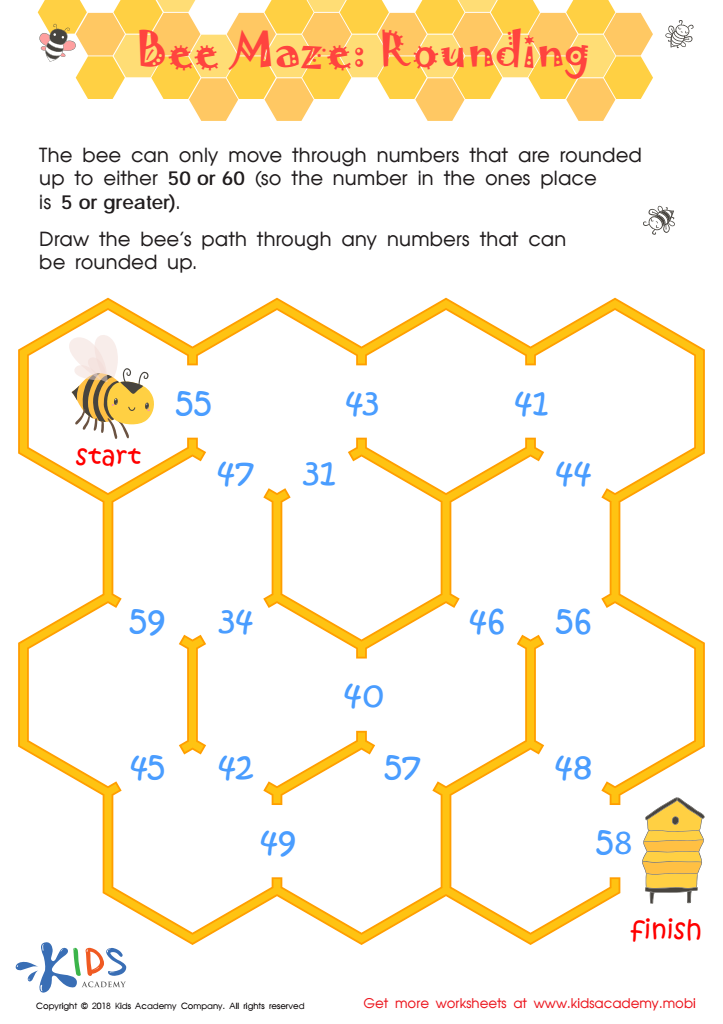
Bee Maze Rounding Worksheet
Round up the bee! Your child will practice rounding with this fun maze worksheet. Kids round up to 50 or 60, evaluating each number and guiding the bee to his home. Get ready for some thought-stretching fun!
Bee Maze Rounding Worksheet
Worksheet
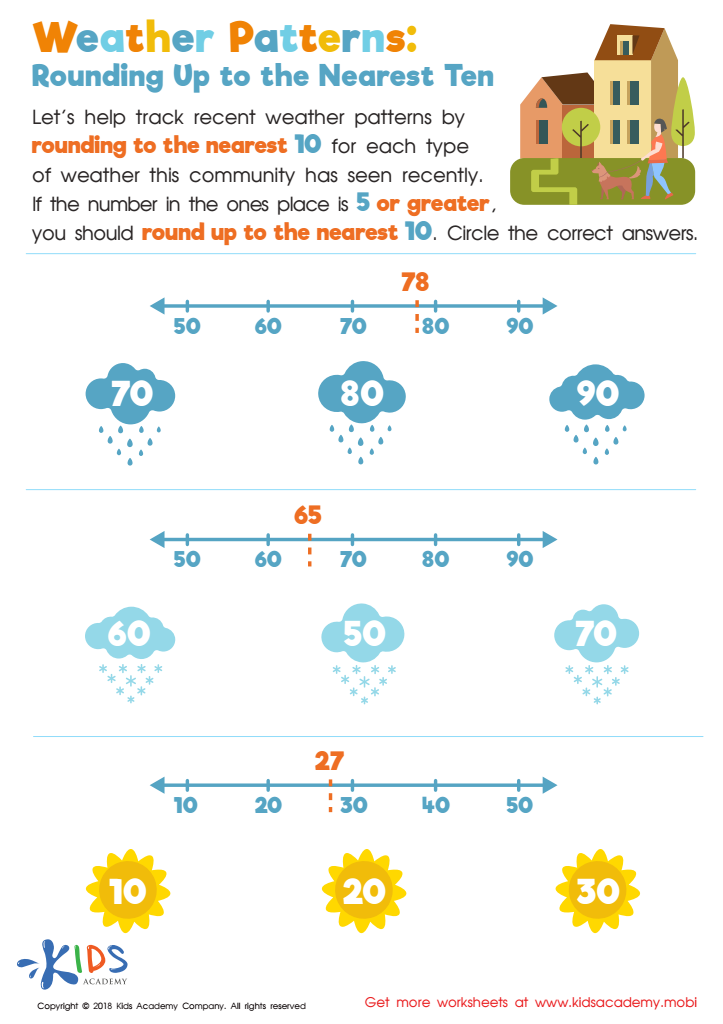
Weather Patterns Worksheet
Use this Weather Patterns worksheet to help your kids develop their mathematical skills. Get them to round the recent weather patterns to the nearest 10 and round up if the number in the ones place is 5 or higher. Work with them to figure out which answers are correct and get them to circle them.
Weather Patterns Worksheet
Worksheet
Join Kids Academy for Free
Who is primarily going to use this learning content?






Normal Rounding worksheets for Ages 8-9 are an invaluable educational tool for several compelling reasons. First and foremost, at the ages of 8 and 9, children are at a critical stage in their mathematical development, where foundational concepts like rounding numbers become essential for their understanding of more complex mathematical operations in the future. Normal Rounding worksheets specifically designed for this age group cater to their learning needs effectively by simplifying complex concepts into more manageable and age-appropriate activities.
These worksheets offer a structured way for children to practice and master the concept of rounding numbers, which is not only a key skill in mathematics but also in everyday life. For instance, estimating costs and understanding quantities all require a solid grasp of rounding. By engaging with these worksheets, children can build their confidence in mathematics, enhance their problem-solving skills, and foster a positive attitude towards learning and dealing with numbers.
Moreover, Normal Rounding worksheets for Ages 8-9 are created with the cognitive and developmental stages of children in mind. The exercises are designed to be engaging and interactive, often incorporating visual aids and real-life examples that make learning both fun and relevant. This approach ensures that children are not only learning but also enjoying the process, which significantly contributes to their overall educational experience.