Normal Difficulty Online ScienceWorksheets for Kids - Page 2
312 filtered results
Difficulty Level
Grade
Age
-
From - To
Subject
Activity
Standards
Favorites
With answer key
Interactive
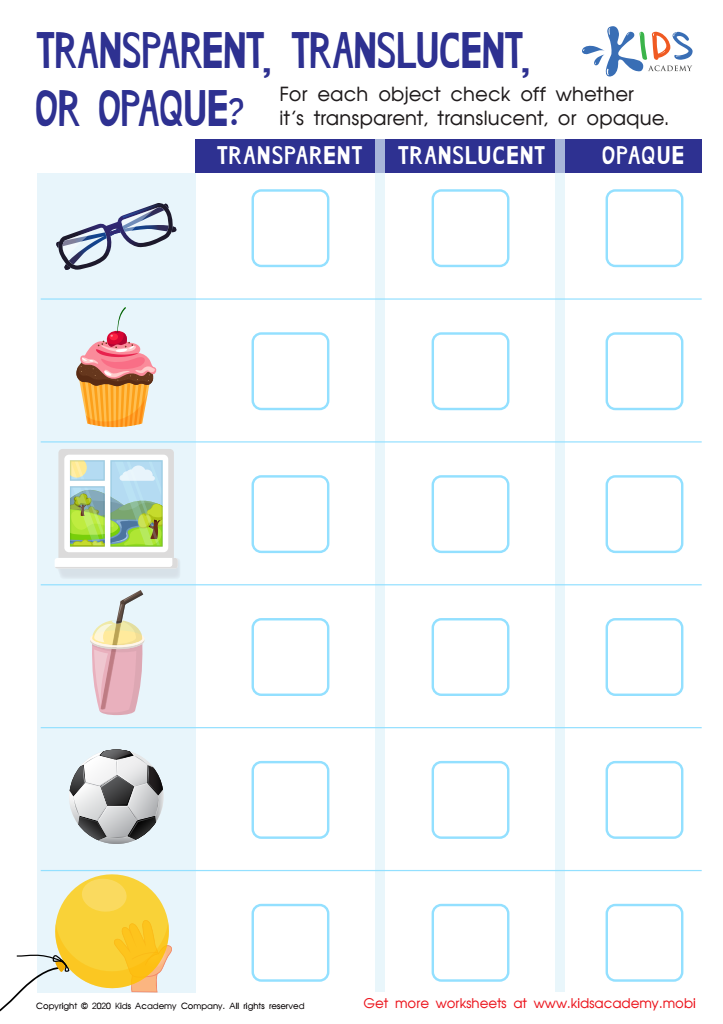
Transparent, Translucent, or Opaque Worksheet
Remind students that transparent objects allow us to see through them, translucent objects let some light pass through, and opaque objects block all light. Have them look at pictures and decide if each object is transparent, translucent, or opaque.
 Assign to My Students
Transparent, Translucent, or Opaque Worksheet
Worksheet
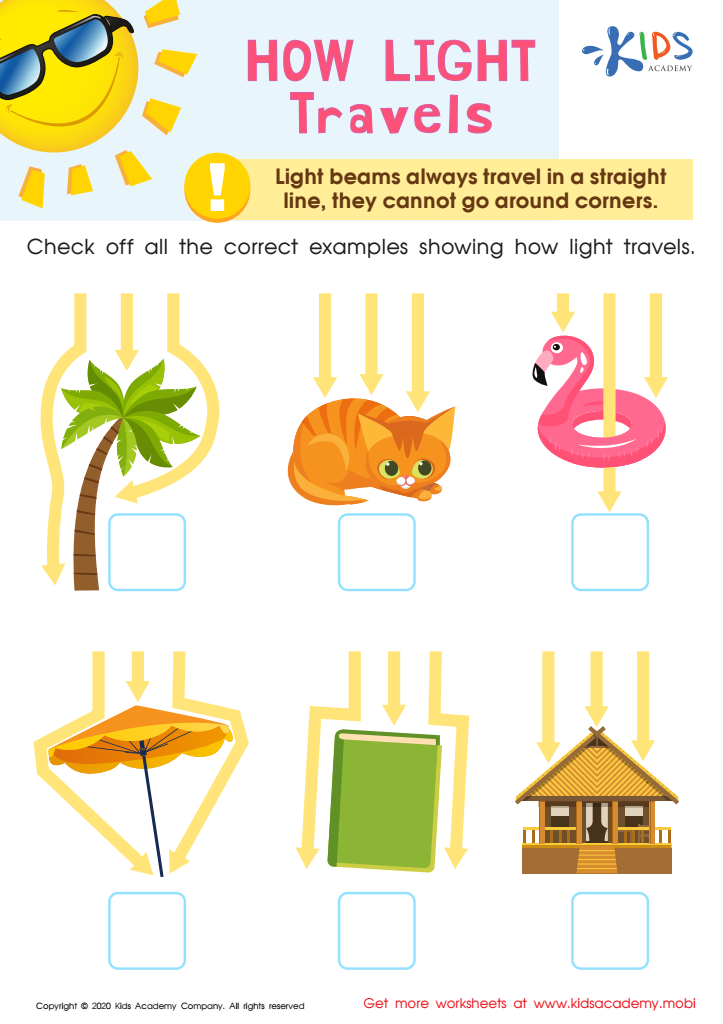
How Light Travels Worksheet
This colorful worksheet teaches students about light travel: beams move in a straight line and can't go around corners. Students view pictures and check off all the correct examples.
How Light Travels Worksheet
Worksheet
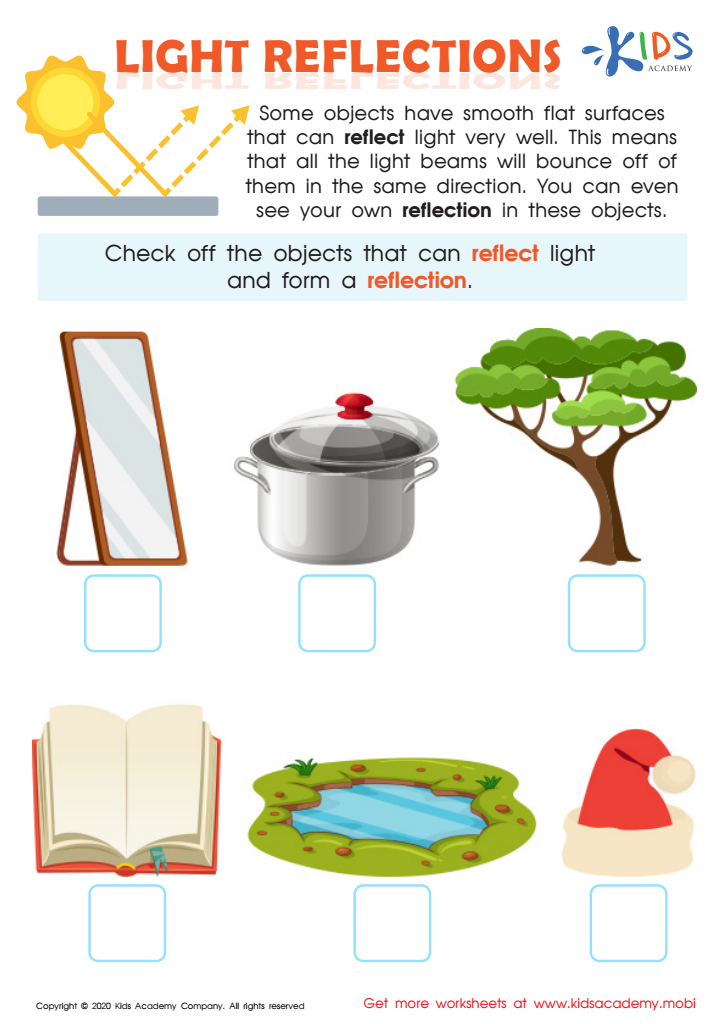
Light Reflections Worksheet
Teach your students that some objects reflect light and form a reflection. Ask them to name examples, then look at pictures and check off which objects can do this. Have them note how the light bounces off these surfaces, and observe their own reflections.
Light Reflections Worksheet
Worksheet
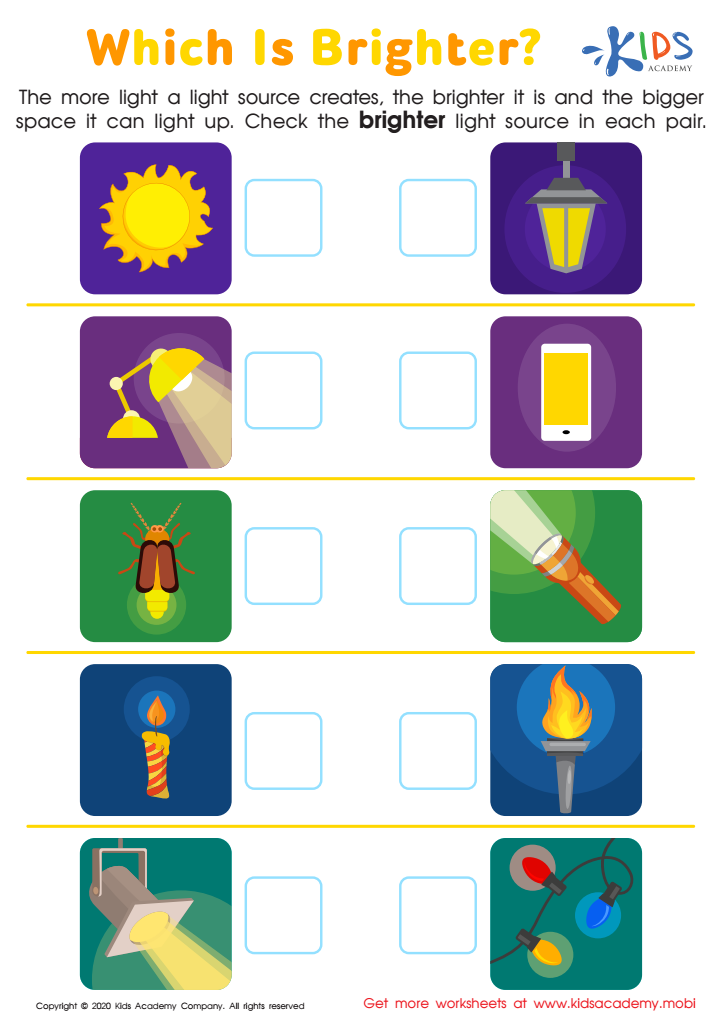
Which Is Brighter? Worksheet
Before the exercise, ask students to recall sources of light. Use this worksheet to explain that the brighter the light source, the more space it can light up. Identify the different light sources in the pictures, then check the brighter light source in each pair. The biggest natural source of light is the sun.
Which Is Brighter? Worksheet
Worksheet
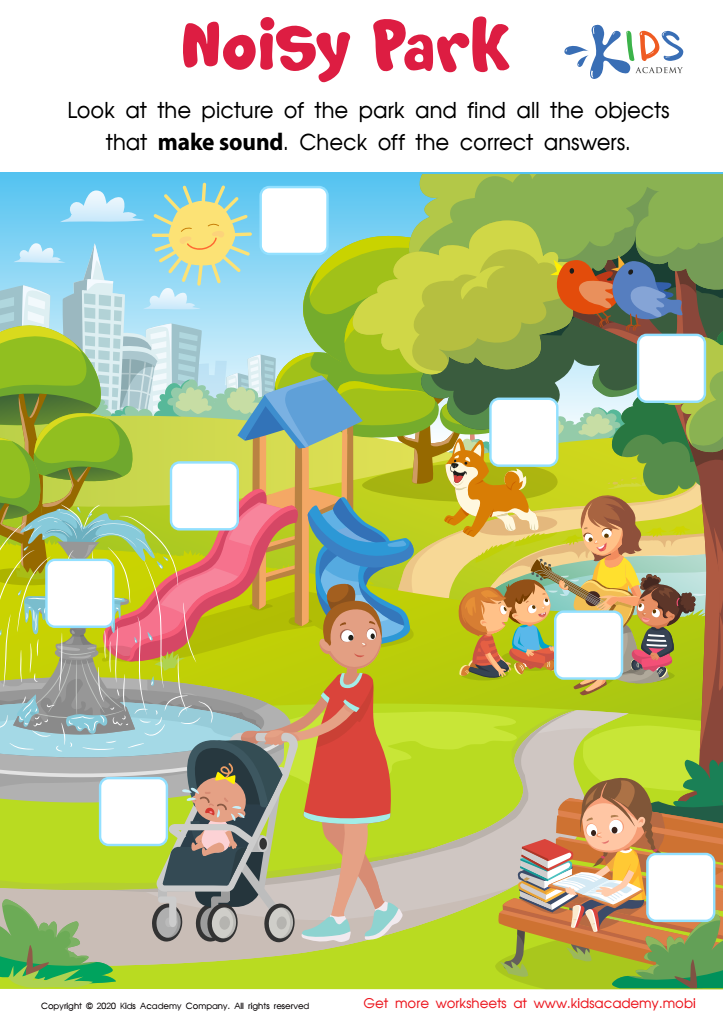
Noisy Park Worksheet
Get your students ready for the exercise by asking them to name things they see and do at the park. Then, have them identify the things in the picture, look for objects that make sounds, and verify the answers.
Noisy Park Worksheet
Worksheet
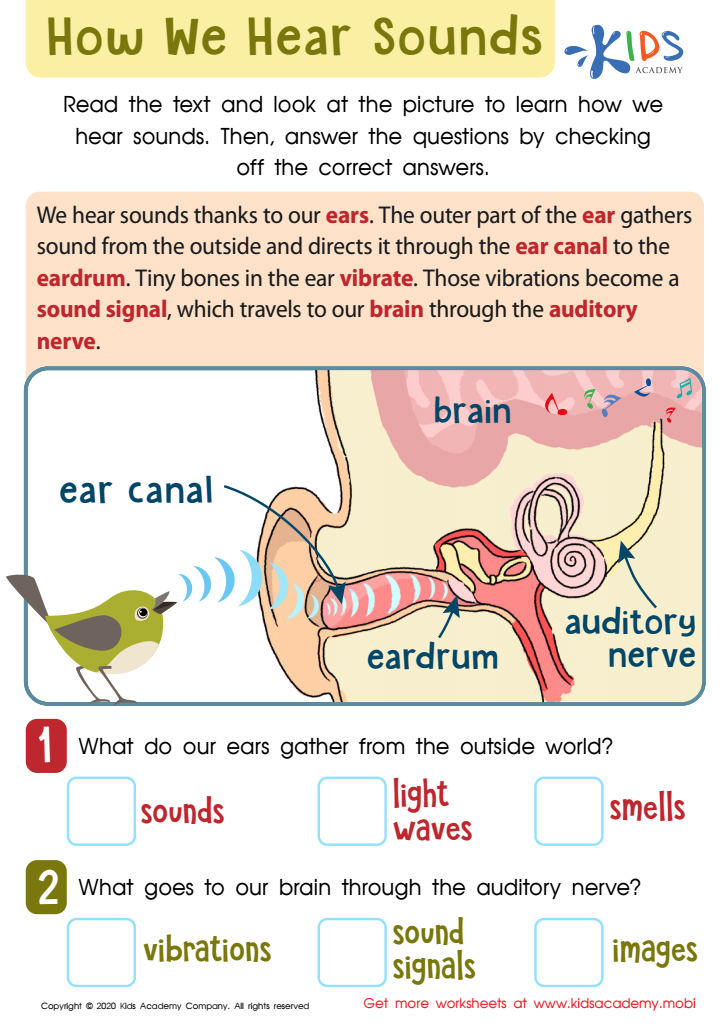
How We Hear Sounds Worksheet
Before beginning this worksheet, make sure your students are aware of the five senses: sight, taste, touch, smell, and hearing. This worksheet will help them explore how we hear sounds with our ears. Read or listen to the text, study the images, and answer the questions. Check off the correct answers.
How We Hear Sounds Worksheet
Worksheet
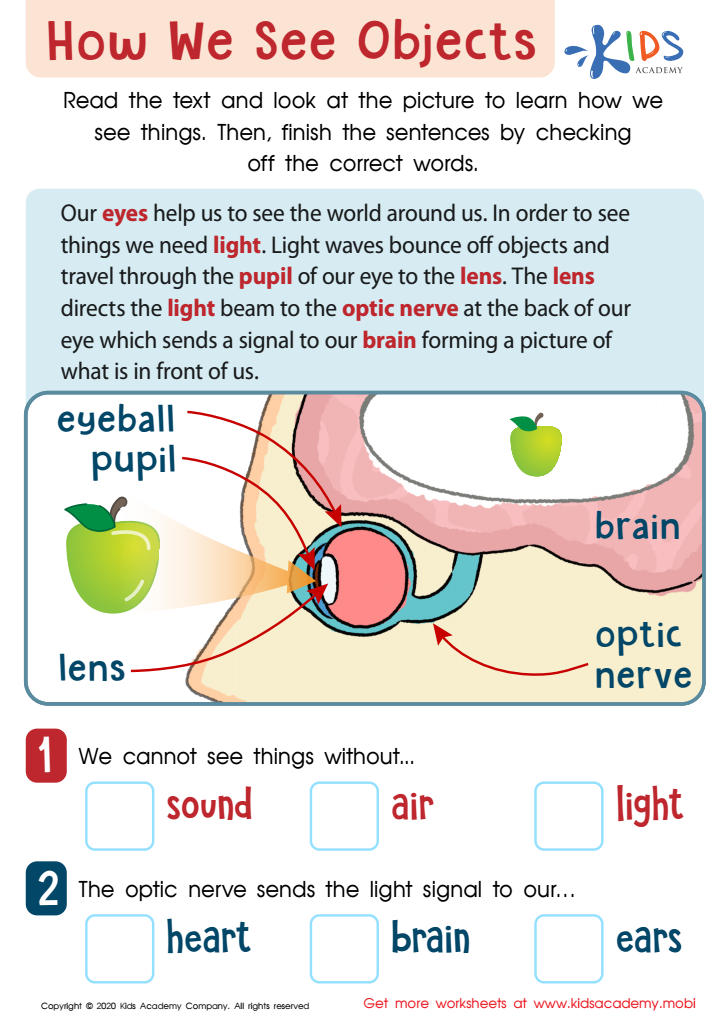
How We See Objects Worksheet
Remind your students of our five senses! This worksheet will teach them more about sight: read/listen to the text, look at pictures, then help them complete sentences. Check off the right words!
How We See Objects Worksheet
Worksheet
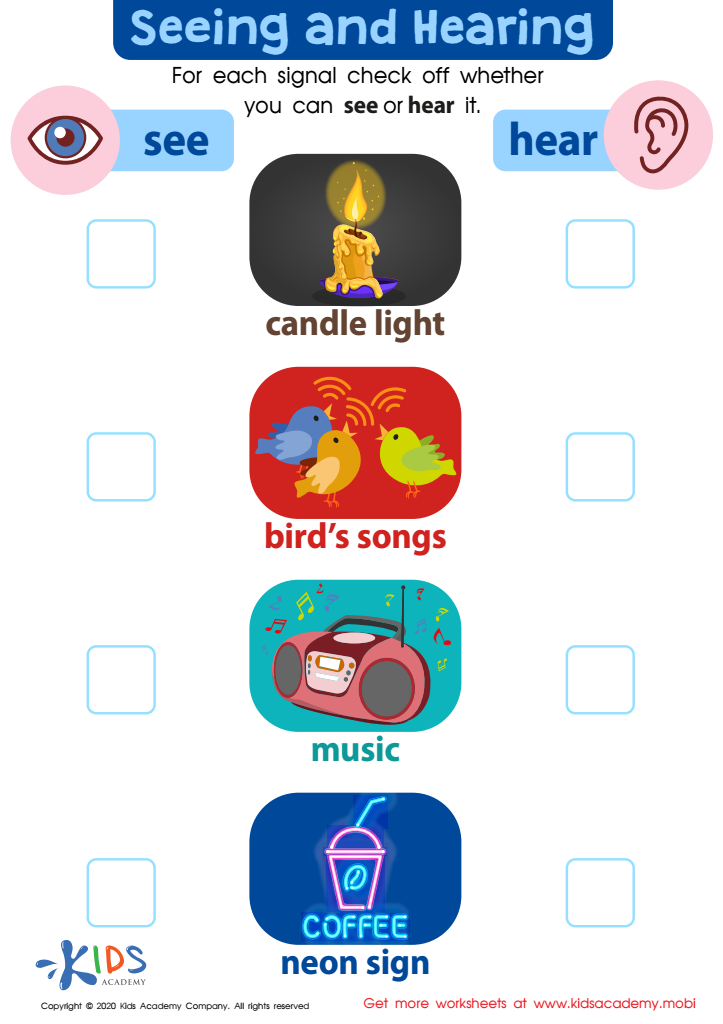
Seeing and Hearing Worksheet
Before beginning this worksheet, ensure your students know that we have five senses: eyes (seeing), tongue (tasting), skin (feeling), nose (smelling), and ears (hearing). This worksheet will explore seeing and hearing - ask your students what they can see/hear in the picture and get them to check it off.
Seeing and Hearing Worksheet
Worksheet
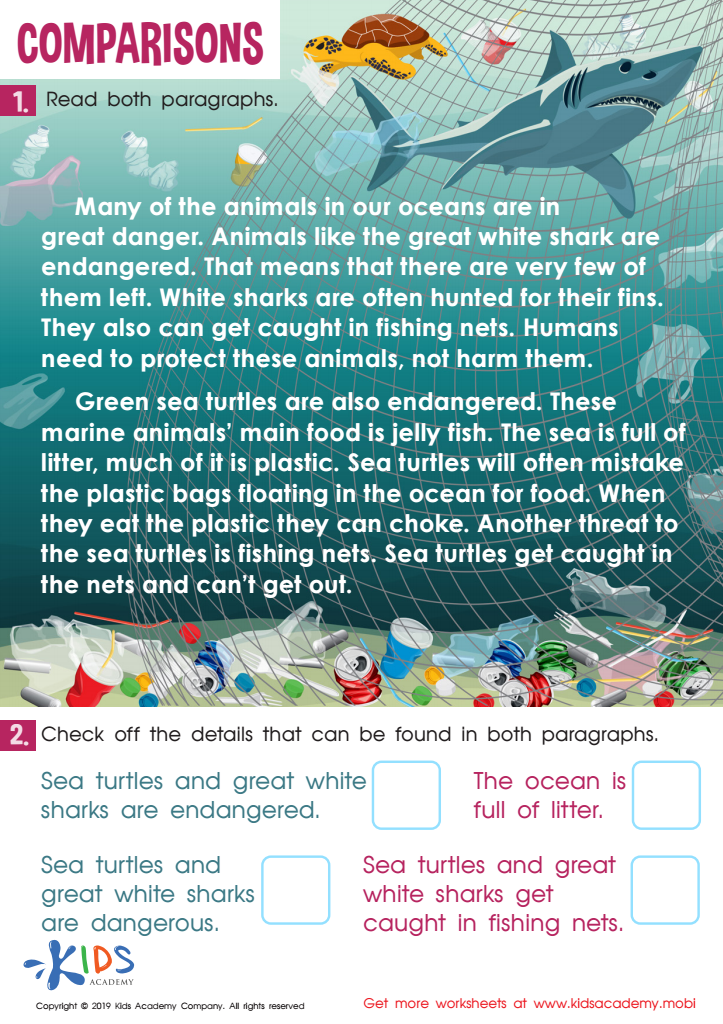
Comparisons Worksheet
Compare two things easily: place them side by side and note the differences. Use this passage to help kids practice reading and comprehension, and teach them about the ocean and sea creatures. Read both paragraphs, then check off details found in both. (80 words)
Comparisons Worksheet
Worksheet
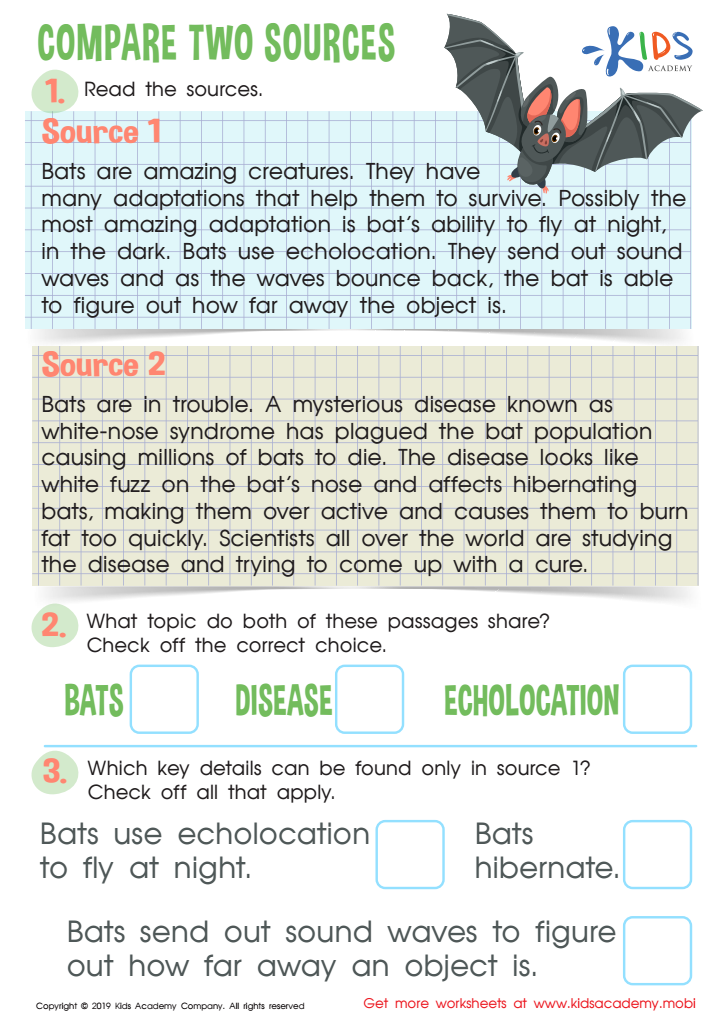
Compare Two Sources Worksheet
Reading exposes us to new words, spelling, and info about different topics. Kids can practice their reading skills, and learn about bats, with this worksheet. Read the two sources in the picture, then help your kids answer the questions at the bottom.
Compare Two Sources Worksheet
Worksheet
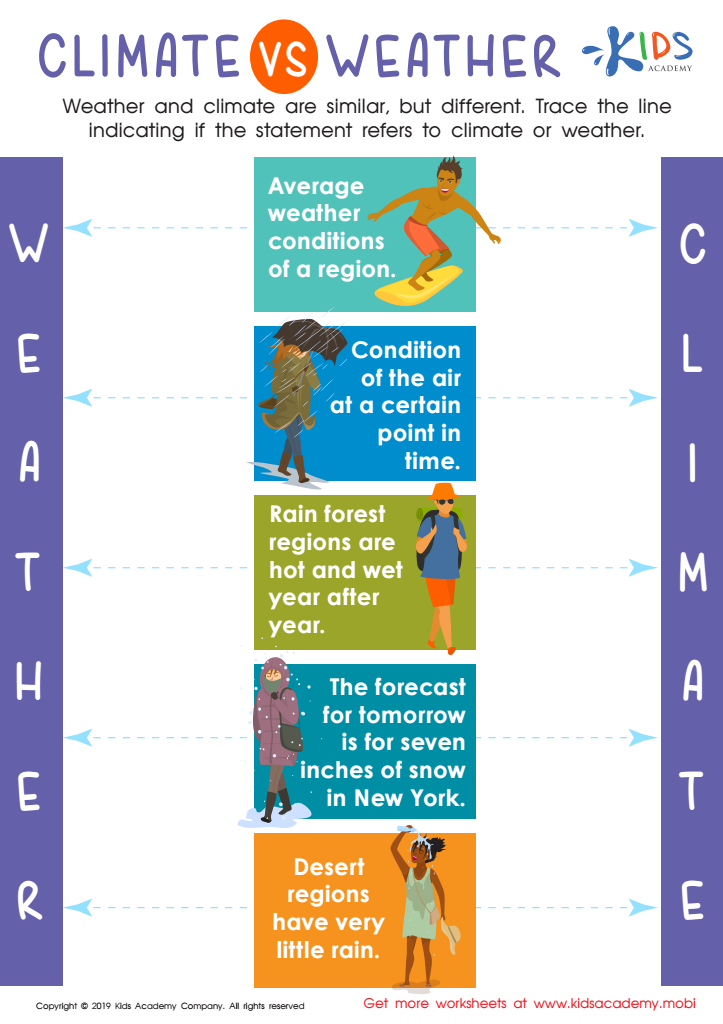
Climate vs Weather Worksheet
Weather and climate might sound similar, but they're different! Kids can discover the difference with this free, factual worksheet. Weather is the air's condition at one moment, while climate is an area's average weather. Kids can draw lines to connect factoids to either one. An interesting and educational activity!
Climate vs Weather Worksheet
Worksheet
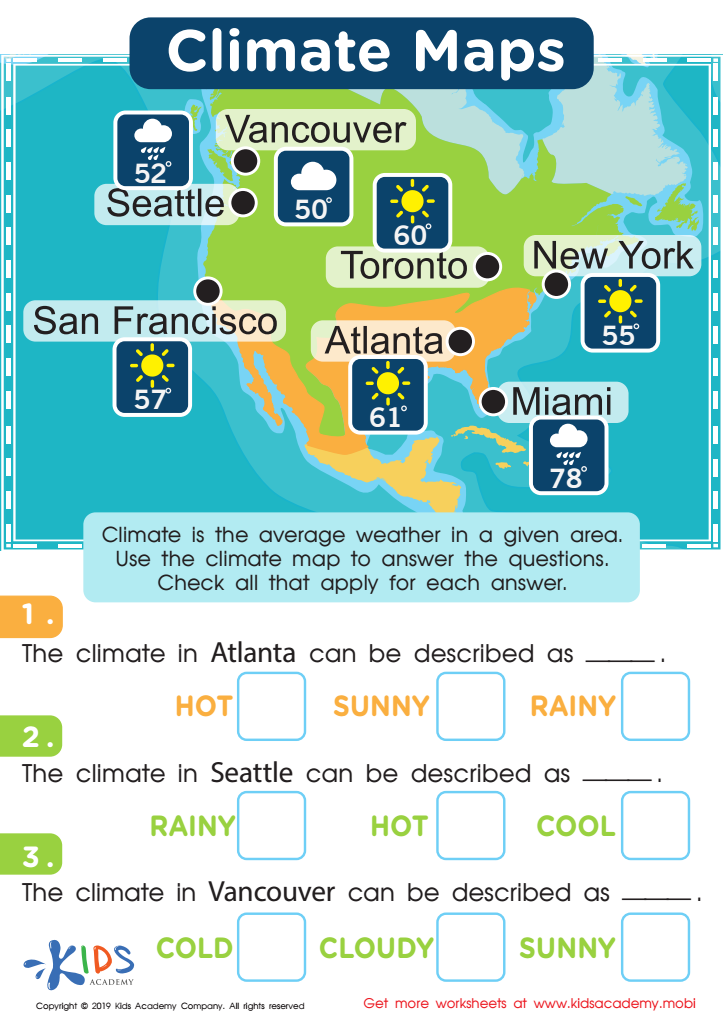
Climate Maps Worksheet
This map offers a fun way to teach kids about the varying climates across North America. They'll learn that Seattle and Miami have different temperatures, yet the same amount of rainfall. Plus other weather facts. This prepares them to answer reading comprehension questions with success!
Climate Maps Worksheet
Worksheet
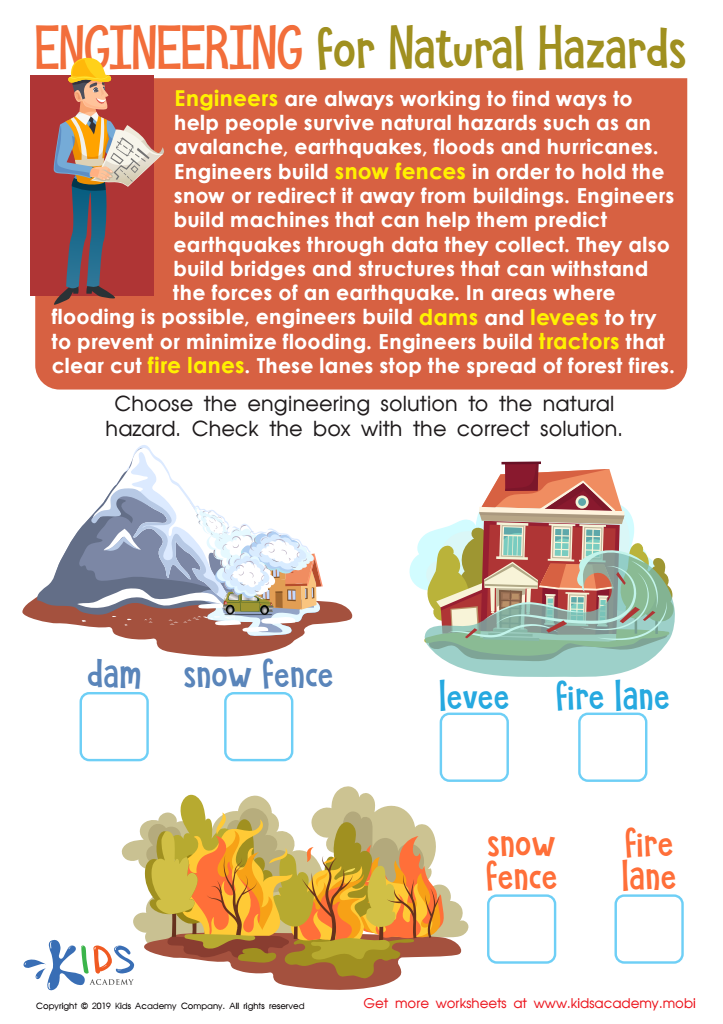
Engineering Natural Hazards Worksheet
Natural hazards can be lessened with precautions. This free worksheet engages kids with informative text on how engineers protect us and lets them practice reading comprehension by choosing the right option.
Engineering Natural Hazards Worksheet
Worksheet
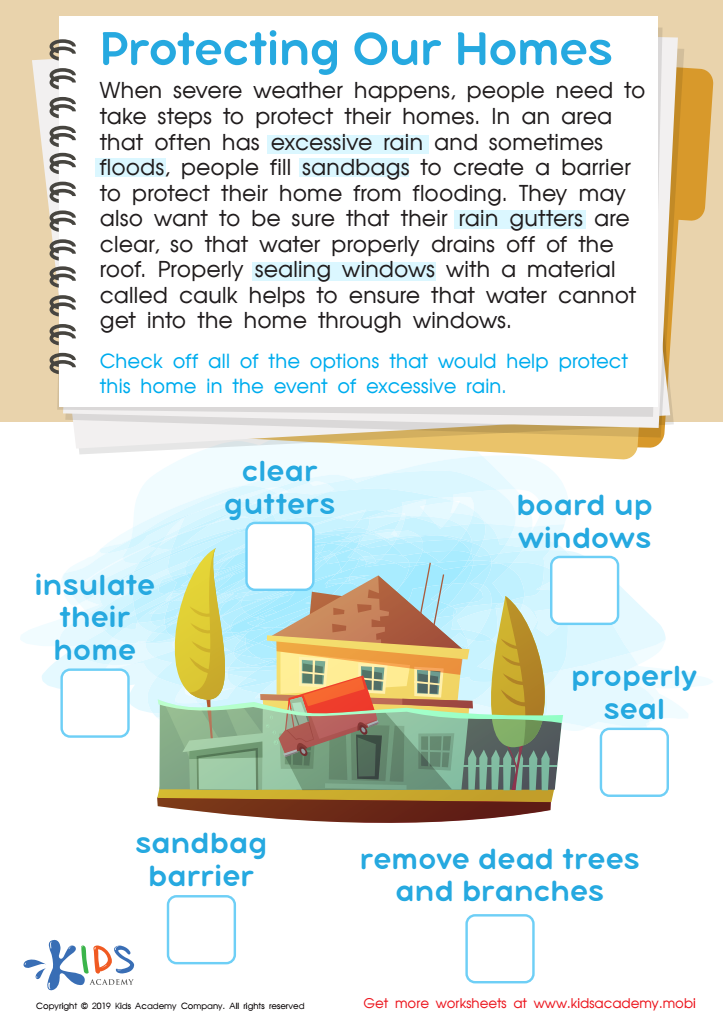
Protecting Our Homes Worksheet
Teach kids about severe weather with this free worksheet. It helps them learn how to protect their home from excessive rain, as well as what not to do. Check the given actions to make the damage from weather events less devastating.
Protecting Our Homes Worksheet
Worksheet
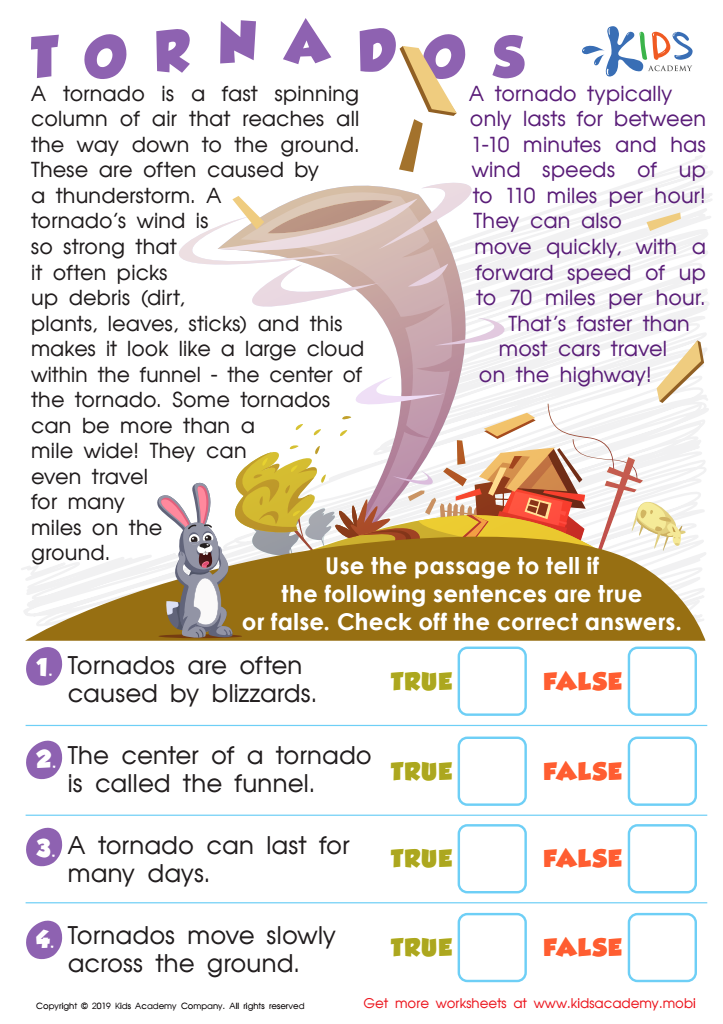
Tornados Worksheet
Kids love learning about natural weather events, especially tornadoes. This worksheet is perfect for teaching facts and critical thinking skills. Children will read statements and decide whether they are true or false. This will help them gain knowledge while developing their reading and analysis skills.
Tornados Worksheet
Worksheet
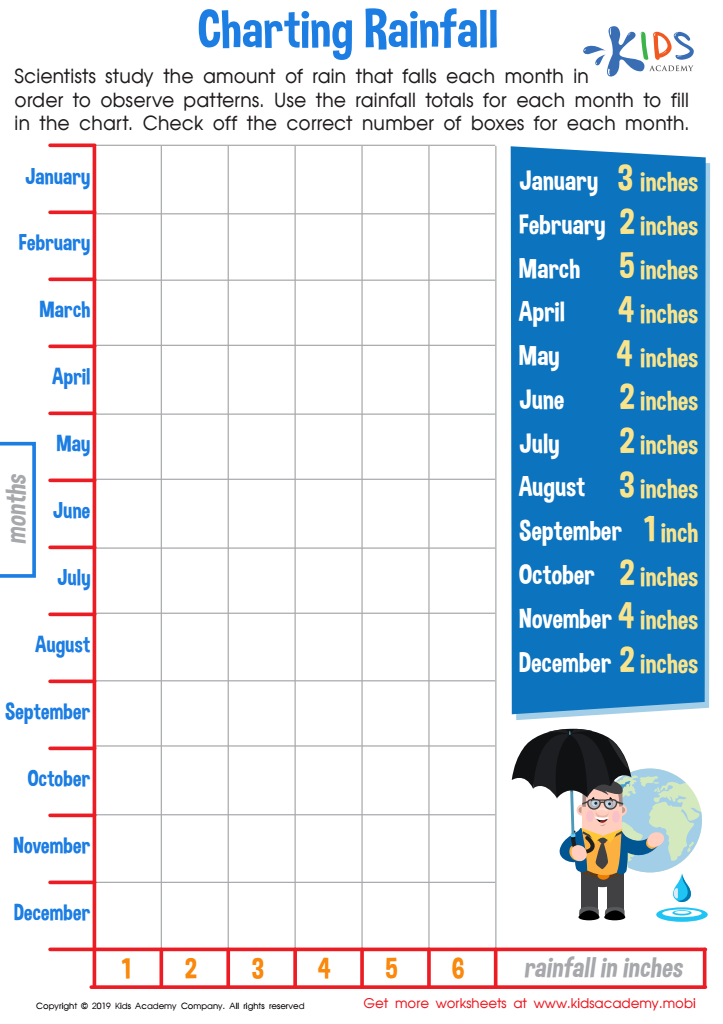
Charting Rainfall Worksheet
Kids need to learn how to graph info in order to understand the world. This rainfall worksheet gives them an opportunity to act as statisticians, charting the amount of rain each month. It also helps them practice data storage and analysis for future math concepts.
Charting Rainfall Worksheet
Worksheet
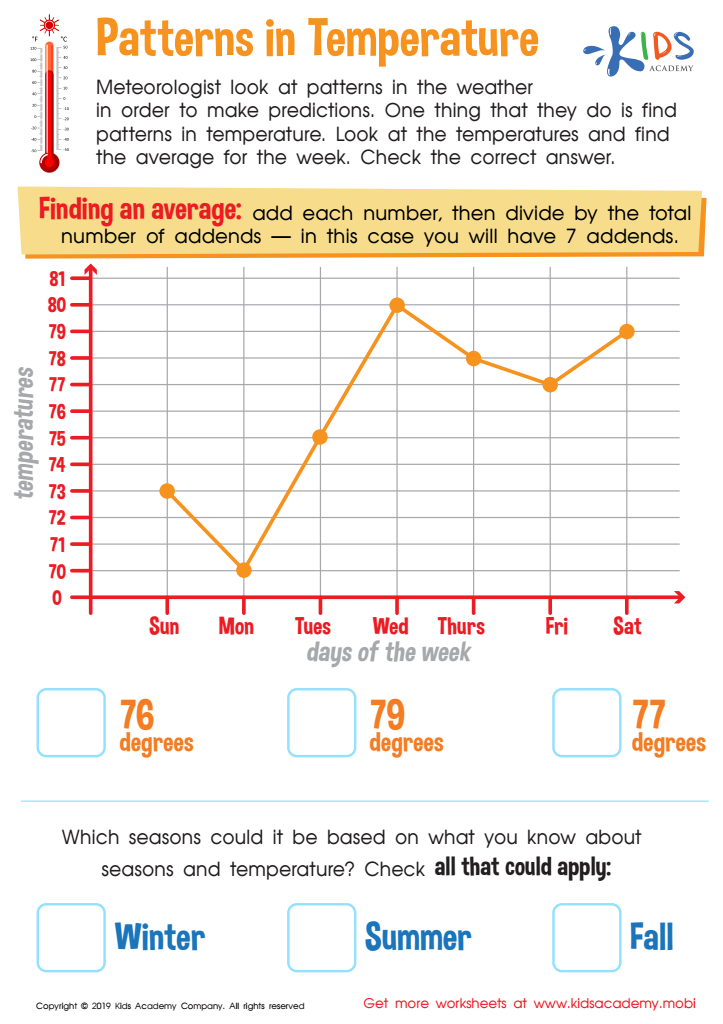
Patterns in Temperature Worksheet
Kids need to learn how to read and interpret data from graphs and charts. This free worksheet on temperature patterns helps them to do just that. They'll practice finding averages and answer questions in multiple-choice format. Plus, it provides a great learning experience!
Patterns in Temperature Worksheet
Worksheet
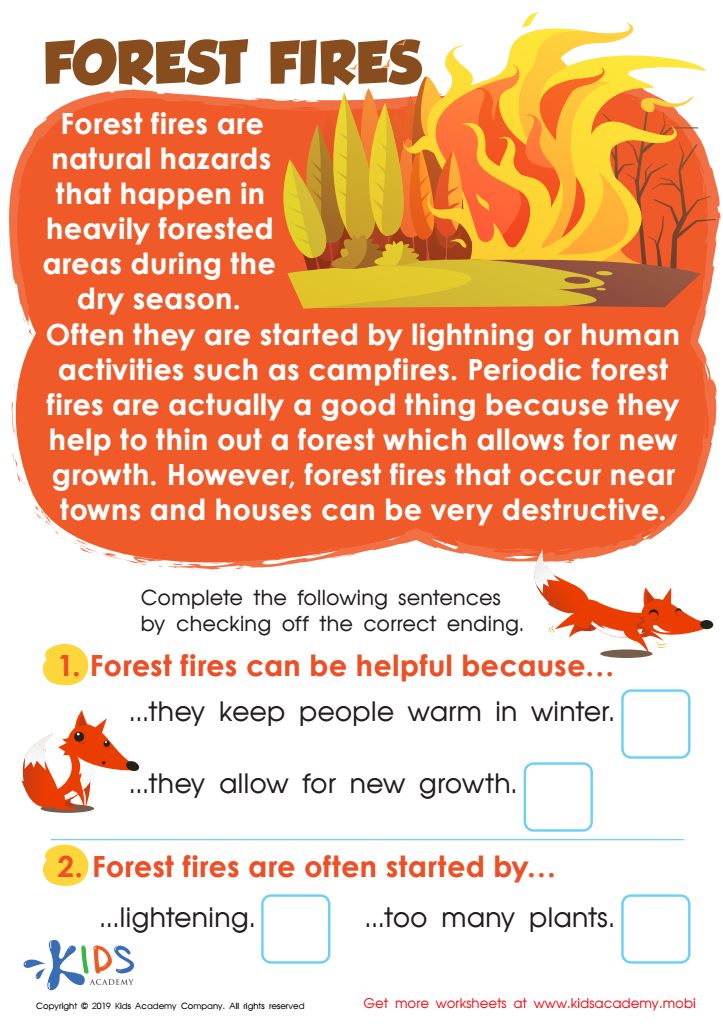
Forest Fires Worksheet
This free worksheet helps kids learn about forest fires. It encourages critical thinking by allowing them to answer multiple-choice questions. It is an important opportunity for children to develop reading skills, as understanding text is essential for further academic success. Download the PDF to give them the chance to practice comprehension and strengthen their knowledge.
Forest Fires Worksheet
Worksheet
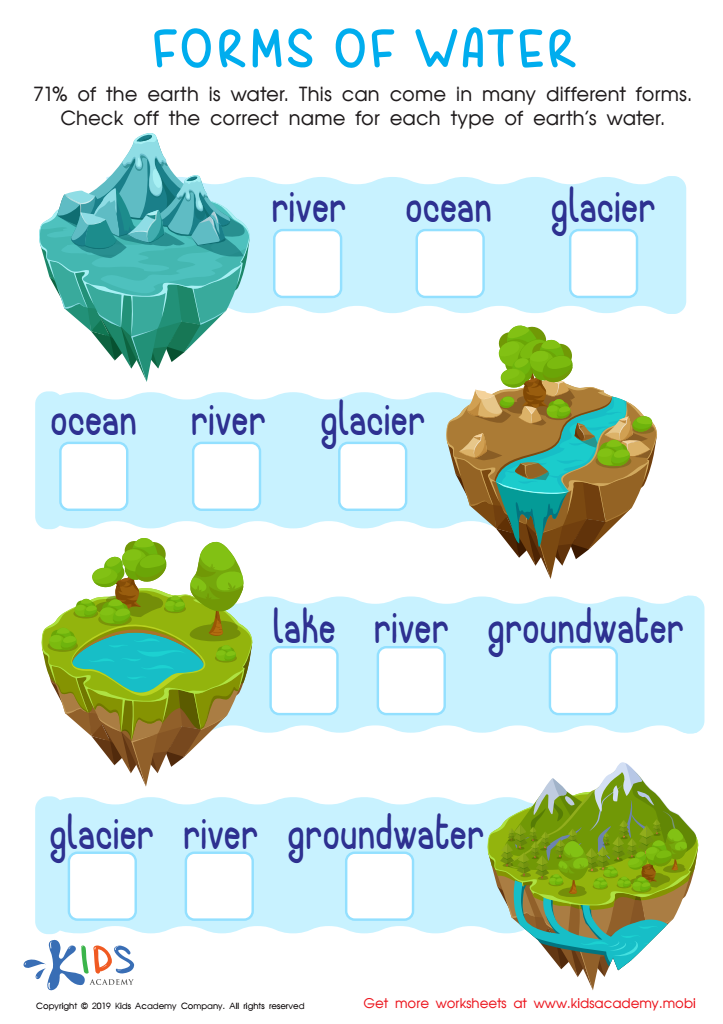
Forms of Water Worksheet
Life on Earth needs water to survive. Luckily, water makes up 75% of the Earth's surface and comes in various forms such as rivers, oceans and lakes. Ask your kids to name other forms and use this worksheet to help them identify each type.
Forms of Water Worksheet
Worksheet
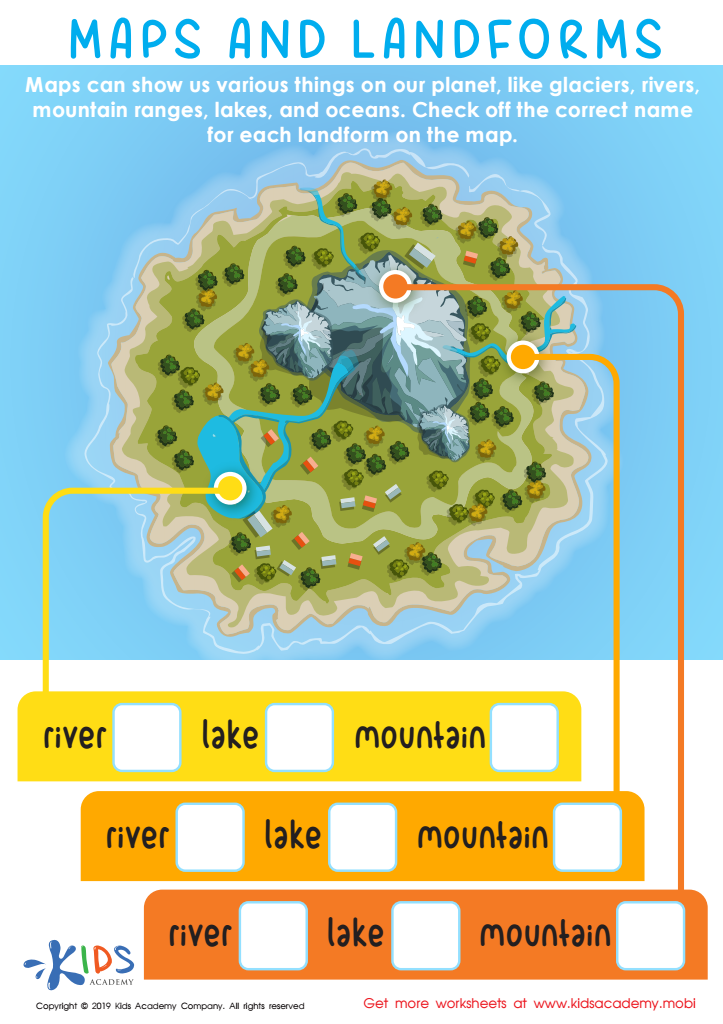
Maps and Landforms Worksheet
We can educate our kids on the world and its landforms by showing them a map. Point out mountains, rivers, and oceans, and help them identify each correctly. With this knowledge, they will better understand our planet.
Maps and Landforms Worksheet
Worksheet
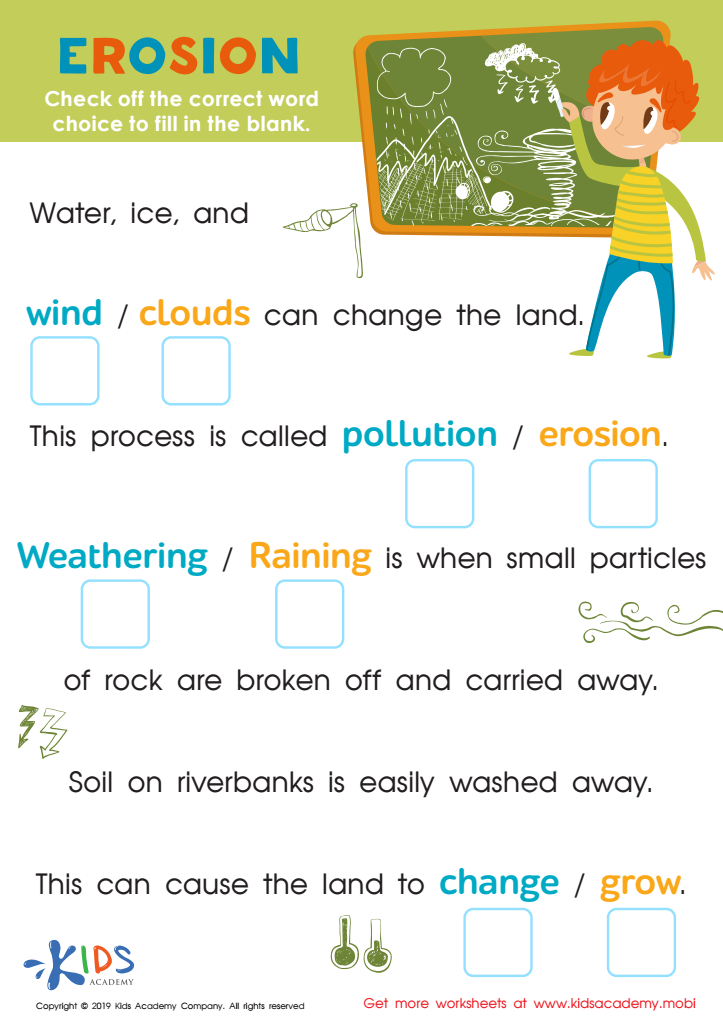
Erosion Worksheet
Erosion is when land is washed or crumbled away; it is caused by water, wind, or man. Teach kids its damaging impact, and how to prevent it. Check out this science worksheet to help them learn more. Read each sentence, then help them fill in the blanks with the correct words.
Erosion Worksheet
Worksheet
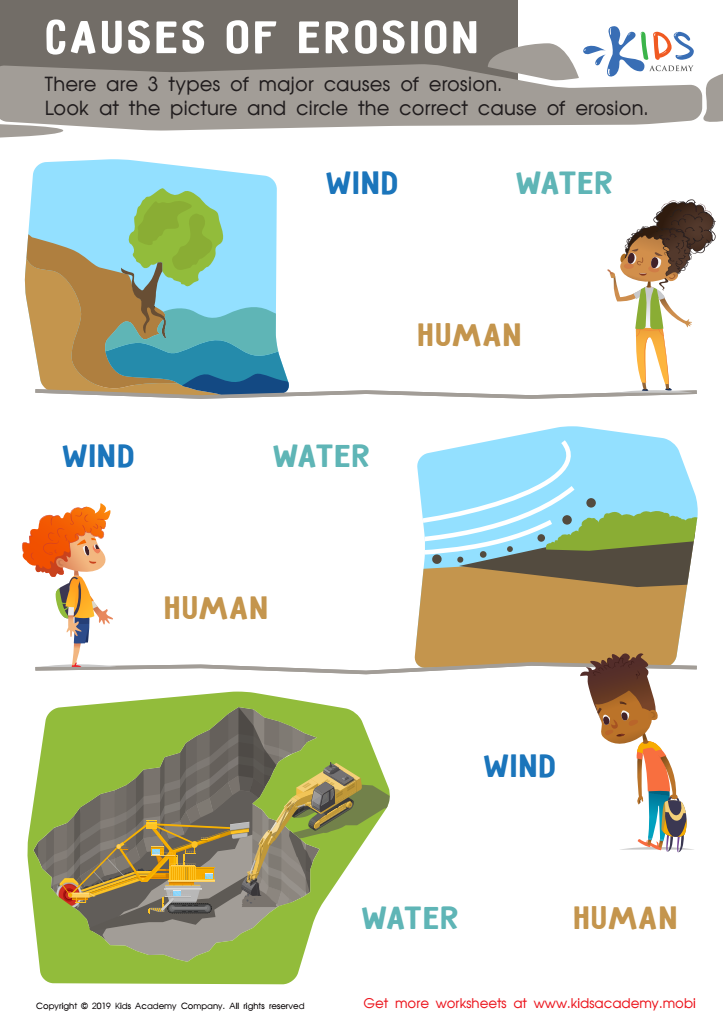
Causes of Erosion Worksheet
Earth is a habitable planet for humans and all life forms, providing us with what we need to survive. However, erosion caused by air, water or man can destroy or crumble parts of its surface. Teach kids the three causes of erosion and help them circle the correct one on a worksheet.
Causes of Erosion Worksheet
Worksheet
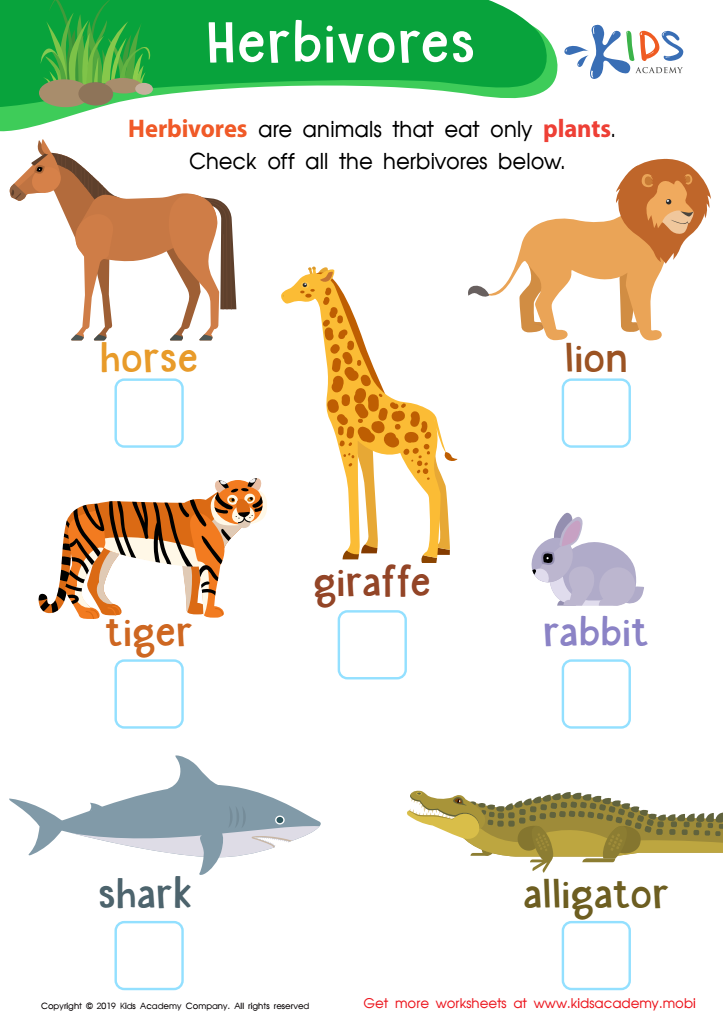
Herbivores Worksheet
Explain to your kids what herbivores are: animals that survive on plants and grass. Examples include cows, rabbits, and deer. Ask them to identify the herbivores in the pictures and check them off.
Herbivores Worksheet
Worksheet
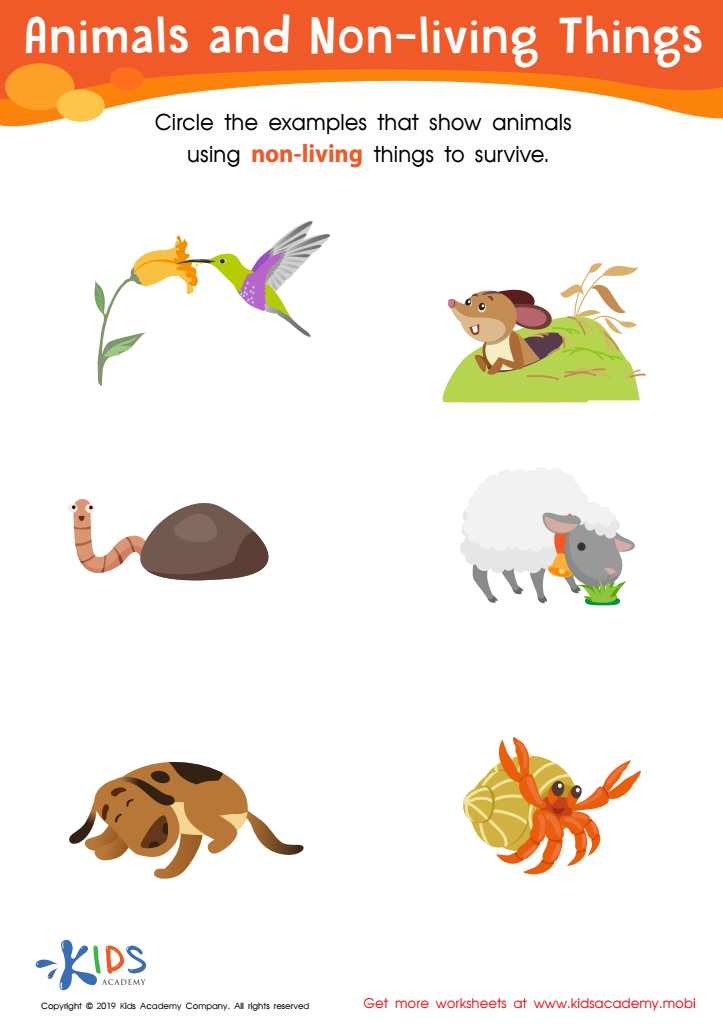
Animals and Non-Living Things Worksheet
People and animals both require more than food to survive. We need shelter, clothing and water, while animals use non-living things like rocks and trees. Ask your kids what else is necessary to survive - then have them identify the objects in the worksheet and circle the examples of animals using non-living things.
Animals and Non-Living Things Worksheet
Worksheet
Join Kids Academy for Free
Who is primarily going to use this learning content?




.jpg)