Reading comprehension Reading Fiction Worksheets - Page 2
99 filtered results
Difficulty Level
Grade
Age
-
From - To
Subject
Activity
Standards
Favorites
With answer key
Interactive
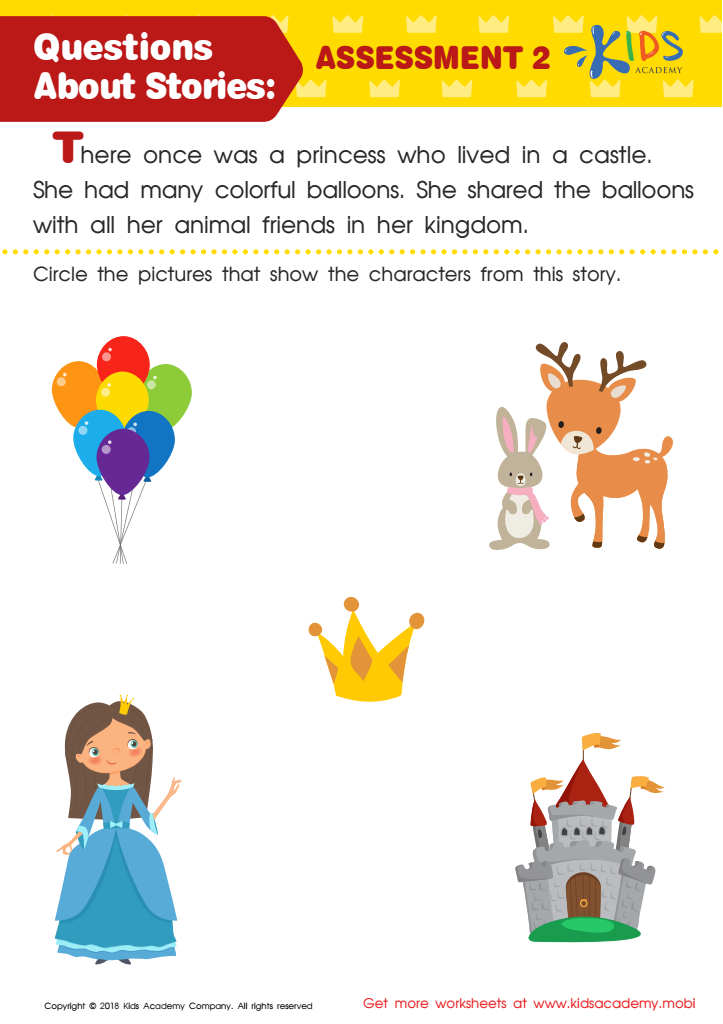
Questions About Stories: Assessment 2 Worksheet
Talk to your child about what a princess is and what activities they associate with that word. Then, read the story to them and help them identify characters in the pictures. Look out for details and ask them questions to ensure they understand.
 Assign to My Students
Questions About Stories: Assessment 2 Worksheet
Worksheet
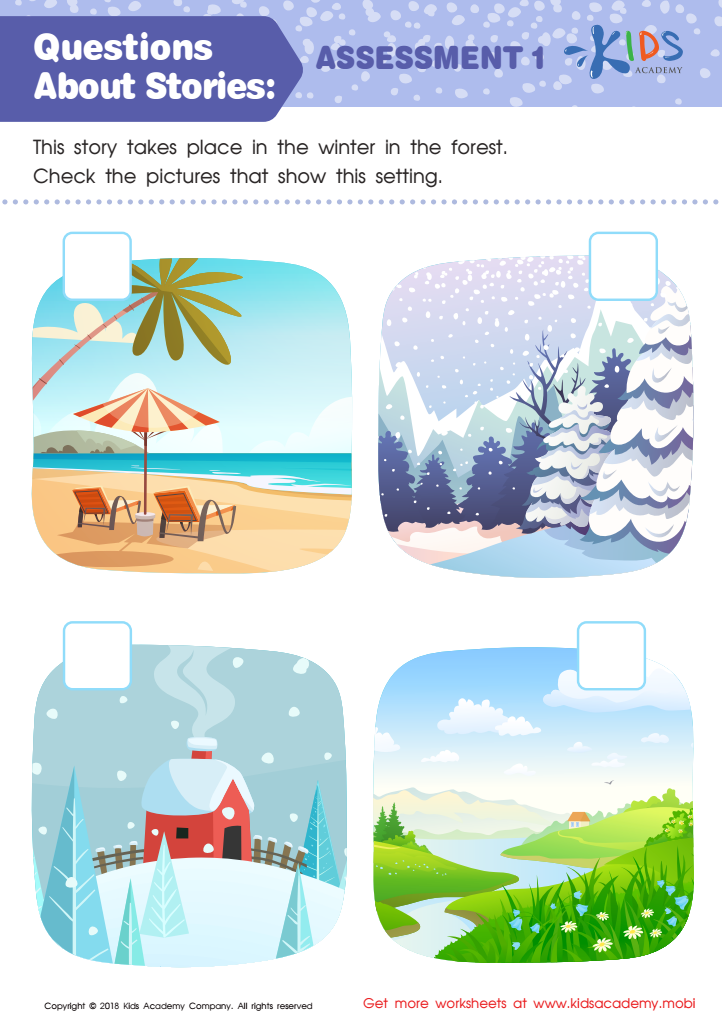
Questions About Stories: Assessment 1 Worksheet
Winter brings snow, cold, short days, and darkness. Schools can even close due to heavy snow. Ask your child what their favourite winter activities are and what color they associate with 'winter'. This worksheet takes place in a winter forest. Look at the 4 pictures with your child, and help them identify which one shows the correct setting.
Questions About Stories: Assessment 1 Worksheet
Worksheet
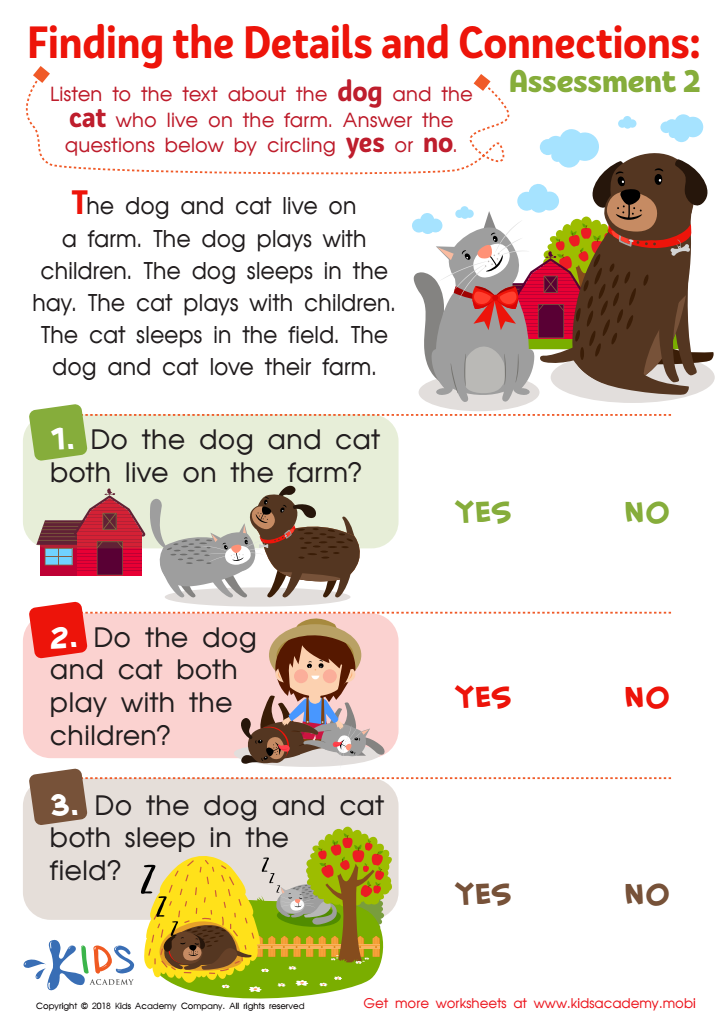
Finding the Details and Connections: Assessment 2 Worksheet
Does your child love animals? If you have pets, they'll relate to the text in this worksheet. Read it aloud to them and help them answer the simple questions by circling yes or no. The story is about a dog and cat living on a farm. Let your child read it aloud to you if they can.
Finding the Details and Connections: Assessment 2 Worksheet
Worksheet
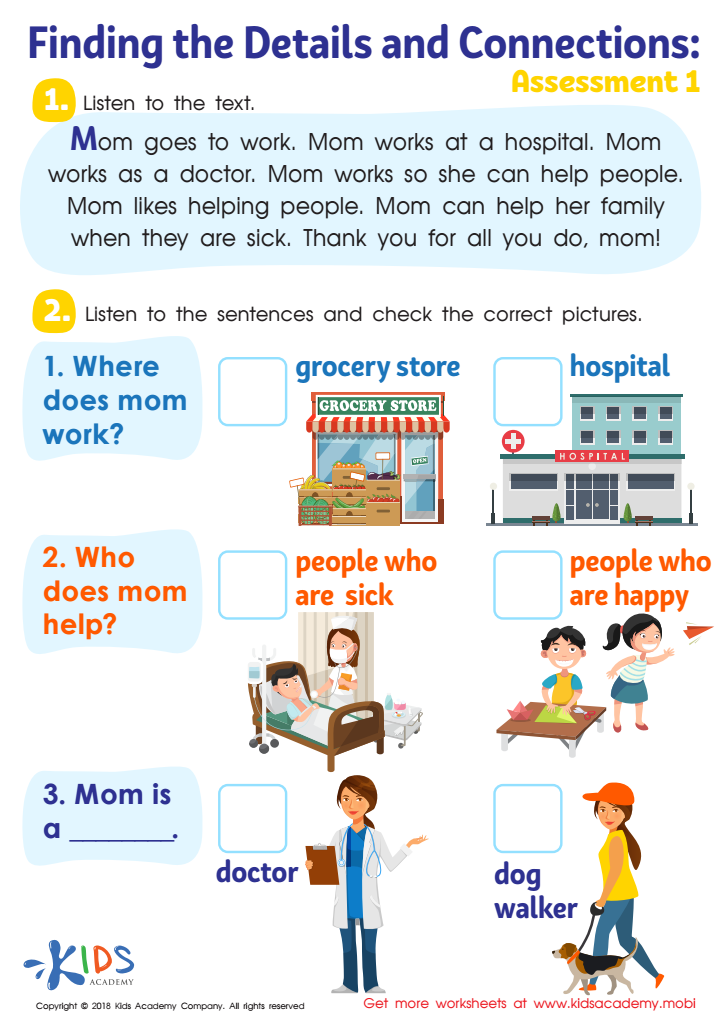
Finding the Details and Connections: Assessment 1 Worksheet
Ask your students what their parents do for a job. Do they know what profession their mom is in and where she works? Professionals have places they go to do their job. In this task, Mom goes to a hospital and is a doctor. Read the text and help them check the right pictures.
Finding the Details and Connections: Assessment 1 Worksheet
Worksheet
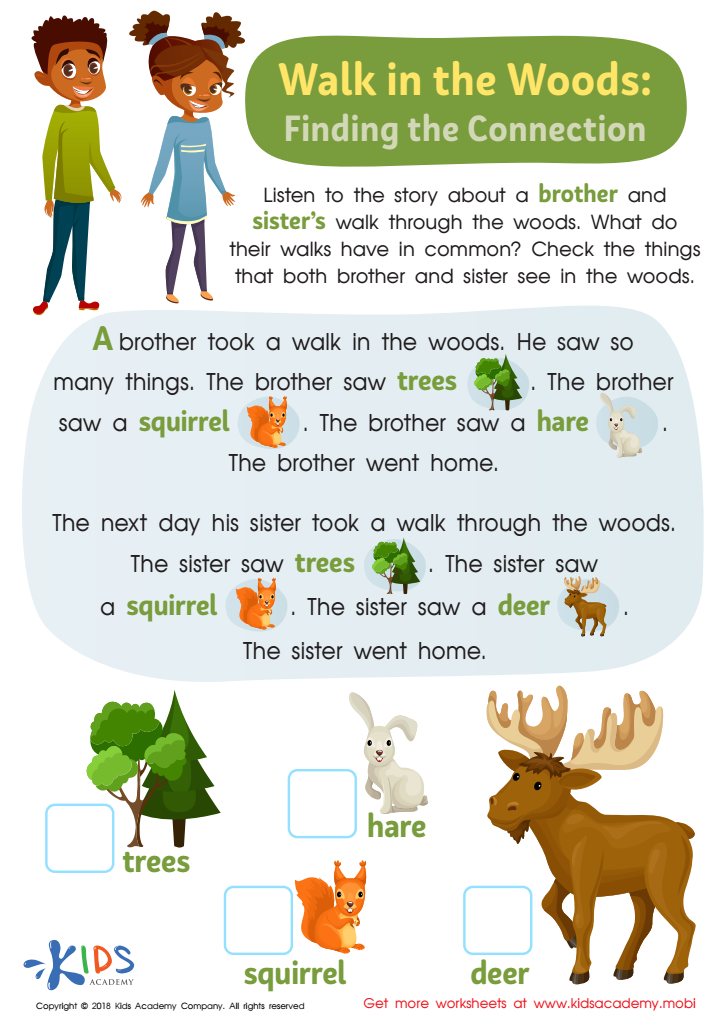
Walk In the Woods: Finding Connections Worksheet
Brother and sister took a walk in the woods to connect with nature and get some exercise. As they went, they noted different things like birds and plants, which they share in this story. Read it to your little ones, and help them check off the items the two saw. It's a great way to learn about nature and enjoy the outdoors.
Walk In the Woods: Finding Connections Worksheet
Worksheet
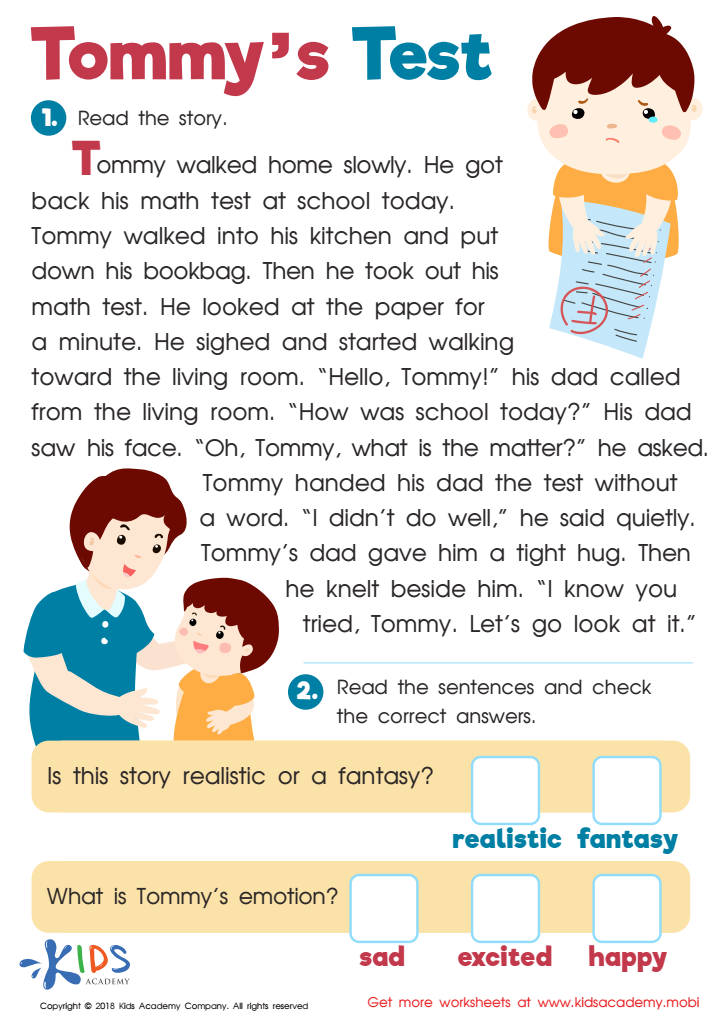
Tommys Test Worksheet
Reading short stories to your students builds a bond, teaches new words and lessons. Read the story aloud and then have them listen for details. Ask them the questions at the bottom and help them check the answers.
Tommys Test Worksheet
Worksheet
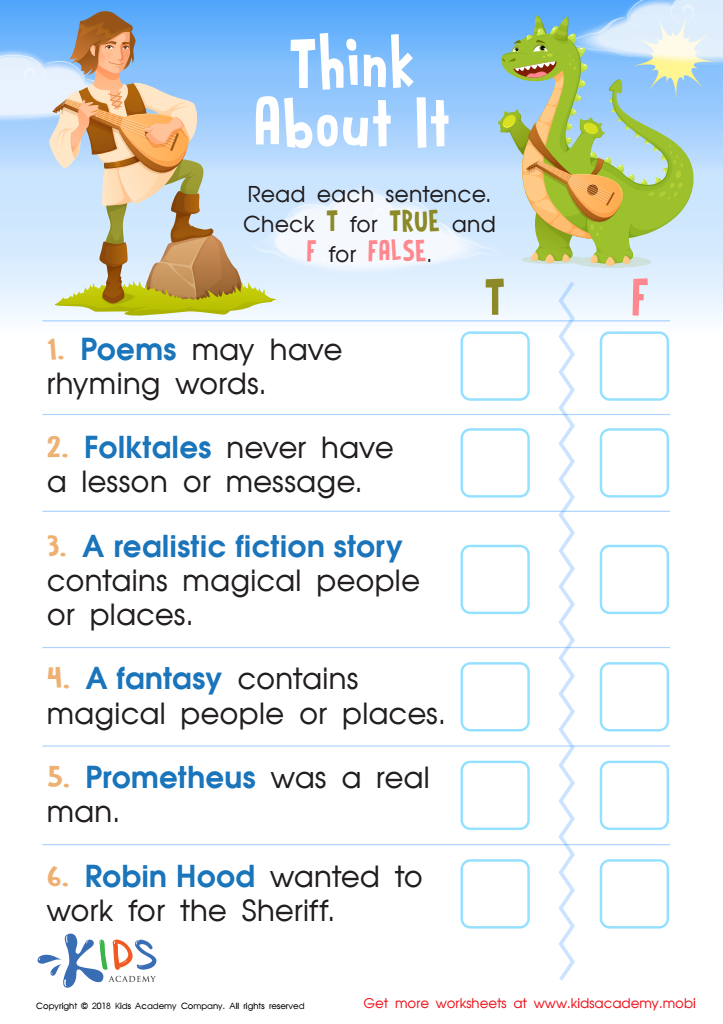
Think About It: Assessment Worksheet
Reading is a fun and important way to learn. Help your students become better readers with this simple yet colorful worksheet. Read each sentence aloud, then have them read it by themselves. Ask them to check T for True and F for False. It's a great way to practice their reading skills!
Think About It: Assessment Worksheet
Worksheet
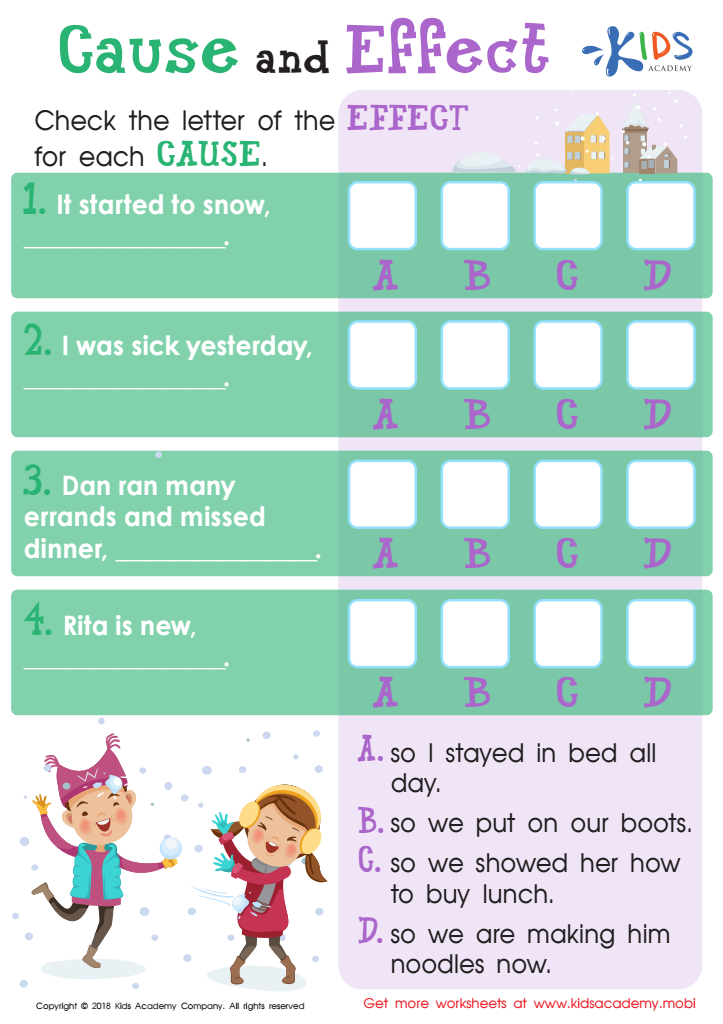
Cause and Effect Worksheet
Help your kids understand the cause-effect relationship of sentences by having them complete this worksheet. There are four incomplete sentences at the top and four options at the bottom. Have them select the appropriate letter for the effect of each cause. This will be the first step to their future of composing grammatically correct and meaningful sentences.
Cause and Effect Worksheet
Worksheet
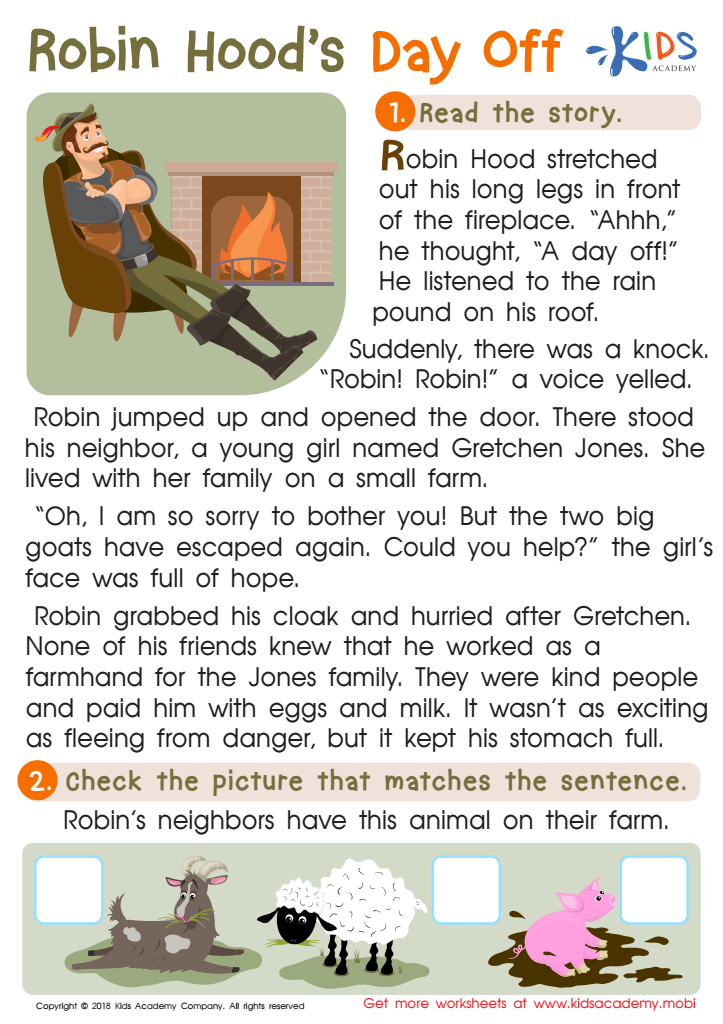
Robin Hood's Day Off Worksheet
Encourage your child to express their personality by writing stories. Show them this worksheet's short story about Robin Hood and read it slowly and carefully. Read it again if needed and ask the question below the story. This will help your child use their knowledge to answer it.
Robin Hood's Day Off Worksheet
Worksheet
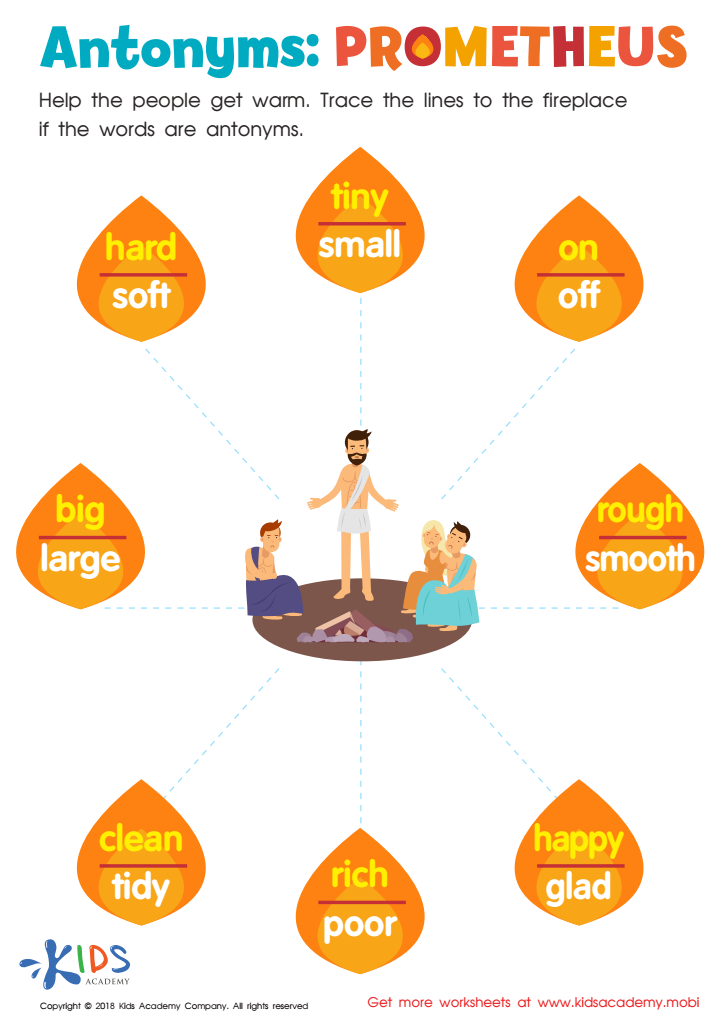
Antonyms: Prometheus Worksheet
Antonyms are words with opposite meanings to another. For example, the antonyms of 'good' are 'bad', 'poor' and 'wicked'. Ask your child to give you antonyms for 'Prometheus', which relates to fire. Invite your kids to trace the lines to the fireplace if the words are antonyms, helping the people in the tracing sheet get warm.
Antonyms: Prometheus Worksheet
Worksheet
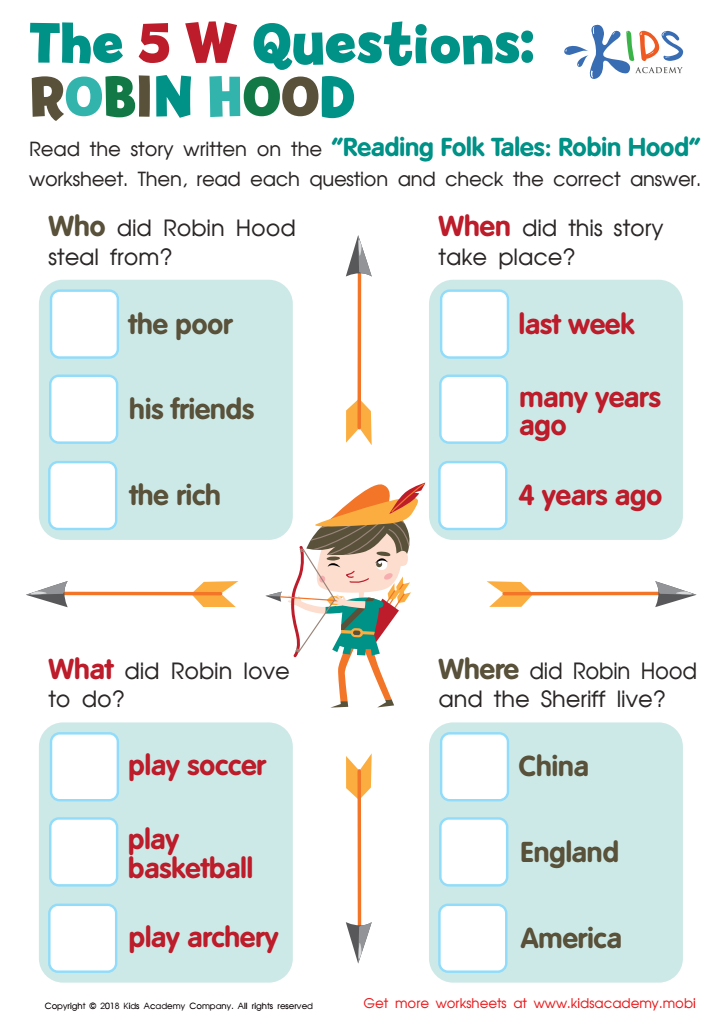
The 5 W Questions: Robin Hood Worksheet
Before embarking on this Robin Hood adventure, ensure your child reads and comprehends the 'Reading Folk Tales: Robin Hood' worksheet. Have them consider the story's lessons, and observe the details. Read the questions and help your kids select the correct answers.
The 5 W Questions: Robin Hood Worksheet
Worksheet
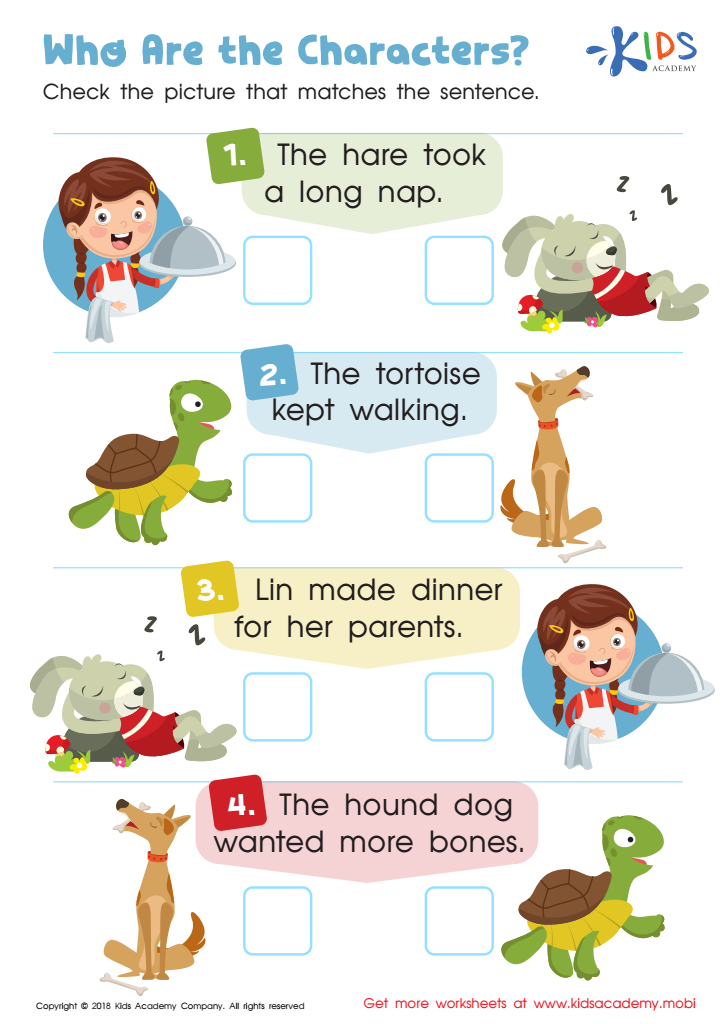
Who Are The Characters Worksheet
This worksheet tests your child's reading skills. Read each sentence out loud with them, then ask which of the two pictures match it. Help them check, then repeat this for the other sentences.
Who Are The Characters Worksheet
Worksheet
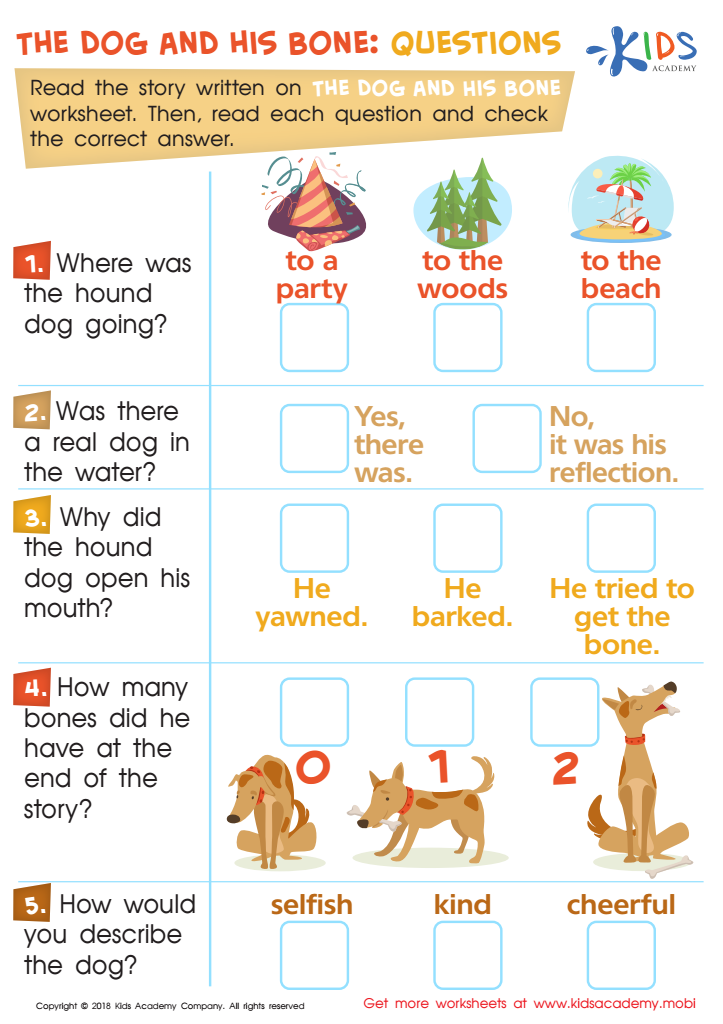
The Dog and His Bone: Questions Worksheet
Read the story of The Dog and His Bone to your child and help them understand it. Have them read it aloud if possible. Then, read the five questions on the worksheet and guide them to select the correct answers.
The Dog and His Bone: Questions Worksheet
Worksheet
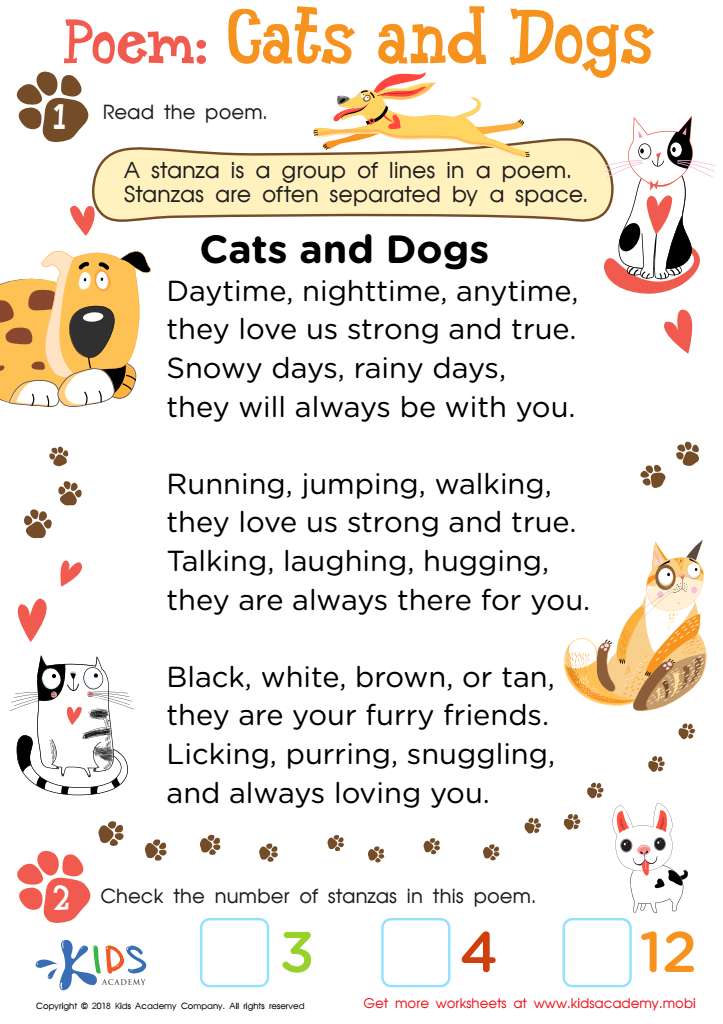
Poem: Cats and Dogs Worksheet
Read the poem to your child and point out where each stanza ends. Ask if they know what a stanza is (if not, explain it's a group of lines in a poem). Help them answer the question at the bottom of the printout. This simple, sweet poem about cats is easy for your child to relate to.
Poem: Cats and Dogs Worksheet
Worksheet
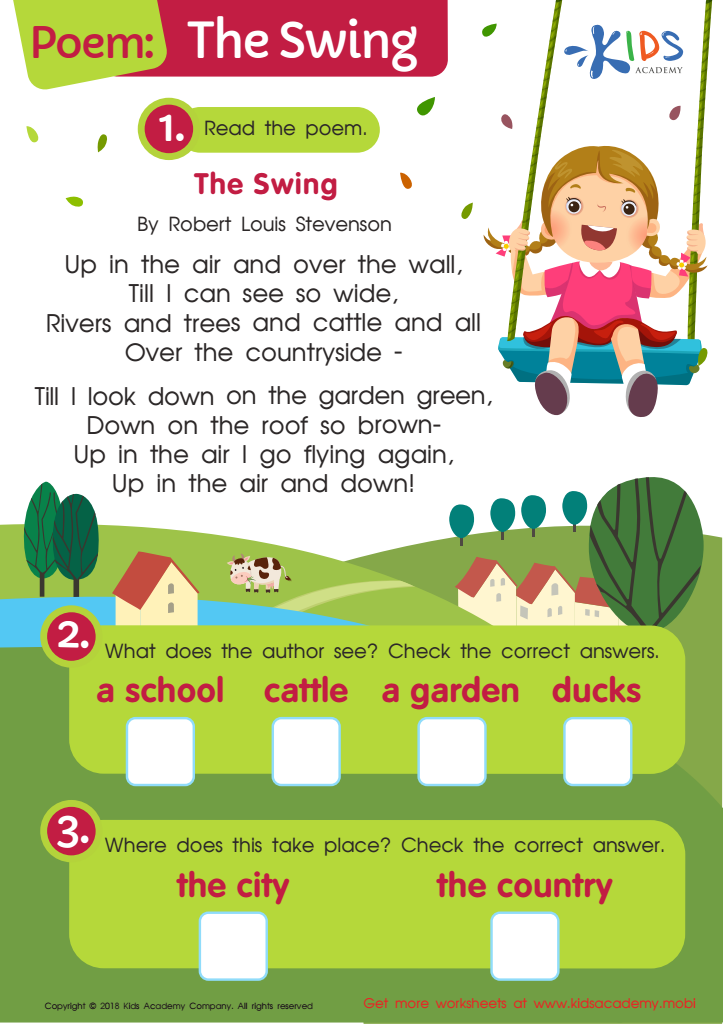
Poem: The Swing Worksheet
Encourage your child's love of writing by displaying their poems on the fridge or walls. This worksheet focuses on a swing, something your child enjoys, and contains questions to help your child think more deeply about the poem. Read it together, then answer the questions and watch as your child's creativity and writing skills blossom!
Poem: The Swing Worksheet
Worksheet
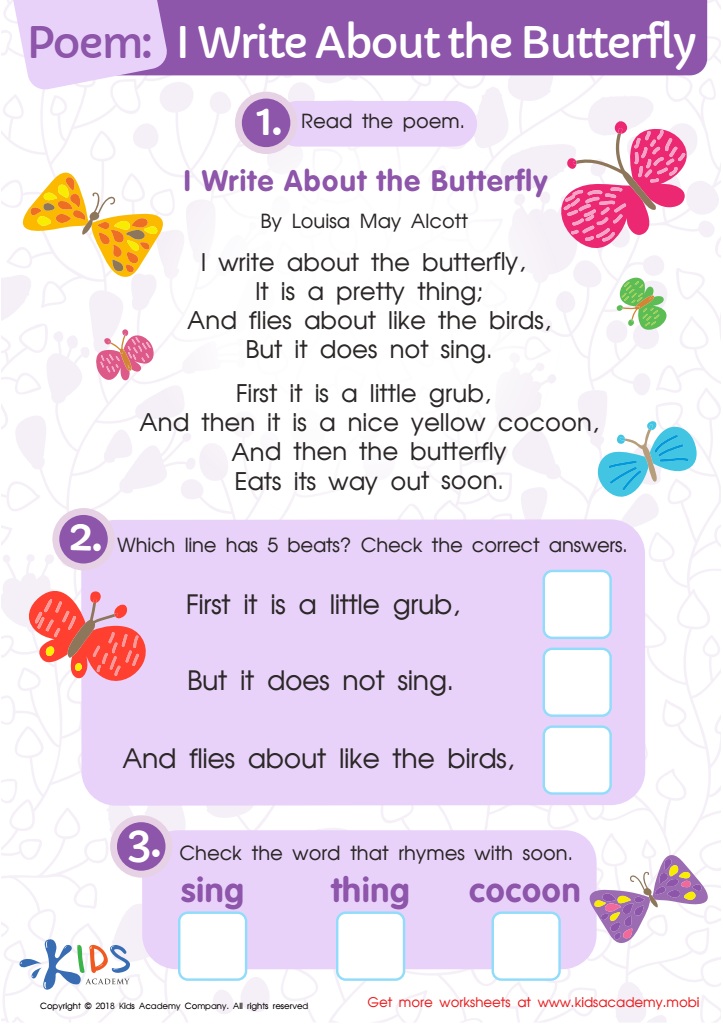
Poem: I Write About The Butterfly Worksheet
Do your kids like poetry? Encourage them to explore and connect with their poetic side! Read the butterfly poem from this worksheet aloud, then help them answer the questions. It's a great way to grow their appreciation of poetry and of the natural world.
Poem: I Write About The Butterfly Worksheet
Worksheet
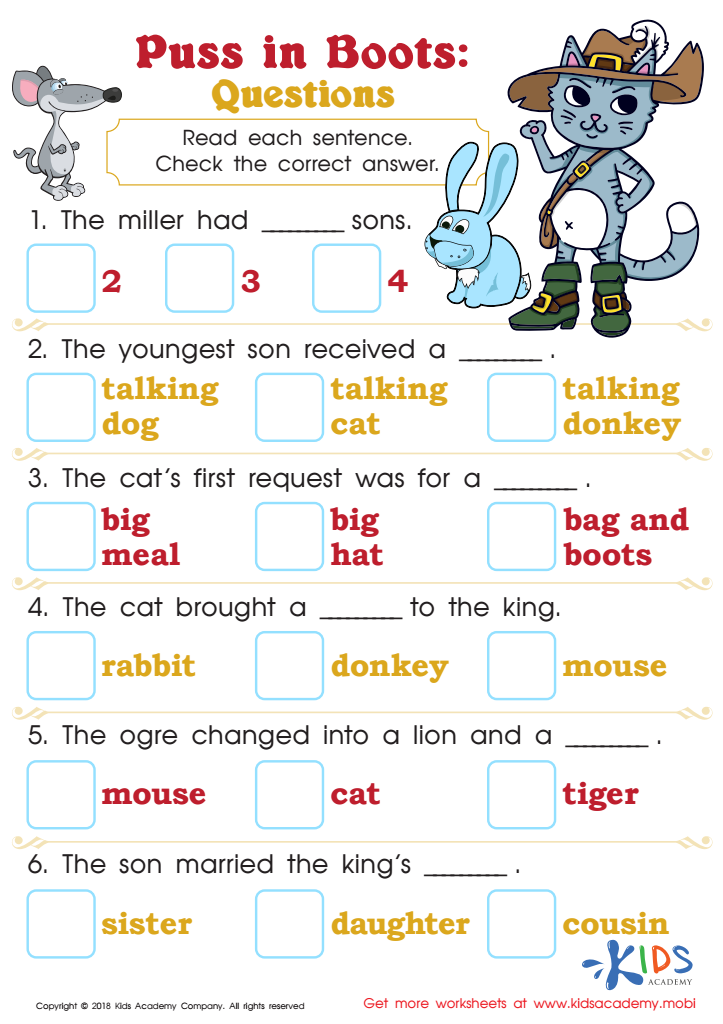
Puss in Boots: Questions Worksheet
This worksheet contains questions to be checked with boxes for the correct answers. It also has pictures of animals; ask kids to identify them, noting the objects with them. Read the questions and have kids provide the answers. Help them check the boxes for the right answer.
Puss in Boots: Questions Worksheet
Worksheet
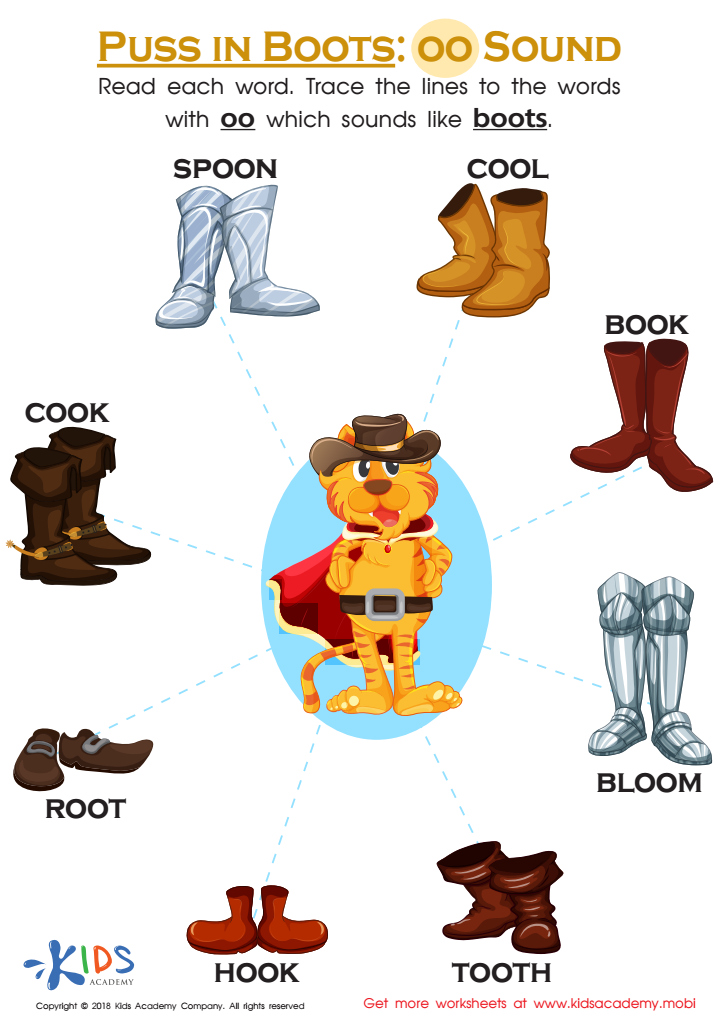
Puss in Boots: OO Sound Worksheet
Read out the words in this printout with the correct pronunciation. Have your child repeat each word after you. Then have them read the words and identify the ones with the "oo" sound. Guide their hands as they trace the lines to the right words.
Puss in Boots: OO Sound Worksheet
Worksheet
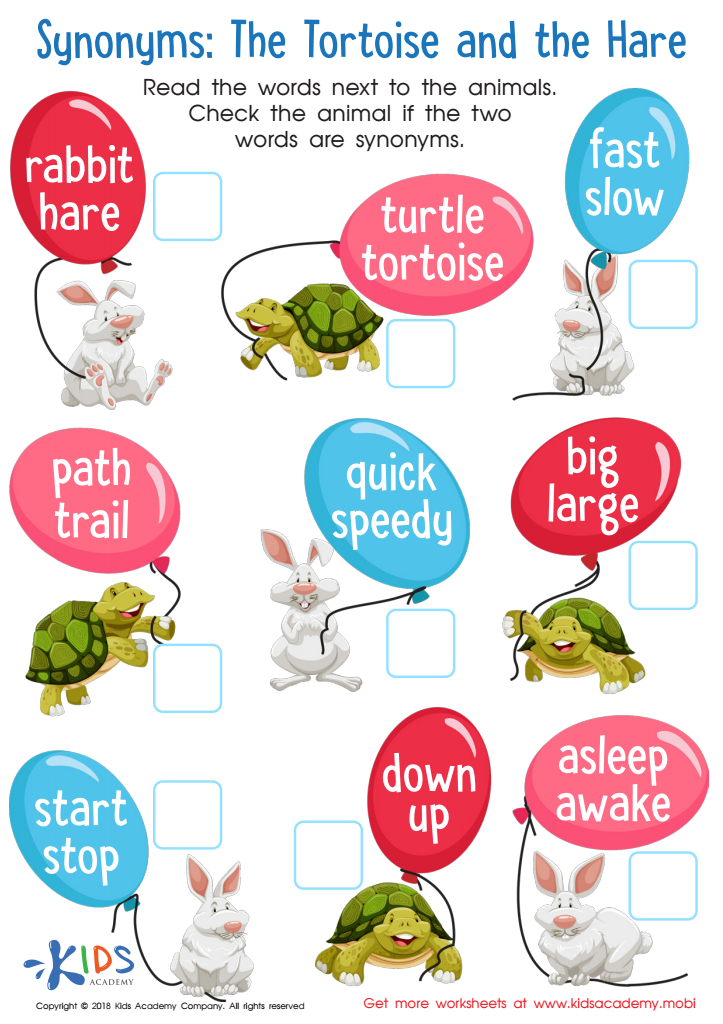
Synonyms: The Tortoise and Hare Worksheet
Help your kids identify words with similar meanings with this worksheet featuring a colourful picture of the Tortoise and the Hare. Show them how to check the boxes of animals with words that have similar meaning, then let them find more on their own. They'll love the challenge and you'll appreciate the educational value.
Synonyms: The Tortoise and Hare Worksheet
Worksheet
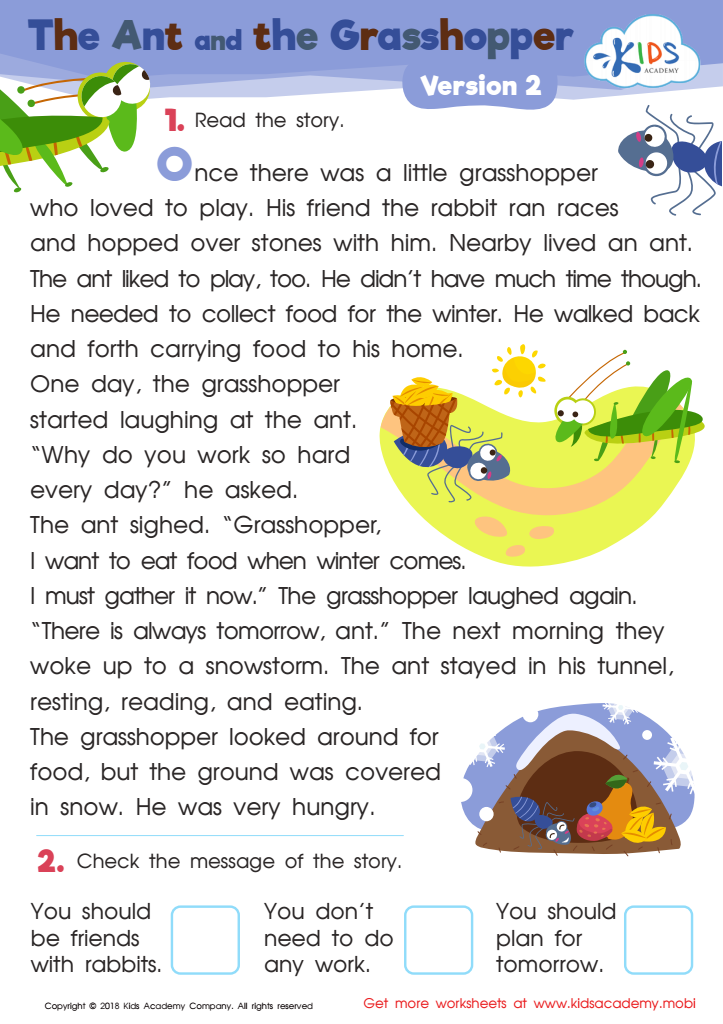
The Ant and The Grasshopper Version 2 Worksheet
Story time is a great way to bond with kids and share a fun story. The Ant and the Grasshopper is a classic with a lesson for everyone. Listen together and then ask your students what the message of the story was. Prompt them with choices from the worksheet and see which one they select. It's a great way to increase their vocabulary and help them learn important lessons.
The Ant and The Grasshopper Version 2 Worksheet
Worksheet
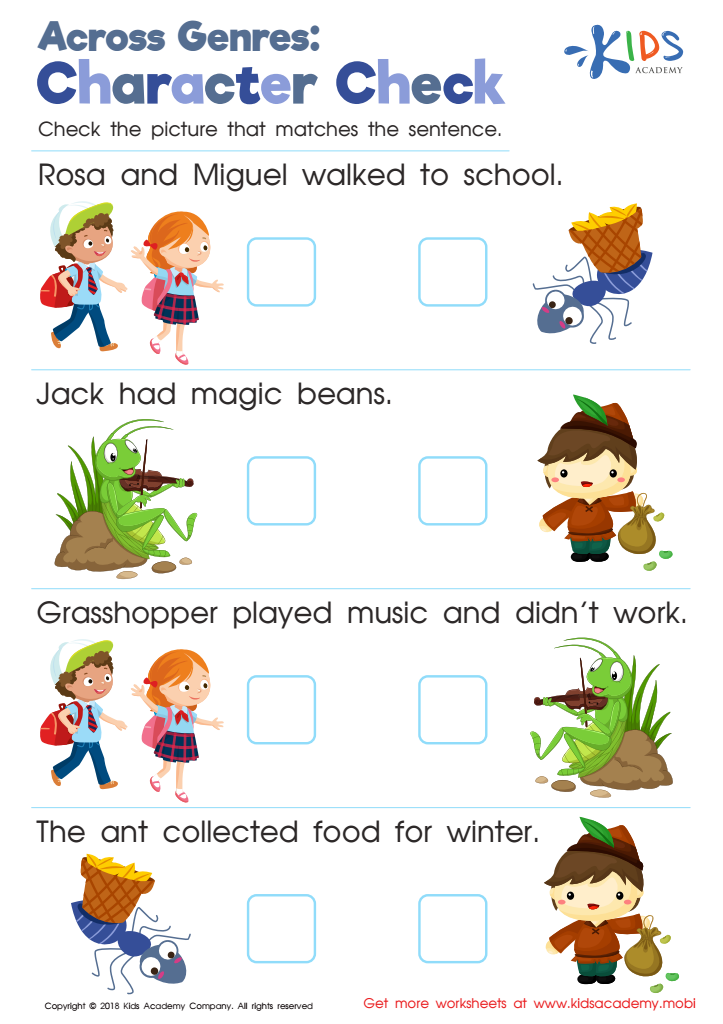
Across Genres: Character Check Worksheet
Read the sentences to your kids, then have them match the pictures to them. Ask them to look at the pictures and help them check which one goes with the sentence. The aim is to see how well they can do this exercise. (80 words)
Across Genres: Character Check Worksheet
Worksheet
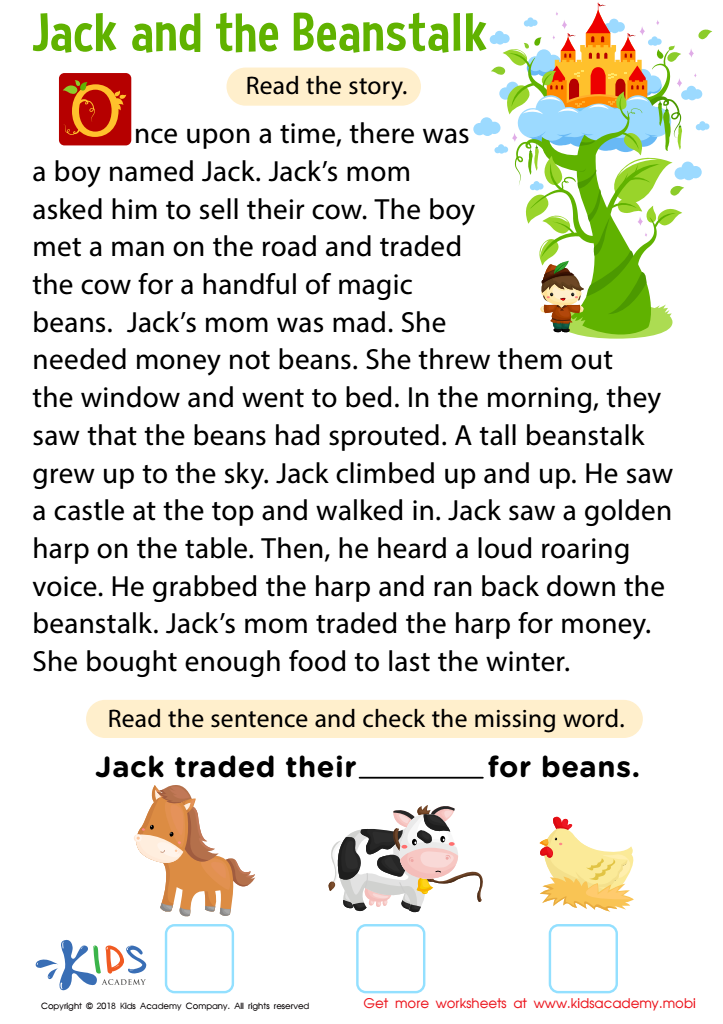
Jack and Beanstalk Worksheet
Story time can be a fun and educational experience for your kids. Read them the classic Jack and the Beanstalk - and even read it twice to help them pay attention. Afterwards, help them fill in the blank on the worksheet to expand their vocabulary and learn more from the story.
Jack and Beanstalk Worksheet
Worksheet
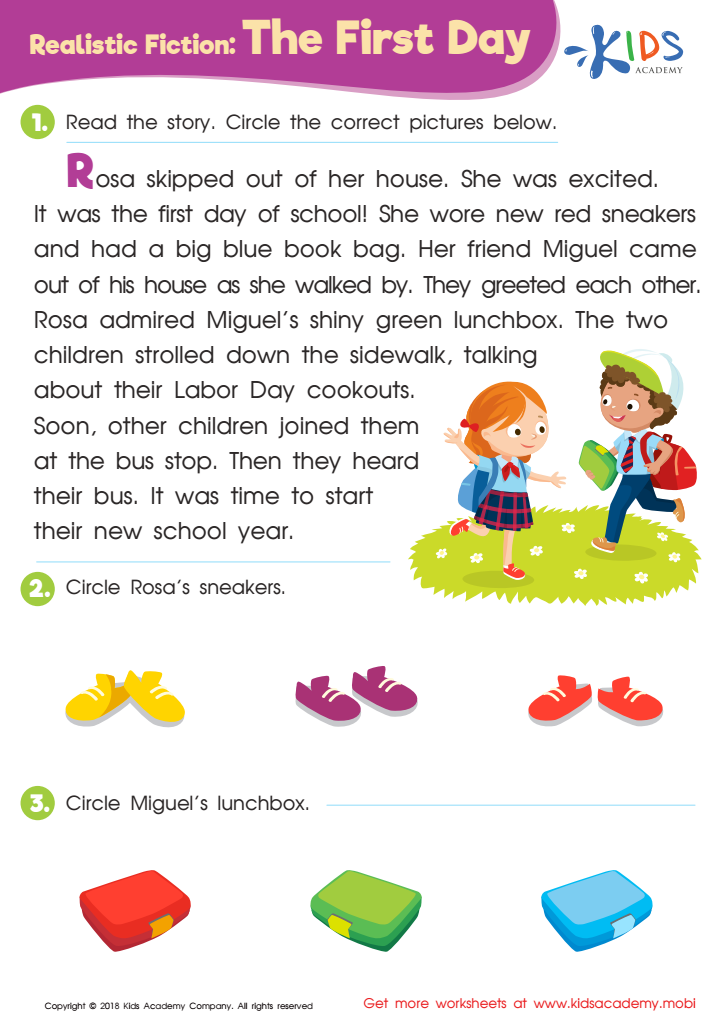
Realistic Fiction: The First Day Worksheet
Fiction is made-up events, so story-writing is fiction writing. In this worksheet, there's a short story about Rosa, her friend Miguel, and their first day back at school. Read the story aloud to your kids and help them circle the right pictures to the questions. Repeat if needed.
Realistic Fiction: The First Day Worksheet
Worksheet
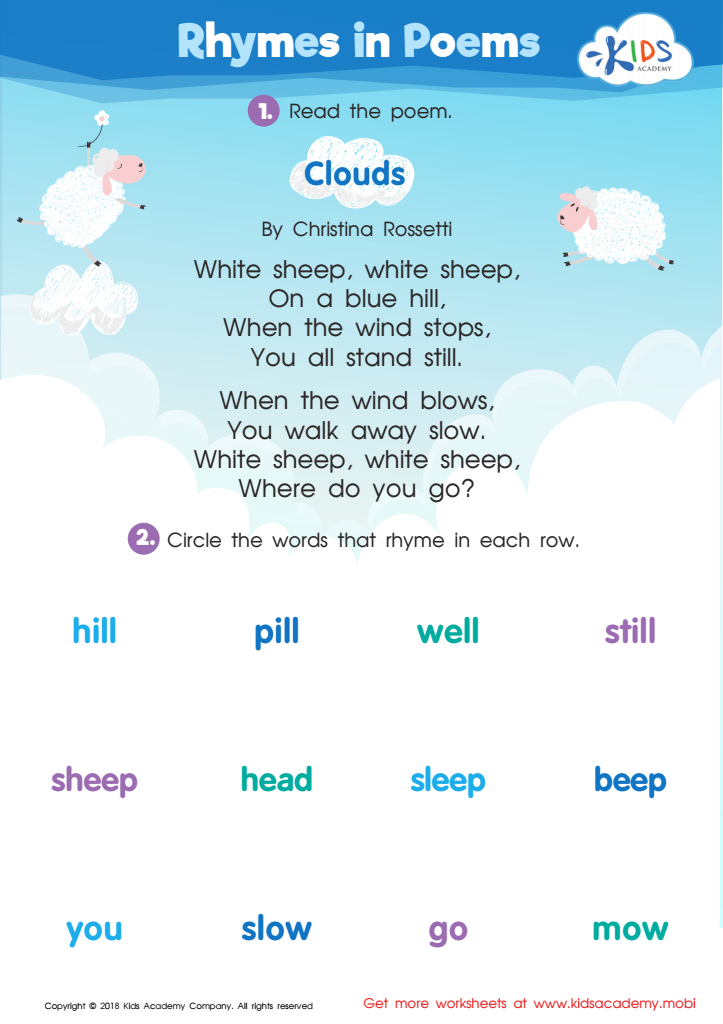
Rhymes in Poems Worksheet
Poems are lovely works of literature; some with rhymes, and some without. This poem for kids is full of rhymes and tells the tale of a sheep. Read it aloud to your kids, then help them circle the rhyming words.
Rhymes in Poems Worksheet
Worksheet
Join Kids Academy for Free
Who is primarily going to use this learning content?