Online Community Worksheets for Kids - Page 3
125 filtered results
Difficulty Level
Grade
Age
-
From - To
Subject
Activity
Standards
Favorites
With answer key
Interactive
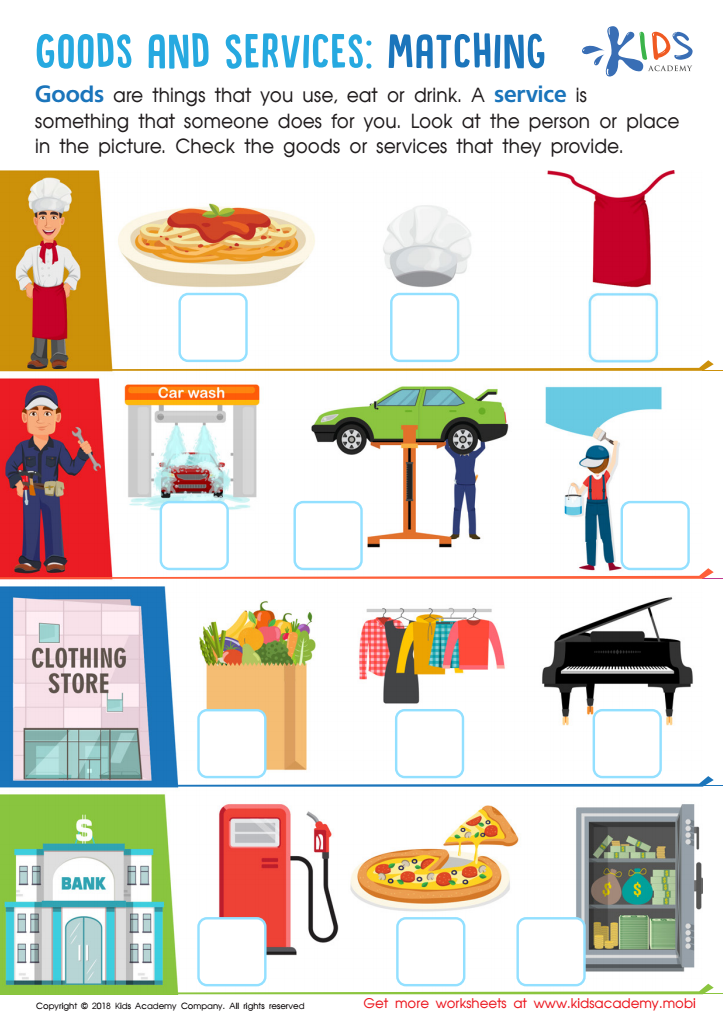
Goods and Services: Matching Worksheet
Goods are things that you use, eat or drink. Ask your kids to give examples of goods and services. Challenge them to identify the people and places in the worksheet, and check the goods or services they provide from the options on the right side.
 Assign to My Students
Goods and Services: Matching Worksheet
Worksheet
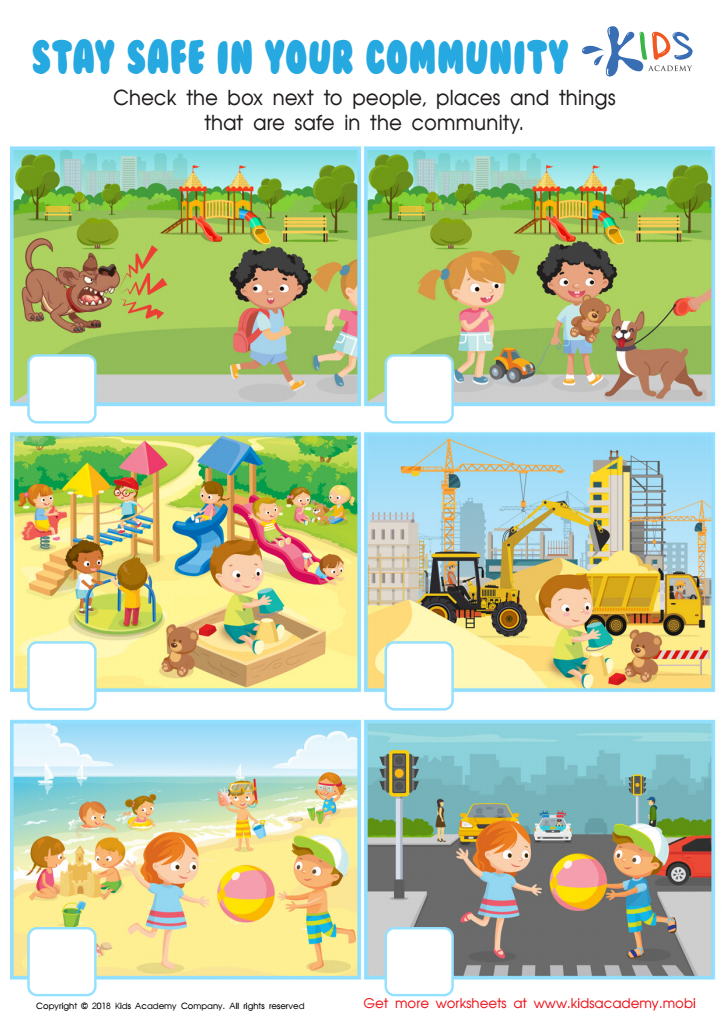
Stay Safe in Your Community Worksheet
It’s vital to ensure your kids understand safety in your community. There may be schools, homes, and construction sites, so it’s important to teach your children to be aware of the risks. Help them look at the pictures in the worksheet and identify which are safe. Ask them to tick the box next to the safe people, places, and things.
Stay Safe in Your Community Worksheet
Worksheet
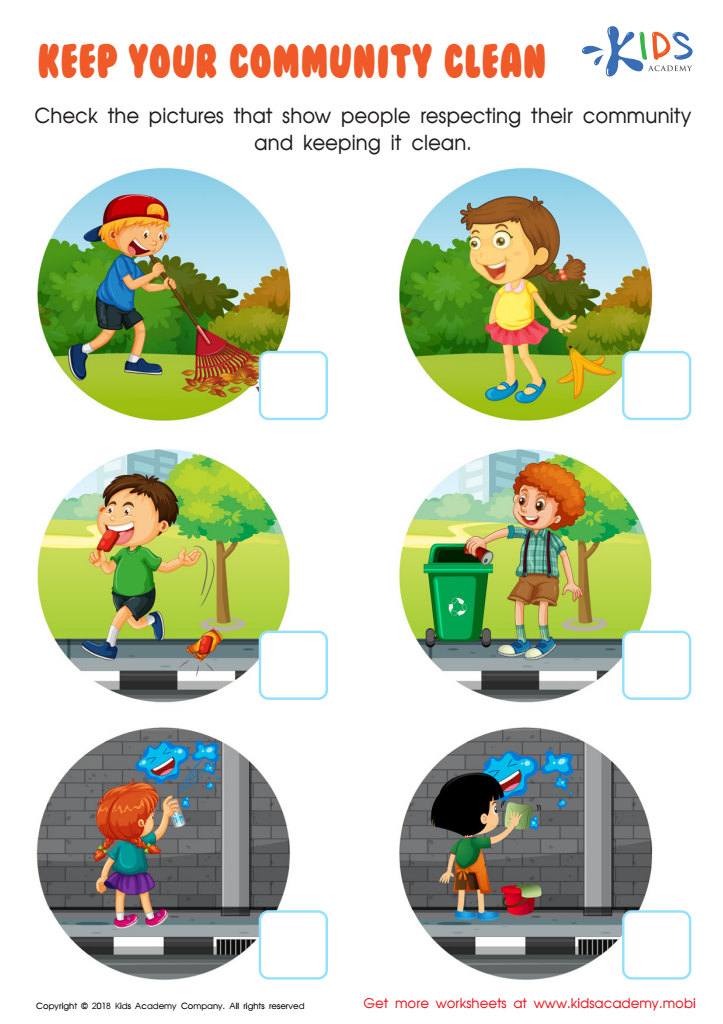
Keep Your Community Clean Worksheet
Teach your kids the importance of cleanliness. Even if they resist, show them that it affects the whole community. Use this worksheet to help them understand - it has six pictures of community members doing different things. Ask them what the kids are doing, and help them tick the pictures that show respect for the community and cleanliness.
Keep Your Community Clean Worksheet
Worksheet
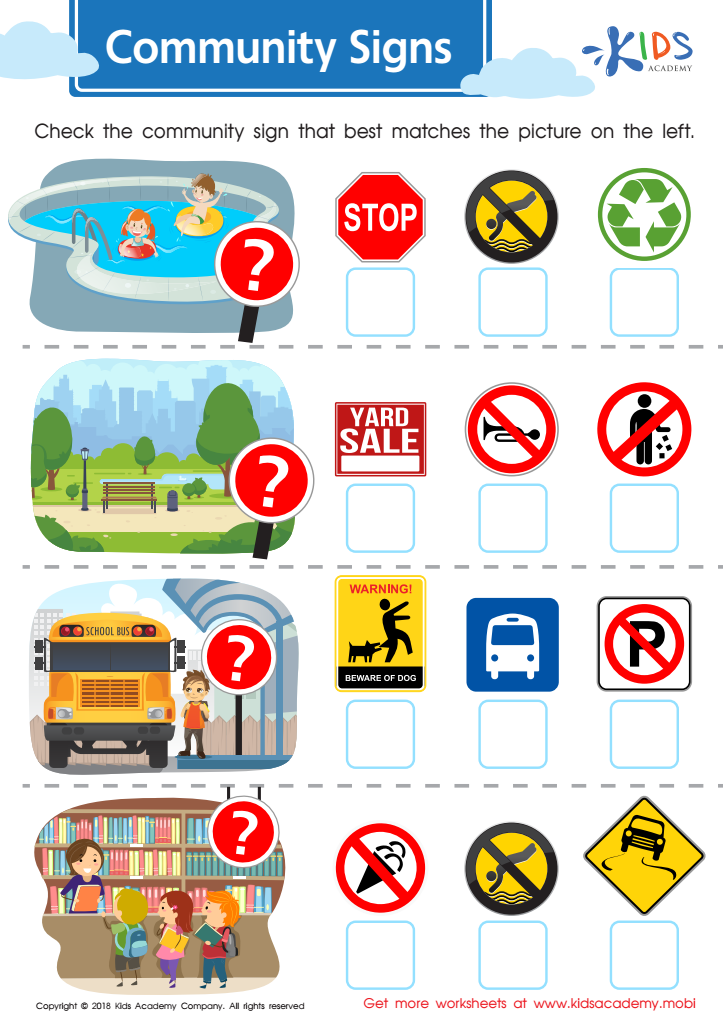
Community Signs Worksheet
To stay safe, our kids need to know community signs. Ask them to name signs at the pool, park, etc. Then, have them check the worksheet for the picture that matches the community signs.
Community Signs Worksheet
Worksheet
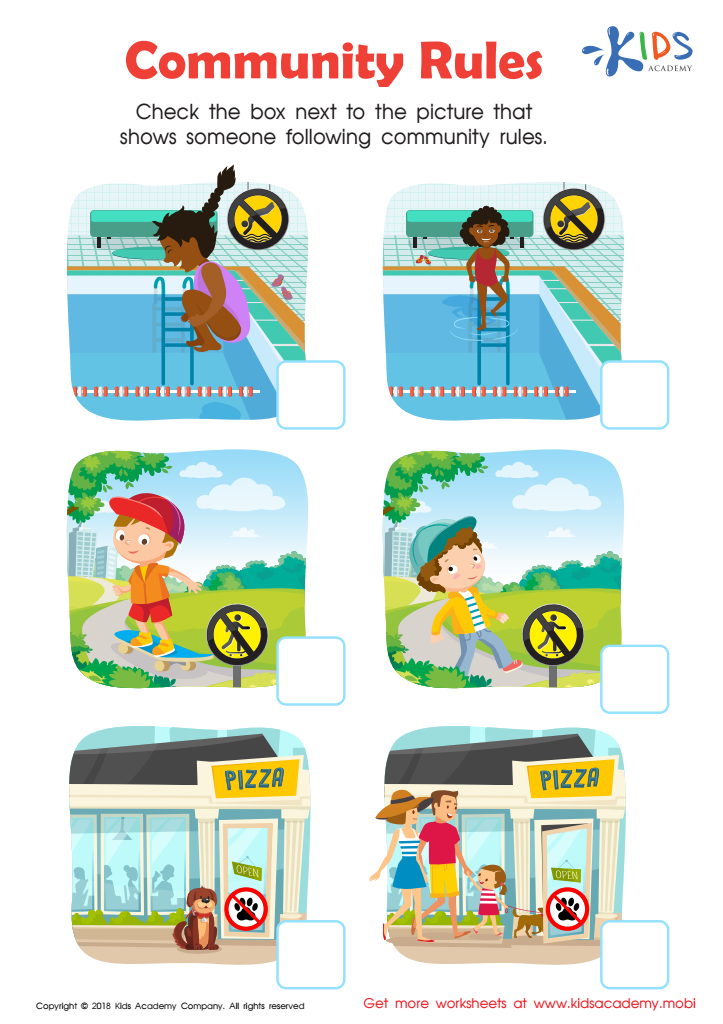
Community Rules Worksheet
Communities are where different people live, work and worship. They're made up of homes, schools, places of worship, businesses and other buildings. To create a healthy, functioning community, it's important for members to follow the rules and guidelines. Use this printout to teach kids about community rules. Ask them to check the box next to the picture that shows someone following them.
Community Rules Worksheet
Worksheet
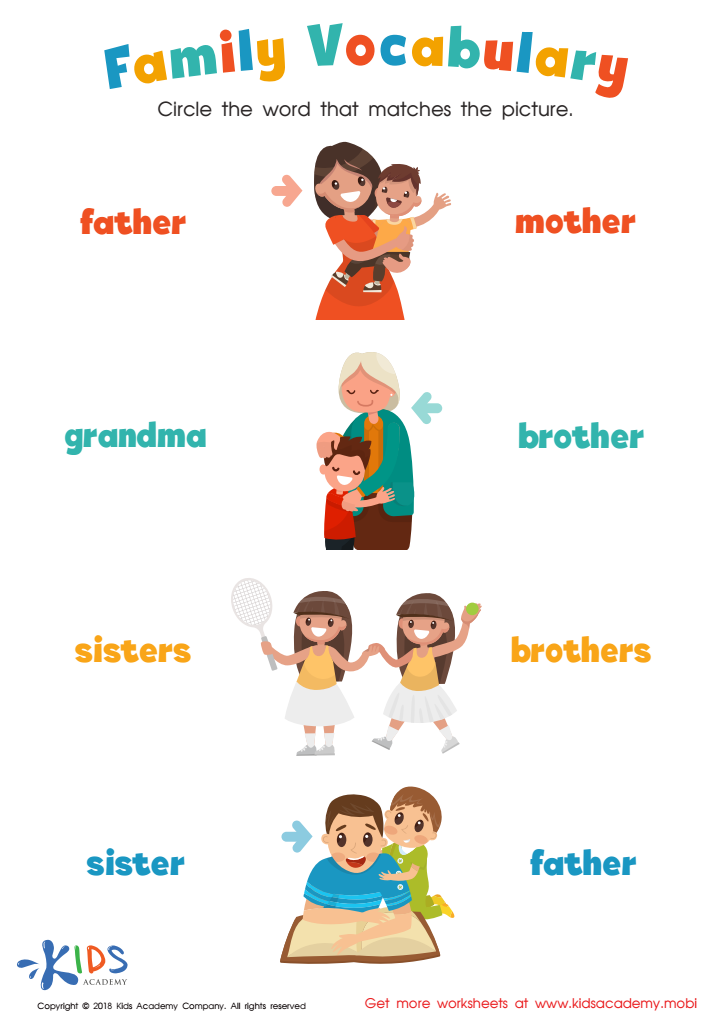
Family Vocabulary Worksheet
Students learn about families in social studies. This worksheet helps them identify family members by looking at a picture and circling the corresponding word. To extend their learning, ask them to talk about their own family members.
Family Vocabulary Worksheet
Worksheet
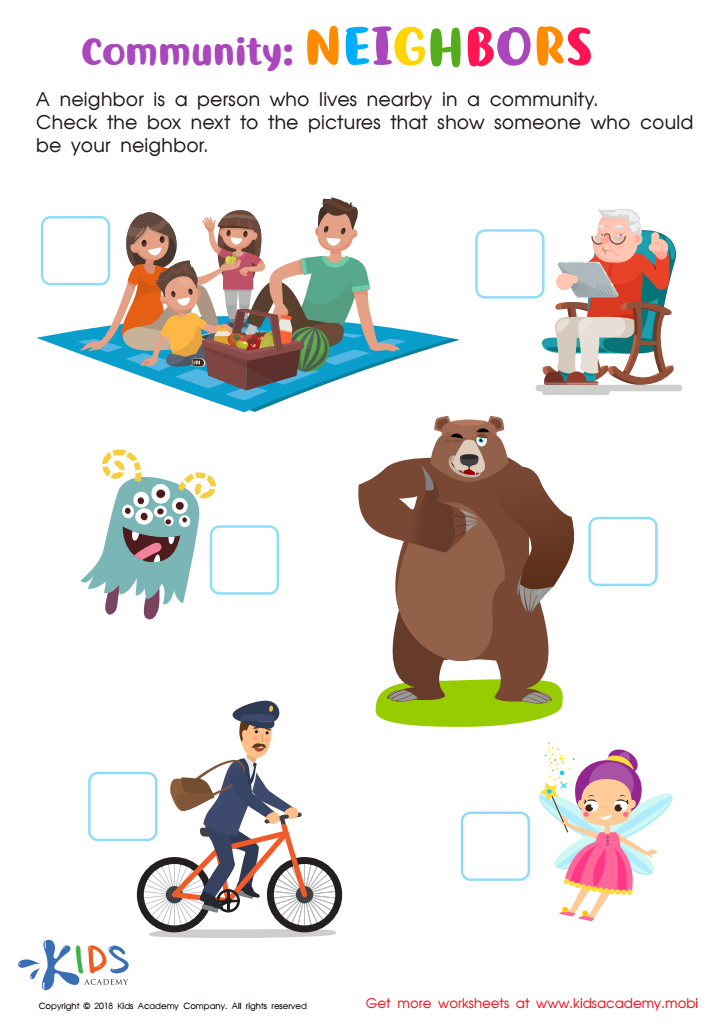
Community: Neighbors Worksheet
This free worksheet helps young learners understand who neighbors are and how they fit into their community. Have your student check out the options, decide which can and can't be neighbours and develop essential social and emotional skills. It's a fun and cheery way to learn about the social sciences!
Community: Neighbors Worksheet
Worksheet
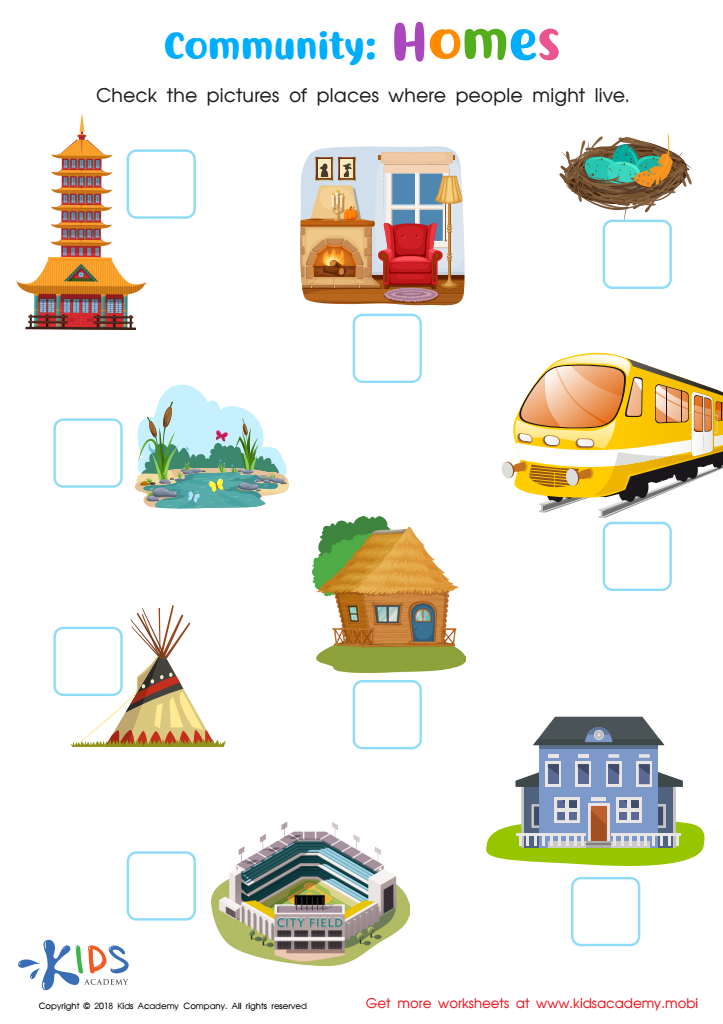
Community: Homes Worksheet
Help your child discover the different types of homes with this free worksheet! Full of colors and pictures, they'll assess which are suitable for people to live in. As they check each picture, they'll use their fine motor skills to draw a conclusion. They'll recognize familiar homes and learn about new ones. There's no place like home!
Community: Homes Worksheet
Worksheet
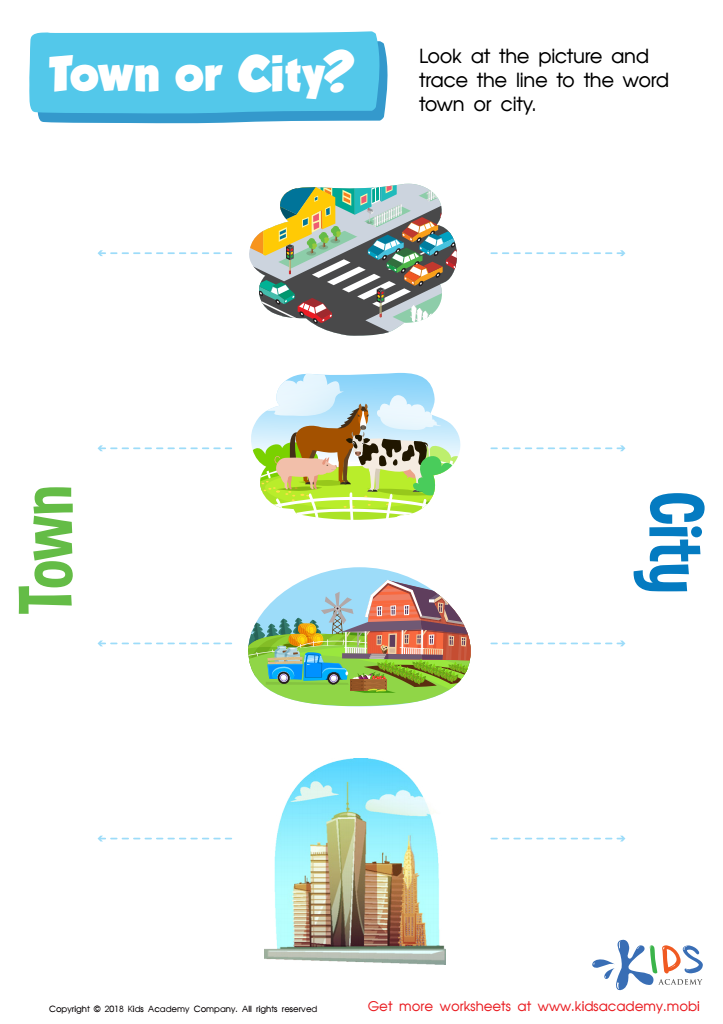
Town or City? Worksheet
Kids will have fun with this free worksheet, matching pictures to either a city or a town. Fine motor skills will be practiced as they trace the lines to their answer. It's a great way to reinforce the differences between cities and towns.
Town or City? Worksheet
Worksheet
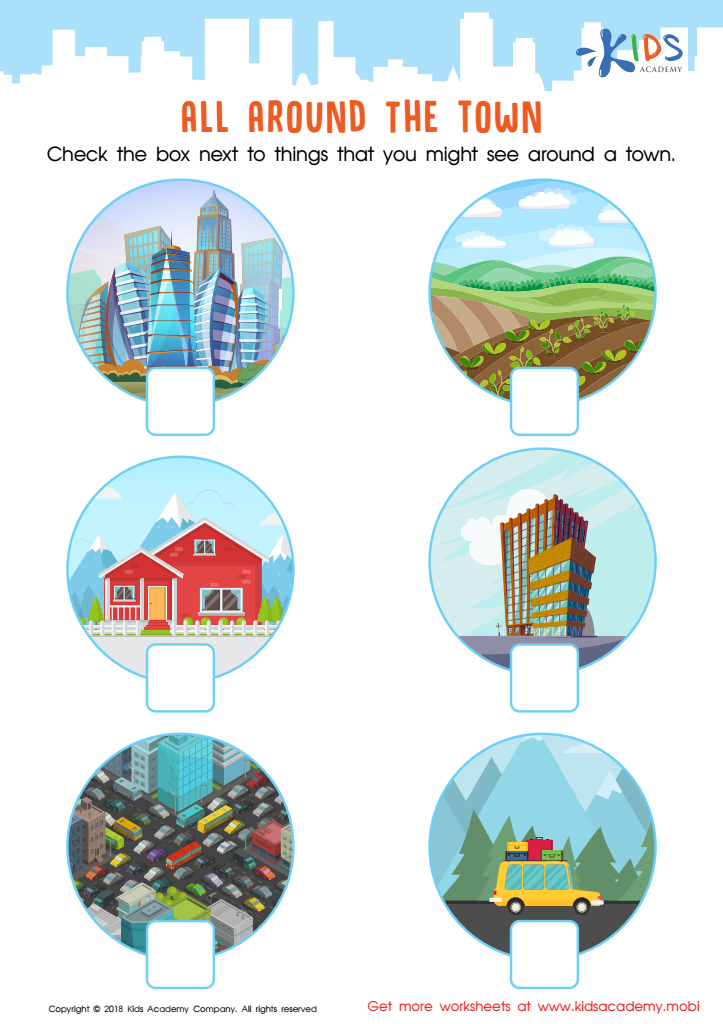
All Around the Town Worksheet
Boost your kids' social studies skills; use this worksheet's vivid pictures to identify things found in a town versus a city. Have them check the box for the correct answer and test their visual discrimination and knowledge.
All Around the Town Worksheet
Worksheet
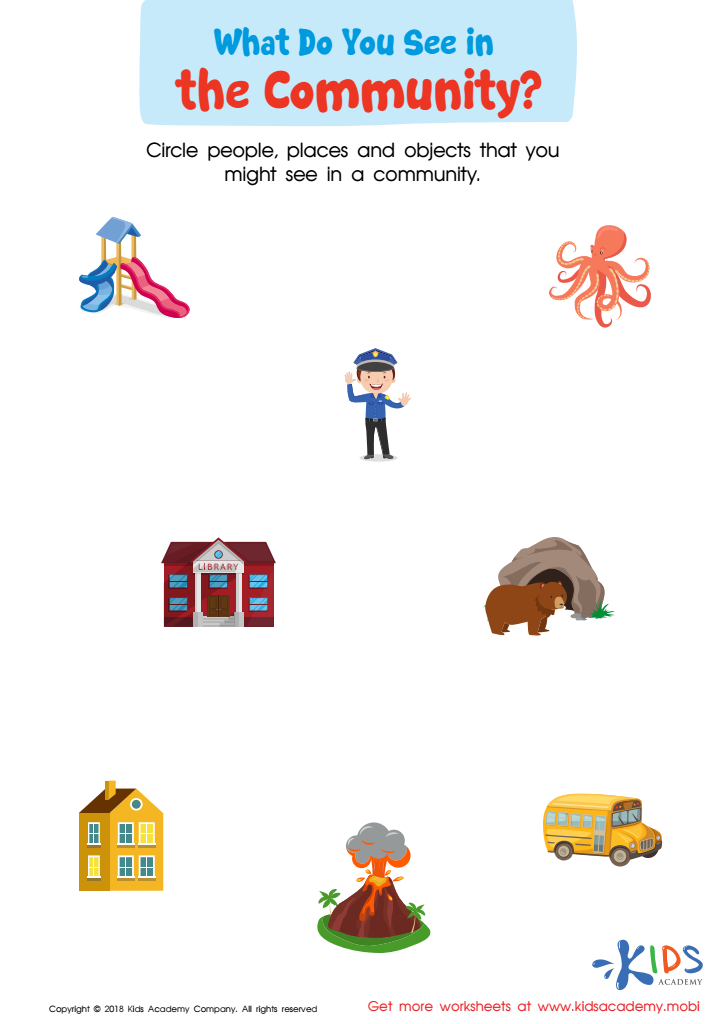
What Do You See in the Community Worksheet
This free social studies PDF can help your children learn about their local community. They'll identify its members, places and objects using engaging and recognizable pictures. As they trace circles around them, they'll also practice fine motor skills. It's a great way to introduce social science concepts and help them understand the importance of community.
What Do You See in the Community Worksheet
Worksheet
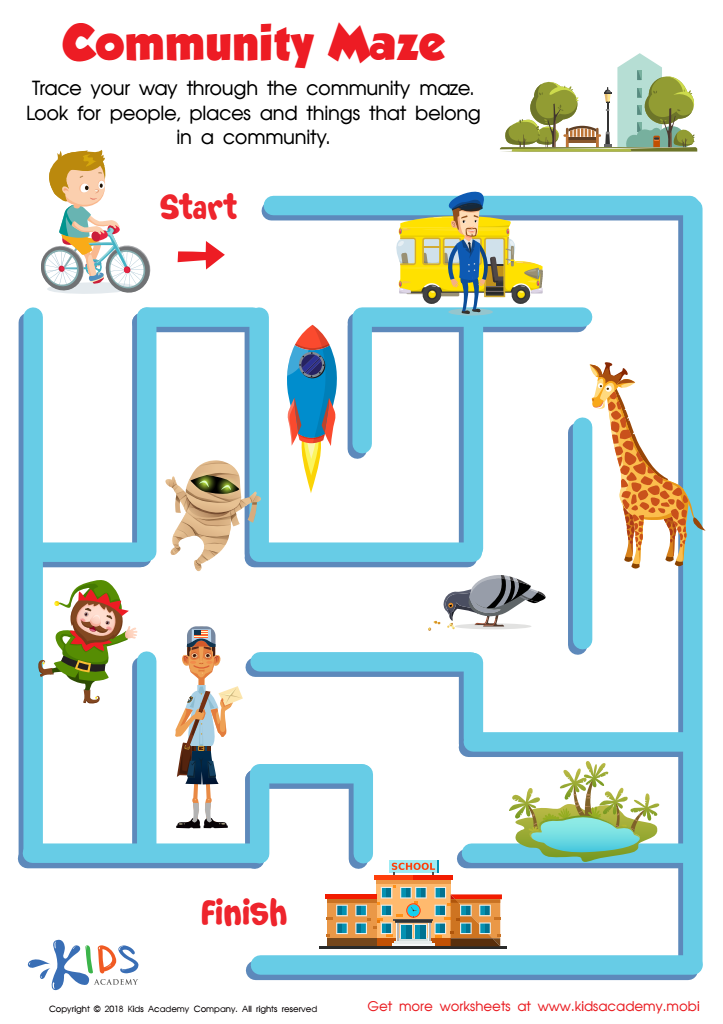
Community Maze Worksheet
Your kids will have a blast as they use their fine motor skills to trace their way through the community maze worksheet. Plus, they'll enjoy meeting people, places, and creatures to sort out who and what belong in a community and who and what don't! Help their friend bike to the neighborhood school and reinforce what life is like in a community.
Community Maze Worksheet
Worksheet
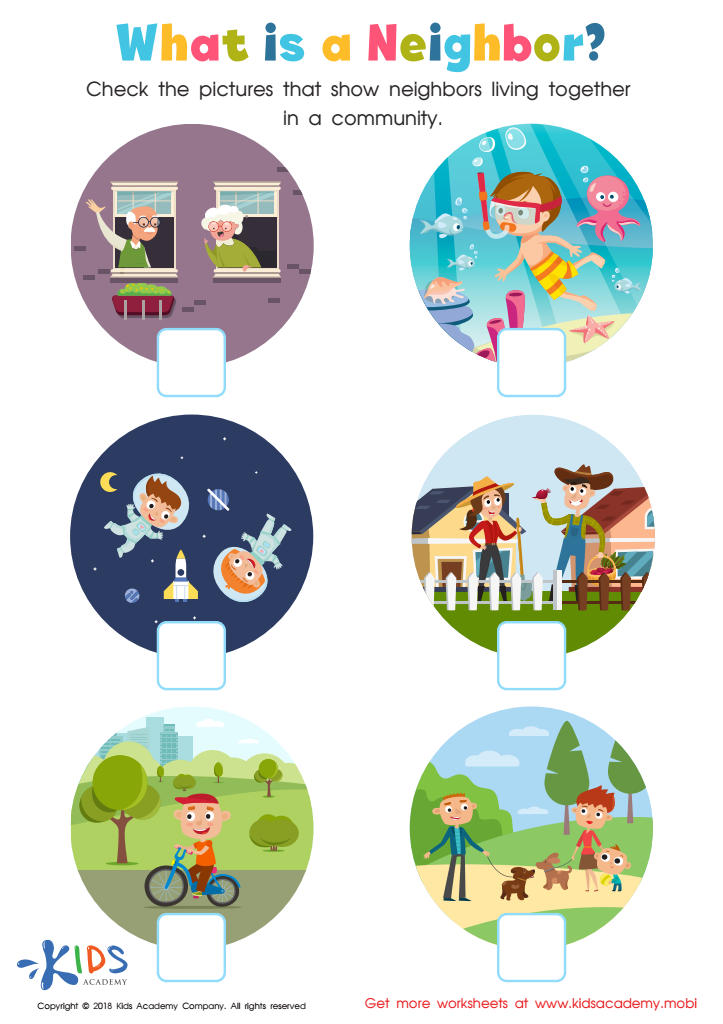
What is a neighbor Worksheet
This engaging worksheet helps students recognize neighbors and their role in a community. They'll identify pictures of people living together and understand the importance of being neighborly. Download the PDF to help reinforce the concept of community teamwork.
What is a neighbor Worksheet
Worksheet
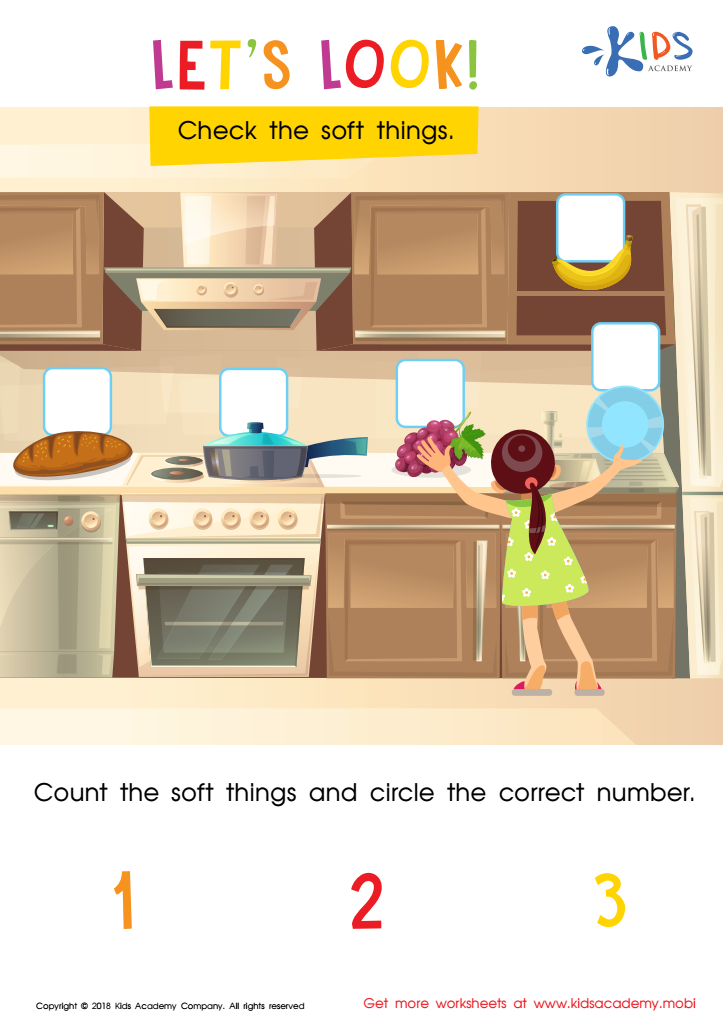
Let's Look! Assessment Worksheet
Have your child look at the picture in the printout and name the objects. Ask which ones are soft and hard and have them count the soft objects and circle the number. This worksheet will engage your child's thinking and teach them about texture.
Let's Look! Assessment Worksheet
Worksheet
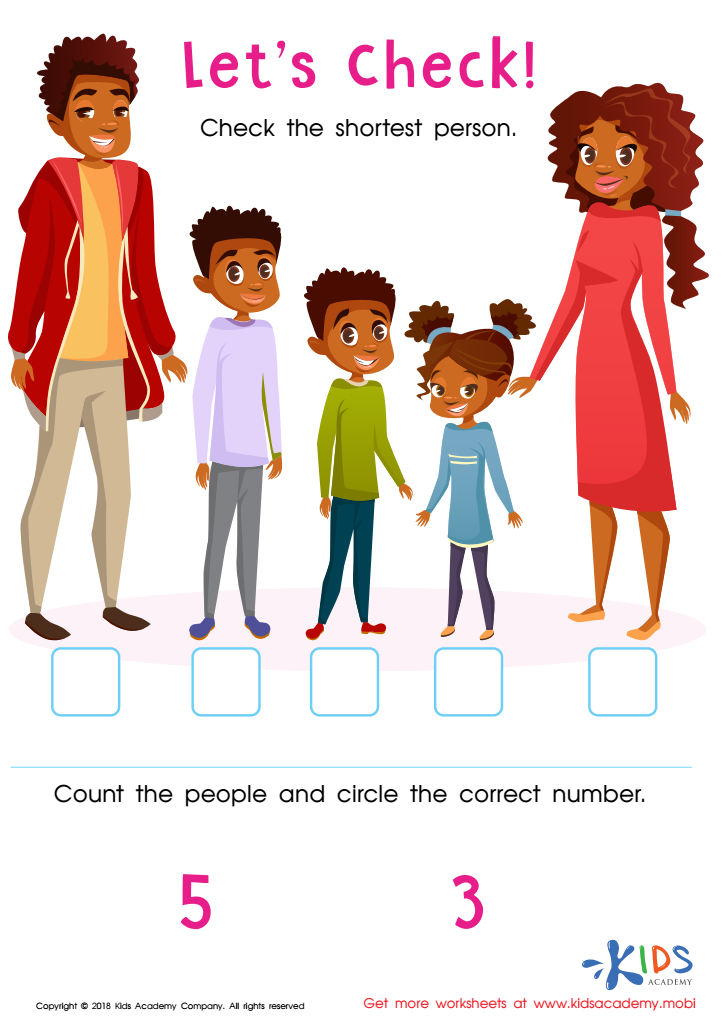
Let's Check! Assessment Worksheet
Check your child's understanding of height with this worksheet. Ask them to sort the objects in order of size and identify the tallest and shortest member of the family in the picture. See if they can correctly arrange the items from tallest to shortest.
Let's Check! Assessment Worksheet
Worksheet
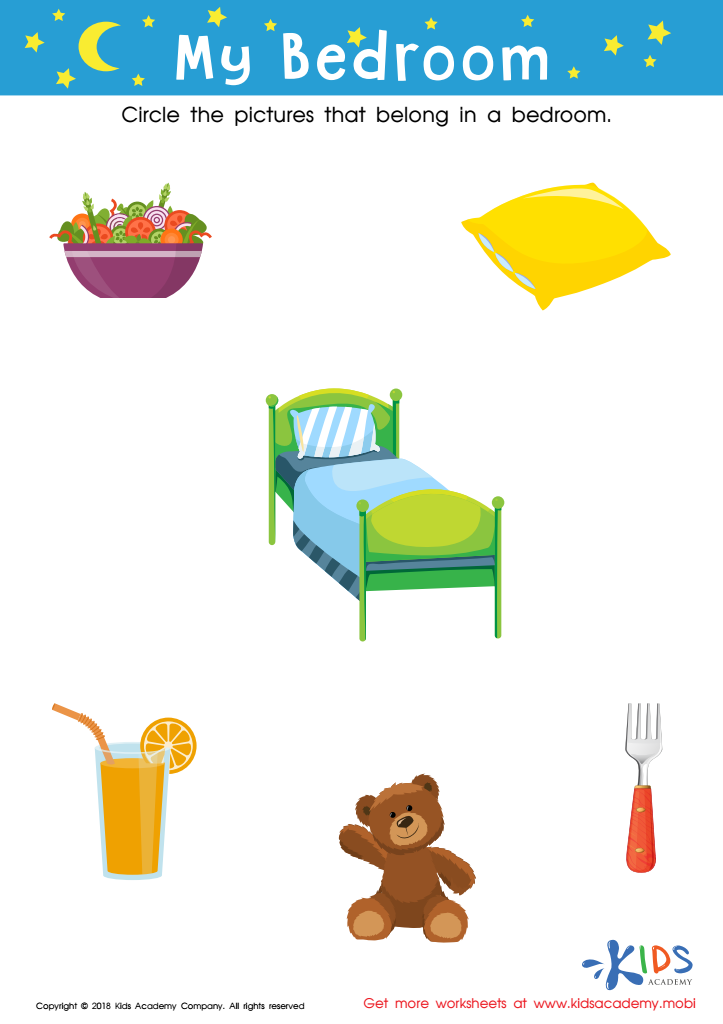
My Bedroom Worksheet
Your child's room is their special space, where only a few are allowed in. You may have let them choose some special decorations, like wall stickers and toys. This exercise will be easy for your child, as they know their bedroom well. Ask them to circle the pictures that belong in a bedroom.
My Bedroom Worksheet
Worksheet
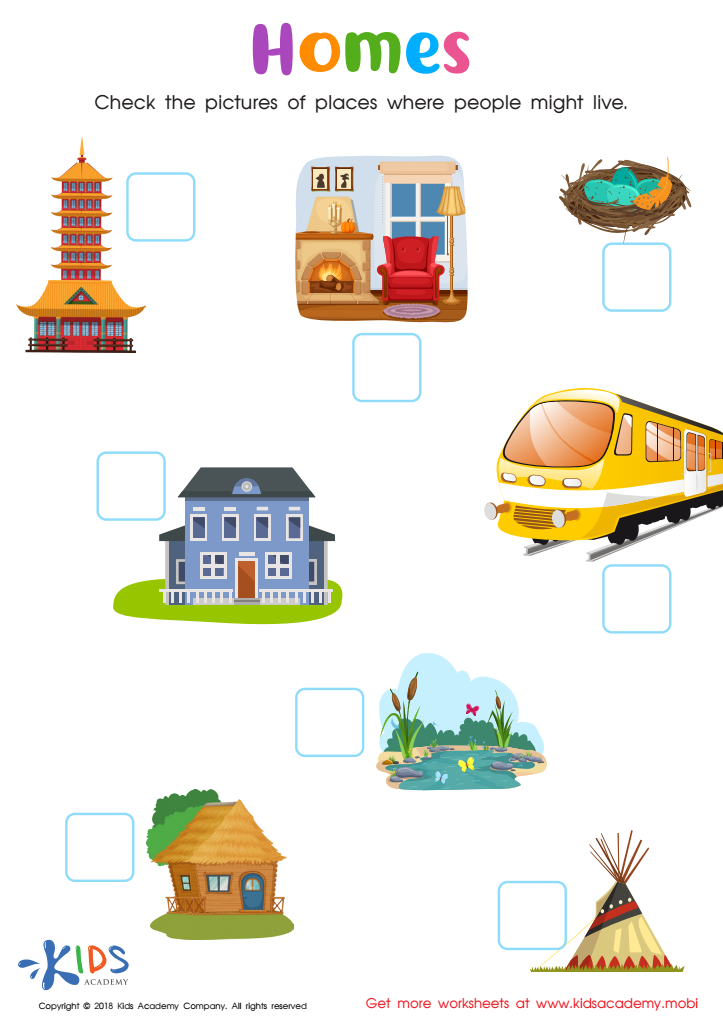
Homes Worksheet
Explain to your child that a home is where people live. Ask if they have noticed homes of different shapes, sizes, and materials in the community. Then, look at the pictures in this worksheet and ask your child to check the ones that show places where people live.
Homes Worksheet
Worksheet
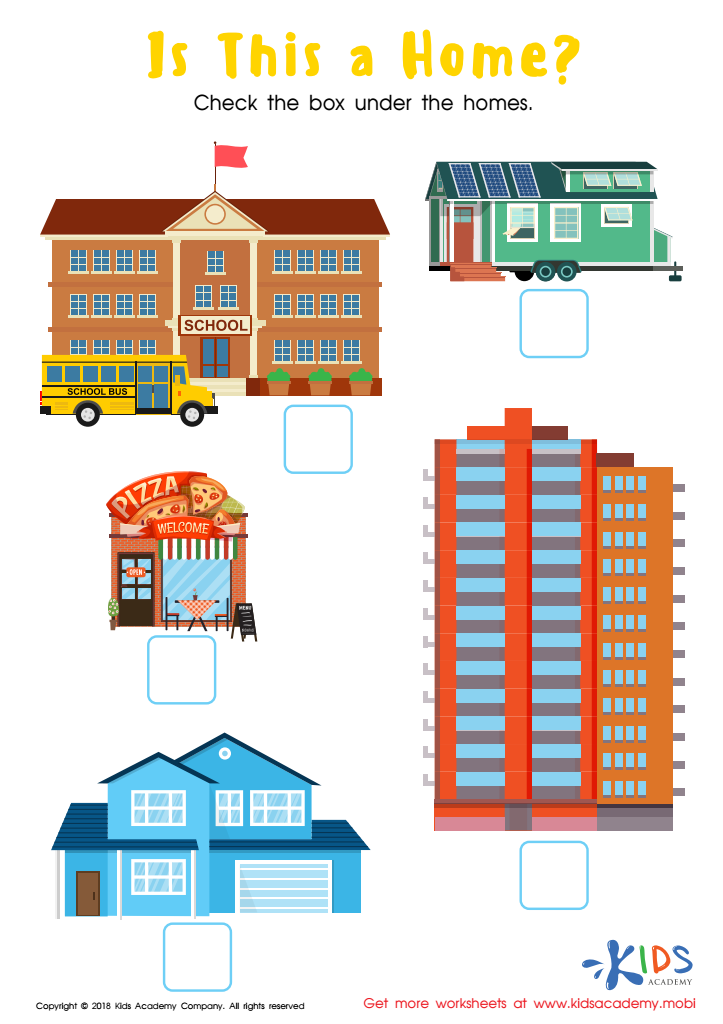
Is this a Home? Worksheet
Ask your child what the building you live in is called. Is it a home, restaurant or hospital? Then look at the pictures in the worksheet and ask them to identify which are homes - even if they don't look like yours. Check the box next to the homes in the pictures.
Is this a Home? Worksheet
Worksheet
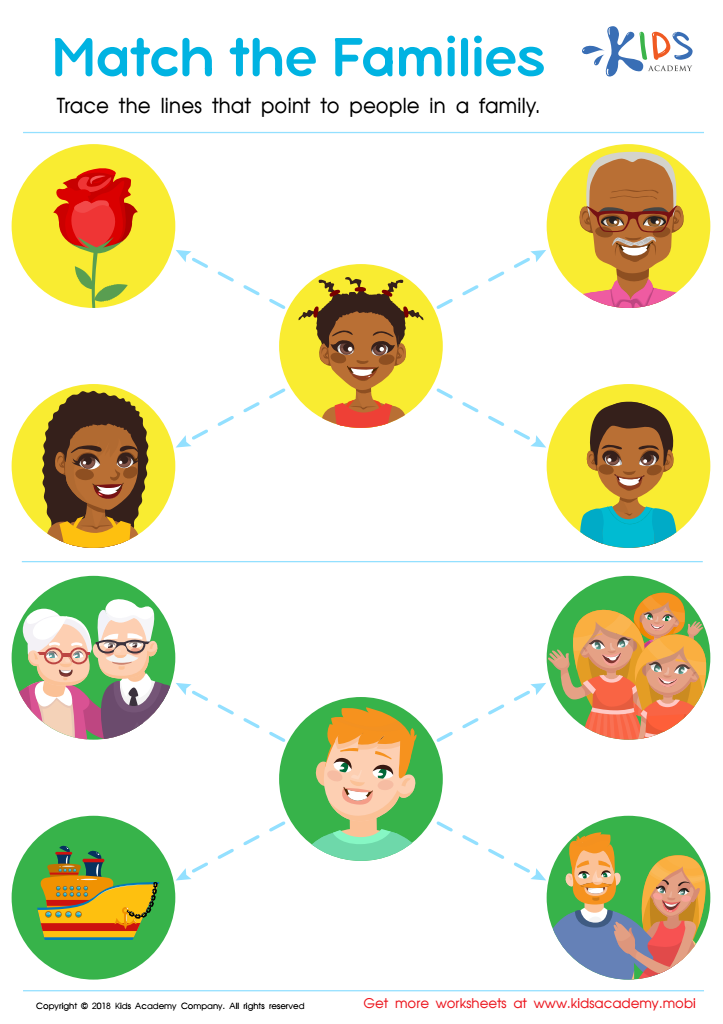
Match the Families Worksheet
Ask your students what a family is and who makes up theirs. Then, help them with a traceable worksheet of a family. By knowing the members of their own family, they will easily complete the task of tracing the picture to form a proper family.
Match the Families Worksheet
Worksheet
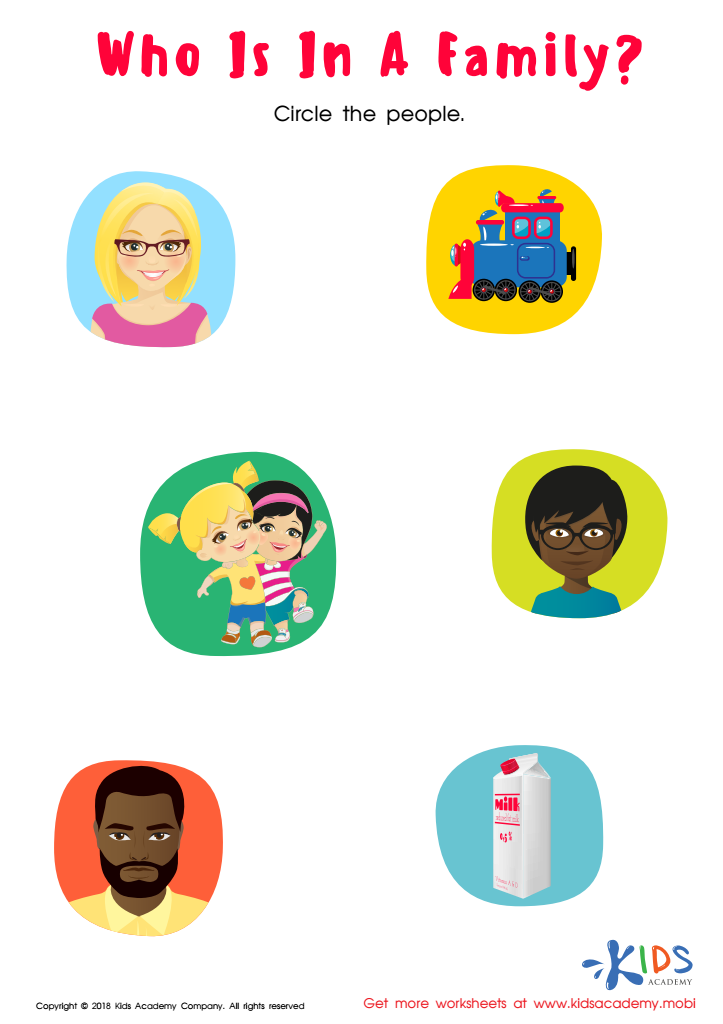
Who Is in a Family? Worksheet
Kids enjoy discussing families. This easy, colorful worksheet helps them determine if a person or thing is in a family. Children look at each picture, name it, and circle it if it represents someone in a family. It introduces or reinforces family words, making it ideal for toddlers.
Who Is in a Family? Worksheet
Worksheet
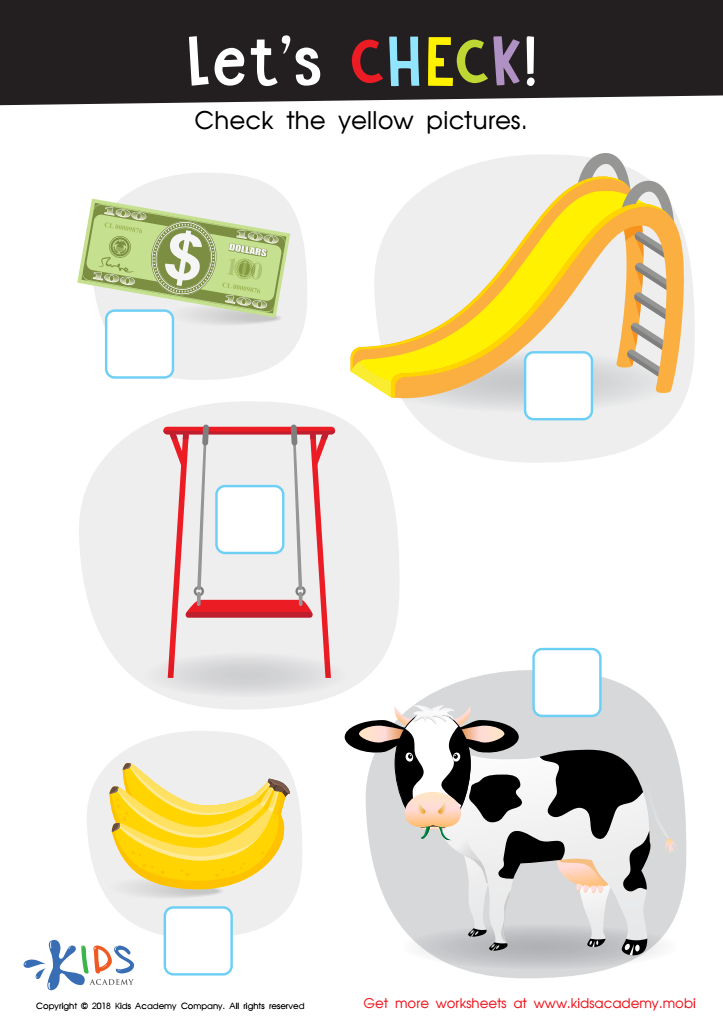
Let's Check! Worksheet
Before starting this coloring sheet, ask your kids to name some colors they know, or point to familiar items and ask them what color they are. Check if they can correctly identify the pictures of yellow objects. Then, you can begin the worksheet.
Let's Check! Worksheet
Worksheet
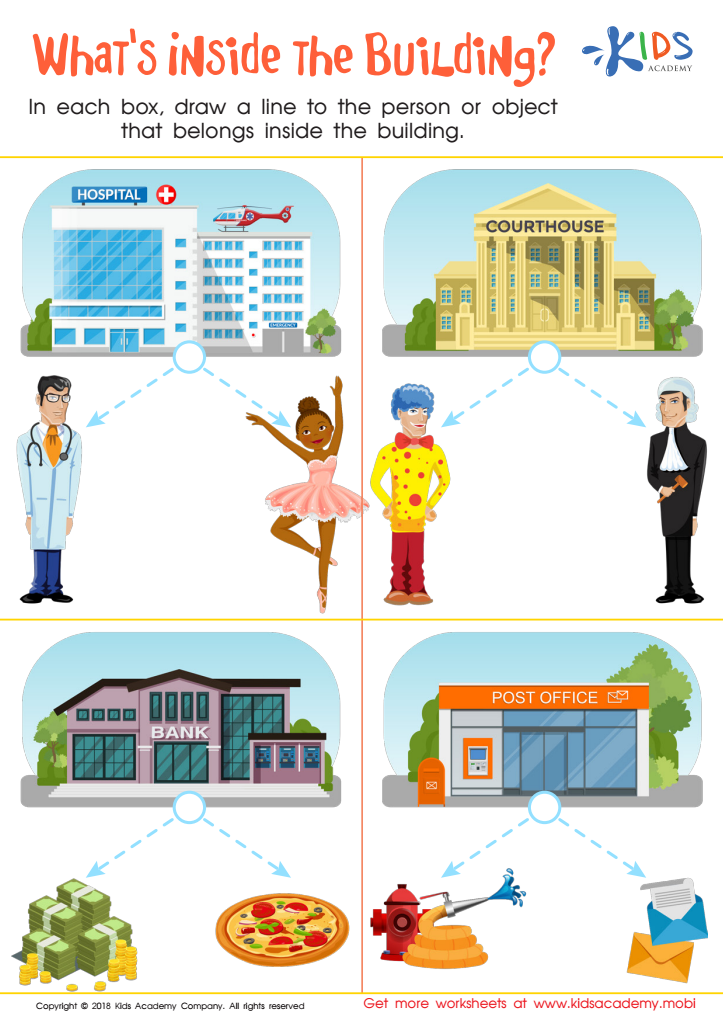
What's Inside the Building? Worksheet
Have your child draw a line from each of the four buildings (printout provided) to the corresponding person or object. This worksheet will help them identify people who work in a hospital, courthouse, bank and others—what they wear and what they're called.
What's Inside the Building? Worksheet
Worksheet
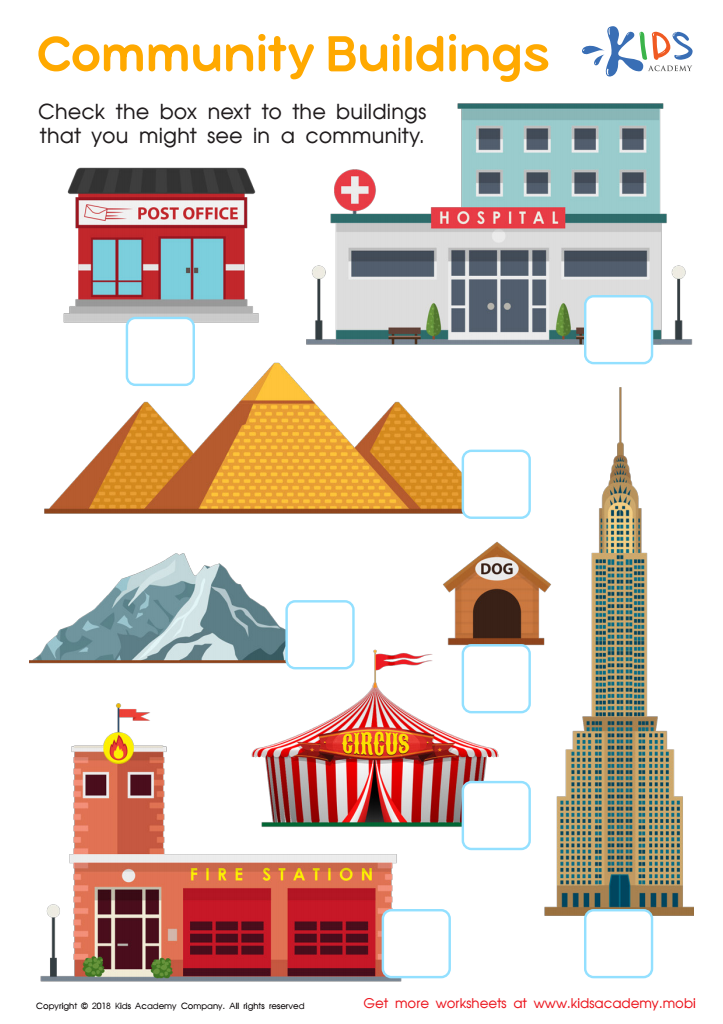
Community Buildings Worksheet
Test your child's knowledge of local buildings with this worksheet. Ask them to name the buildings in the images, then check the boxes next to the ones they might see in a community. It's a great way to explore the places you visit together.
Community Buildings Worksheet
Worksheet
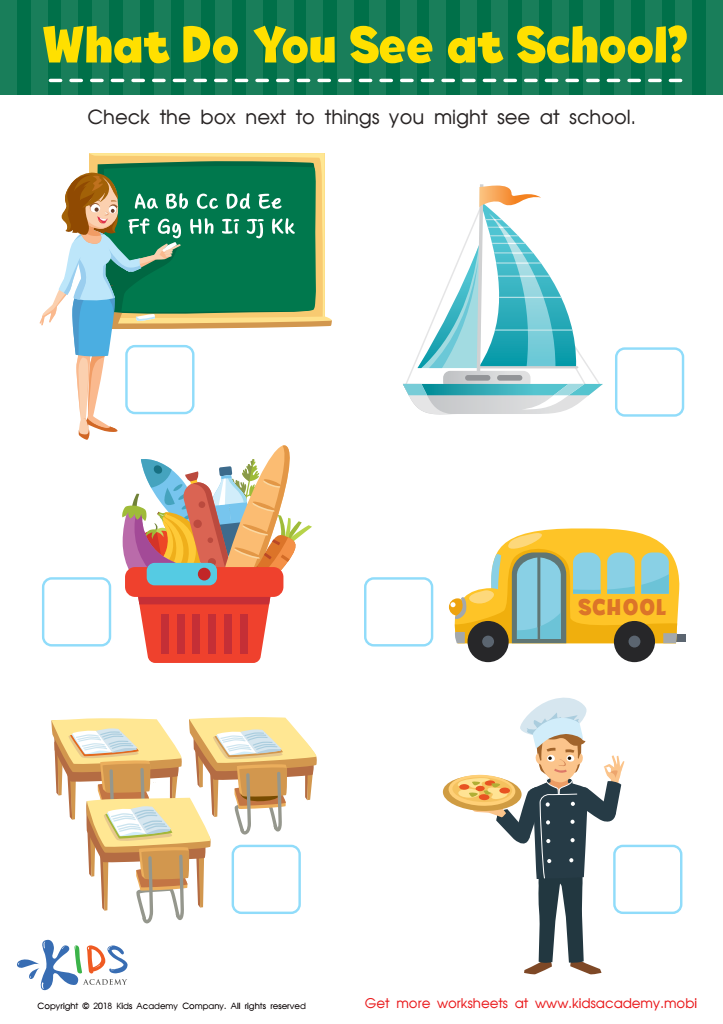
What Do you See at School? Worksheet
Have your kids give you a list of things they see at school. Then, view the worksheet together. Ask them to check the boxes next to the school items. Look for objects that can be found at school and those that don't belong. This is a great way to check their knowledge of what they see at school daily, except on weekends and holidays.
What Do you See at School? Worksheet
Worksheet
Join Kids Academy for Free
Who is primarily going to use this learning content?