Letter-sound correlation Preschool Worksheets
5 filtered results
-
From - To
Enhance your preschooler's literacy skills with our engaging Letter-Sound Correlation Worksheets! These thoughtfully designed resources help young learners link letters to their corresponding sounds, fostering essential early reading abilities. Each worksheet is filled with fun activities that encourage children to recognize letters, practice phonetic sounds, and hone their writing skills. Tailored for varying levels of proficiency, our worksheets provide a hands-on approach to learning. Perfect for classrooms or at-home practice, these printable worksheets promote cognitive development while keeping kids entertained and excited about reading. Spark a love for learning today with our Letter-Sound Correlation resources tailored for preschoolers!
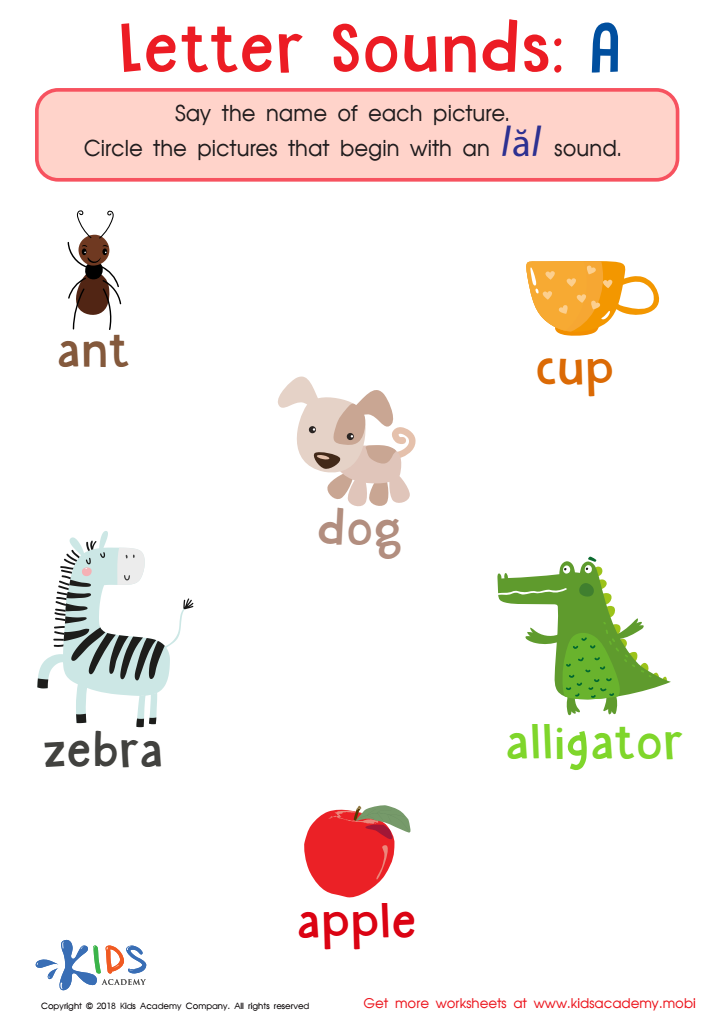
Letter A Sounds Worksheet
 Assign to My Students
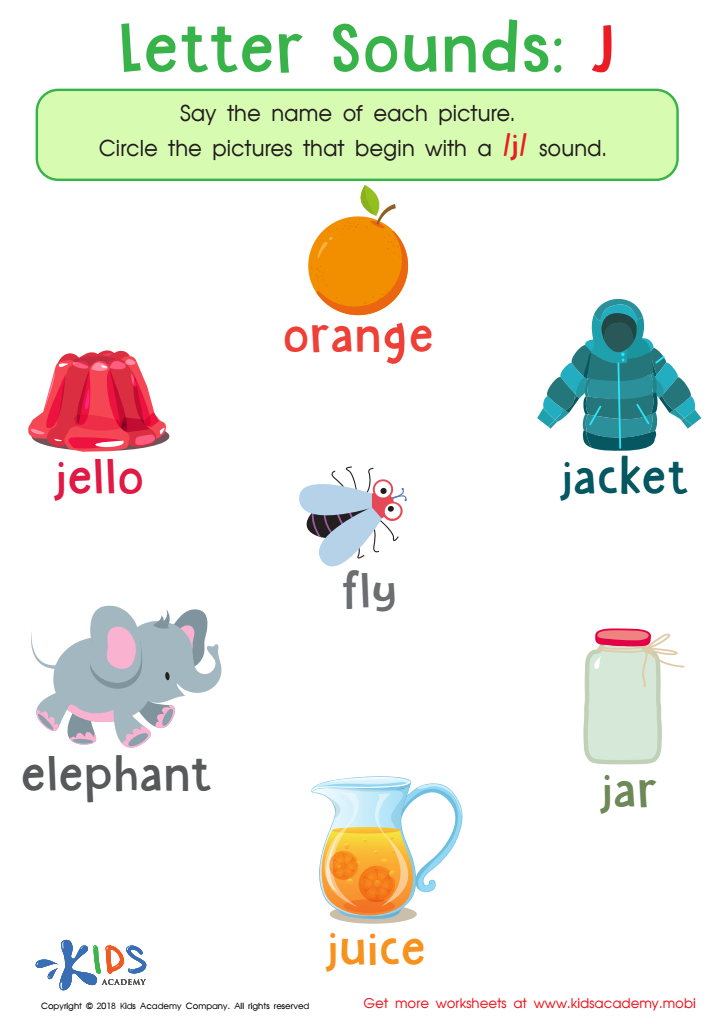
Letter Sounds: J Printable Worksheet
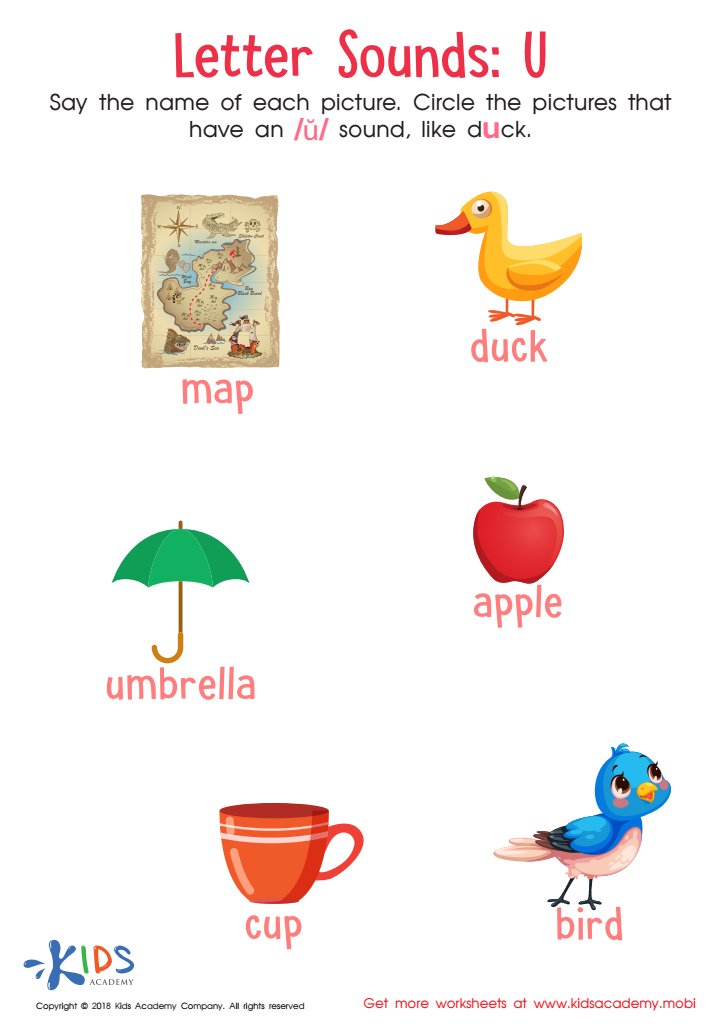
Letter U Sounds Worksheet
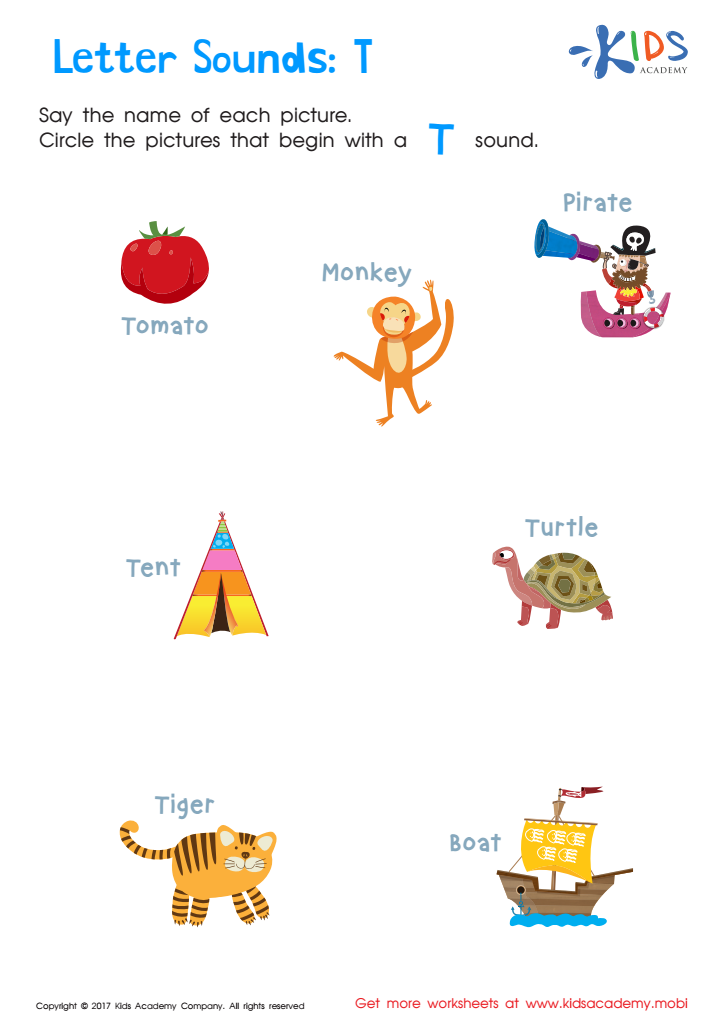
Letter T Sounds Worksheet
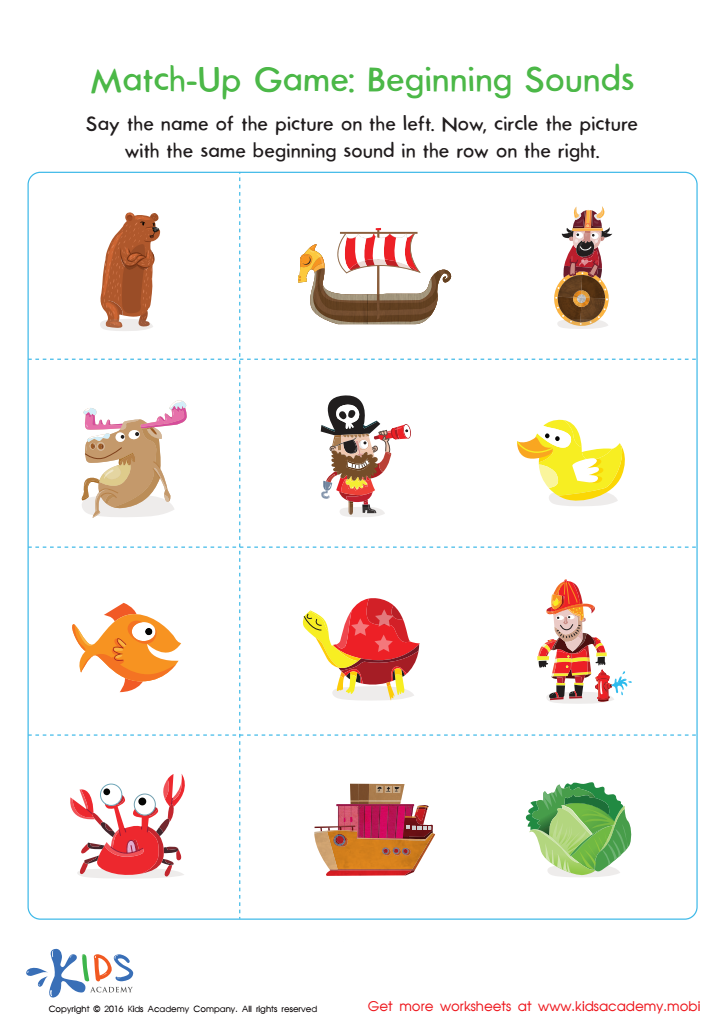
Match–Up Game: Beginning Sounds Worksheet







Letter-sound correlation, also known as phonics, is fundamental in early literacy development, making it crucial for parents and teachers to prioritize it in preschool. Understanding the relationship between letters and their corresponding sounds lays the groundwork for children to read and write effectively. When preschoolers grasp this connection, they begin to decode words independently, building confidence in their literacy skills.
Moreover, strong letter-sound recognition supports vocabulary development and enhances comprehension abilities. As kids learn to associate sounds with letters, they can break down complex words, improving their reading fluency. This competence also fosters a passionate interest in reading, encouraging a lifelong love of literature and learning.
Additionally, letter-sound correlation helps identify and address early literacy challenges, enabling educators and parents to work together to support children who may need extra help. Effective early intervention can prevent future difficulties in reading and overall academic performance.
Ultimately, investing time in developing letter-sound correlation not only equips young learners with crucial skills but also empowers them to navigate their educational journey with greater ease, benefiting their academic, social, and emotional development throughout their lives.