Reading comprehension Preschool Addition and Subtraction Word Problems Worksheets
12 filtered results
-
From - To
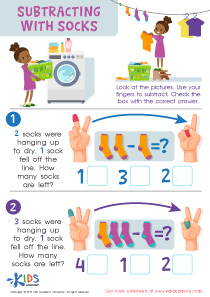
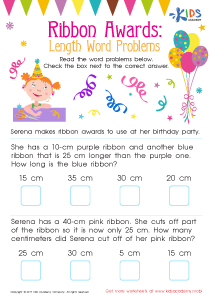
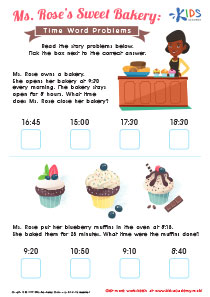
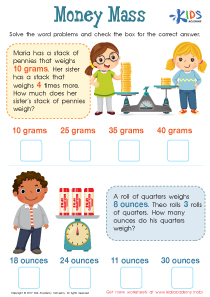
Enhance your child's mathematical and reading skills with our "Reading Comprehension Preschool Addition and Subtraction Word Problems Worksheets." These engaging, educator-designed worksheets combine early math practice with essential reading comprehension exercises to make learning interactive and fun. Ideal for preschoolers, each worksheet presents simple addition and subtraction word problems that encourage critical thinking and problem-solving. As children identify key information in the text, they develop both their numerical skills and reading proficiency. Our worksheets cater to different learning paces, ensuring that every young learner finds them both challenging and rewarding. Download today and watch your child's skills flourish!
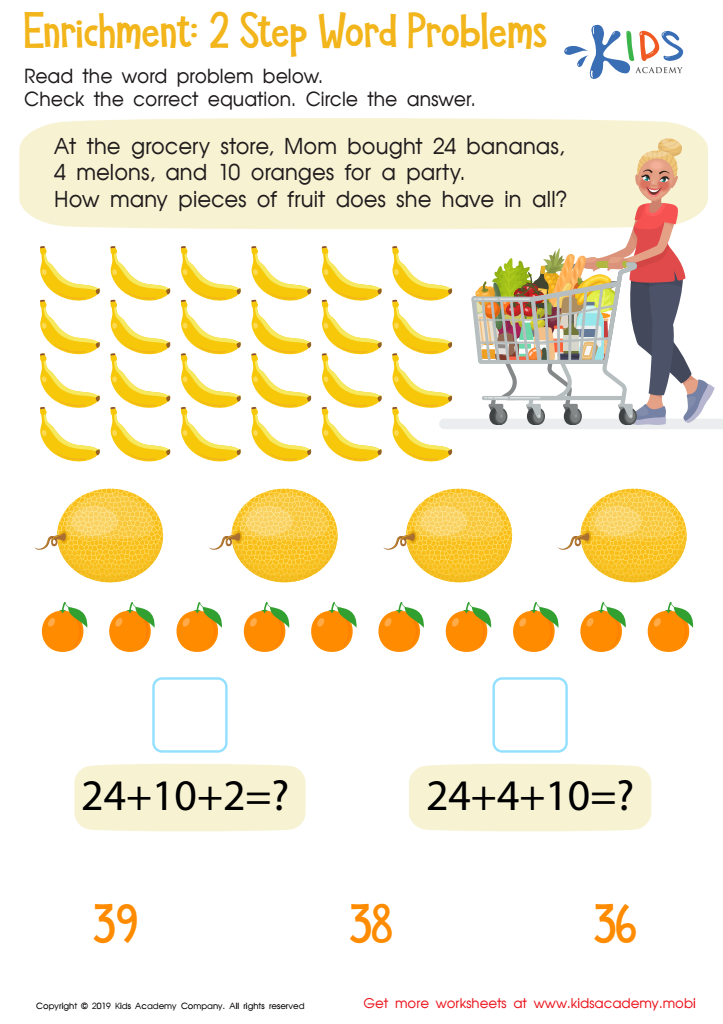
Enrichment -2 Step Word Problems Worksheet
 Assign to My Students
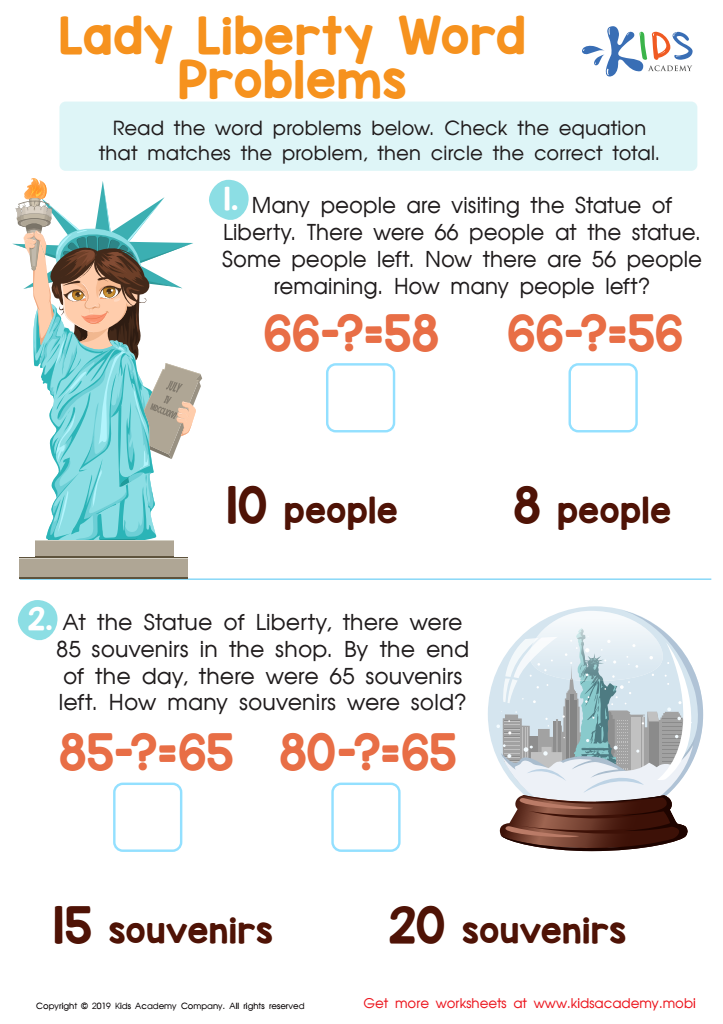
Lady Liberty Worksheet
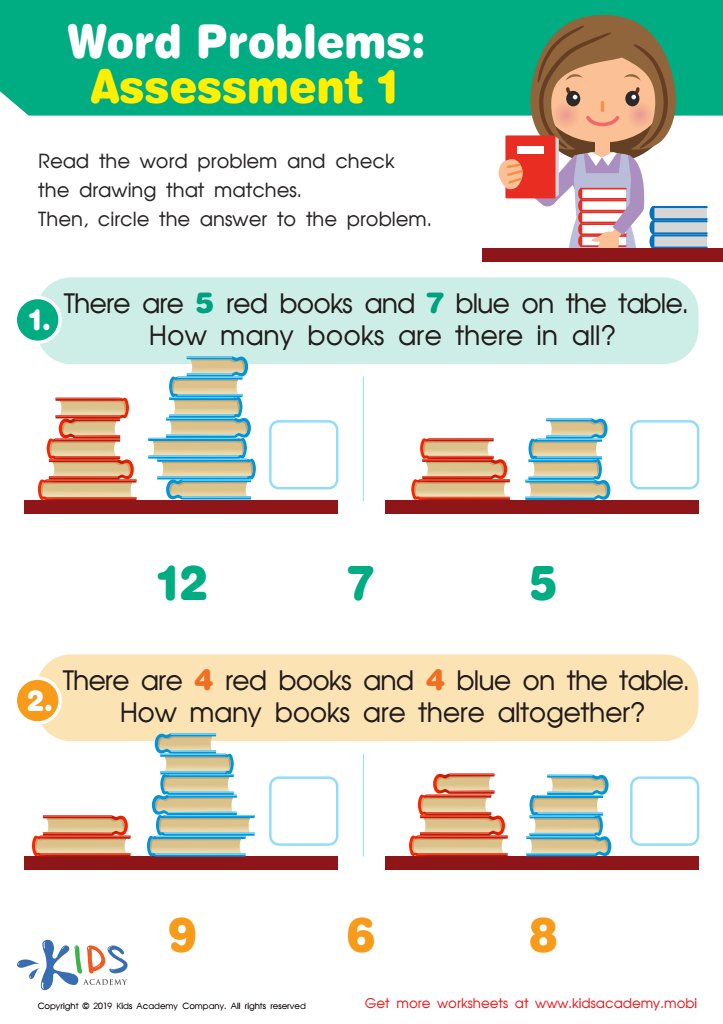
Word Problems: Assessment 1 Worksheet
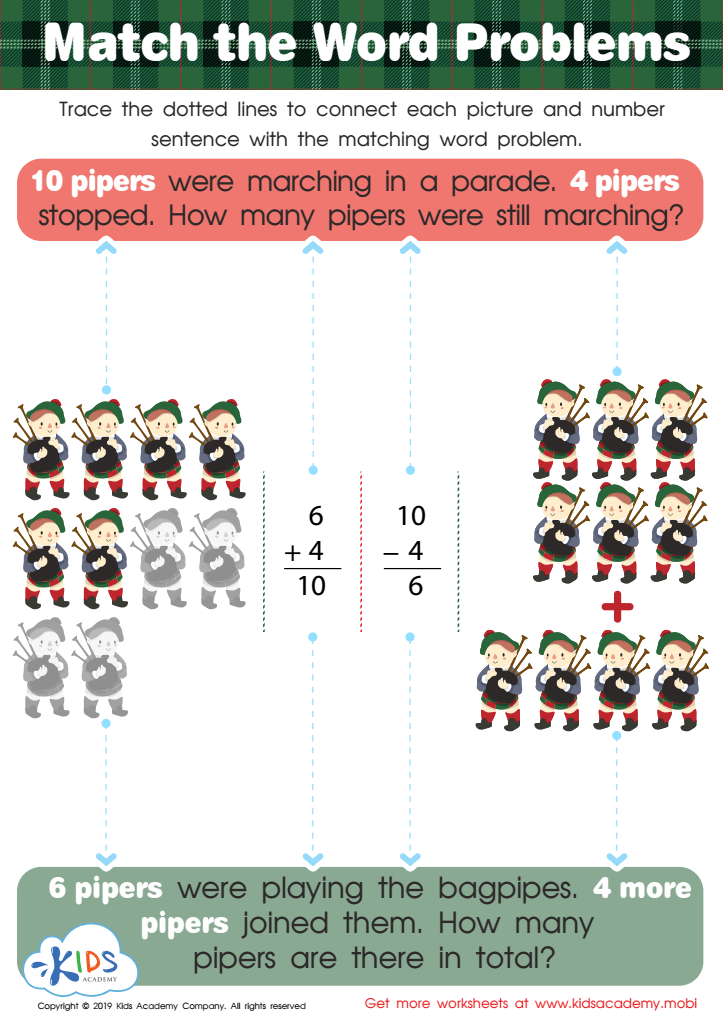
Match the Word Problems Worksheet
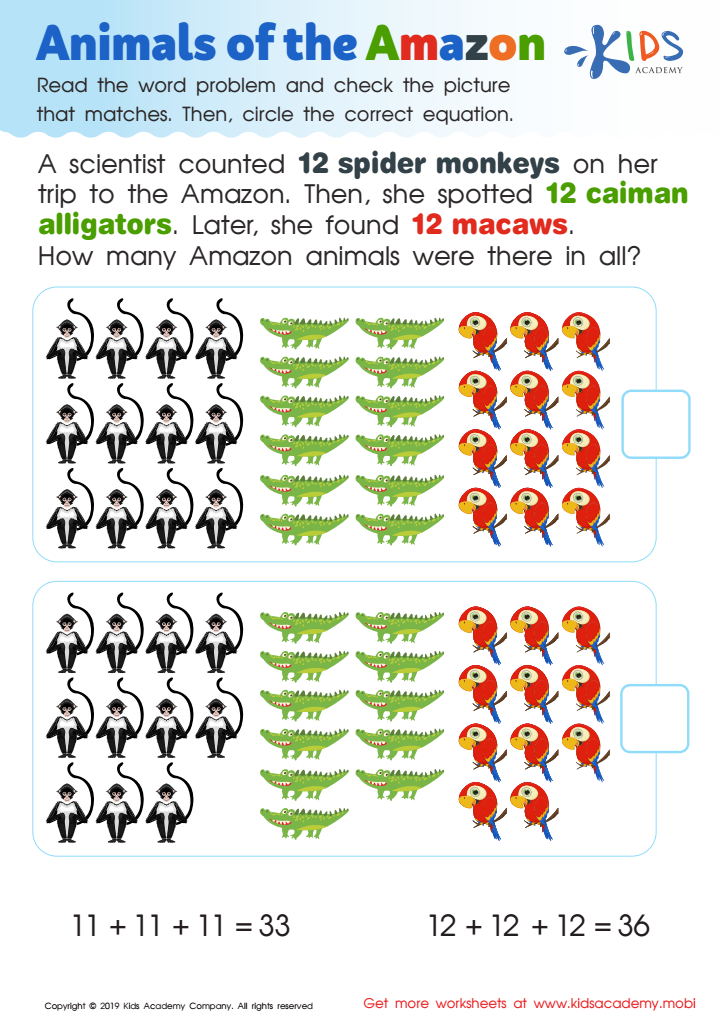
Animals of Amazon Worksheet
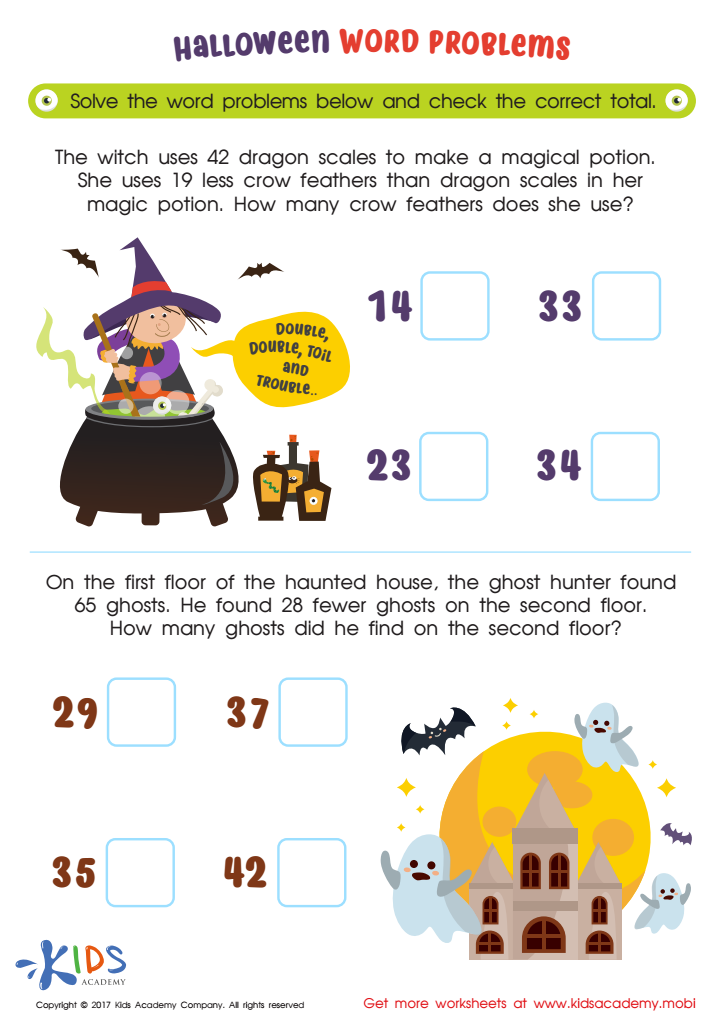
Halloween Word Problems Printable
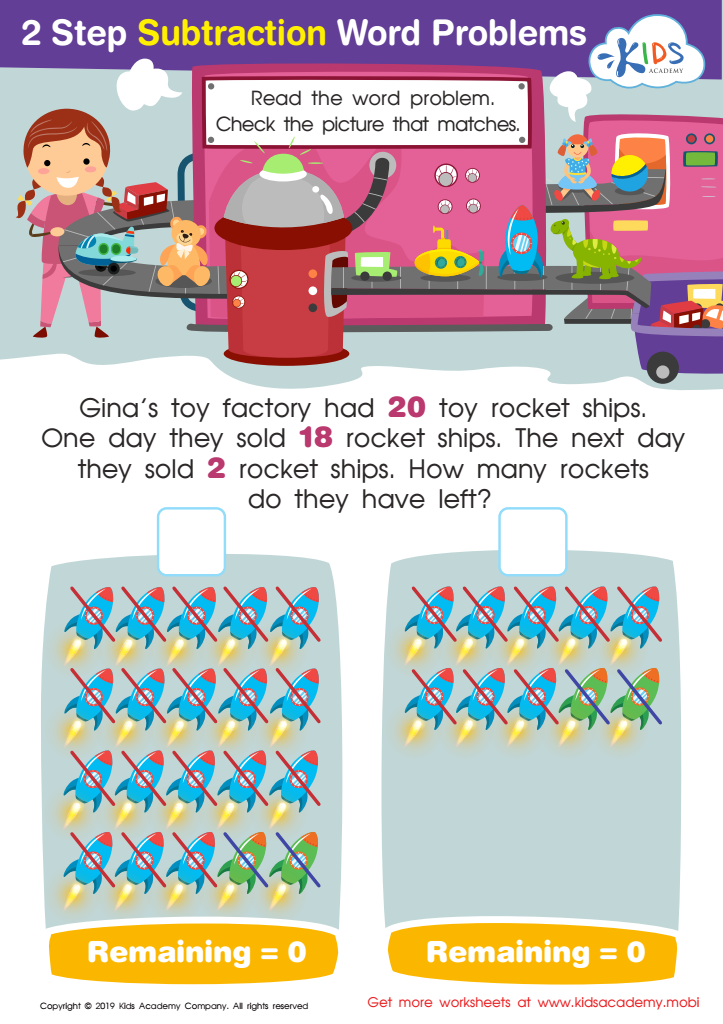
Step Subtraction Word Problems Worksheet
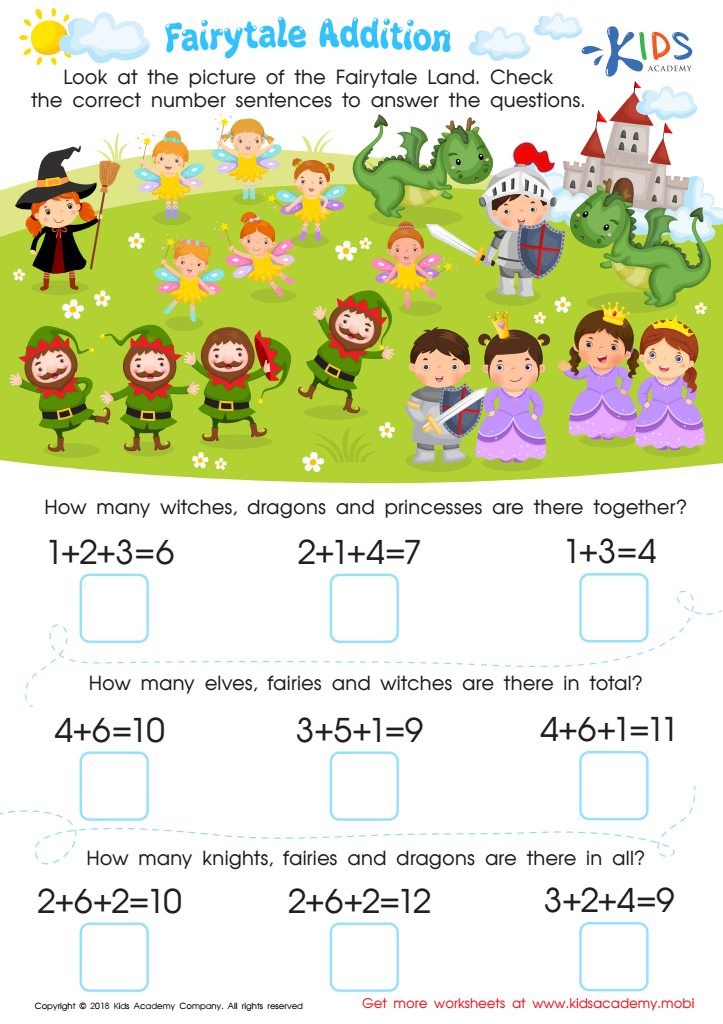
Fairytale Addition Worksheet
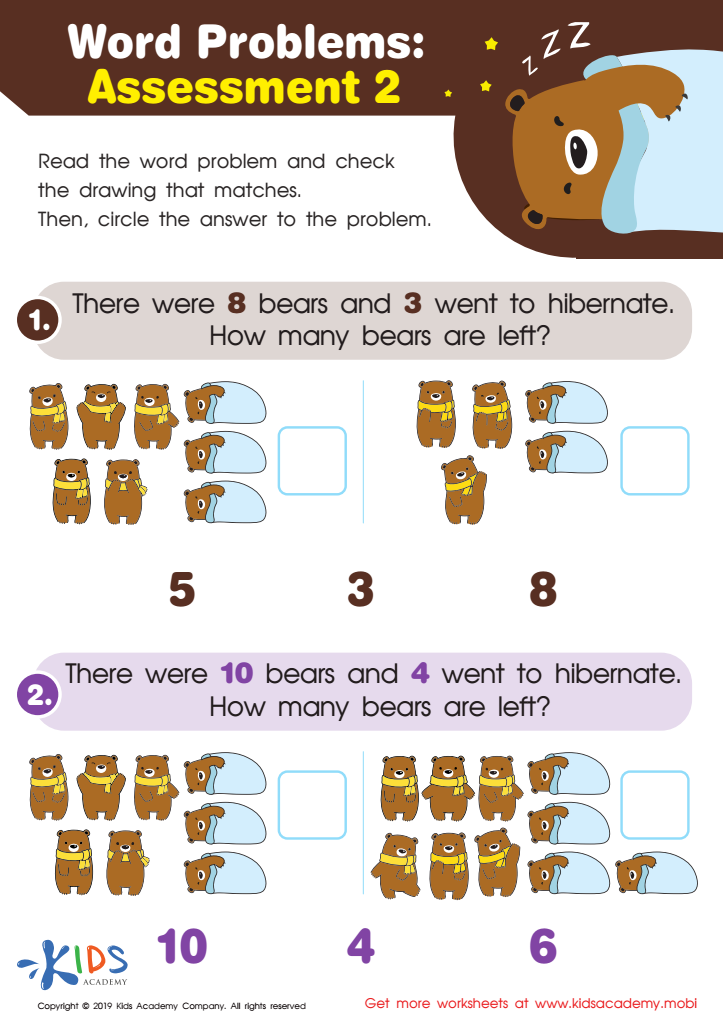
Word Problems: Assessment 2 Worksheet
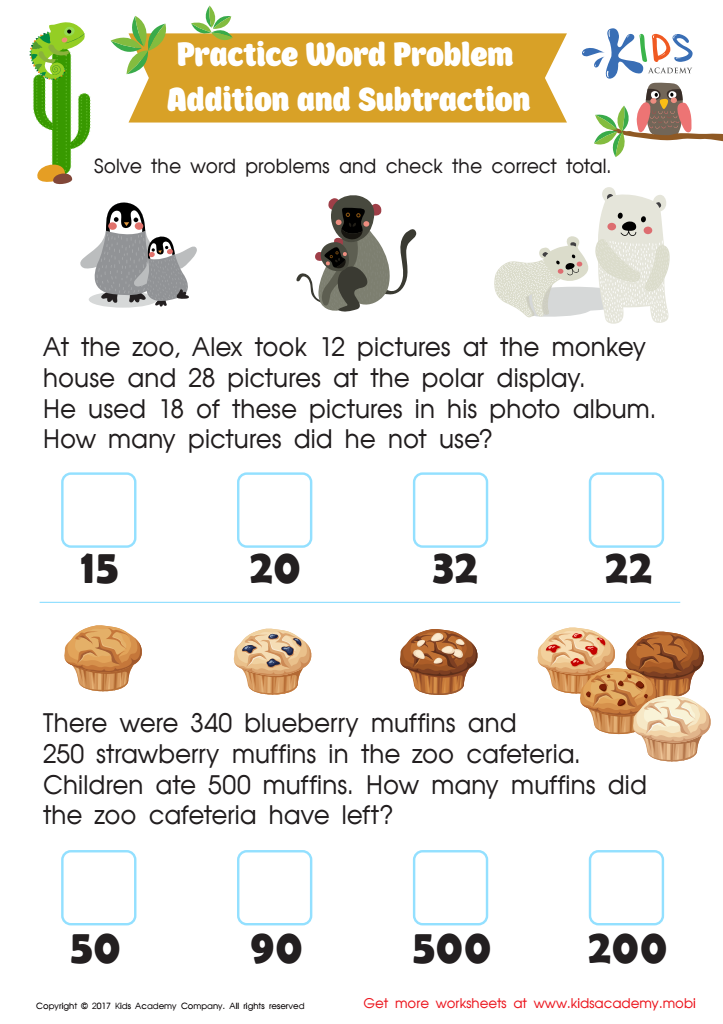
Addition and Subtraction: Word Problems Worksheet
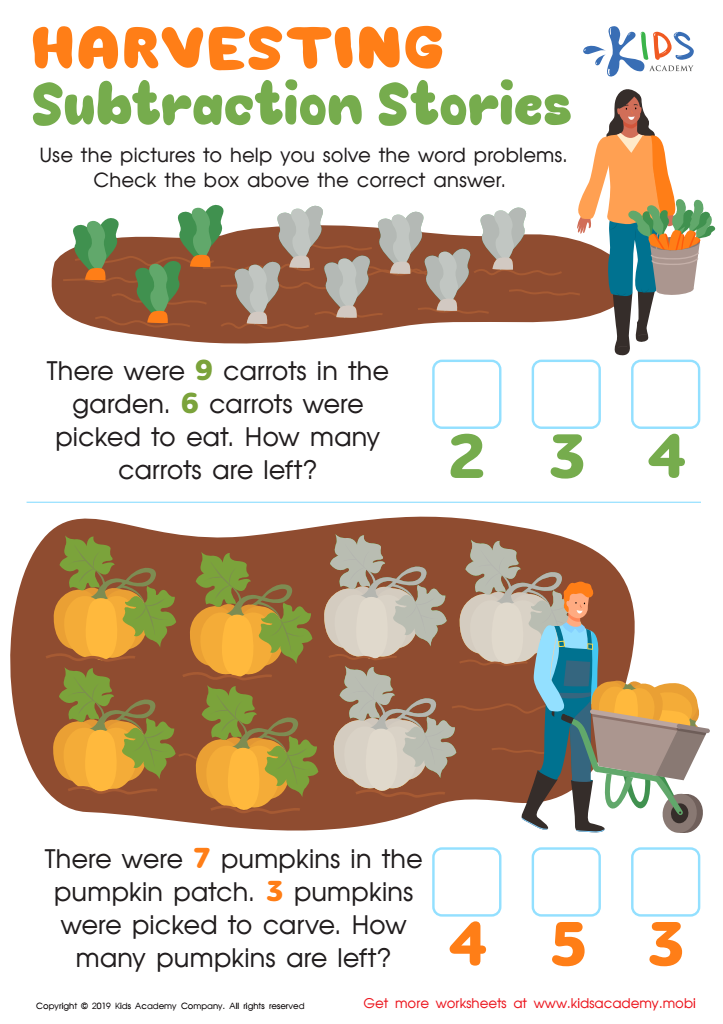
Harvesting Subtraction Stories Worksheet
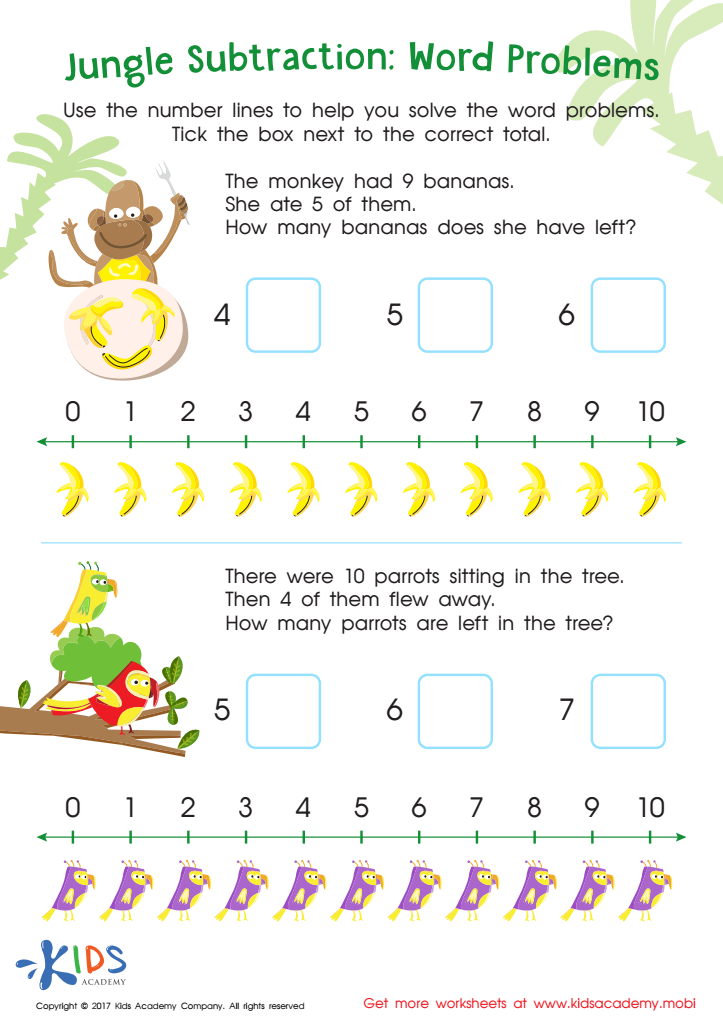
Jungle Subtraction Word Problems Substraction Worksheet







Reading comprehension, preschool addition, and subtraction word problems are critical foundational skills for young children, and parents and teachers should be invested in nurturing these abilities for several key reasons.
Firstly, reading comprehension is essential for all areas of learning. A strong grasp of understanding what is read boosts cognitive development, encourages a love for reading, and improves vocabulary and communication skills. It empowers children to follow instructions, grasp mathematical concepts, and engage meaningfully with content across subjects.
Secondly, mastering addition and subtraction word problems at the preschool level creates a strong mathematical foundation. Early exposure to these problems enhances children's ability to think critically and solve real-life problems, promoting numerical literacy and logical thinking. These early math skills are predictive of future academic success in mathematics and science-related fields.
Moreover, integrating reading comprehension with math word problems can enrich learning experiences. Children who decode story problems enhance both literacy and problem-solving skills, making learning more holistic and interconnected. Activities that pair reading with math practice also keep young minds engaged, making learning fun and comprehensible.
Therefore, parents and teachers play a crucial role in fostering these skills. Active involvement aids in ensuring children are well-equipped with the essential tools needed for academic and real-world success.